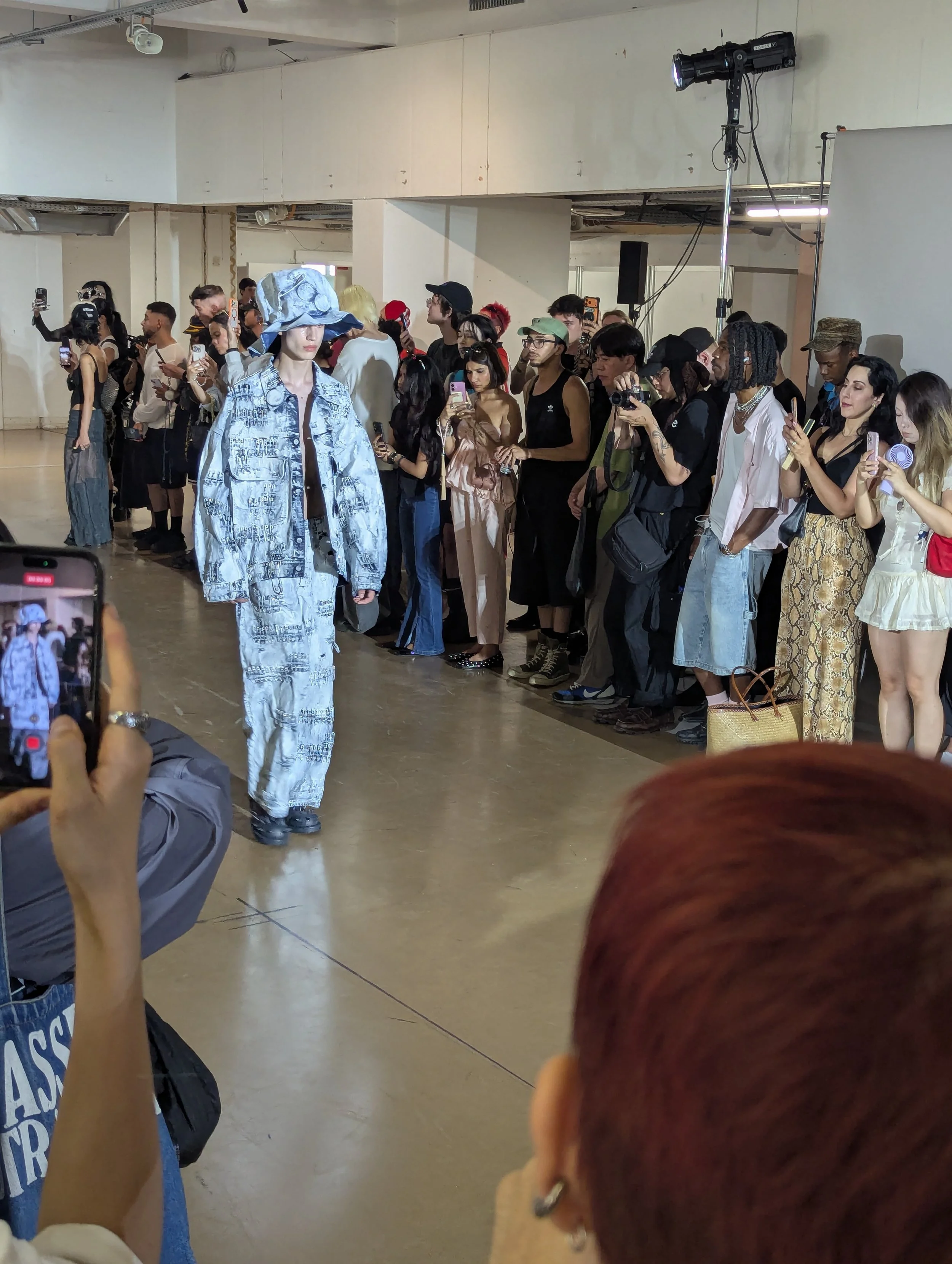
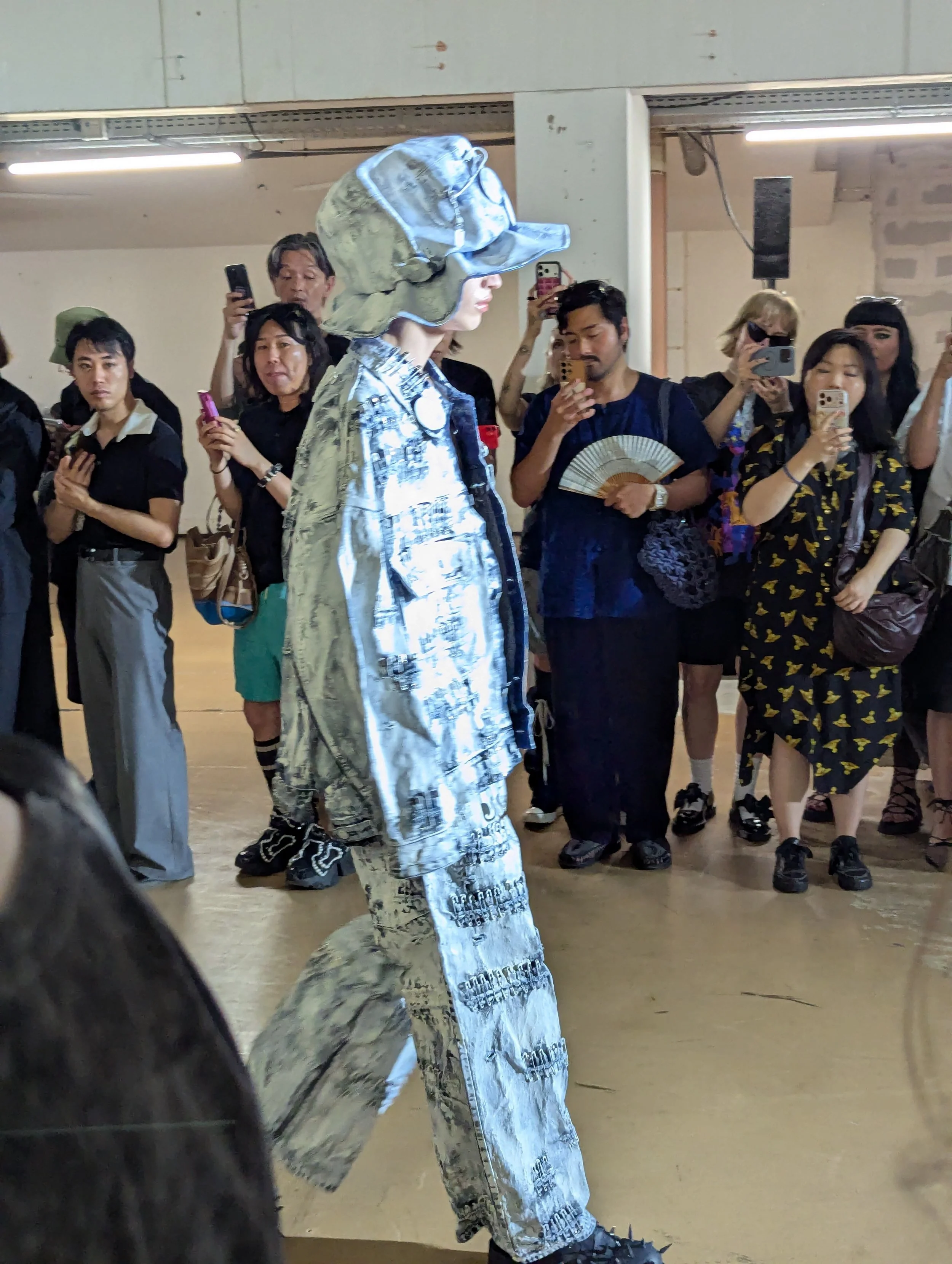
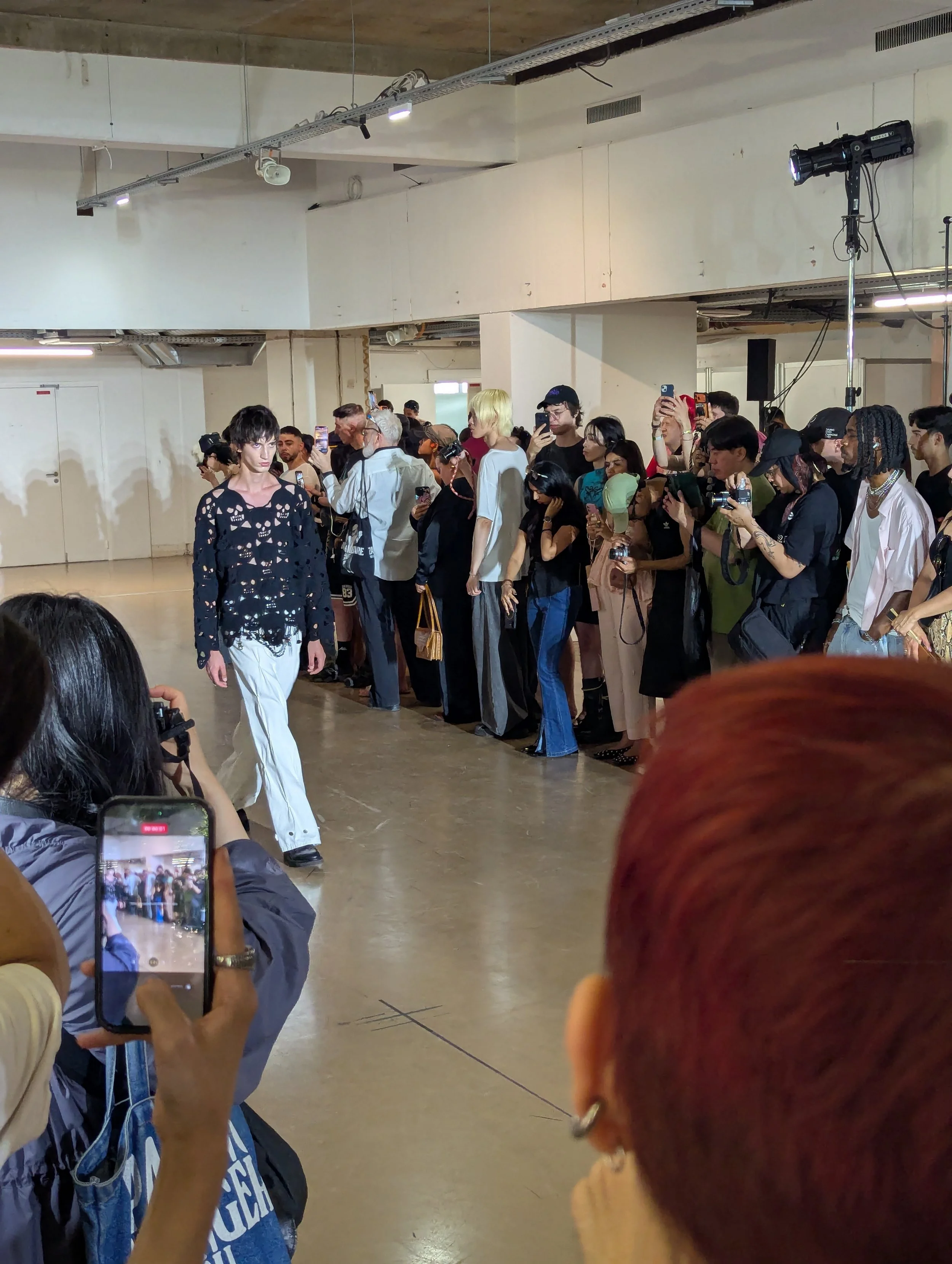
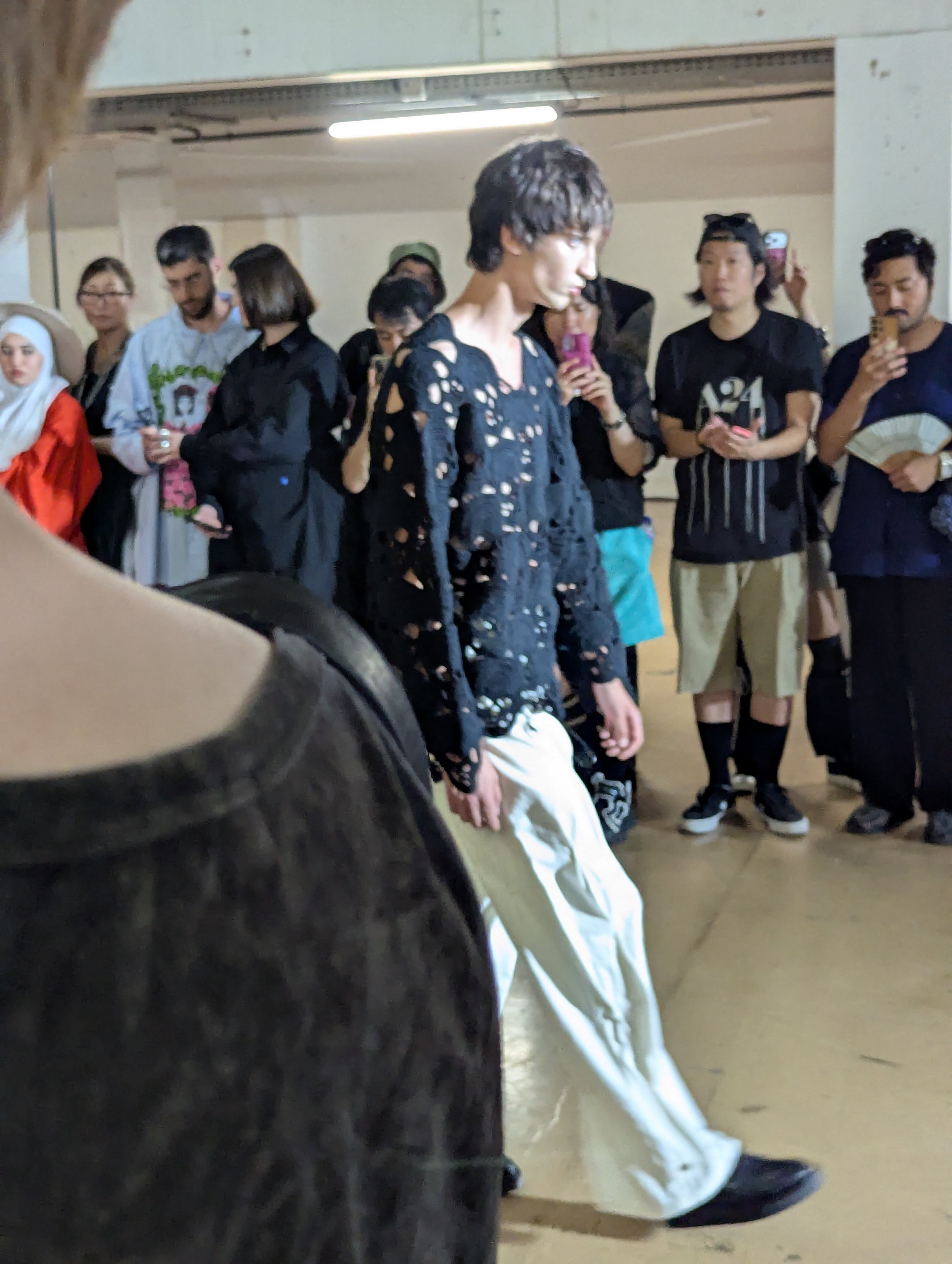
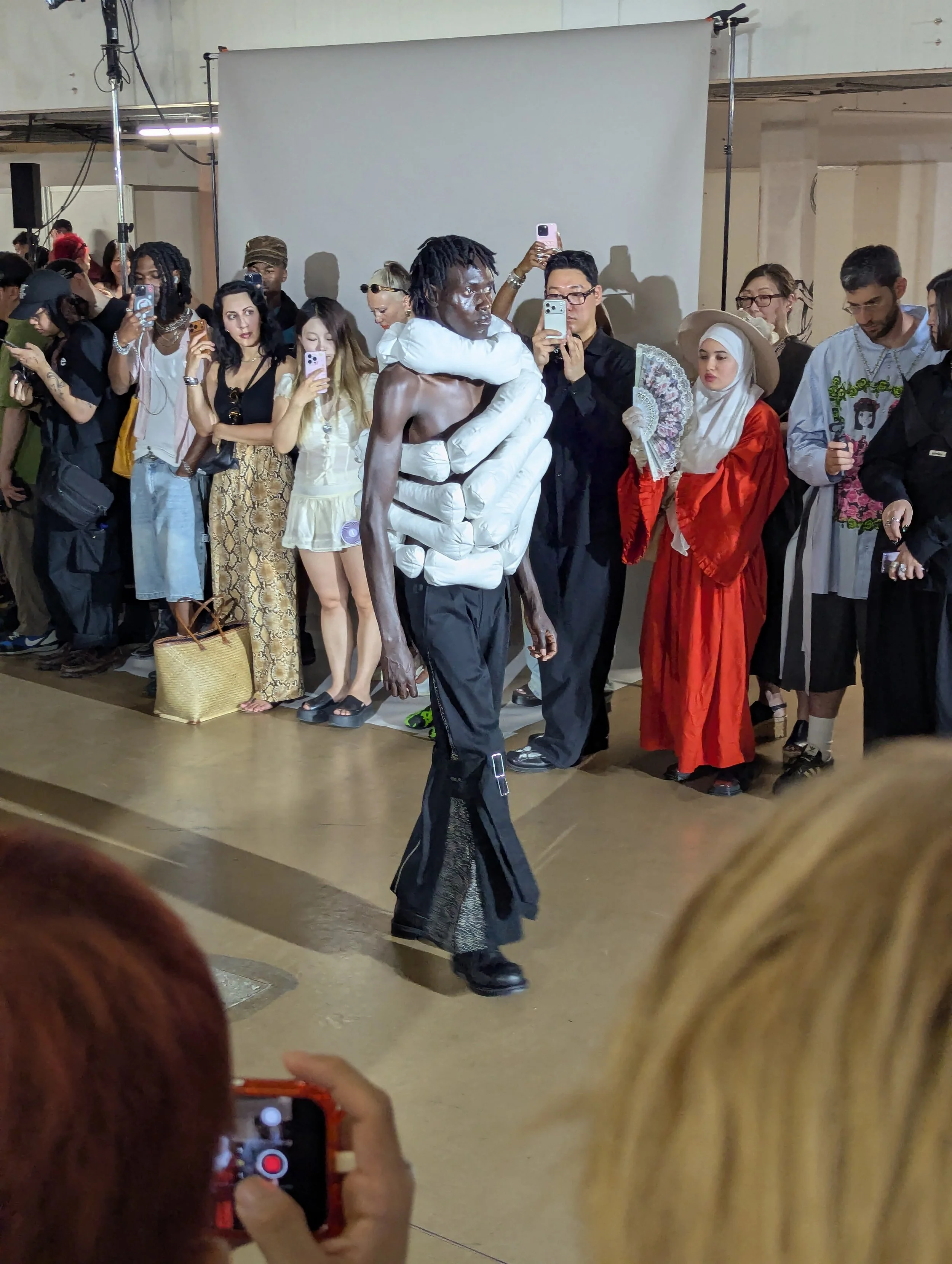
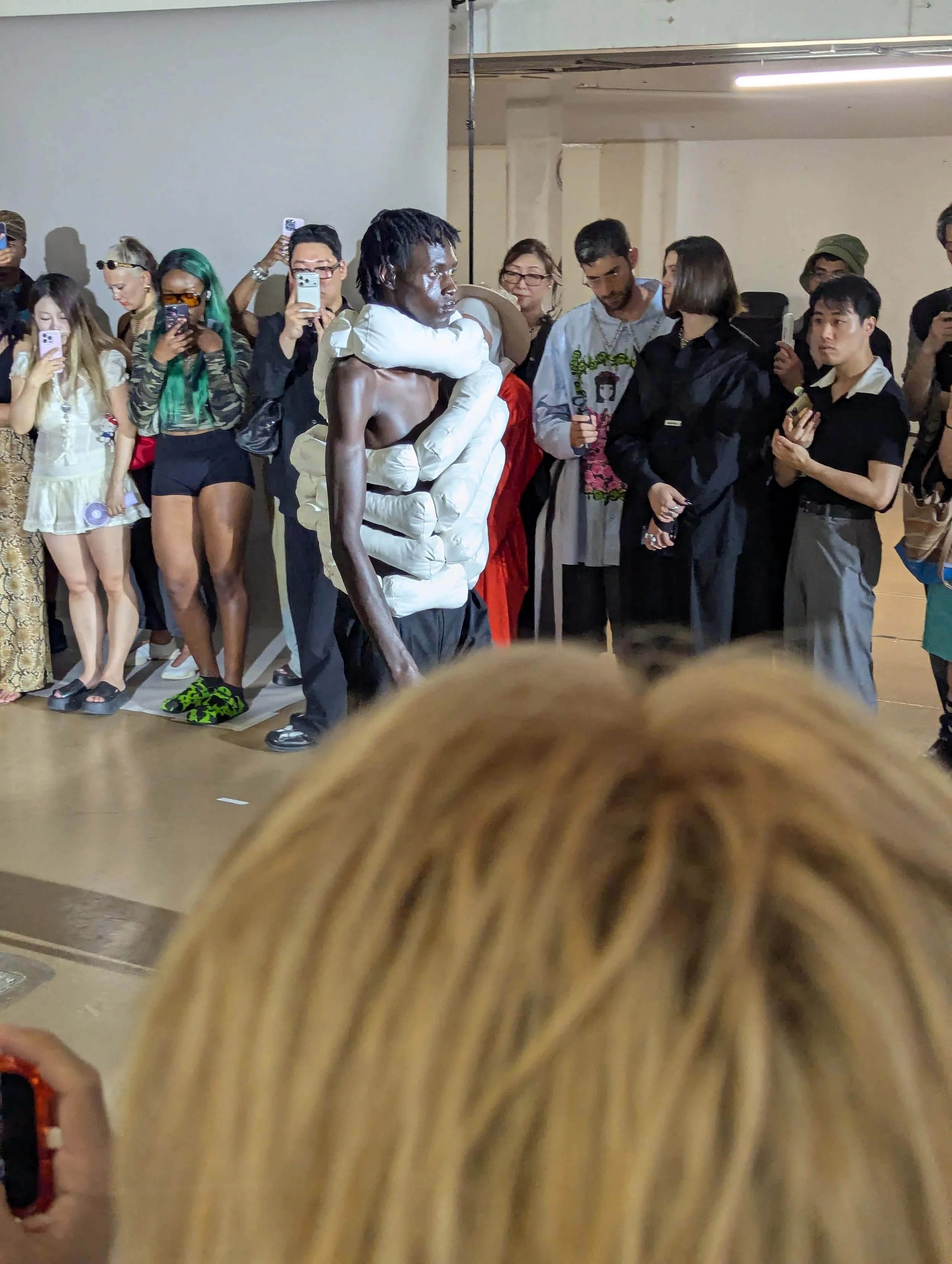
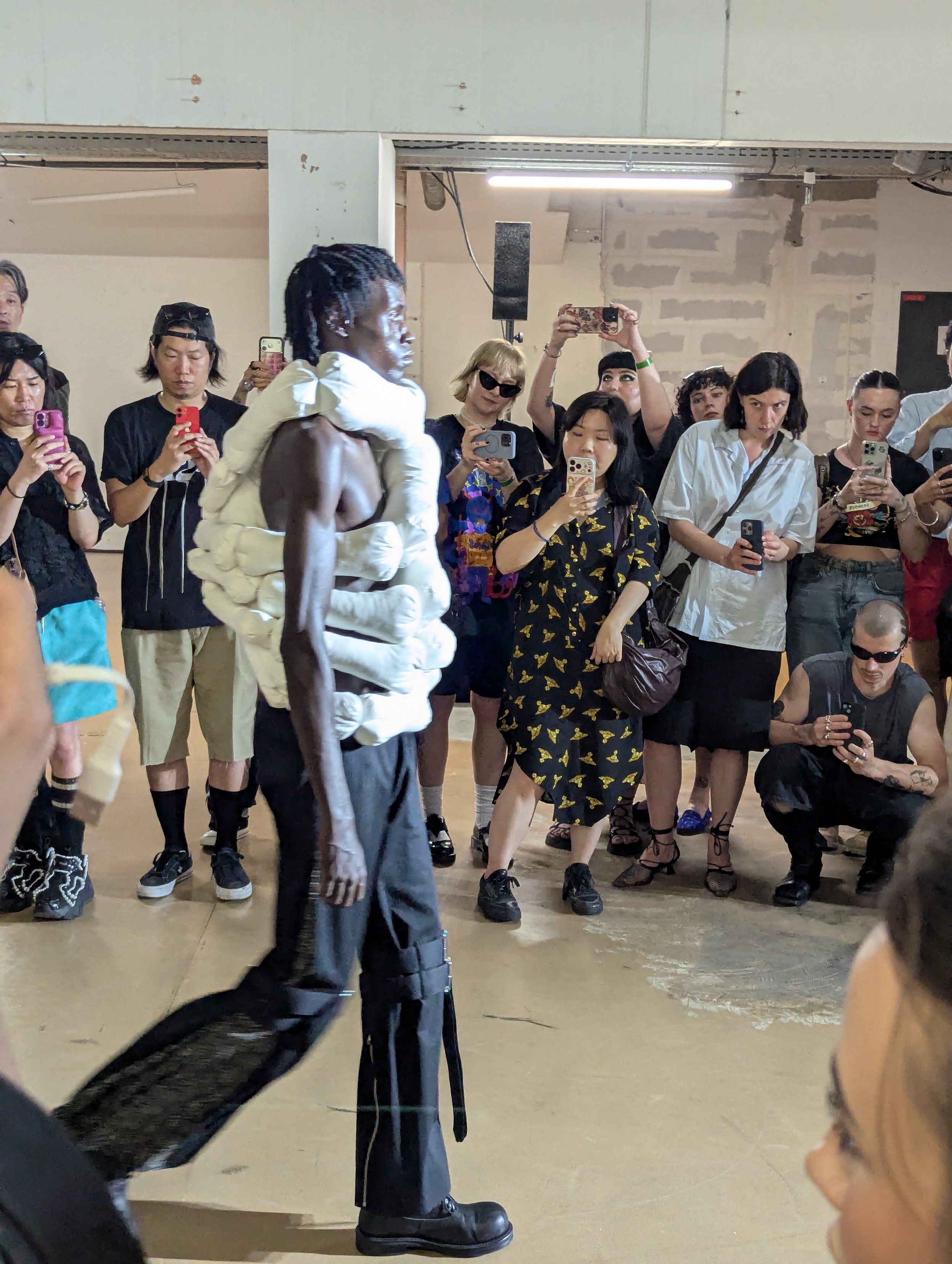
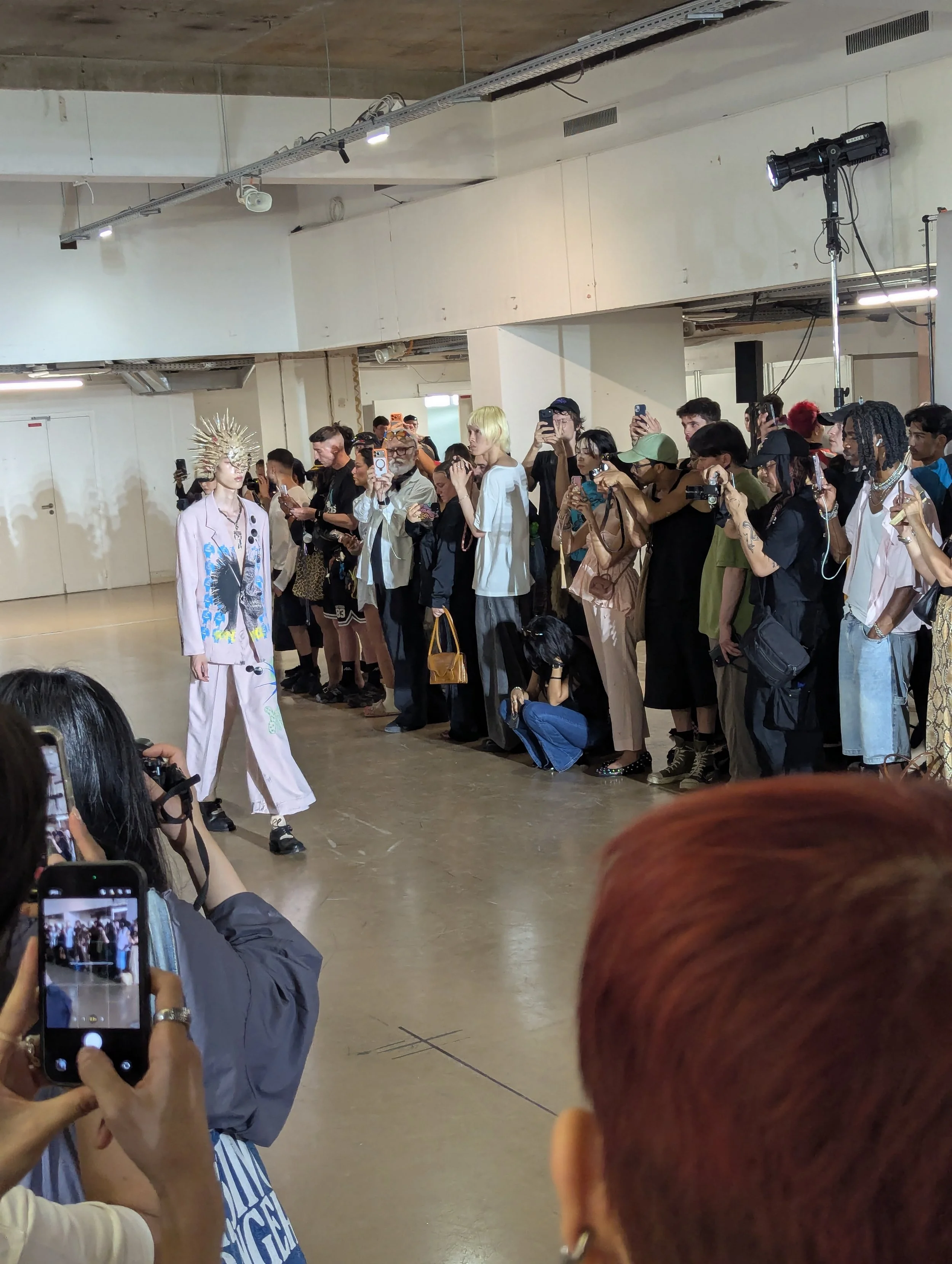
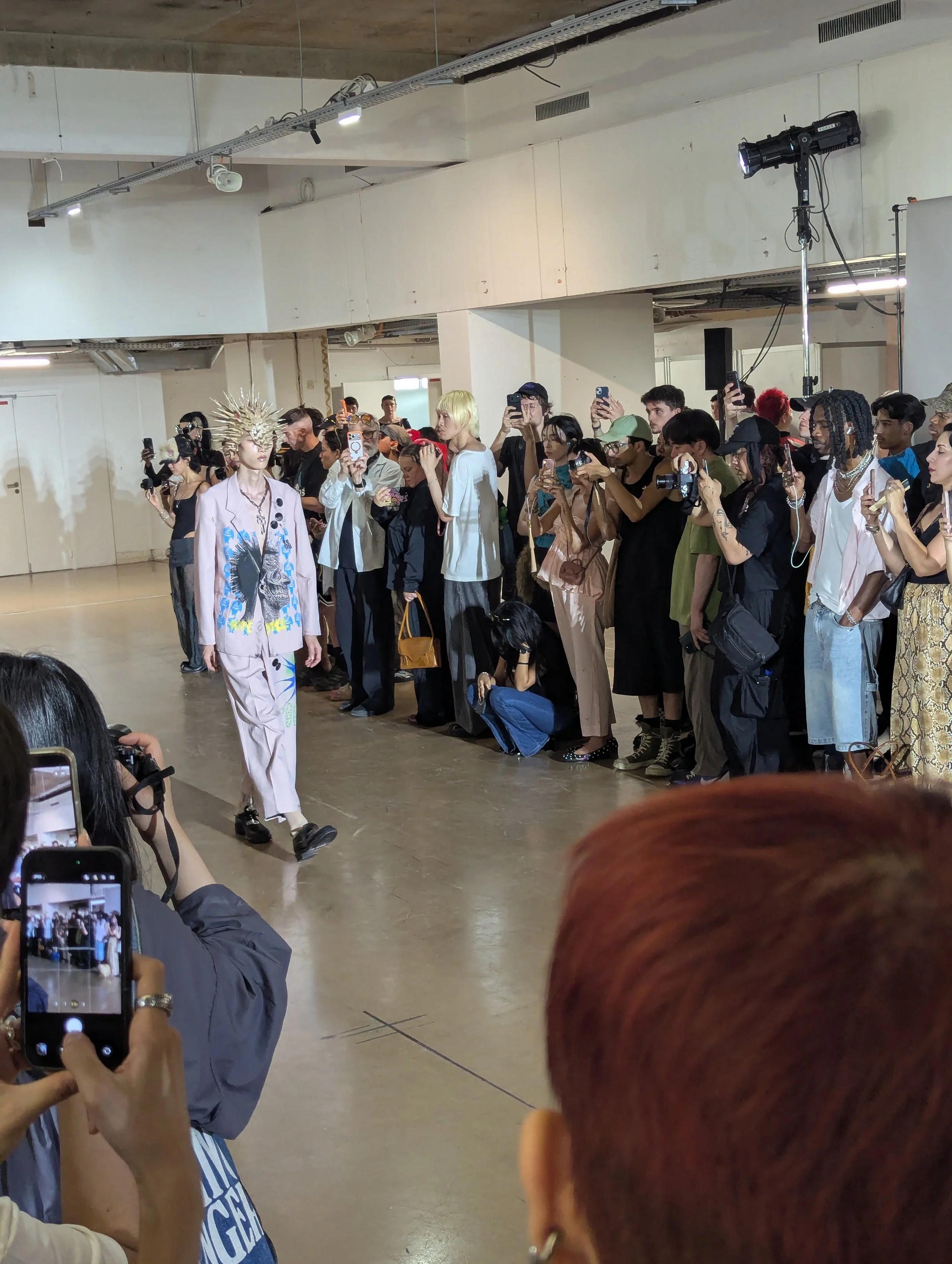
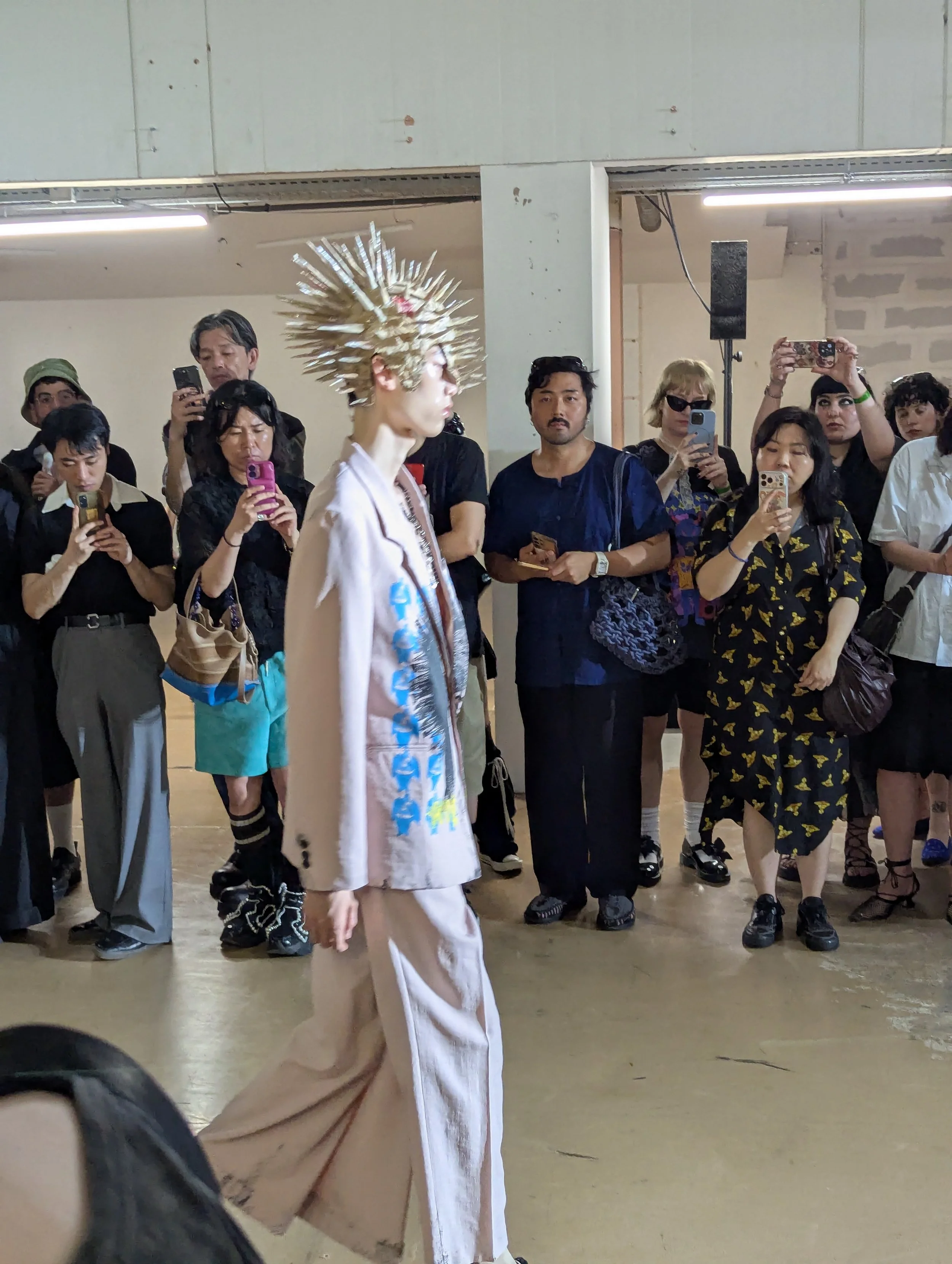
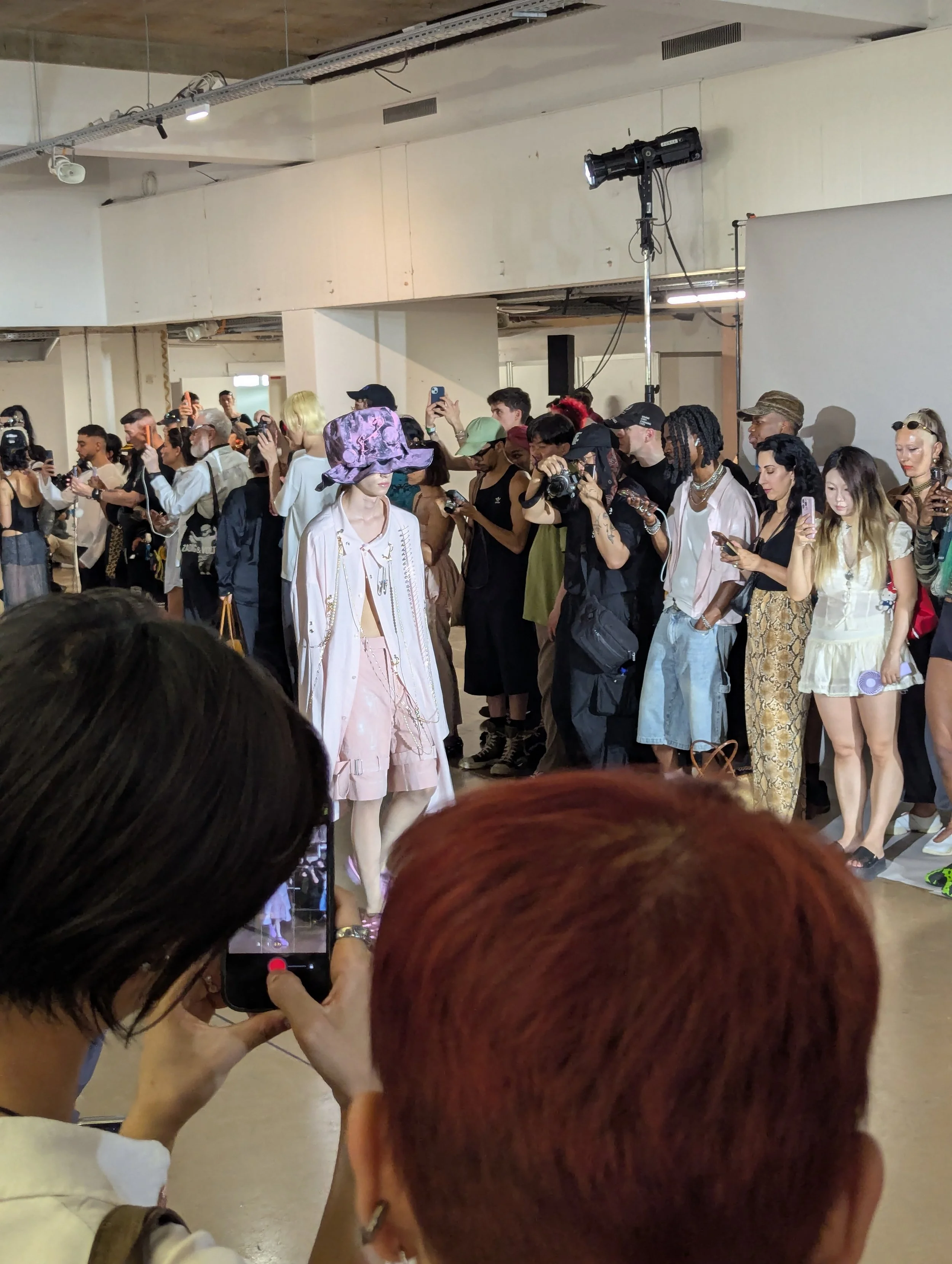
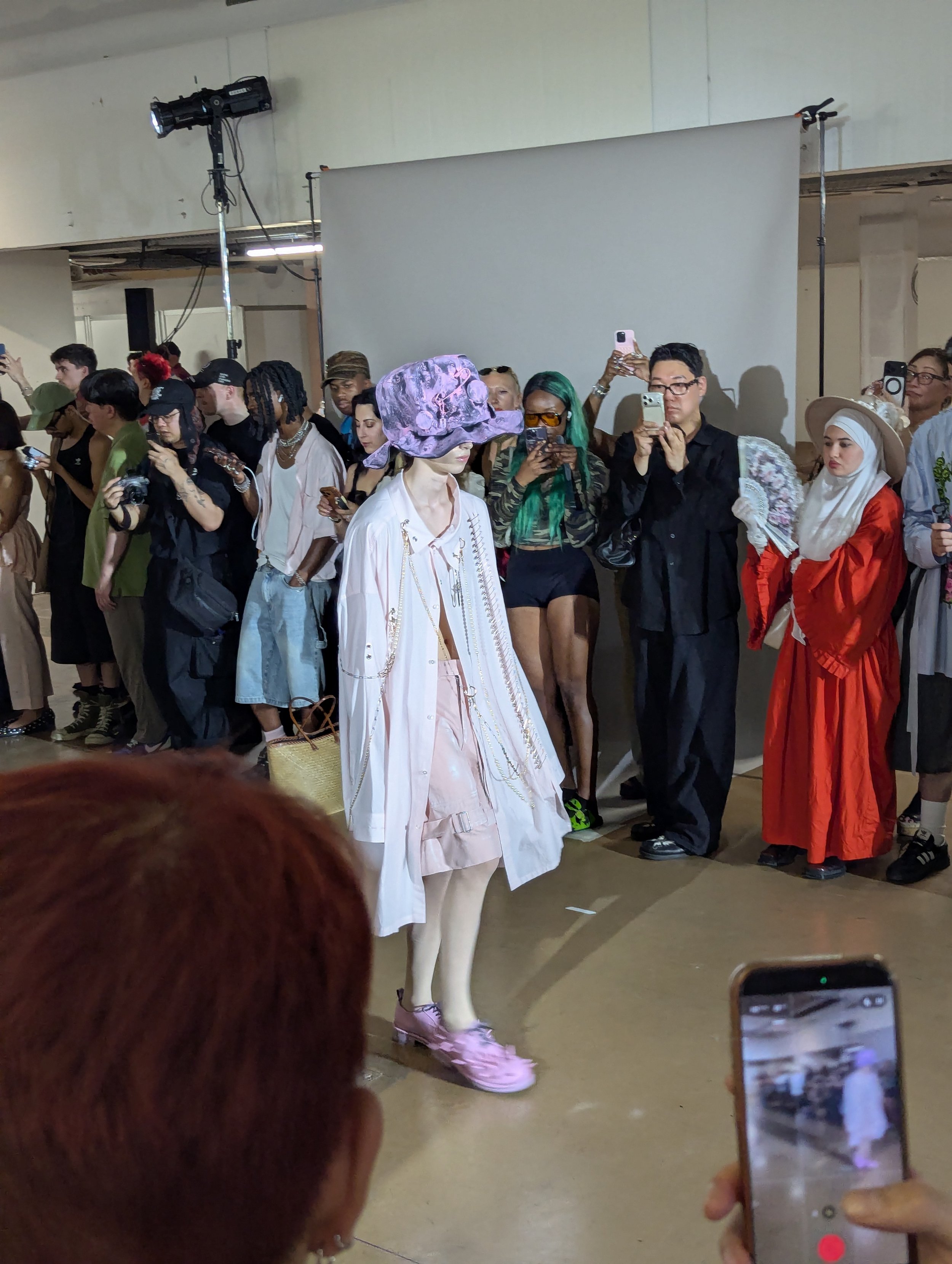
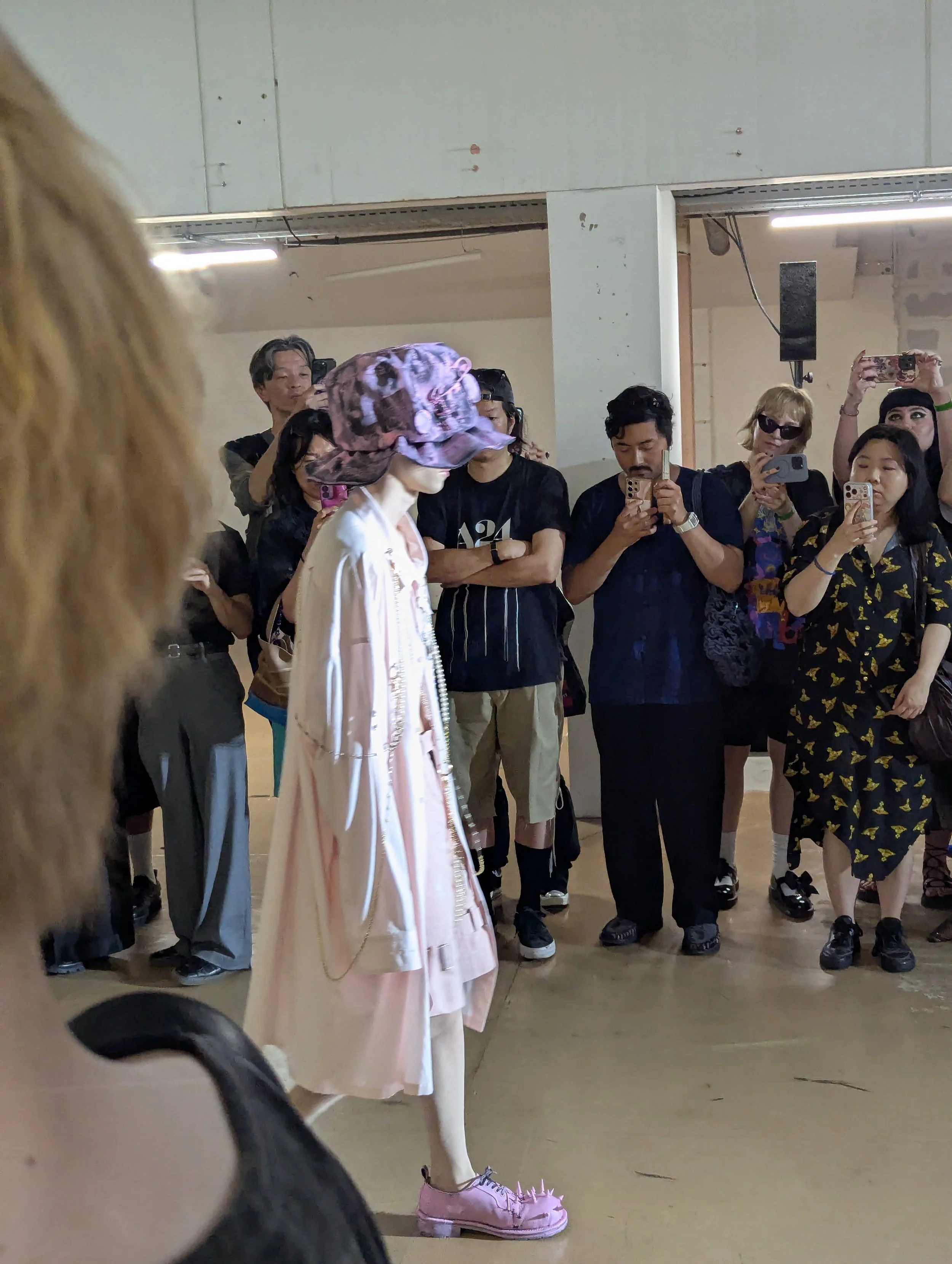
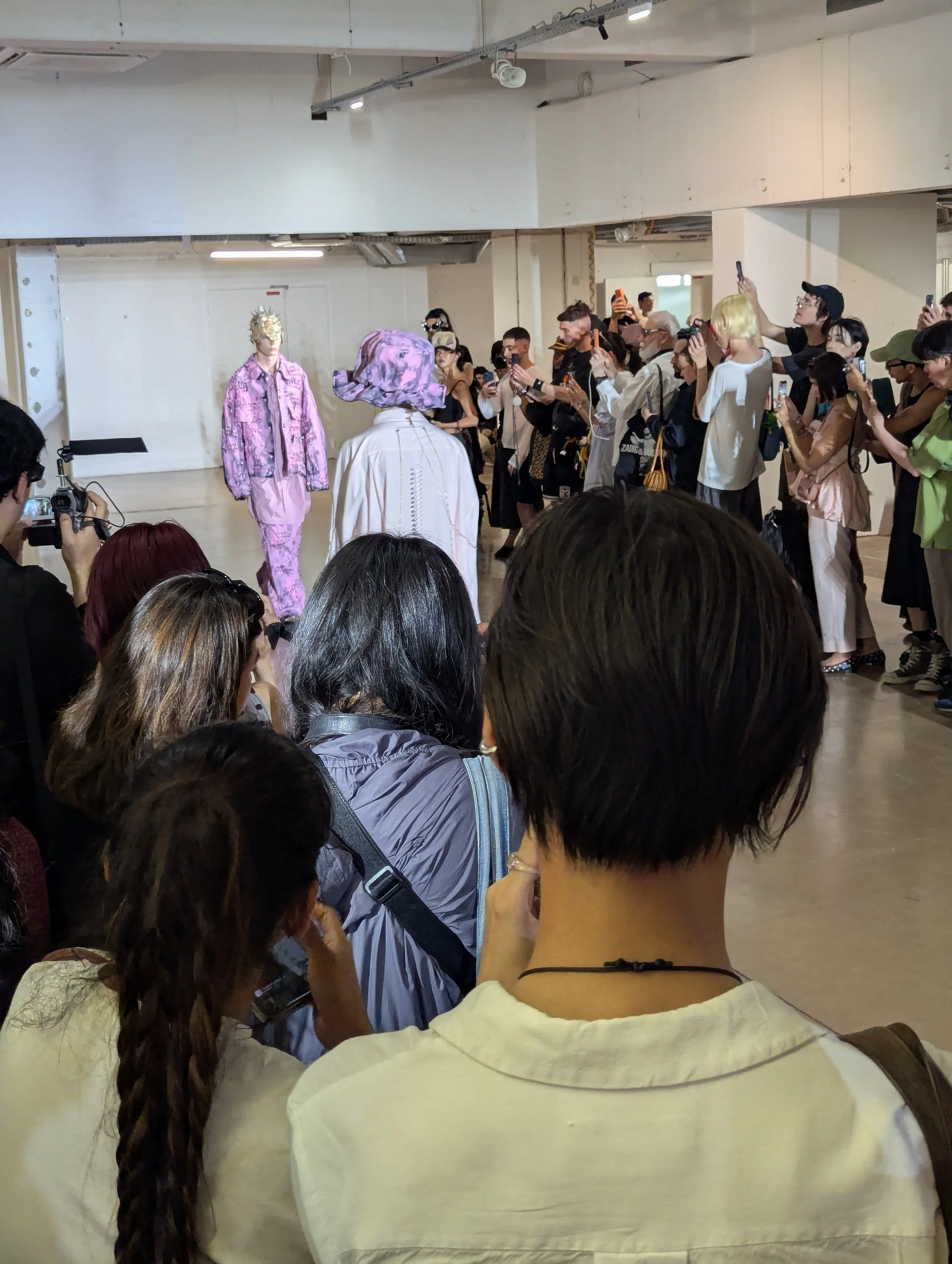
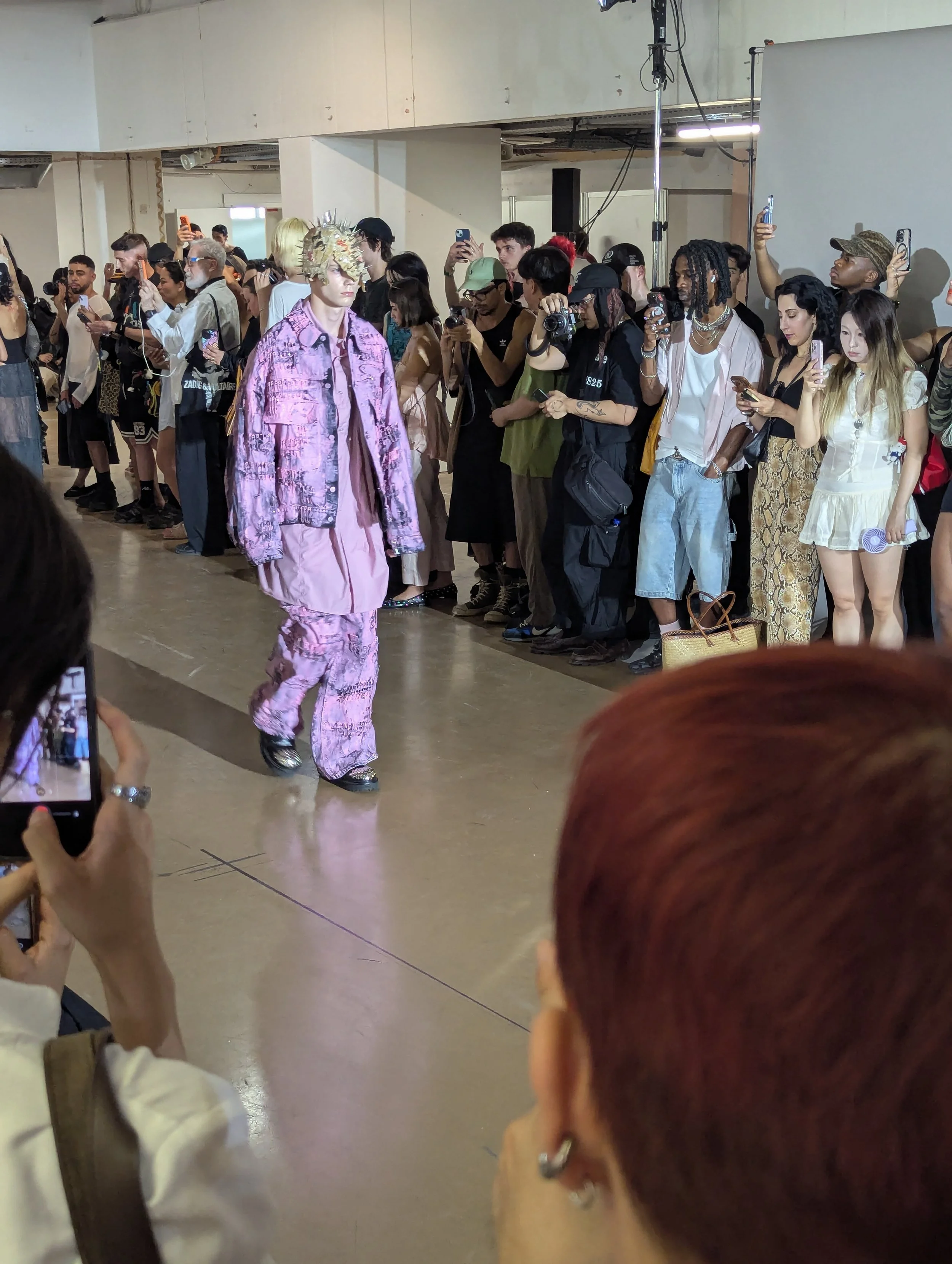
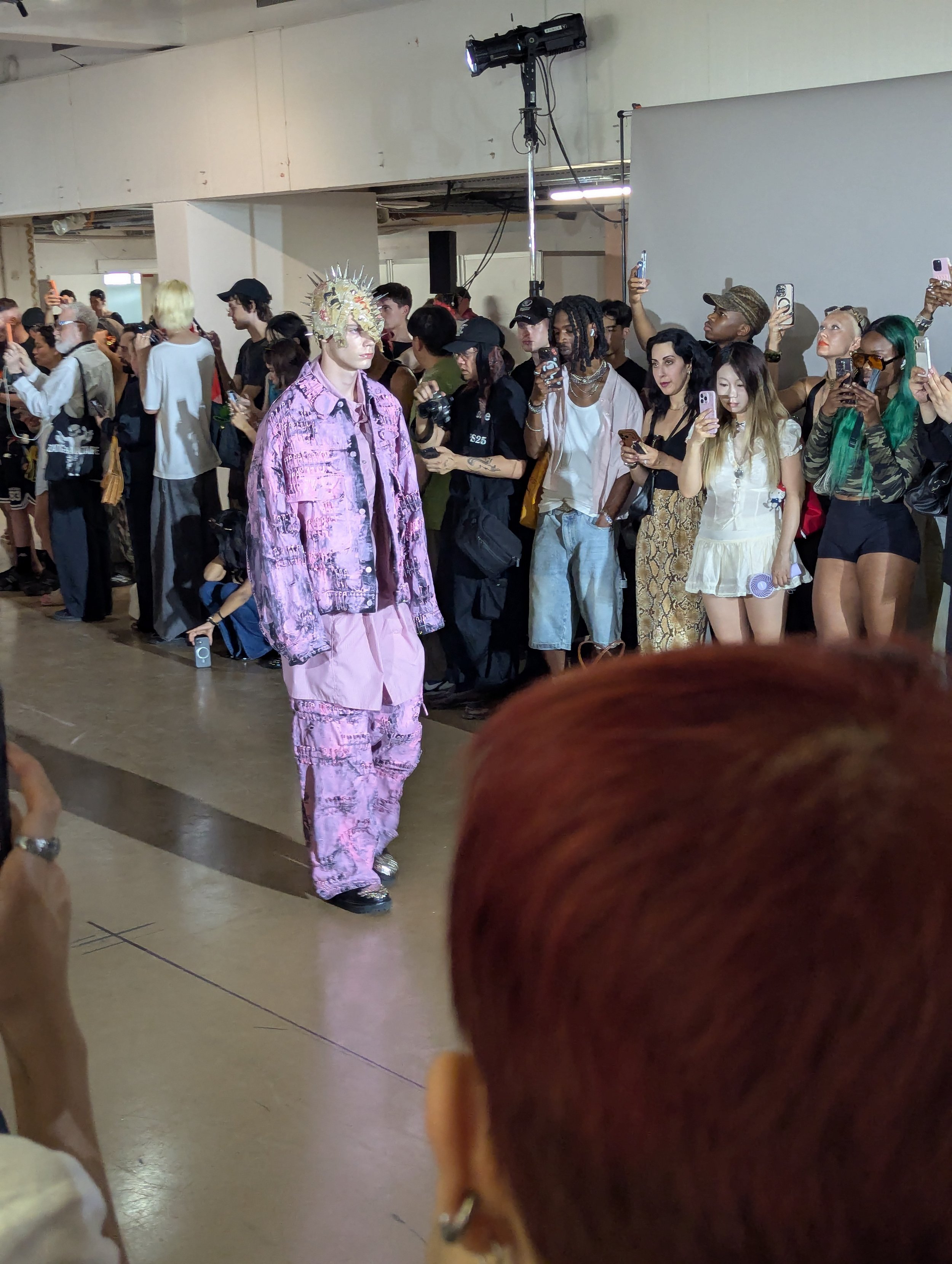
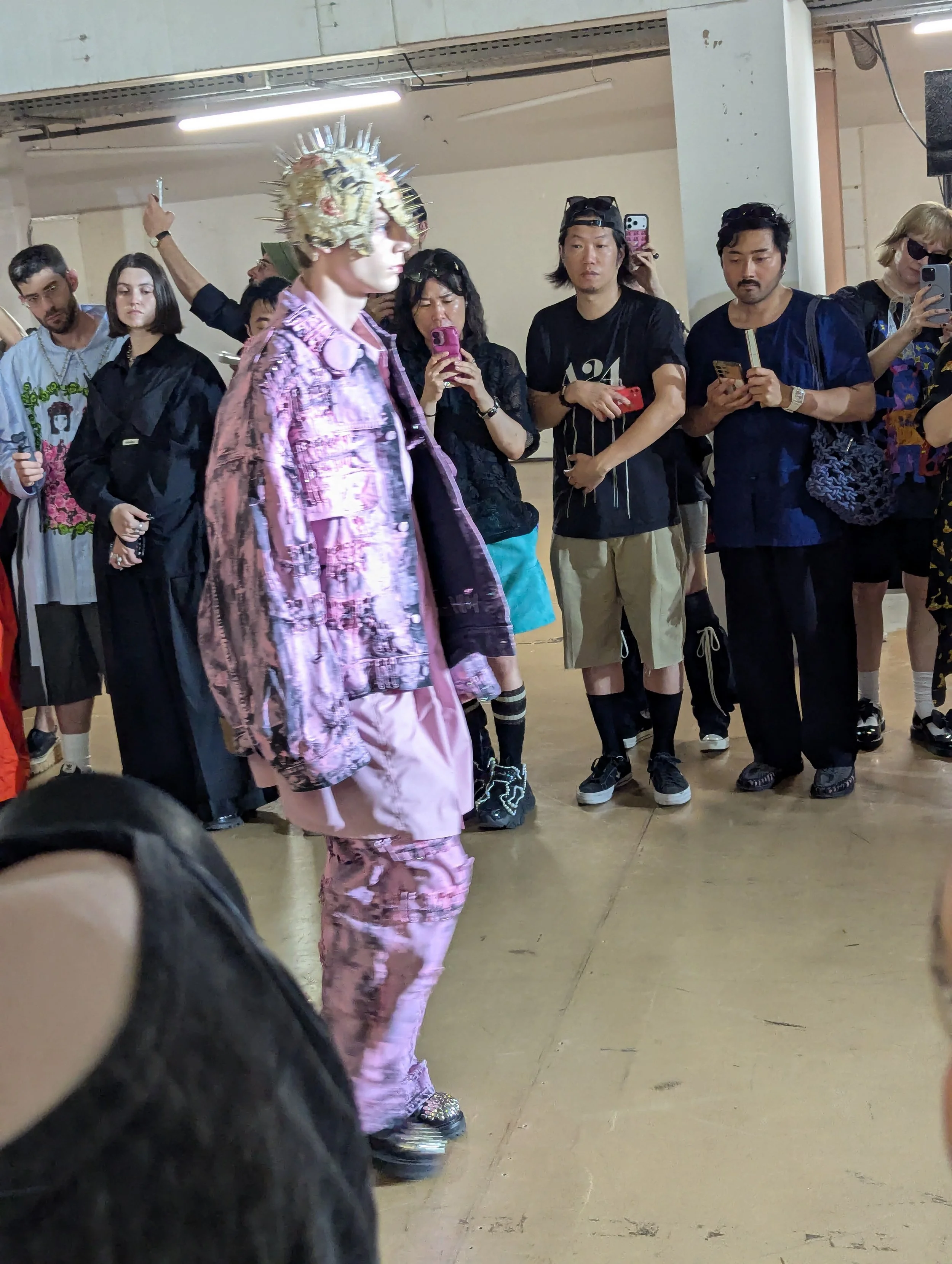
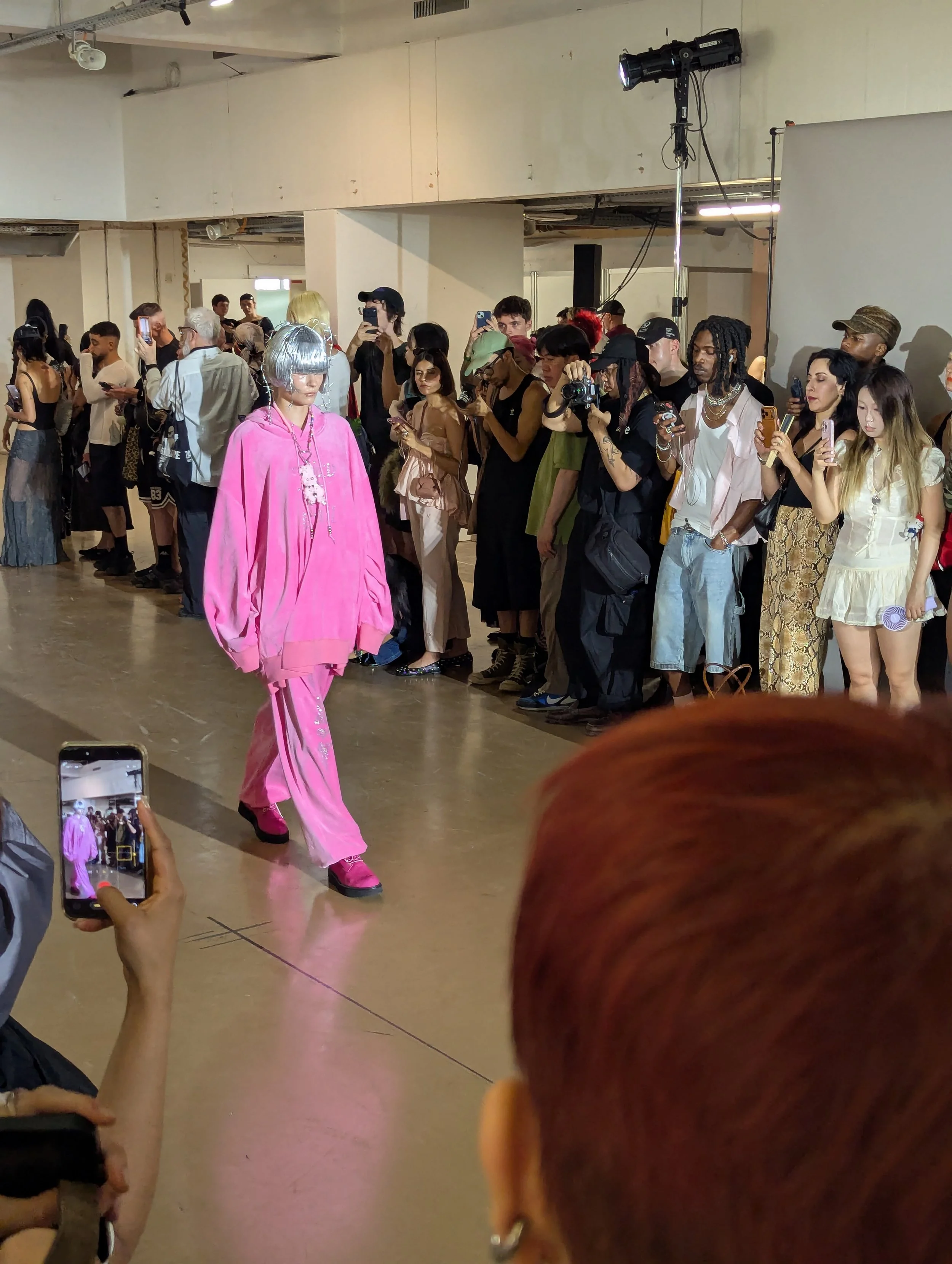
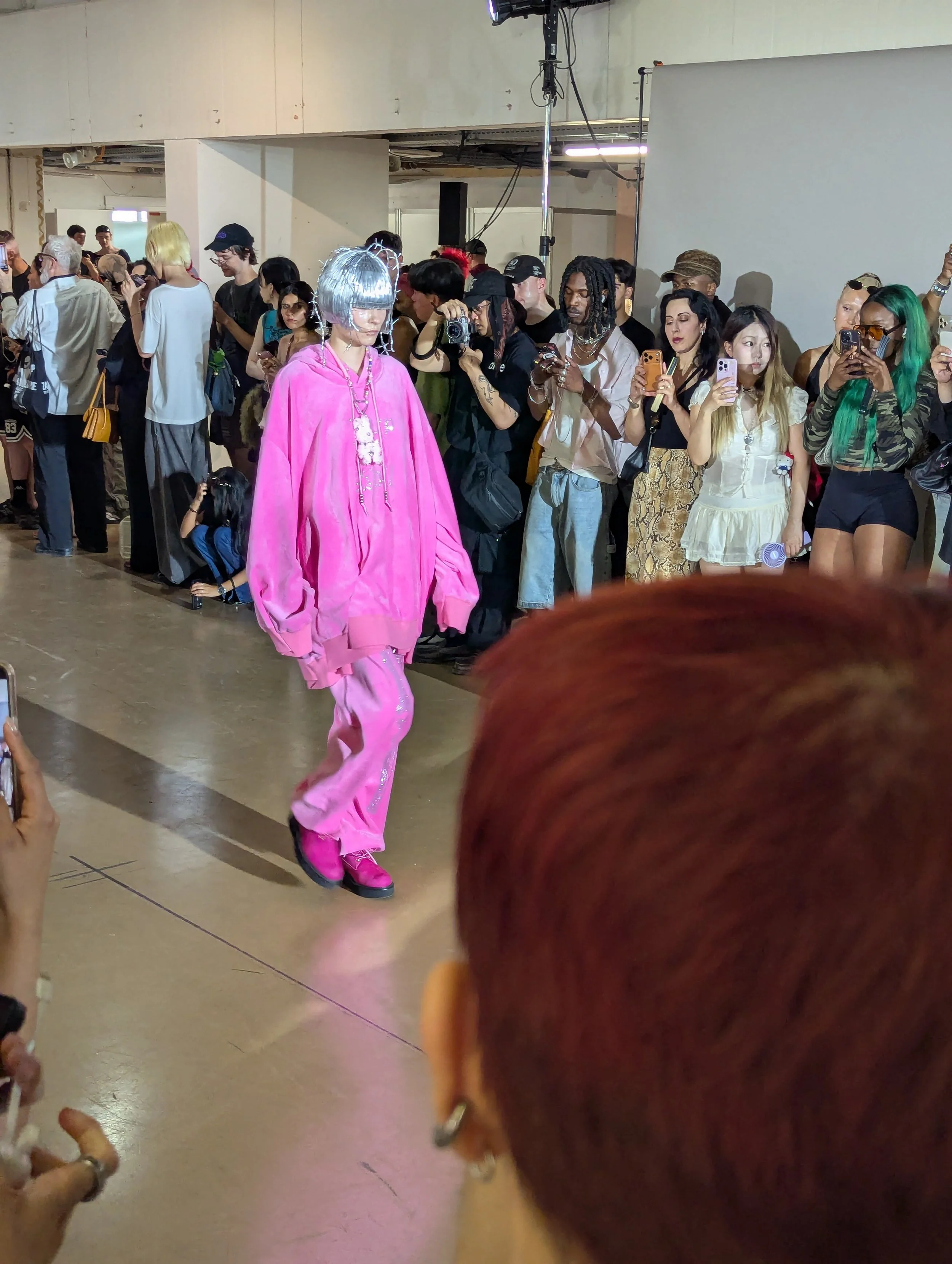
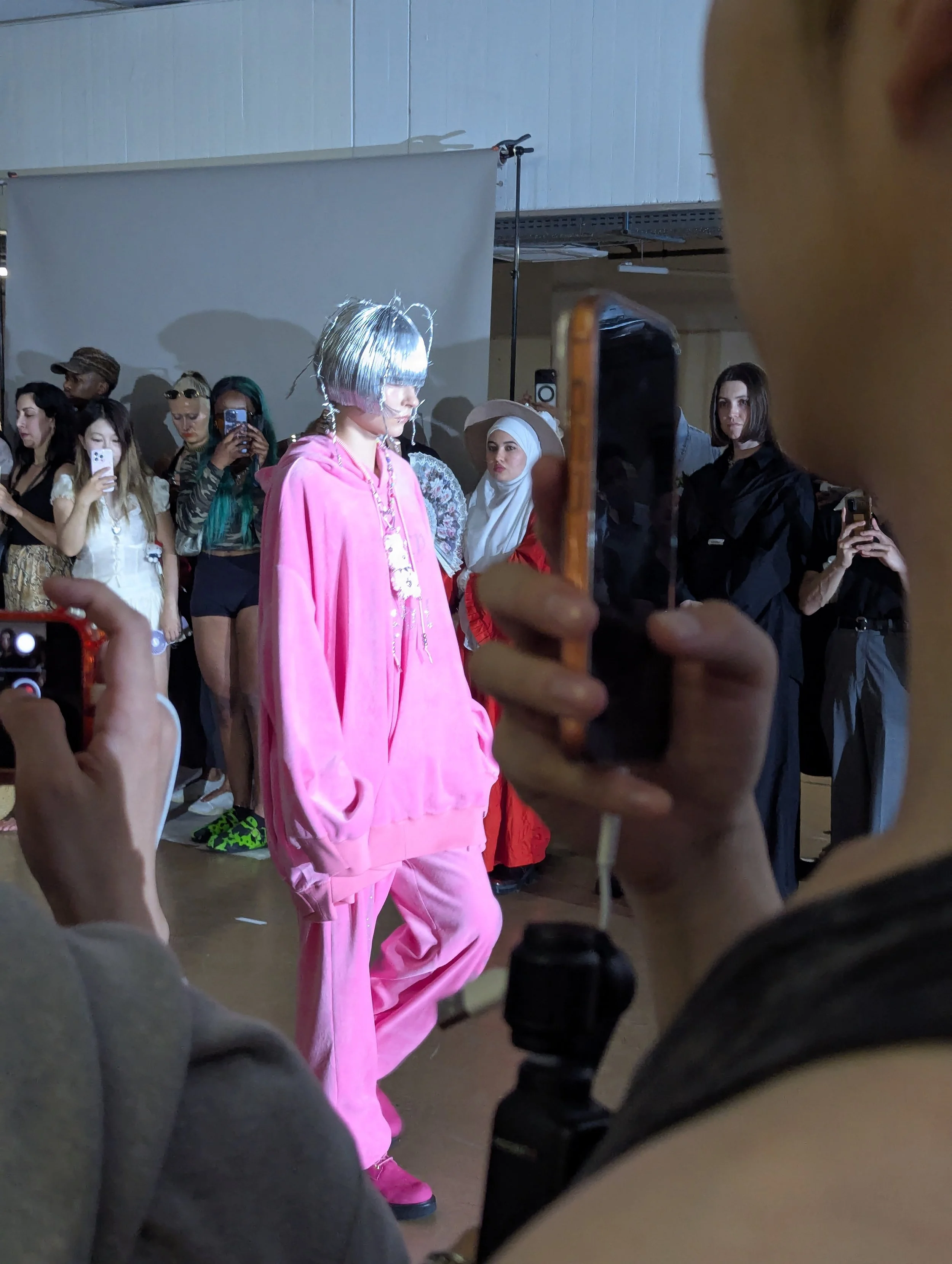
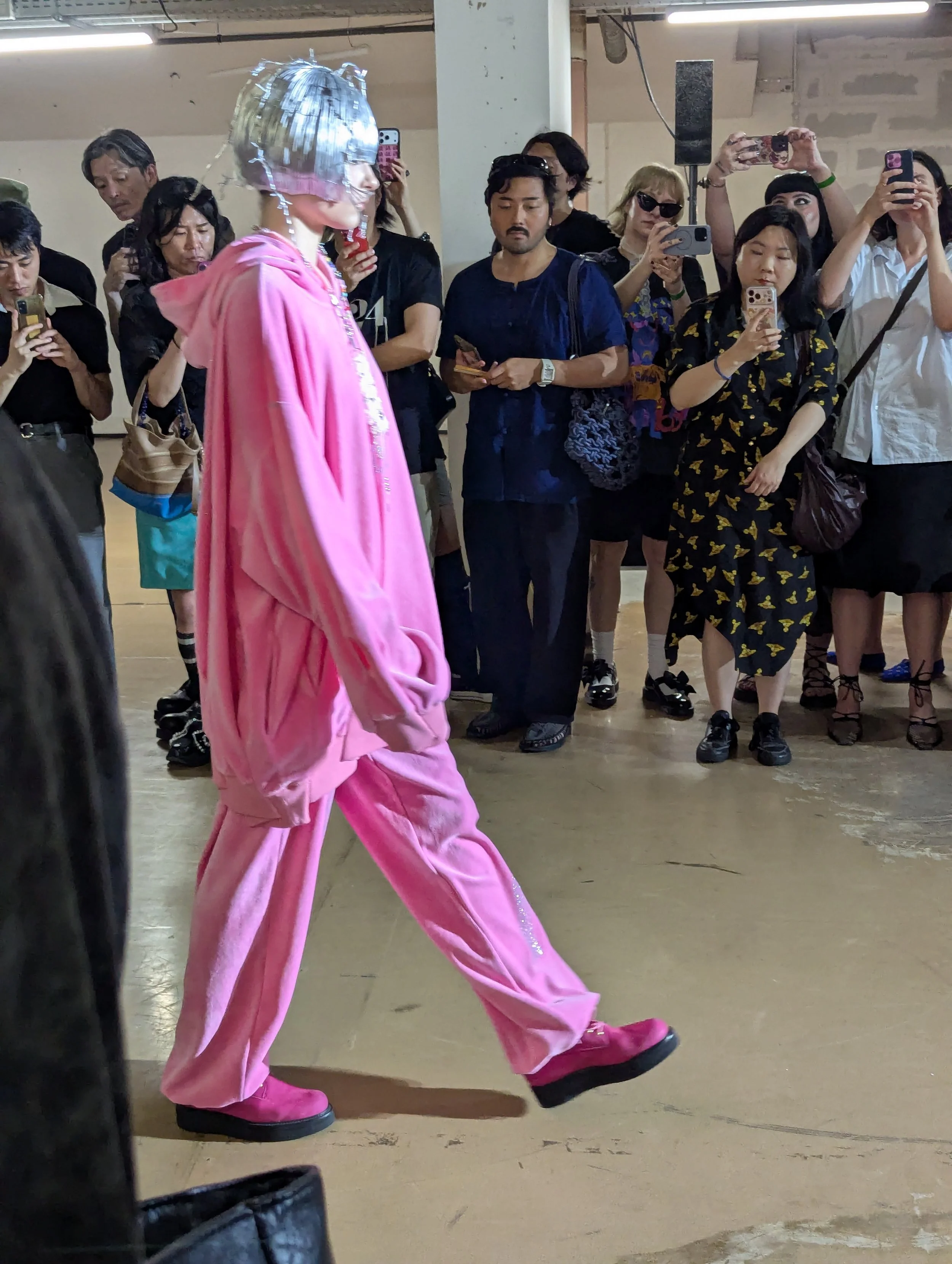
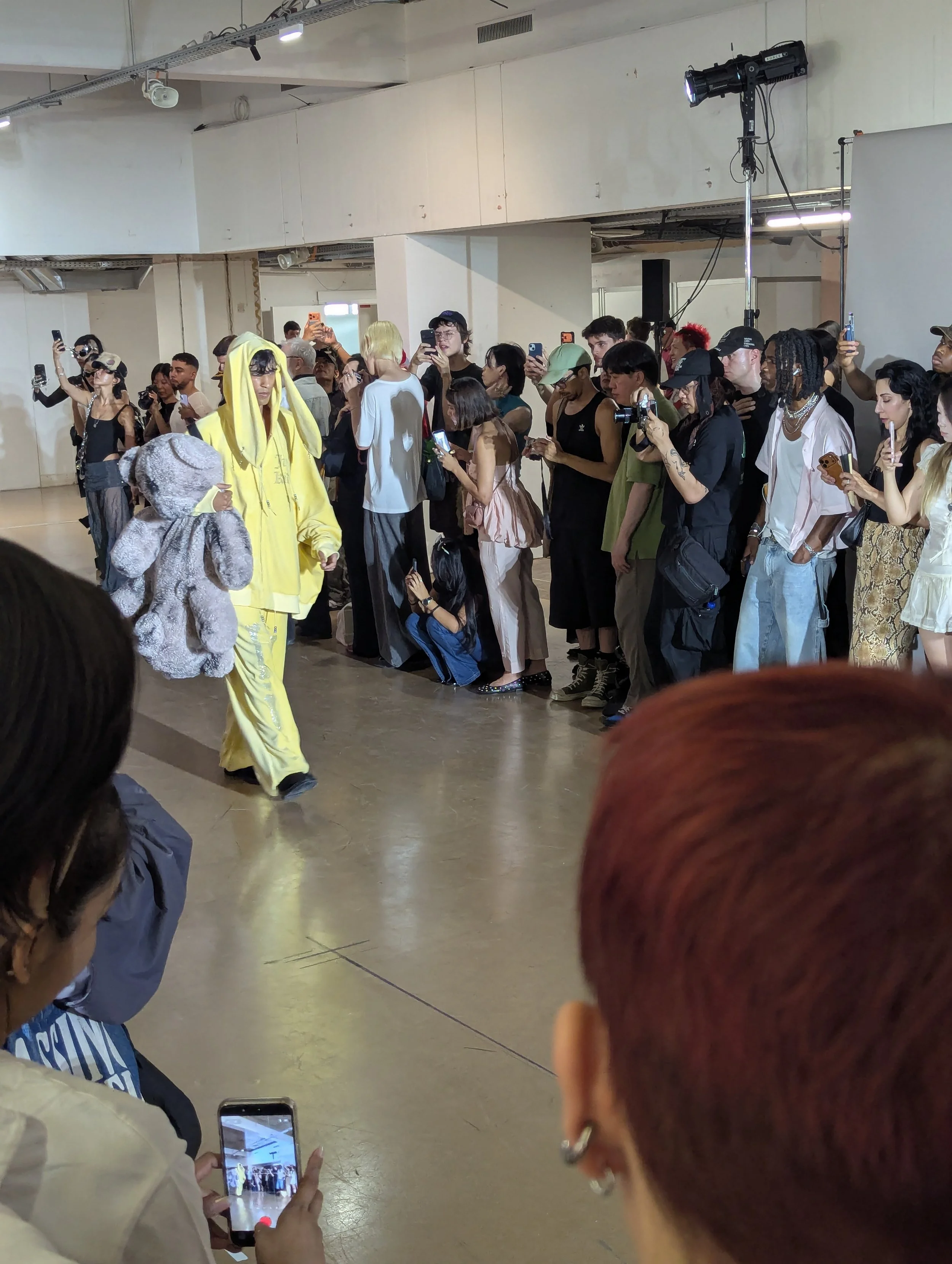
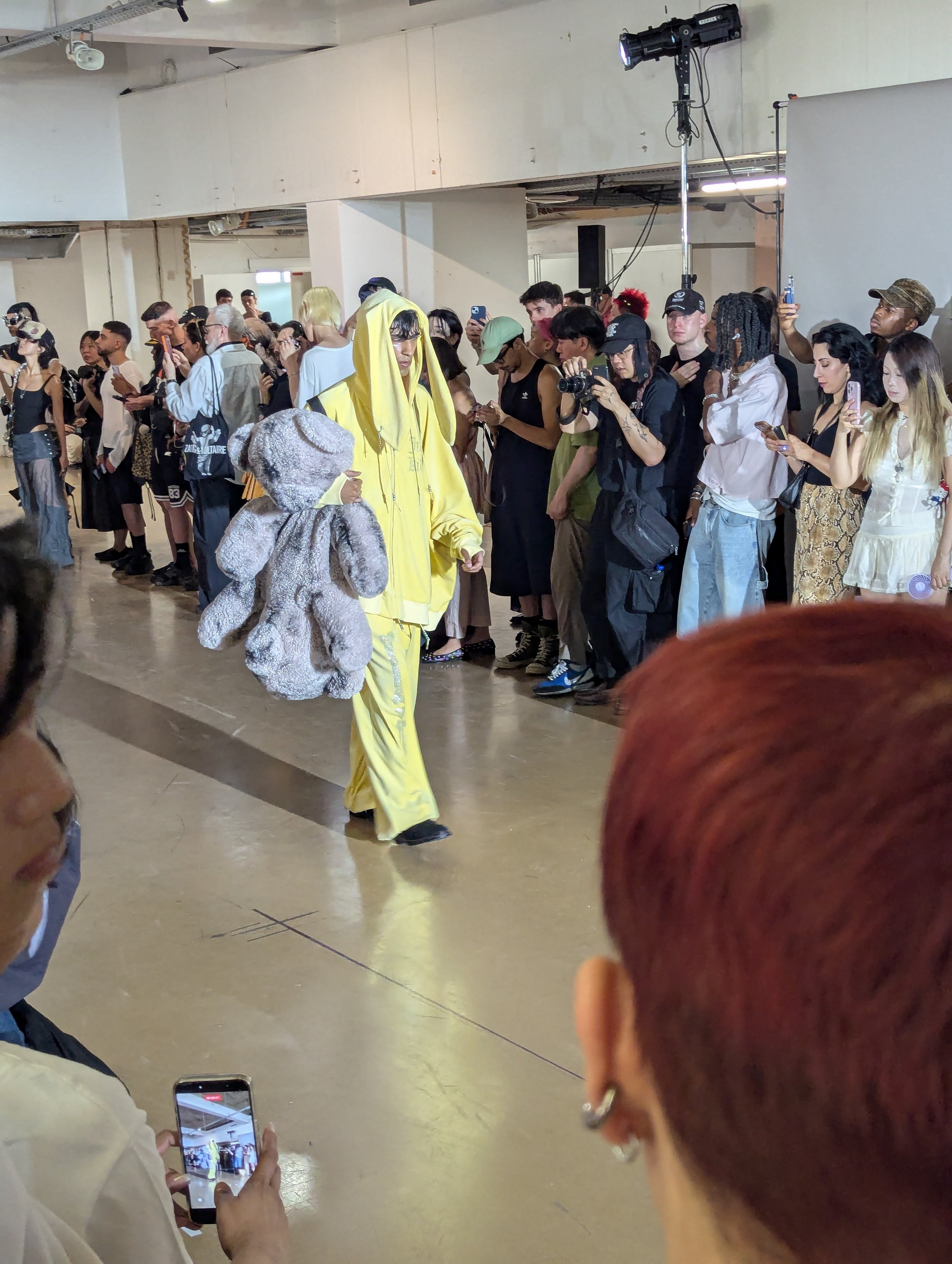
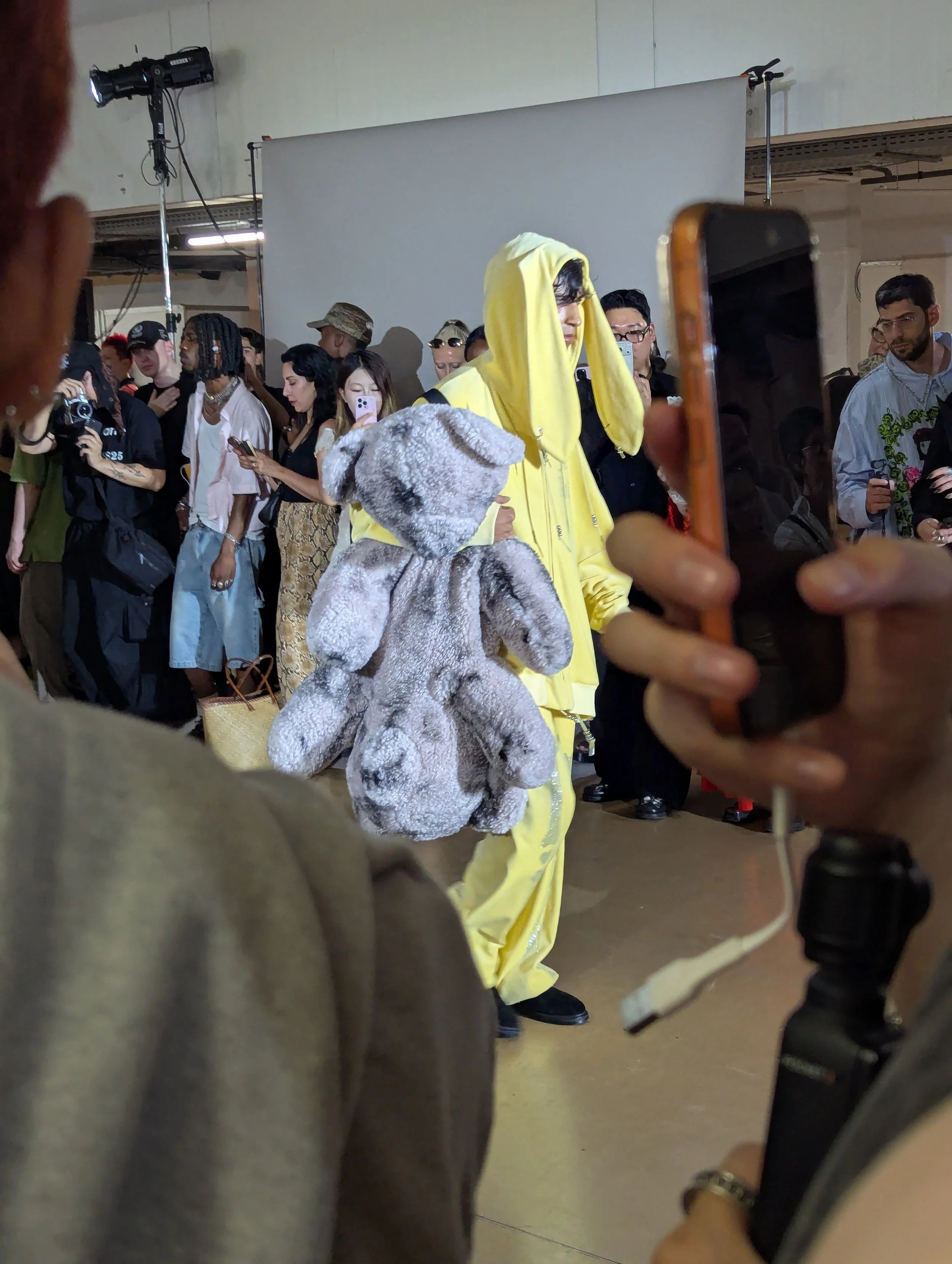
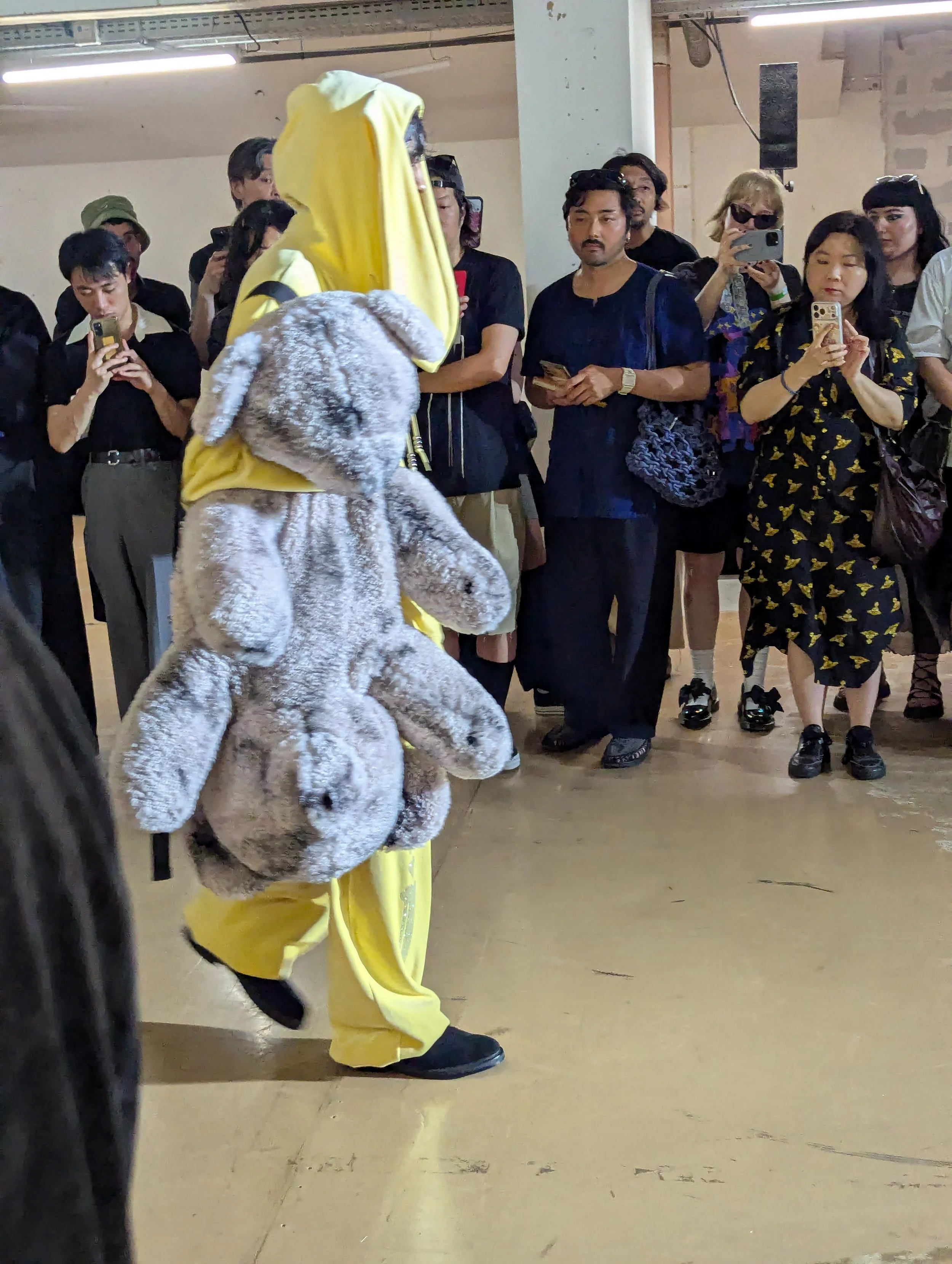
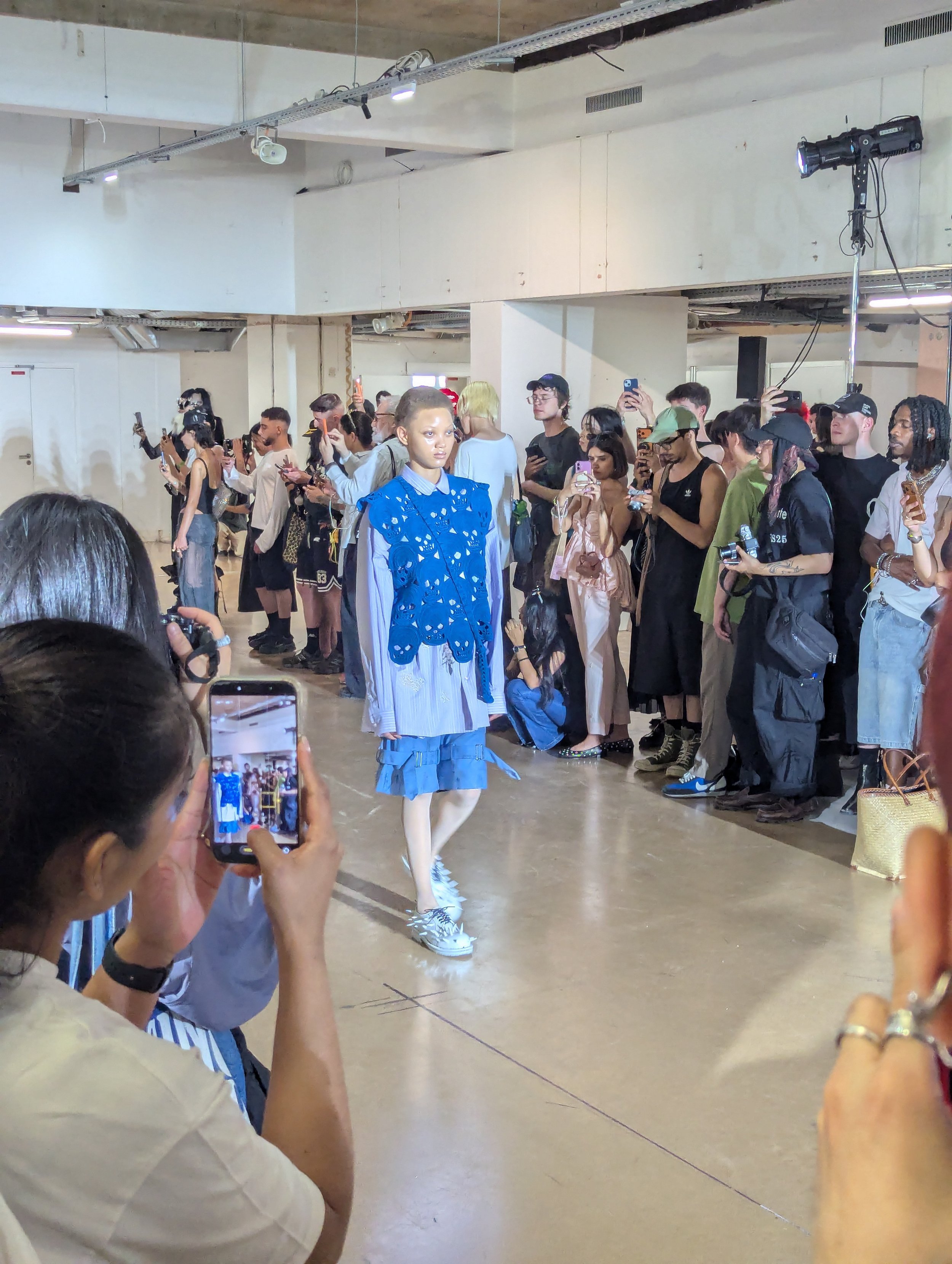
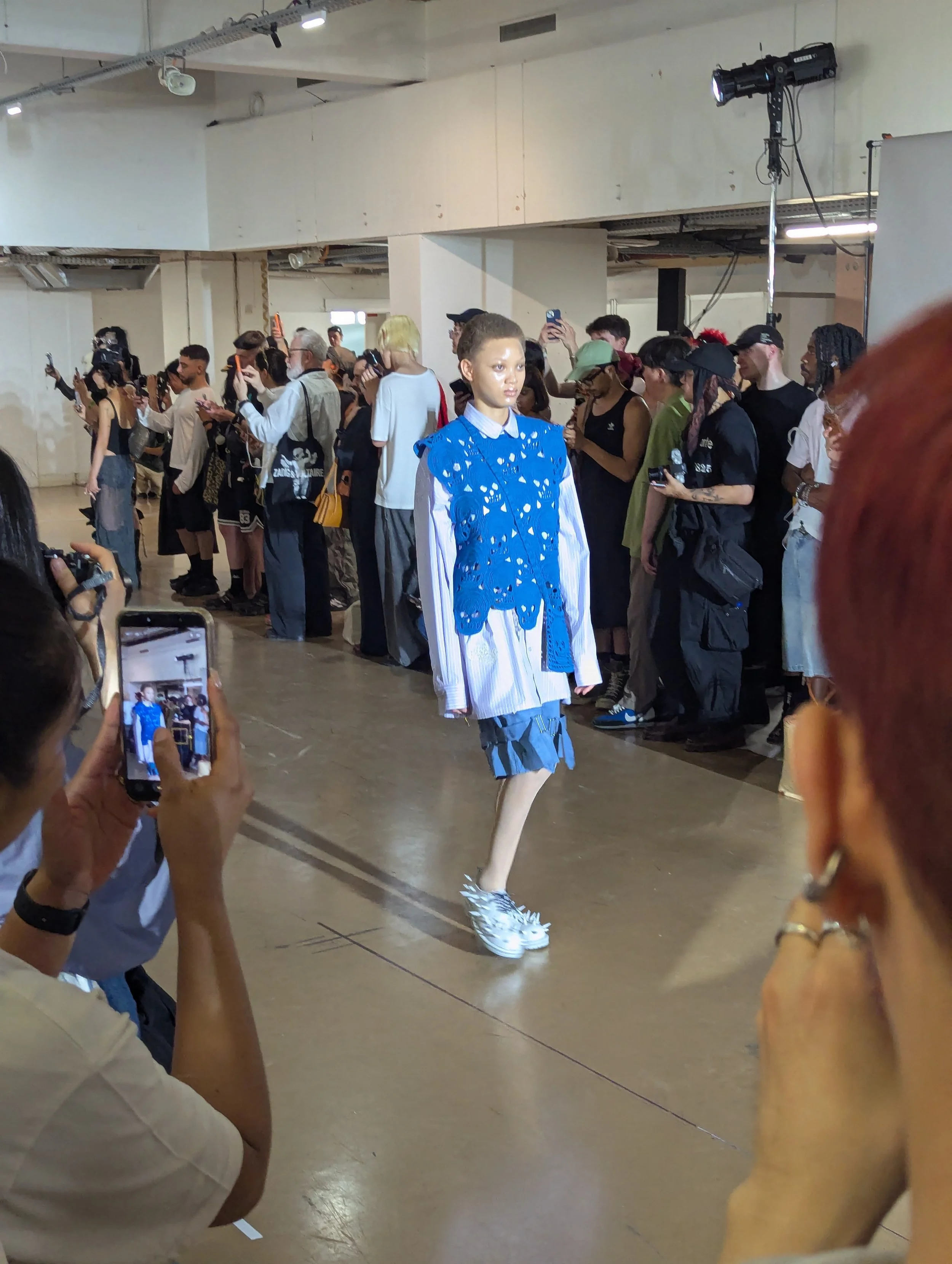
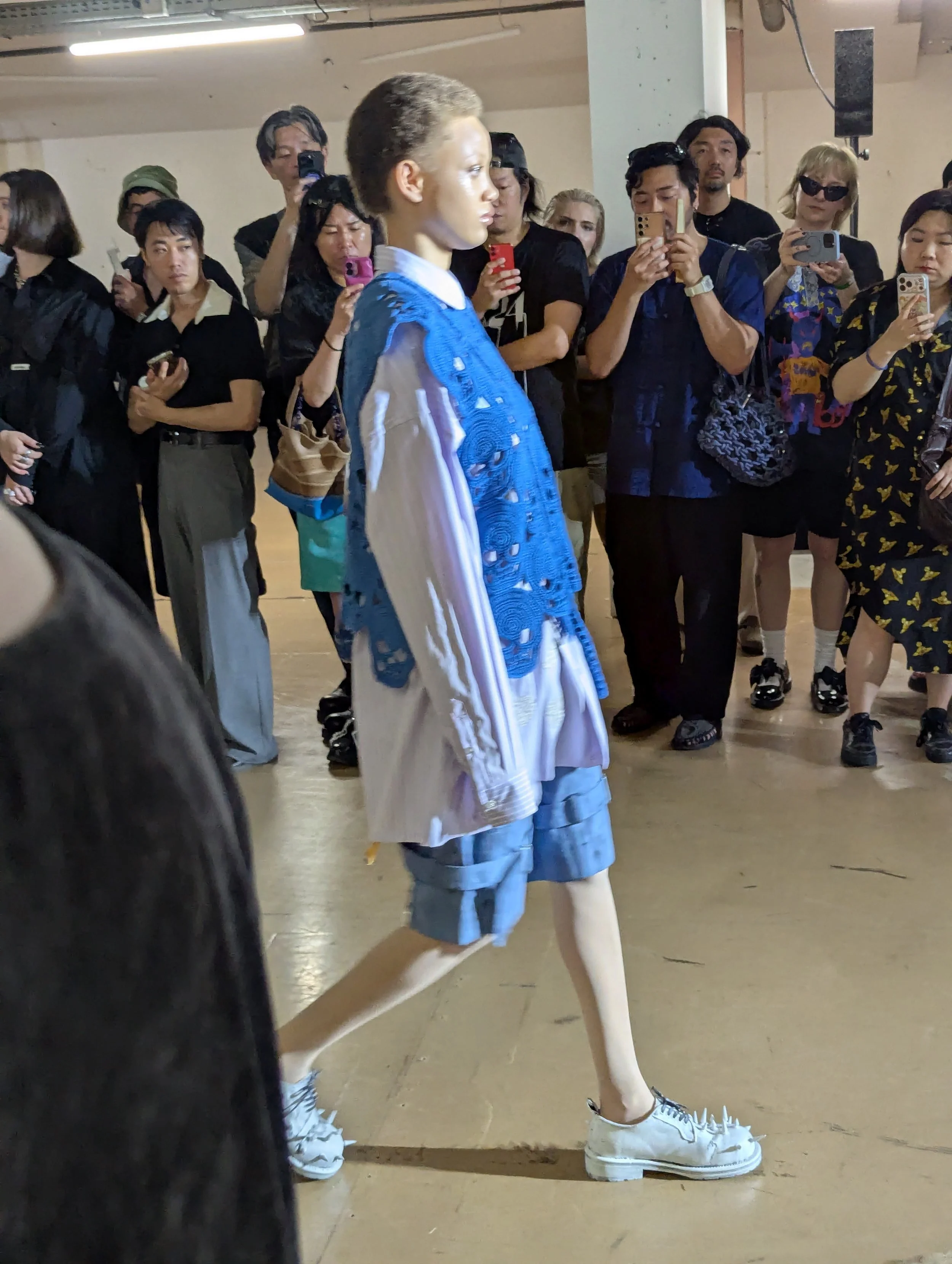
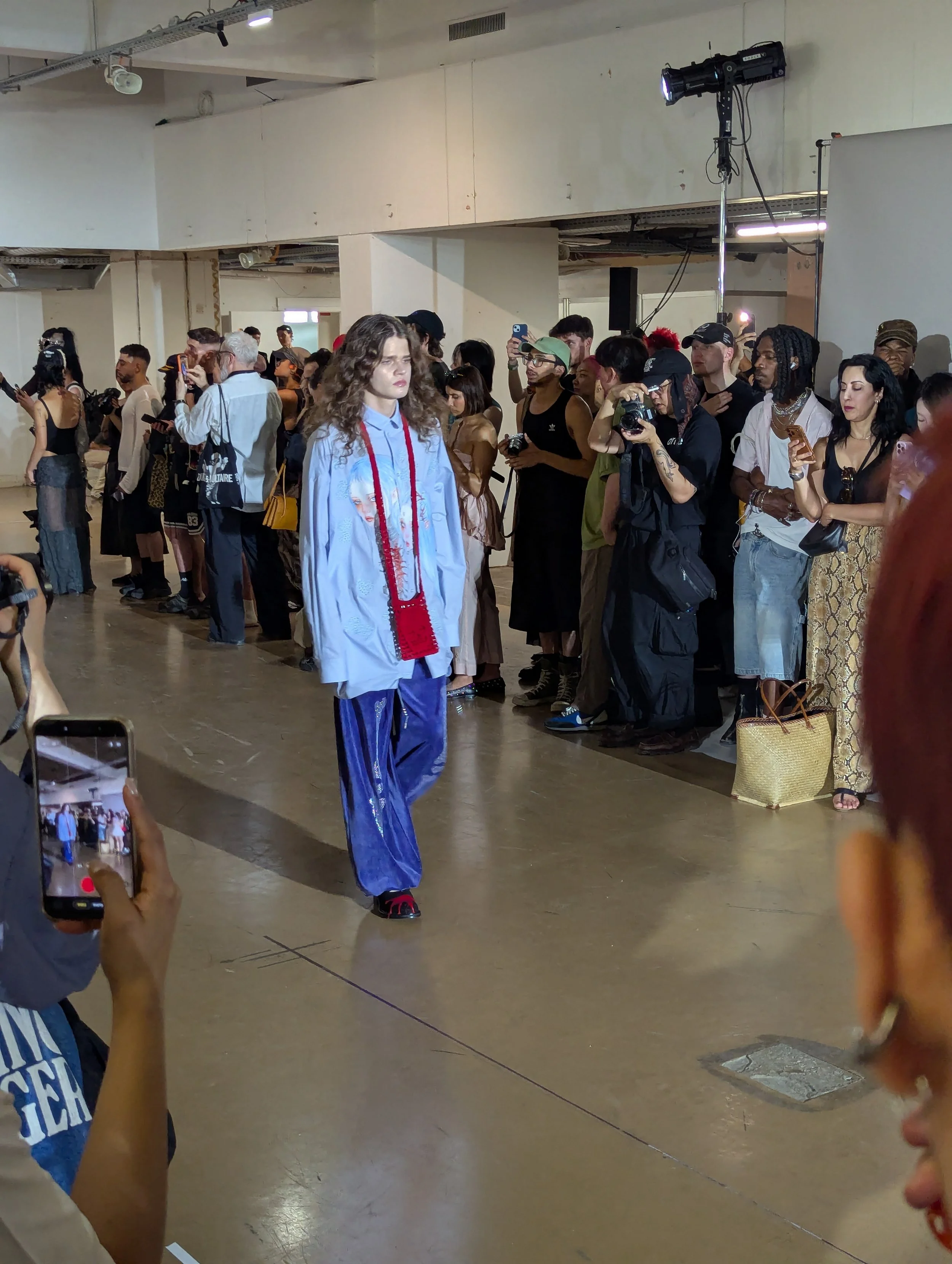
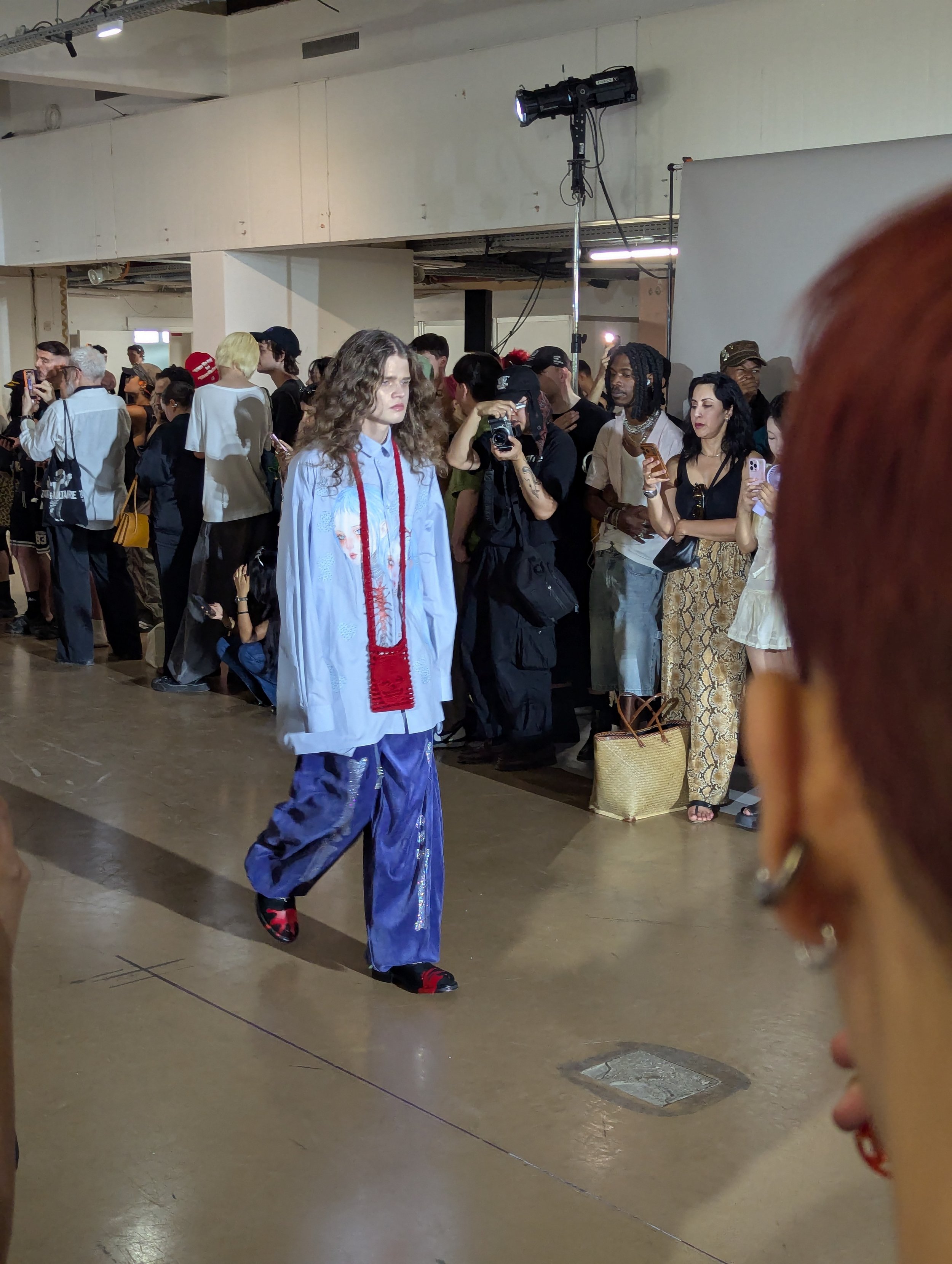
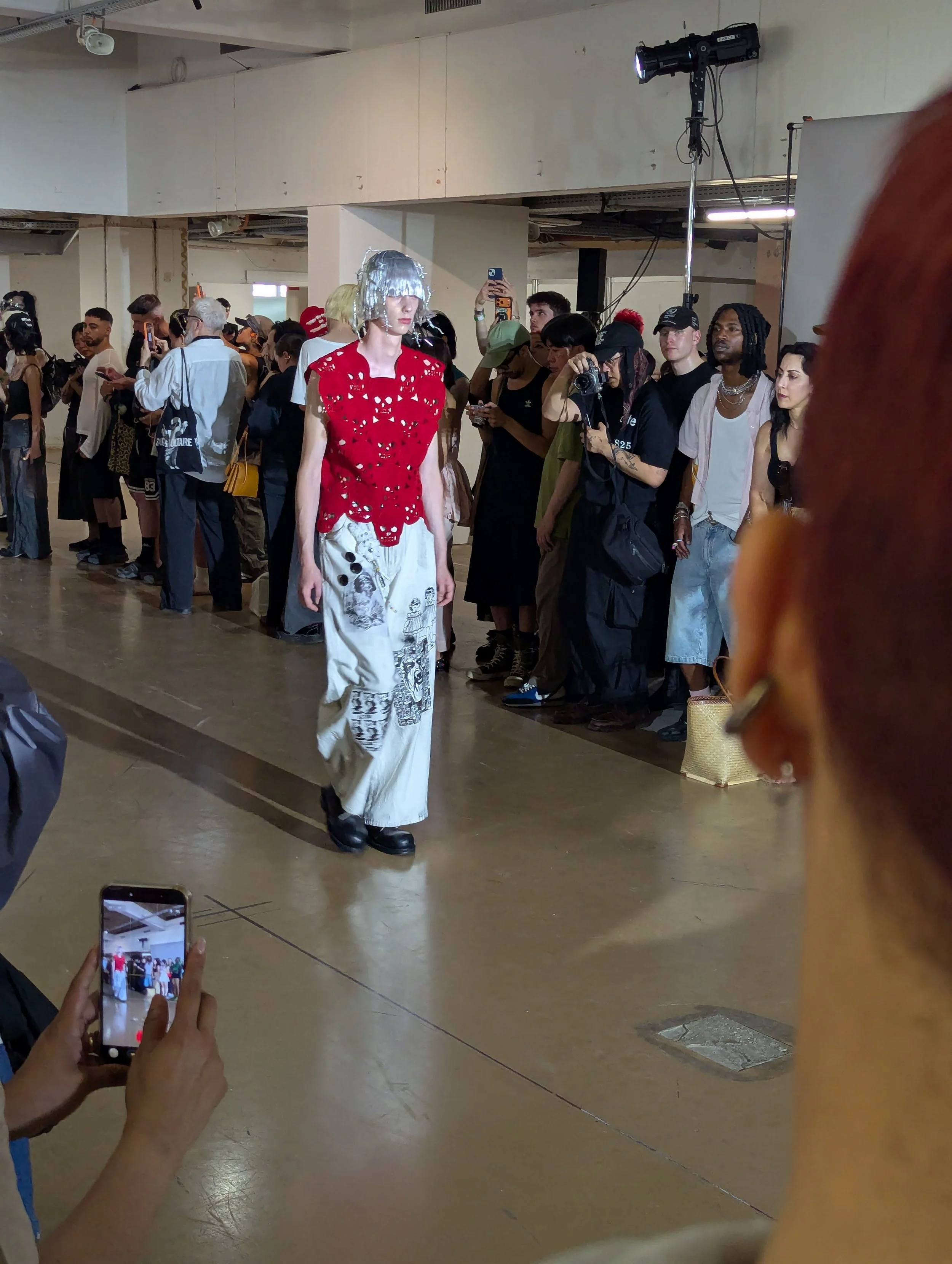
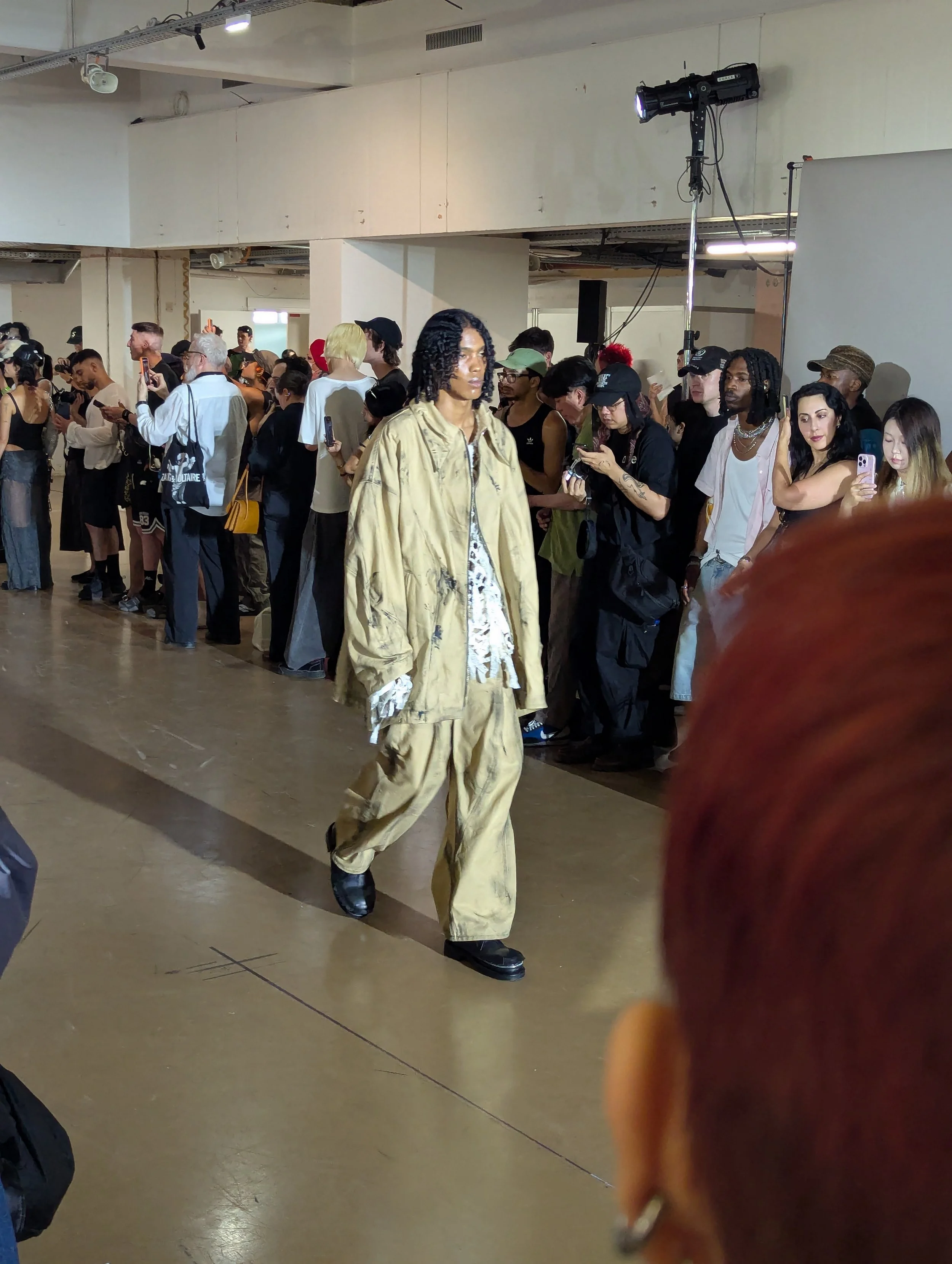
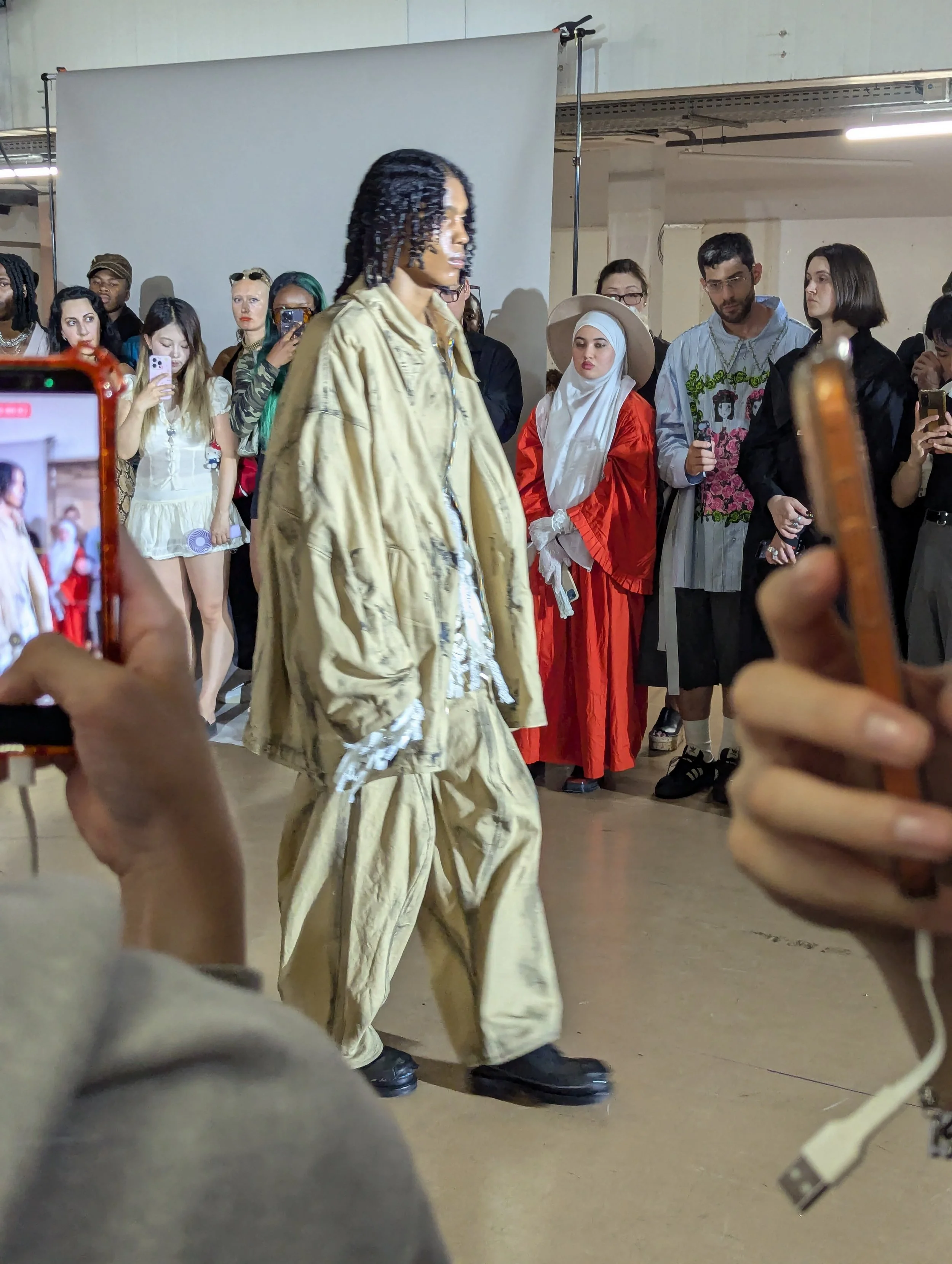
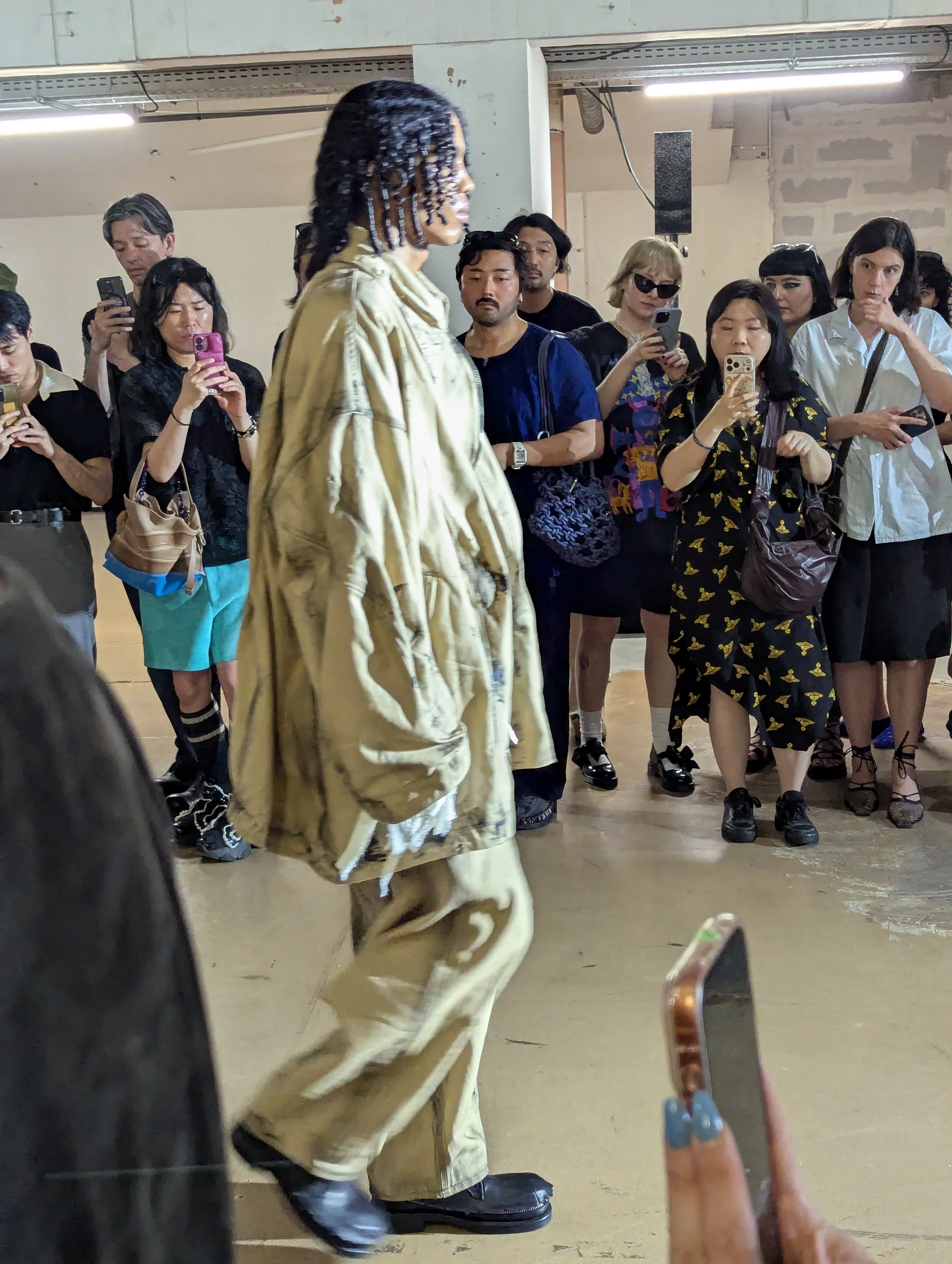
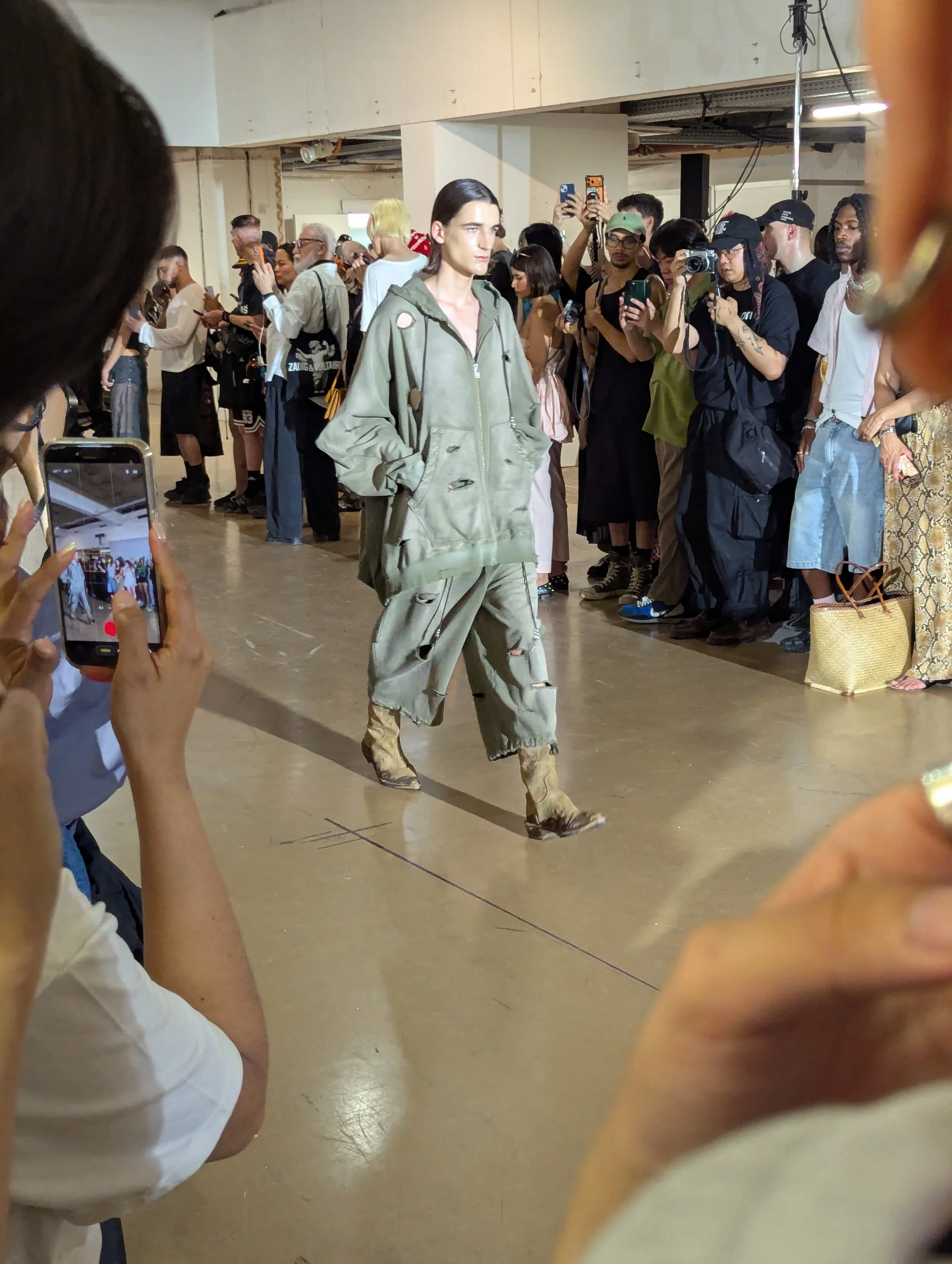
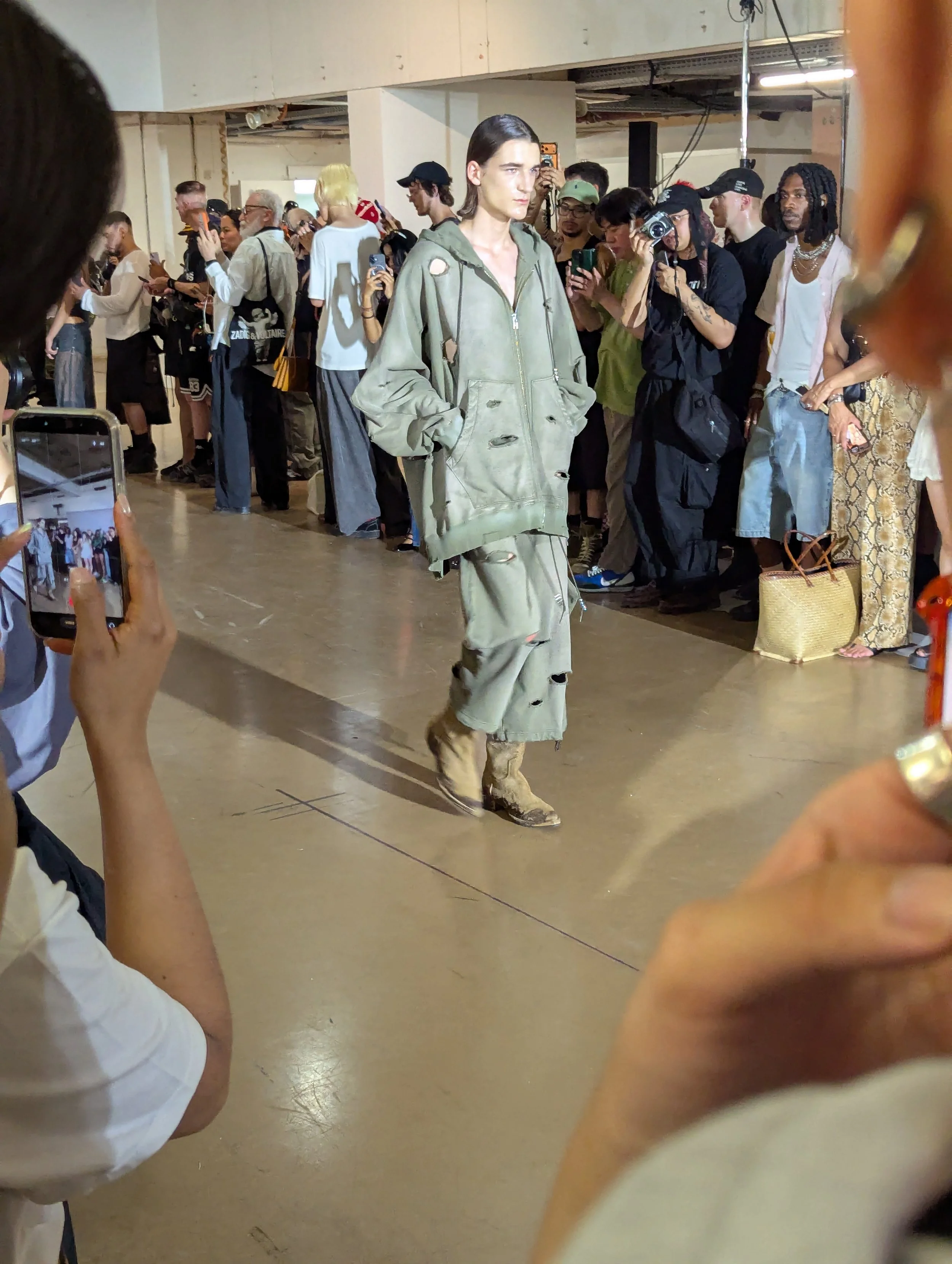
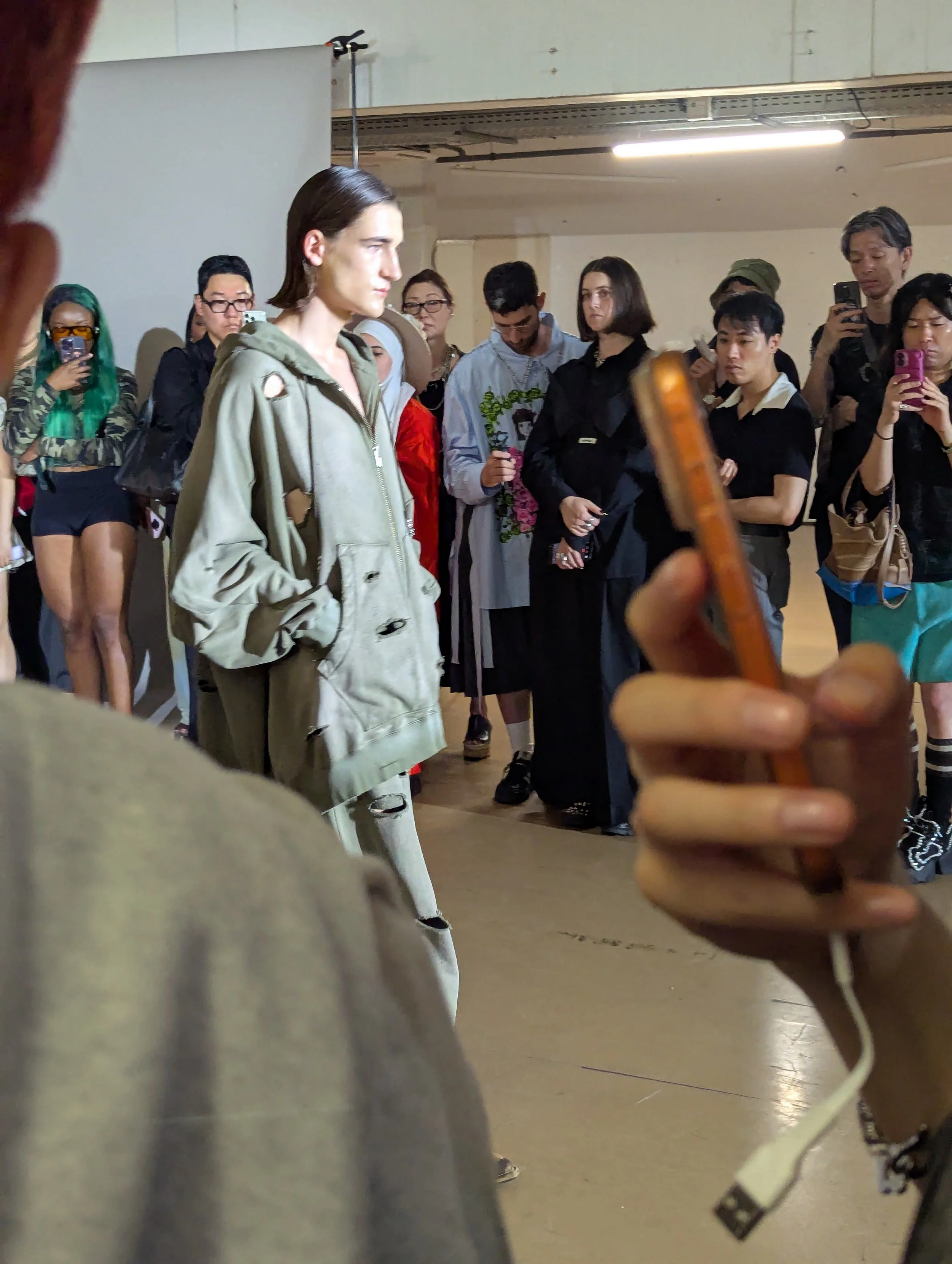
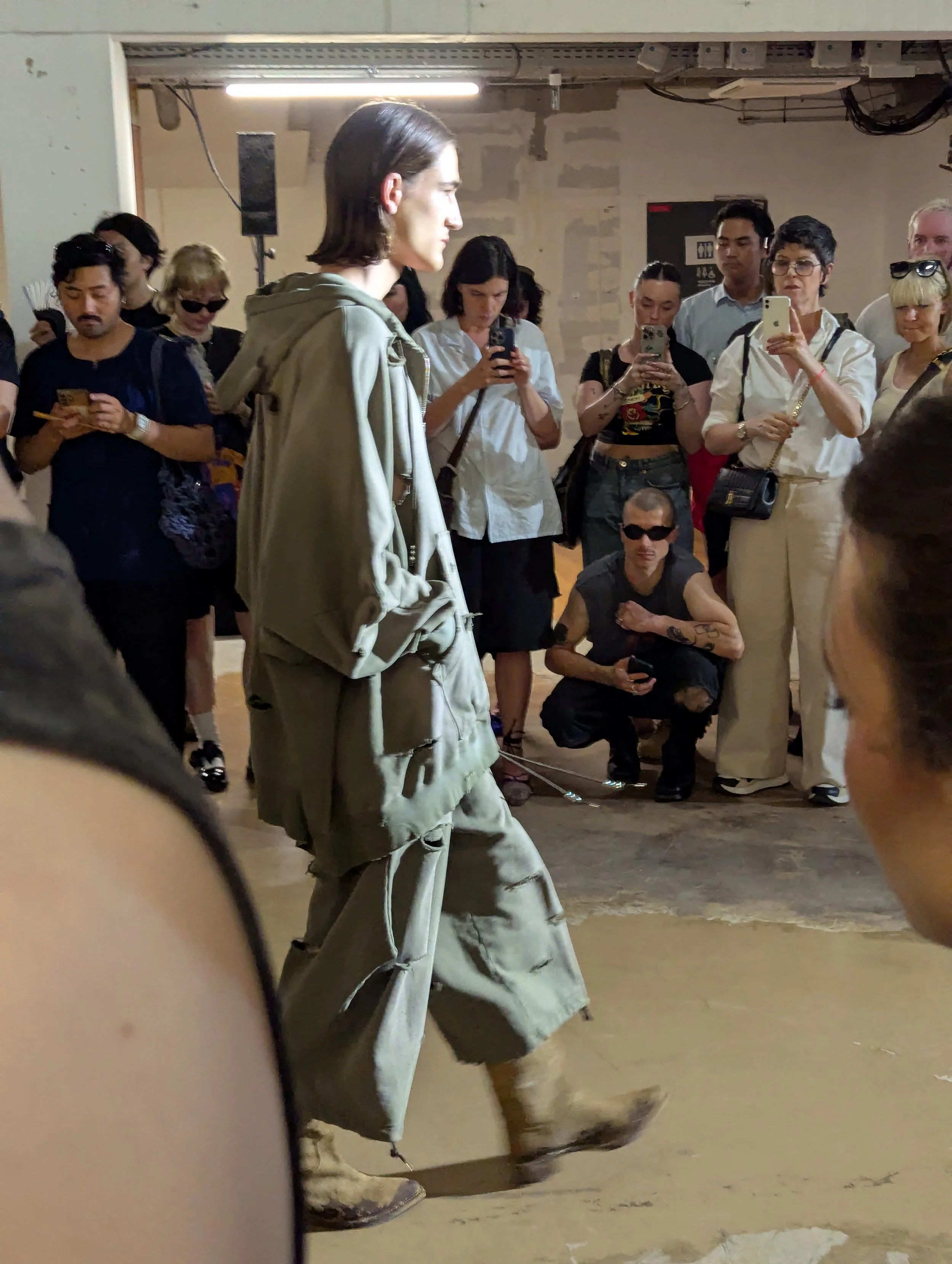
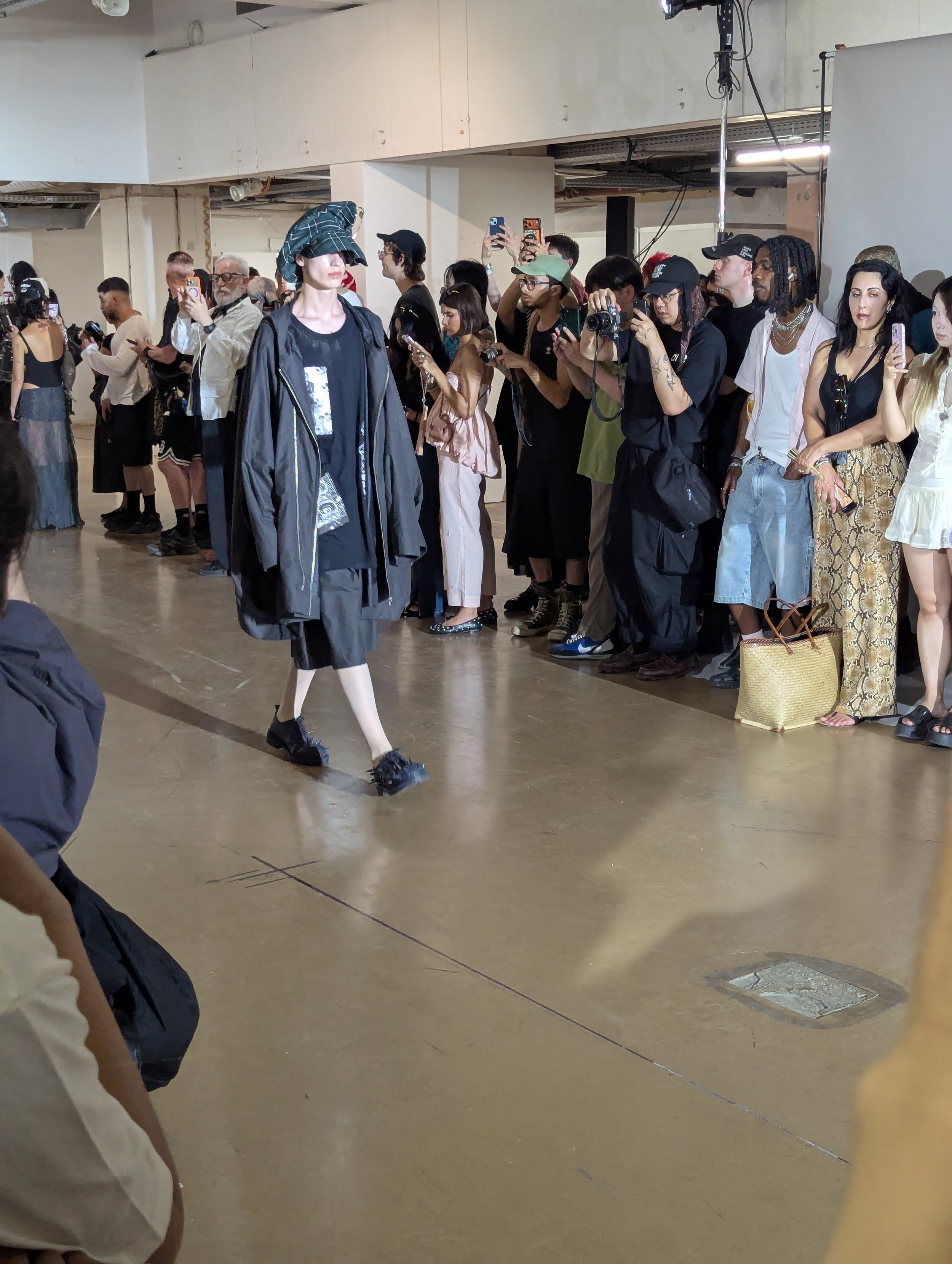
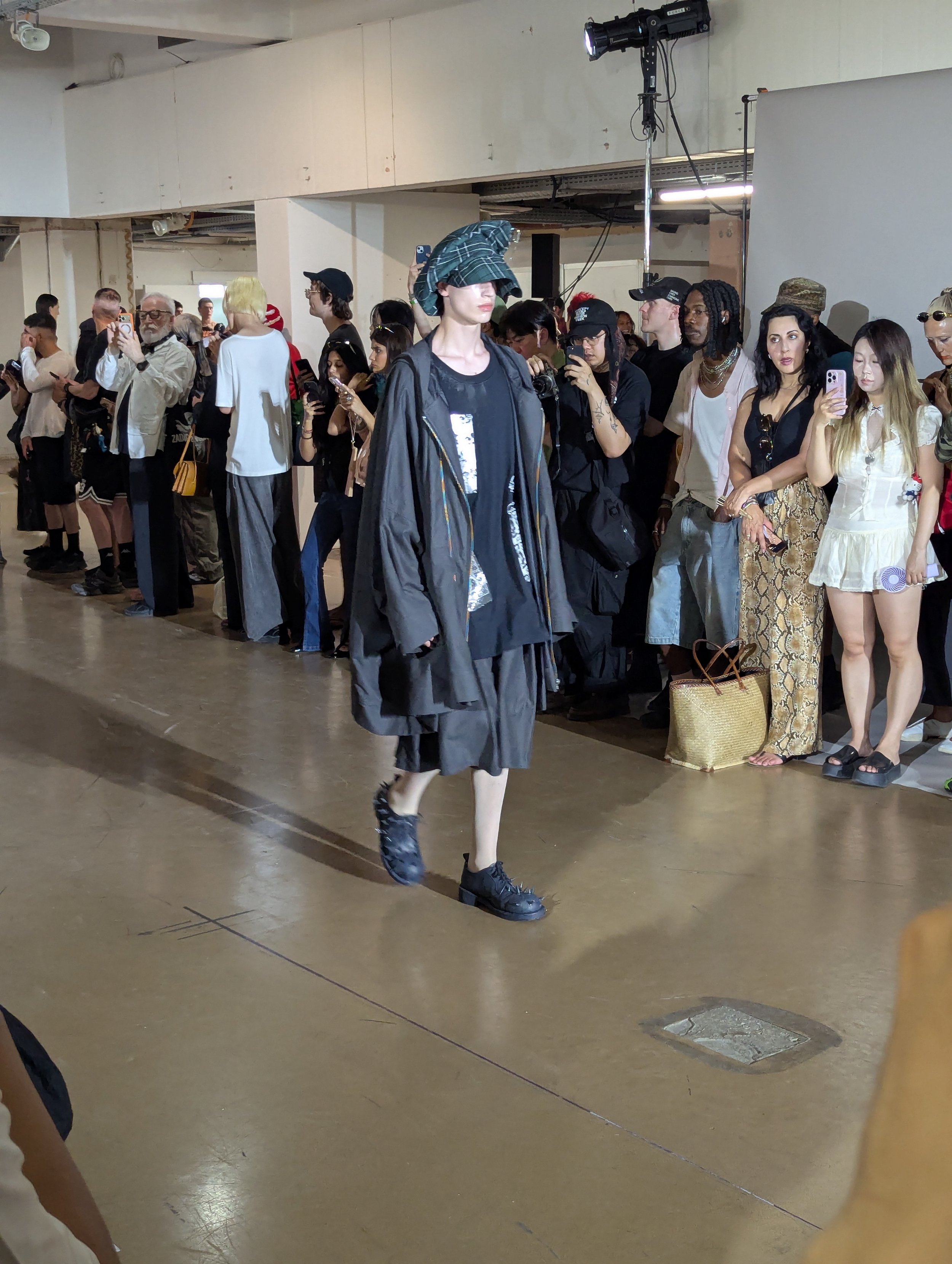
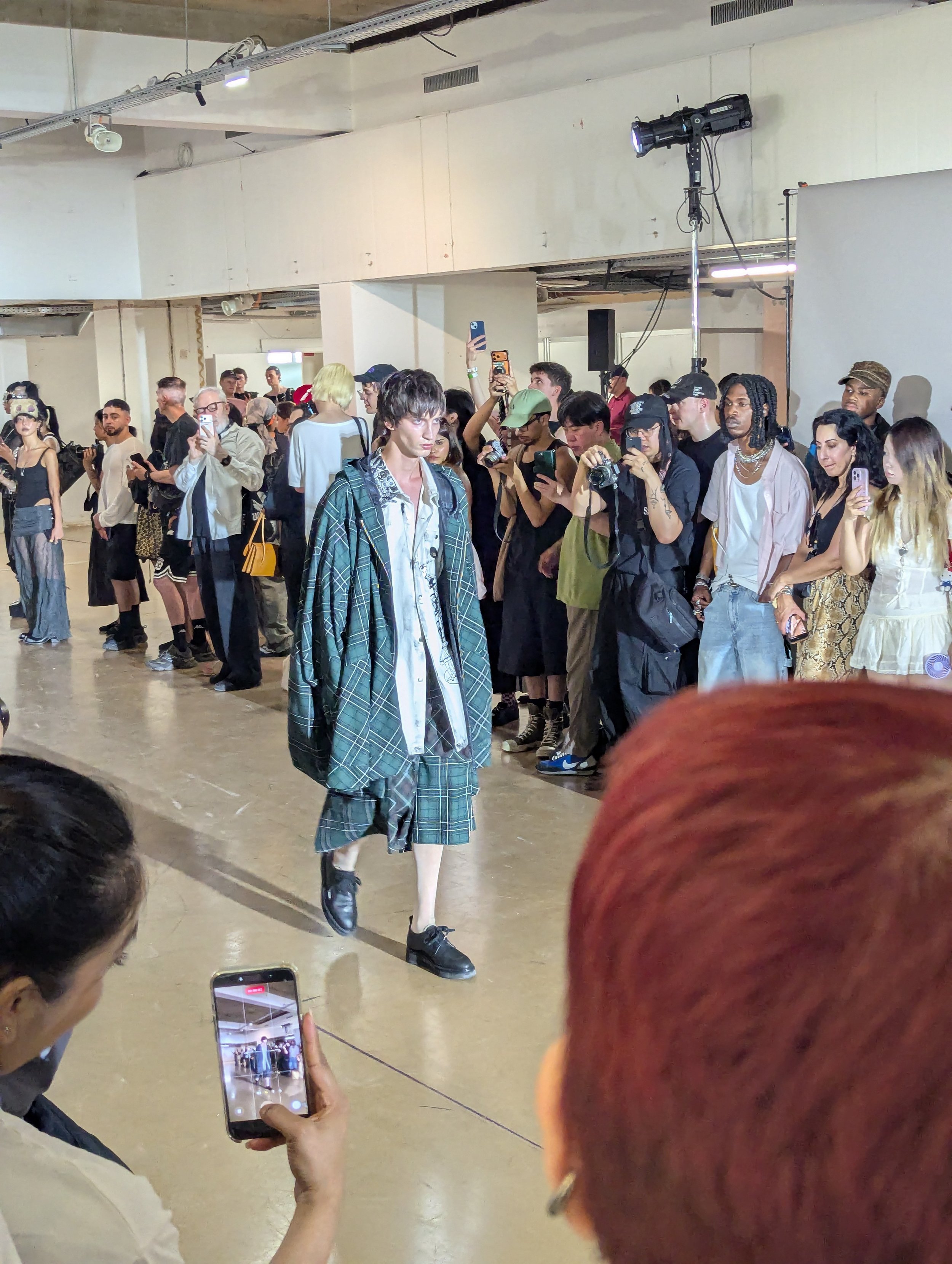
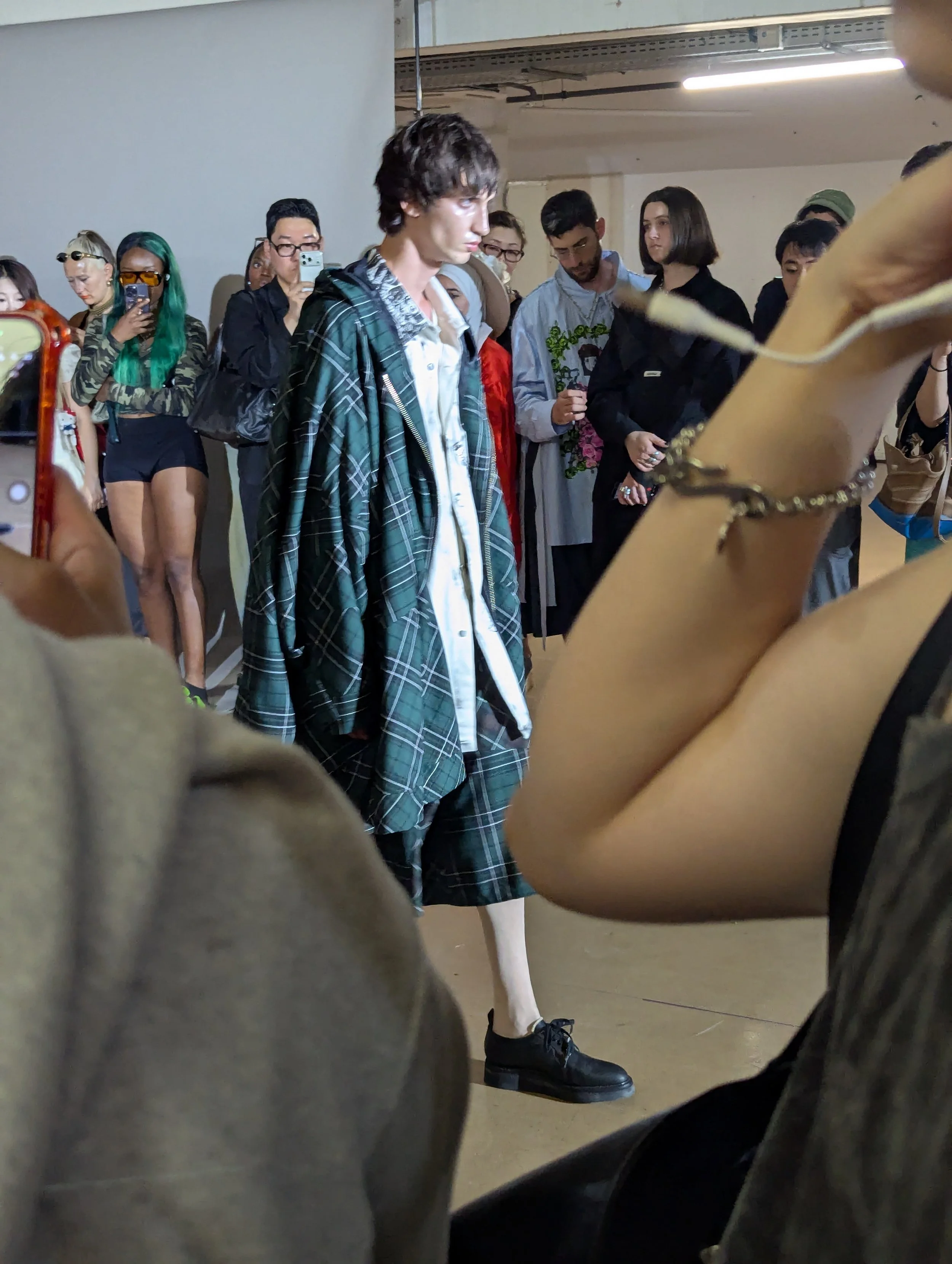
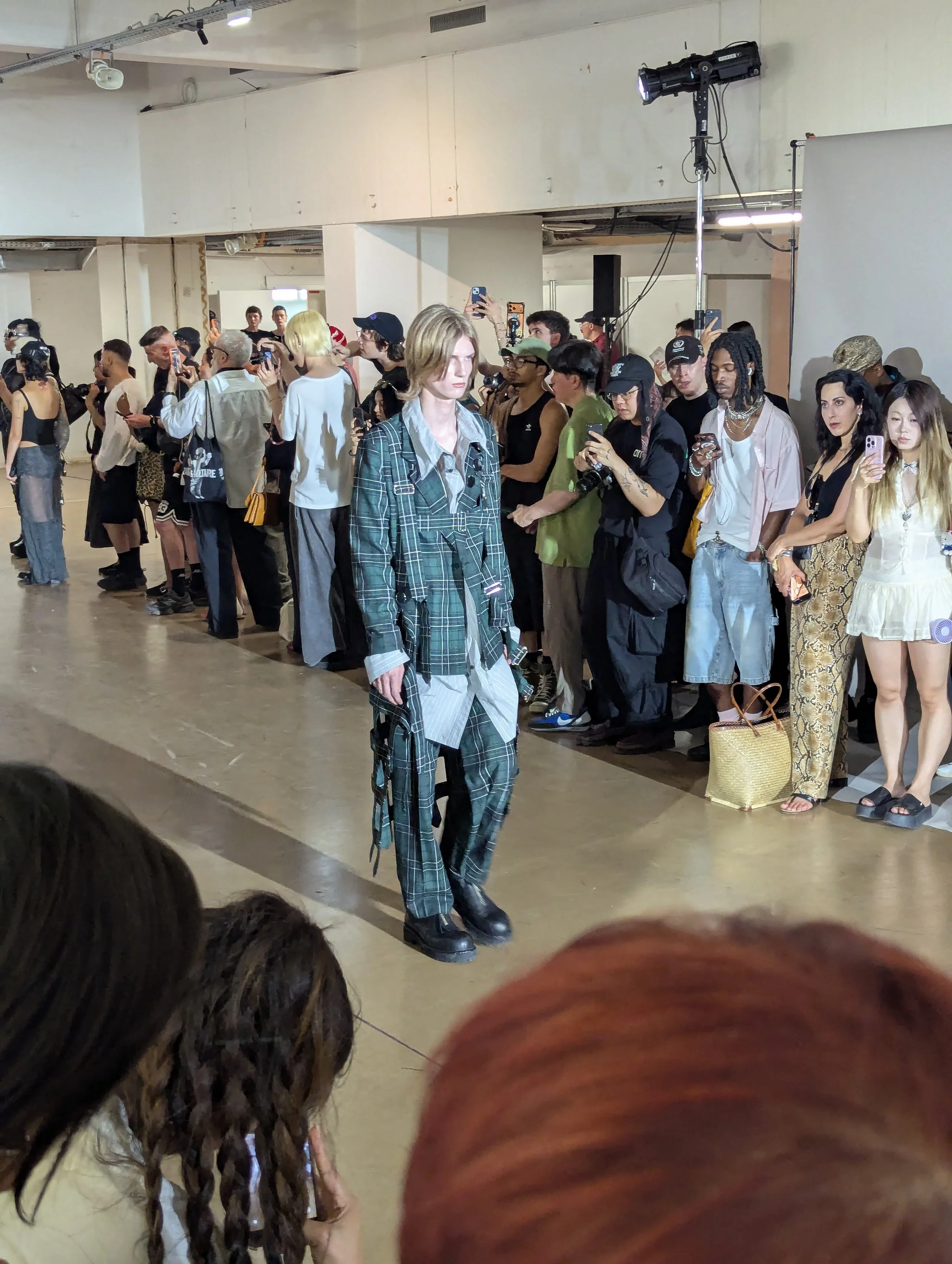
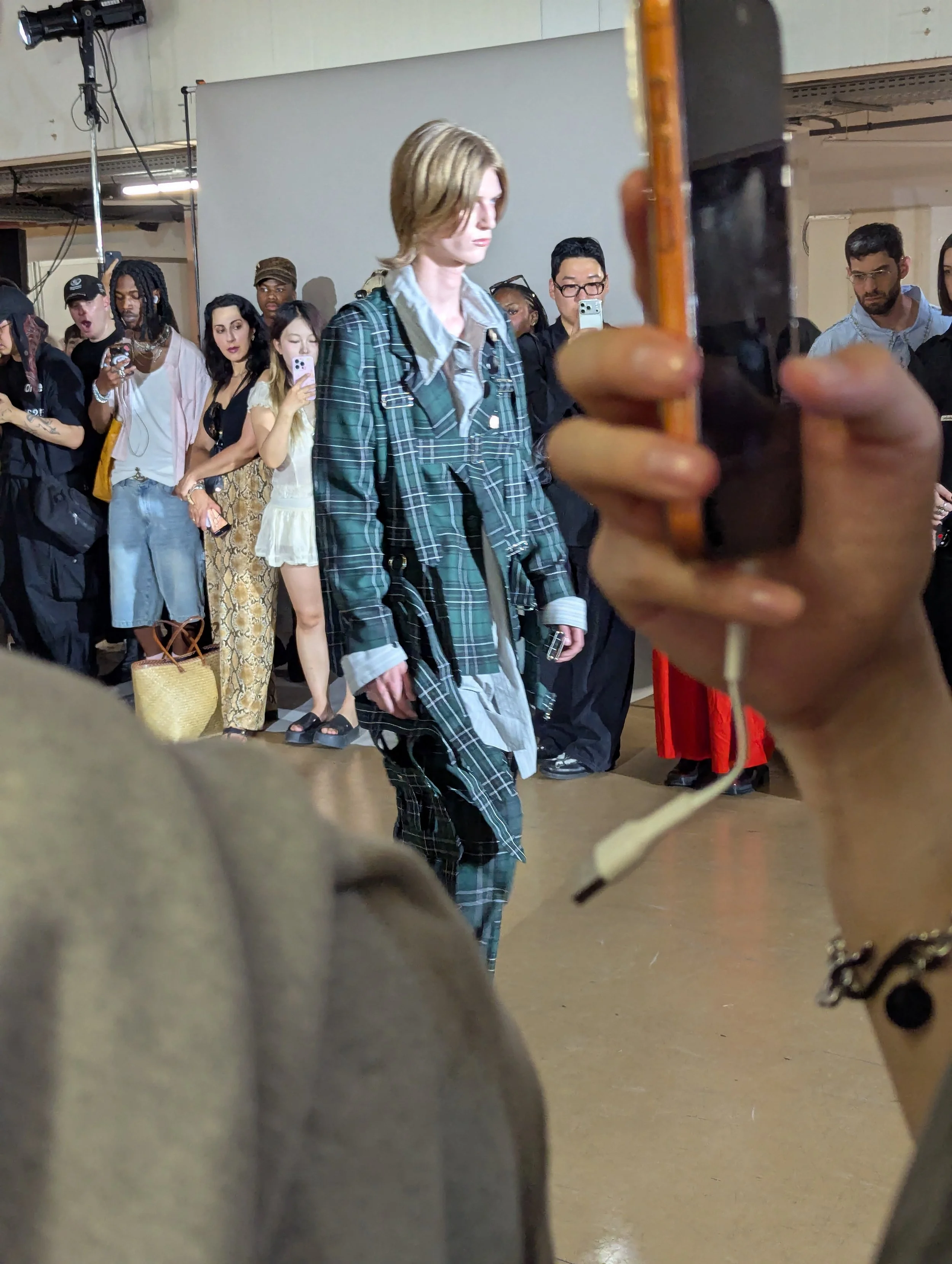
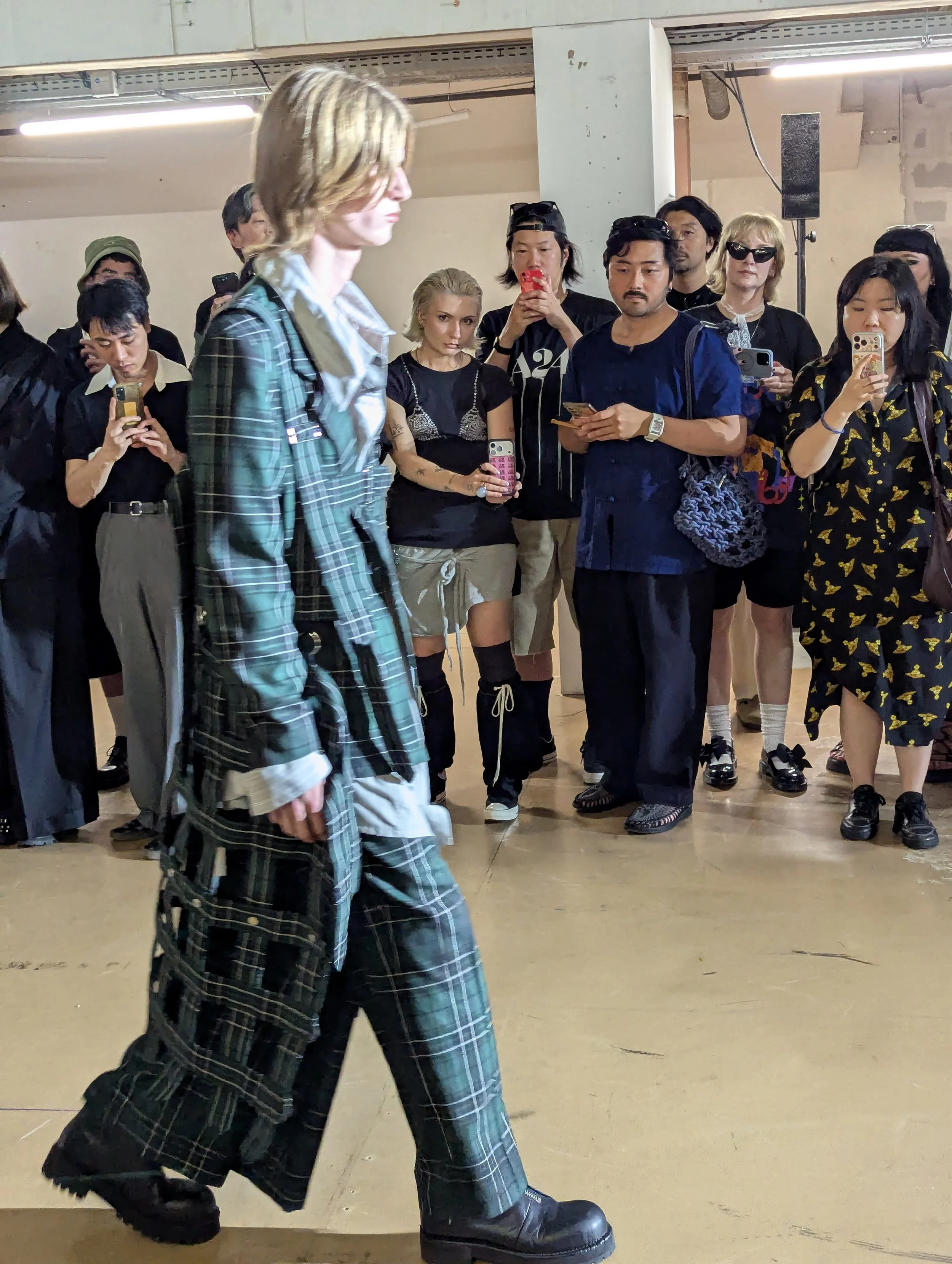
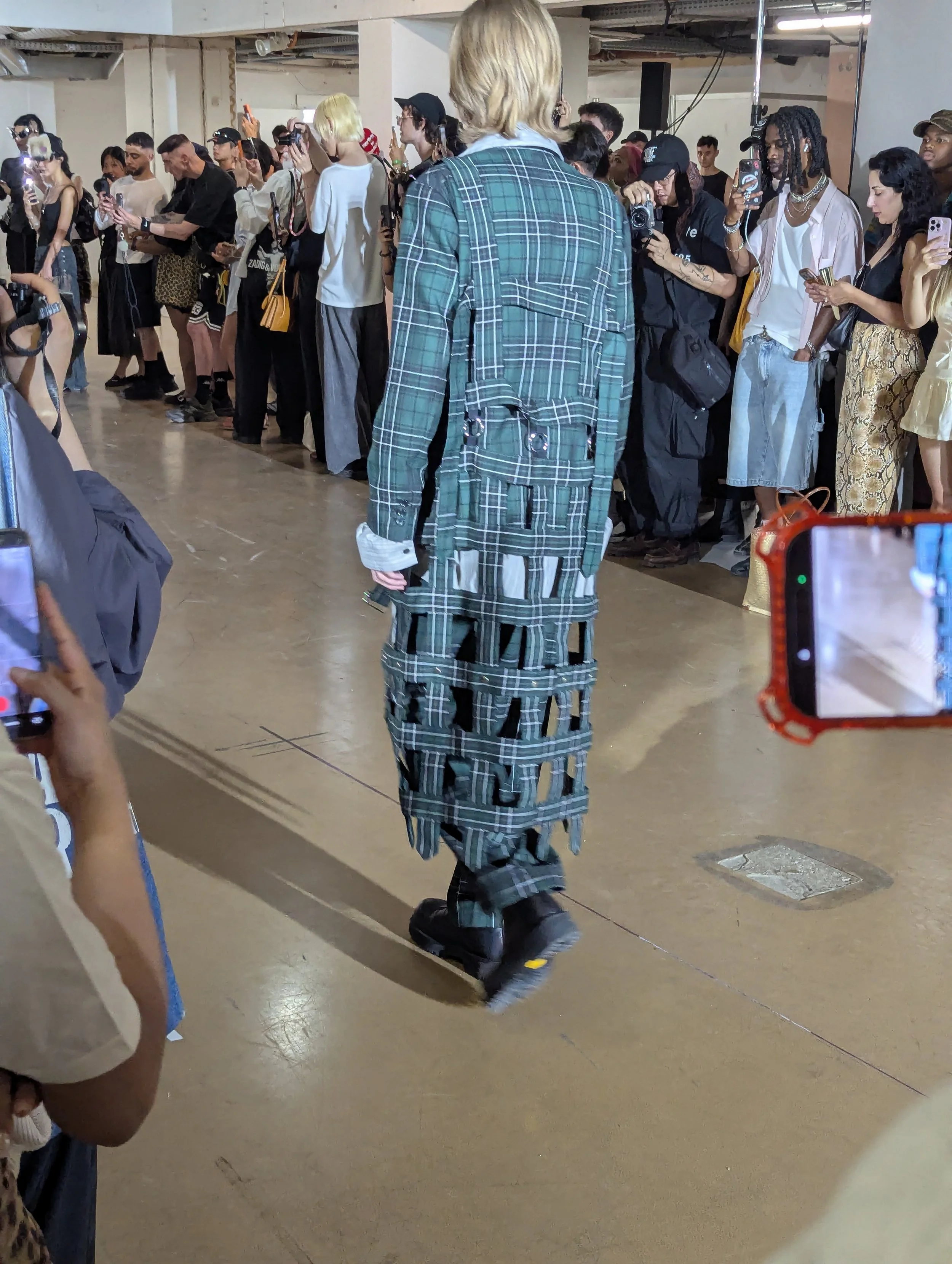
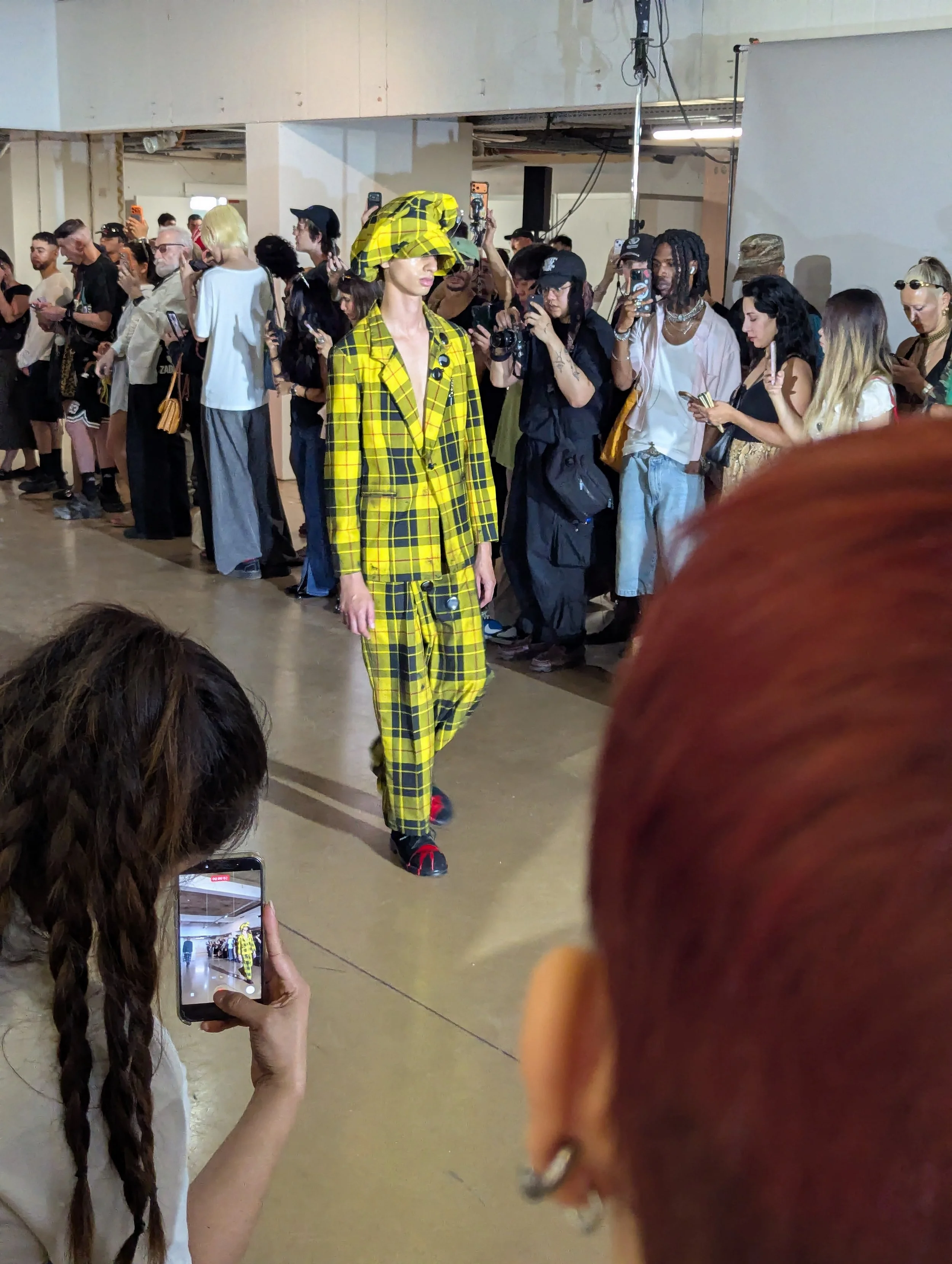
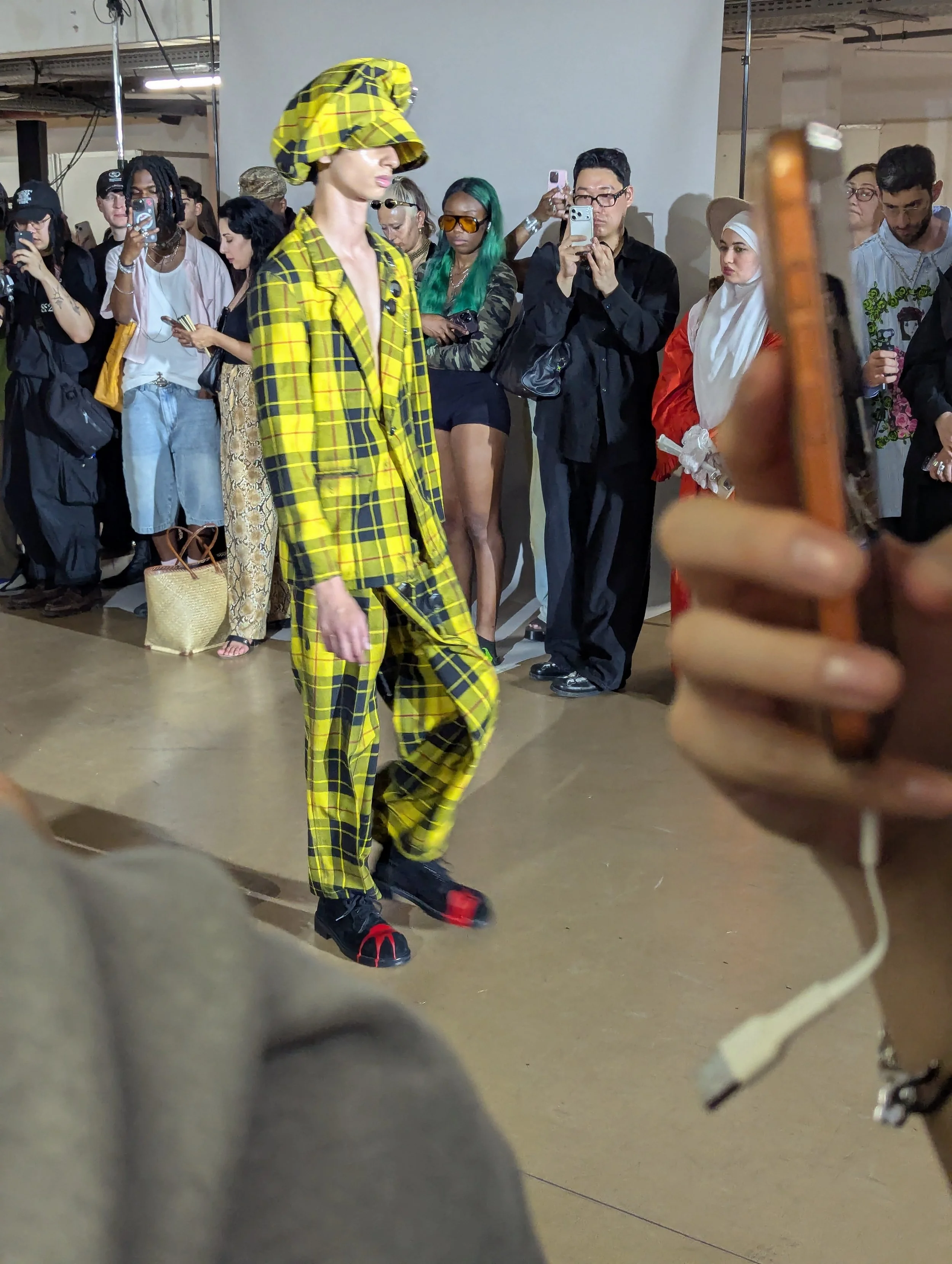
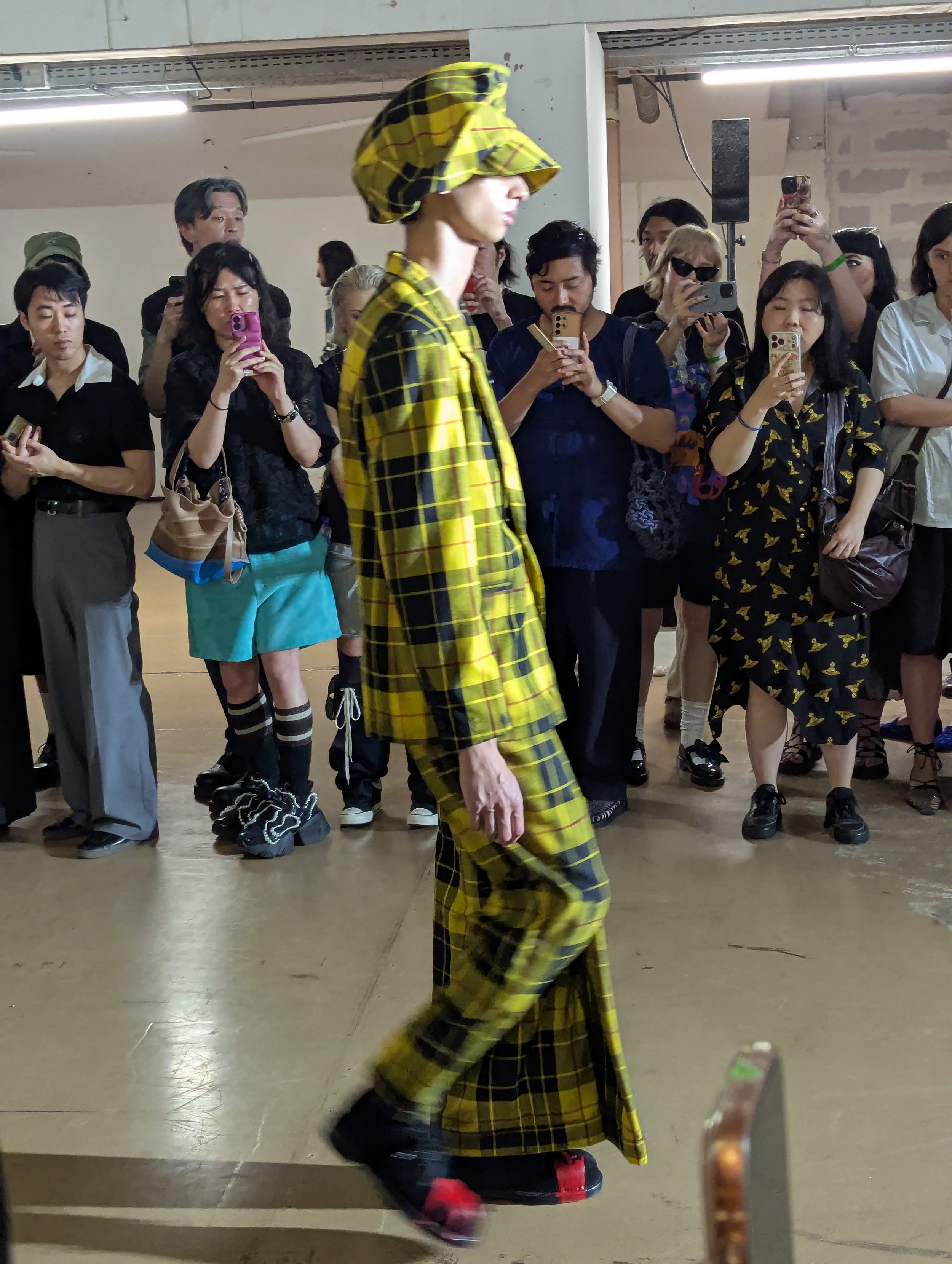
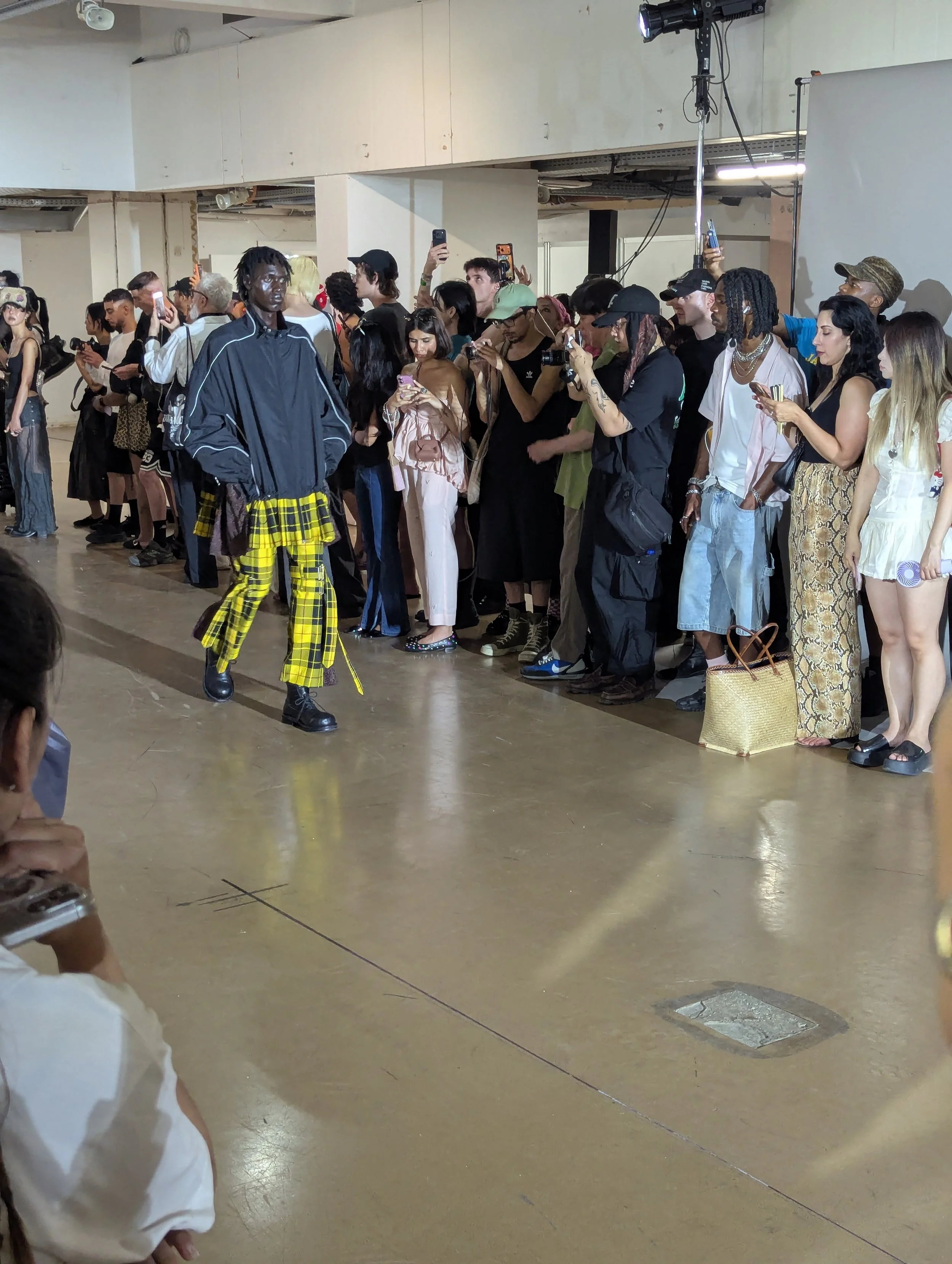
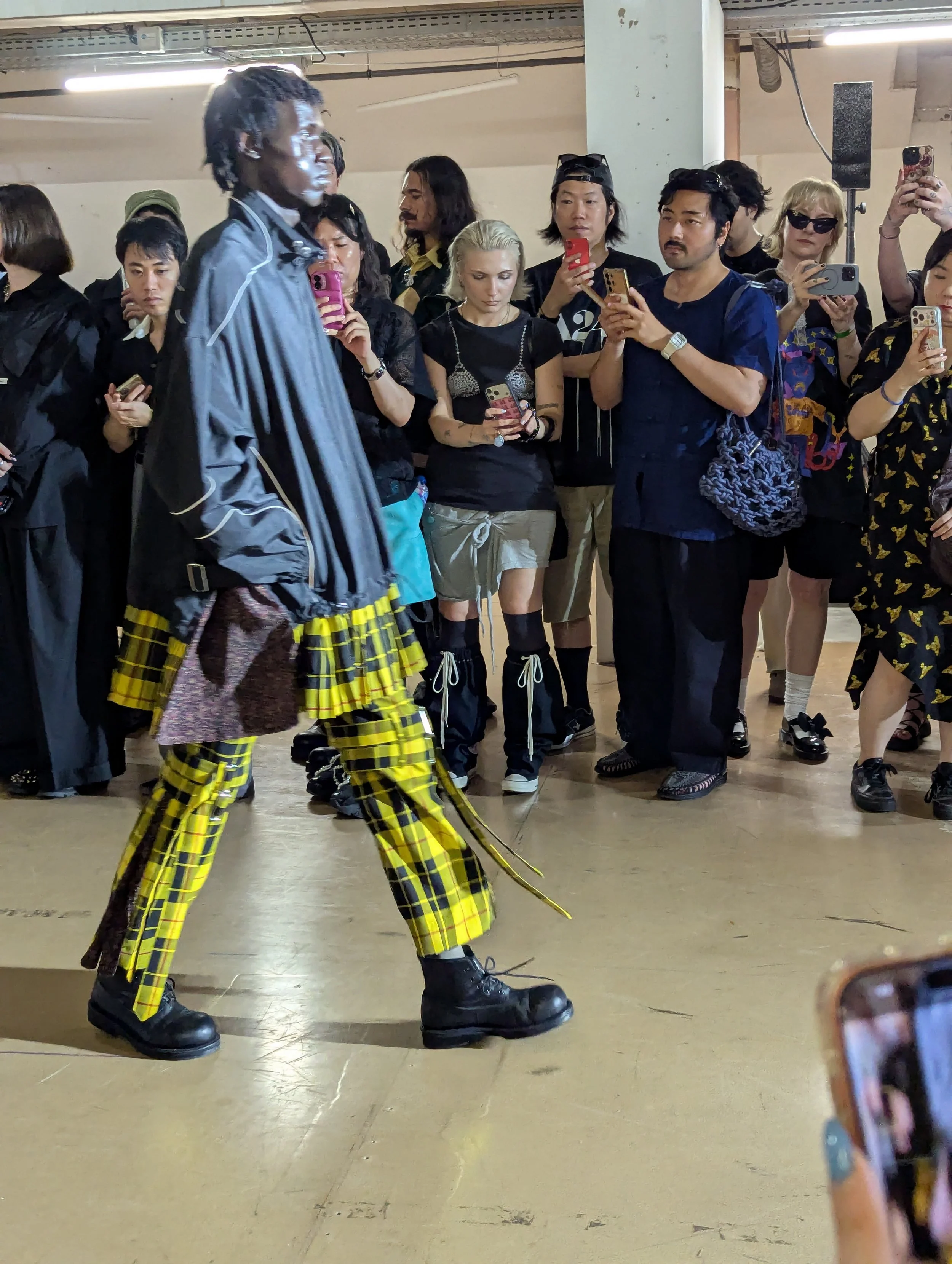
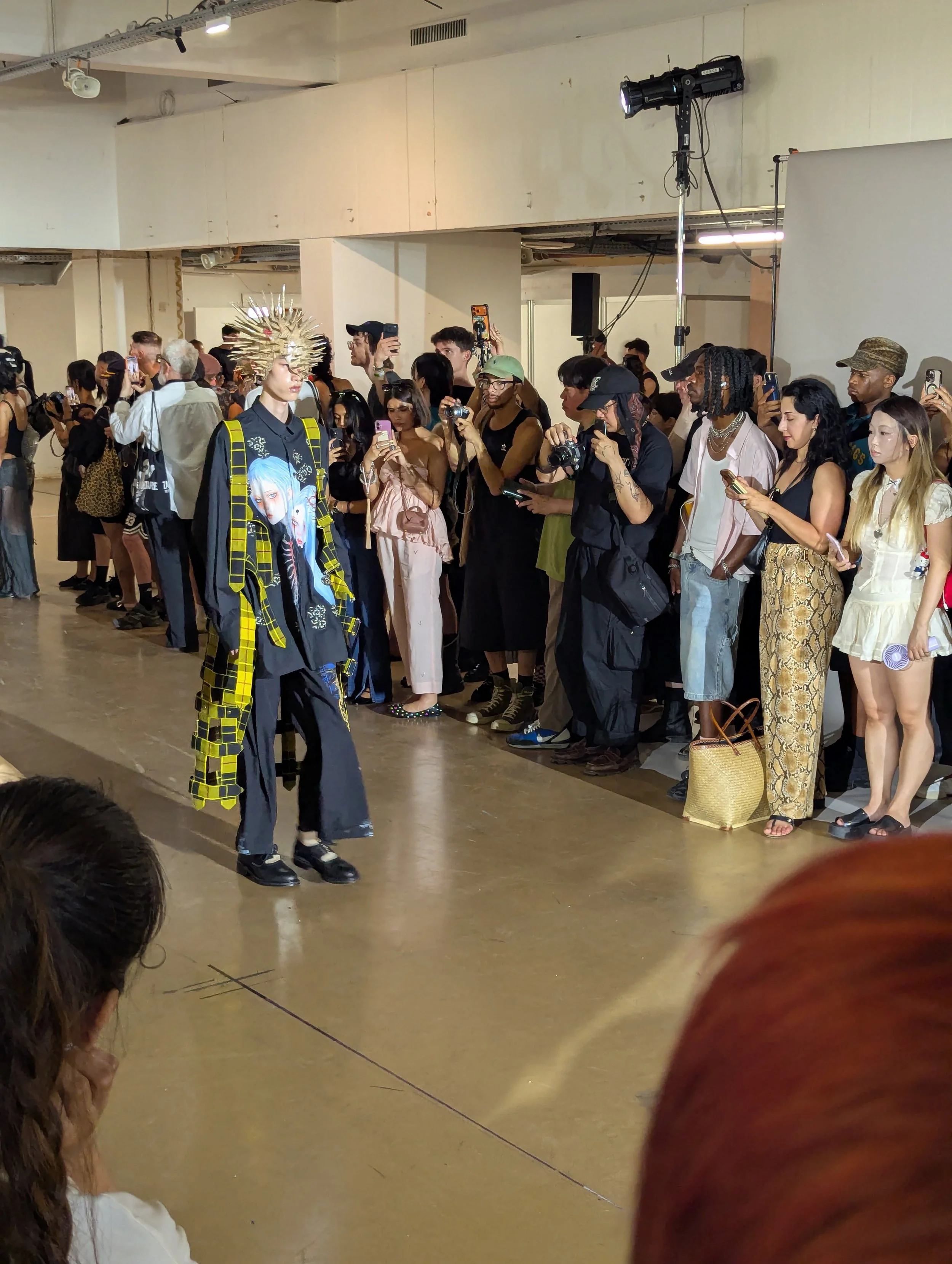
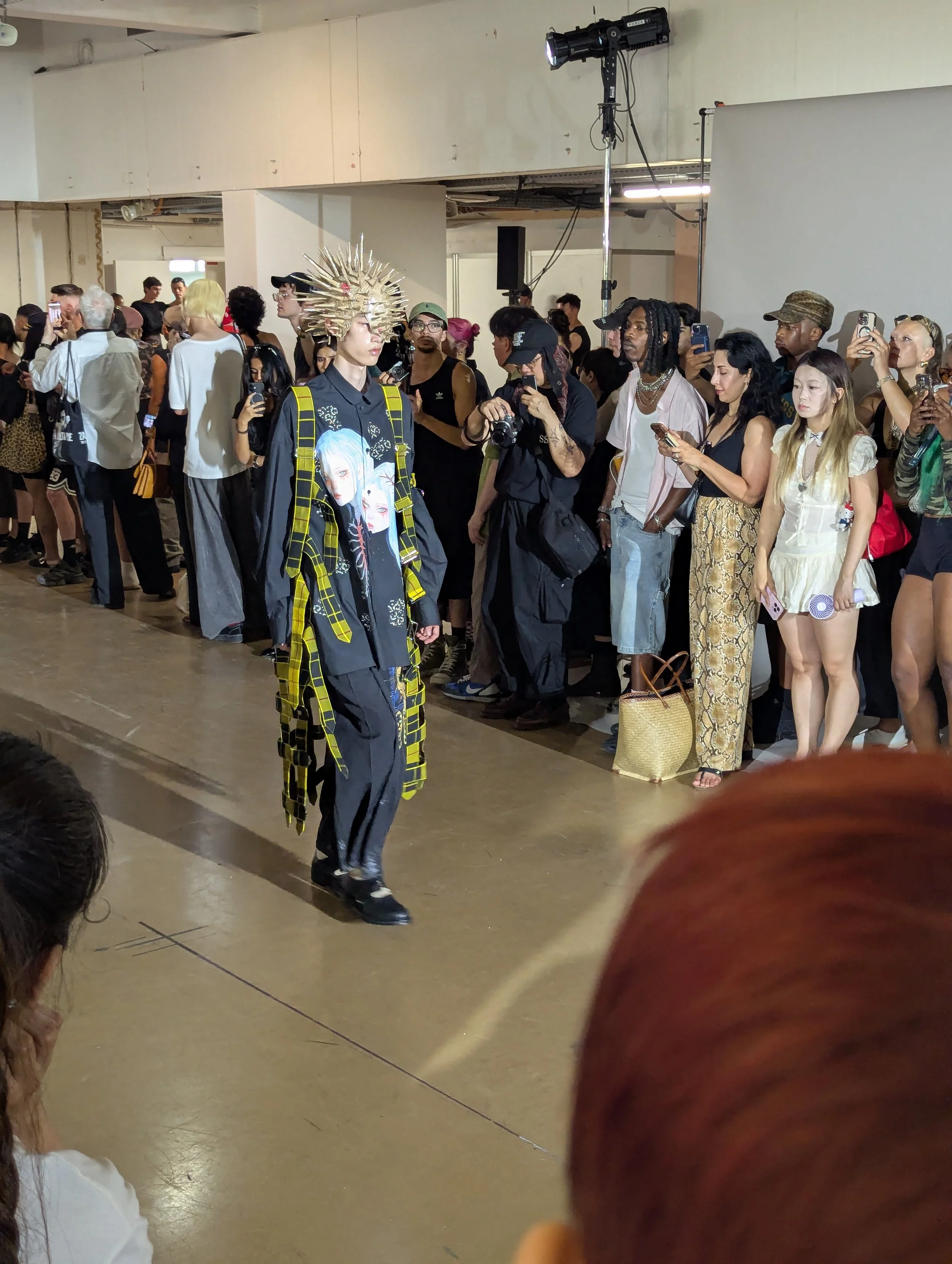
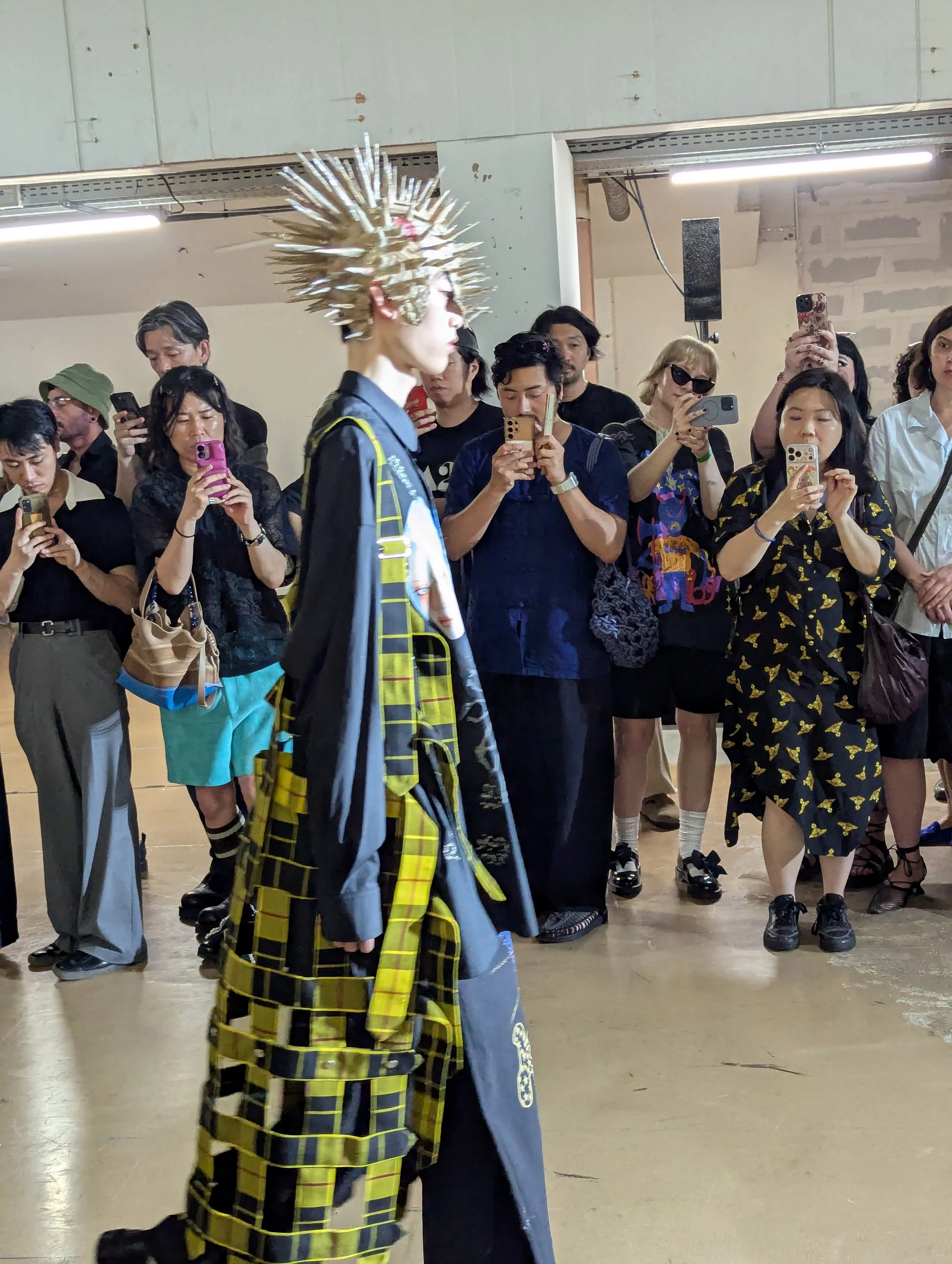
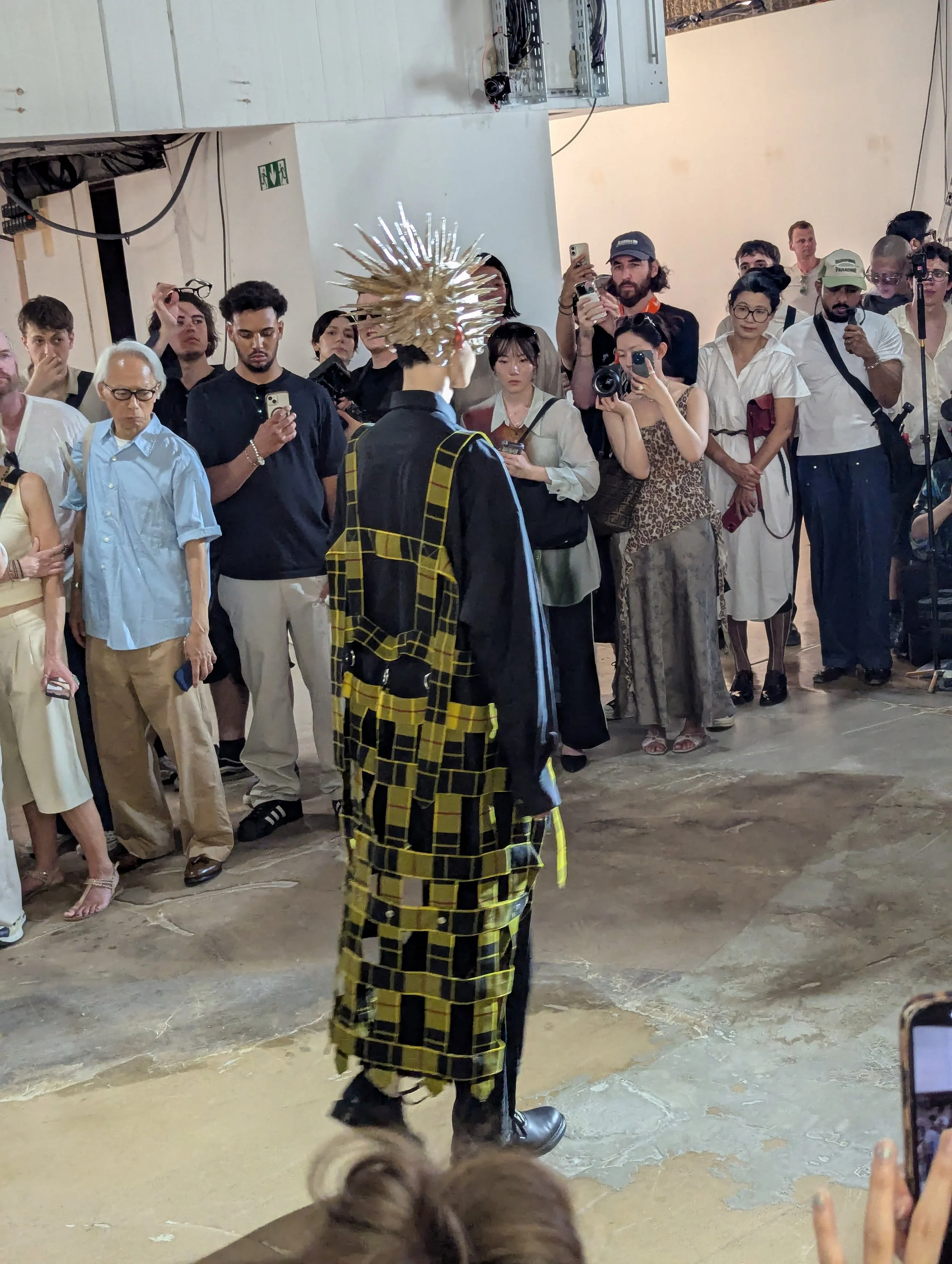
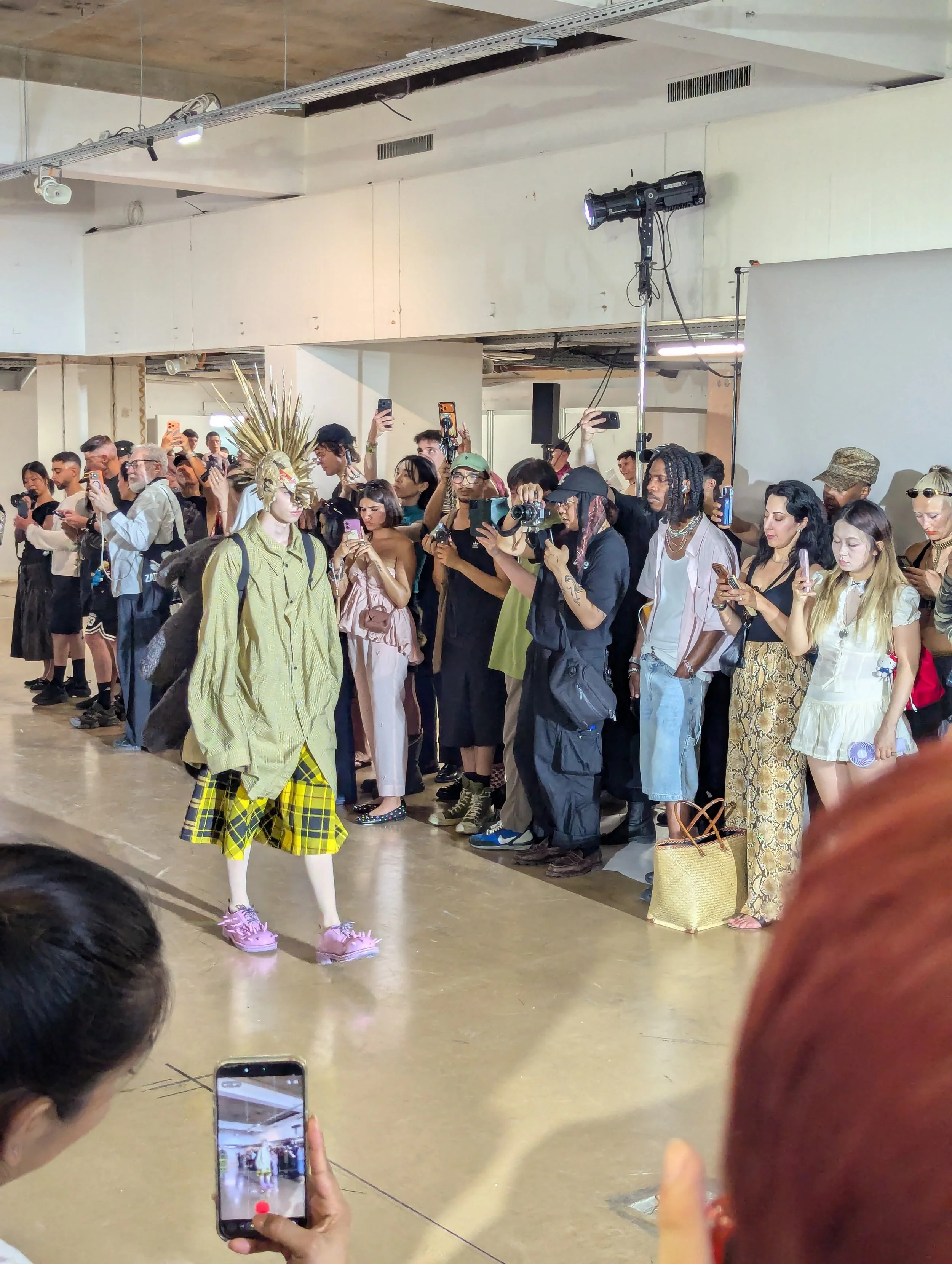
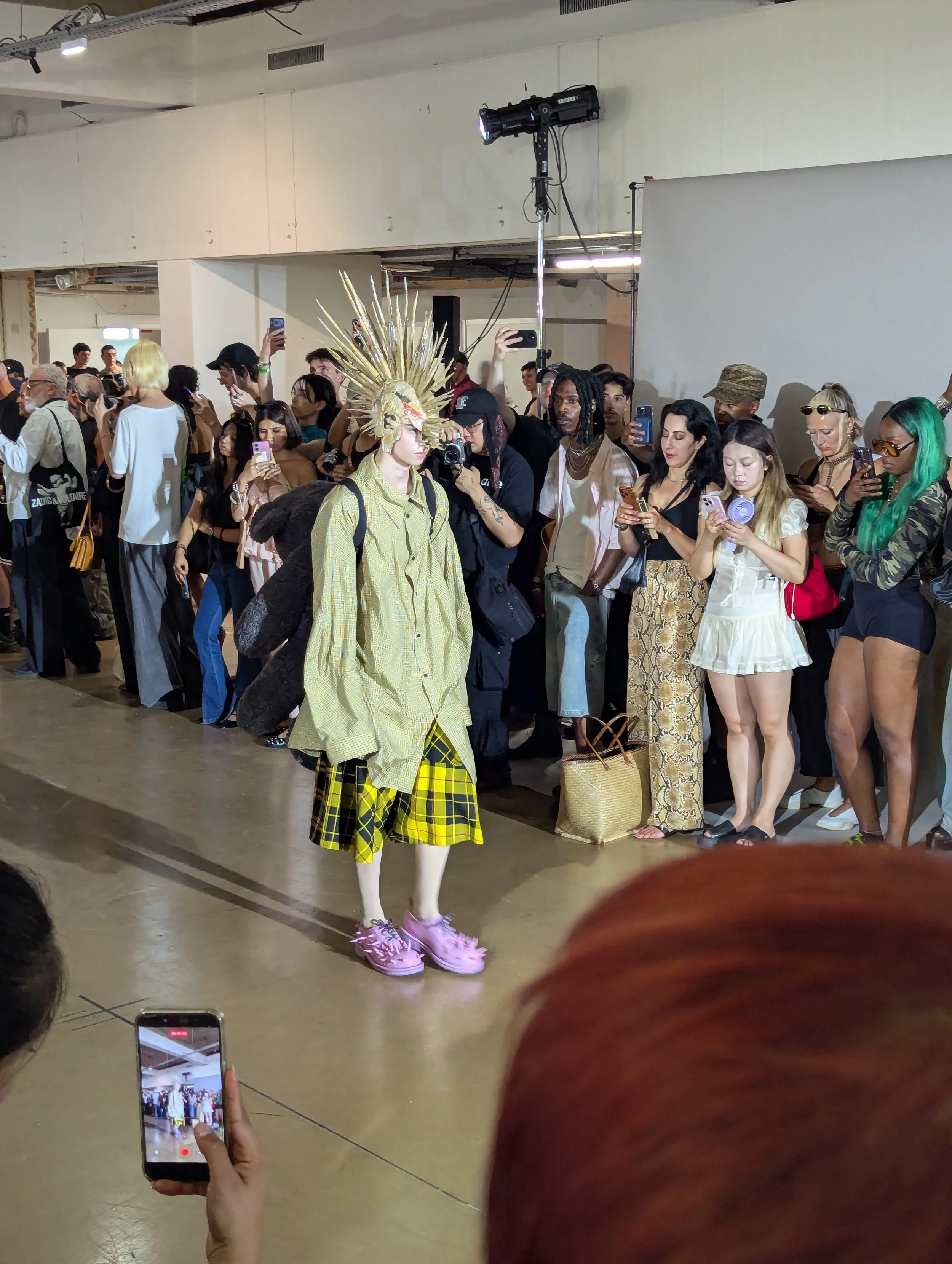
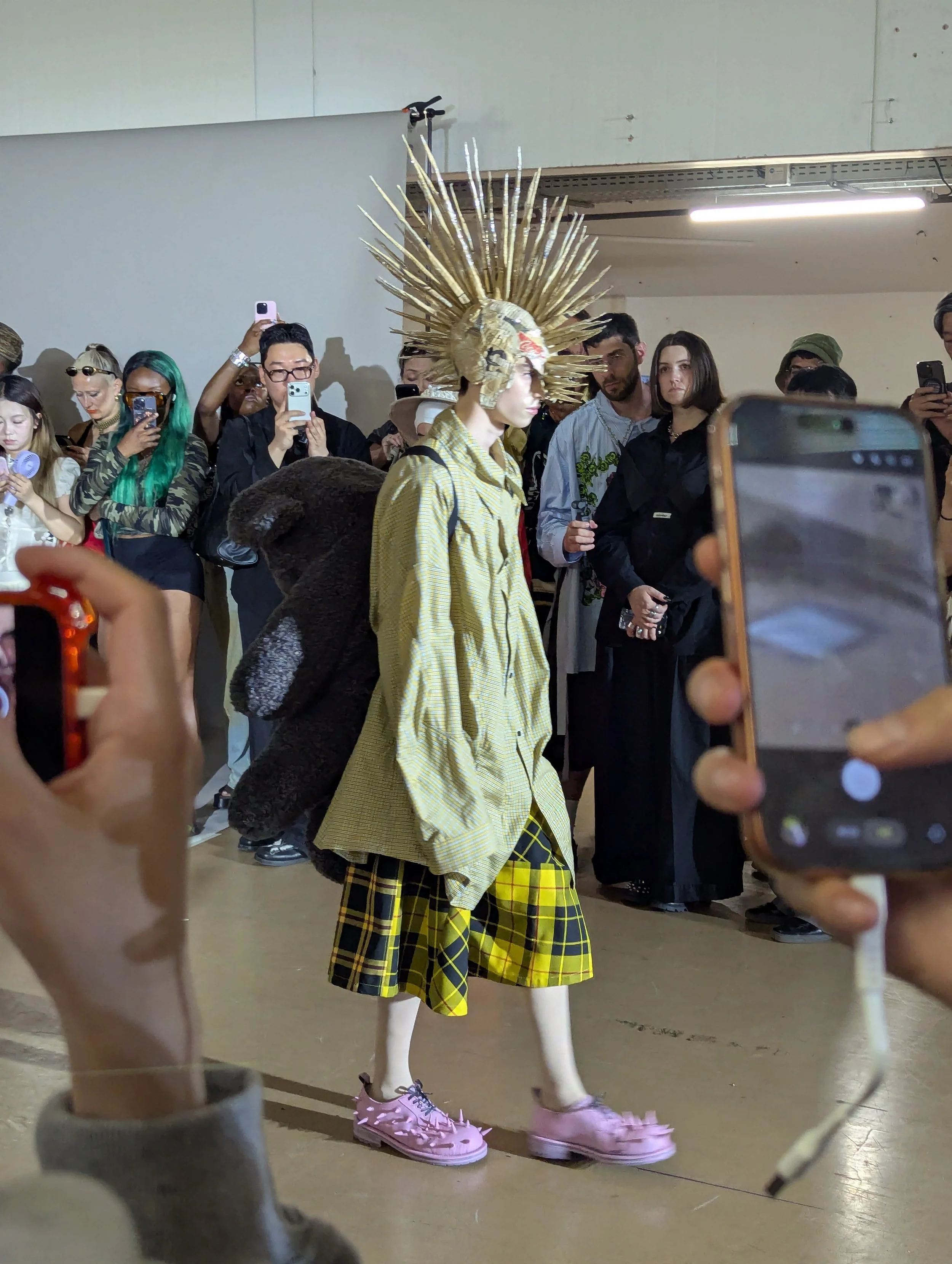
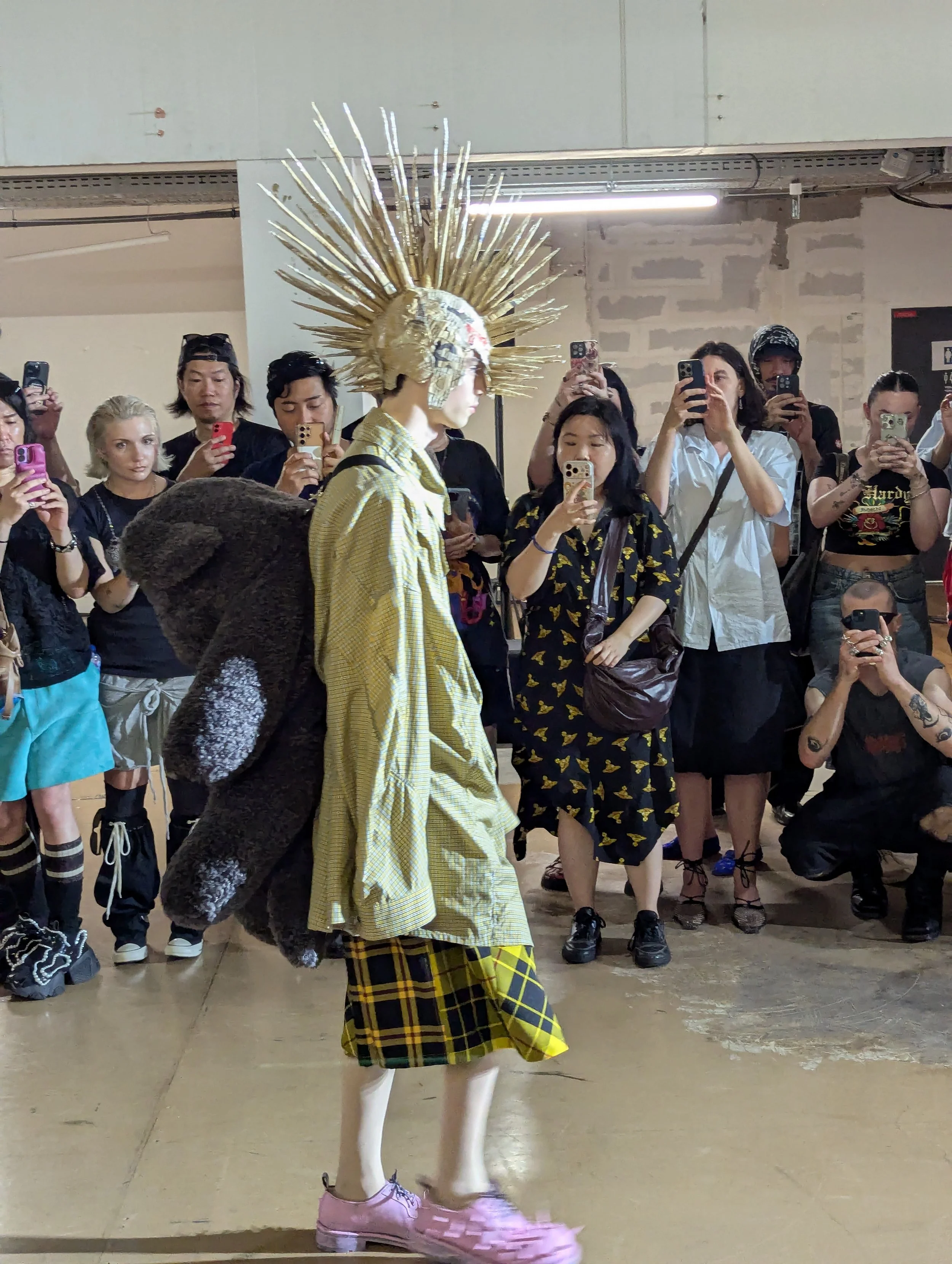
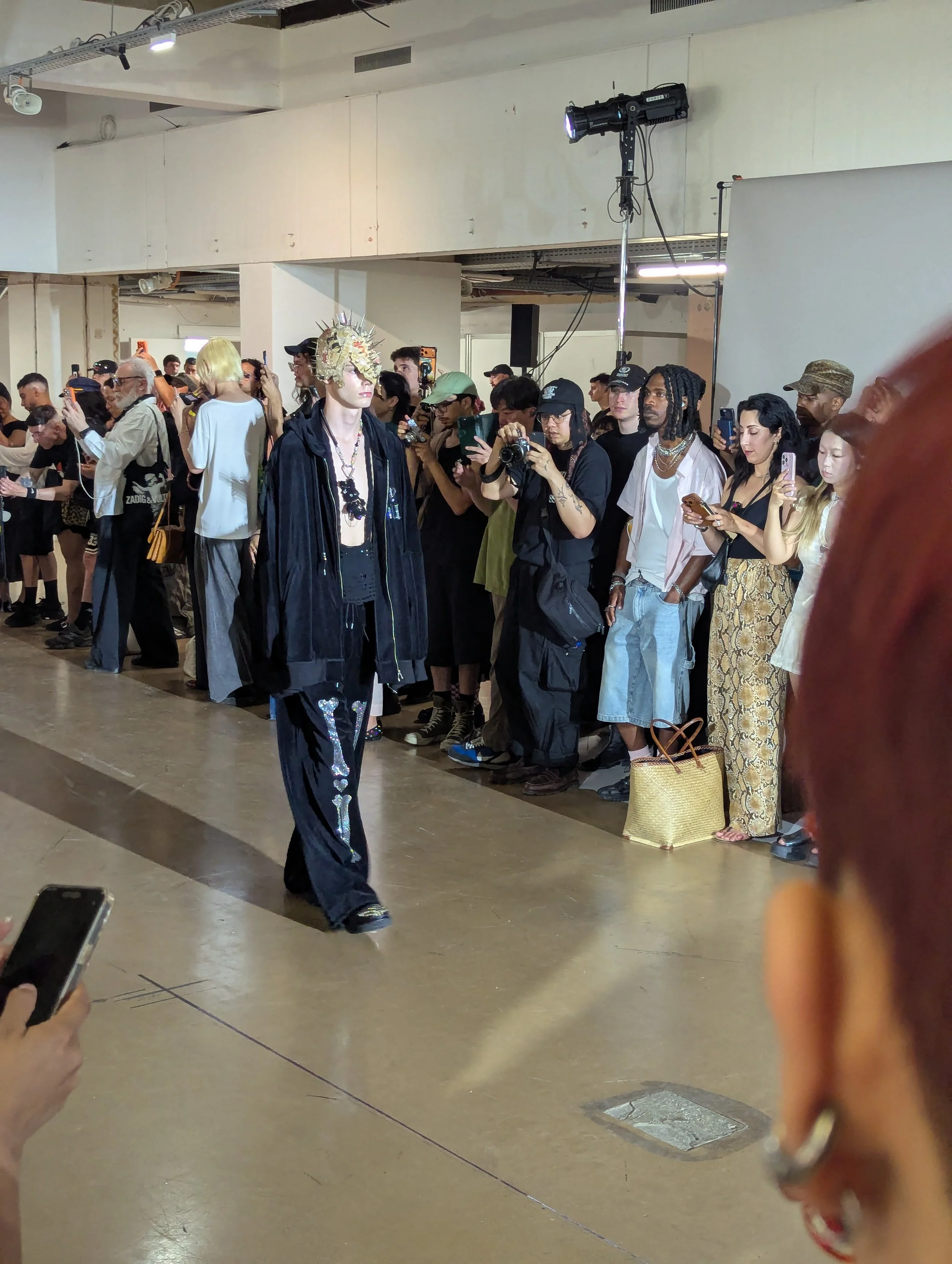
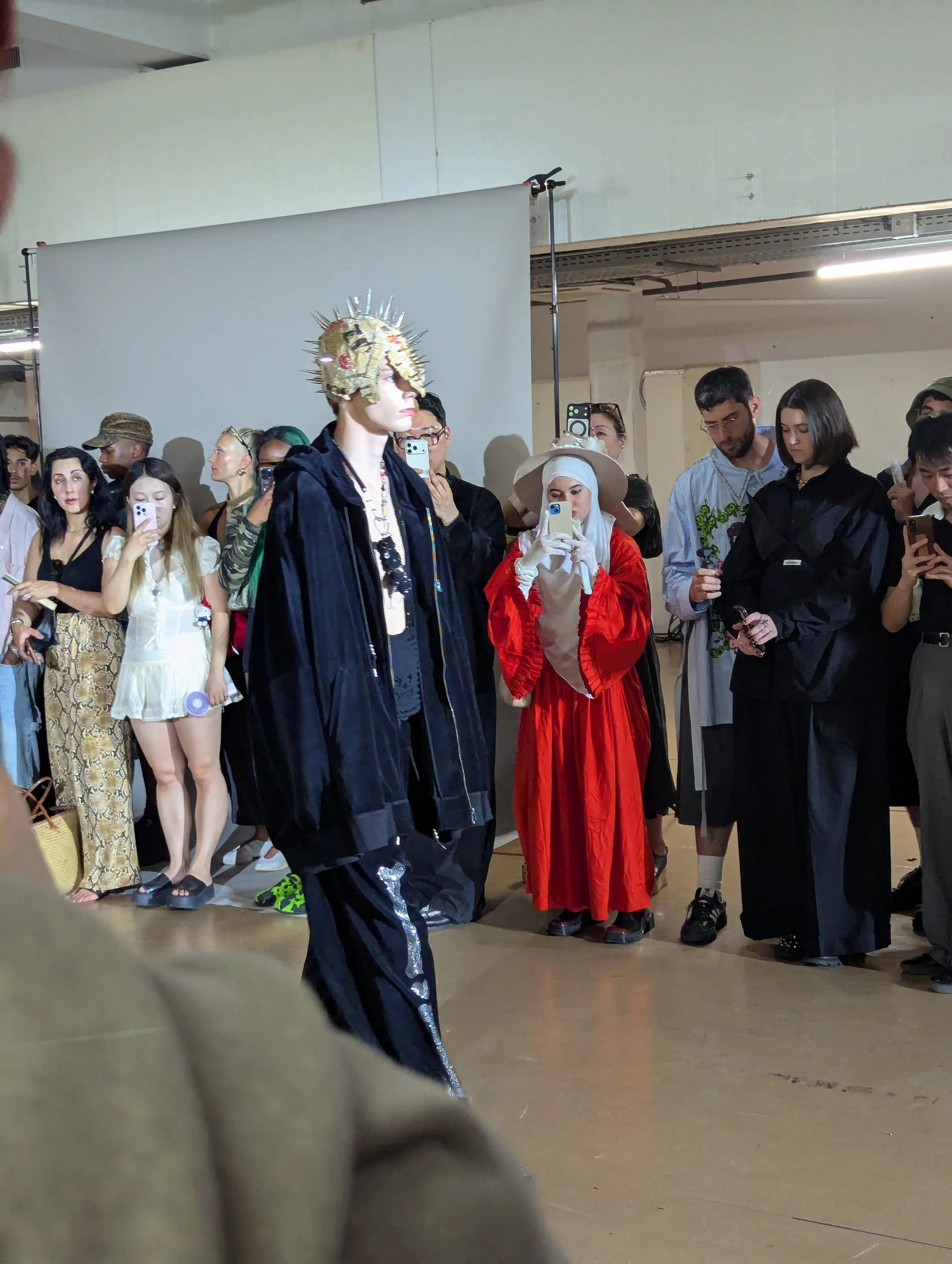
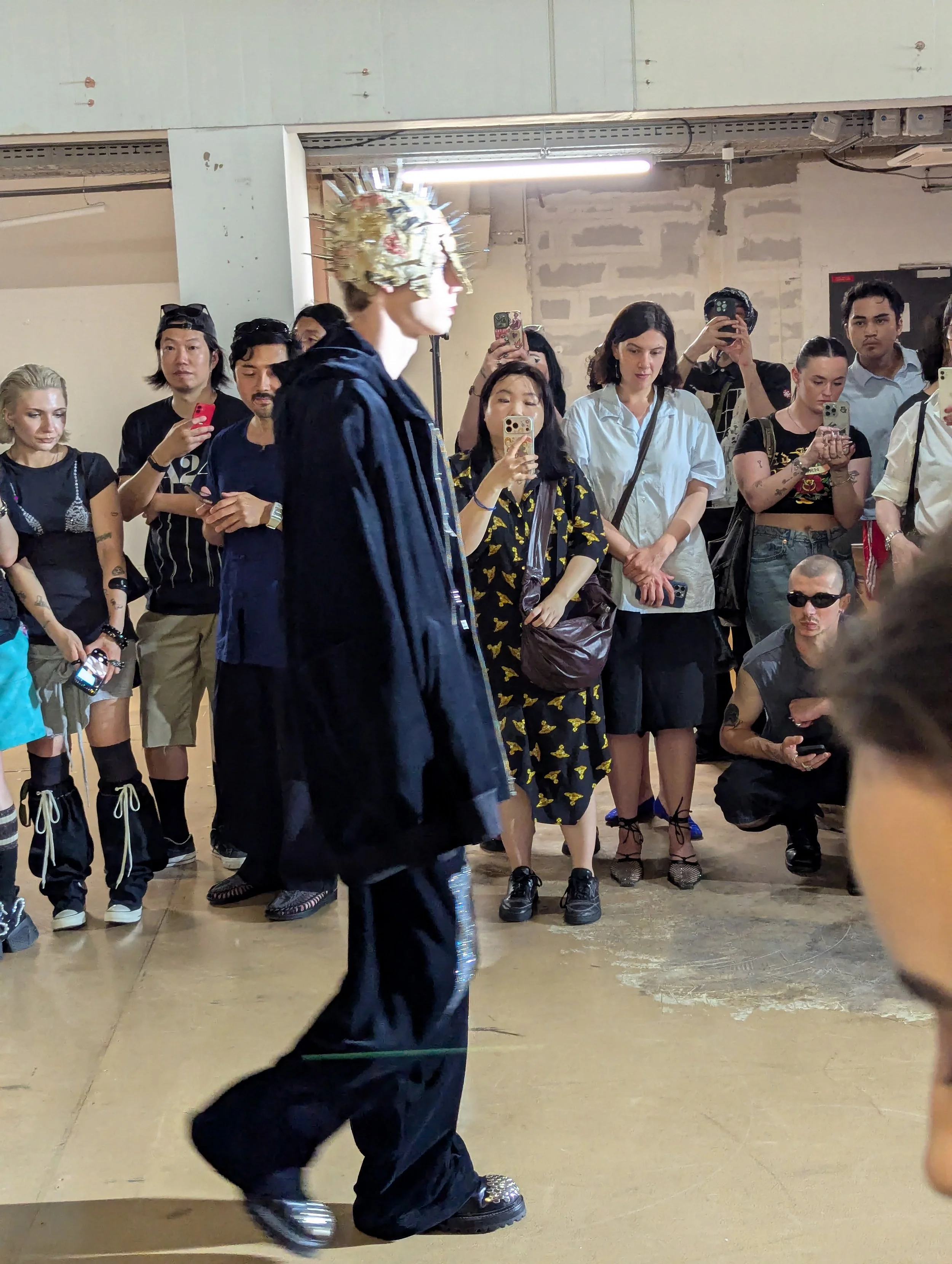
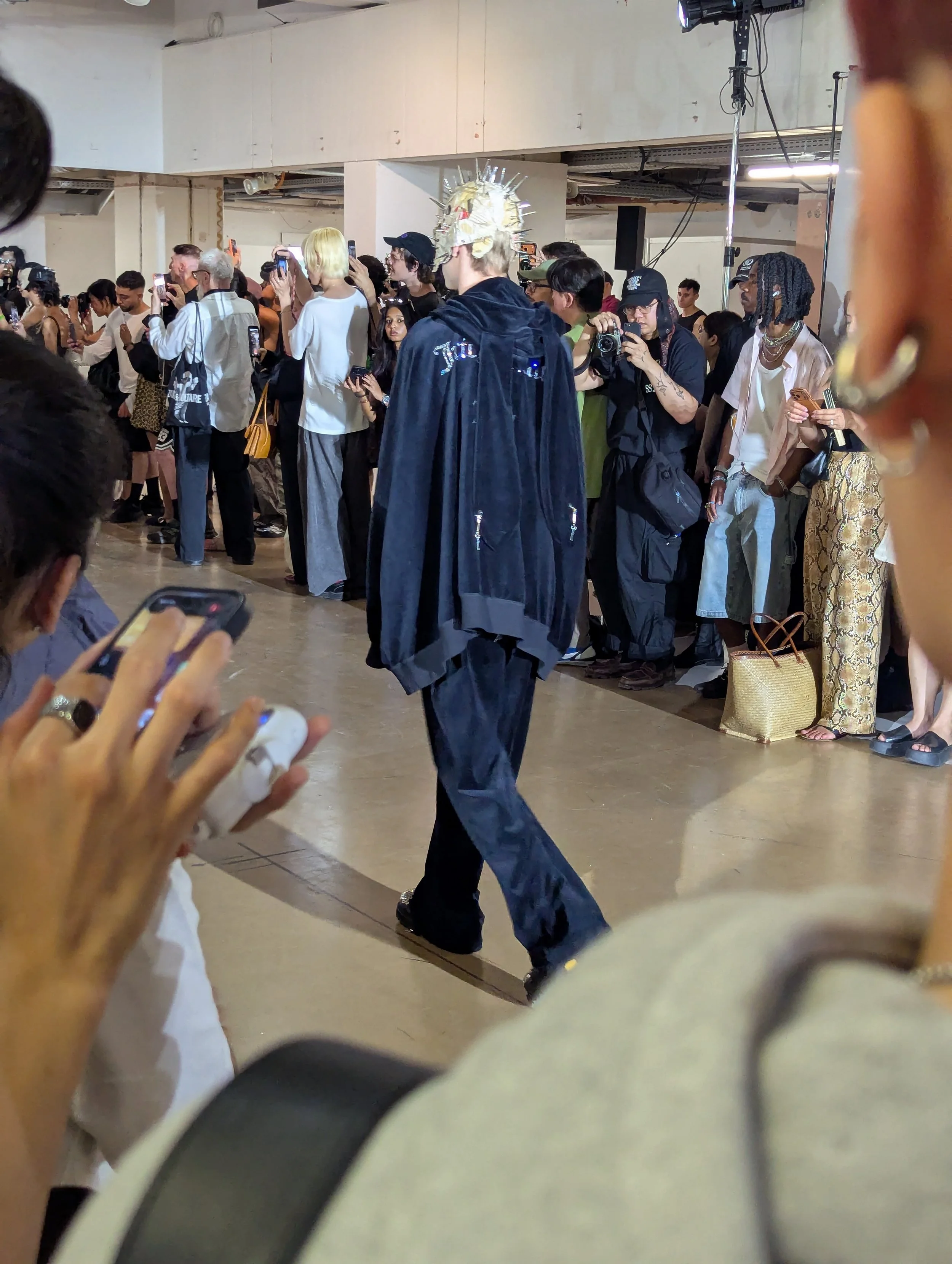
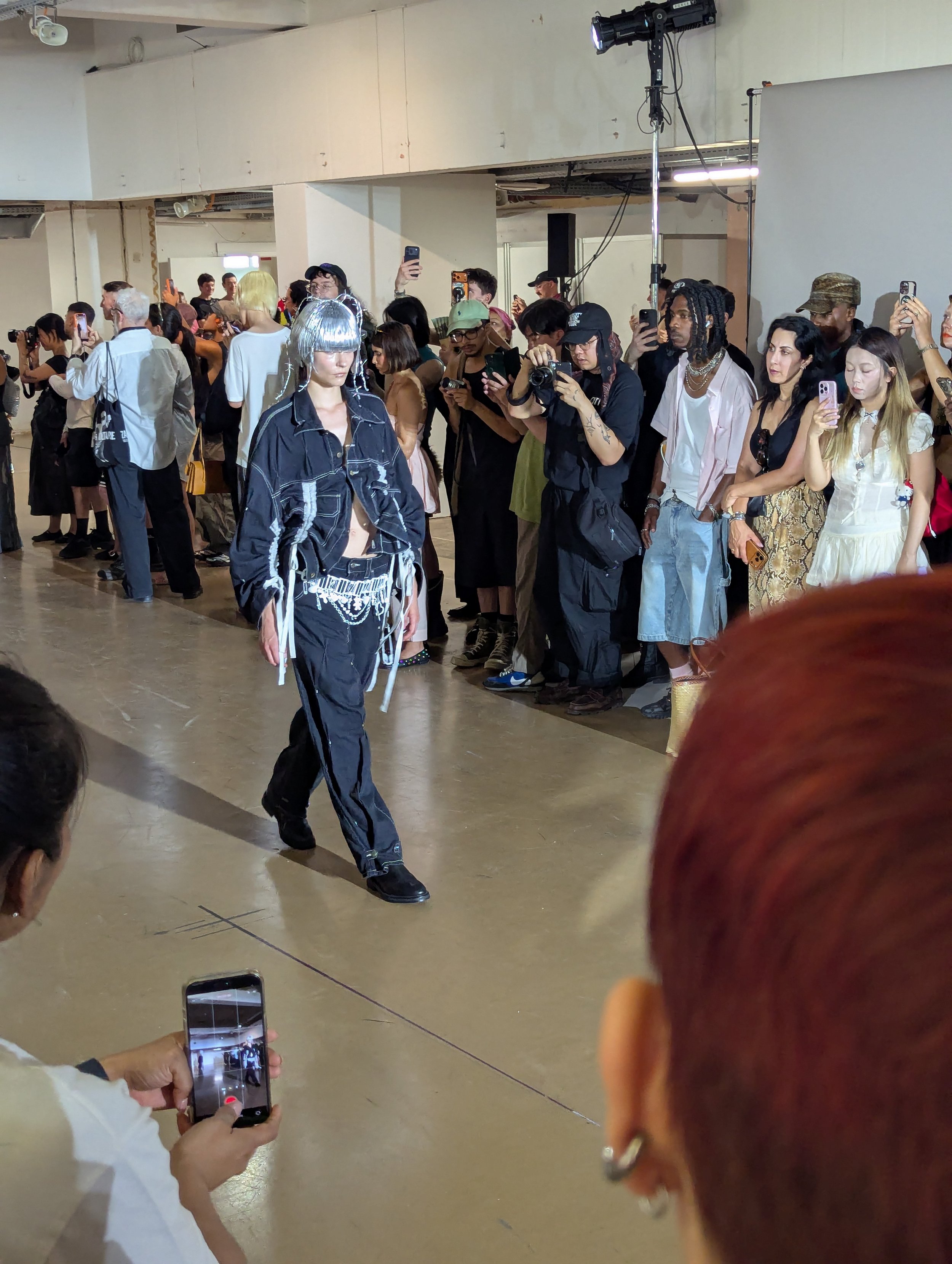
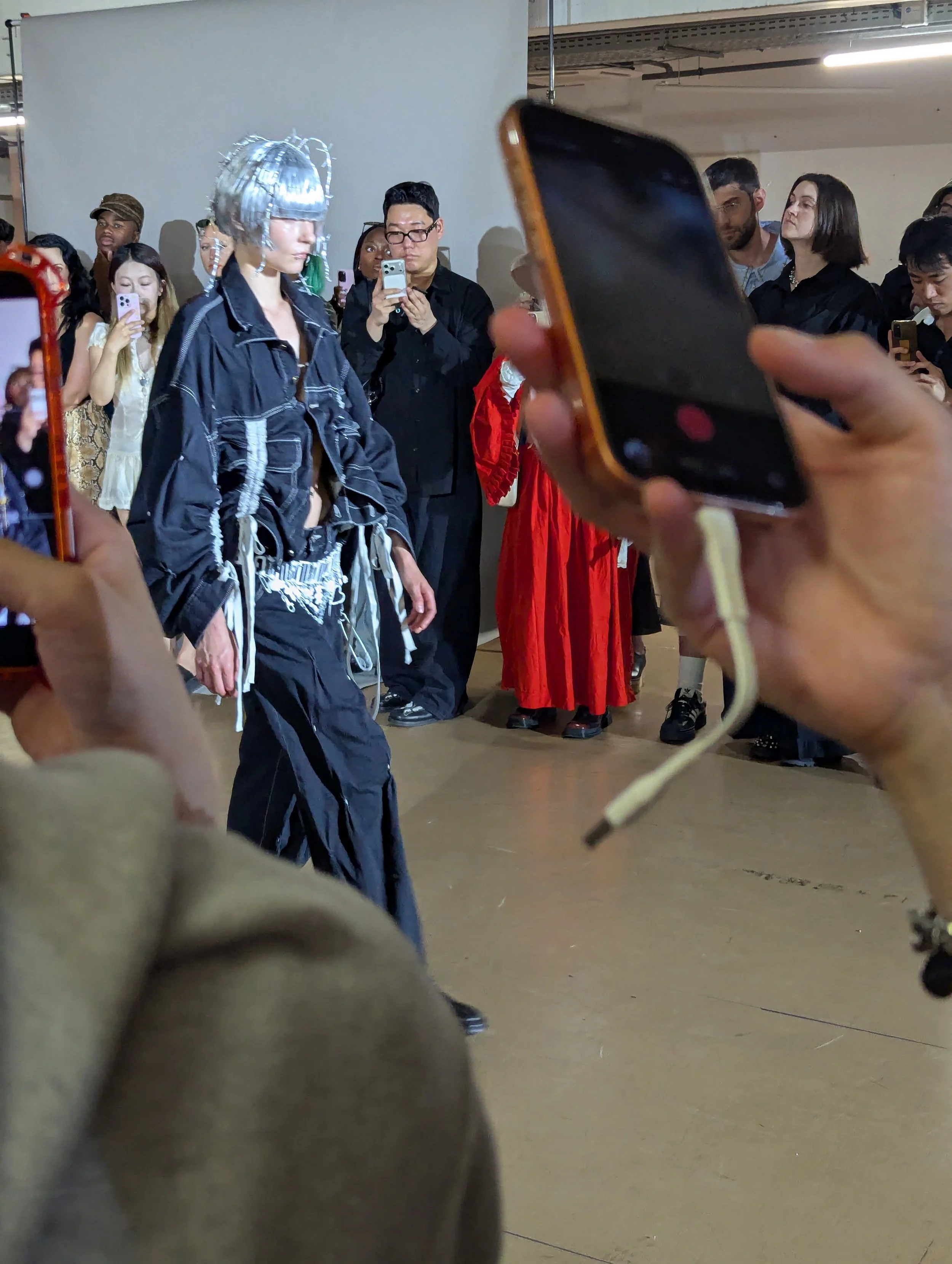
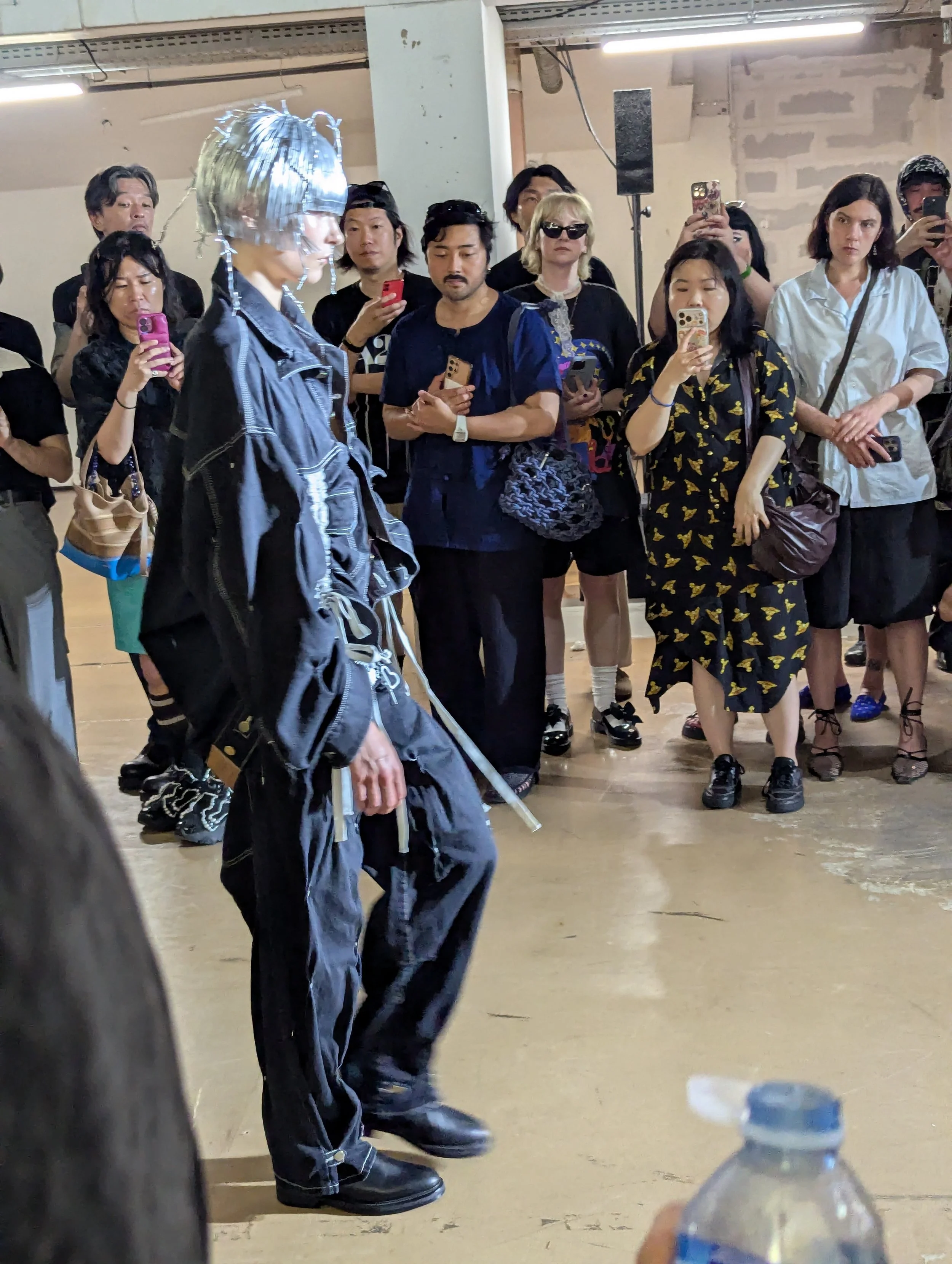
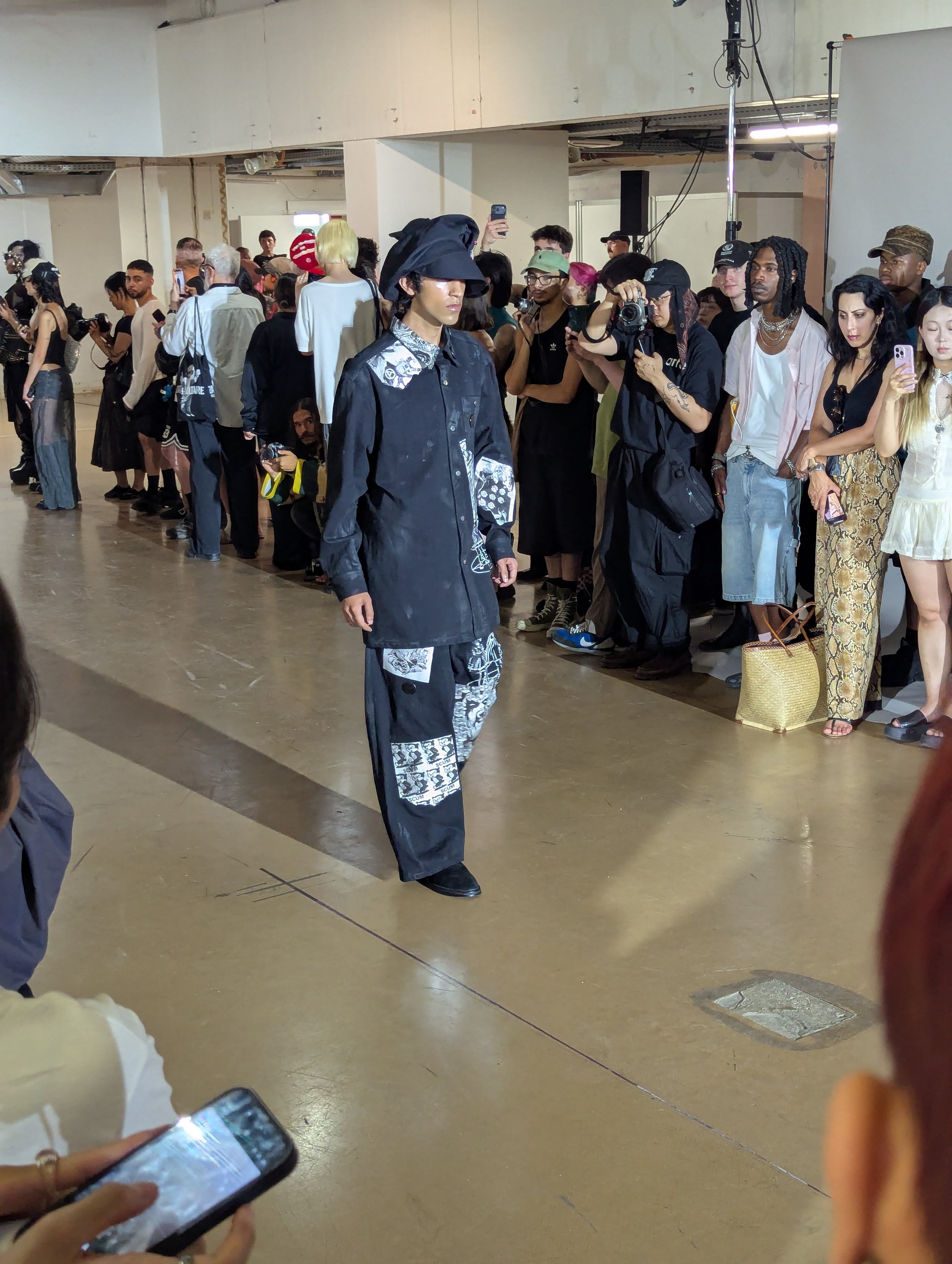
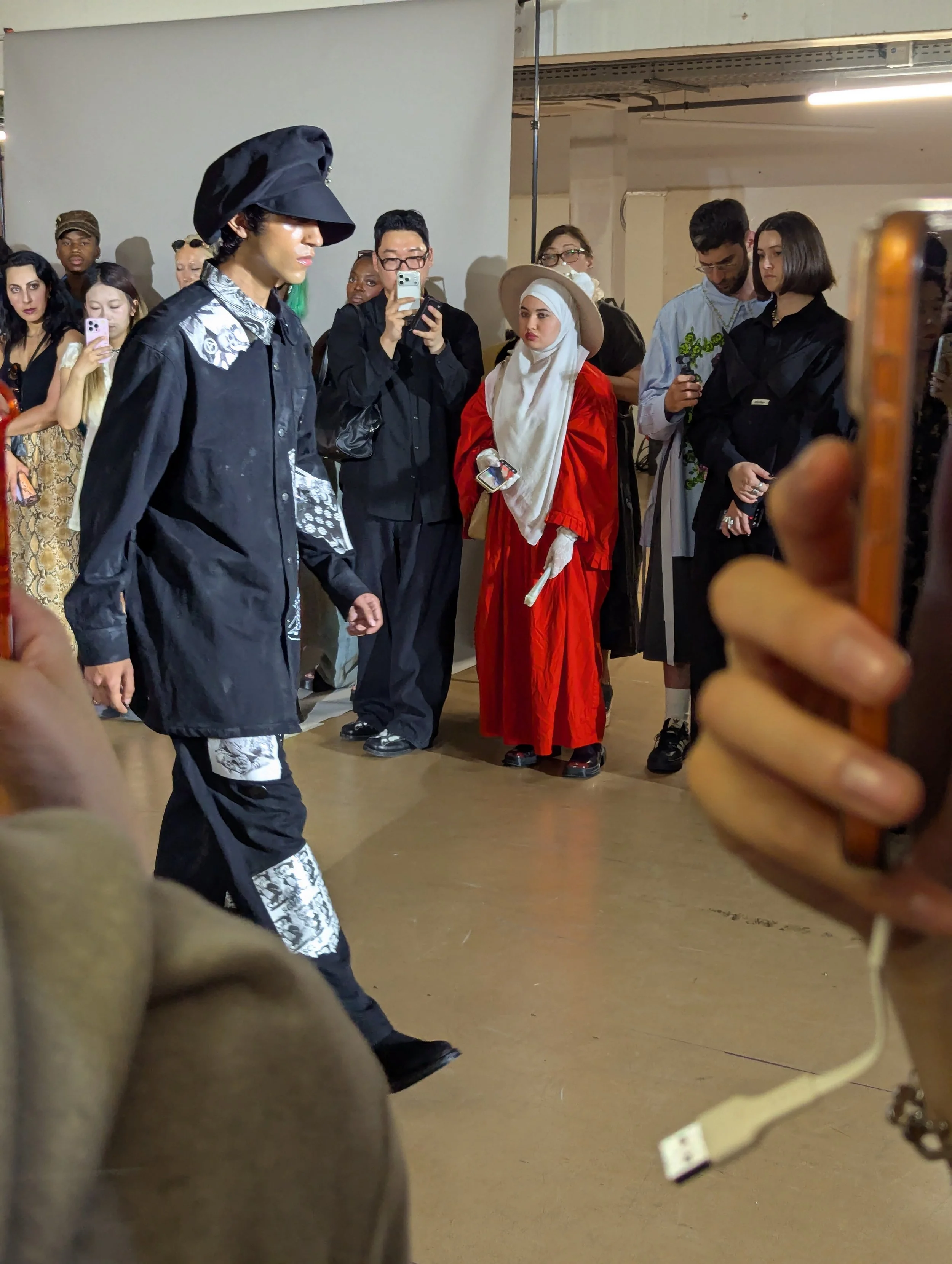
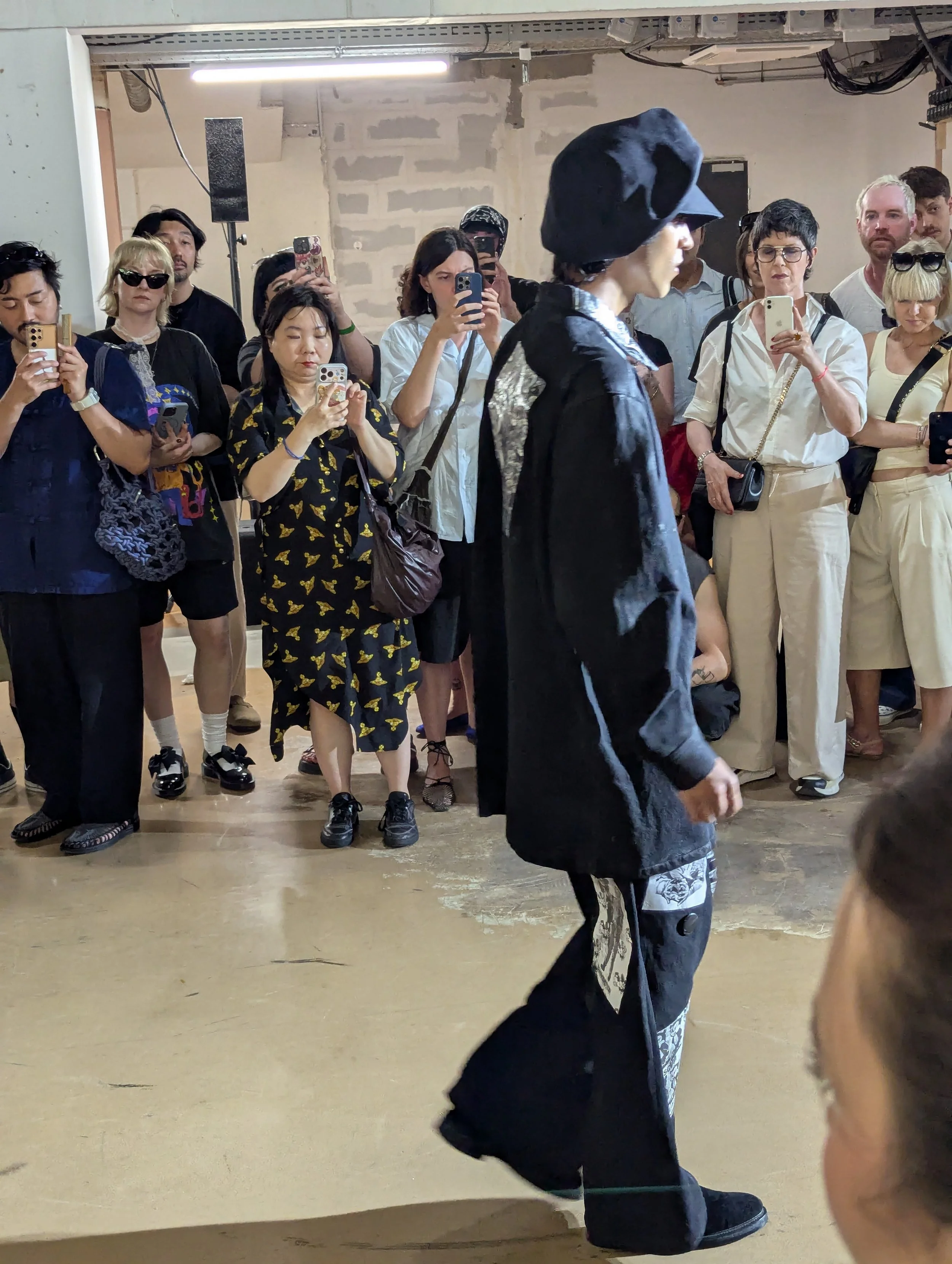
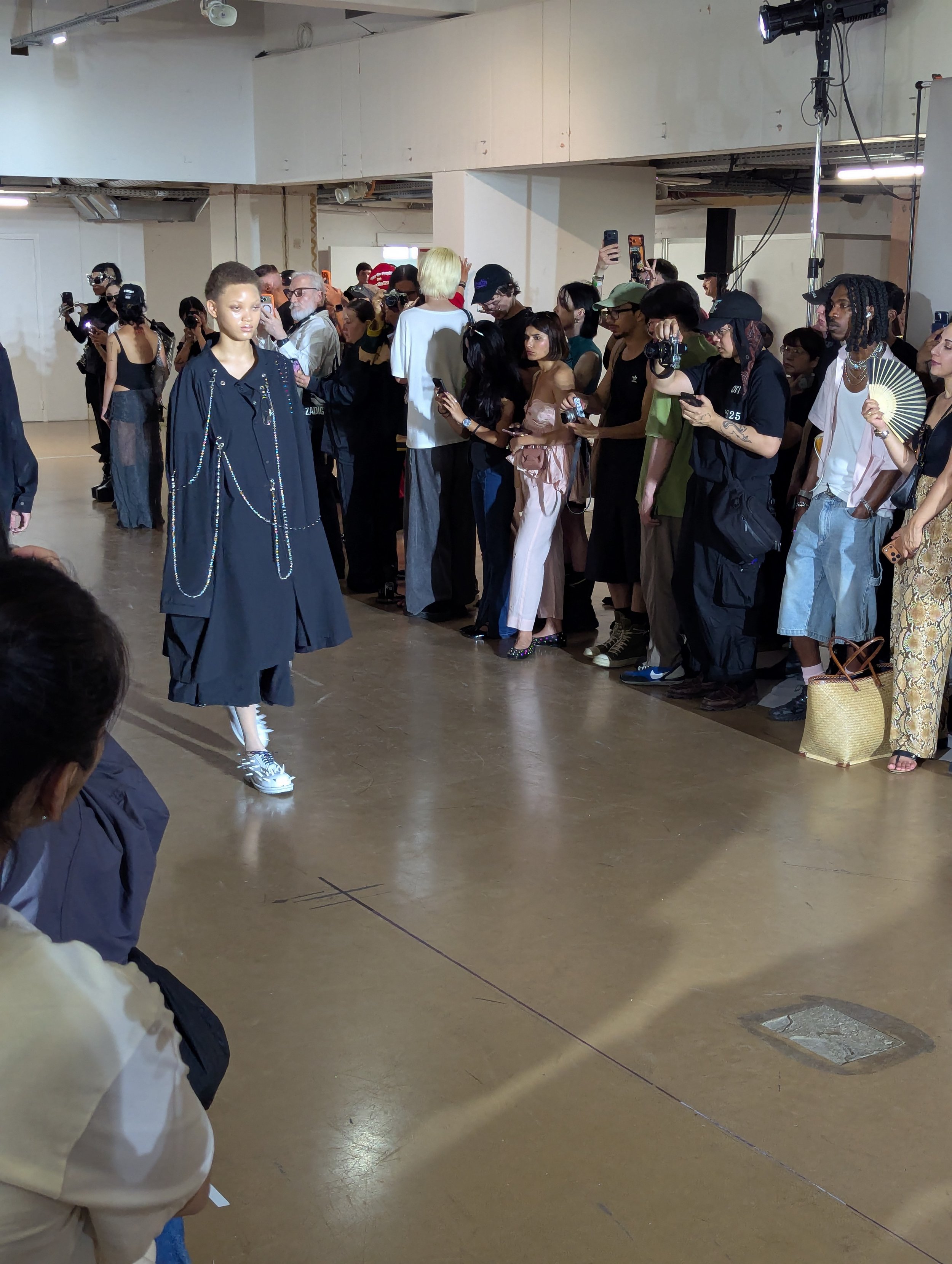
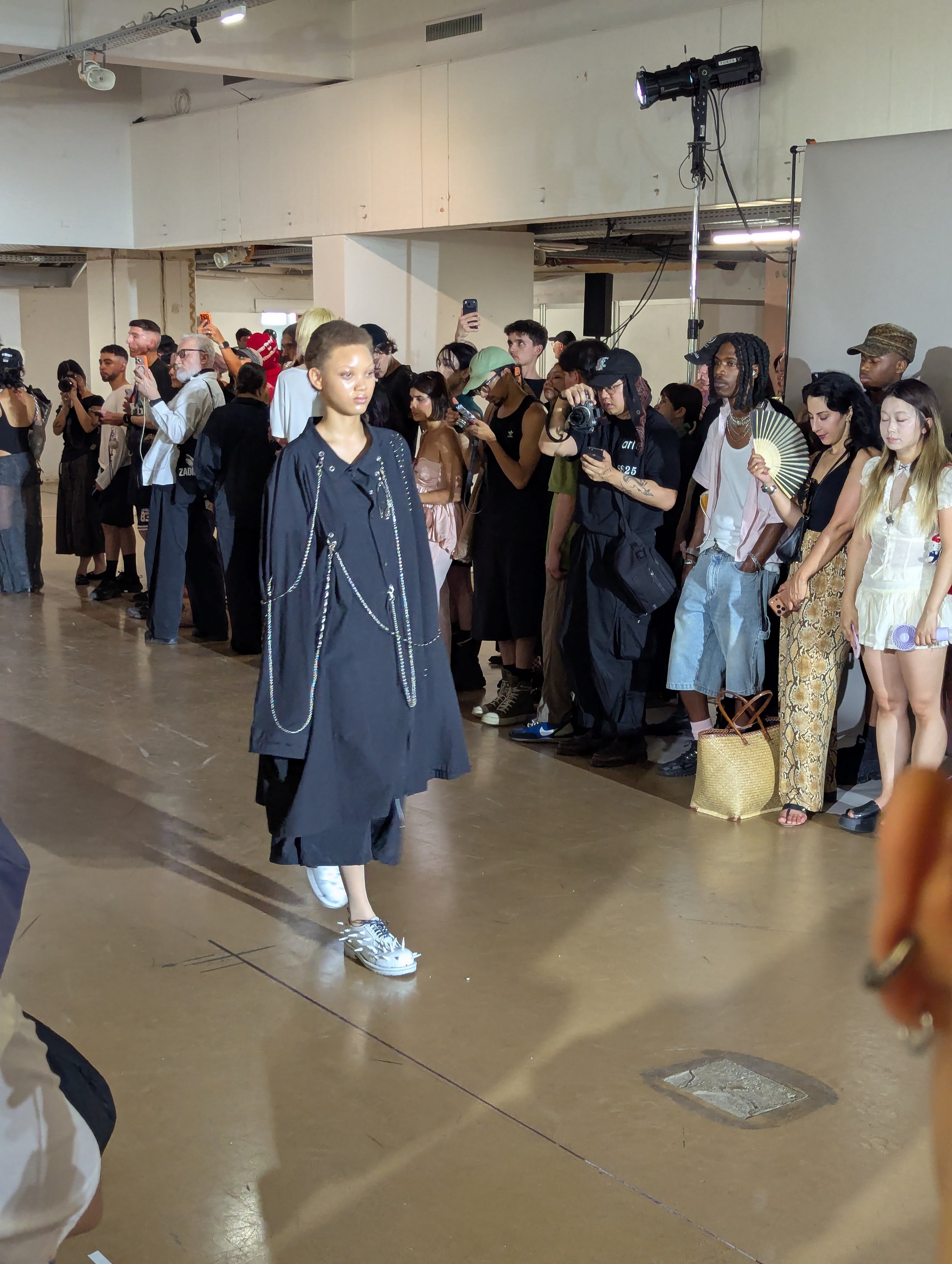
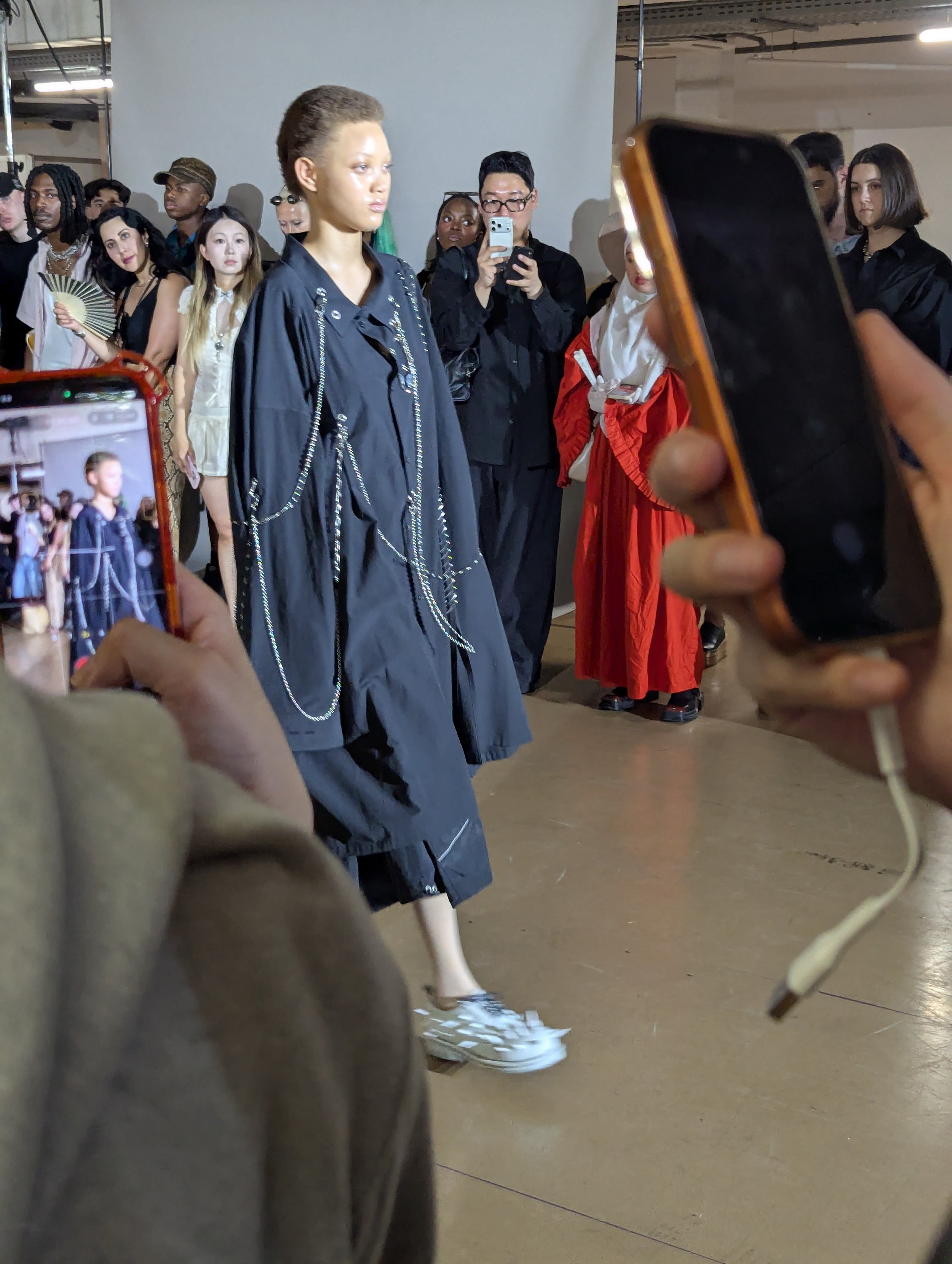
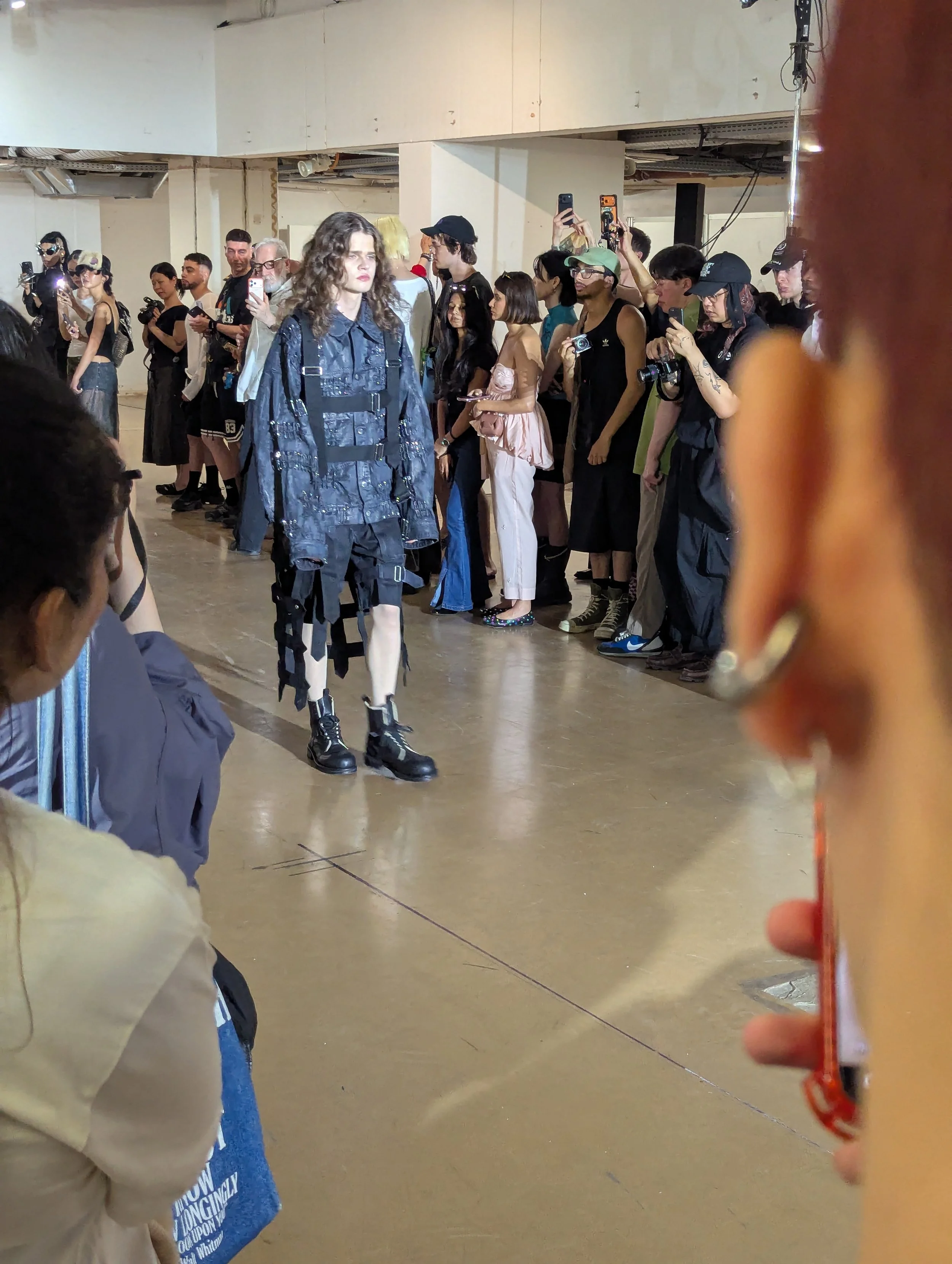
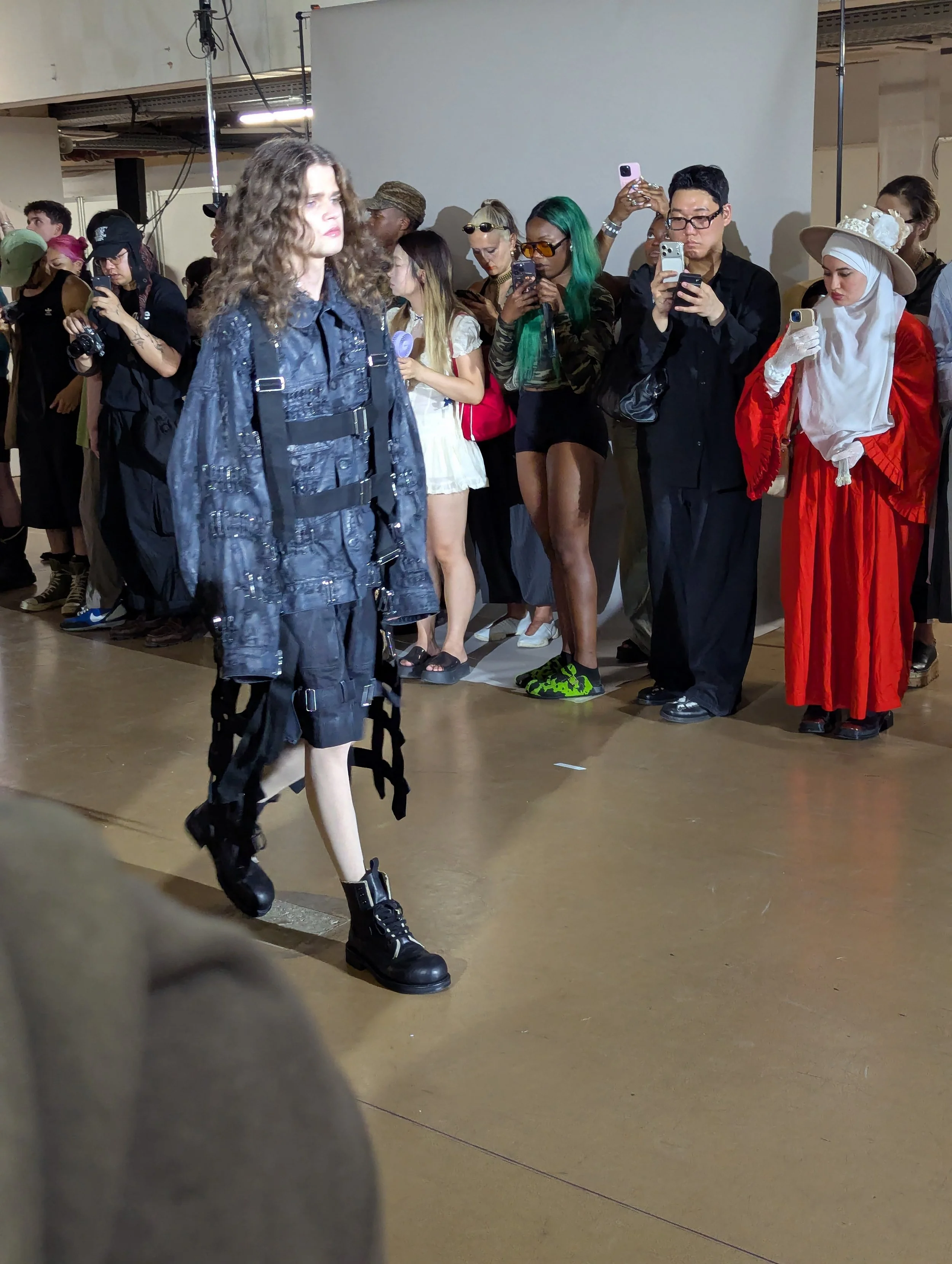
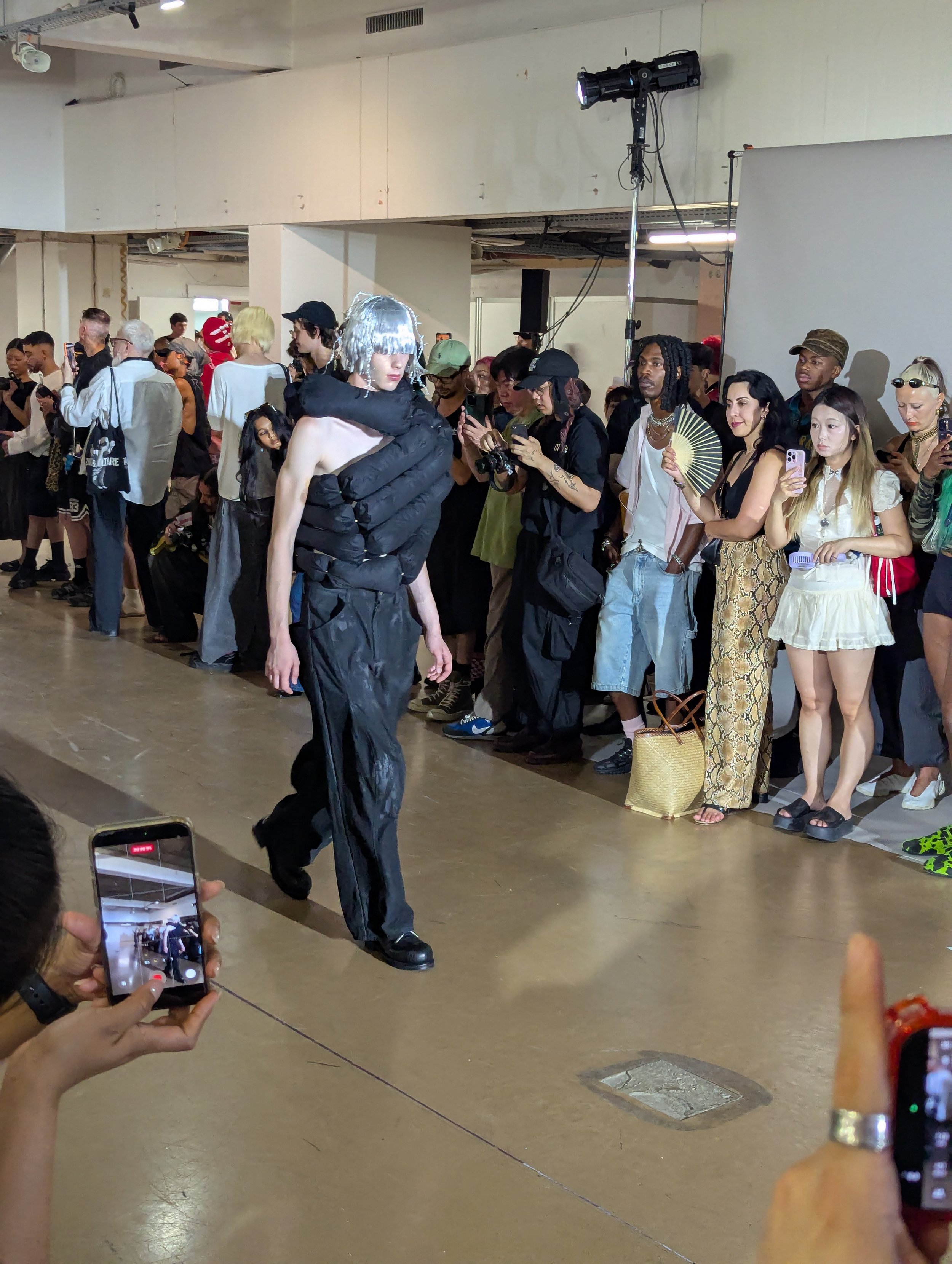
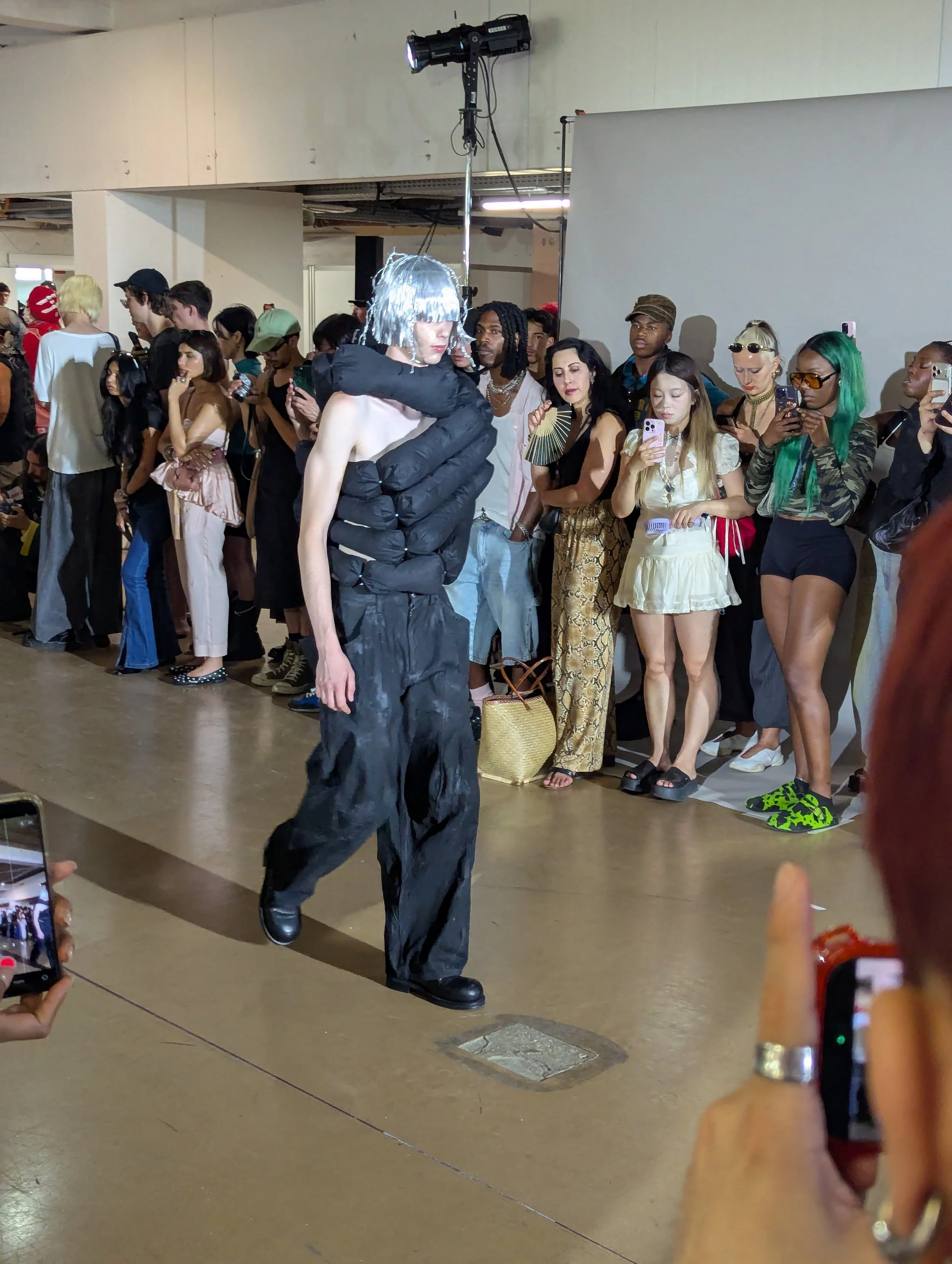
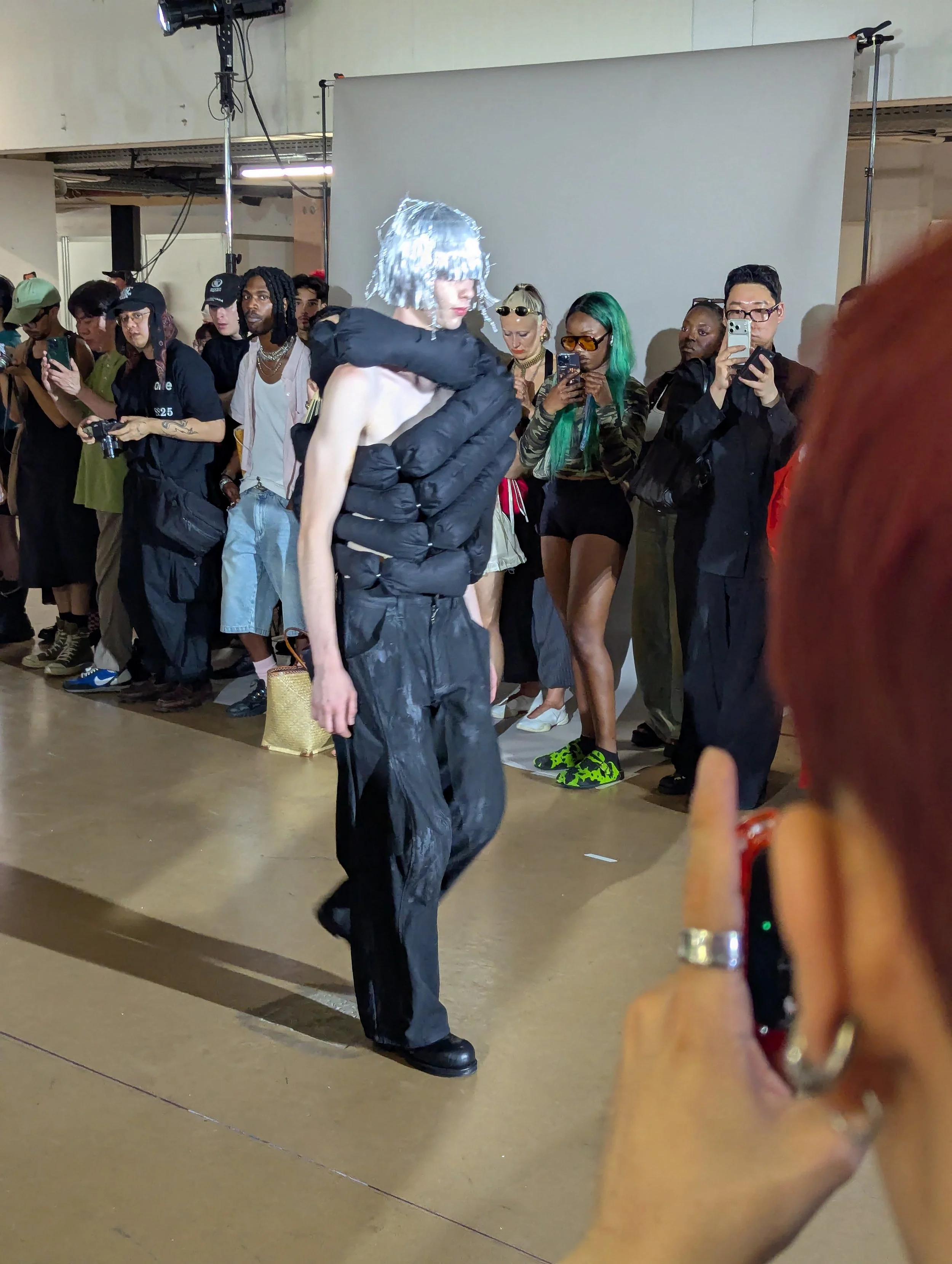
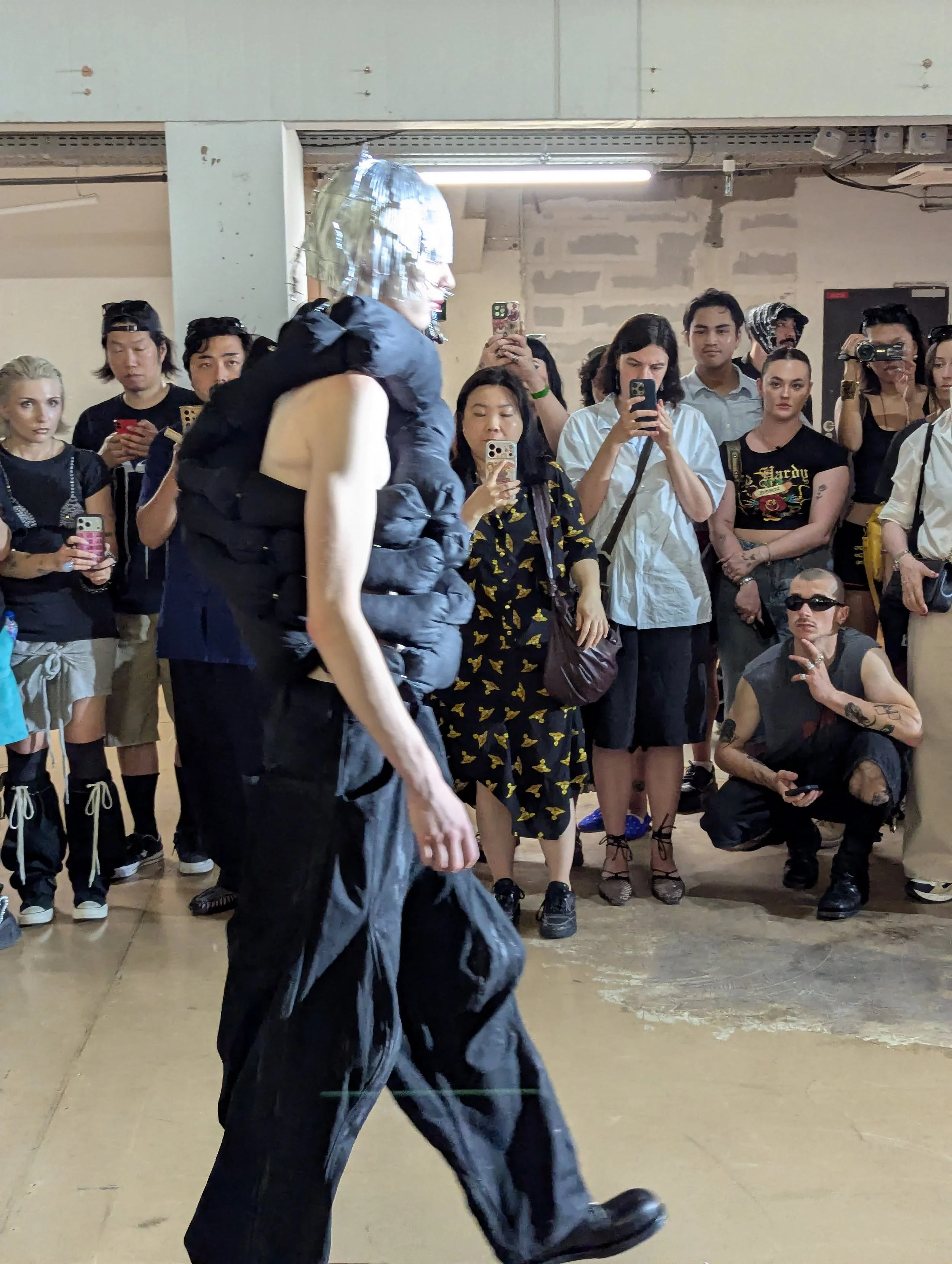
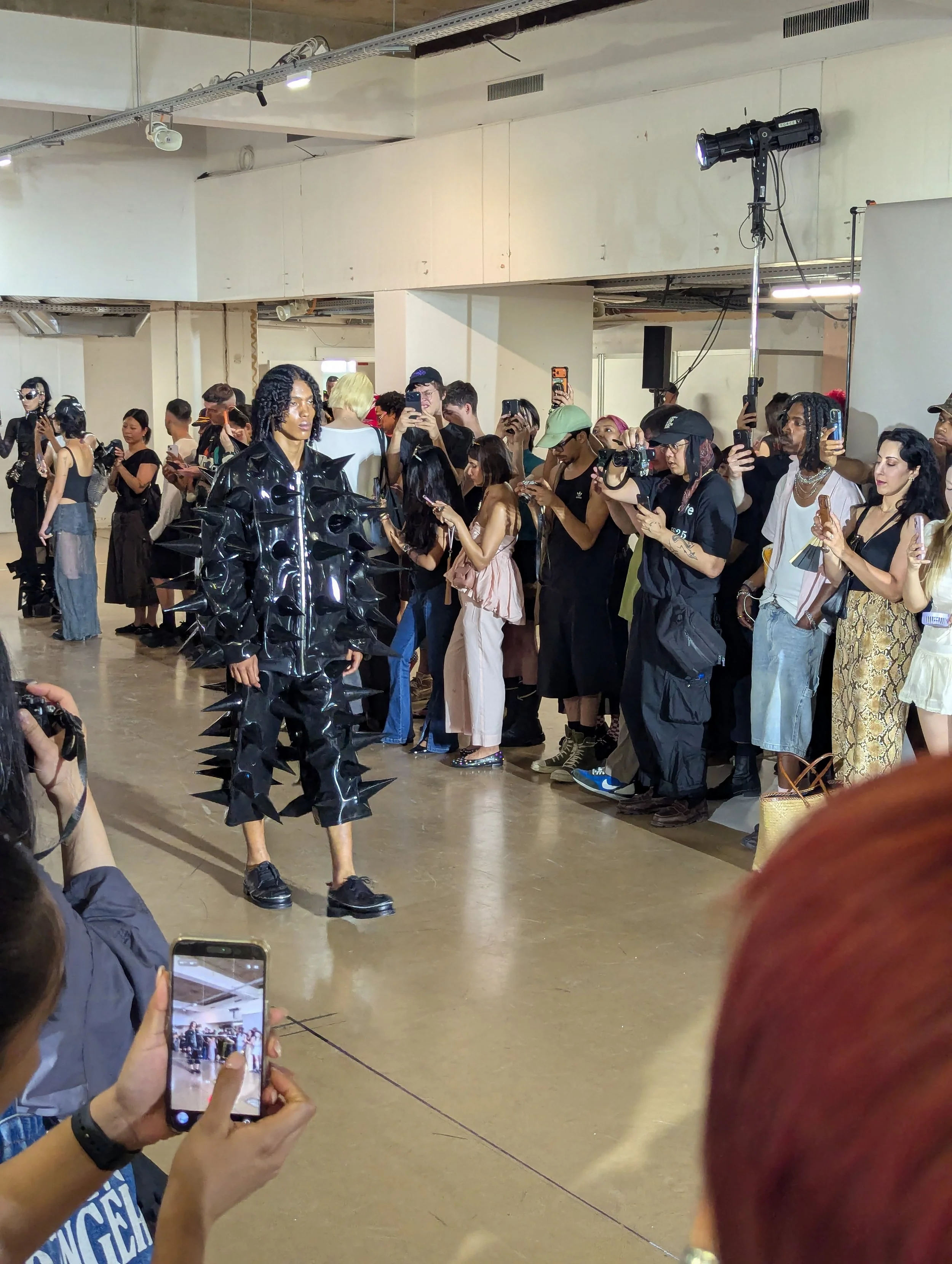
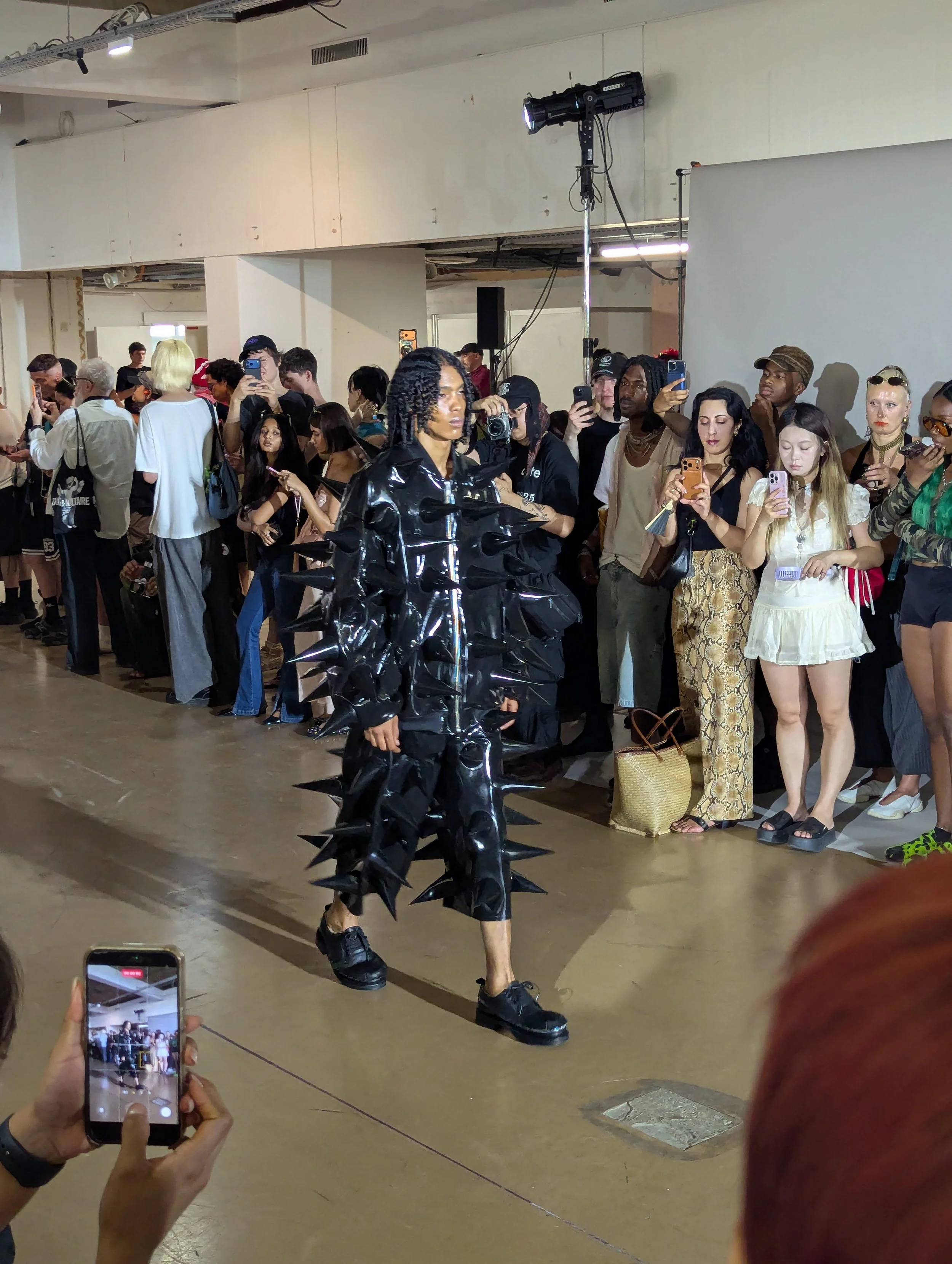
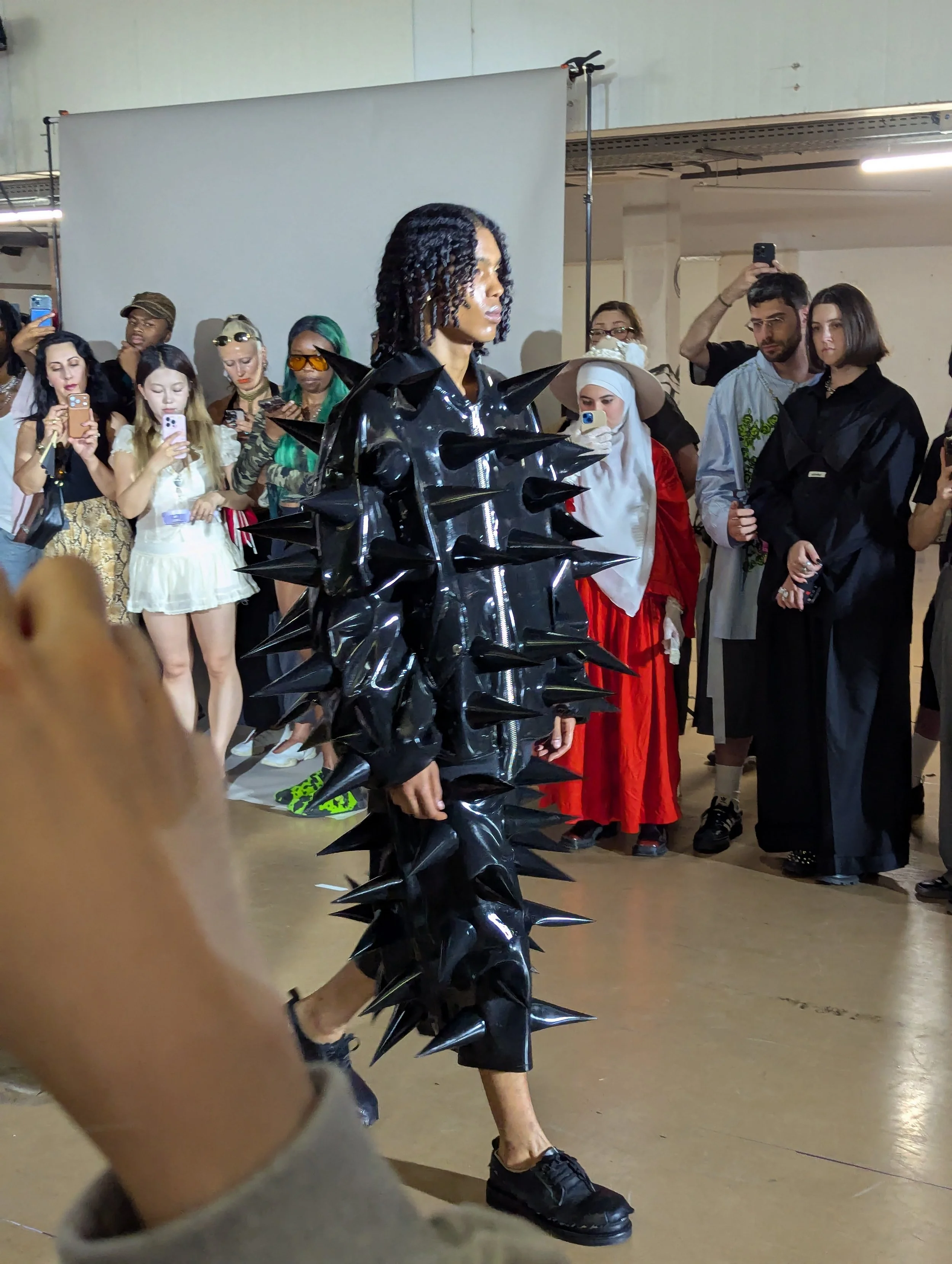
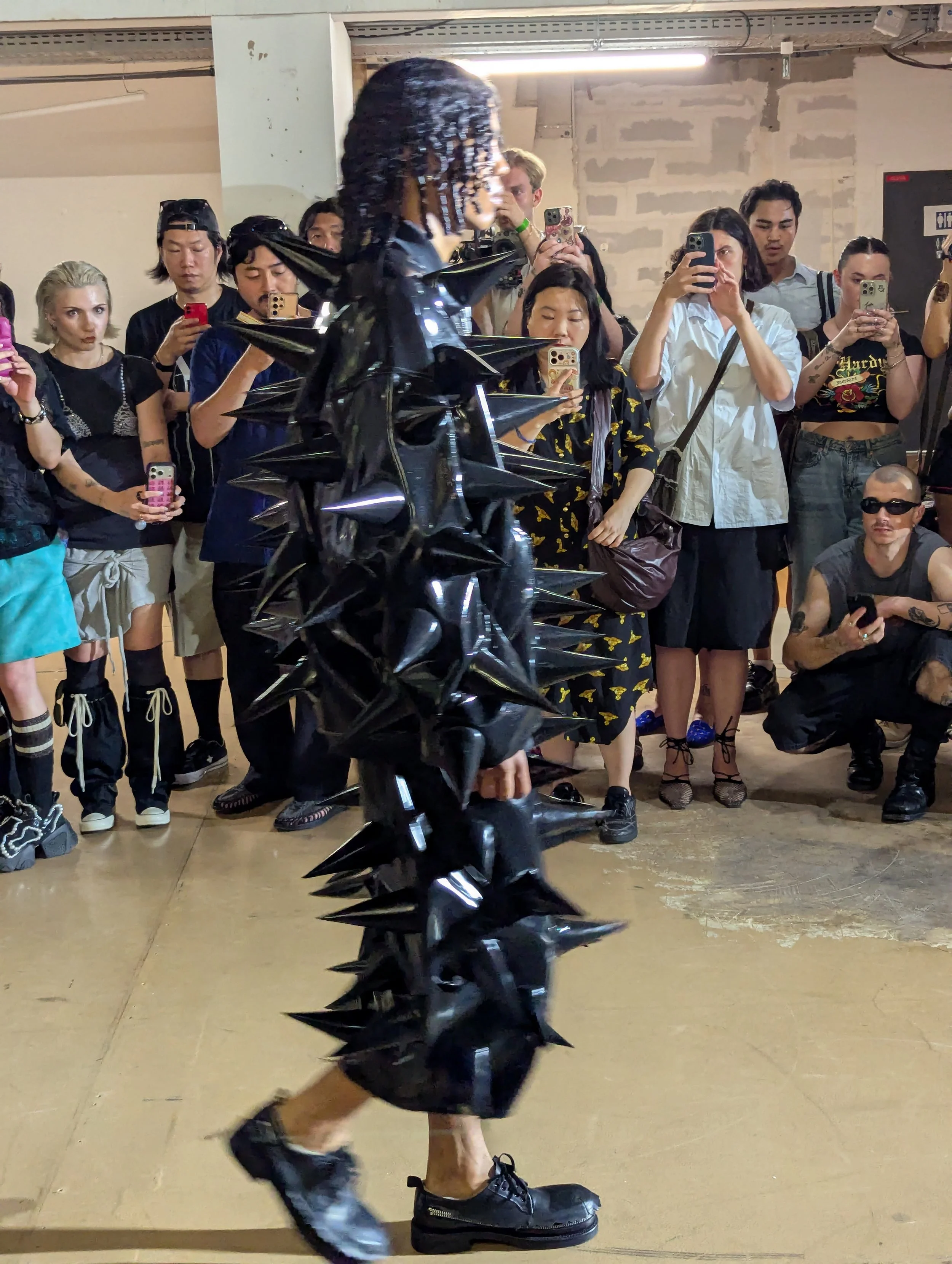
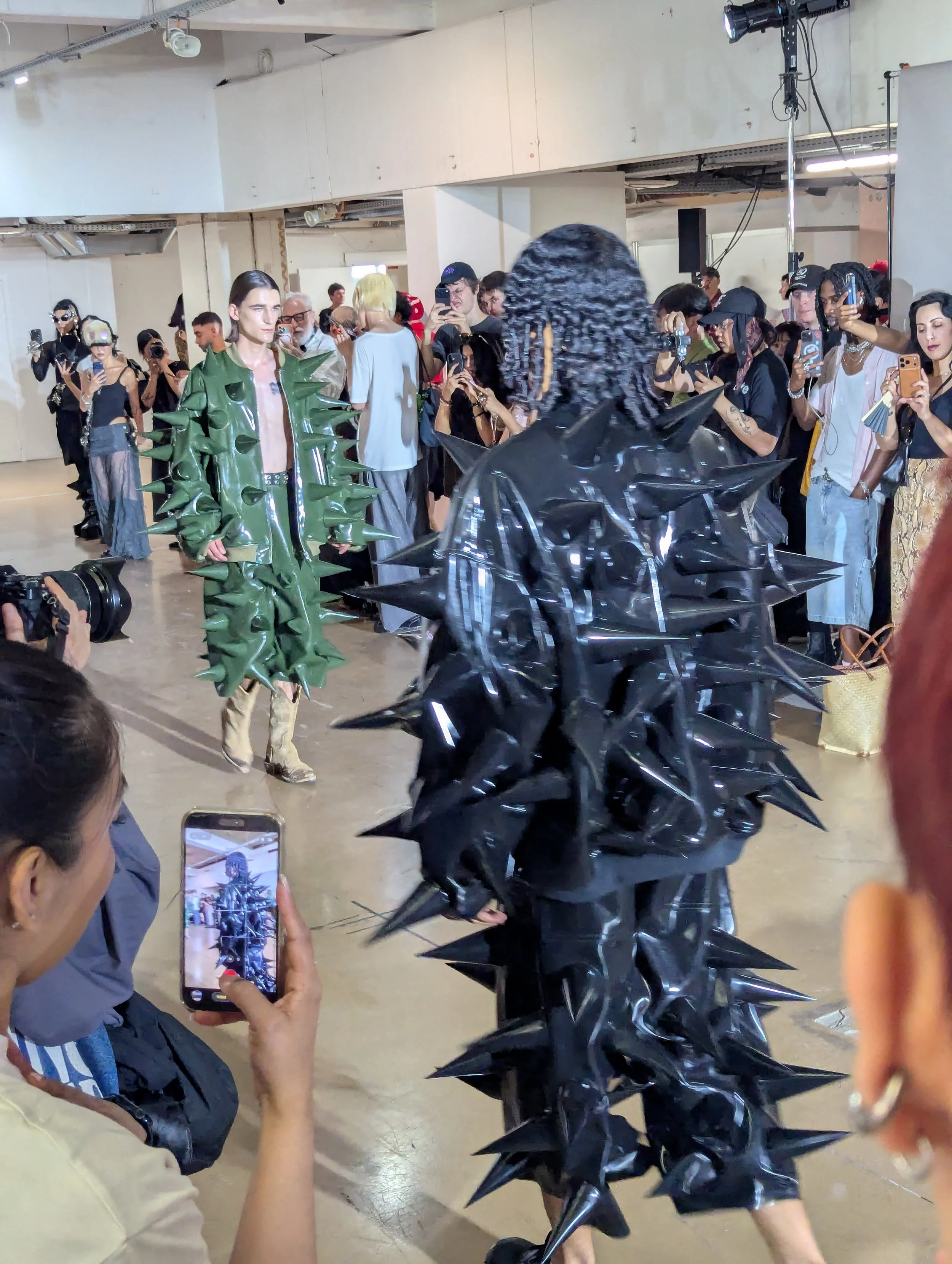
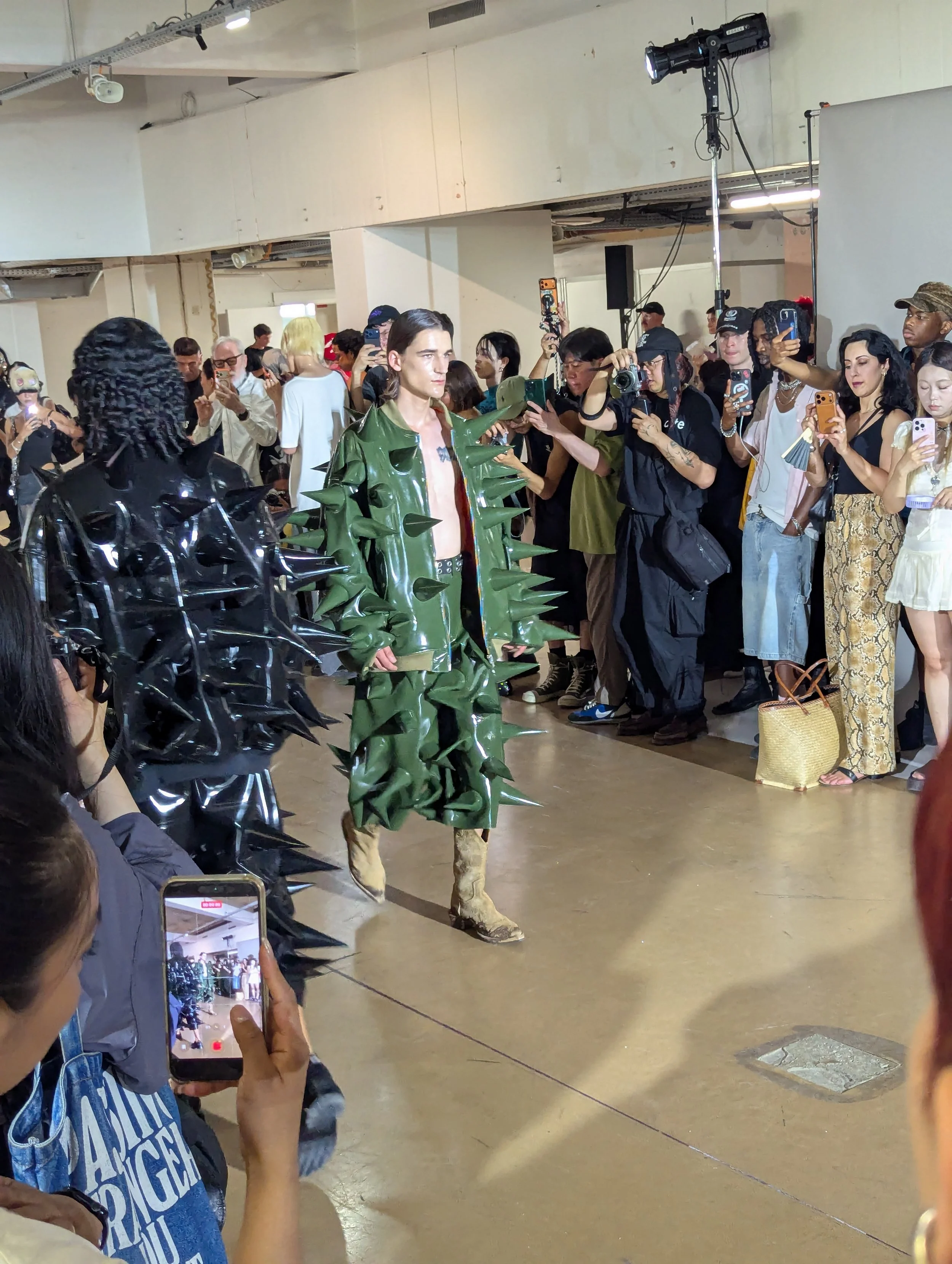
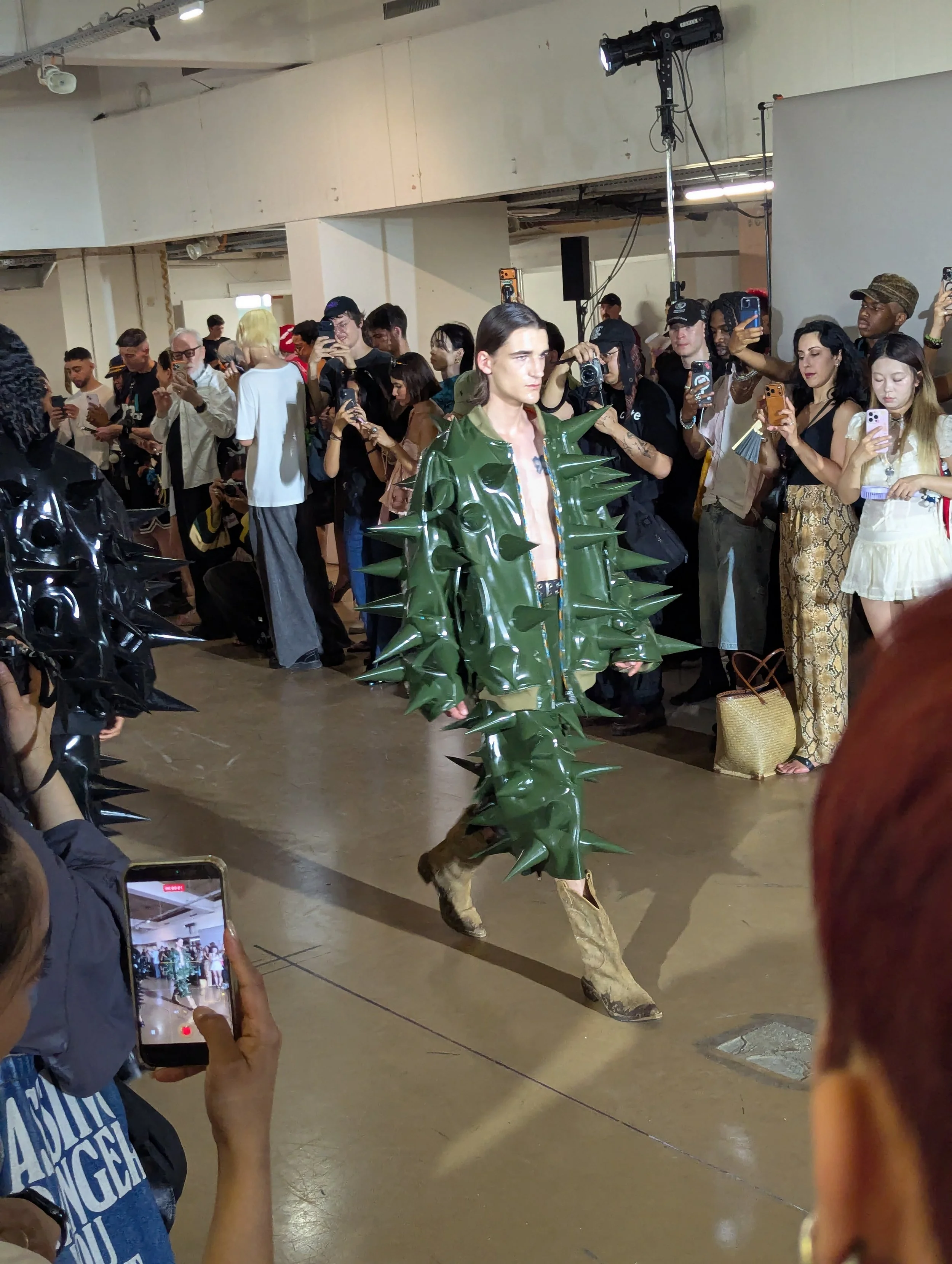
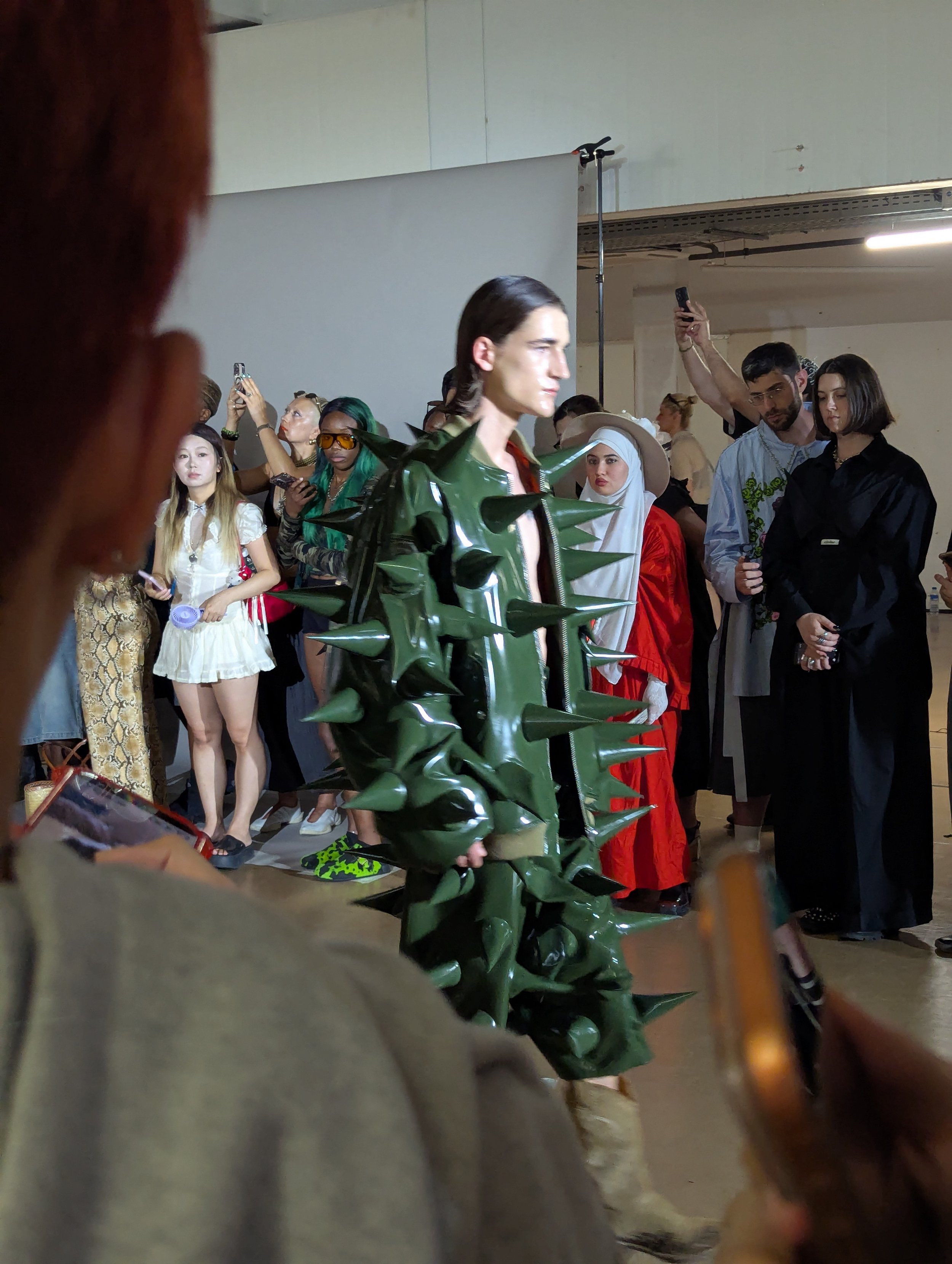
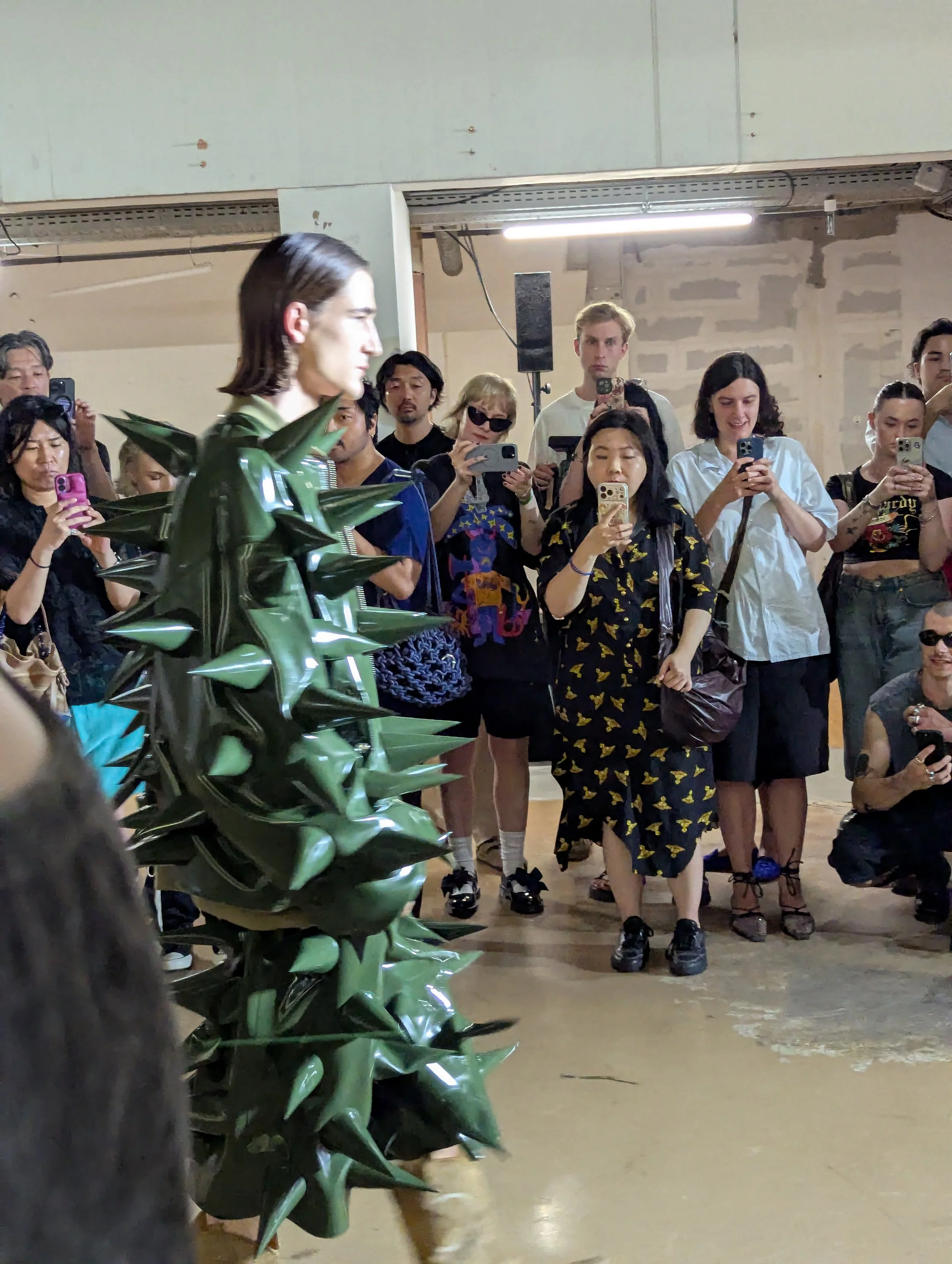
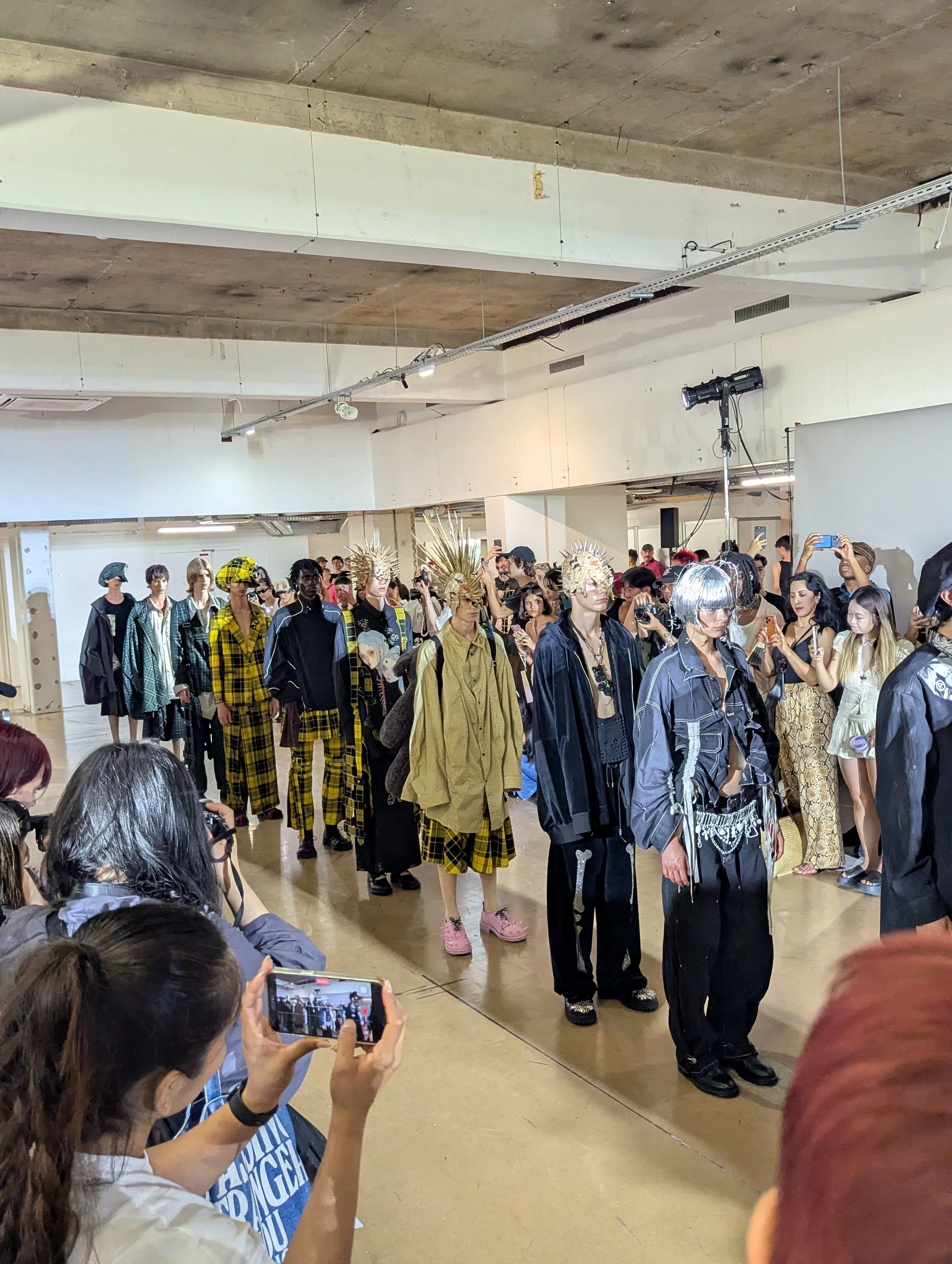
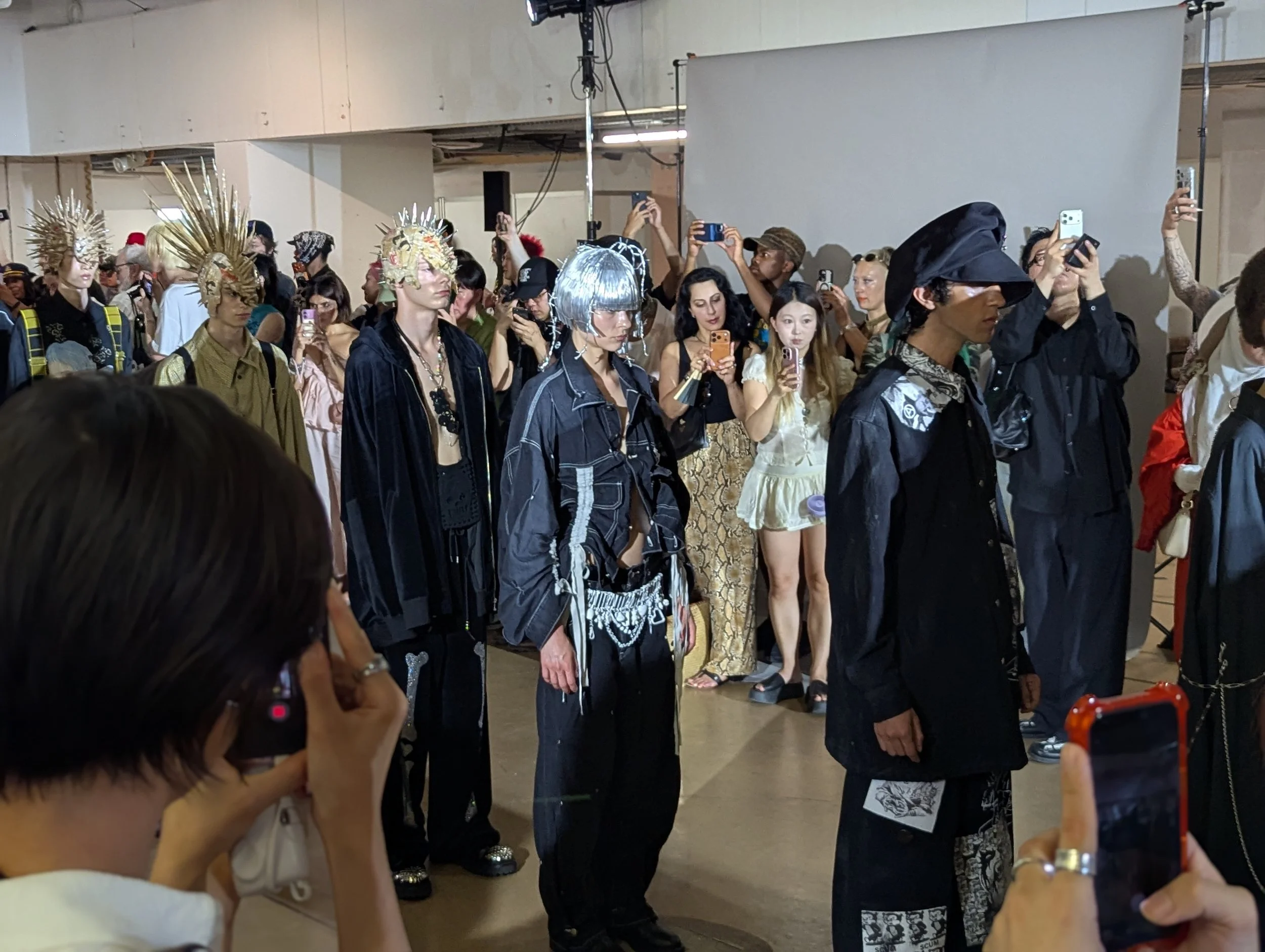
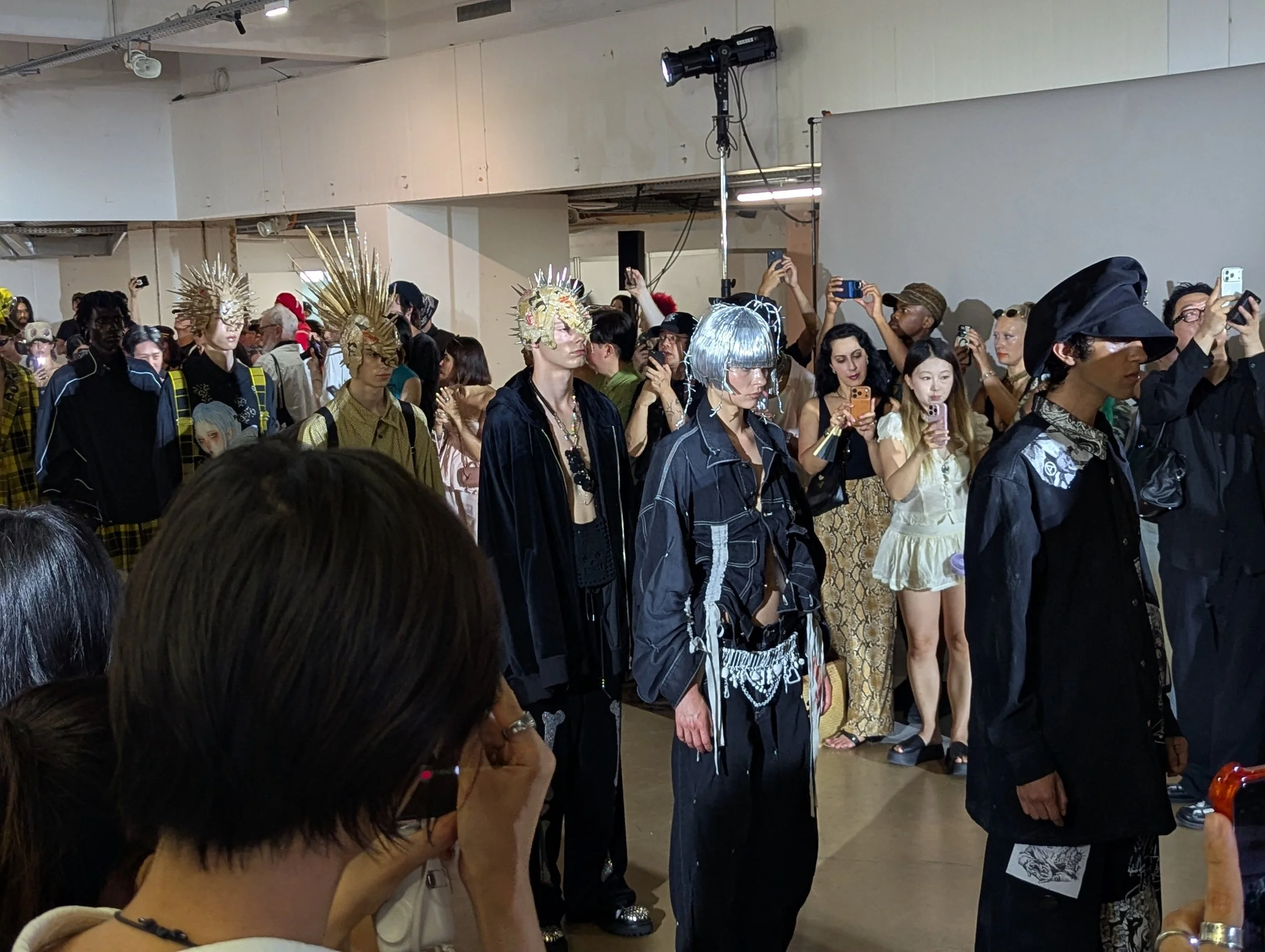
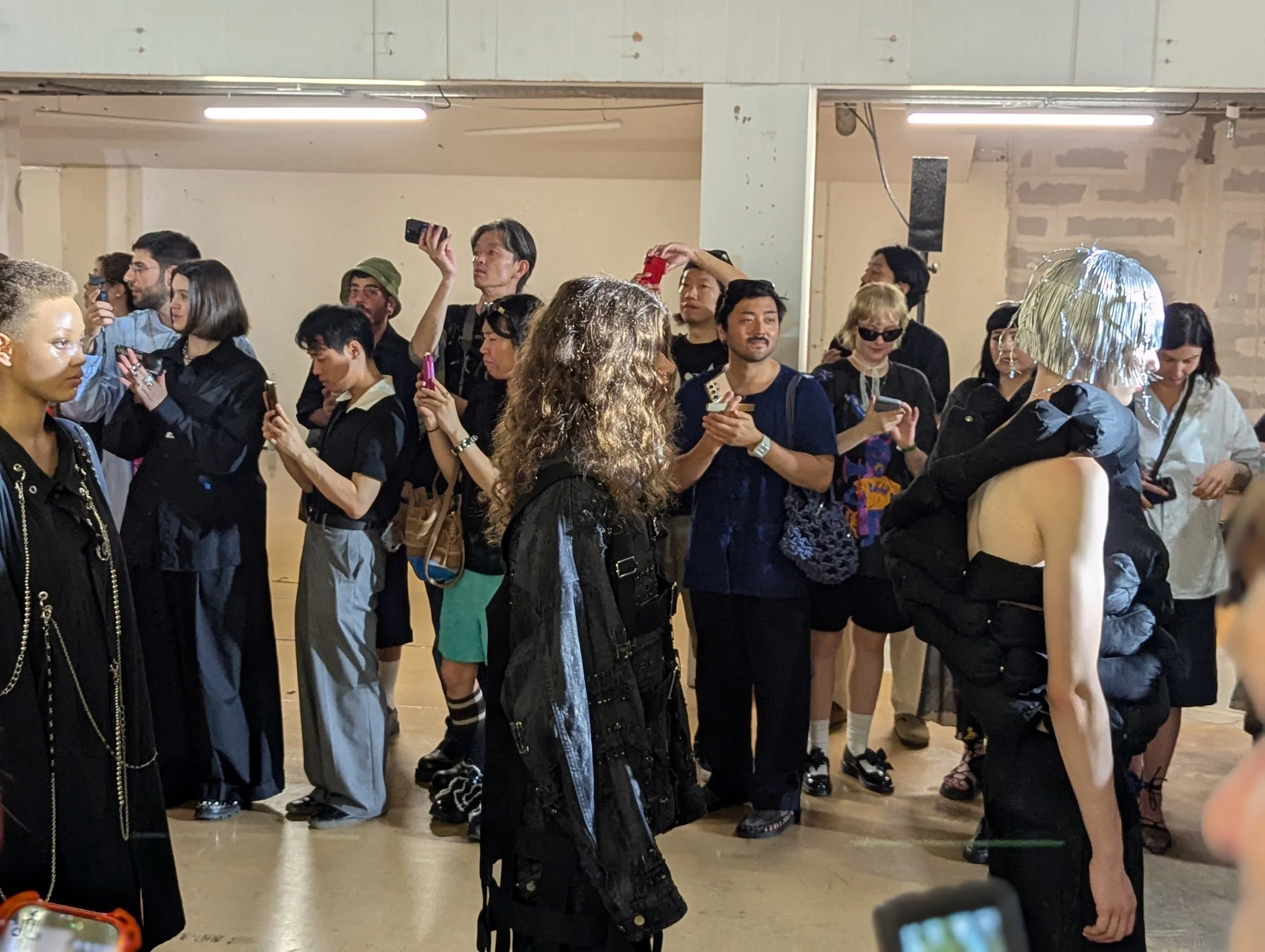
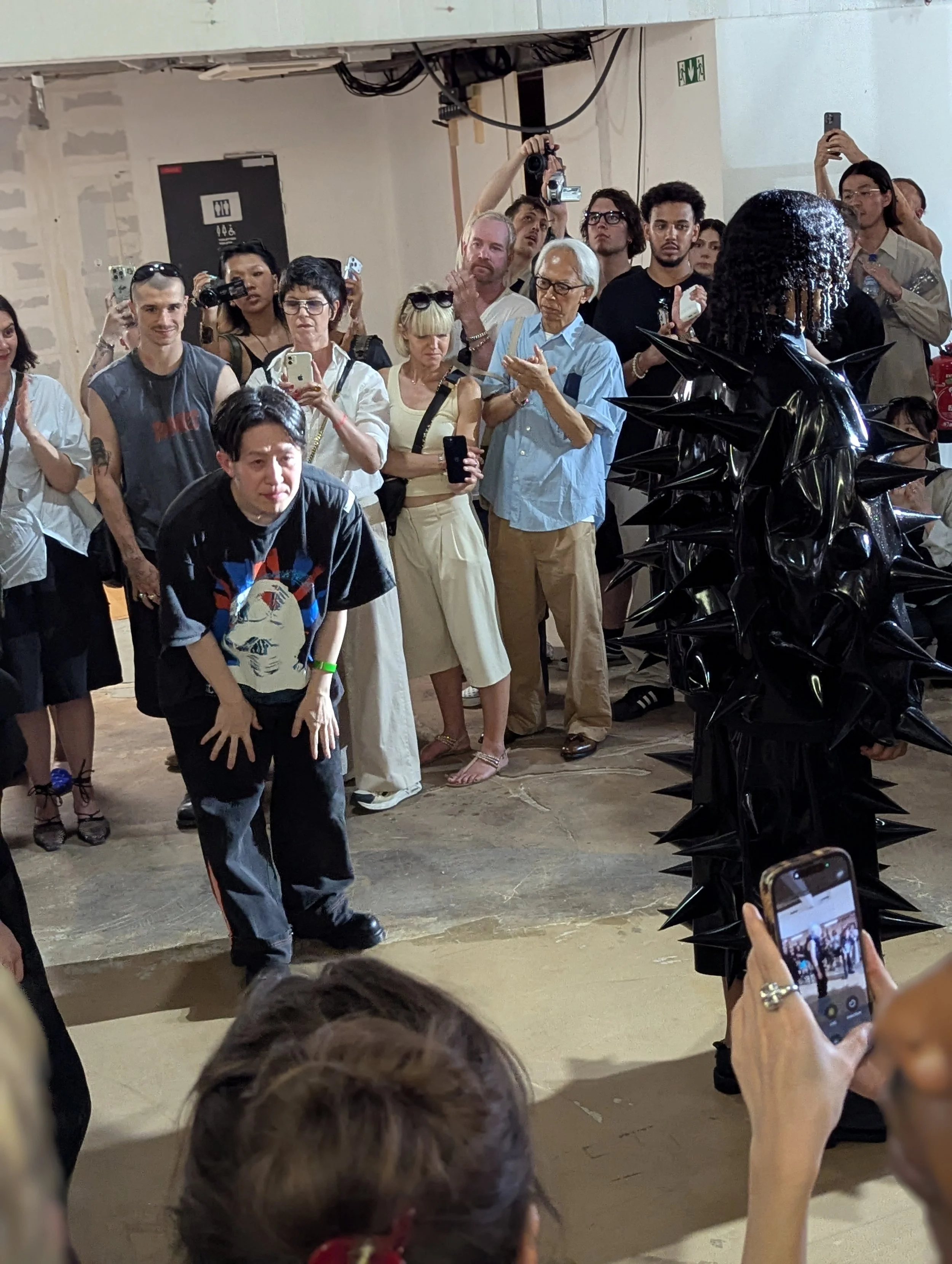
Kidill SS27
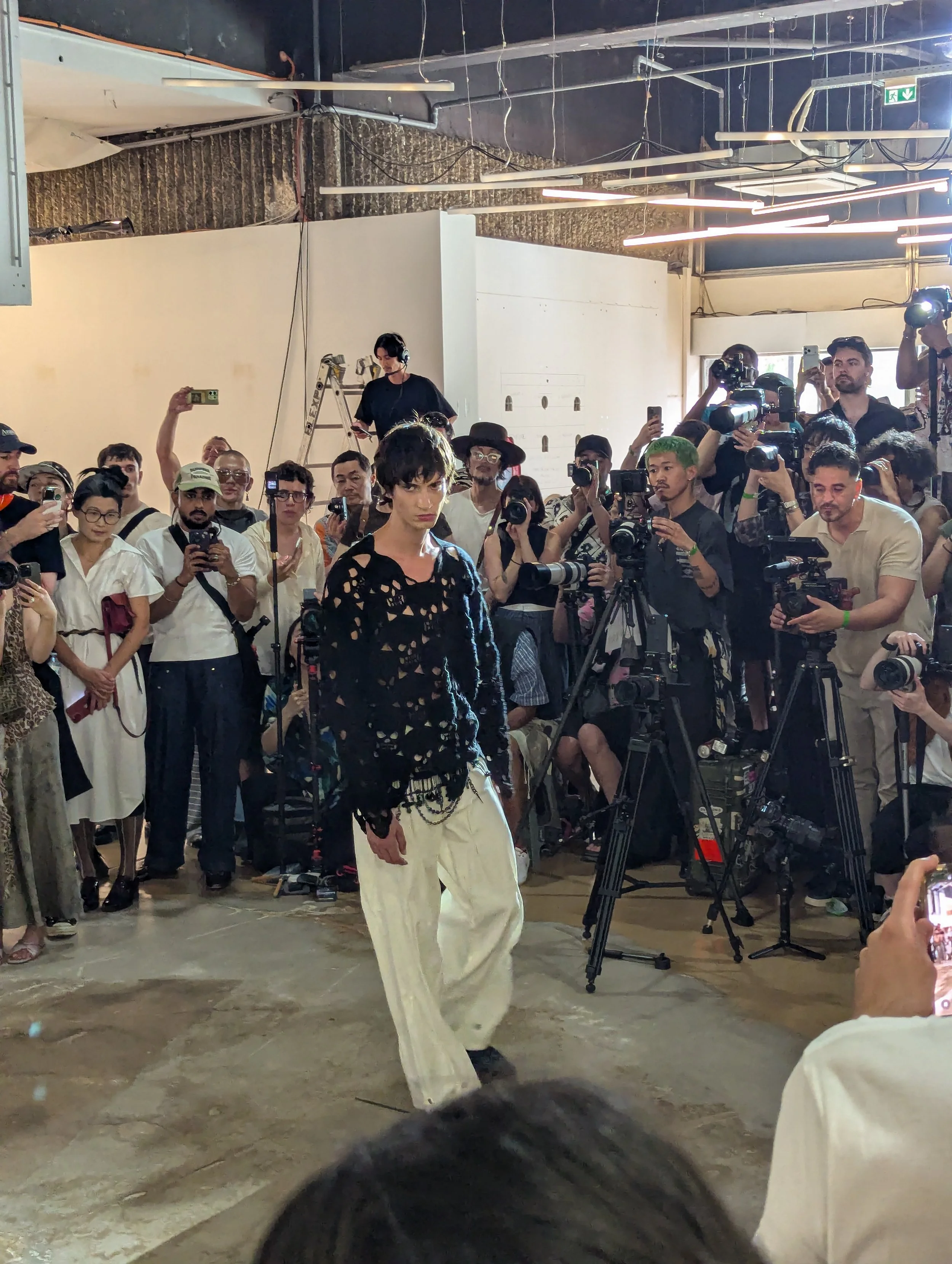
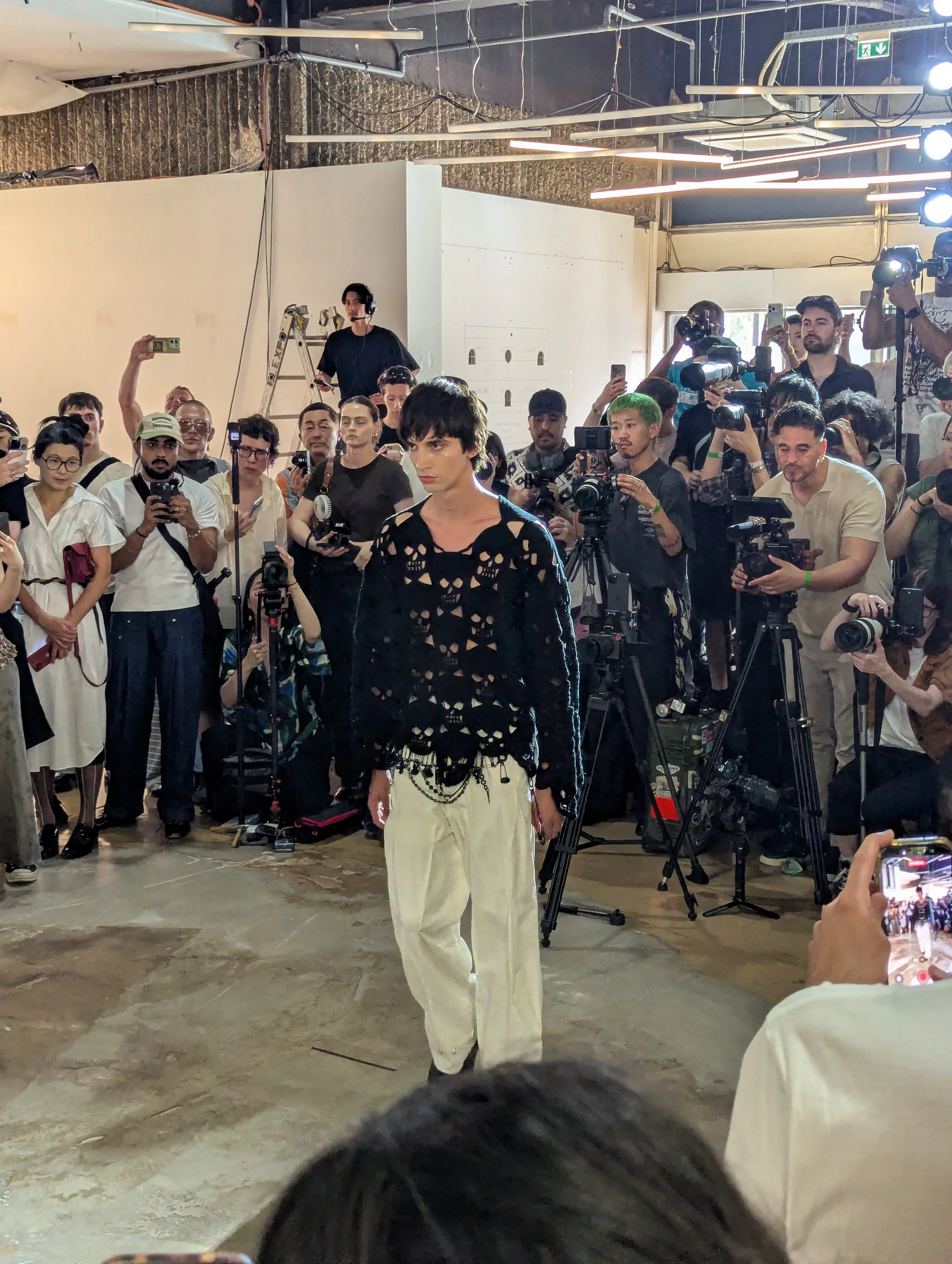
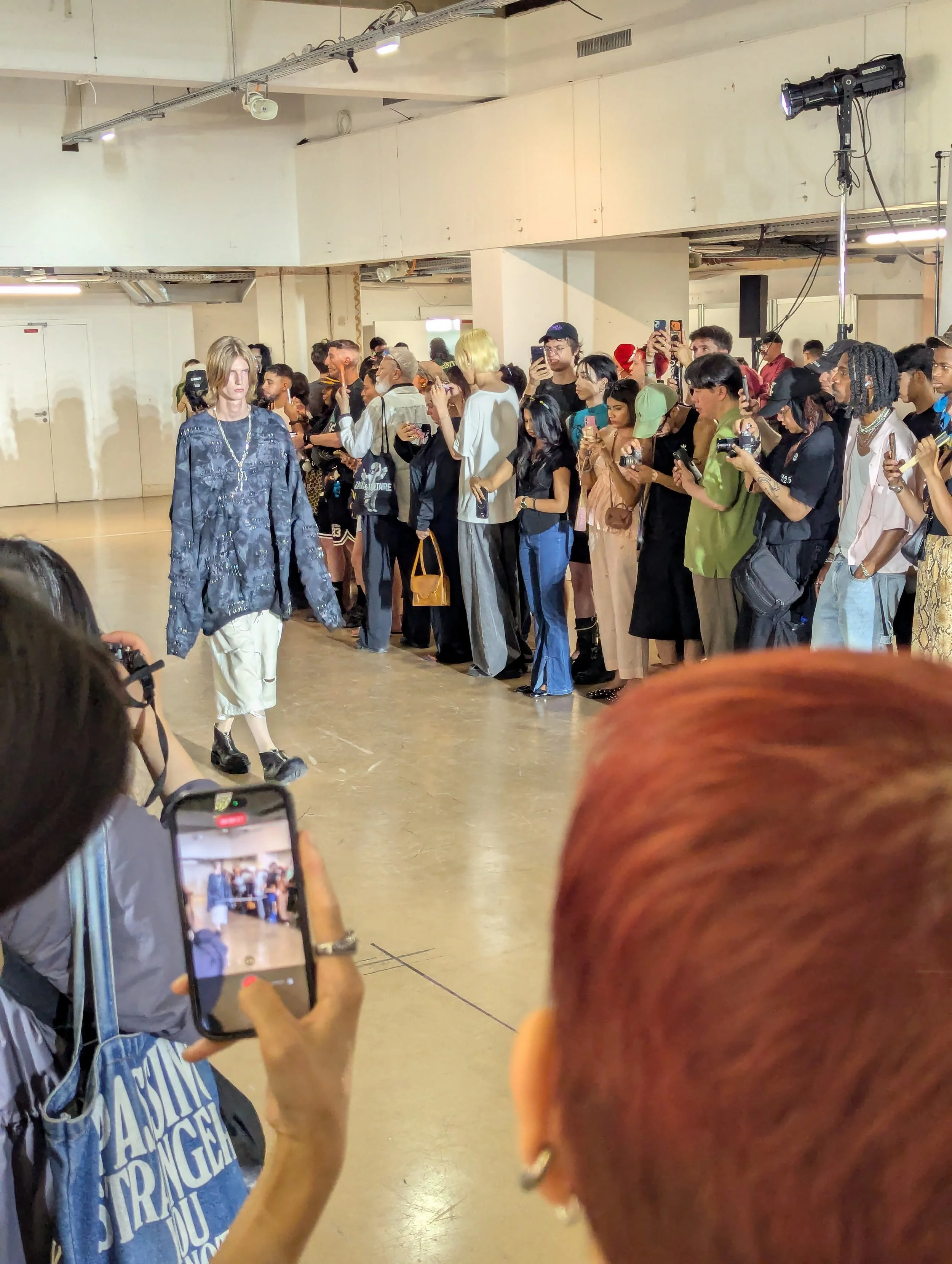
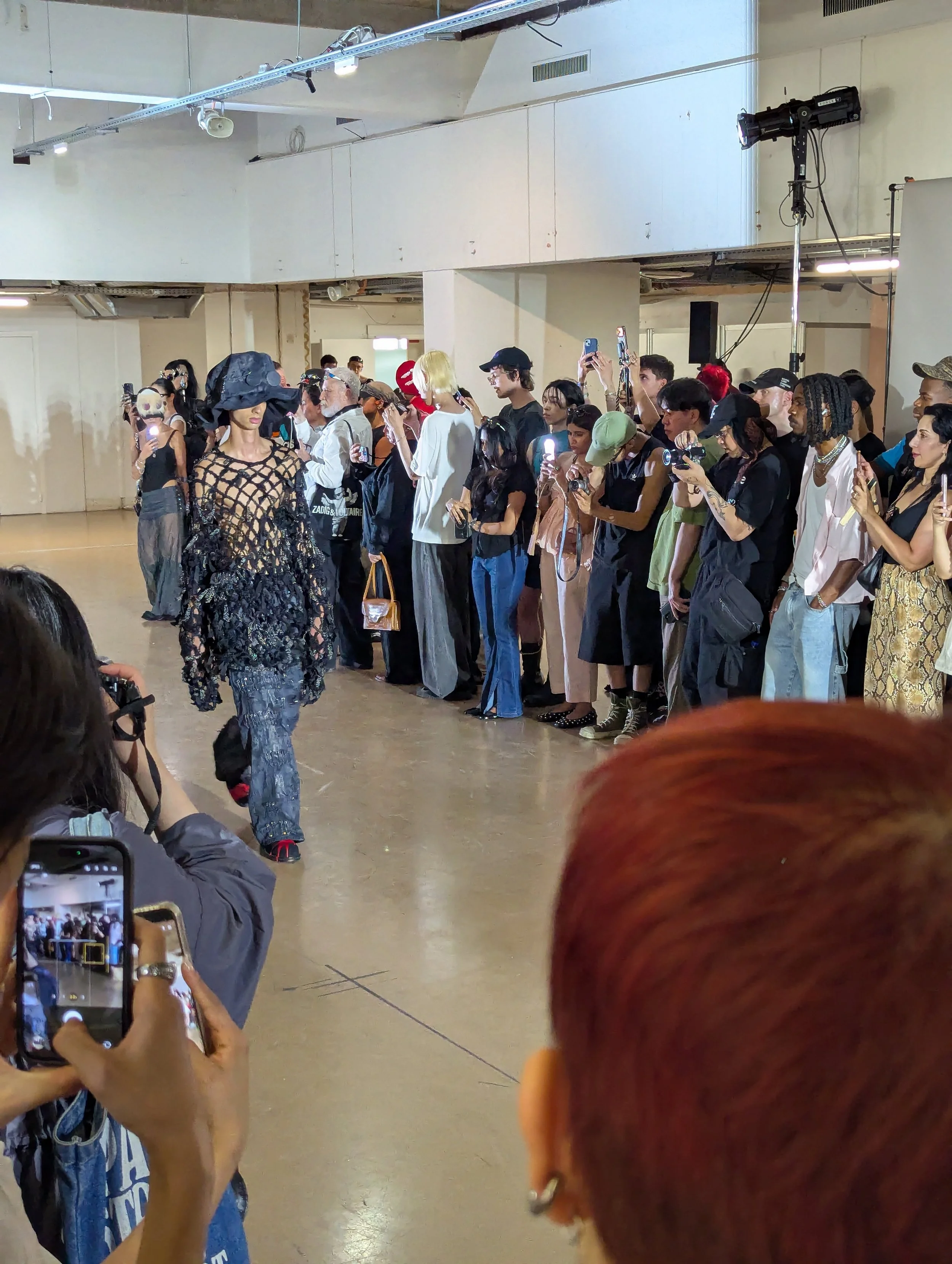
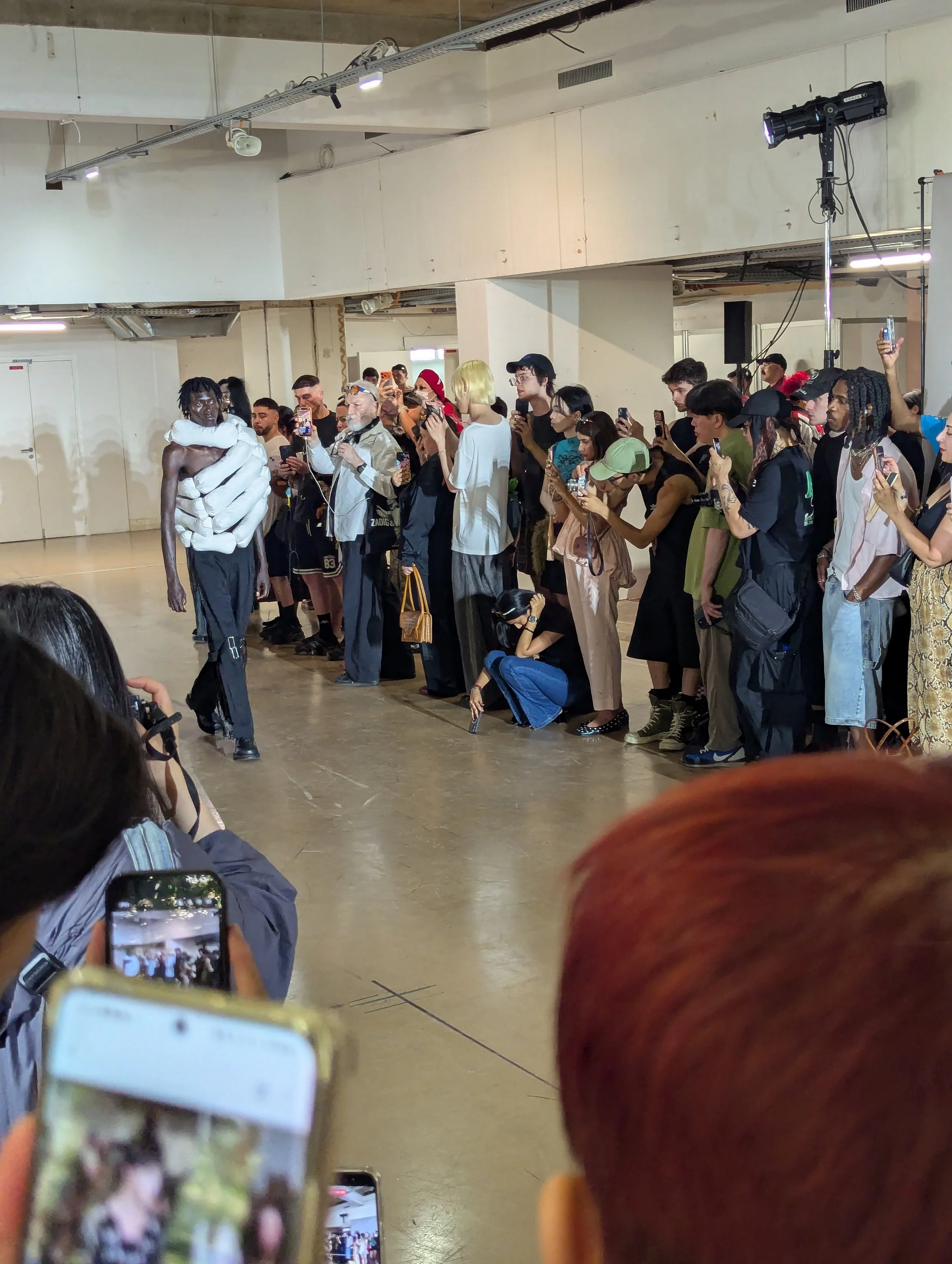
There’s nothing quite like the sight of the Eiffel Tower in Paris, even in the extreme heat of this unprecedented heatwave. In lieu of taking the Metro and being stuck in an airtight hot chamber for 20 minutes, JP and I decided that walking for 30 minutes was probably doable, especially since we’d both stripped down to our white ribbed tank tops. As we arrived at the show, dozens of attendees waved their handheld and electric fans while we pushed our way through the crowd. KIDILL is quite infamous for its standing-room-only presentations, which have always proved challenging, particularly since there are never any risers.
Yet, there is something fitting about this kind of discomfort at a KIDILL show. The Japanese label has never been particularly interested in making fashion feel too polished, too comfortable, or too easy to digest. Under the direction of designer Hiroaki Sueyasu, KIDILL has consistently explored the tension between punk subculture, youthful rebellion, and the more unsettling dimensions of contemporary Japanese street style.
For SS27, the question is how these familiar codes continue to evolve in a fashion landscape increasingly drawn to spectacle, nostalgia, and subcultural references. Rather than treating punk as a purely aesthetic exercise, KIDILL approaches it as an attitude: confrontational, deliberately imperfect, and resistant to the conventions that dictate how clothing should look or how it should be worn.
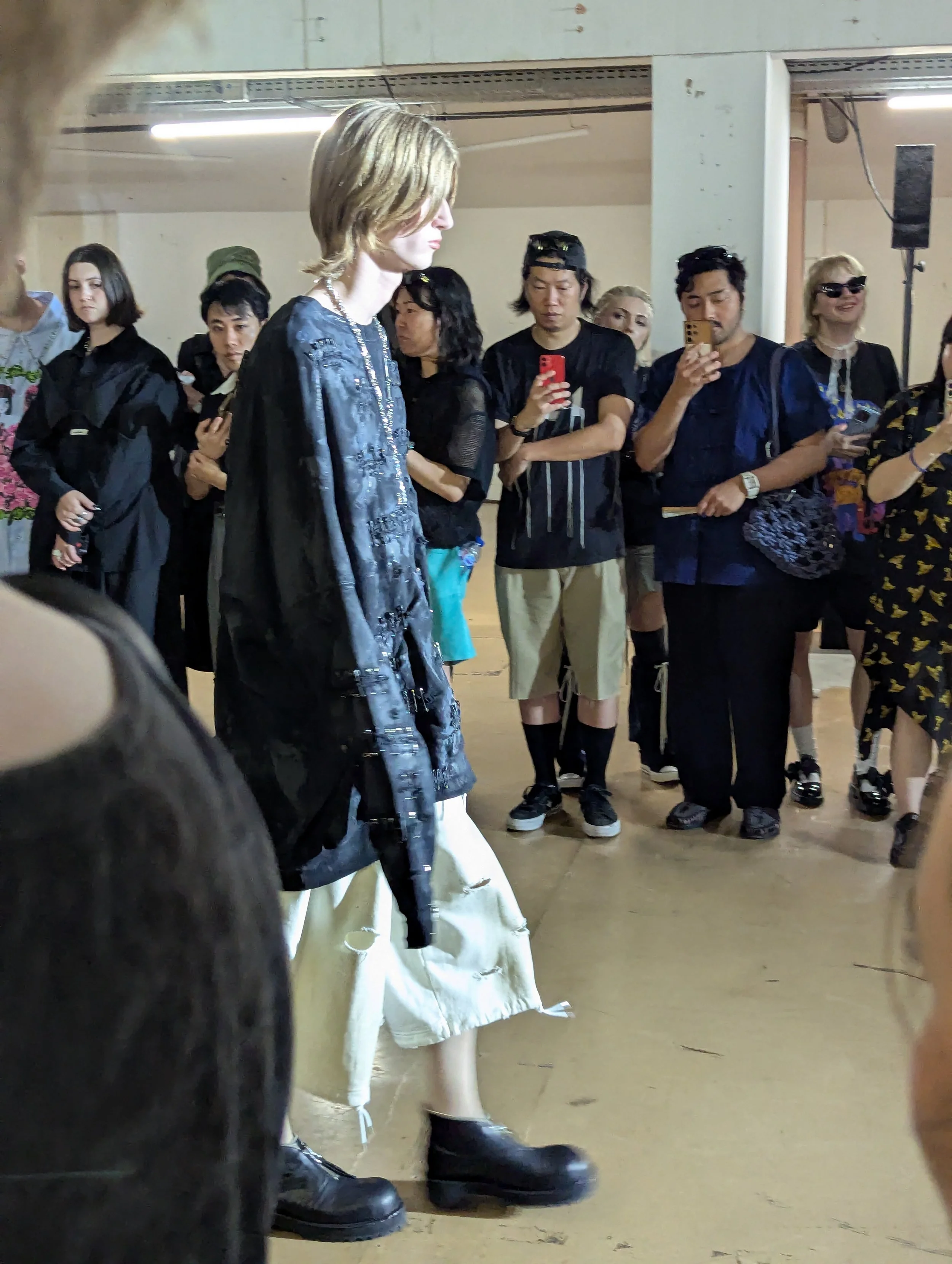
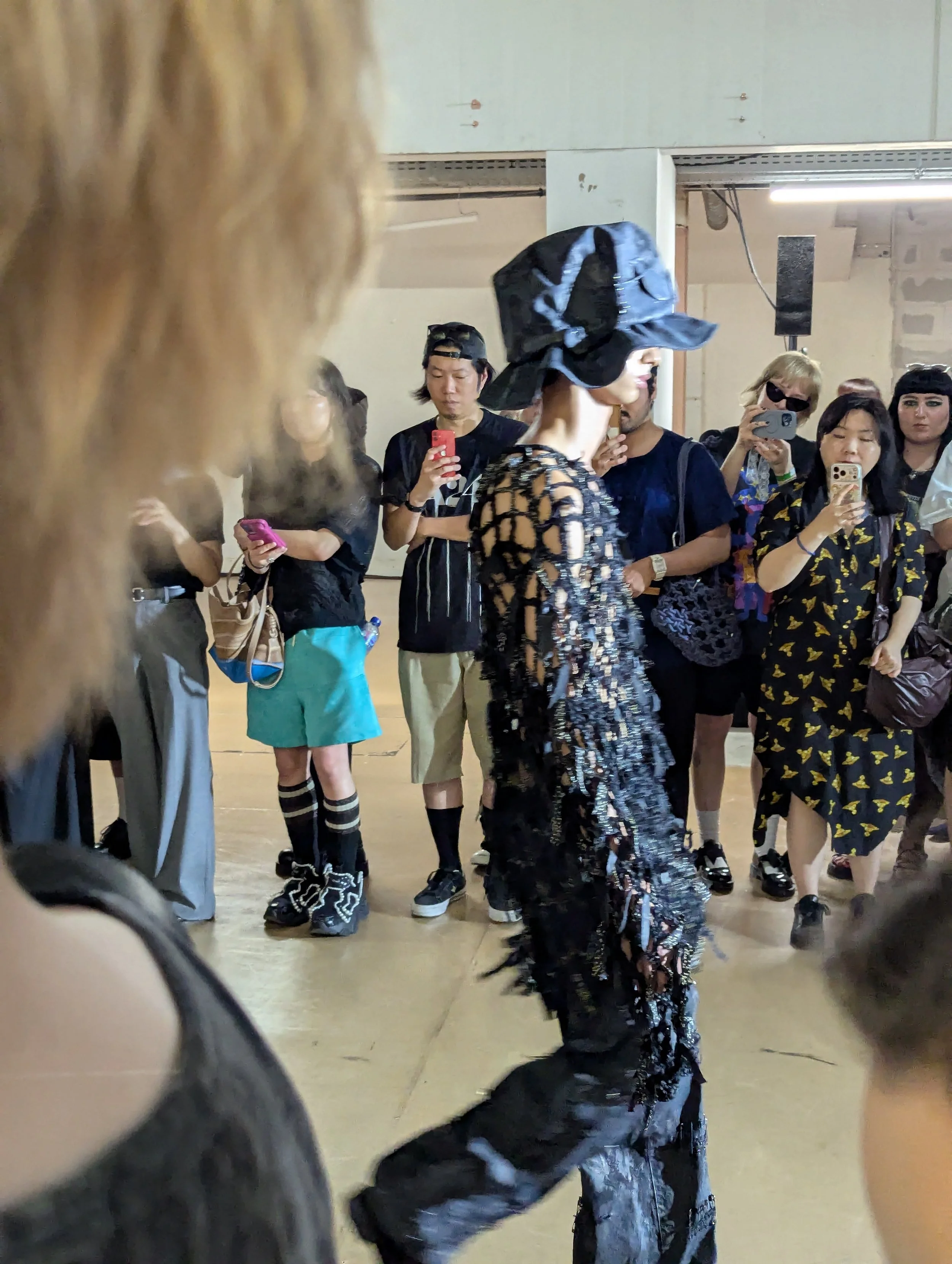
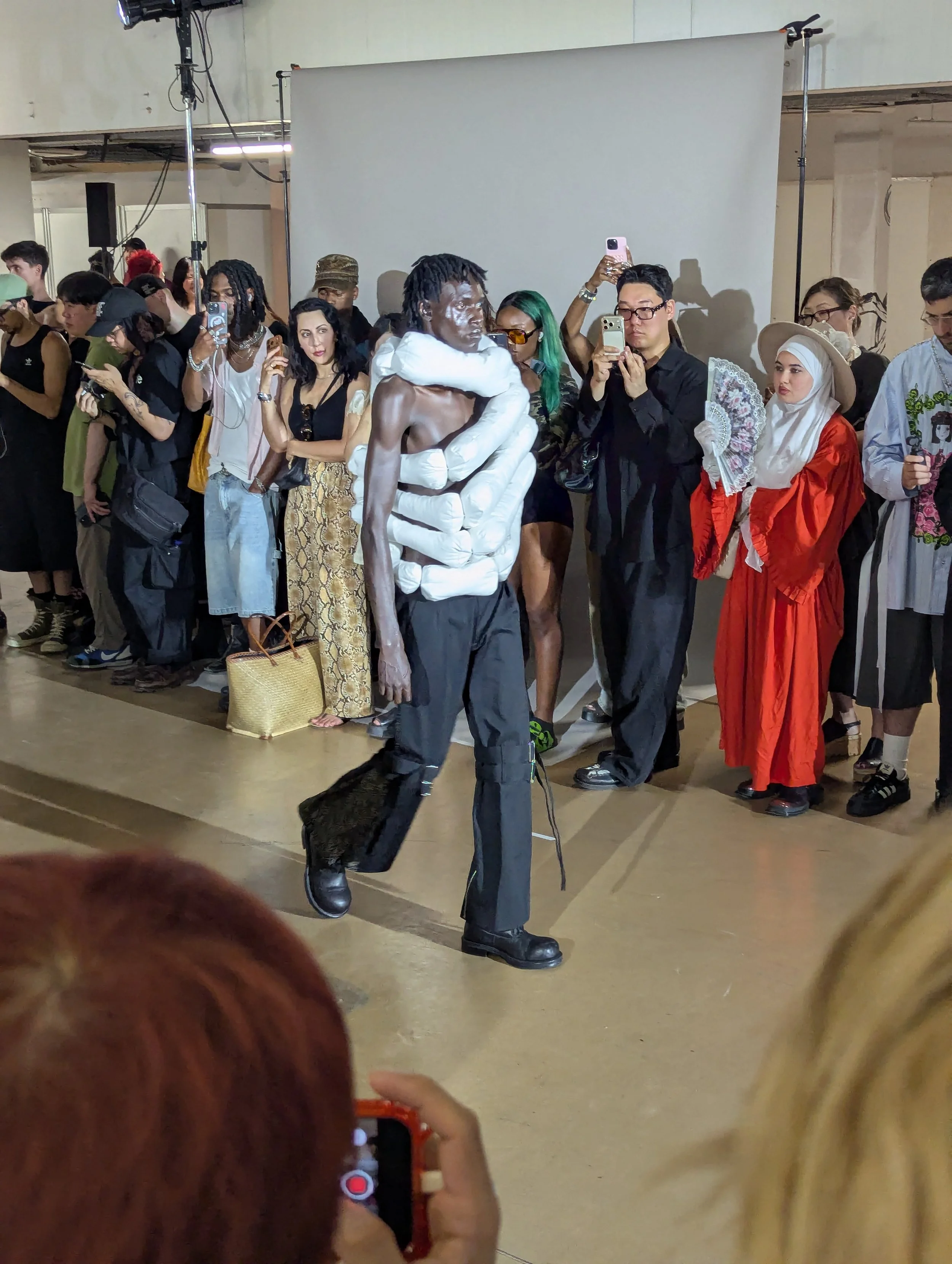
What makes the label compelling is its willingness to embrace contradiction. Fragility and aggression, disorder and intention, and the handmade and the industrial can coexist within the same visual language. Distressed surfaces, exaggerated proportions, and the energy of underground youth culture have long informed Sueyasu’s design vocabulary, allowing the clothes to communicate something beyond their immediate silhouettes.
This is also where KIDILL occupies an interesting position within Paris Men’s Fashion Week. While many designers revisit punk through familiar references to leather, hardware, and torn fabrics, Sueyasu’s approach is rooted in a more personal understanding of Japanese subculture. The result is less about reproducing a historical moment than about preserving the spirit of nonconformity that made these movements meaningful in the first place.
And perhaps that is why the atmosphere surrounding the show matters as much as the clothes themselves. The compressed crowd, the restless energy, and the collective anticipation all contribute to an experience that feels closer to an underground gathering than a conventional runway presentation. Fashion, in this context, is not simply something to observe from a comfortable distance. It is something to participate in, even when participation means standing shoulder to shoulder in the Parisian heat.
As the SS27 collections continue to shape the conversation around menswear, KIDILL offers a reminder that fashion does not always need to seek refinement to demonstrate sophistication. Sometimes, its most interesting expressions emerge from discomfort, confrontation, and a refusal to fit neatly into established expectations.
In a season where individuality remains one of fashion’s most frequently invoked ideals, KIDILL’s continued commitment to the unruly spirit of punk feels particularly relevant. It is not rebellion for rebellion’s sake, but an ongoing investigation into the relationship between identity, subculture, and the clothes we choose to inhabit.