Reverie by Caroline Hu AW26
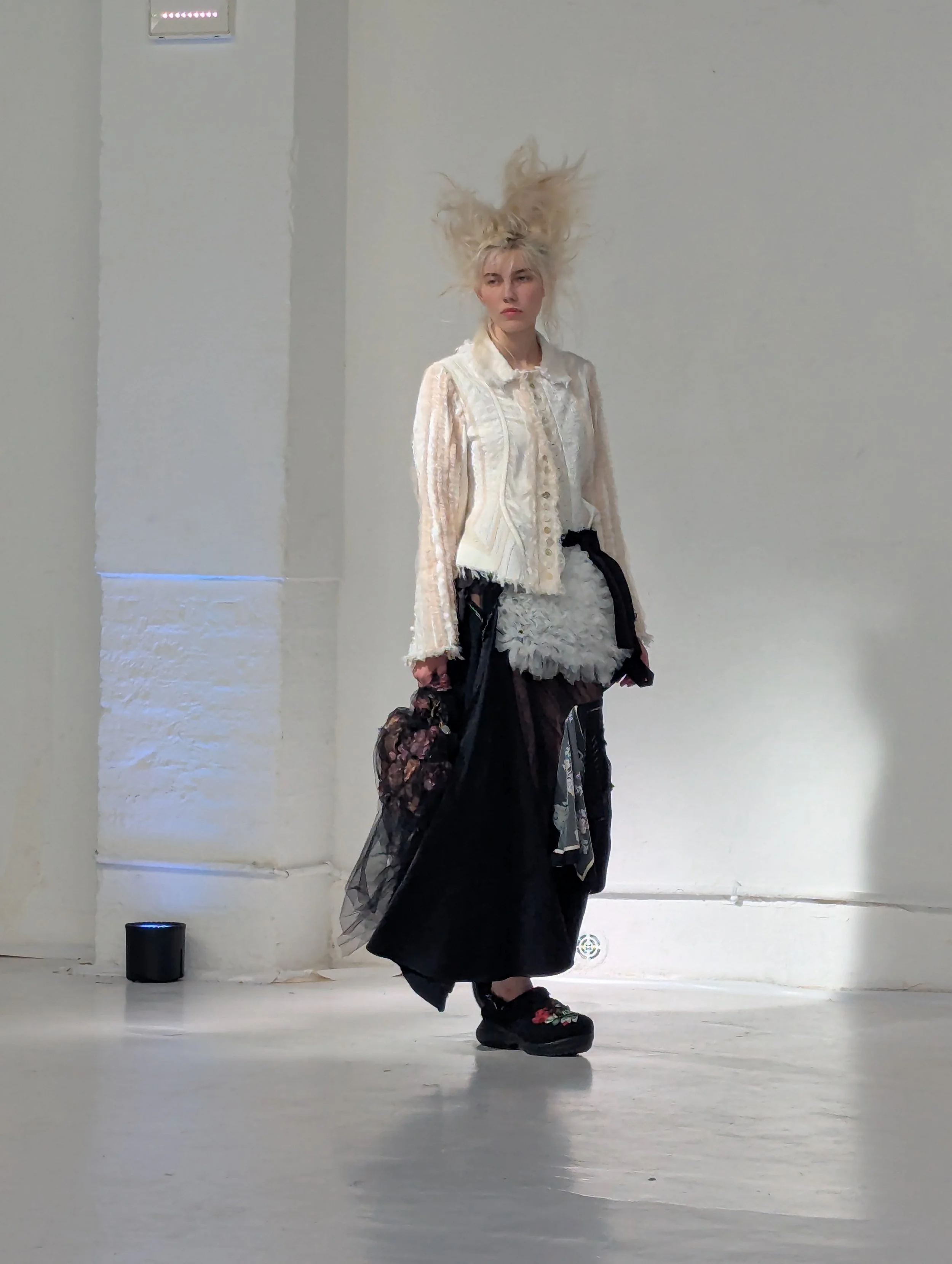
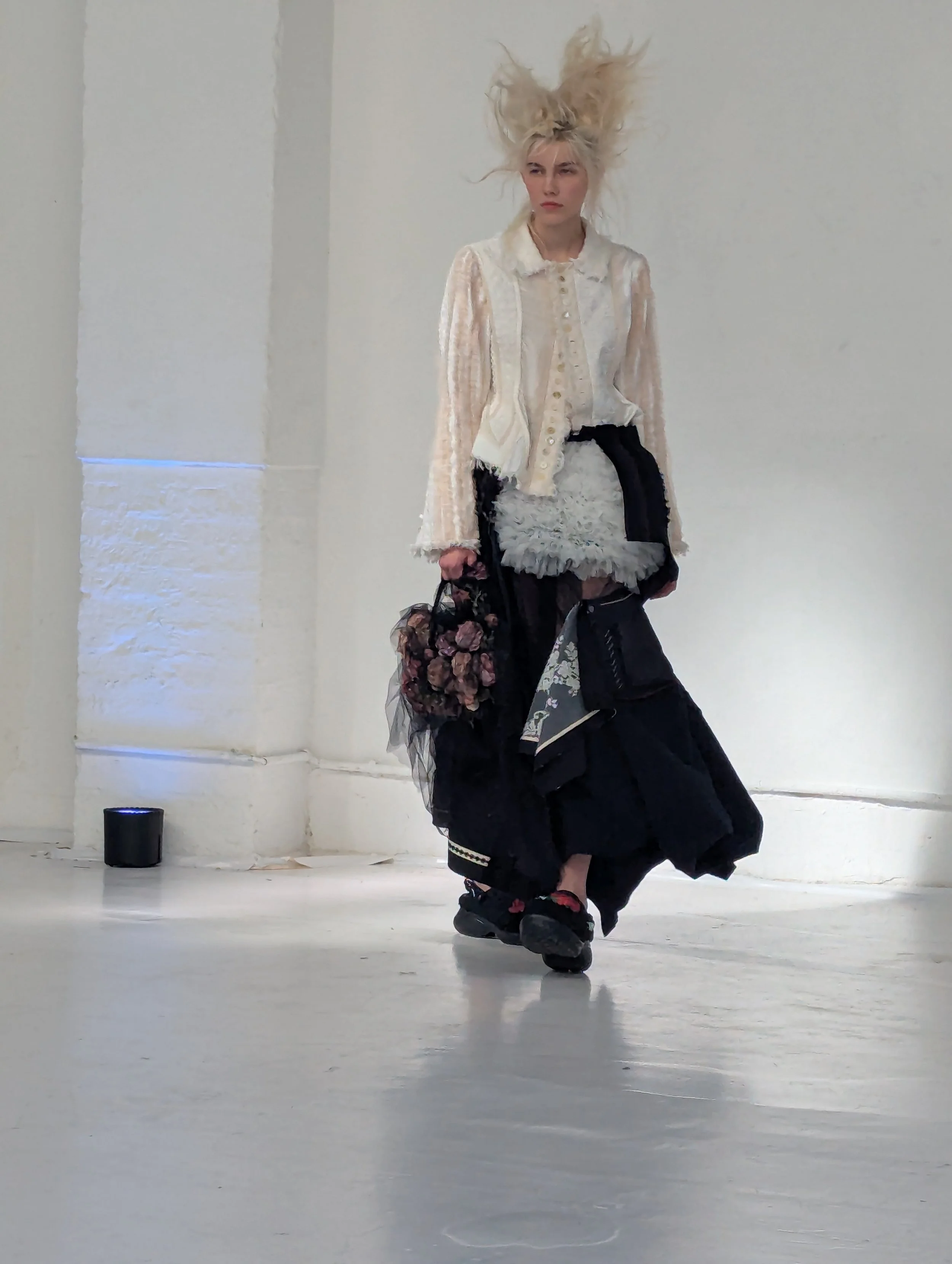
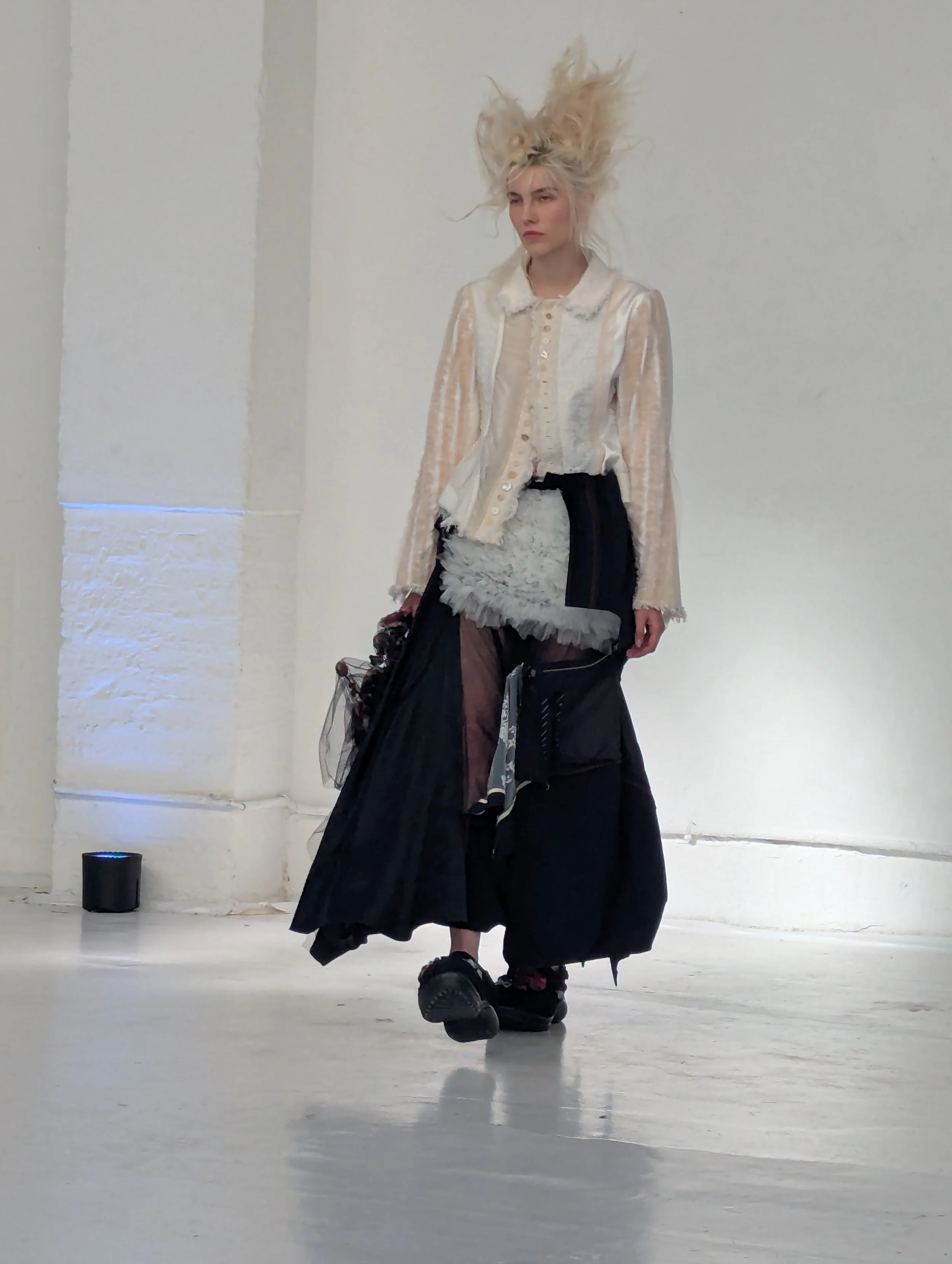
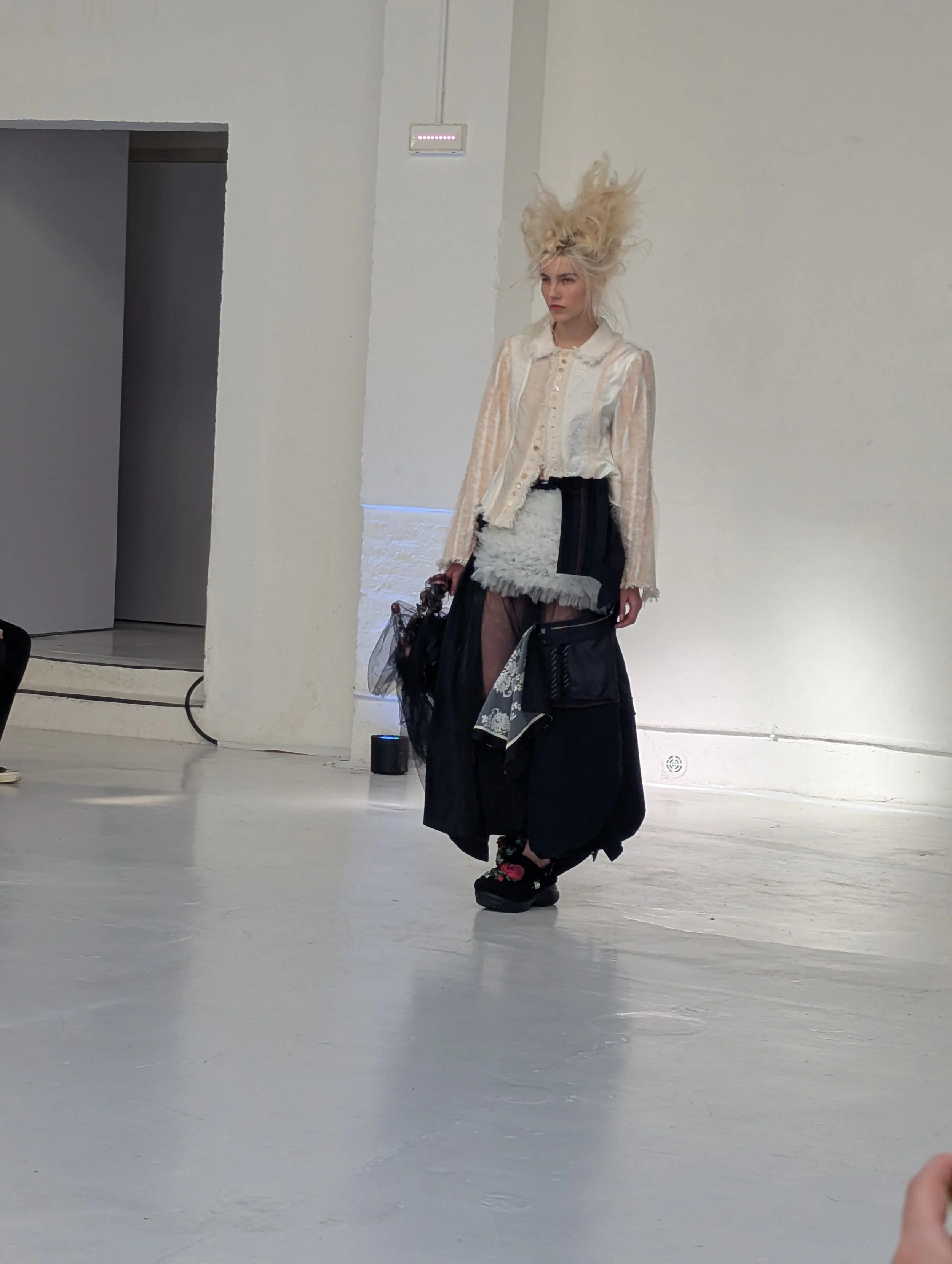
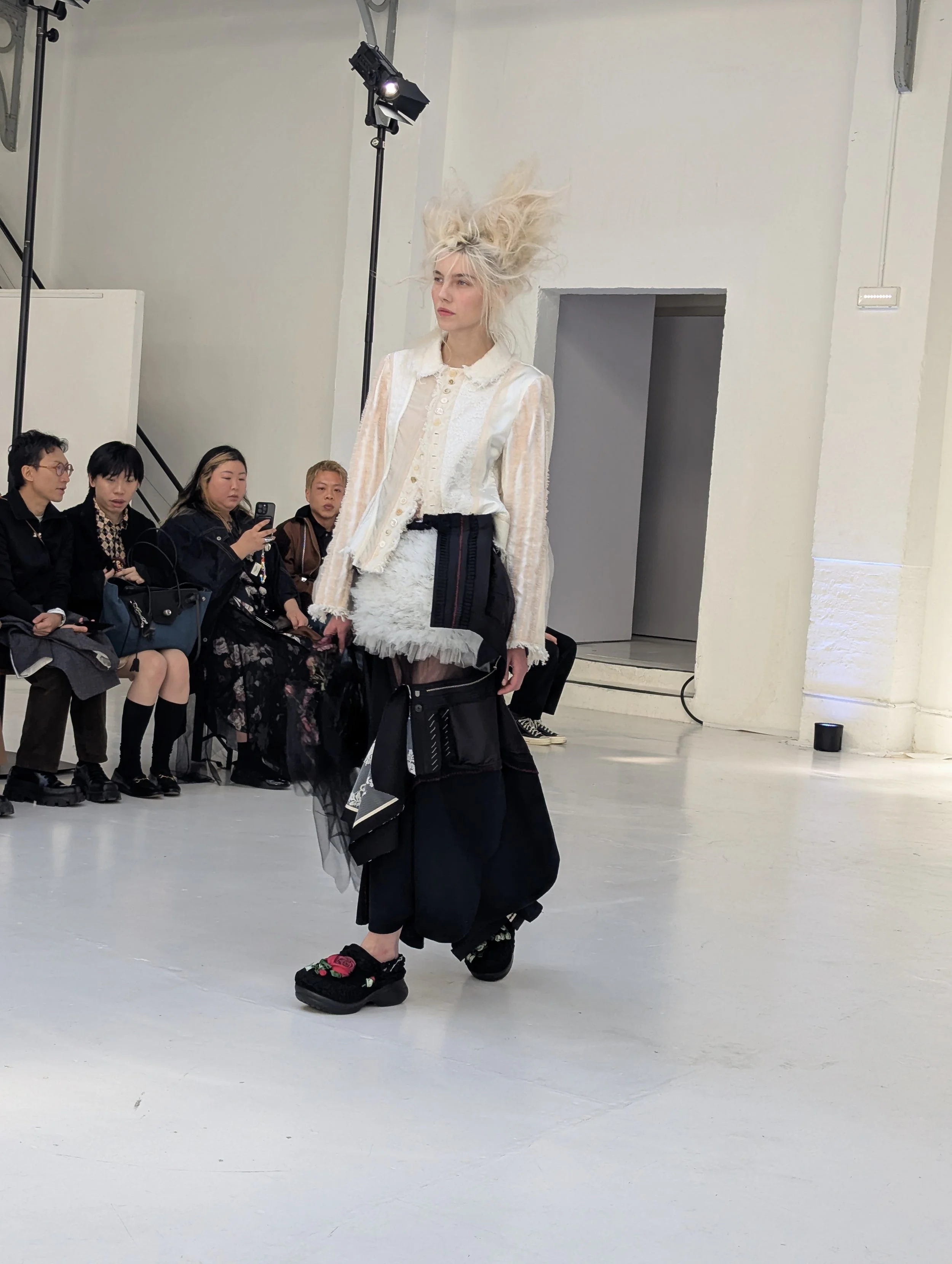
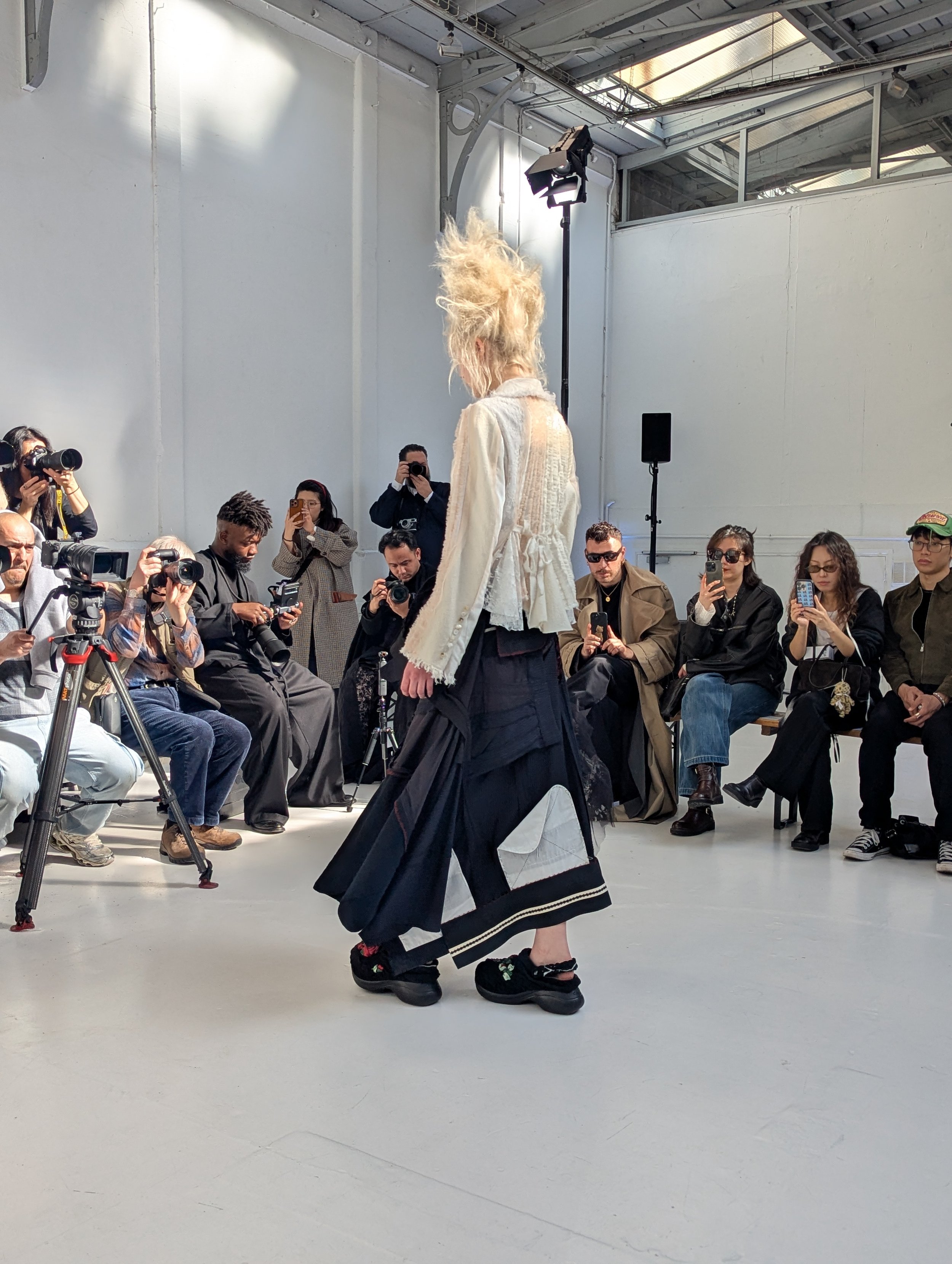
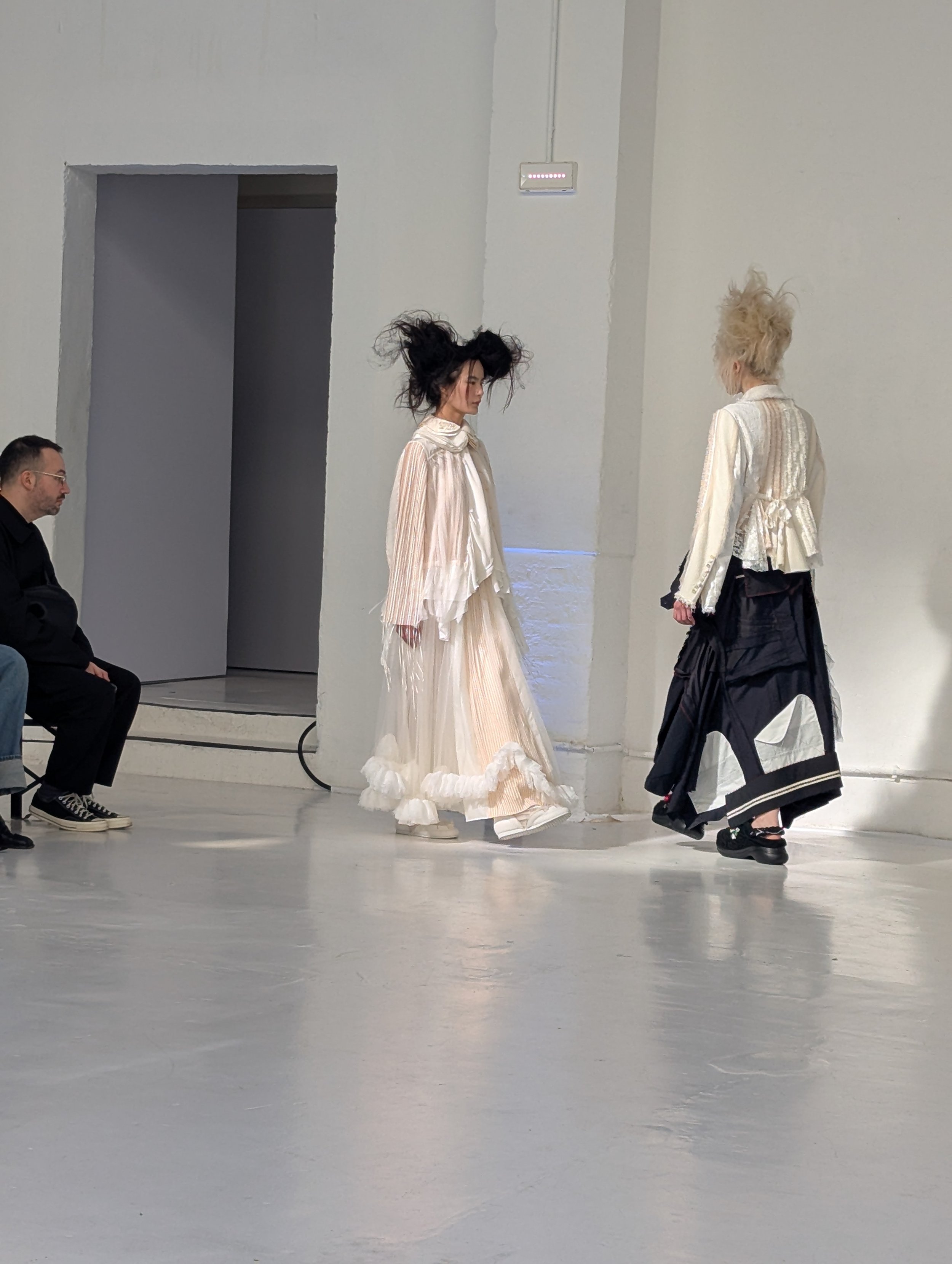
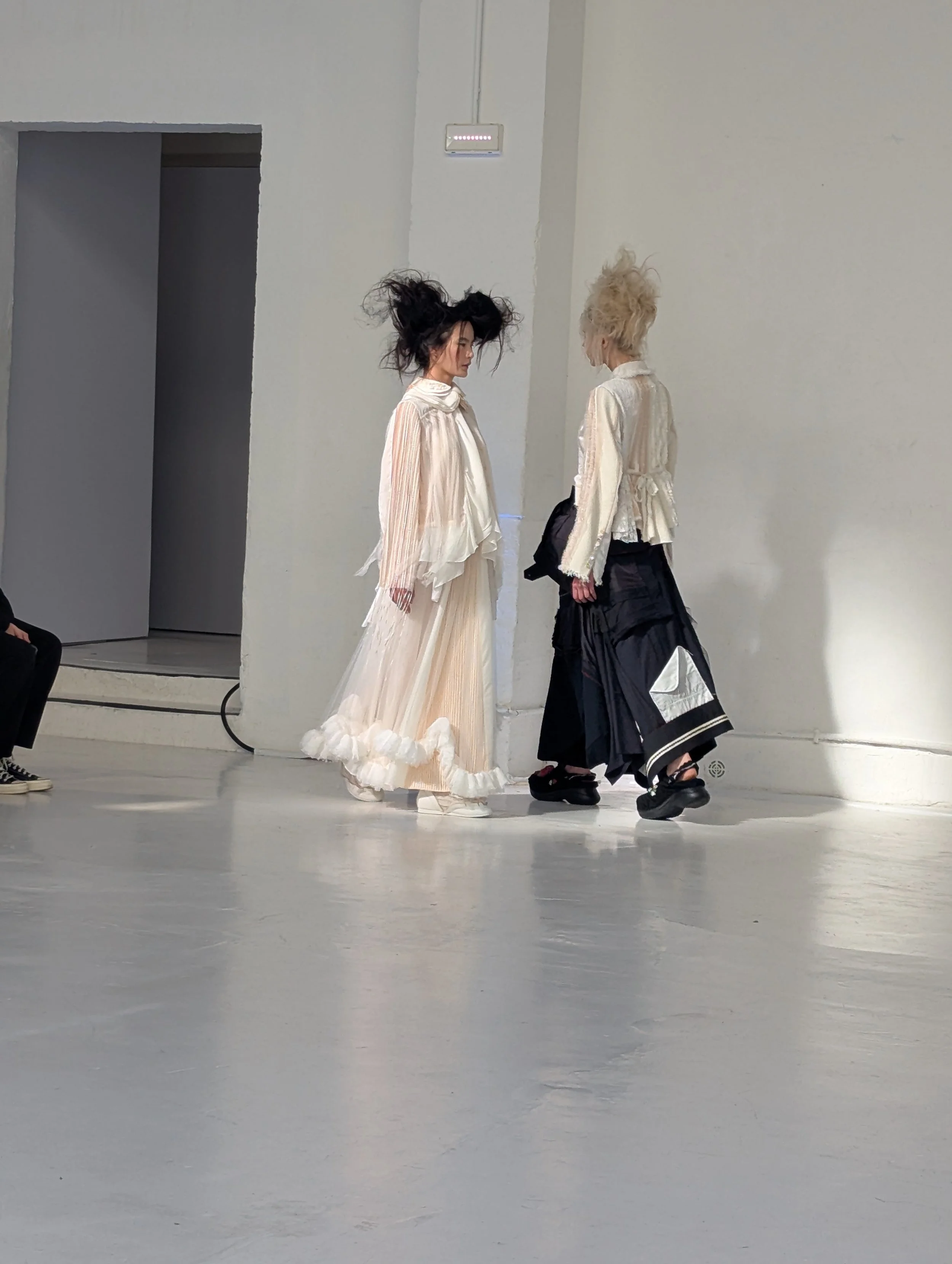
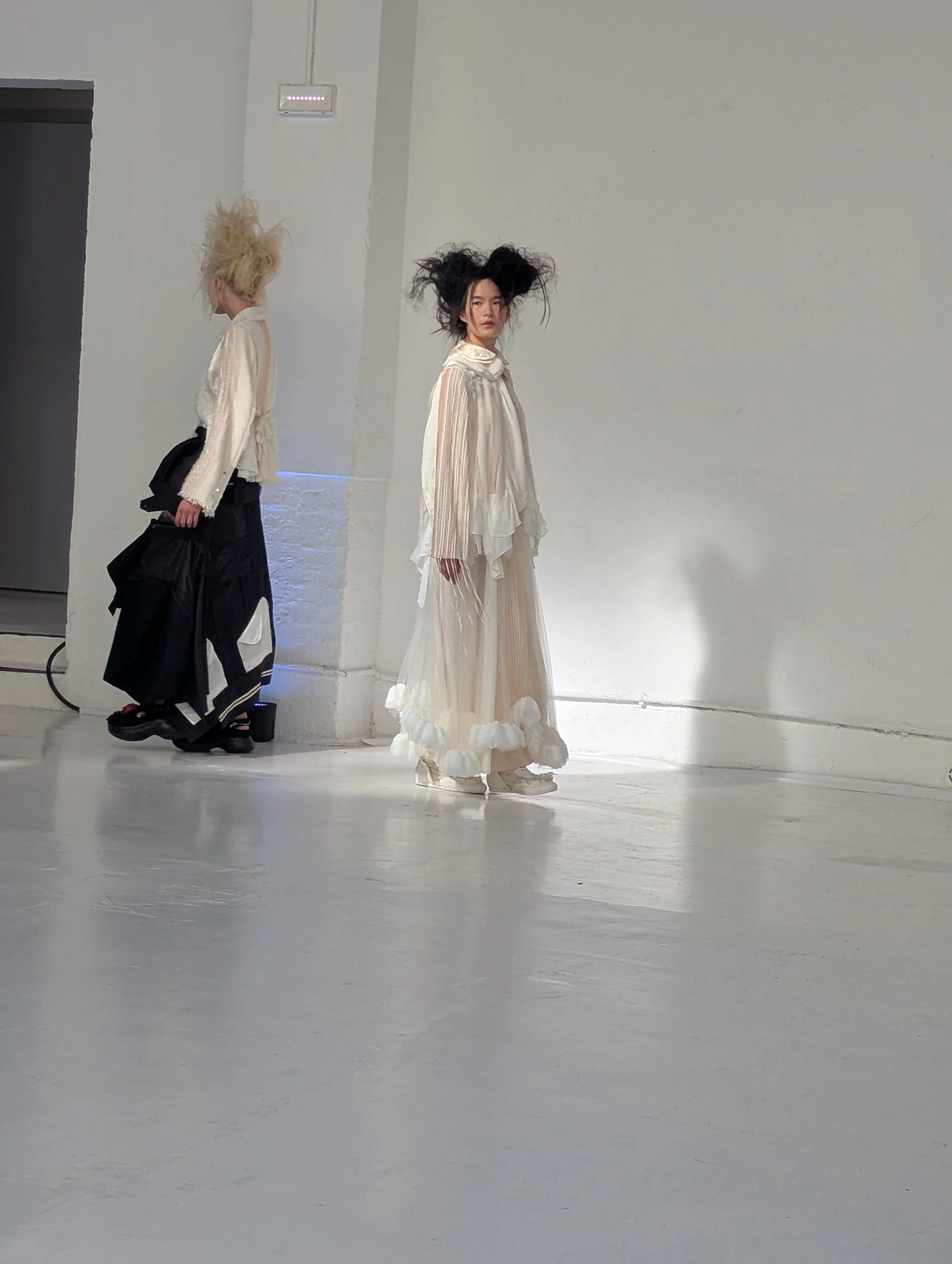
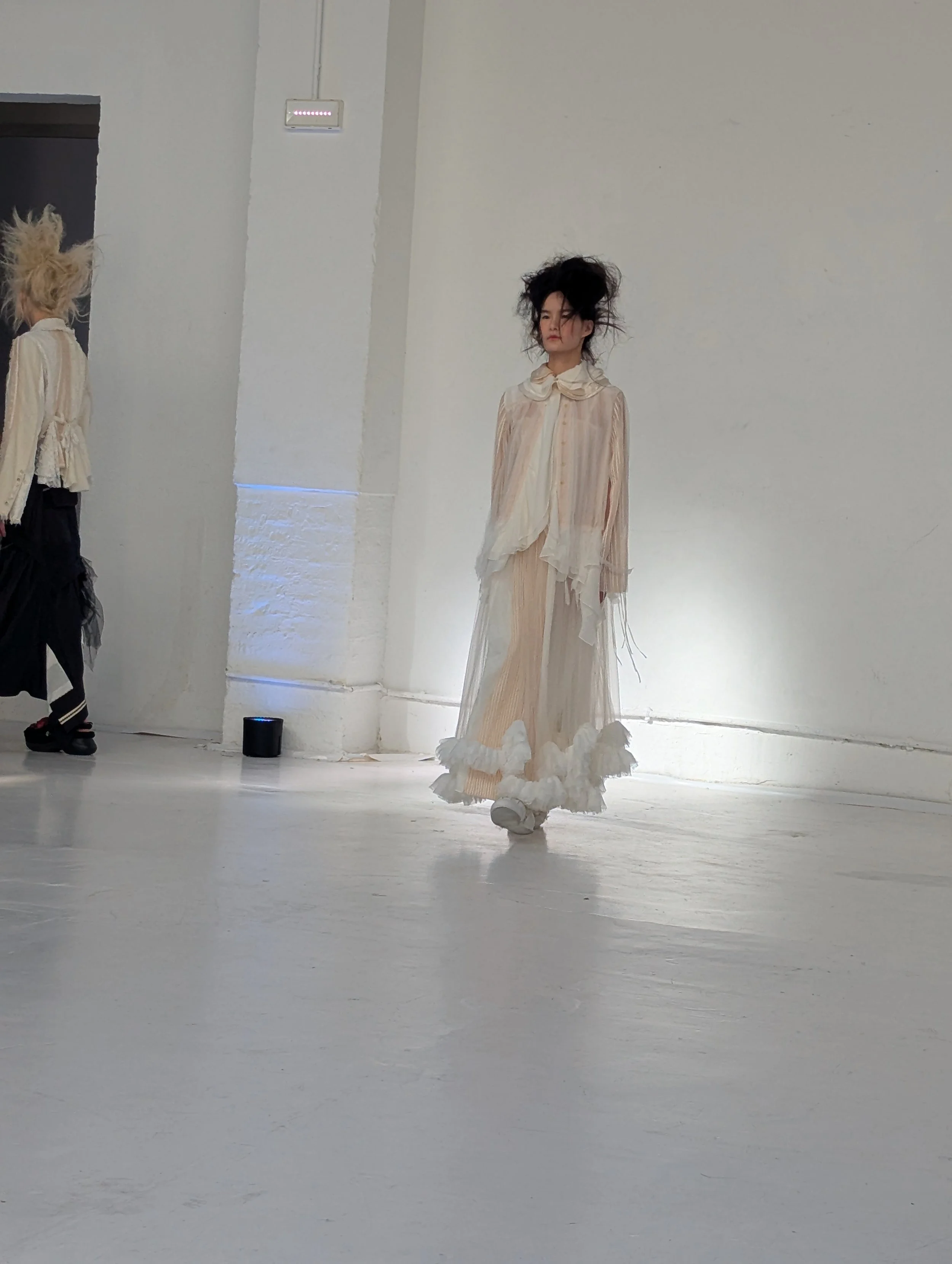
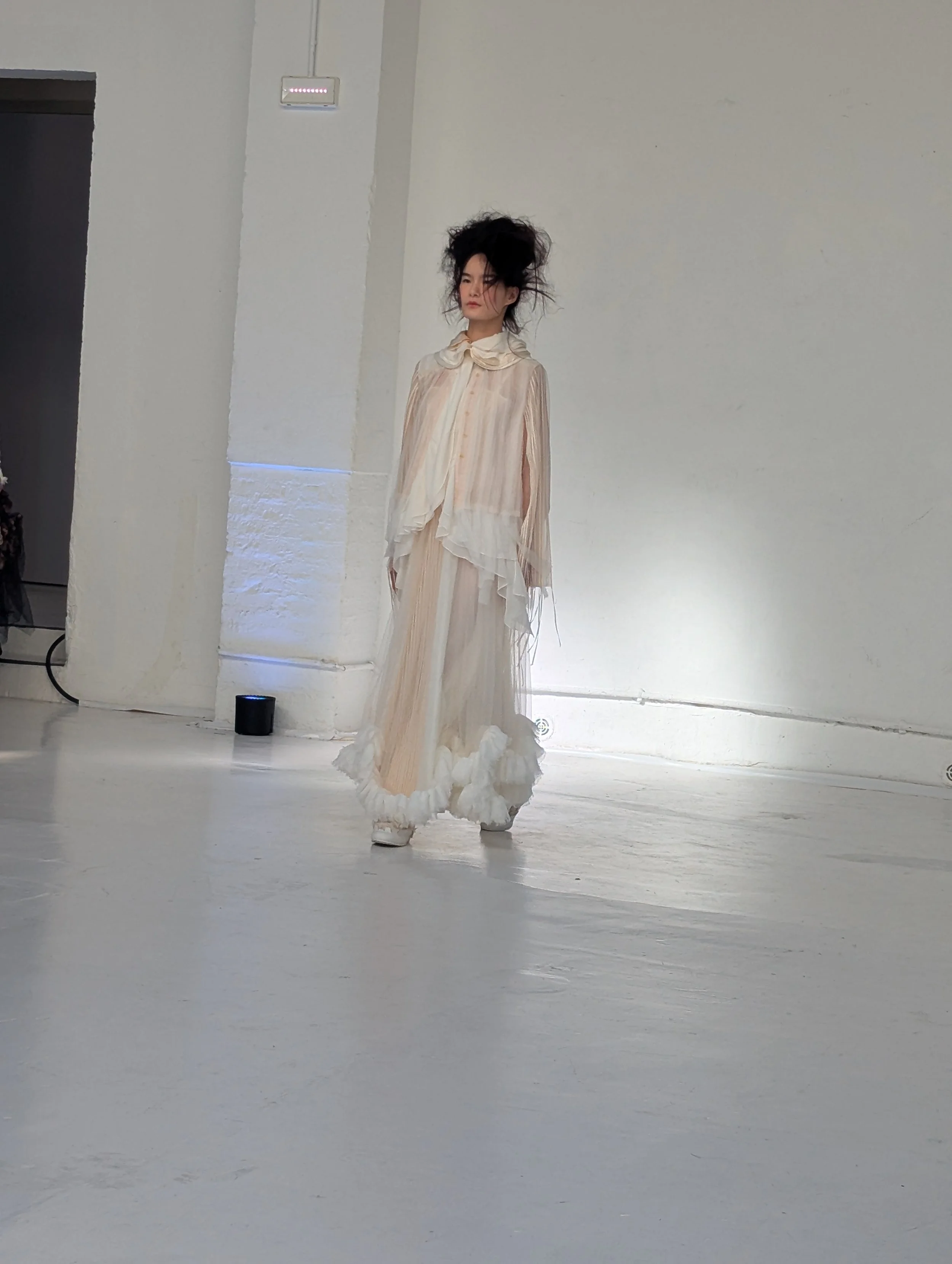
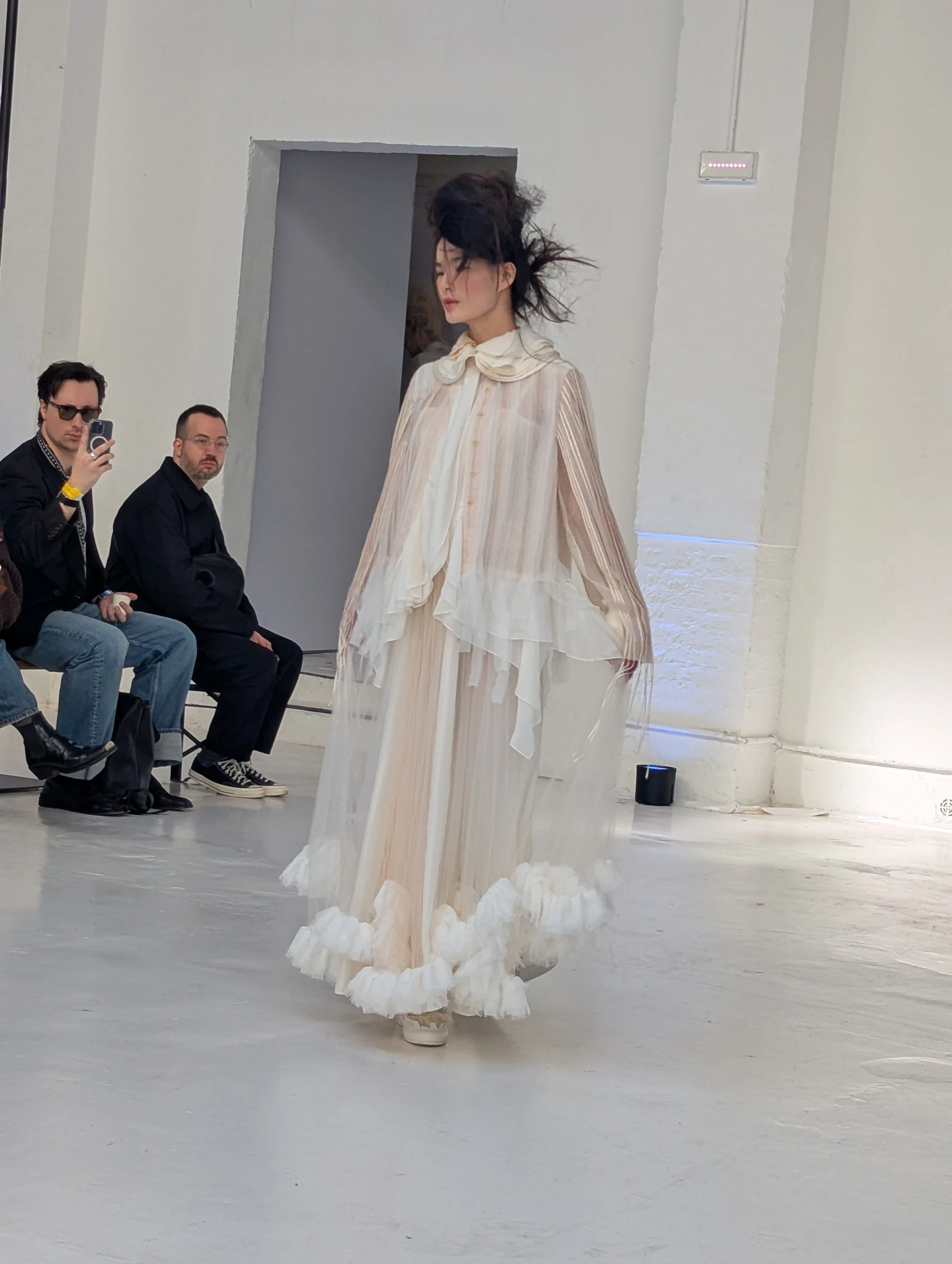
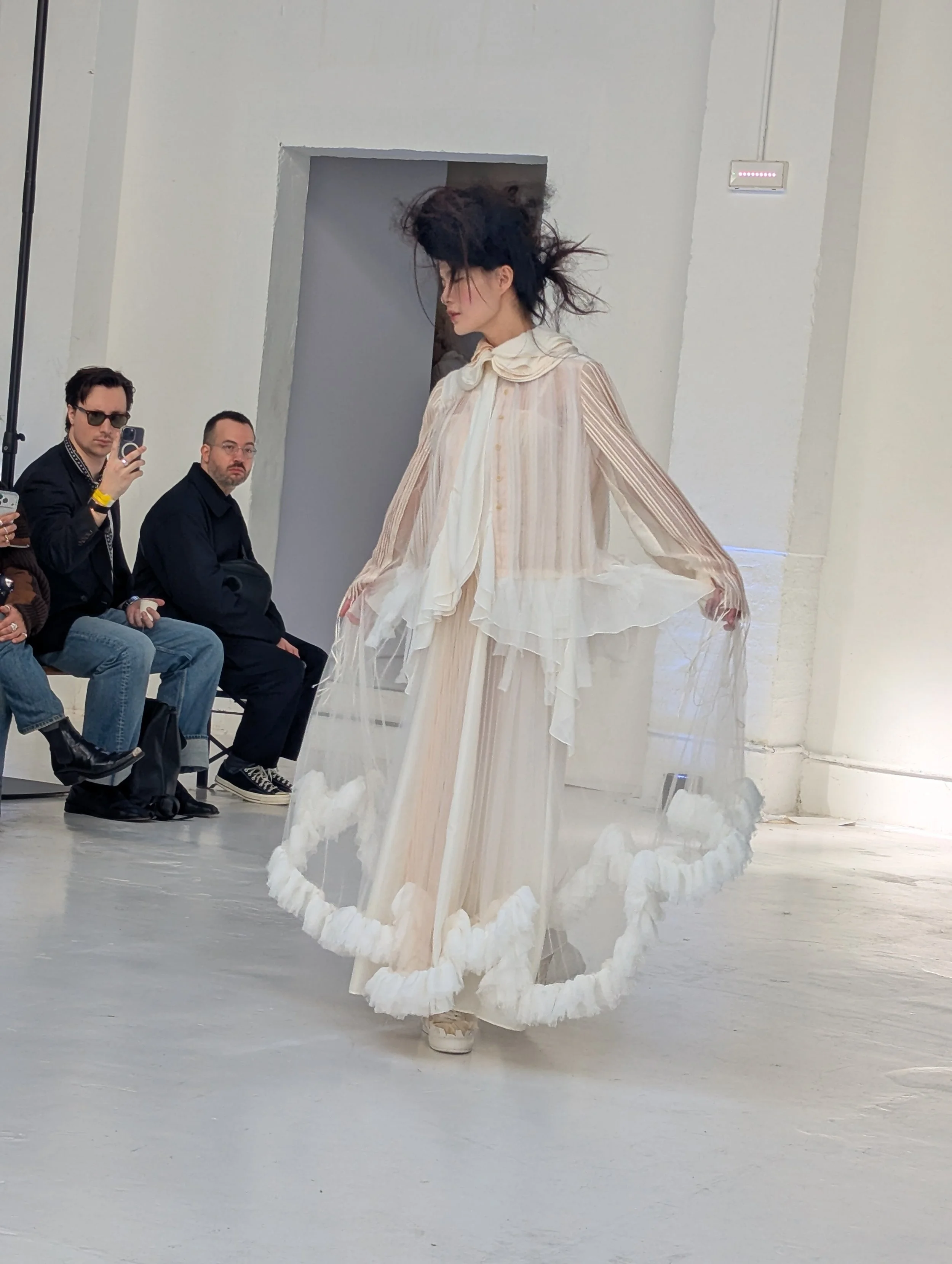
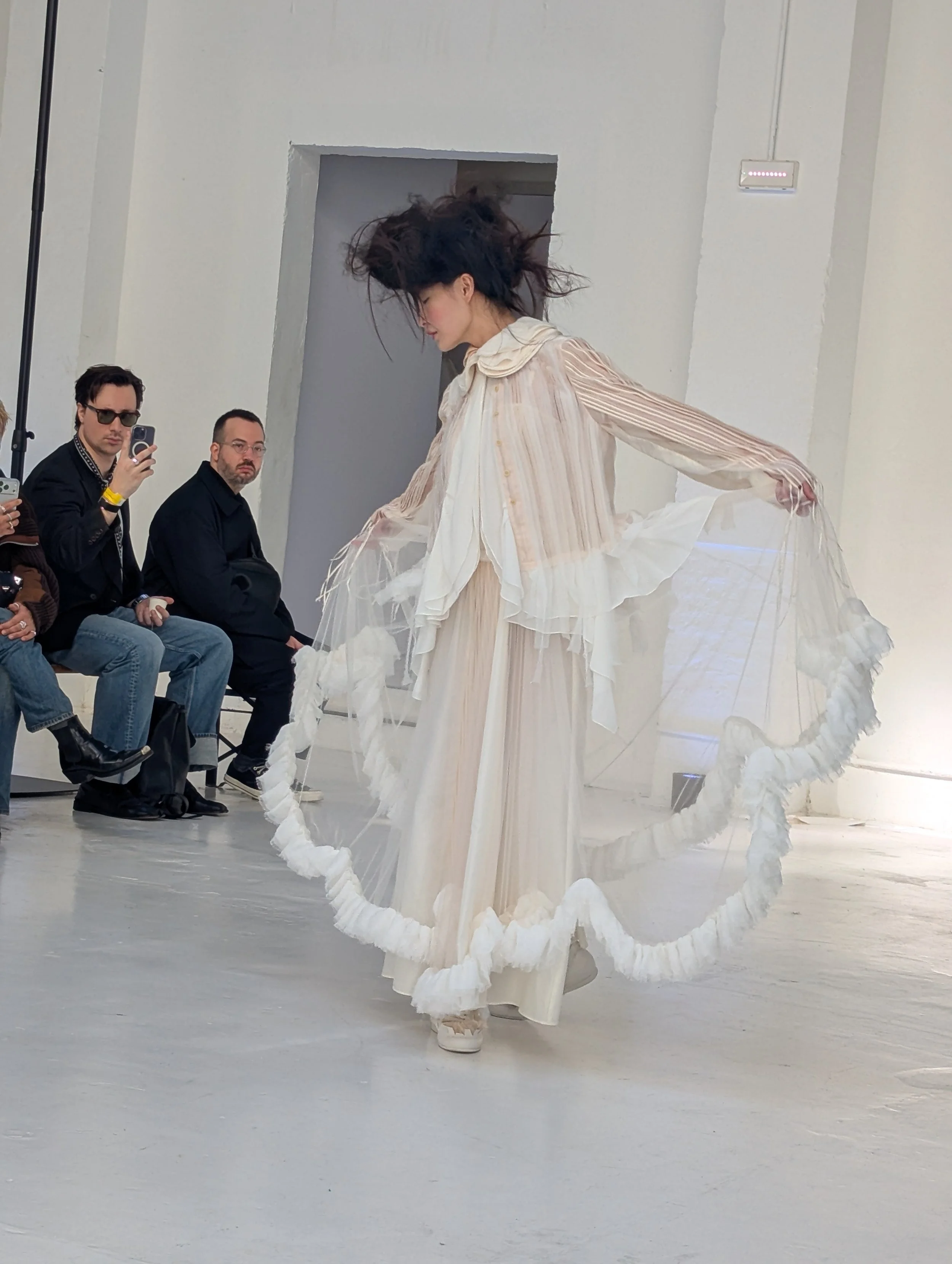
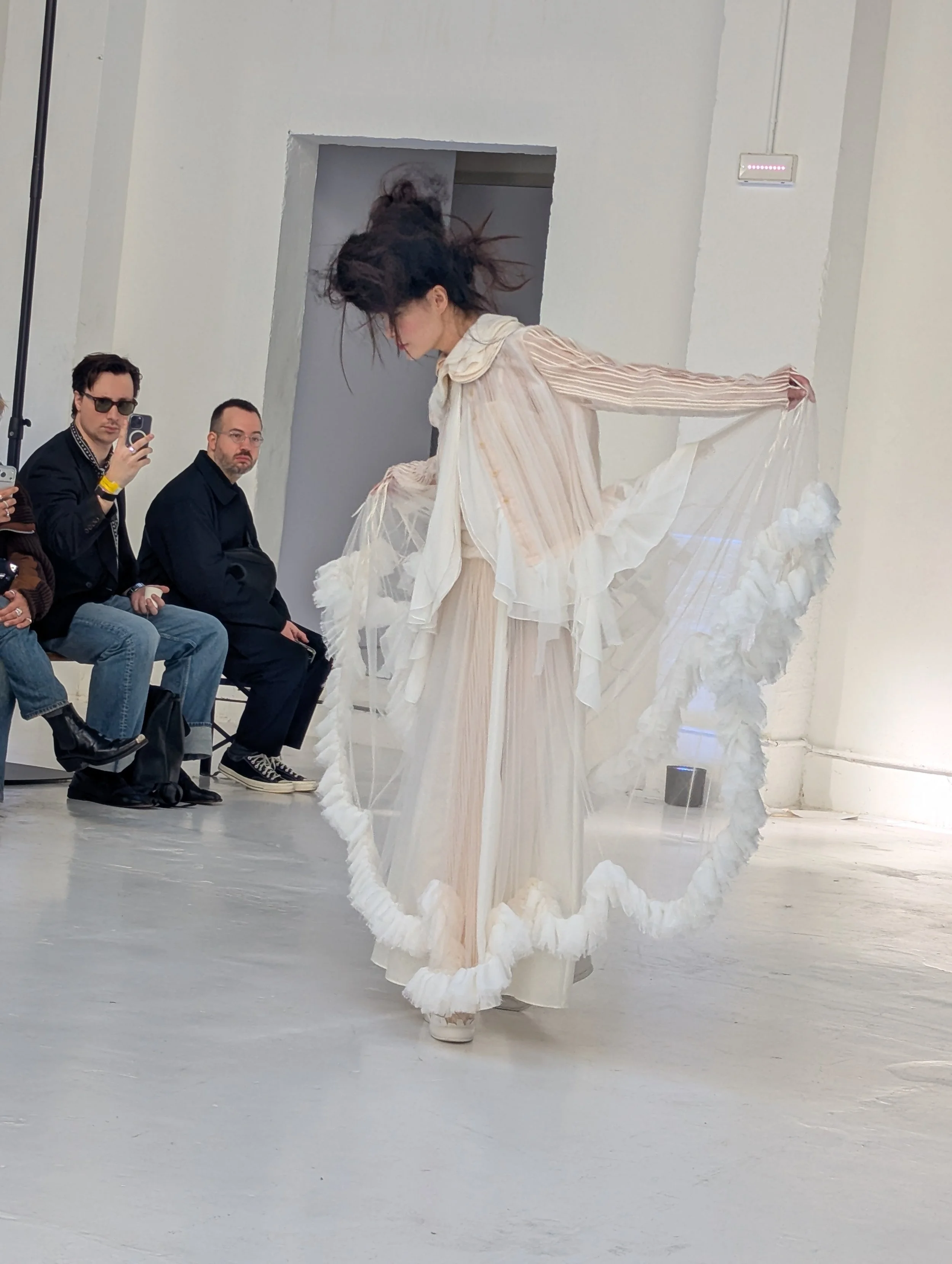
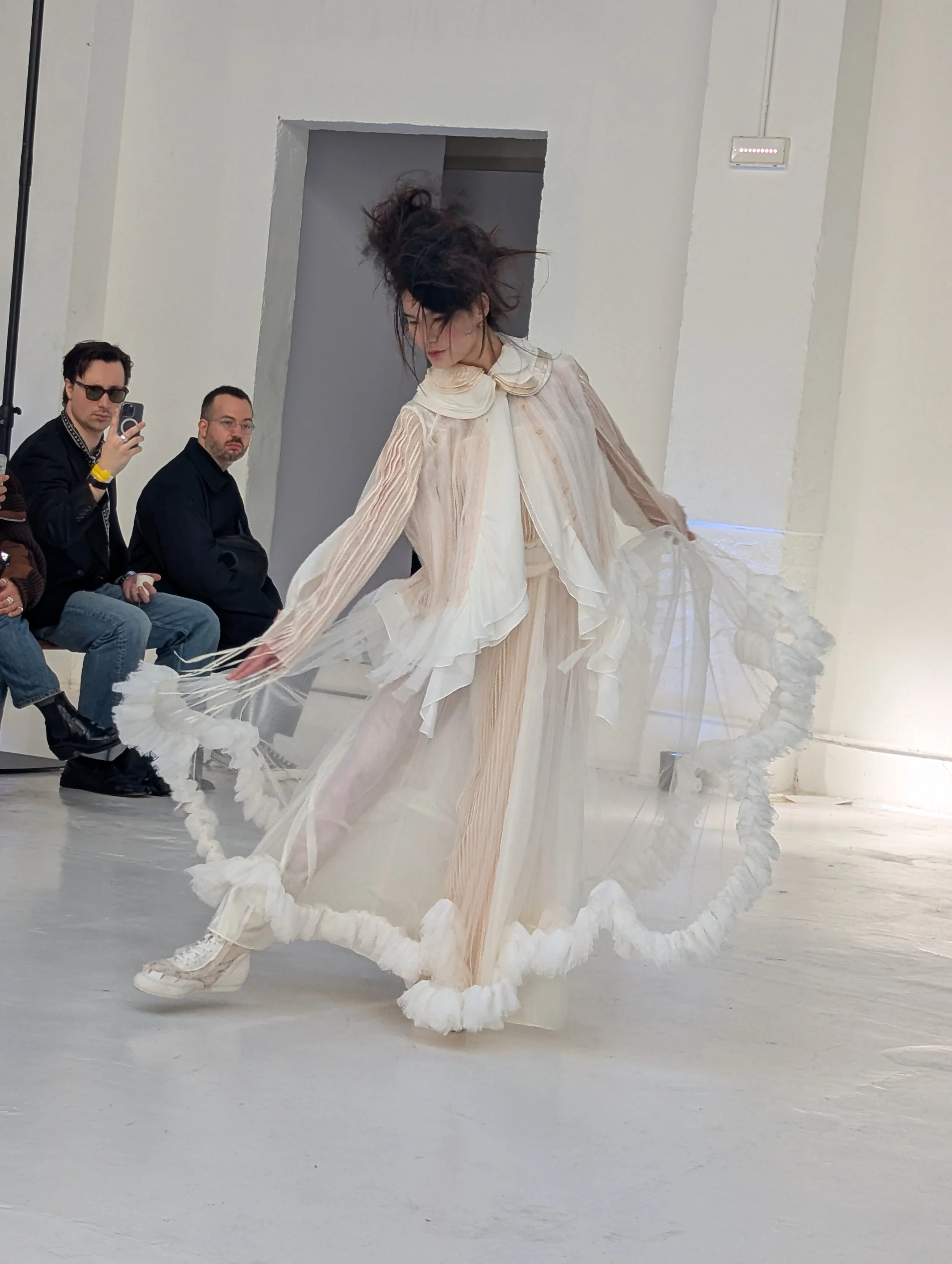
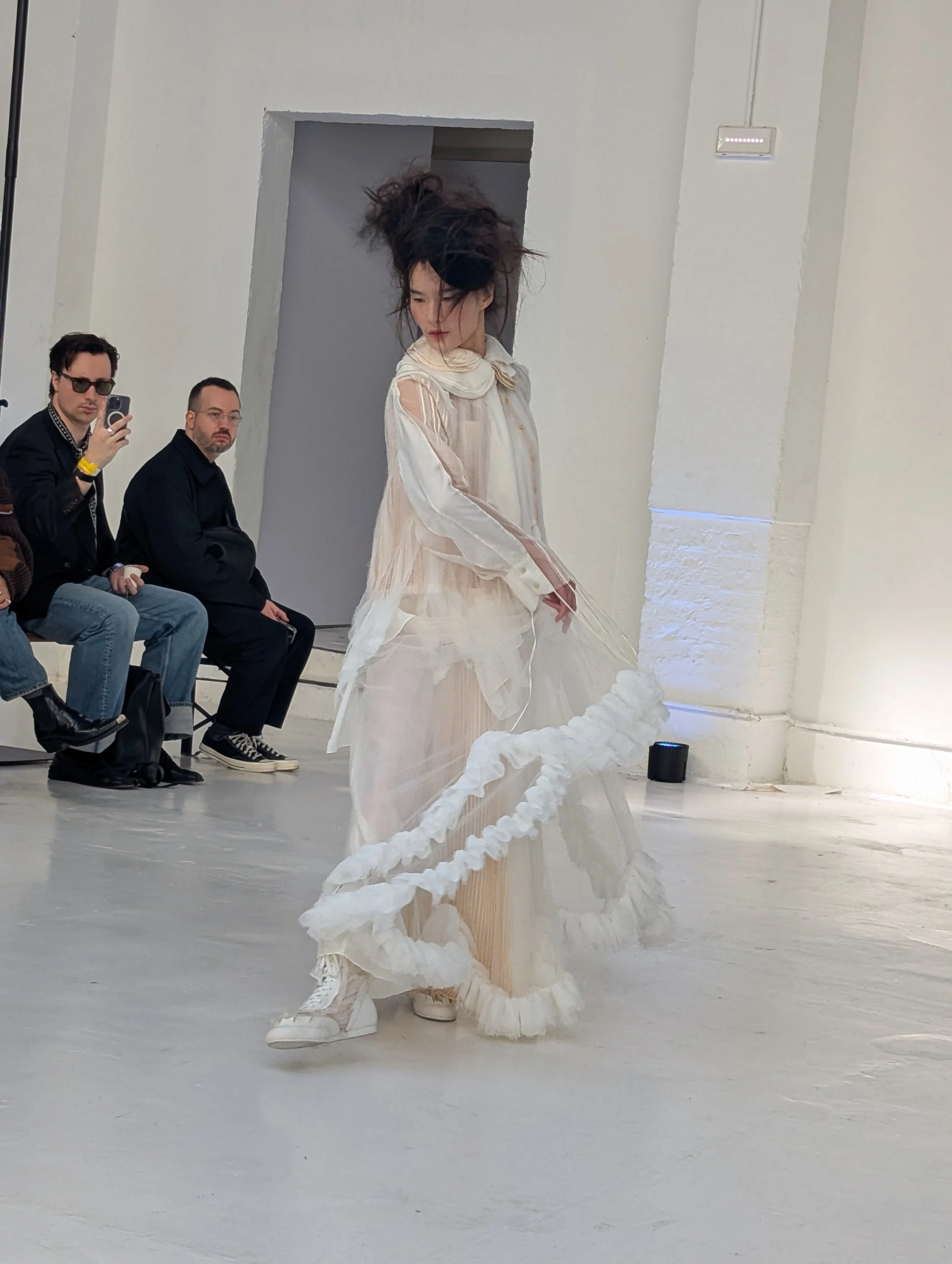
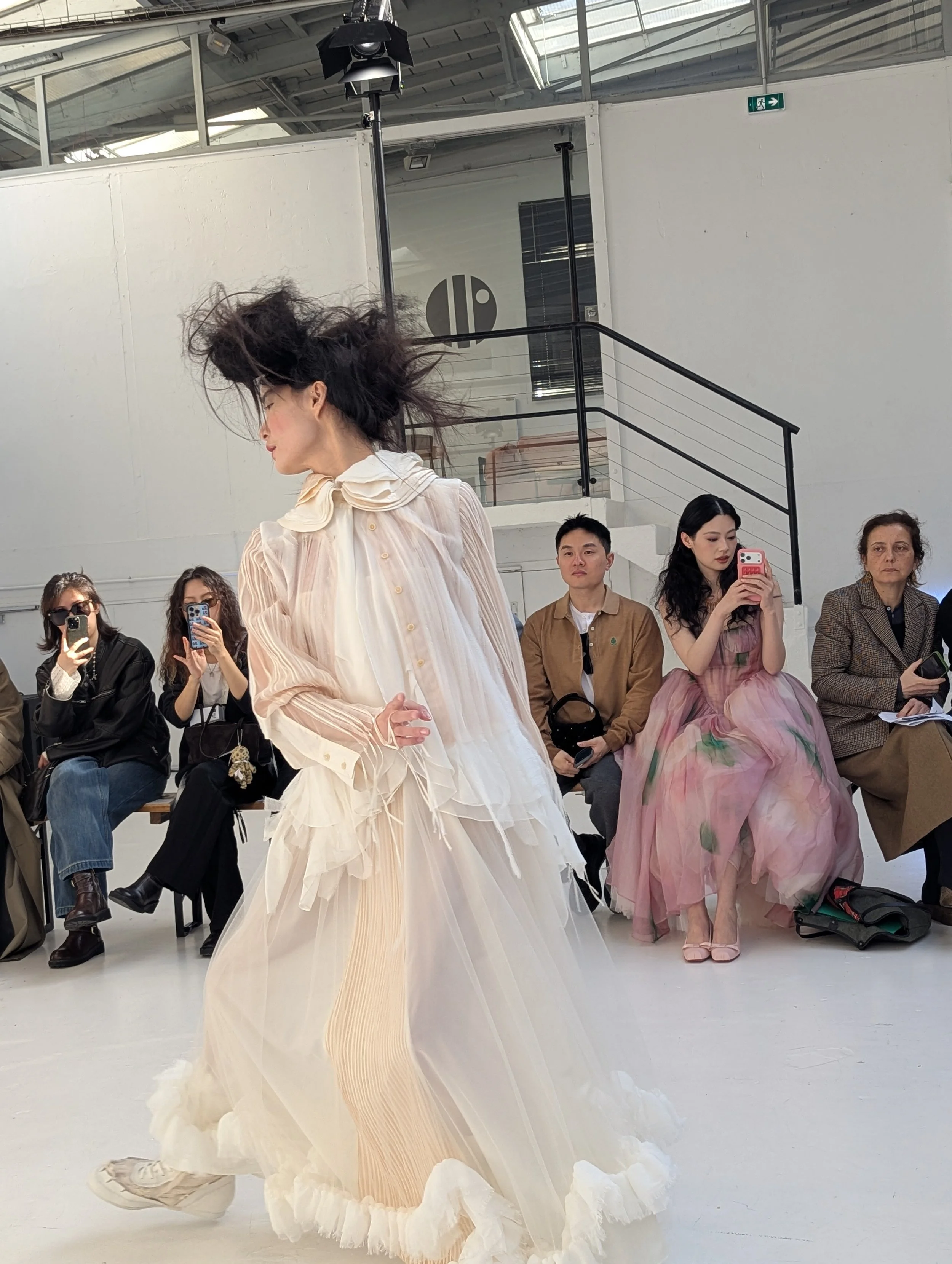
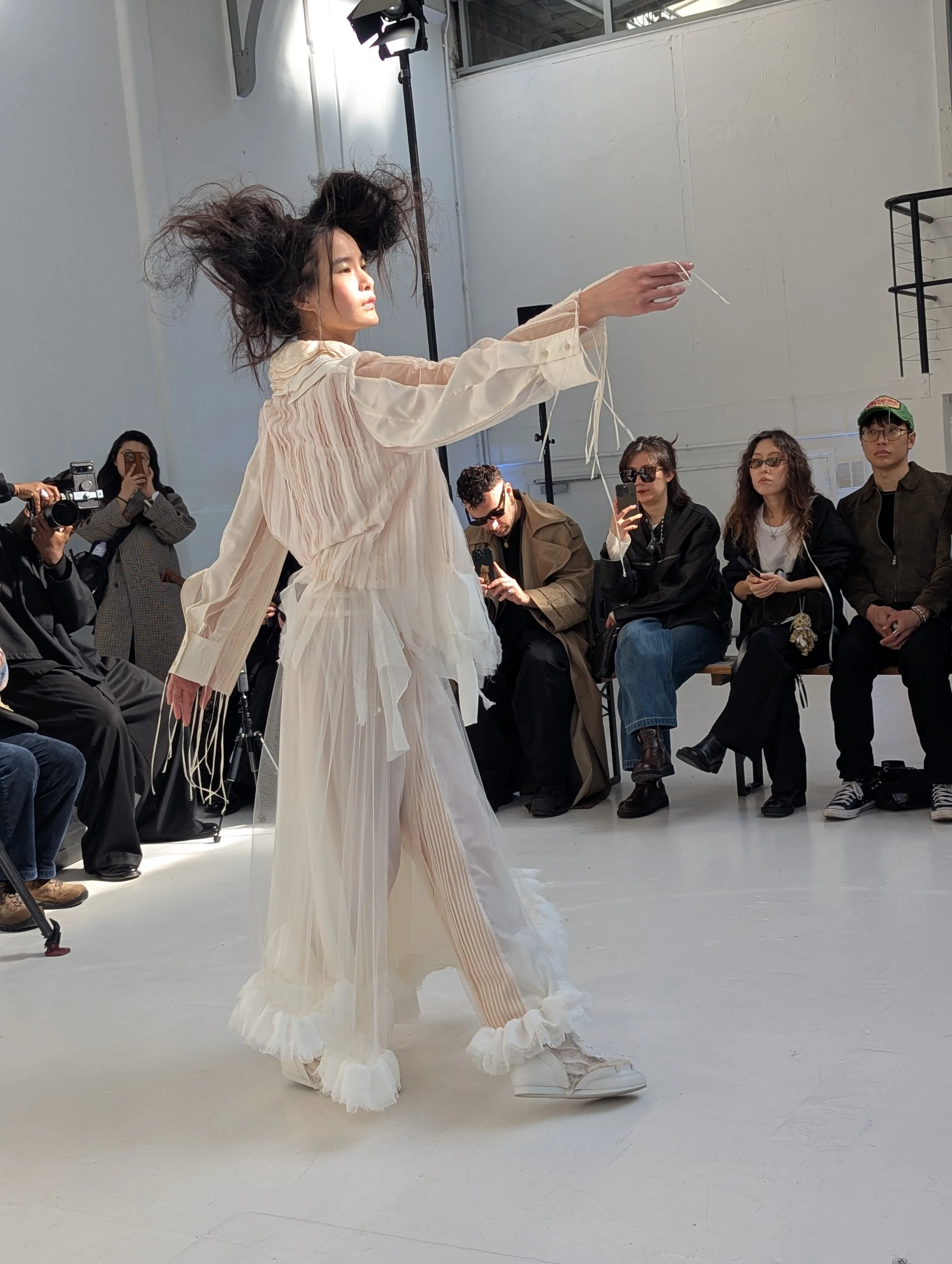
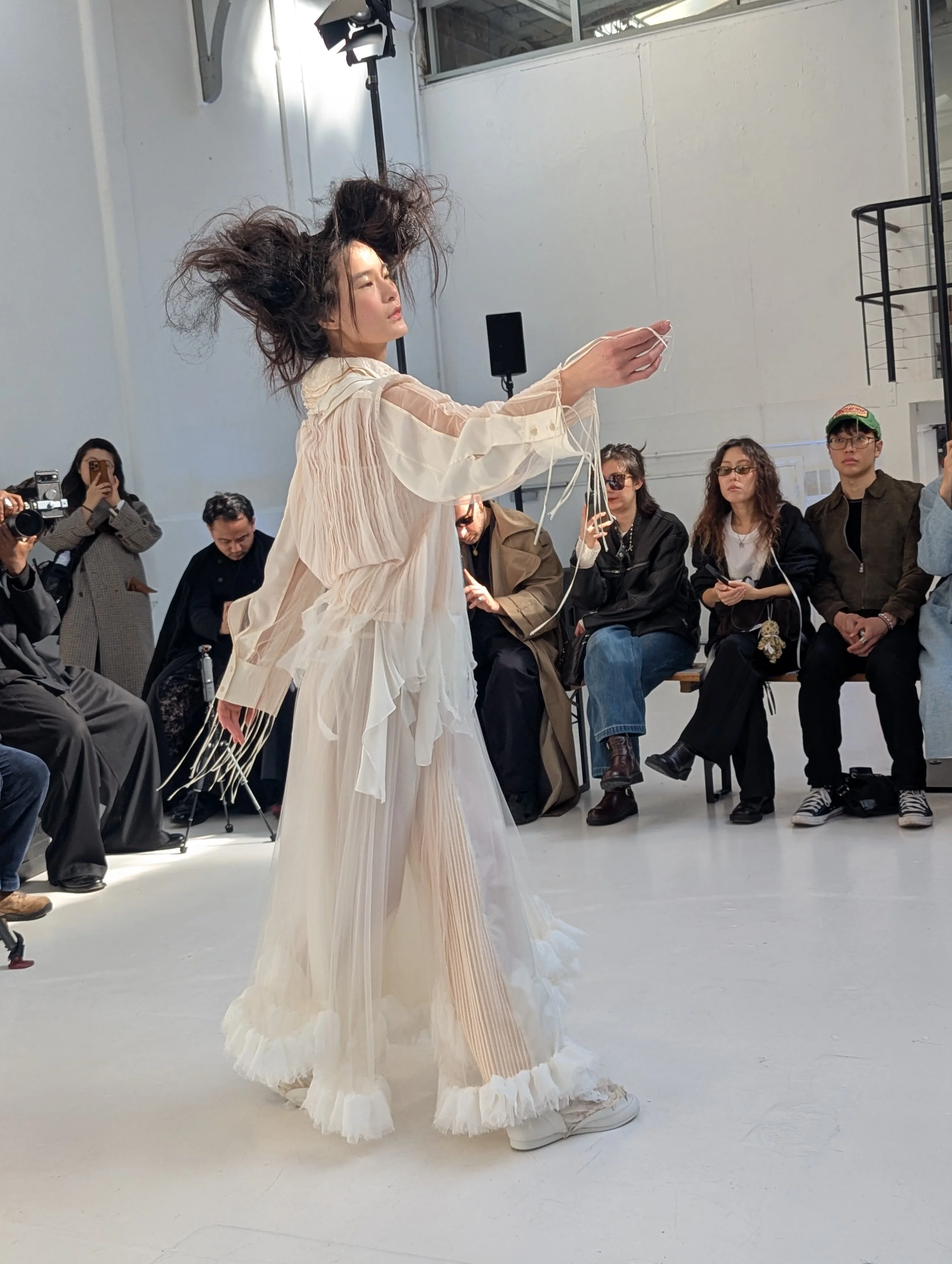
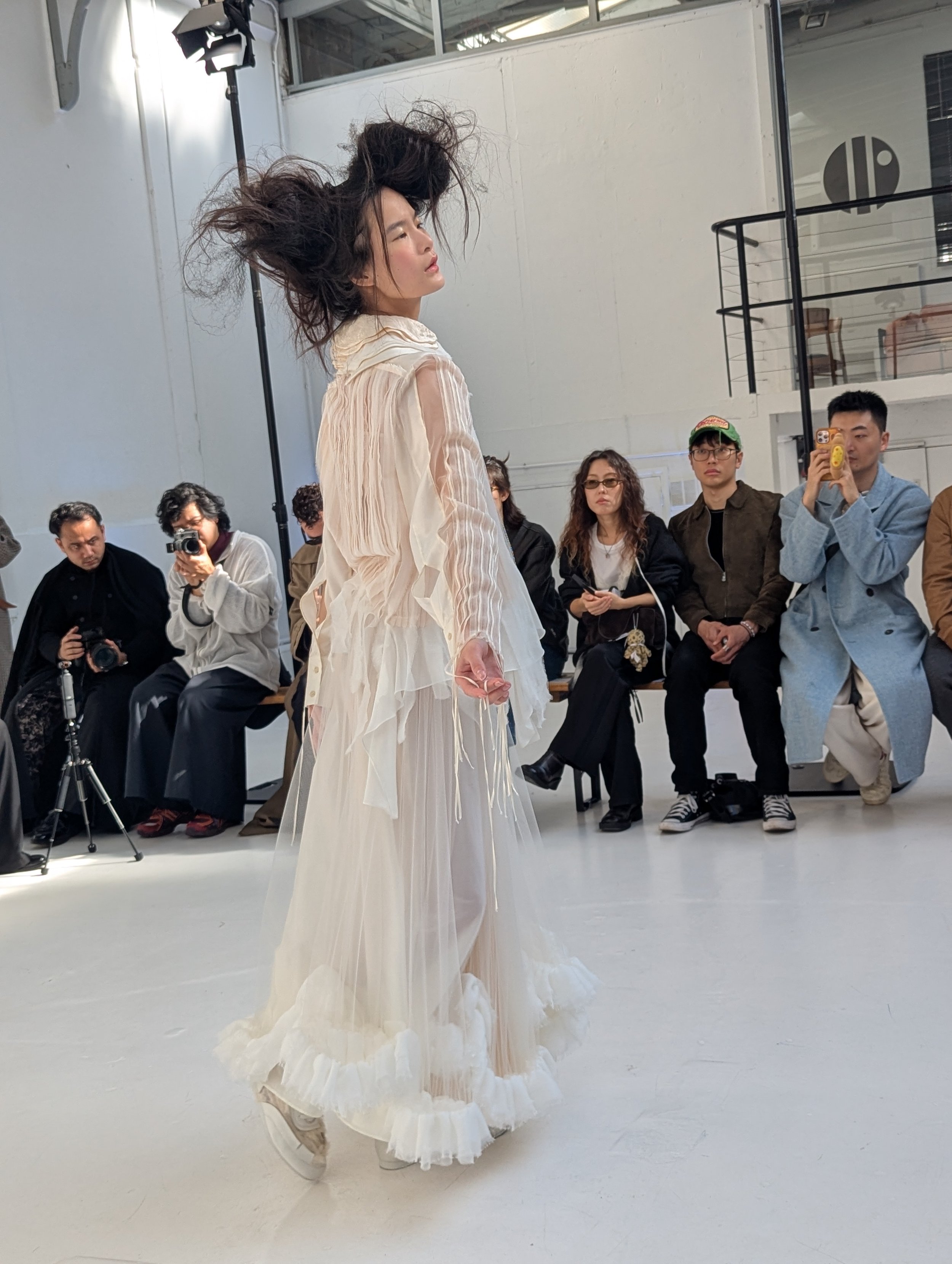
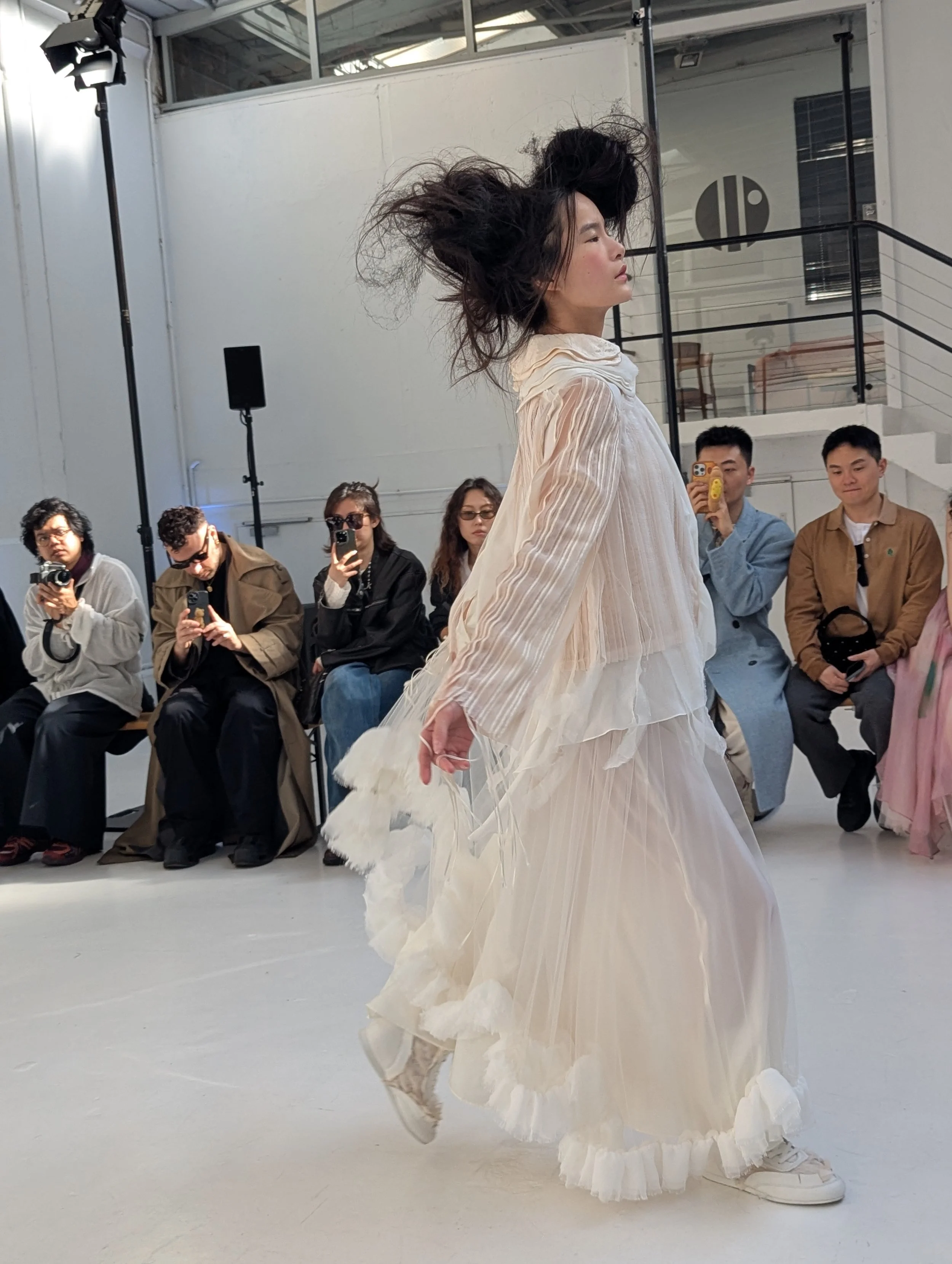
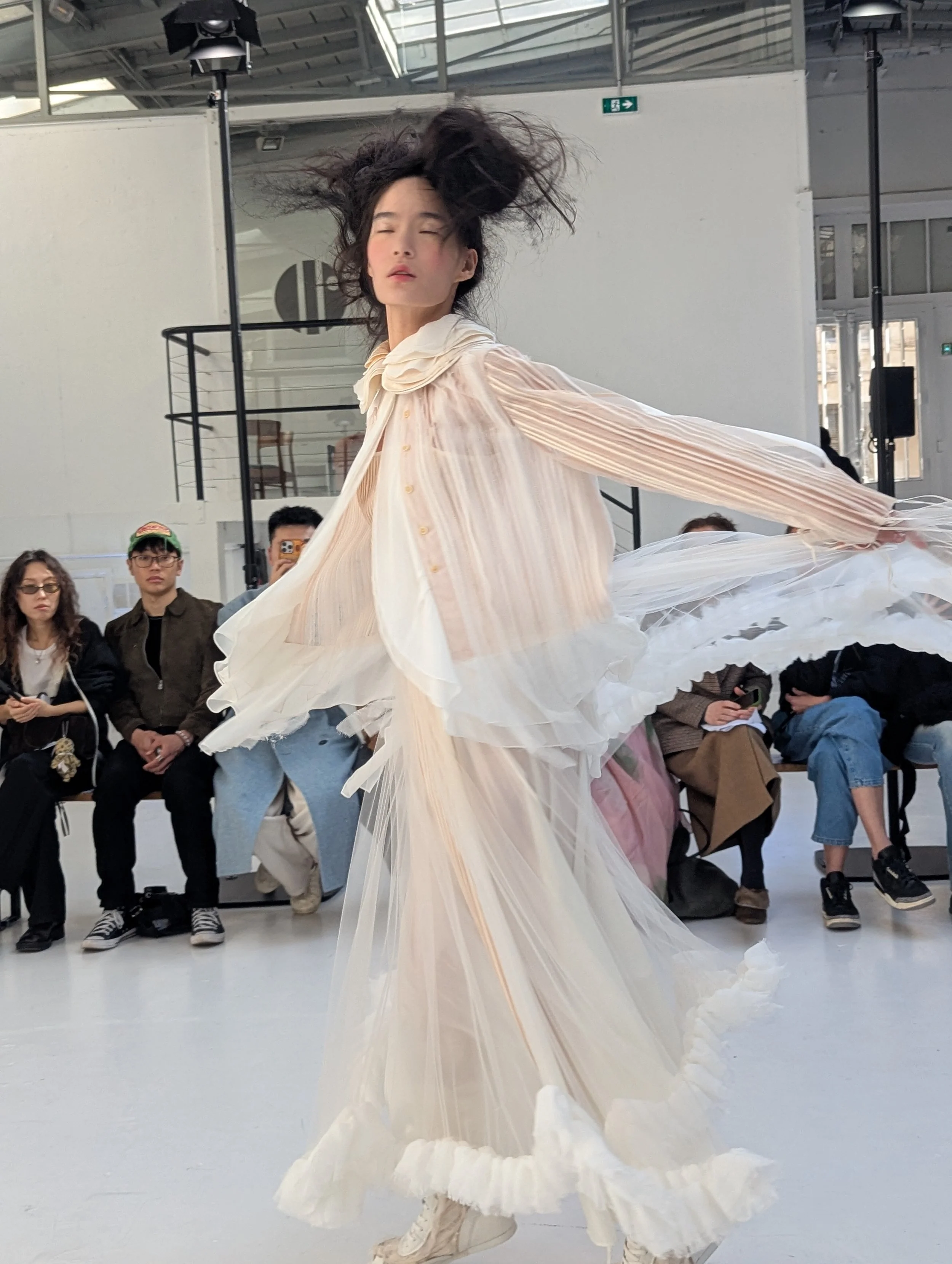
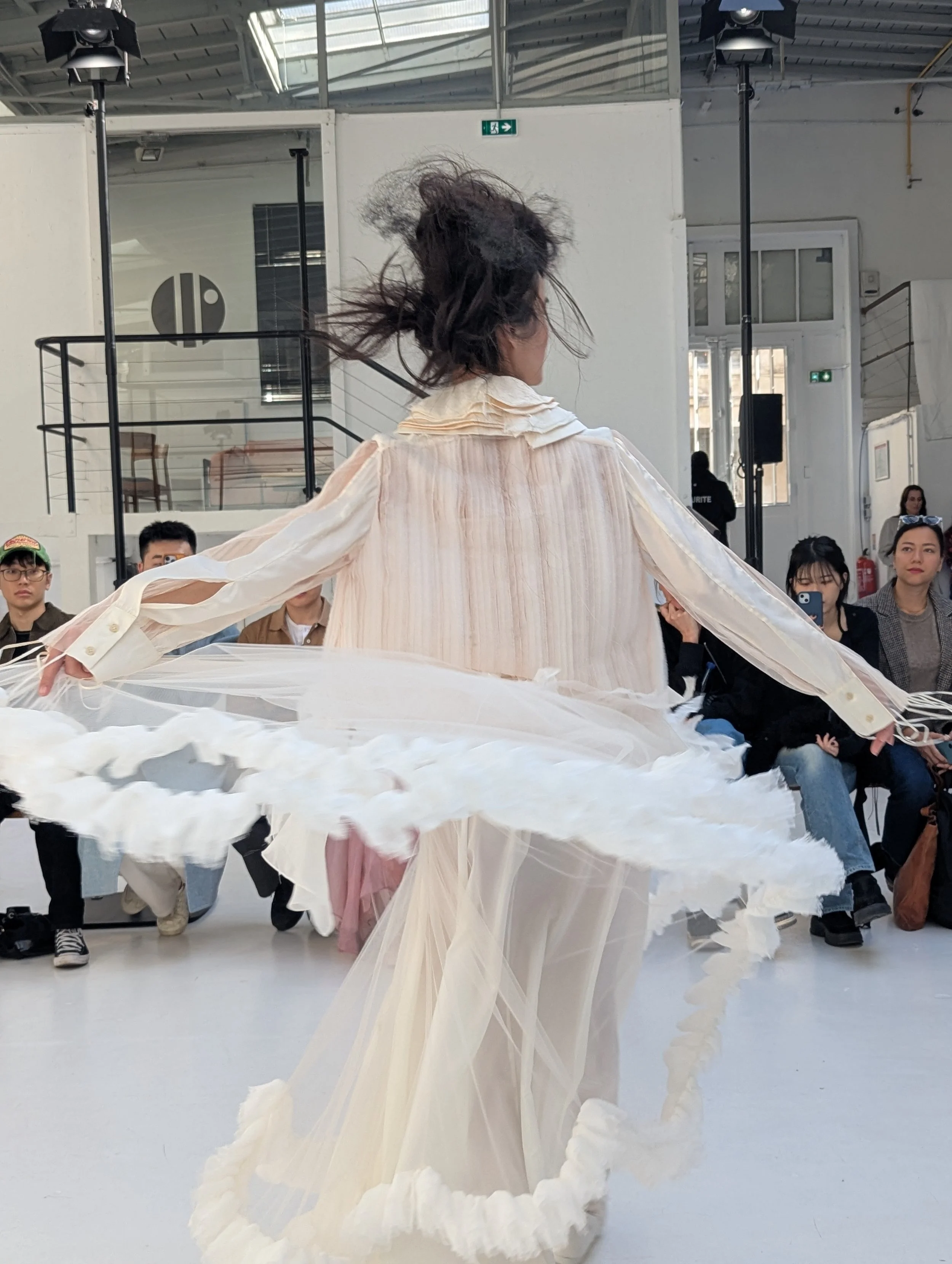
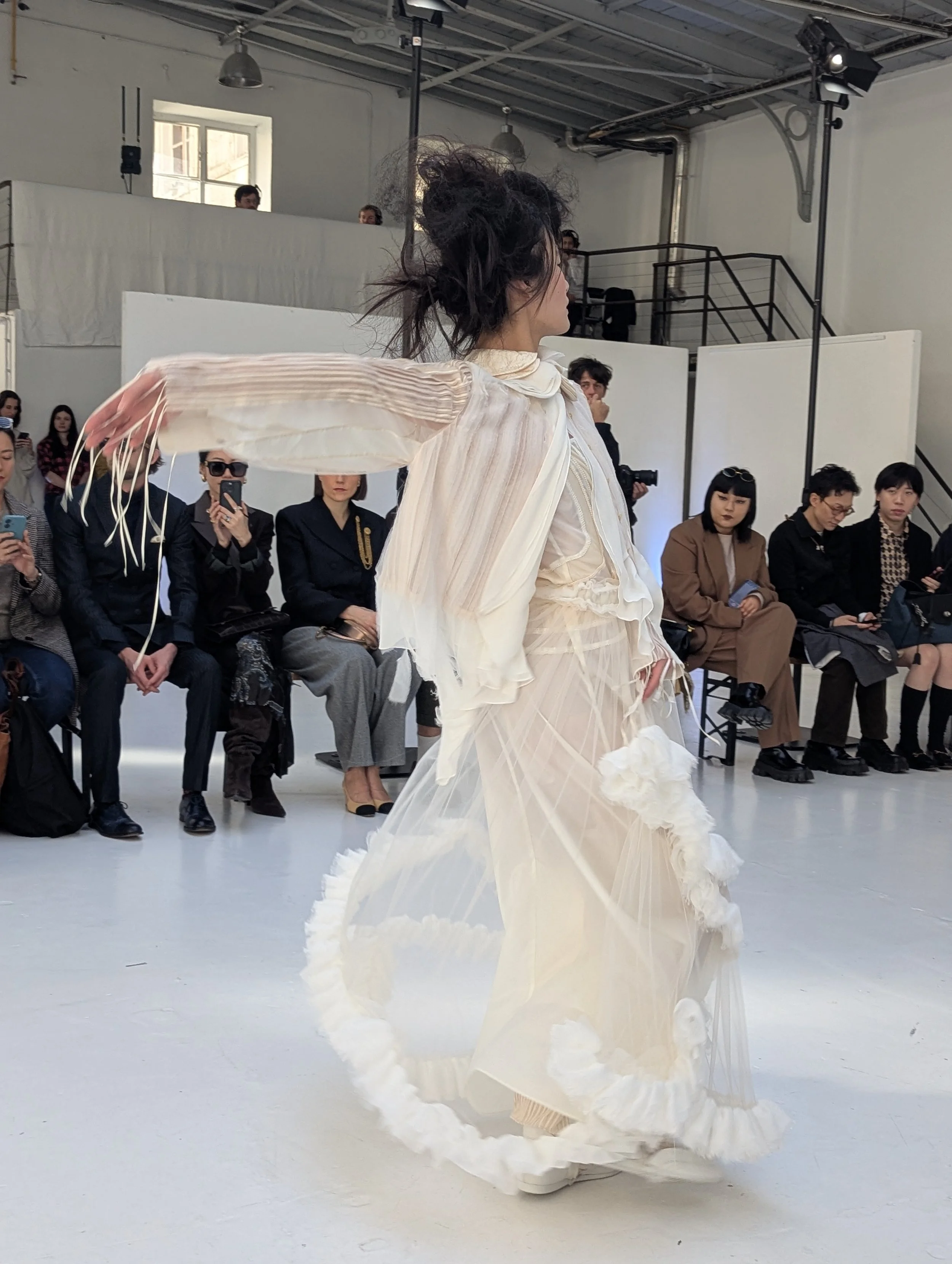
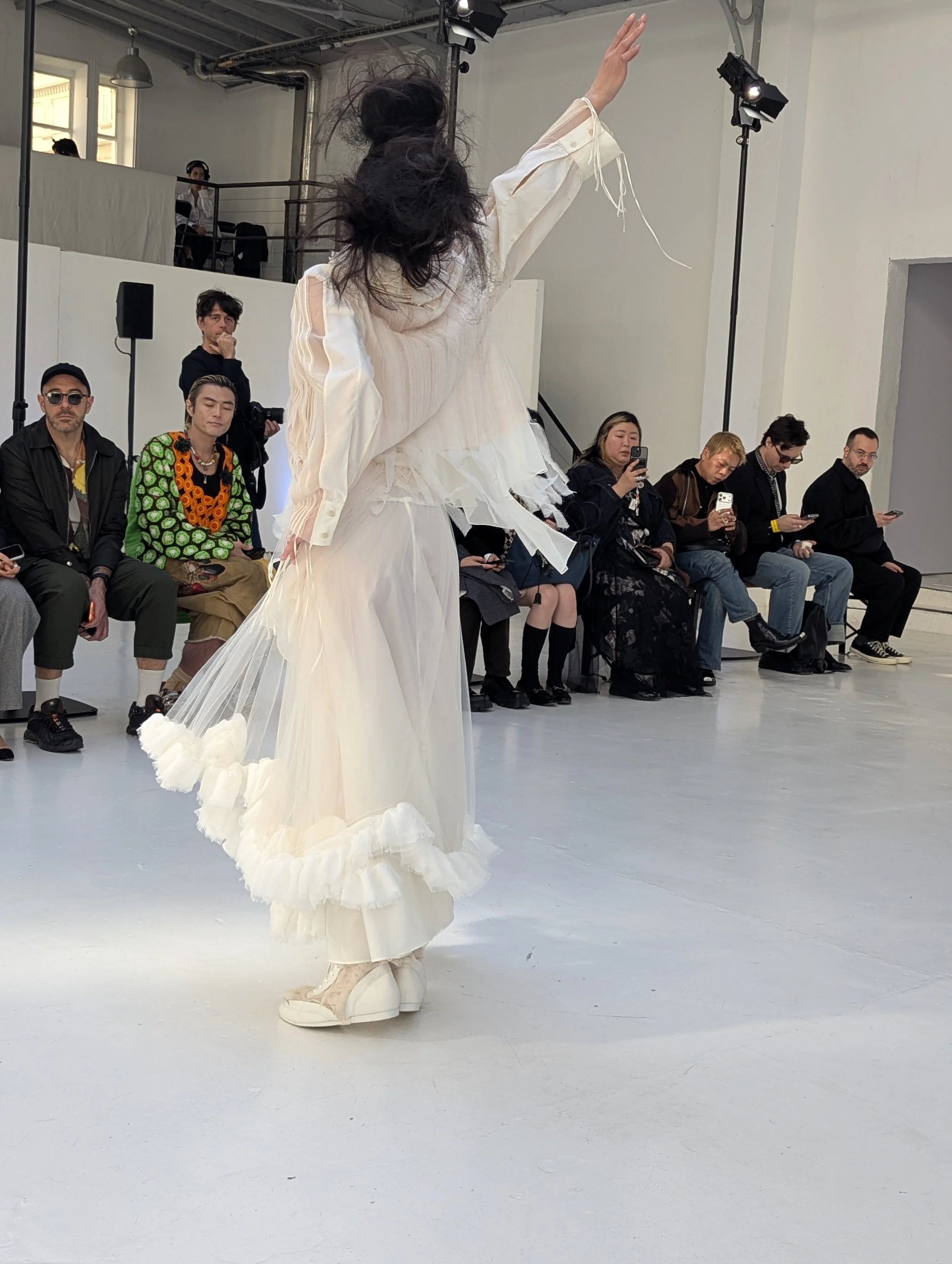
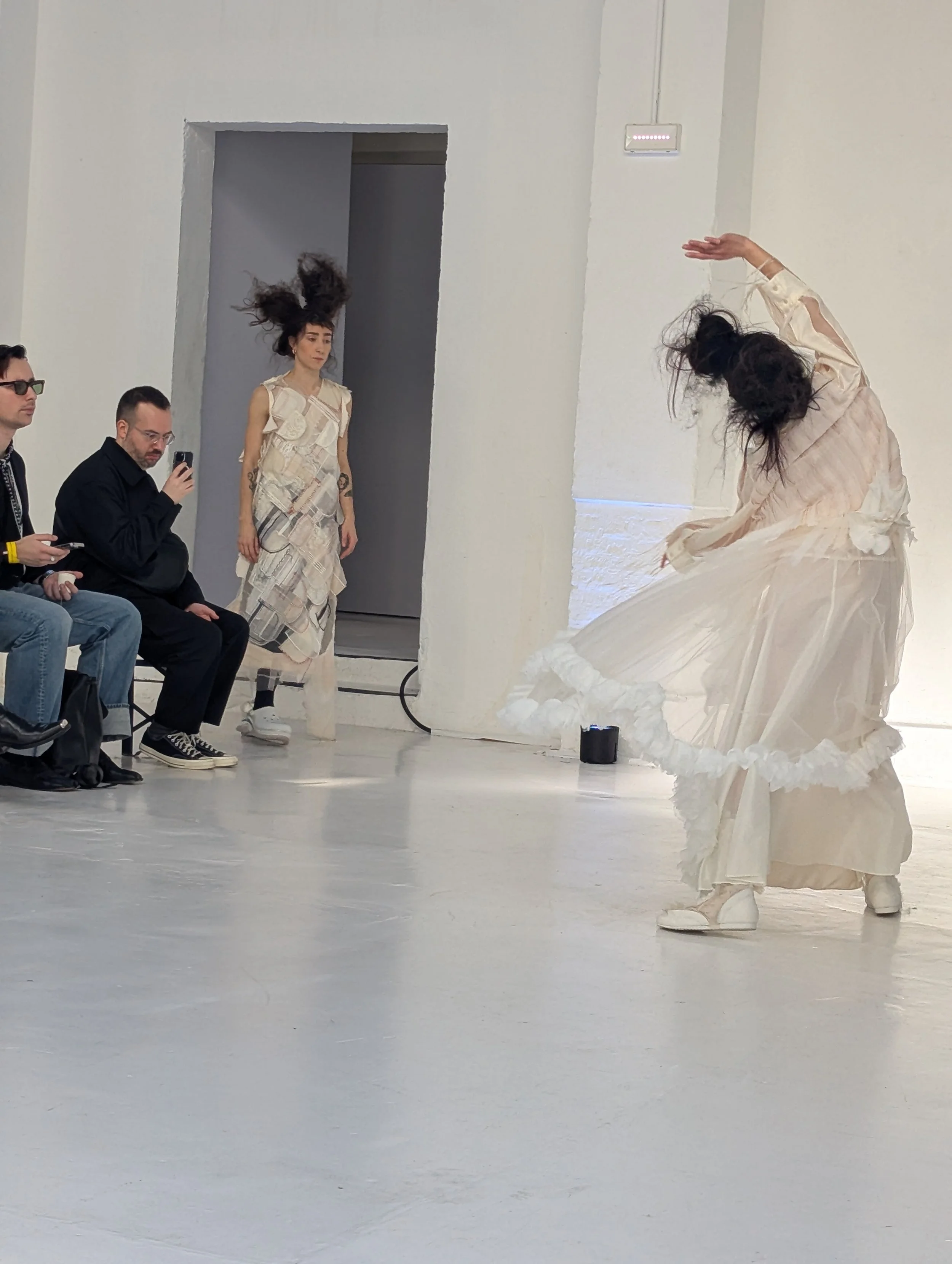
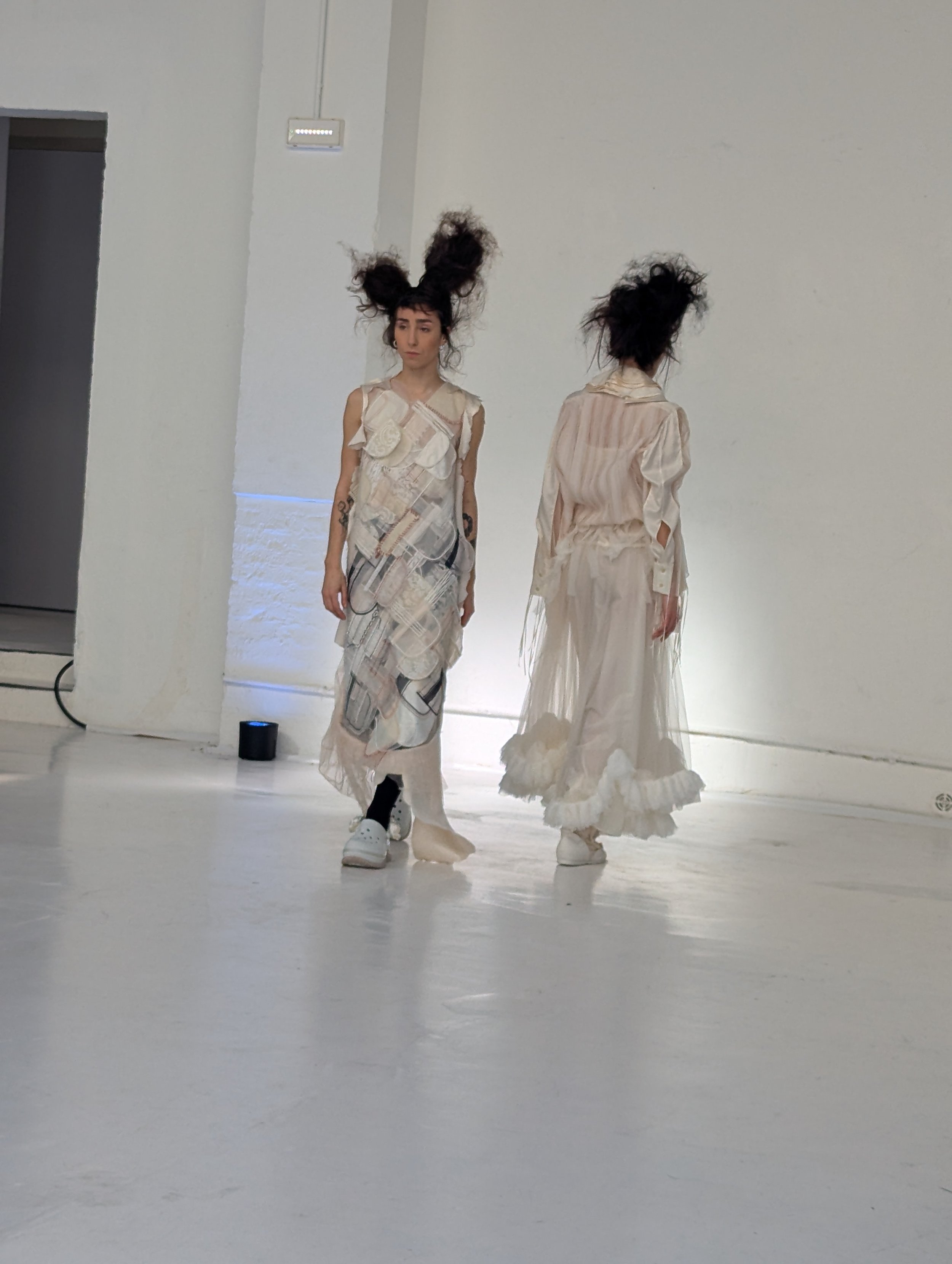
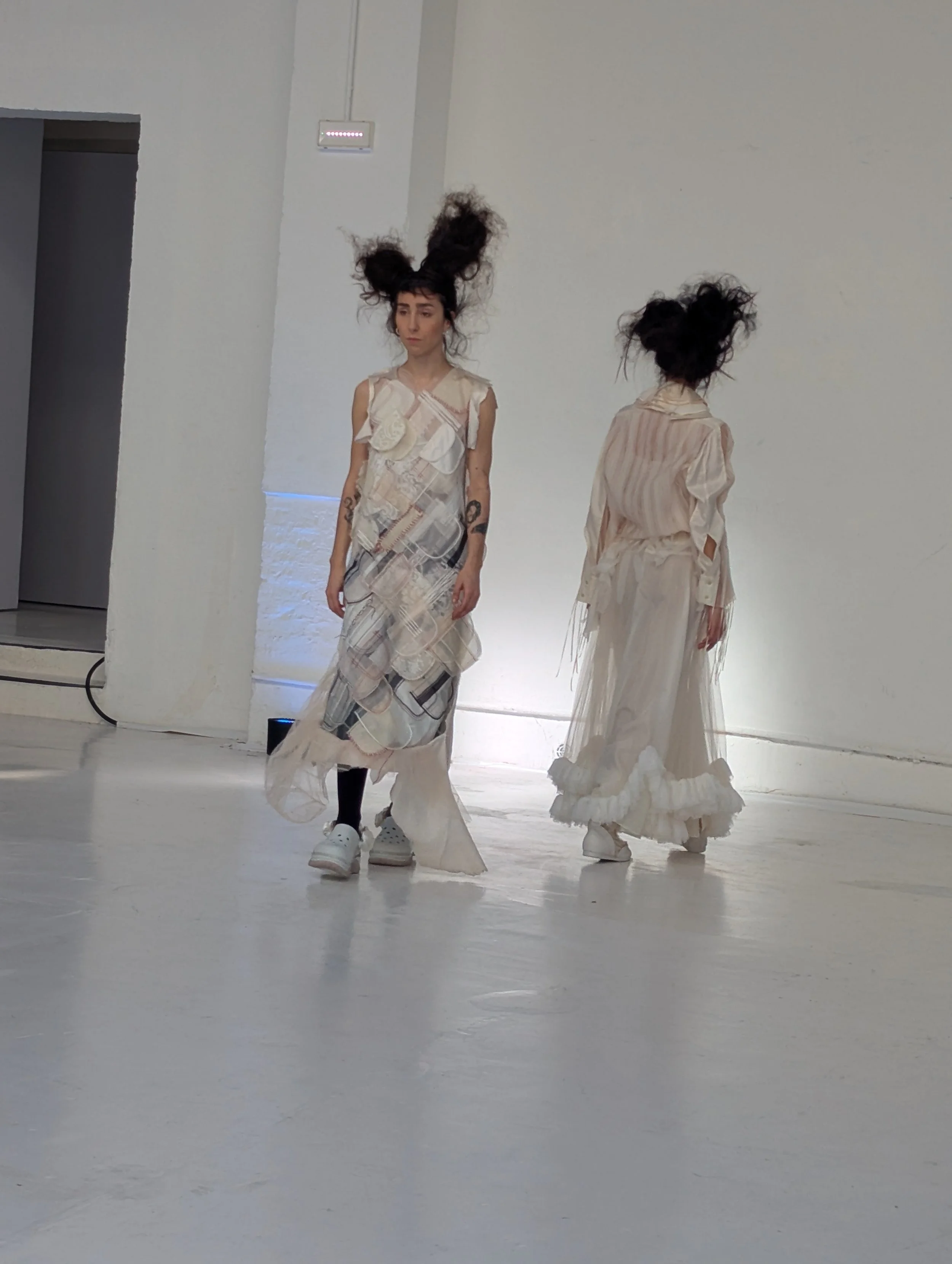
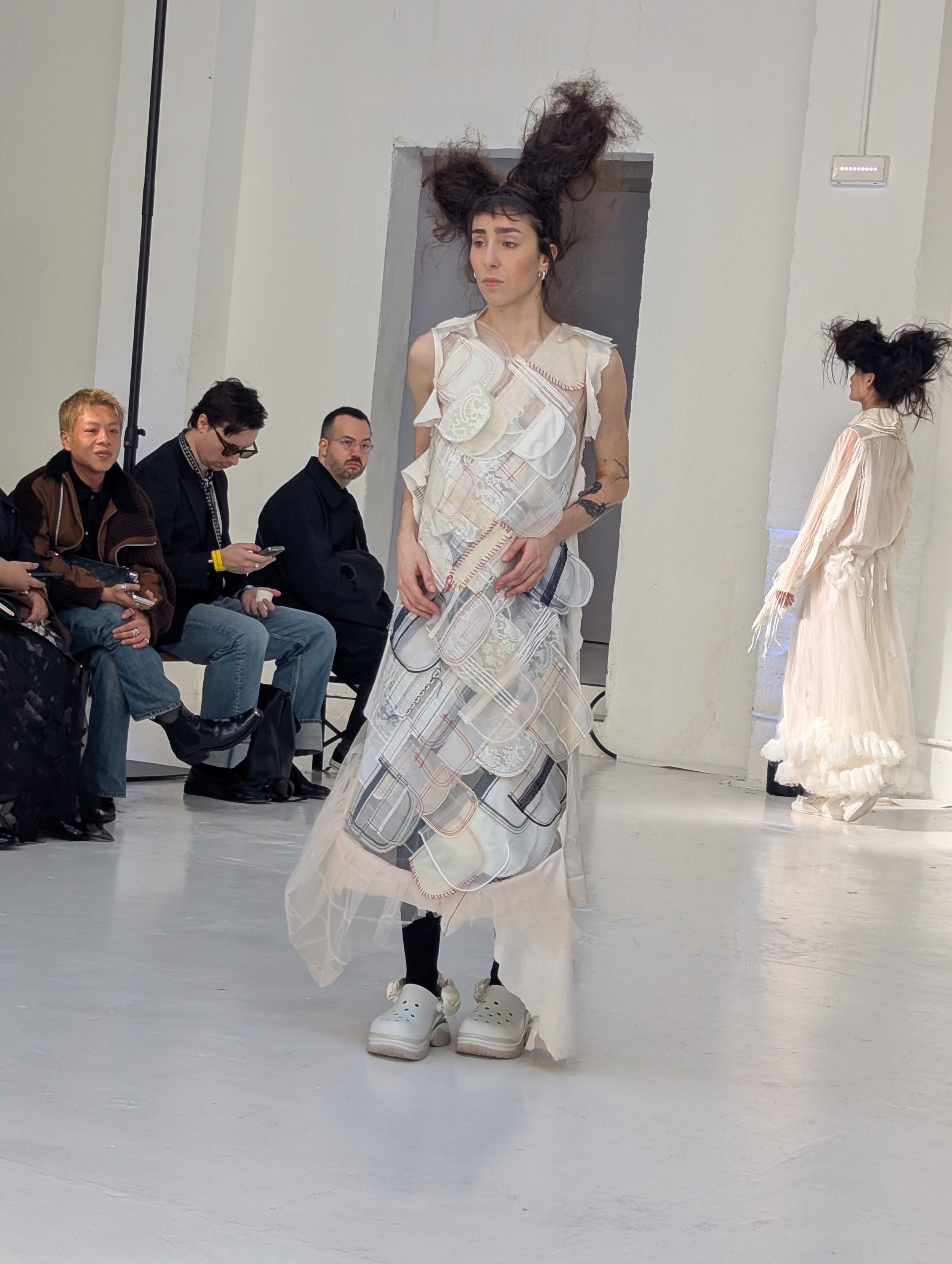
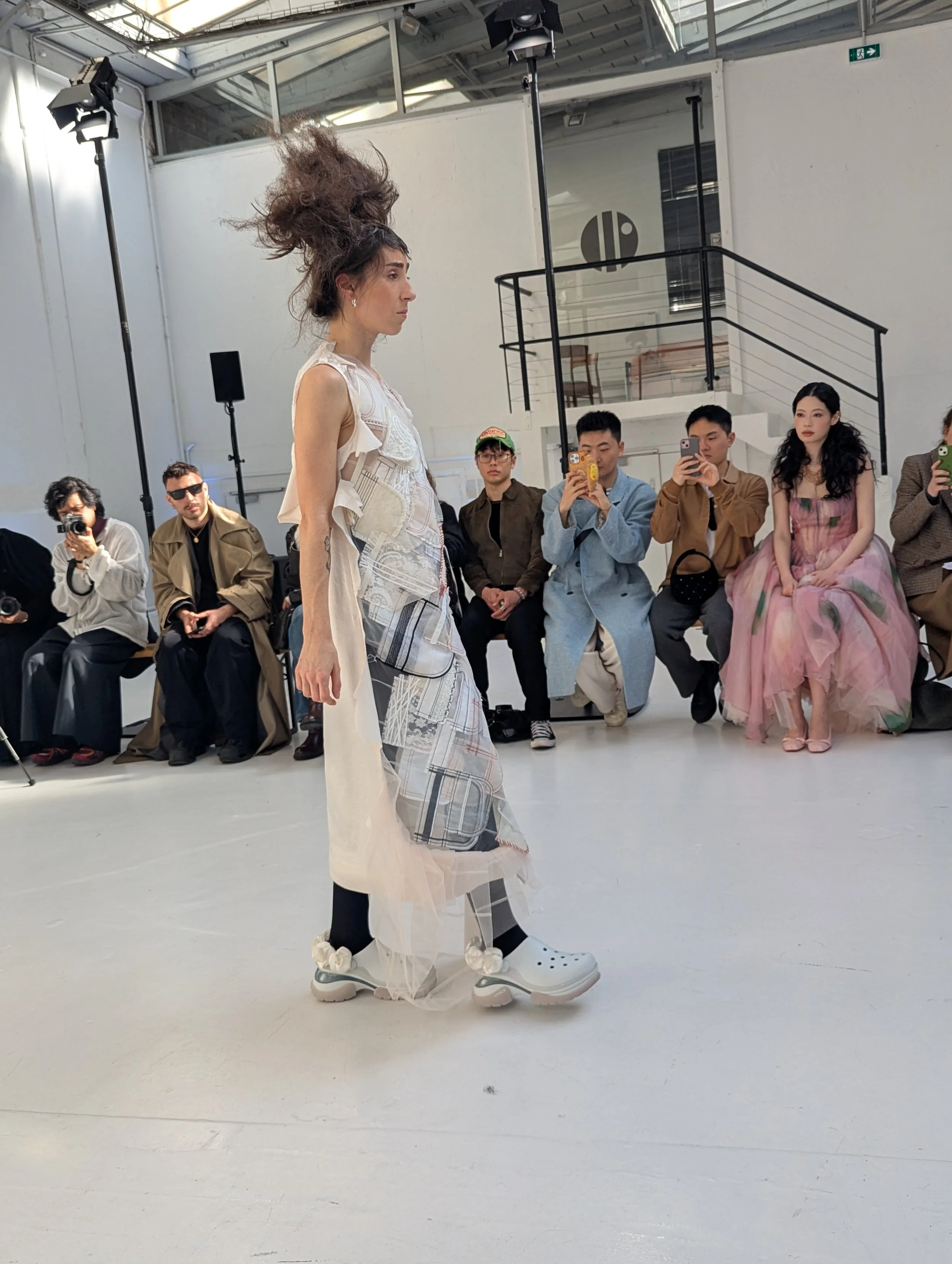
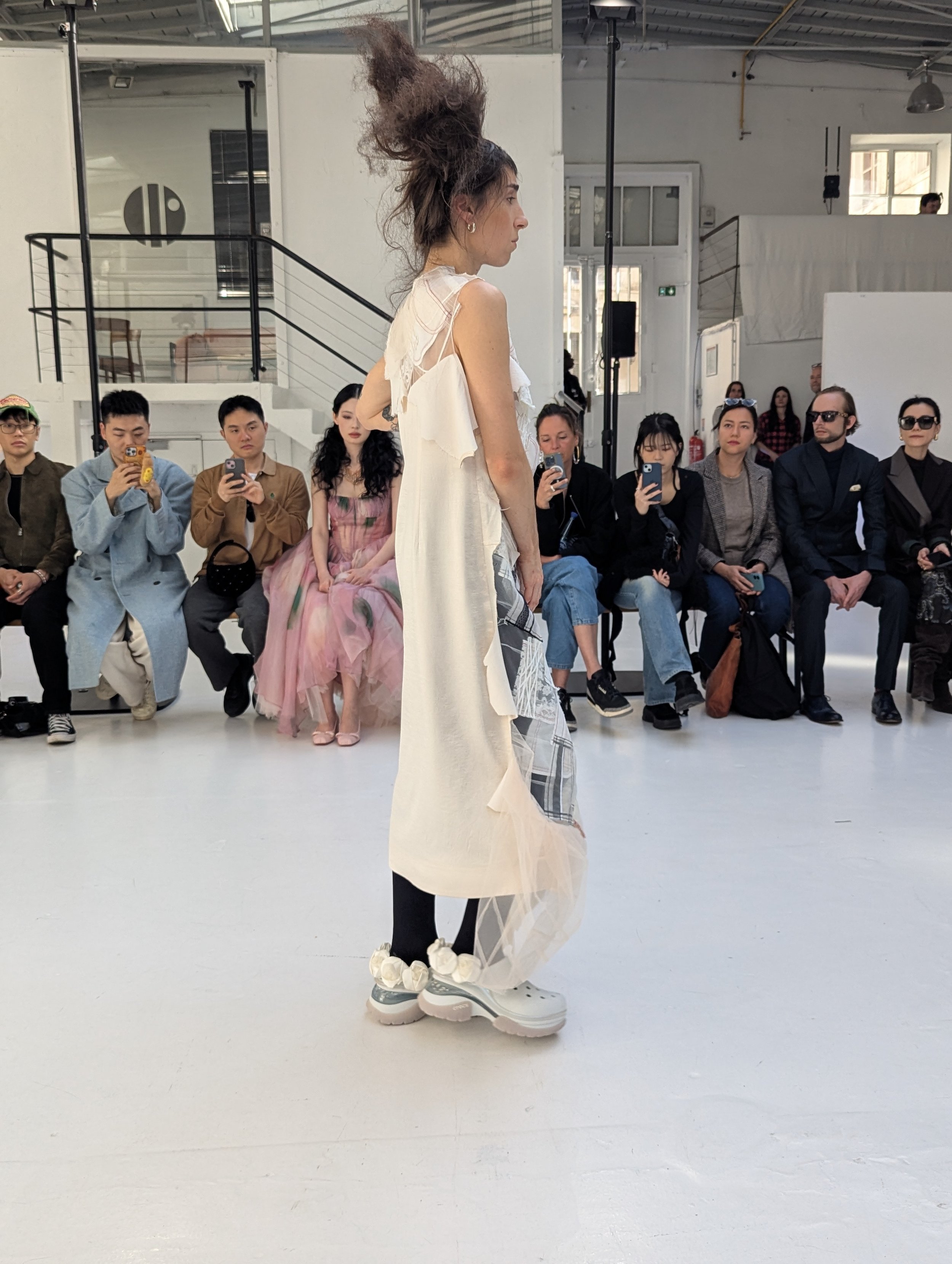
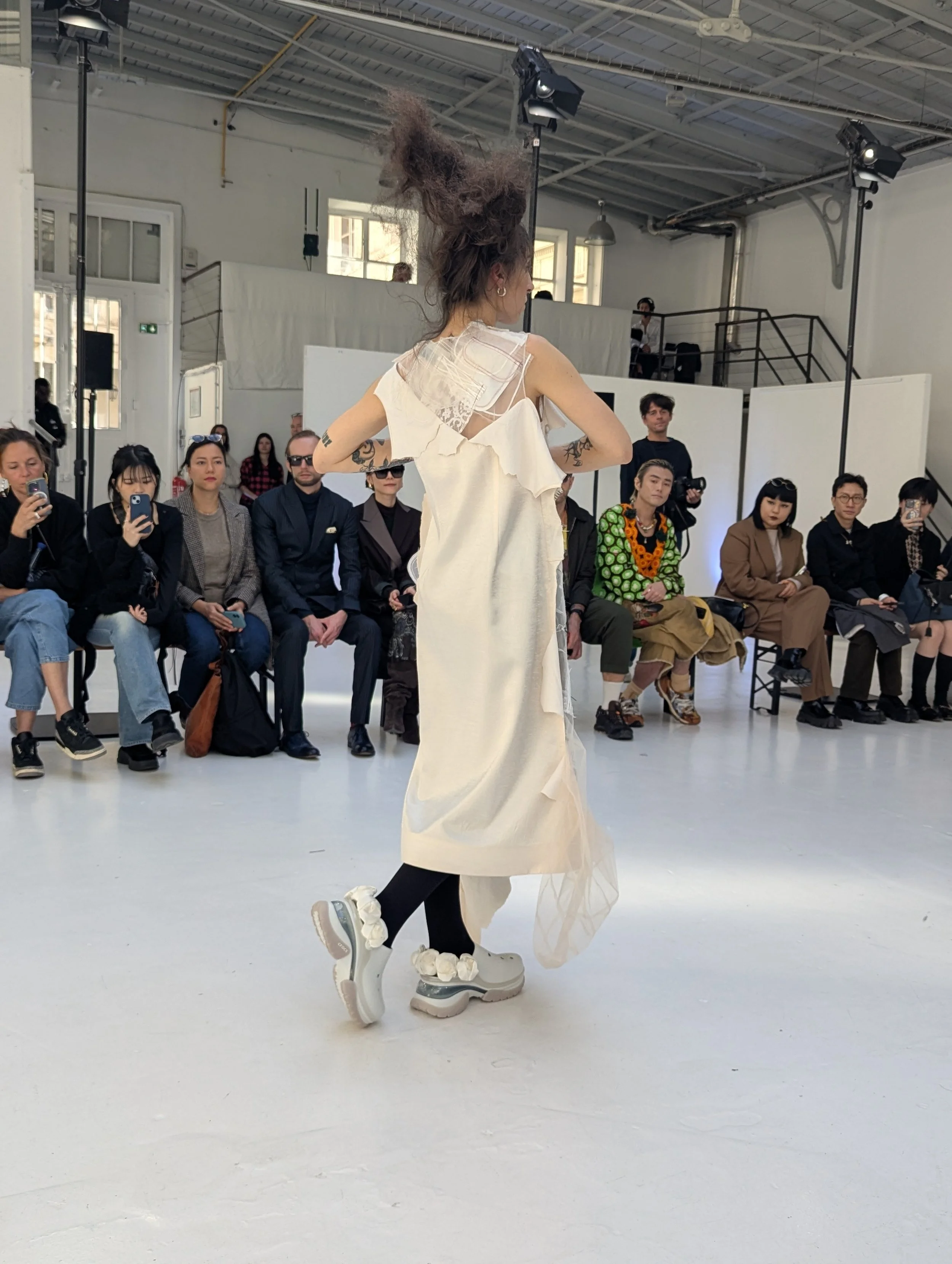
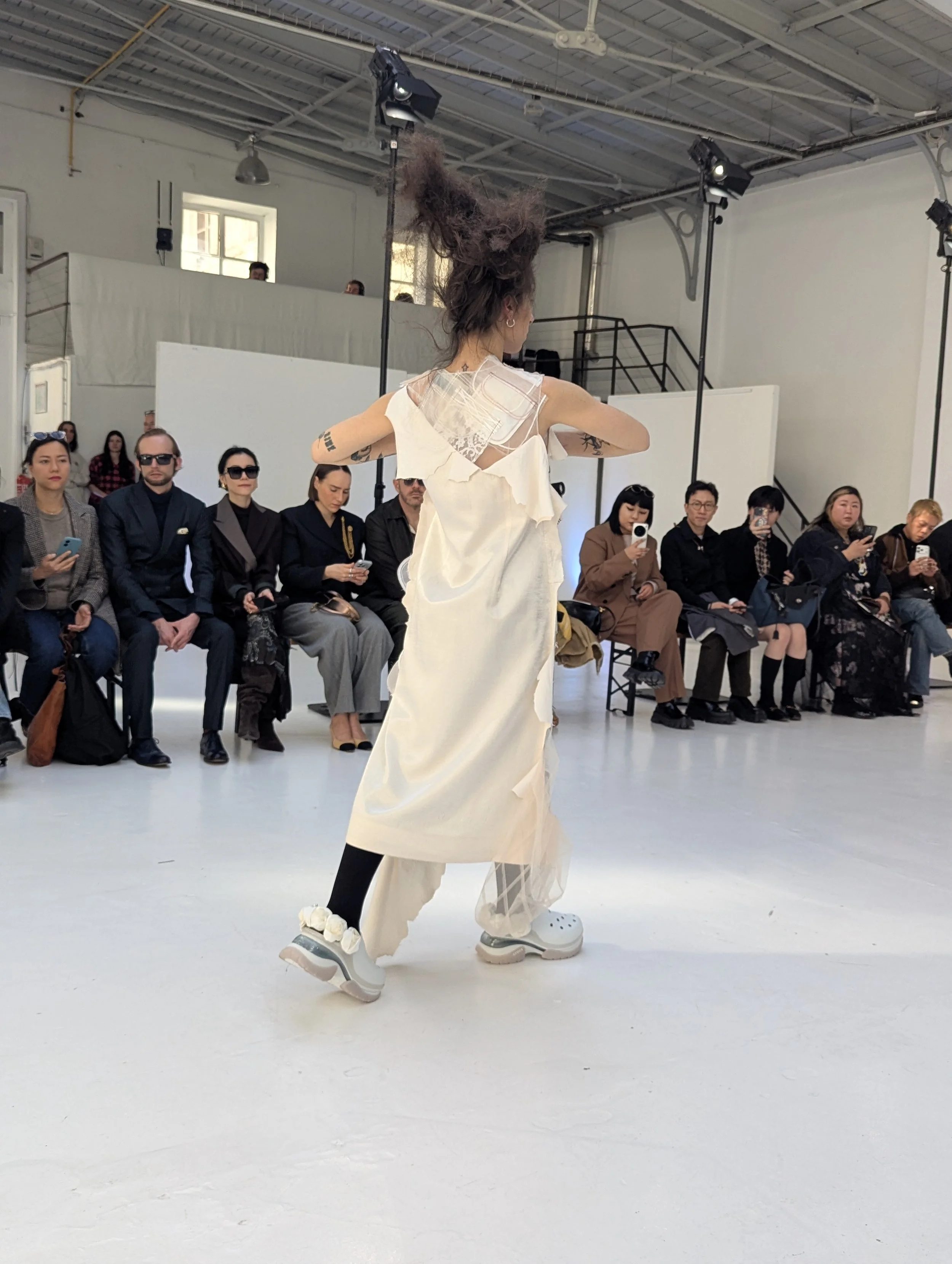
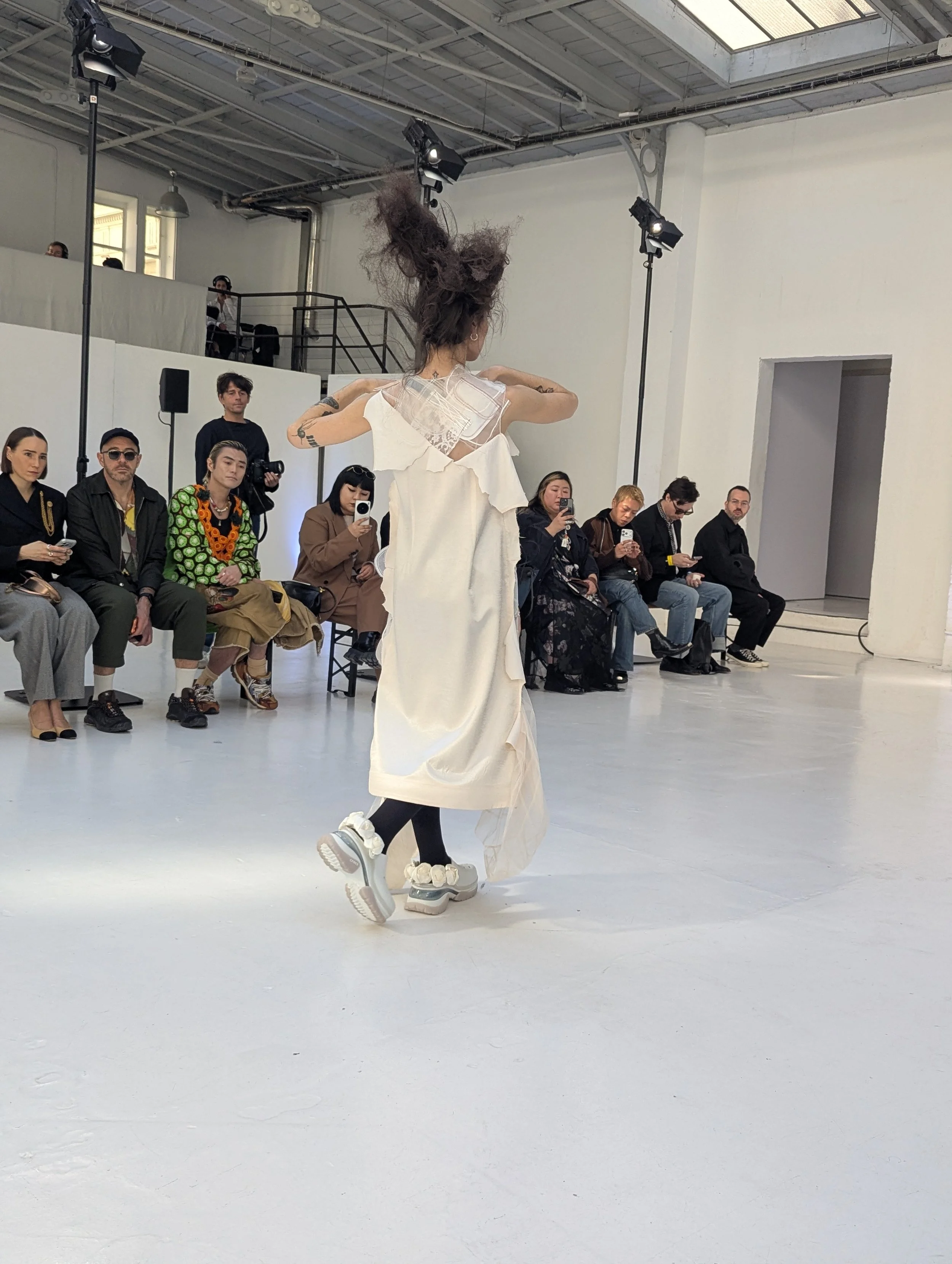
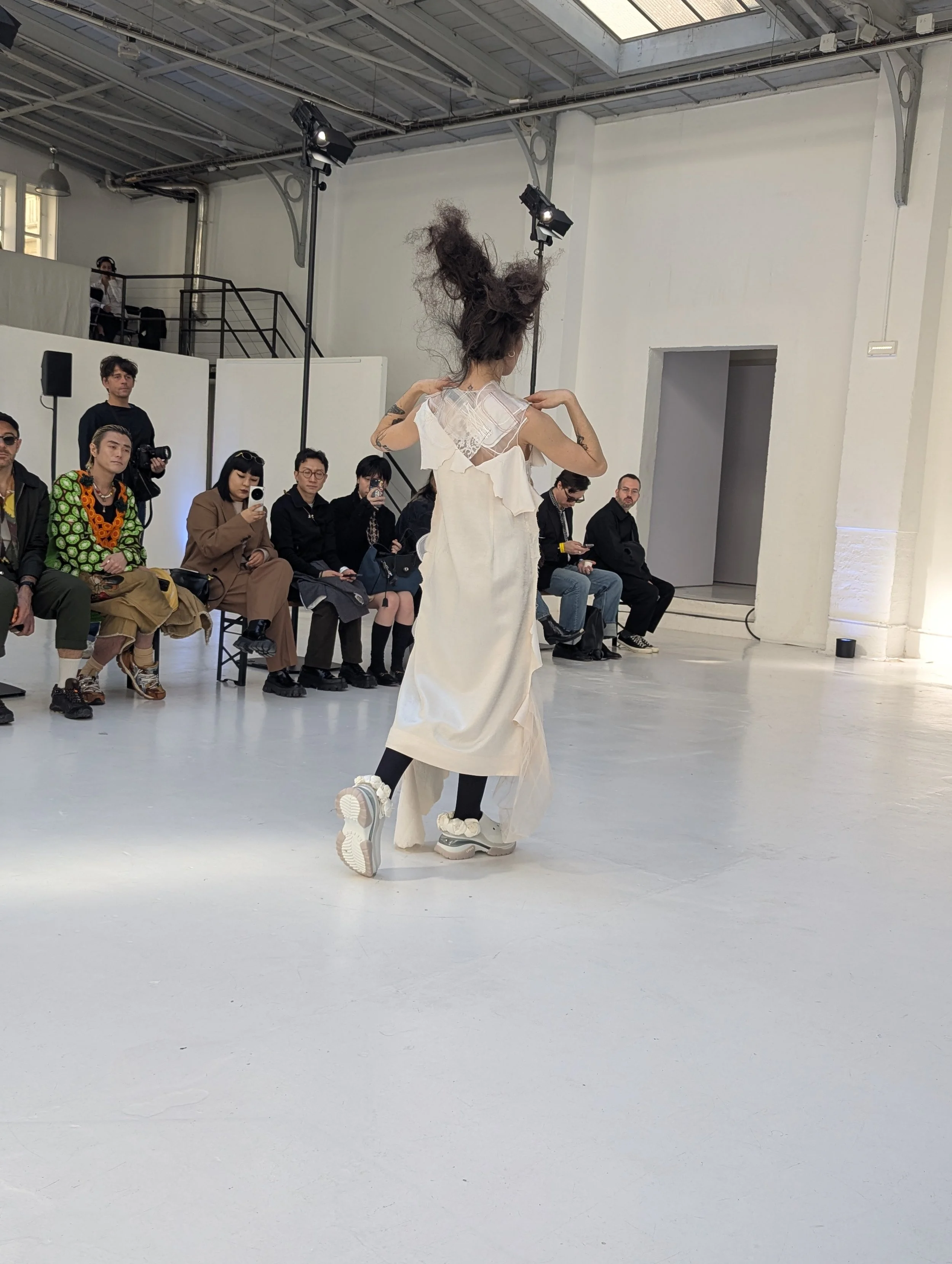
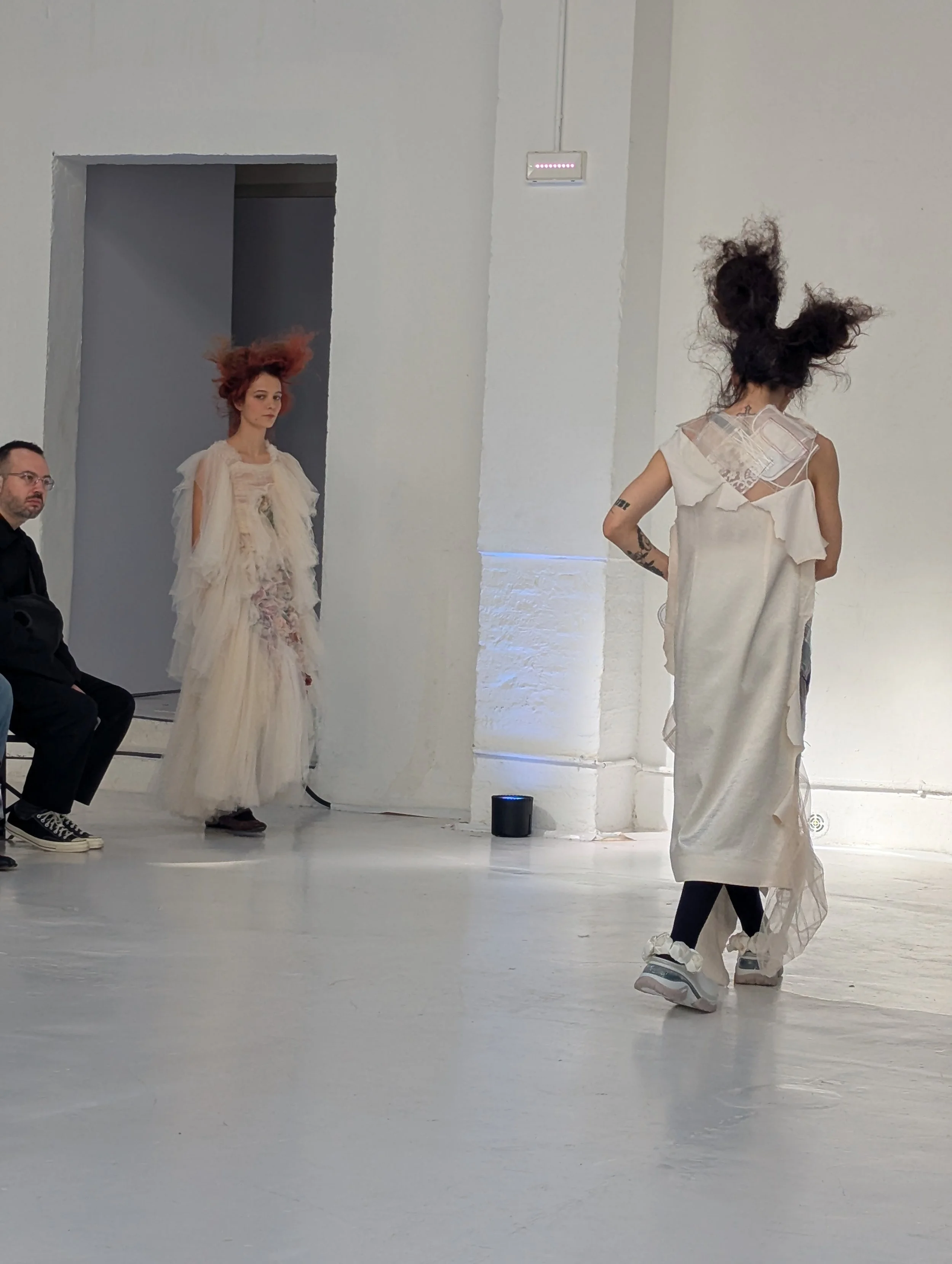
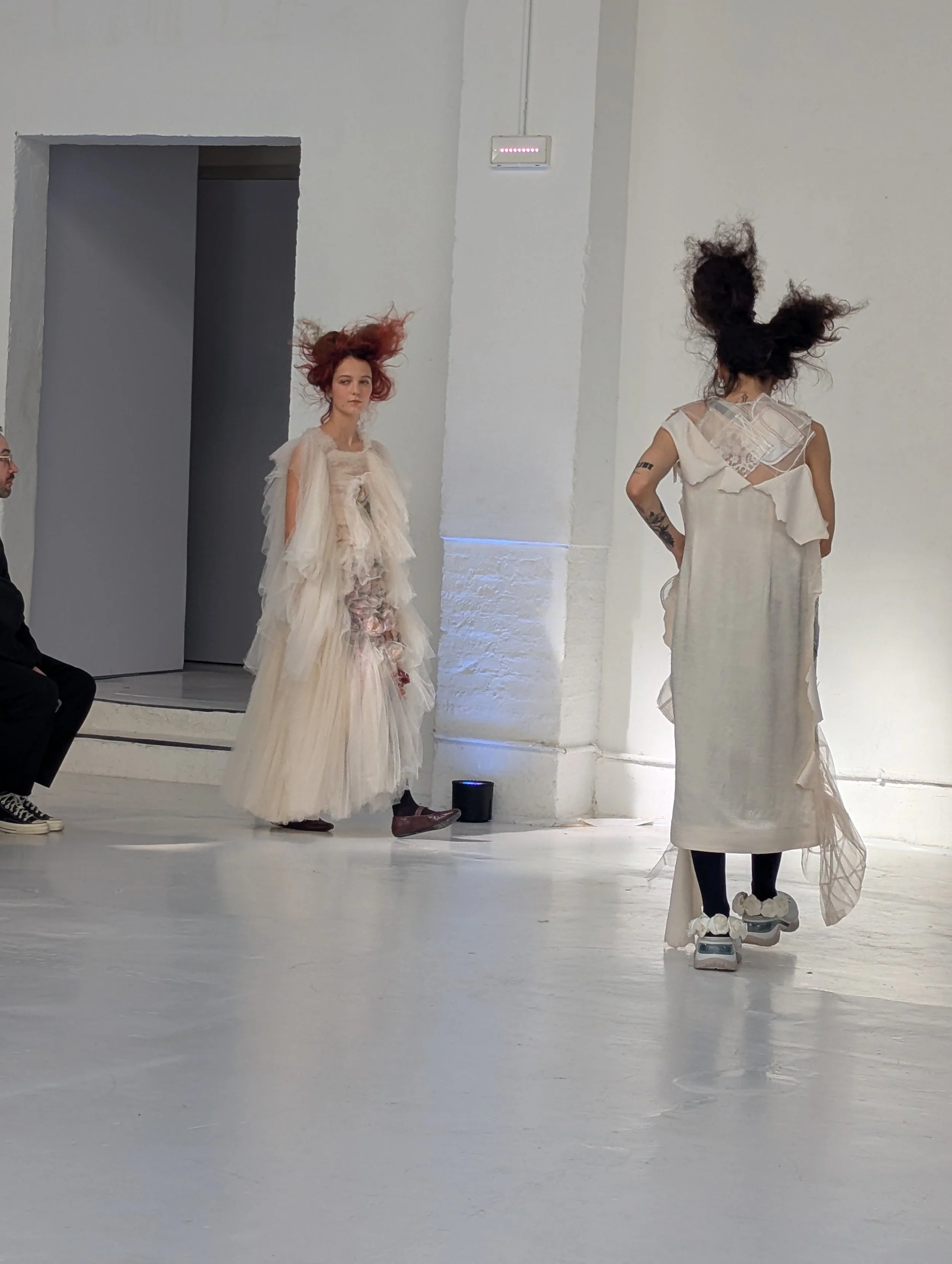
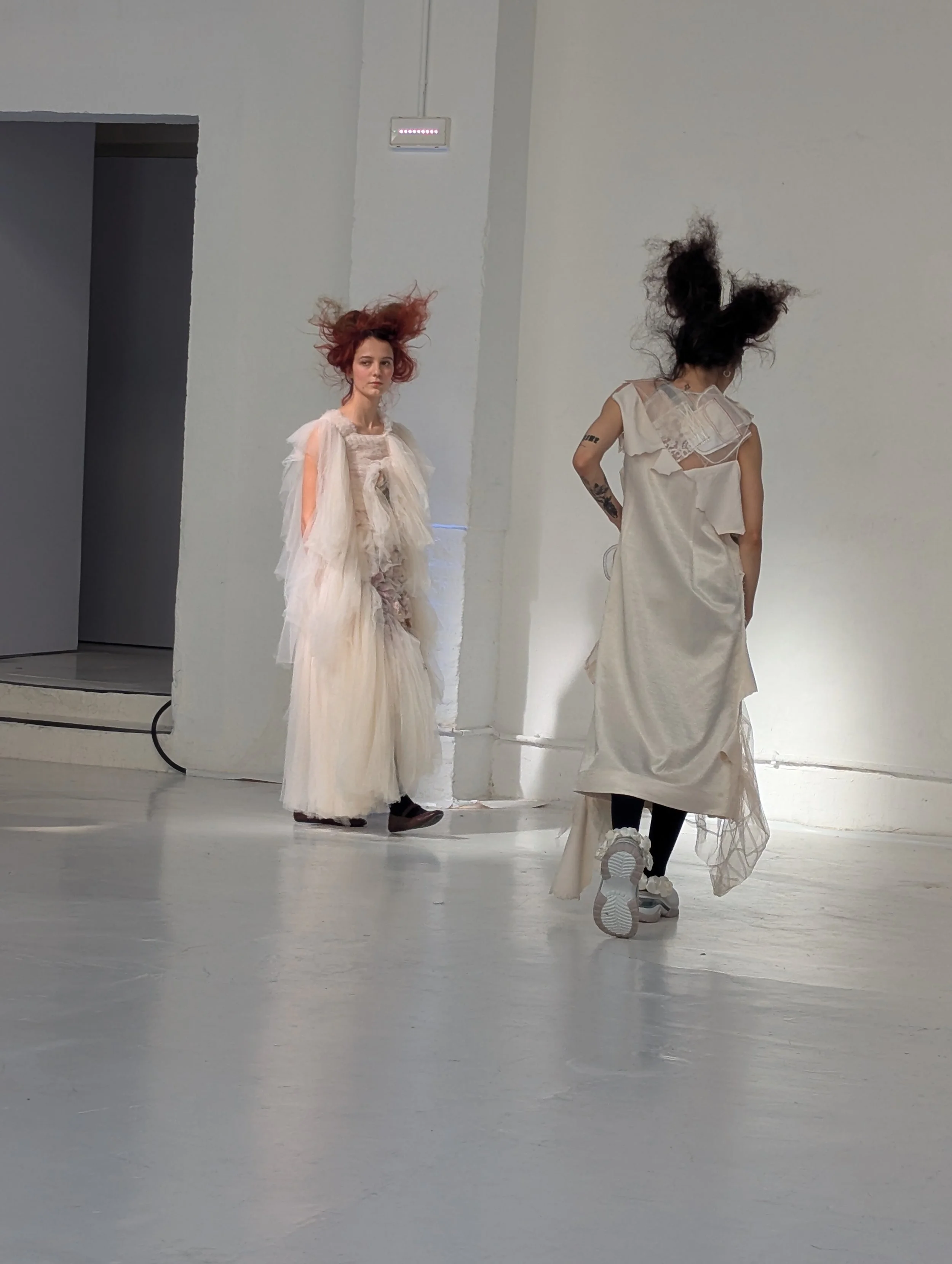
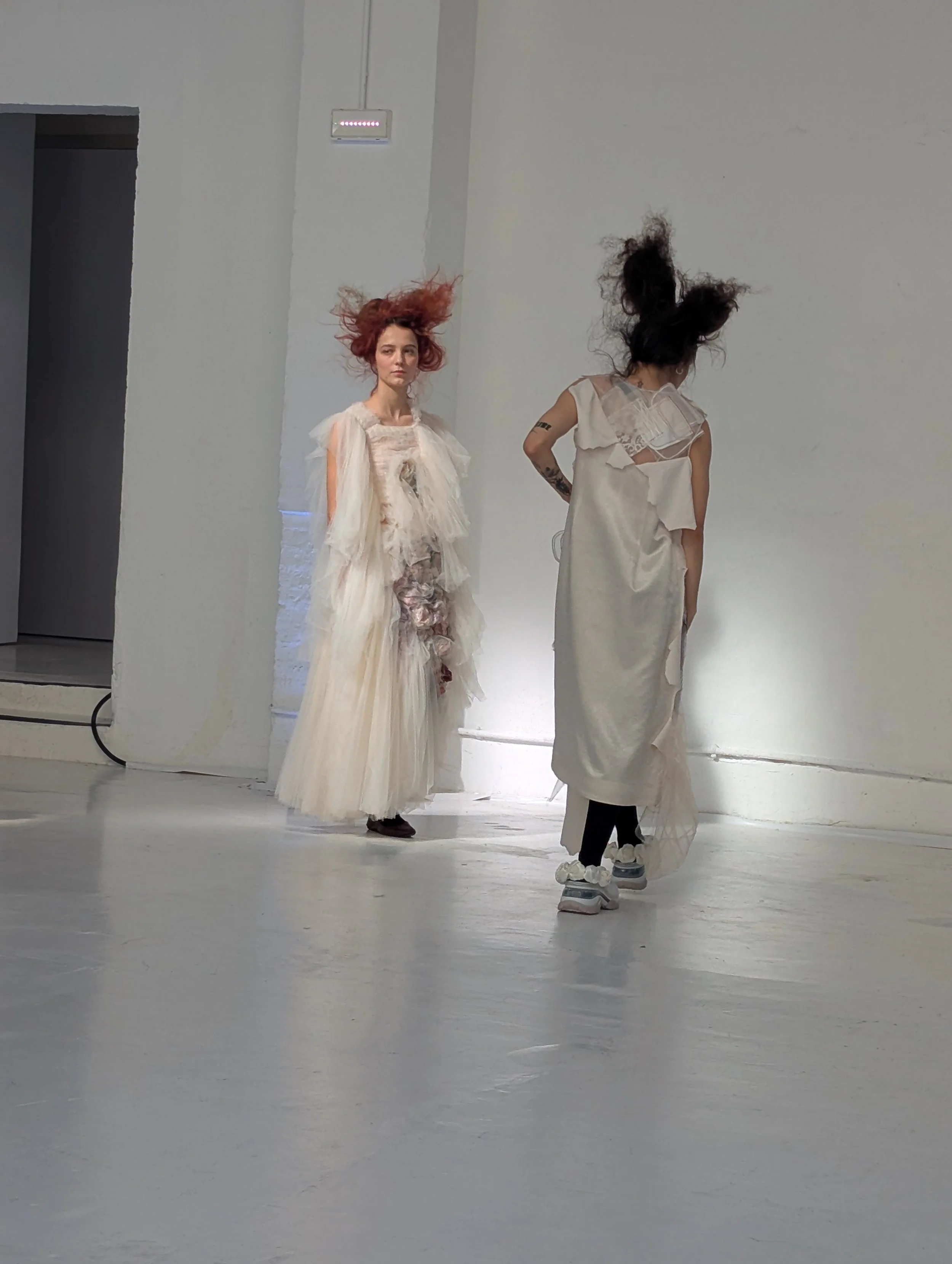
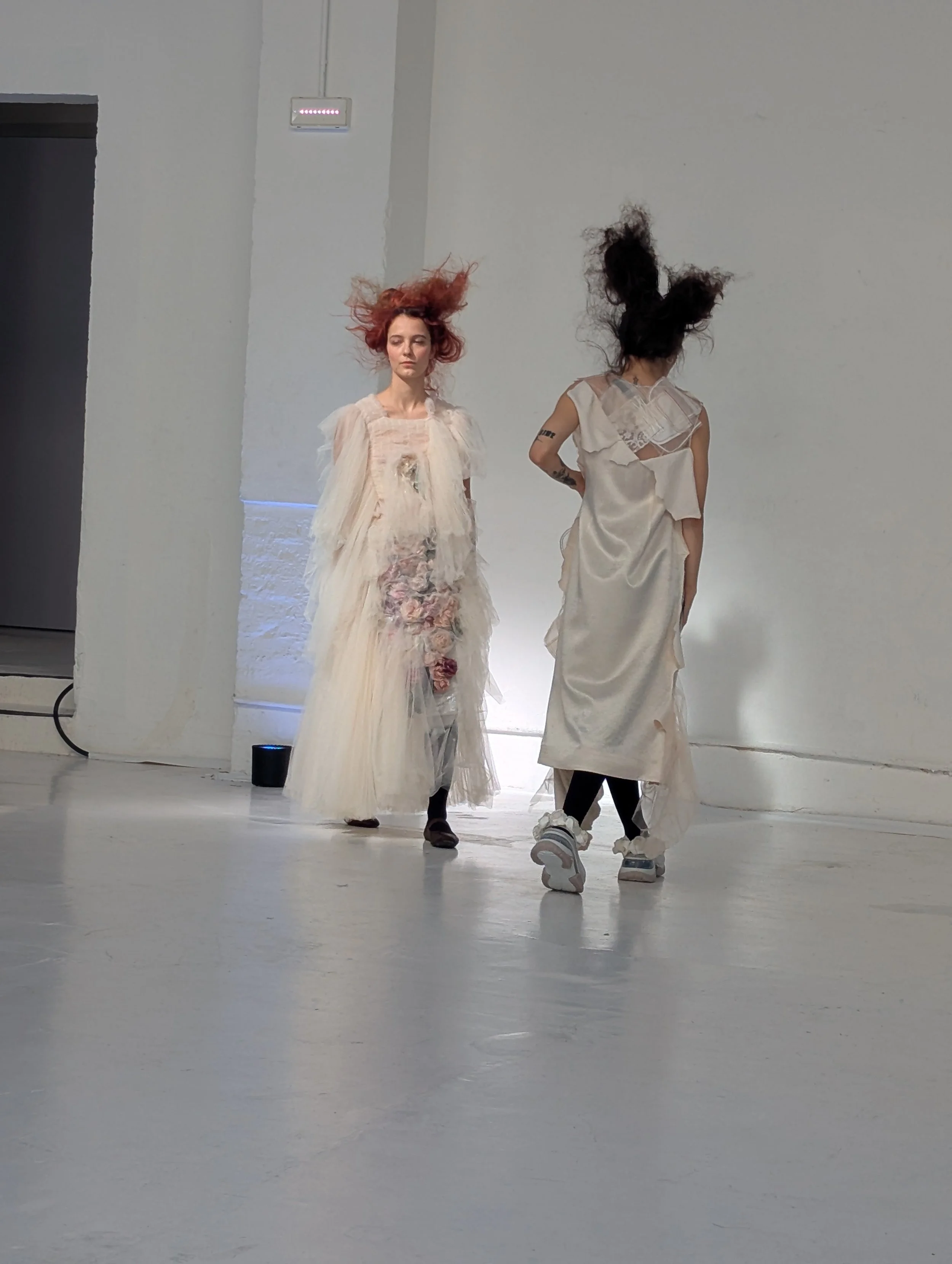
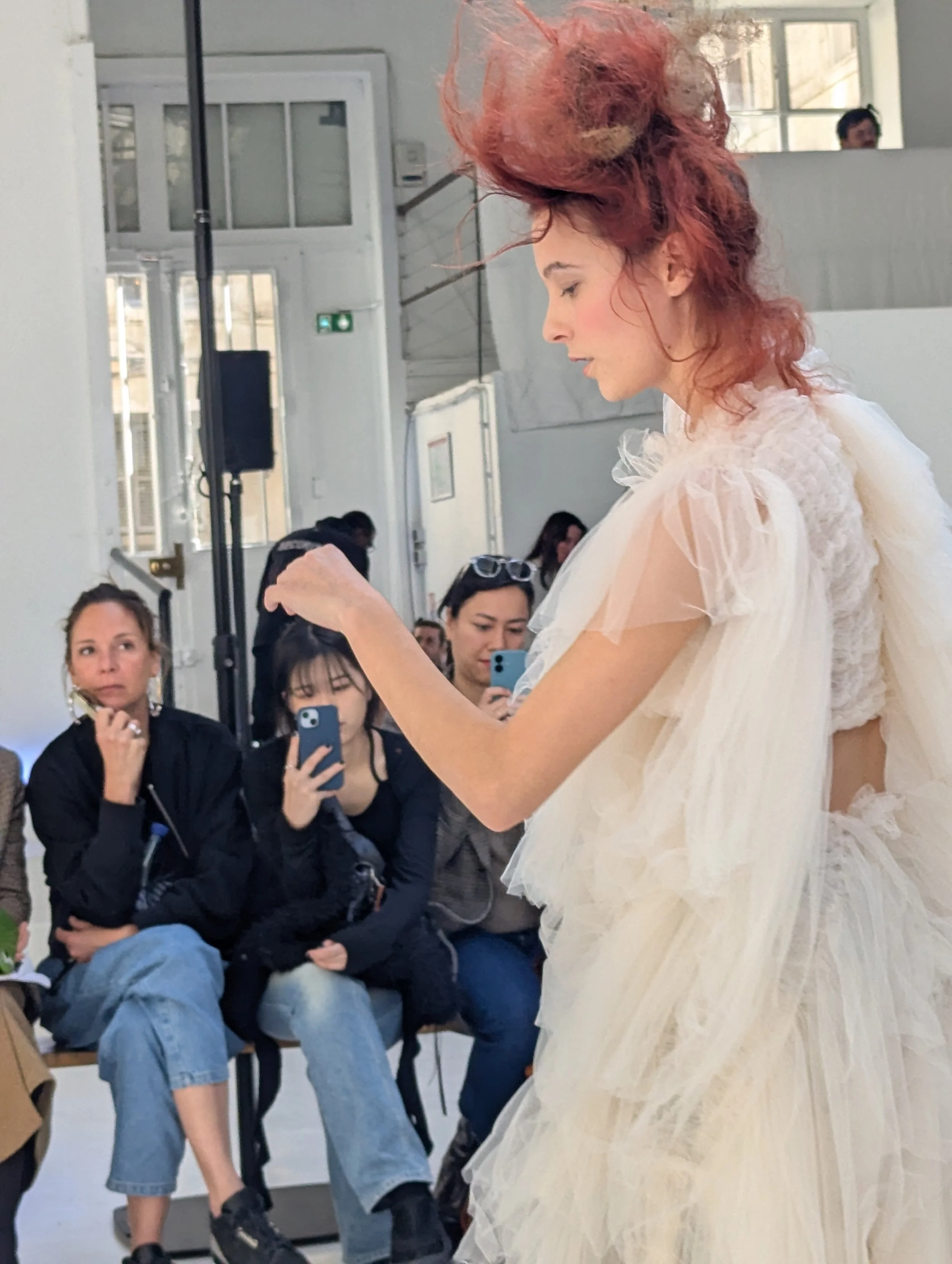
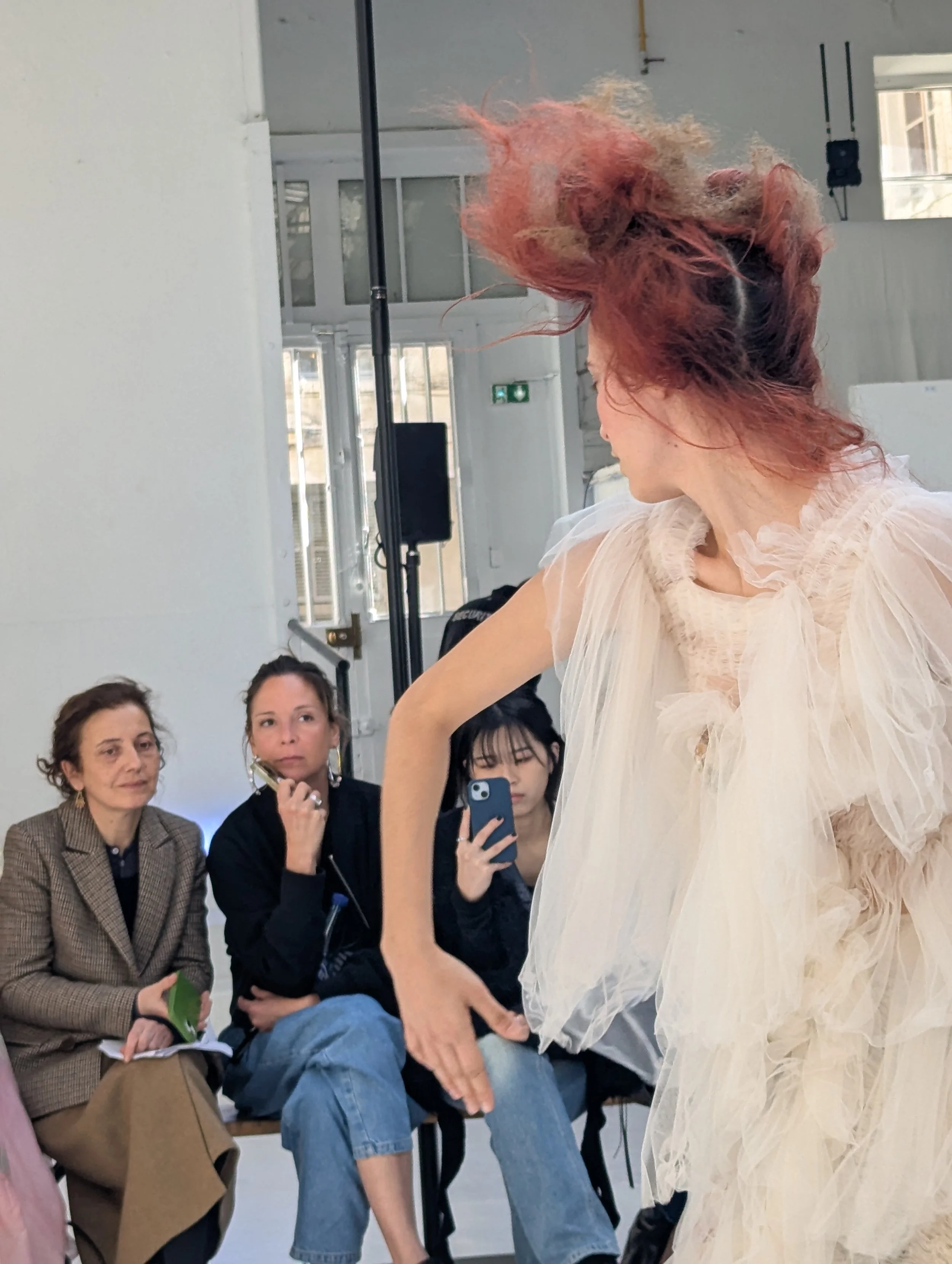
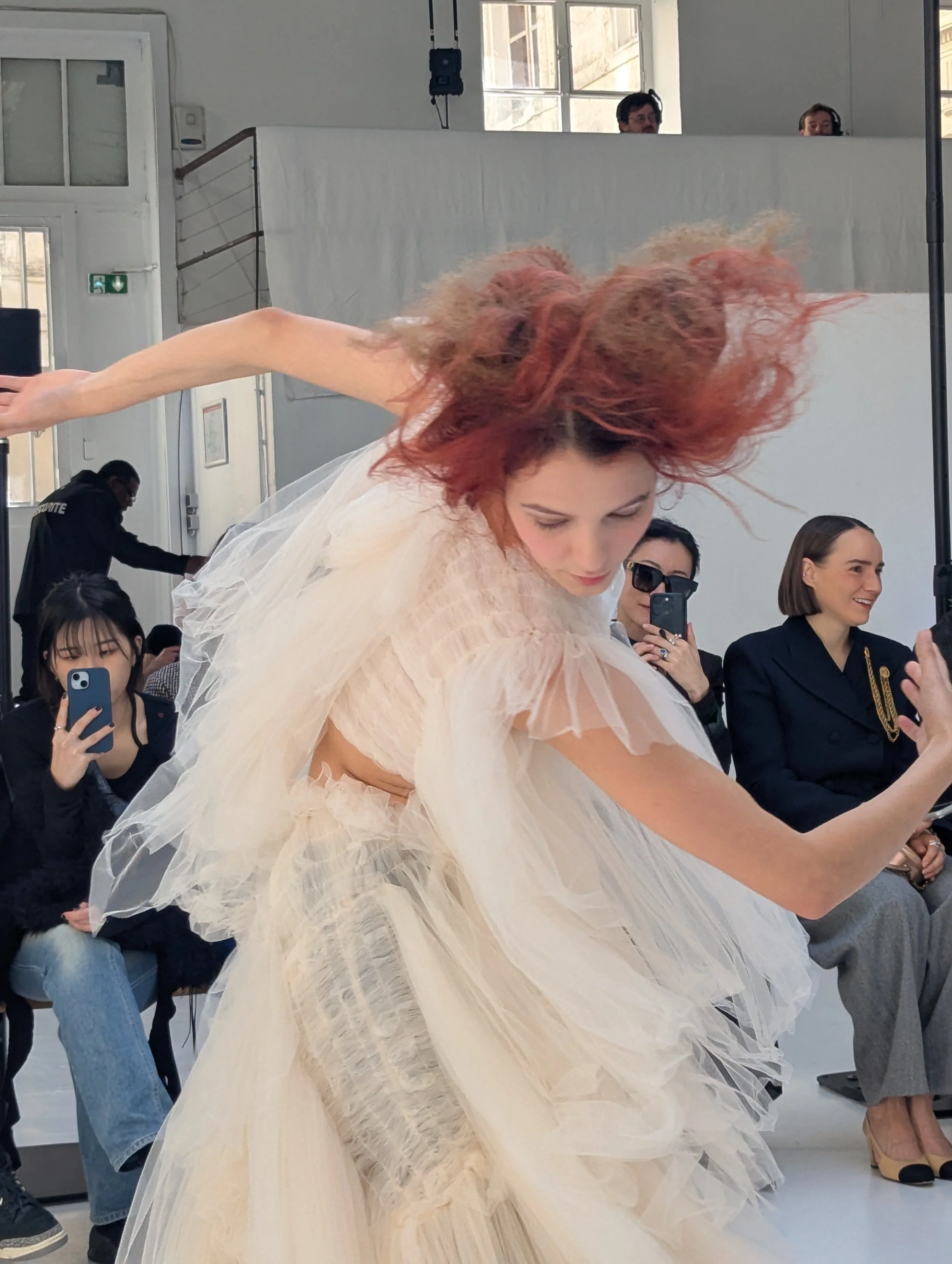
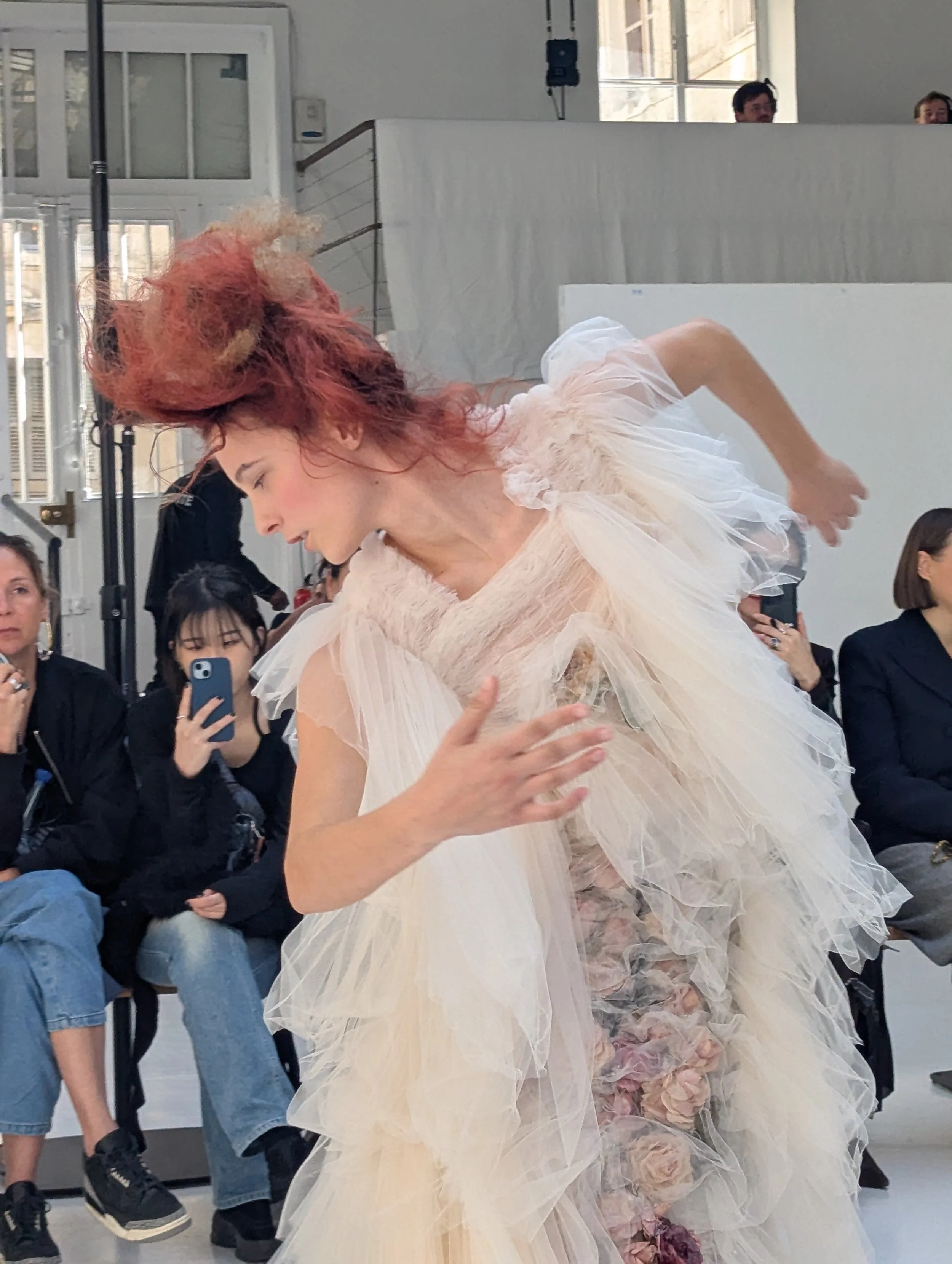
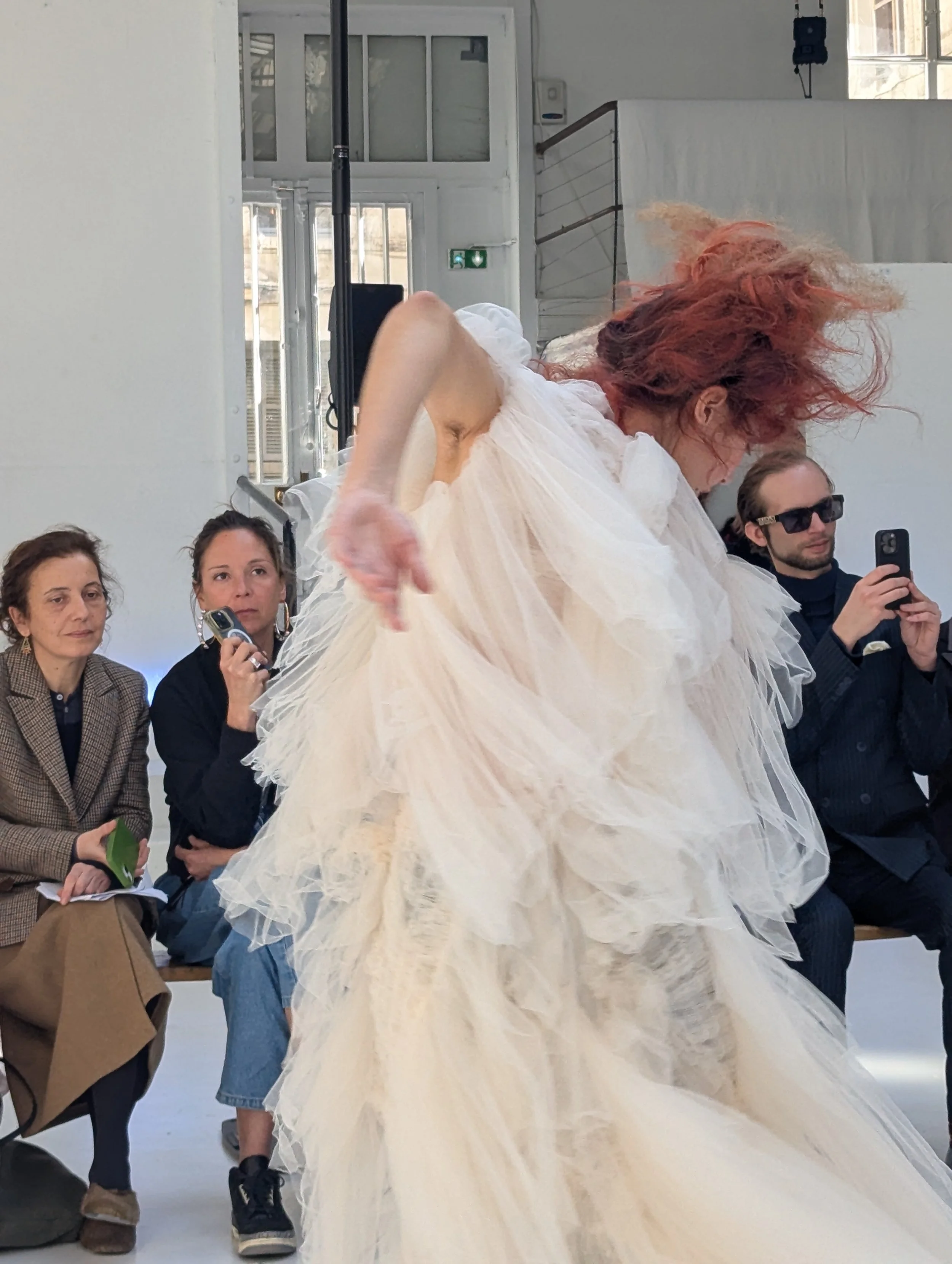
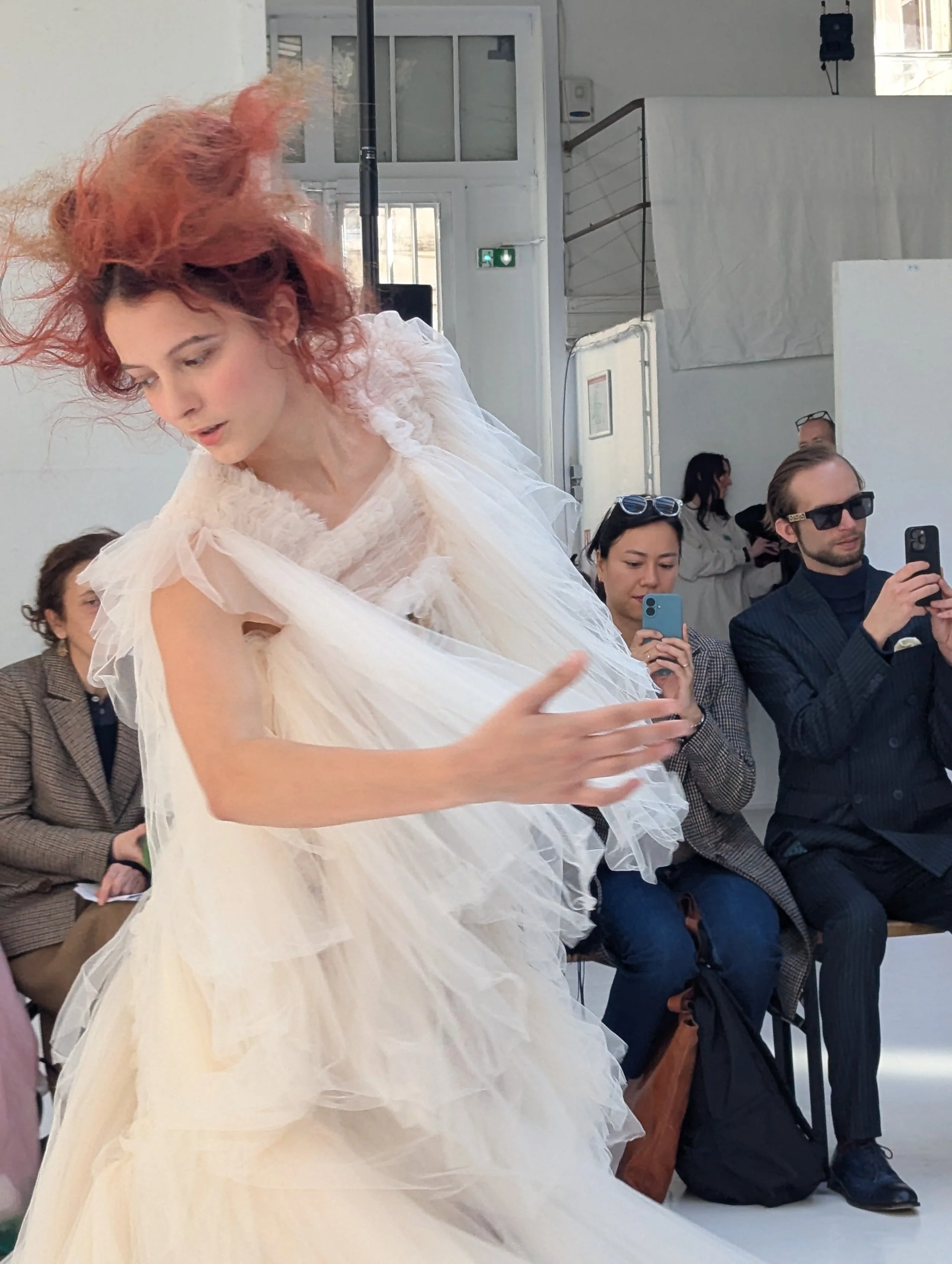
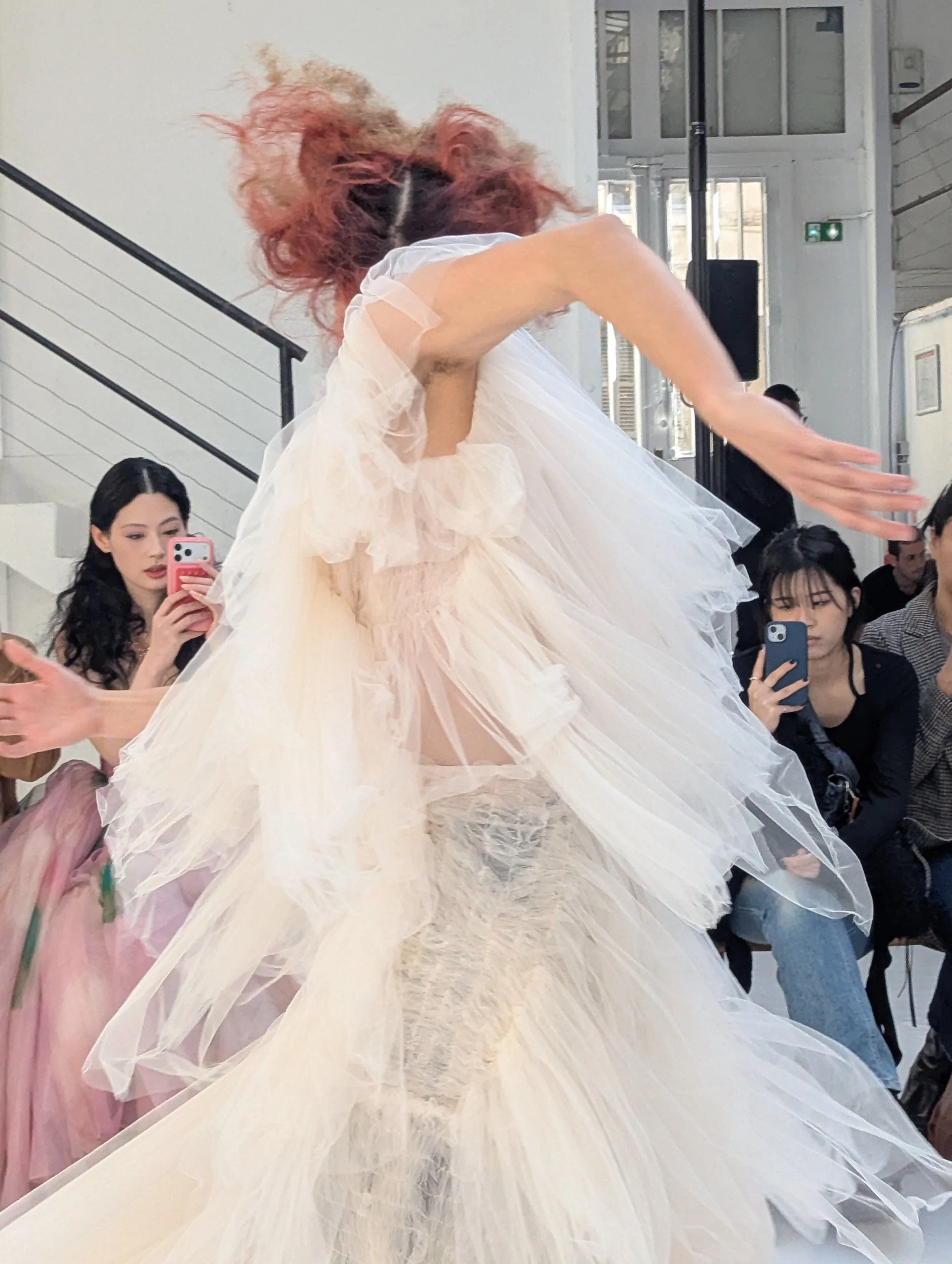
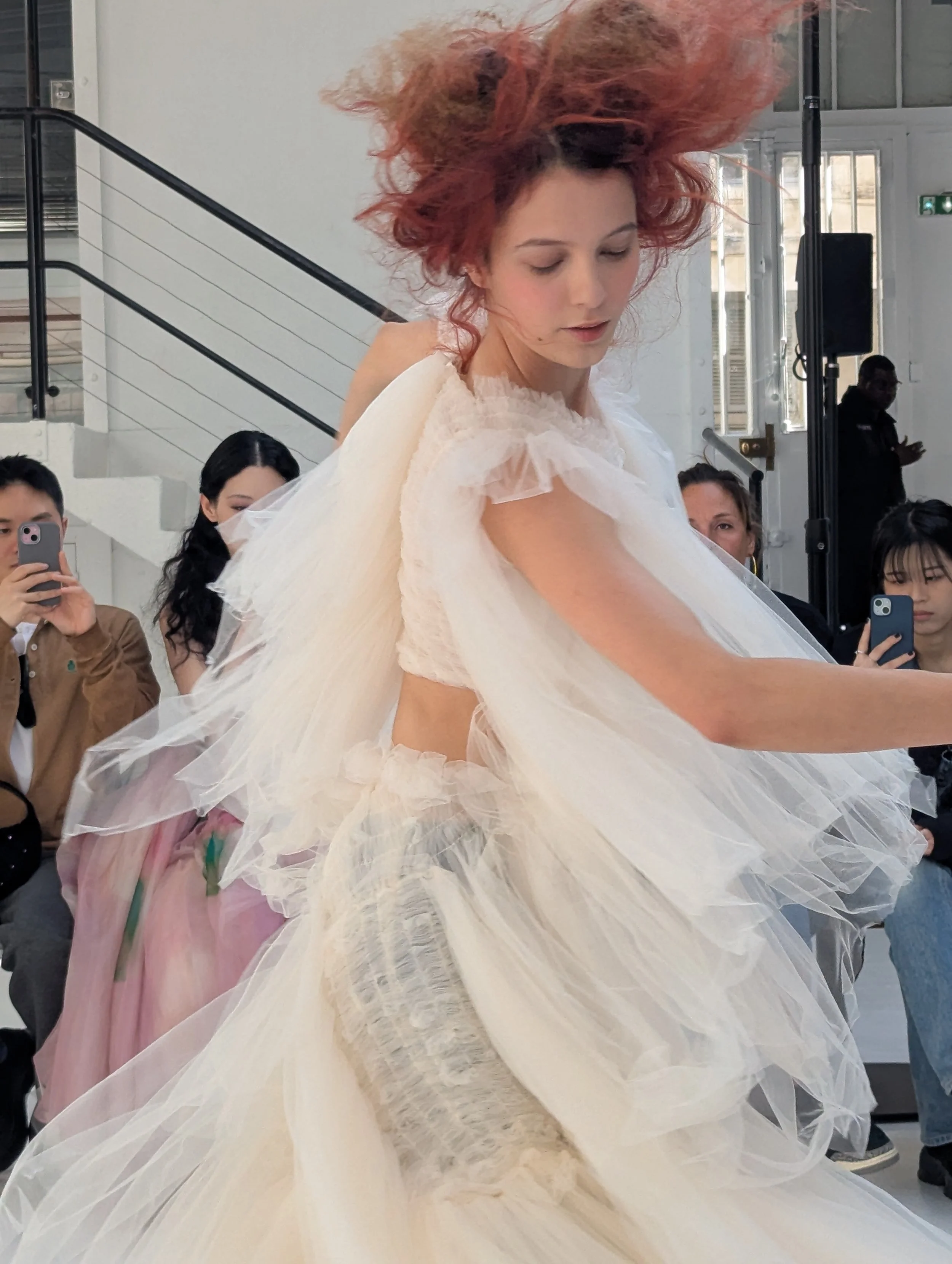
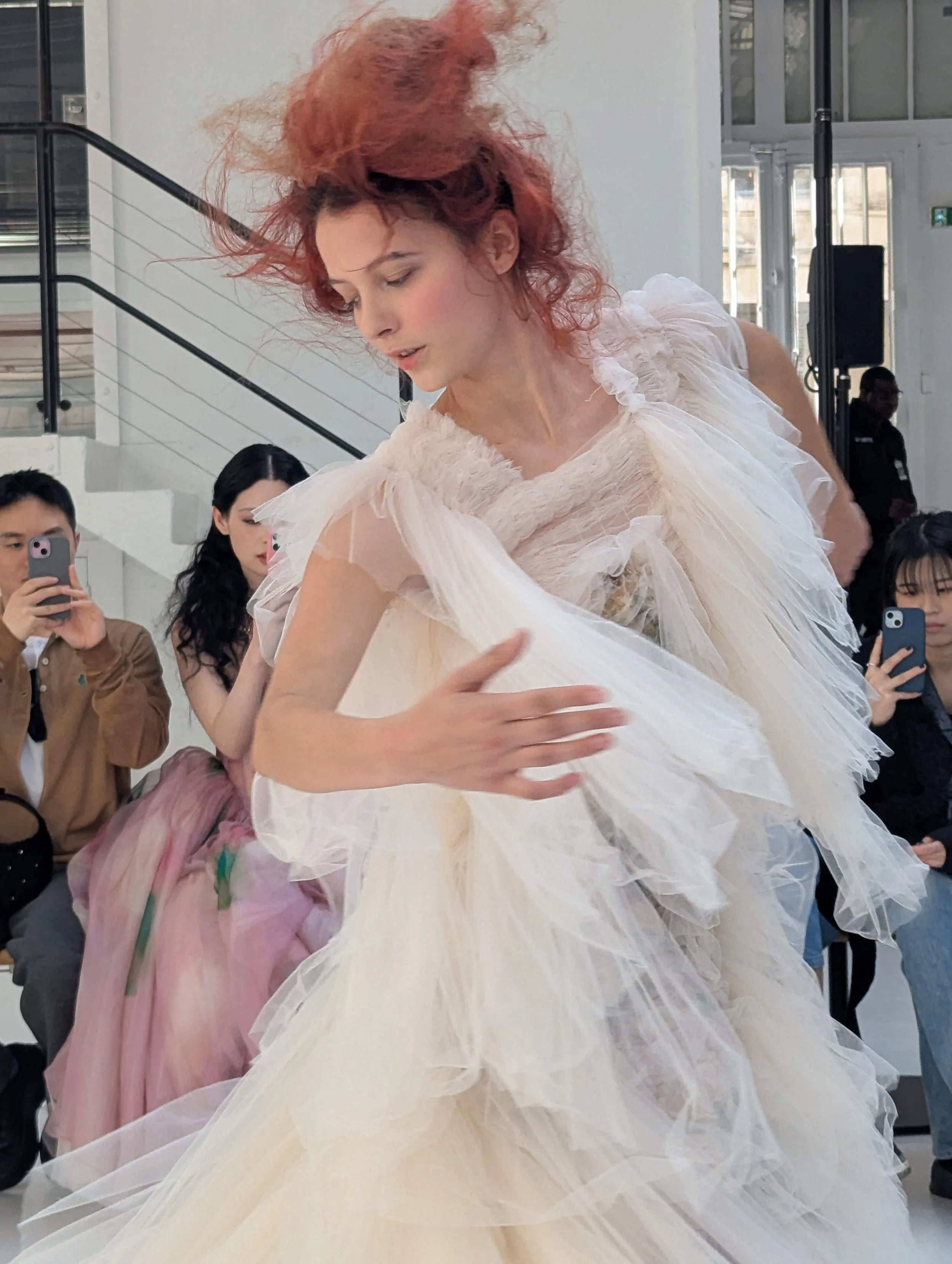
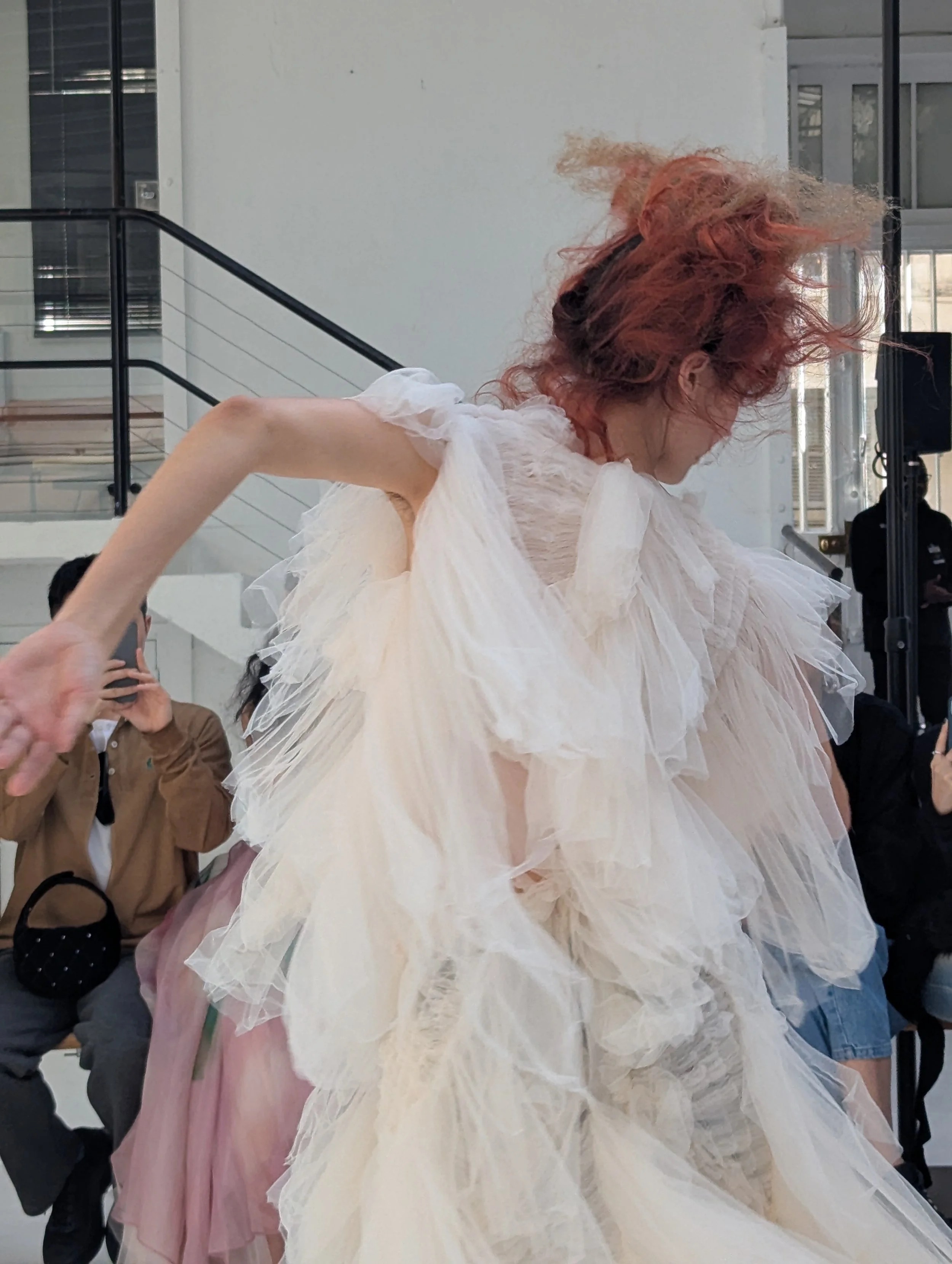
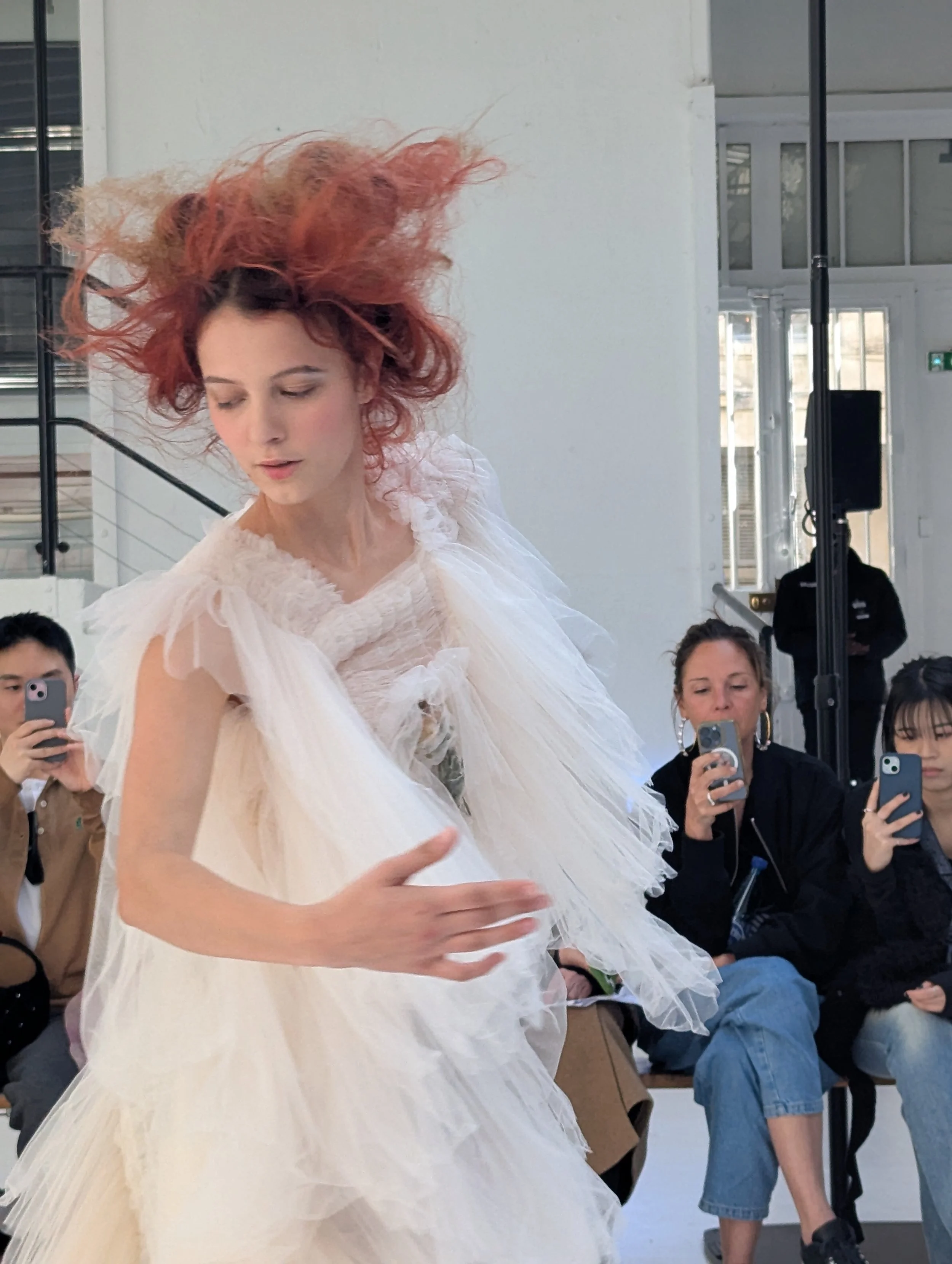
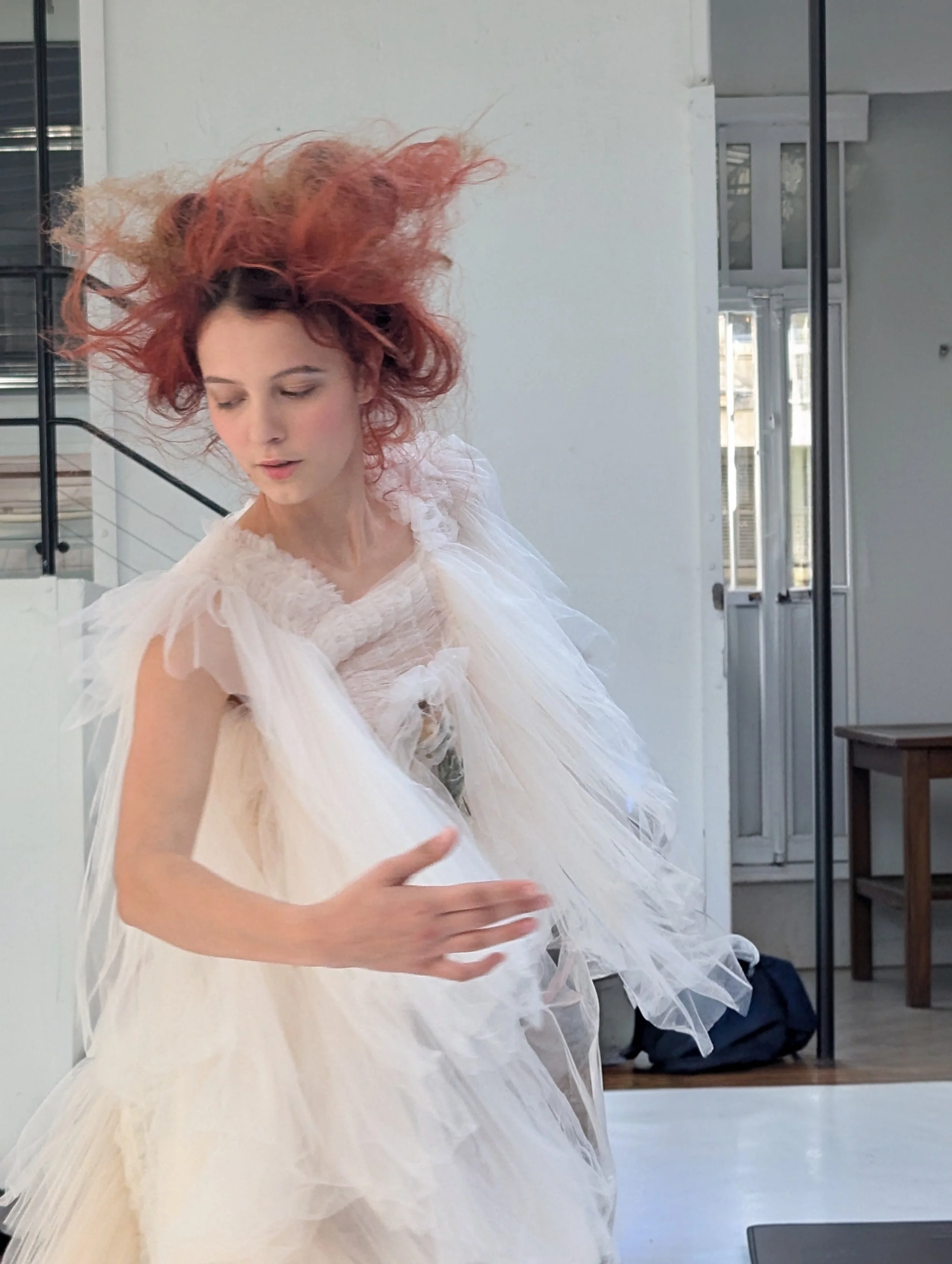
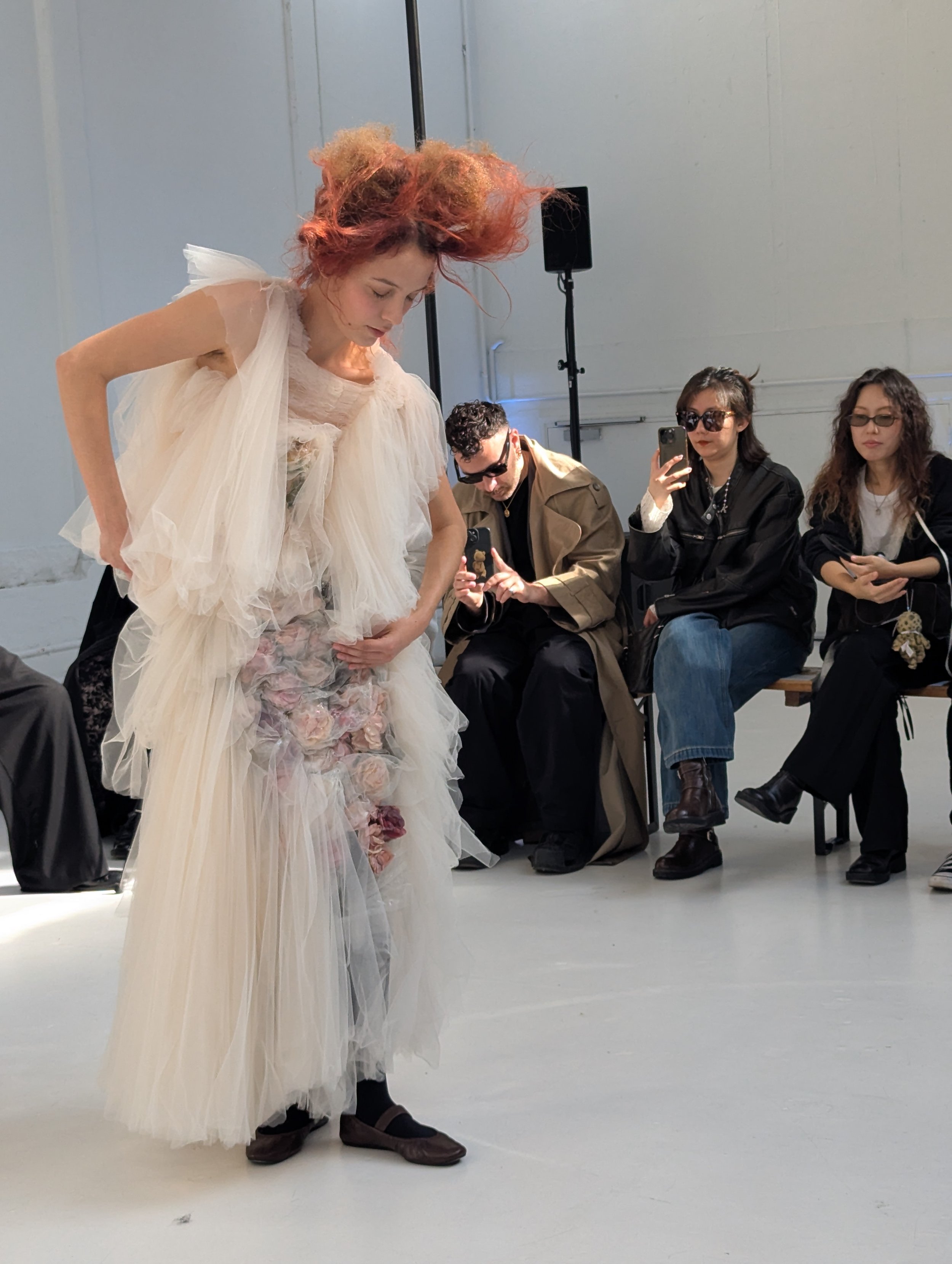
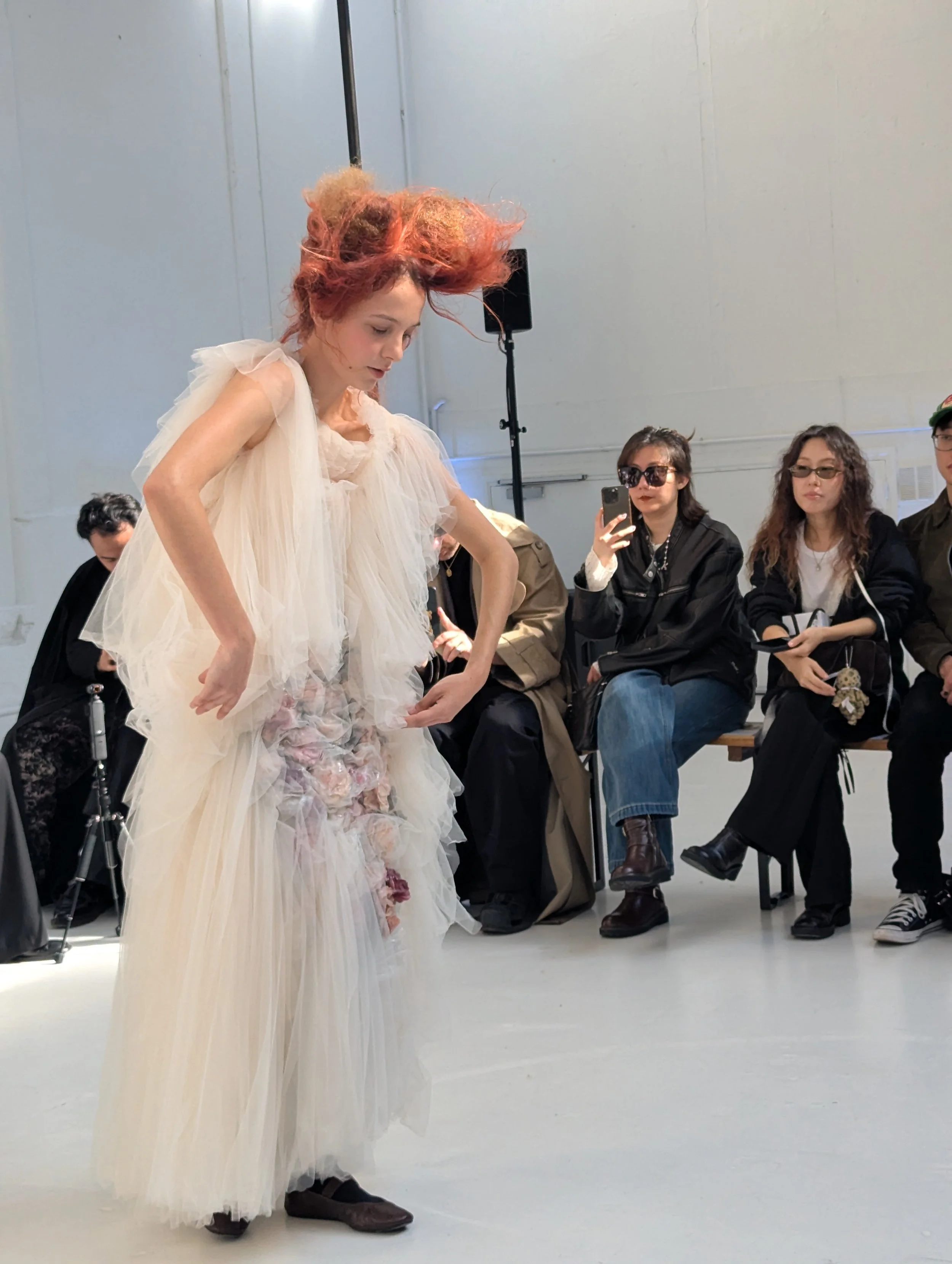
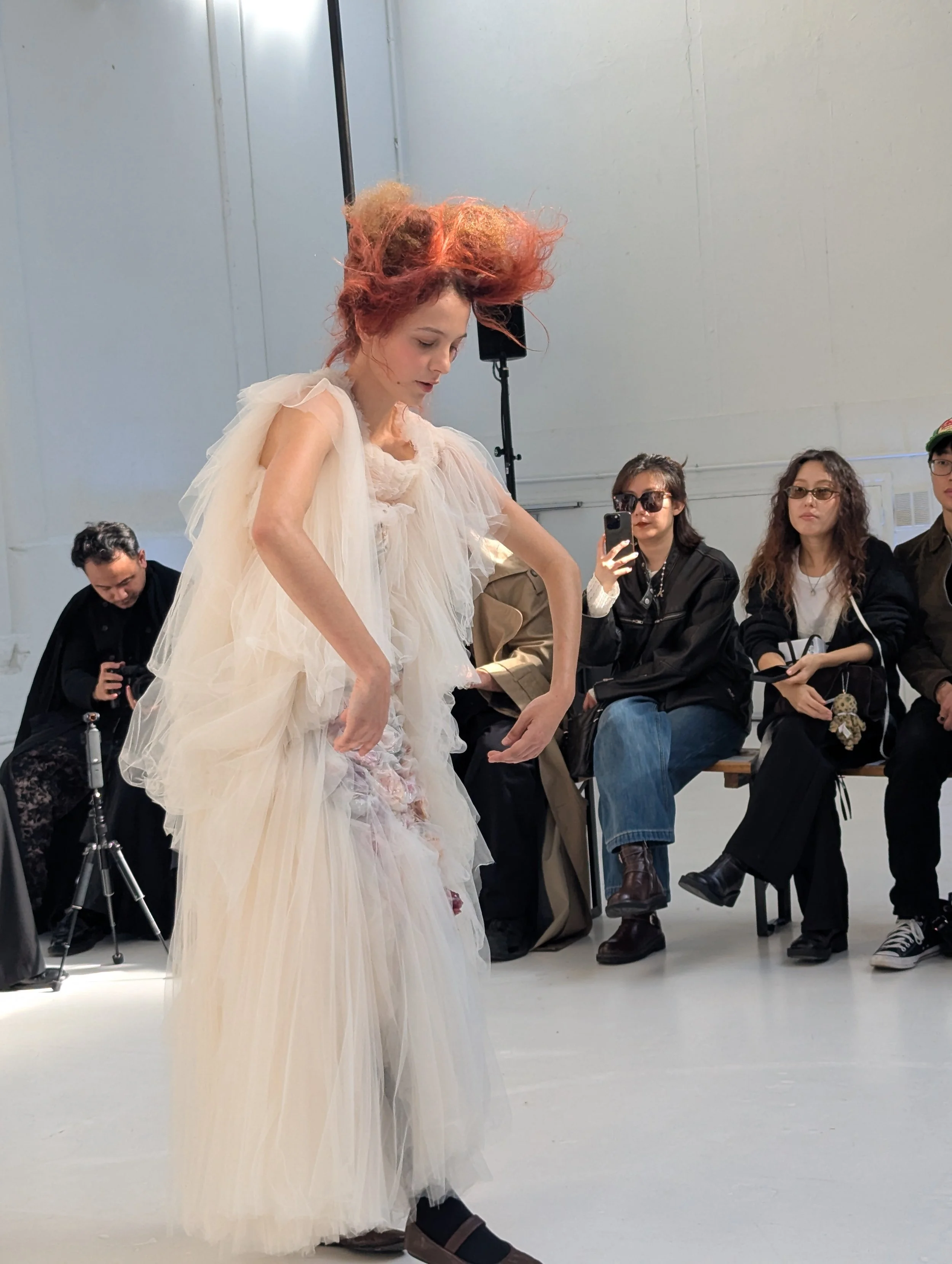
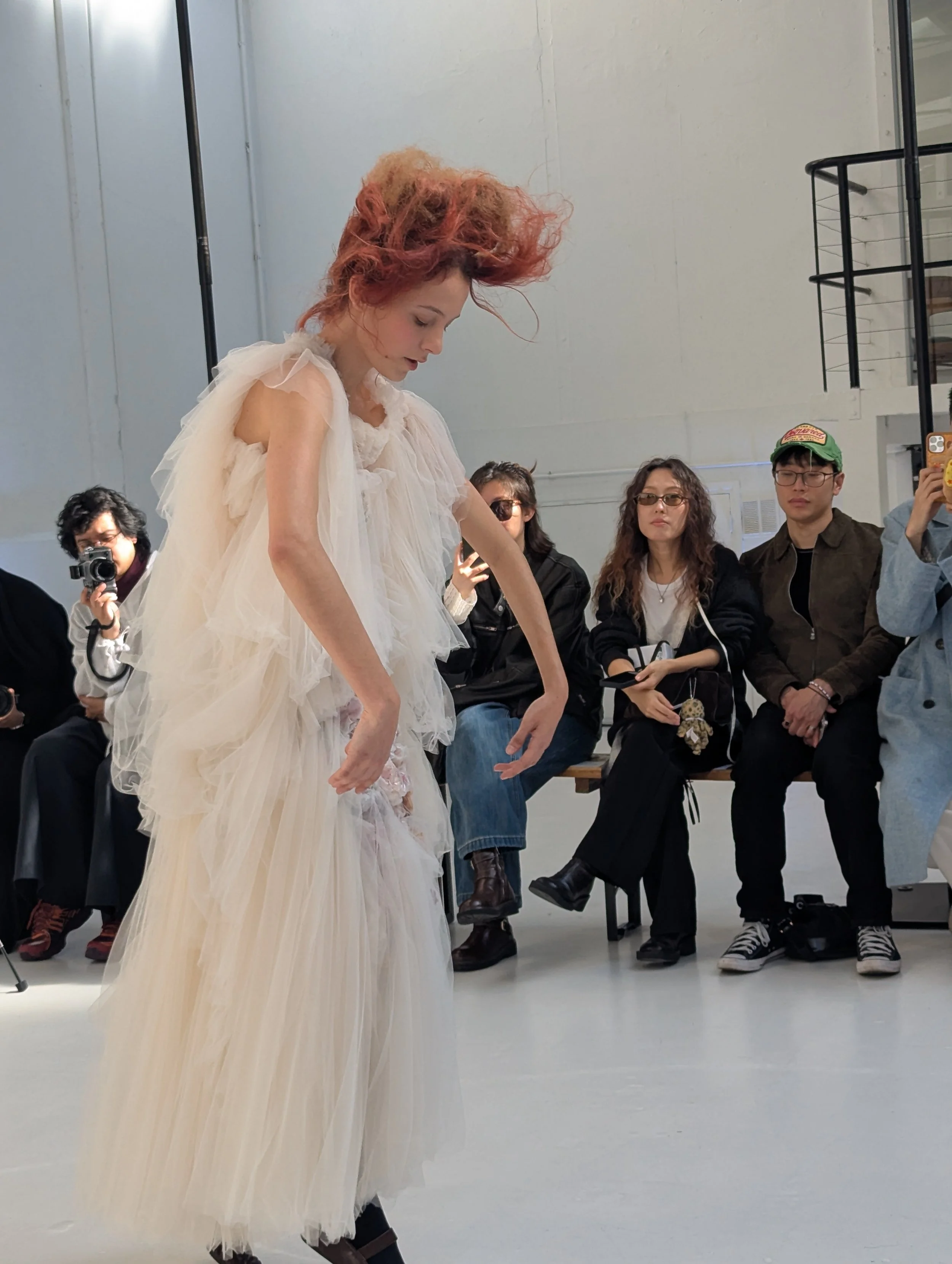
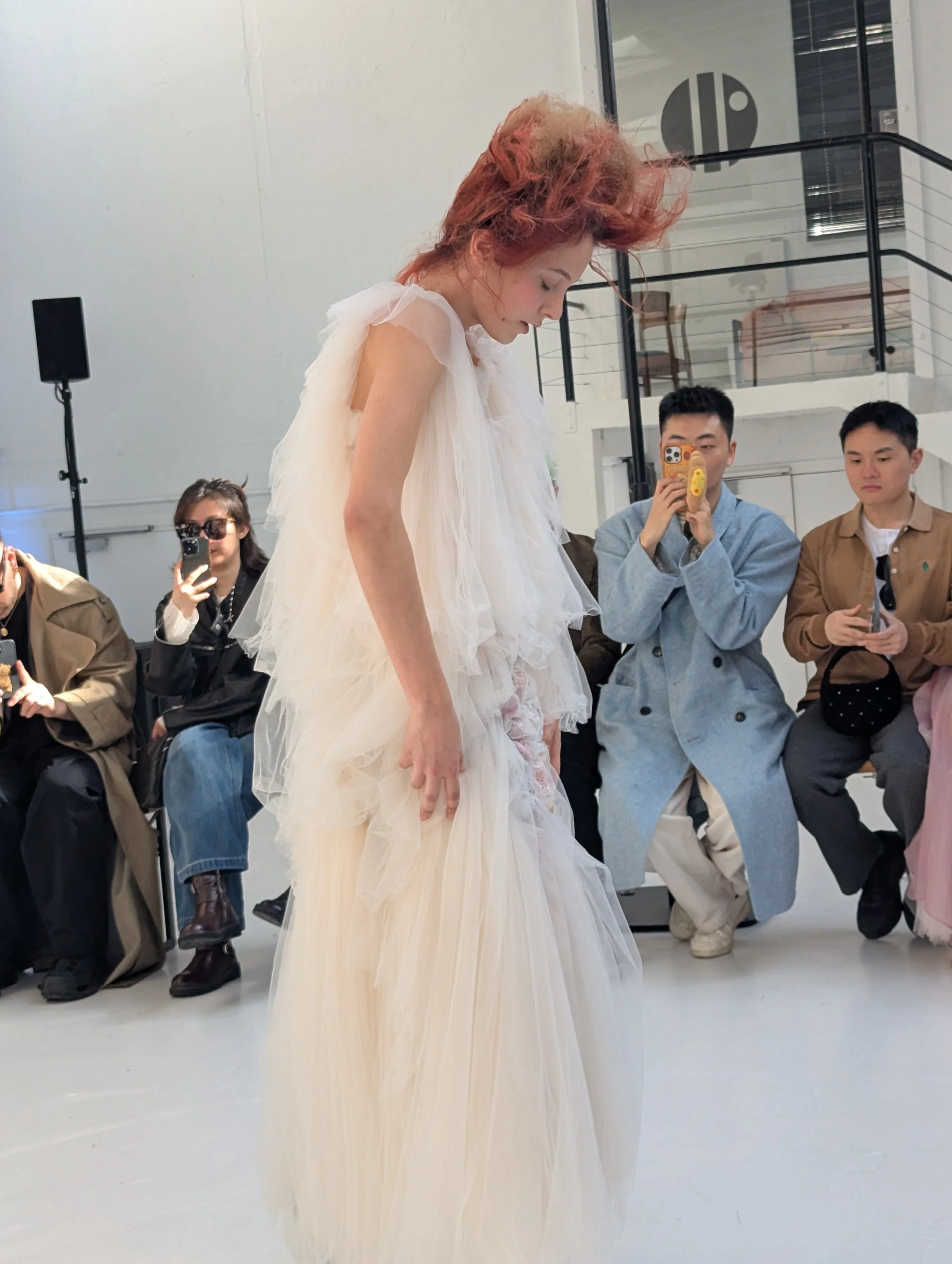
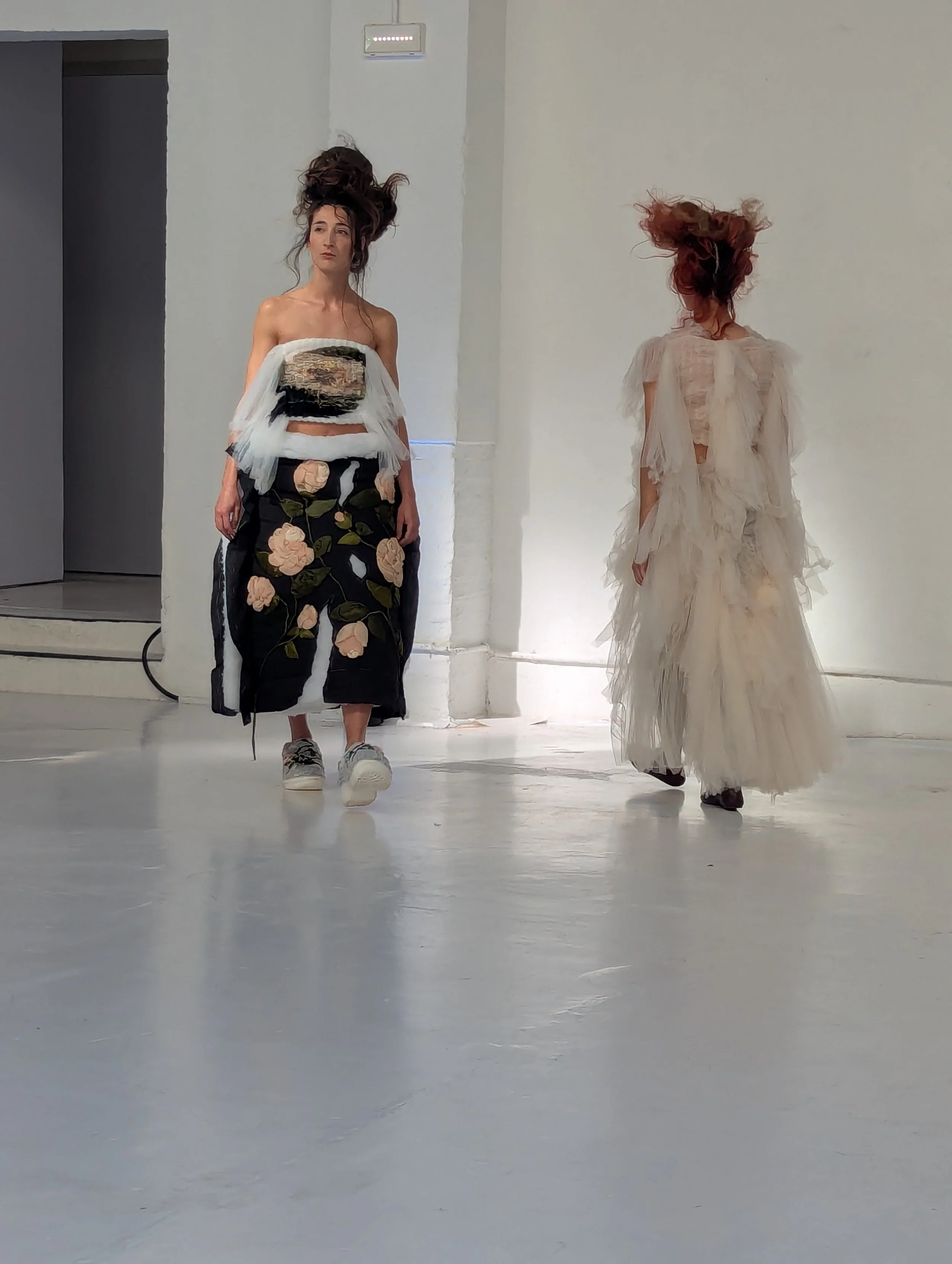
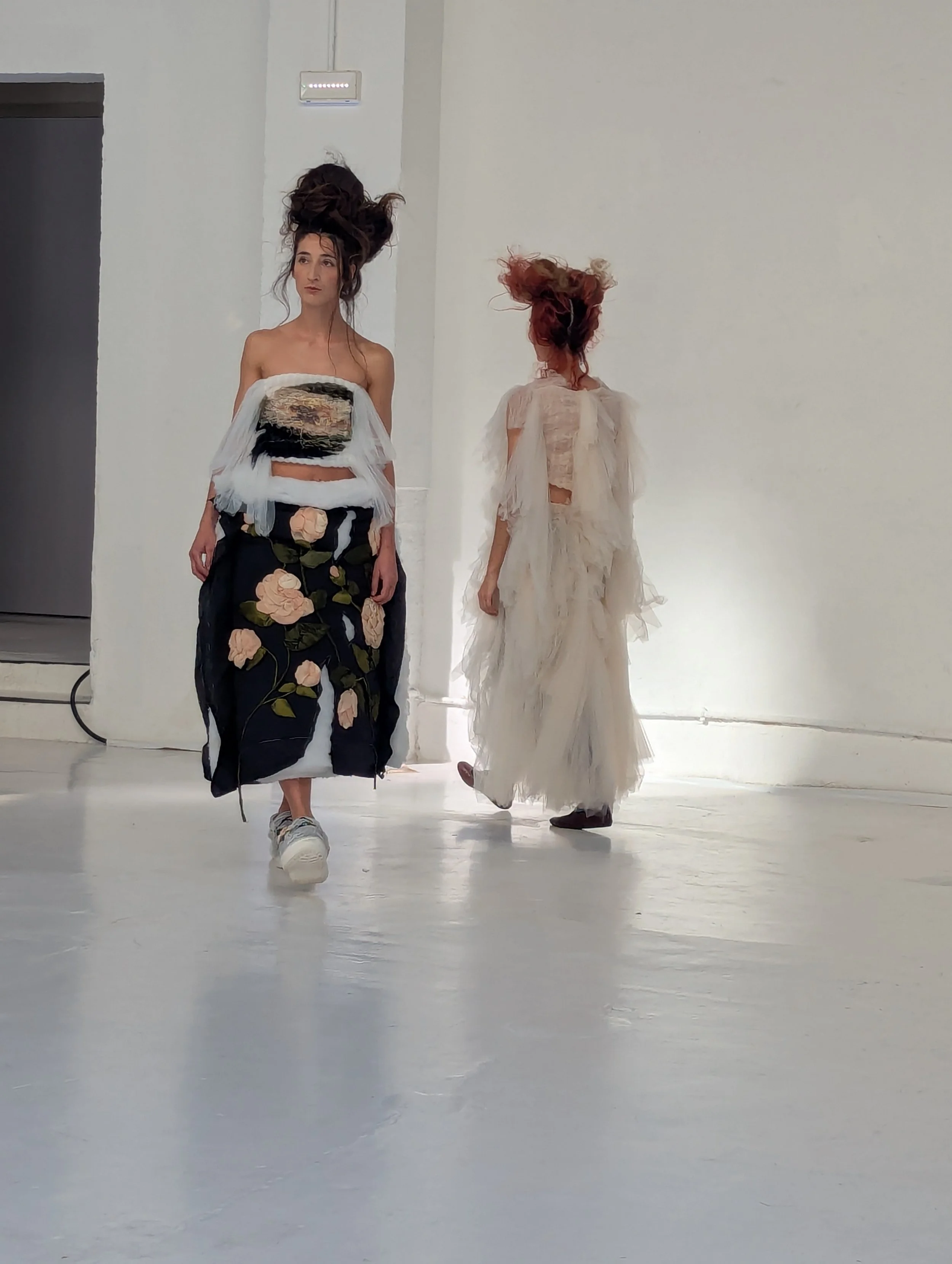
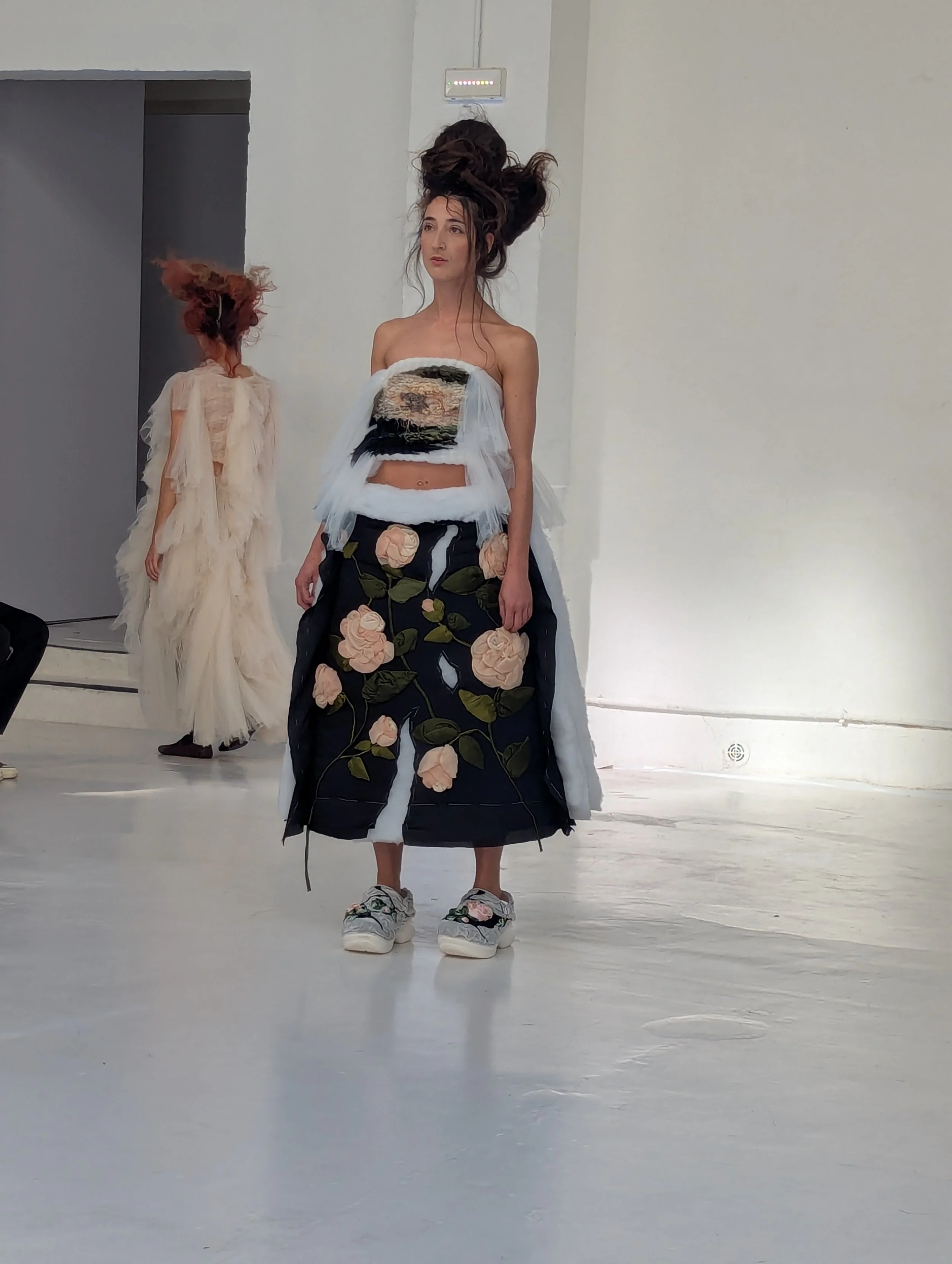
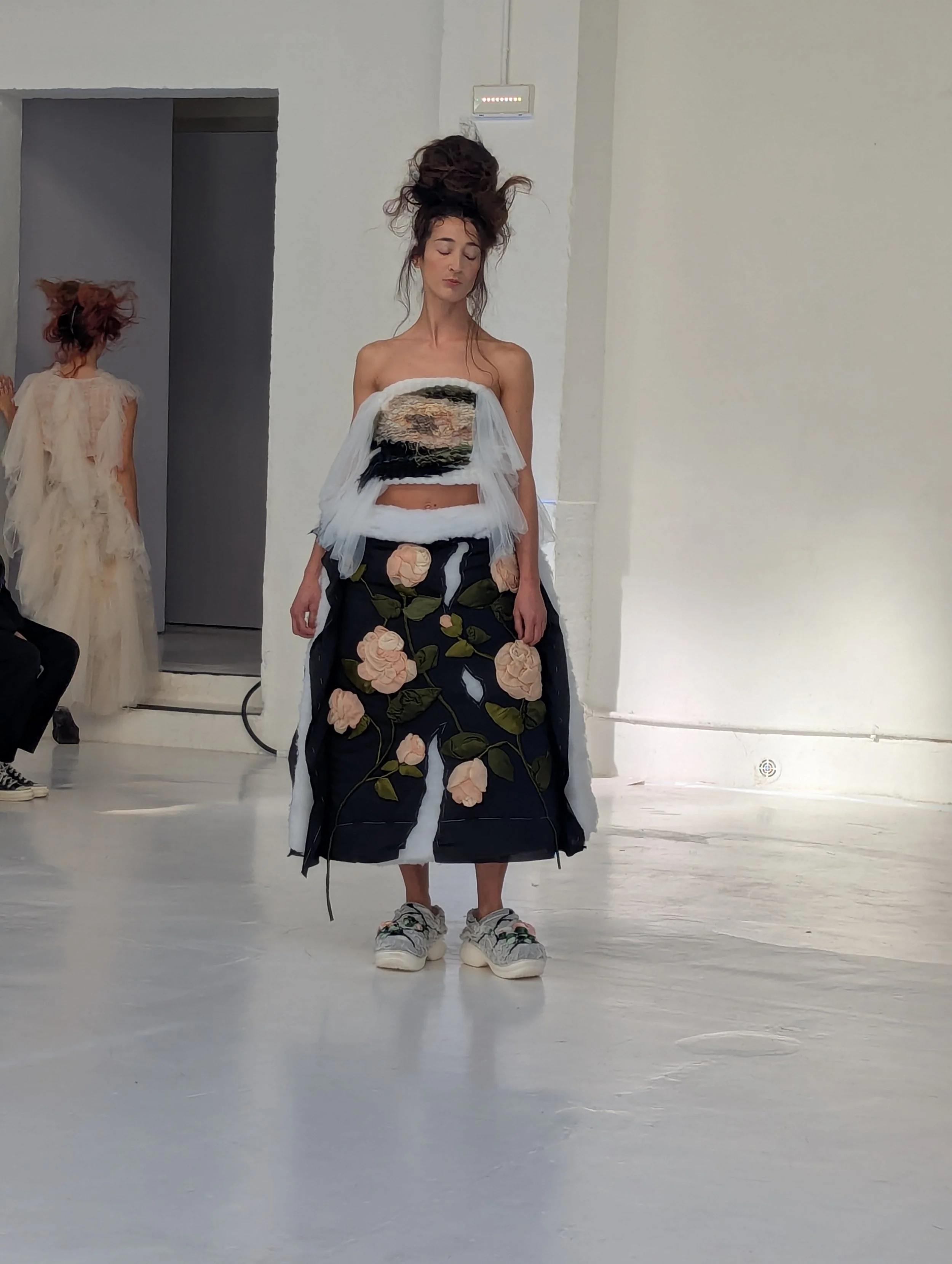
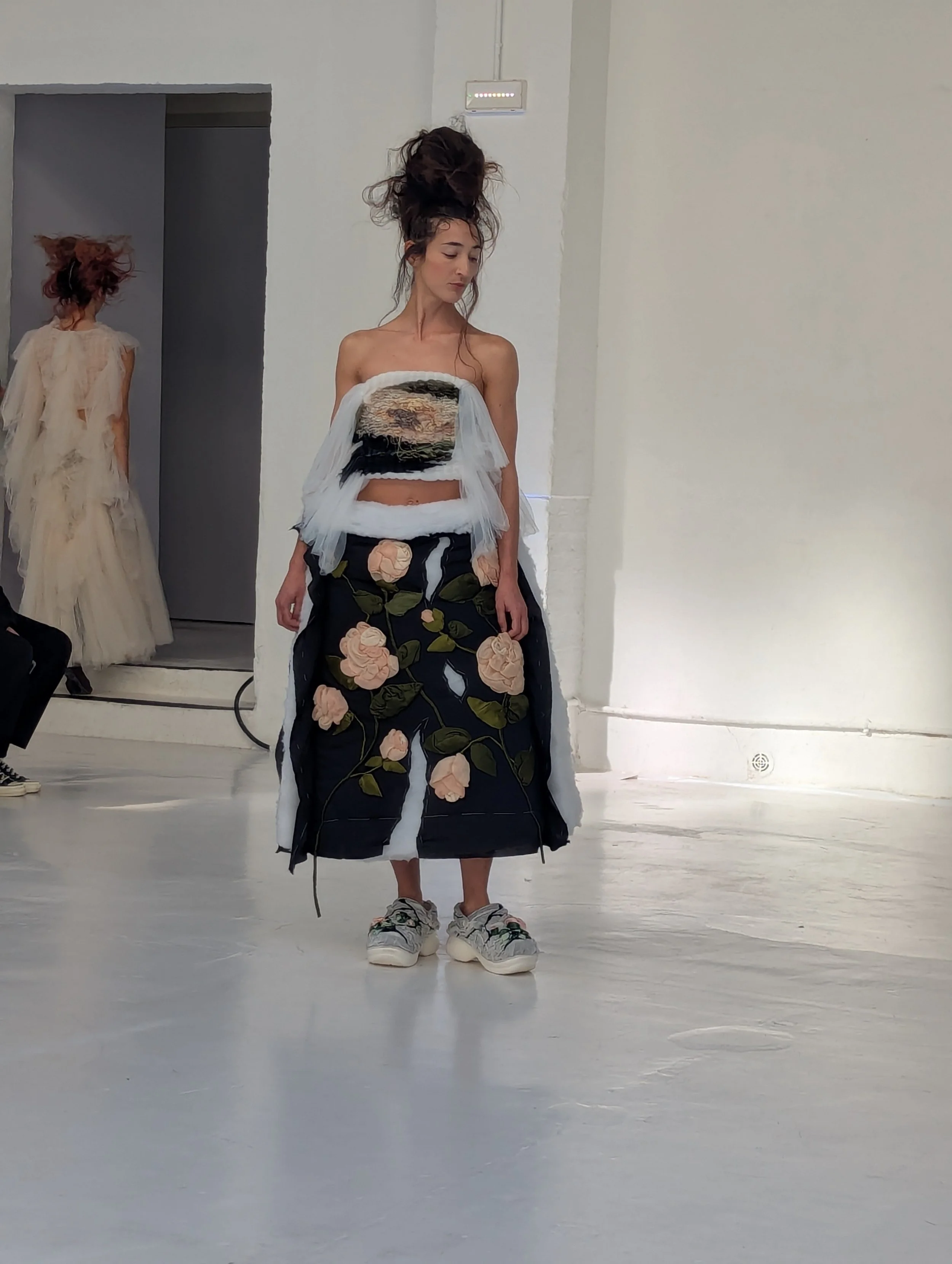
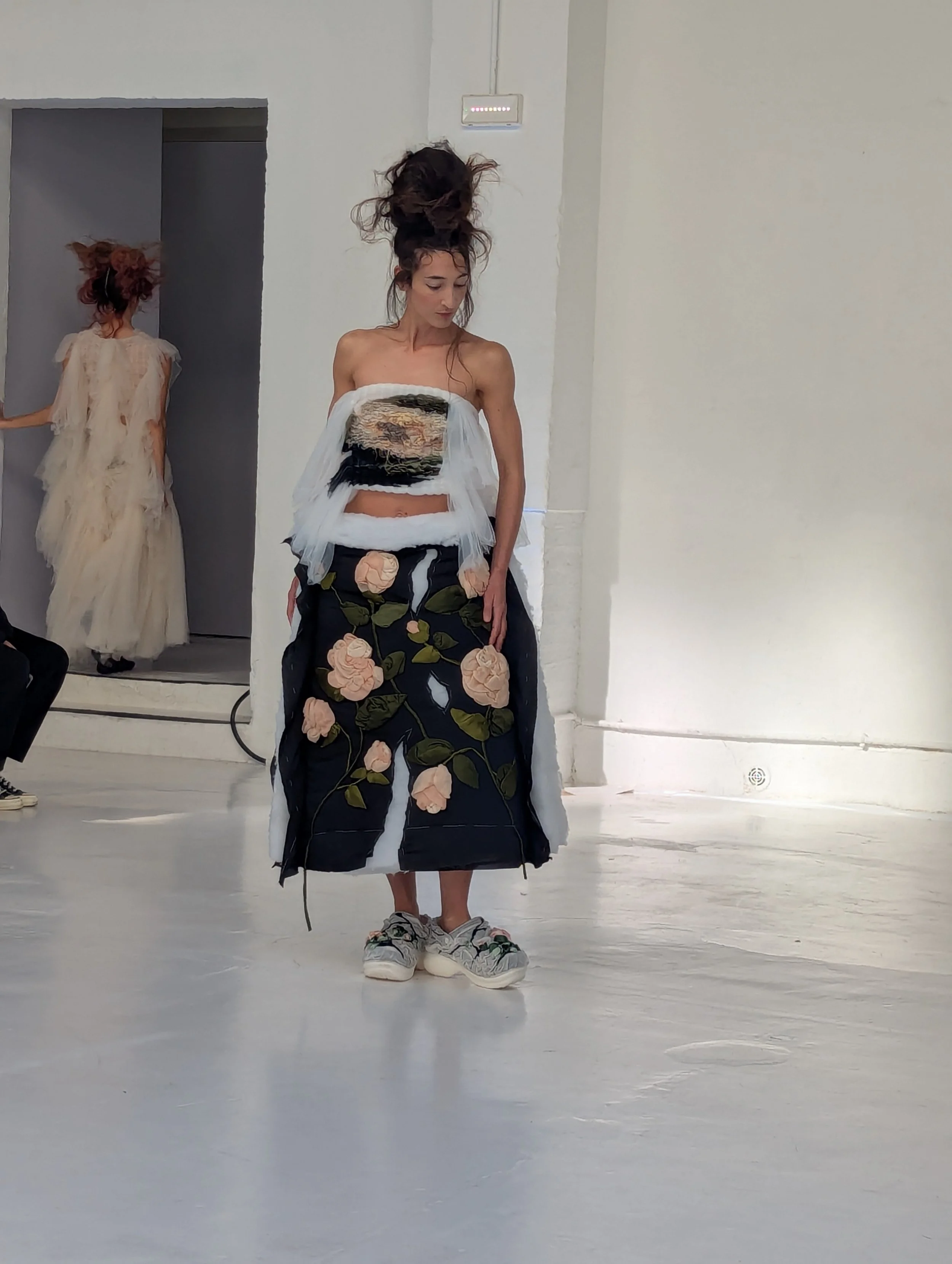
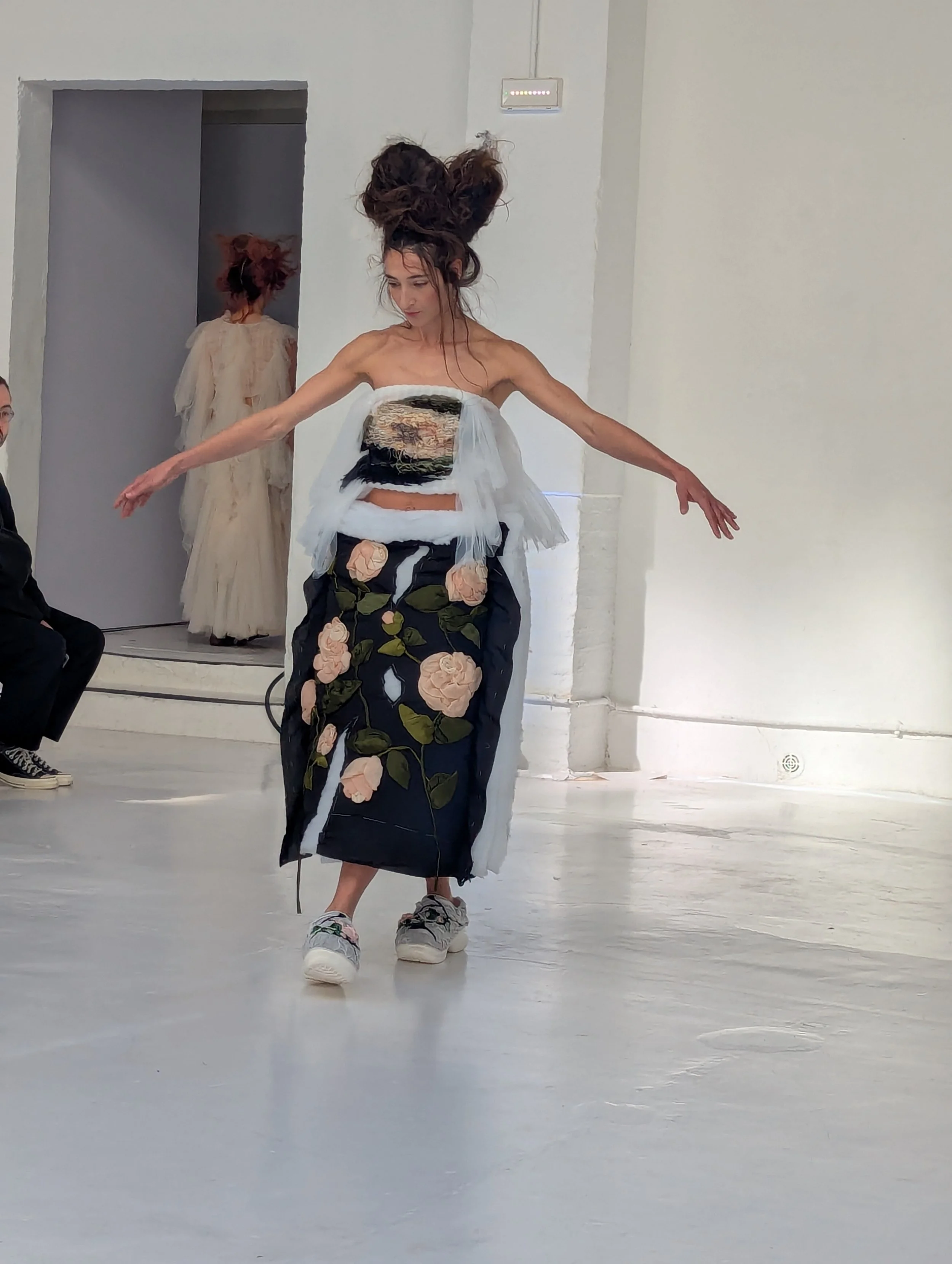
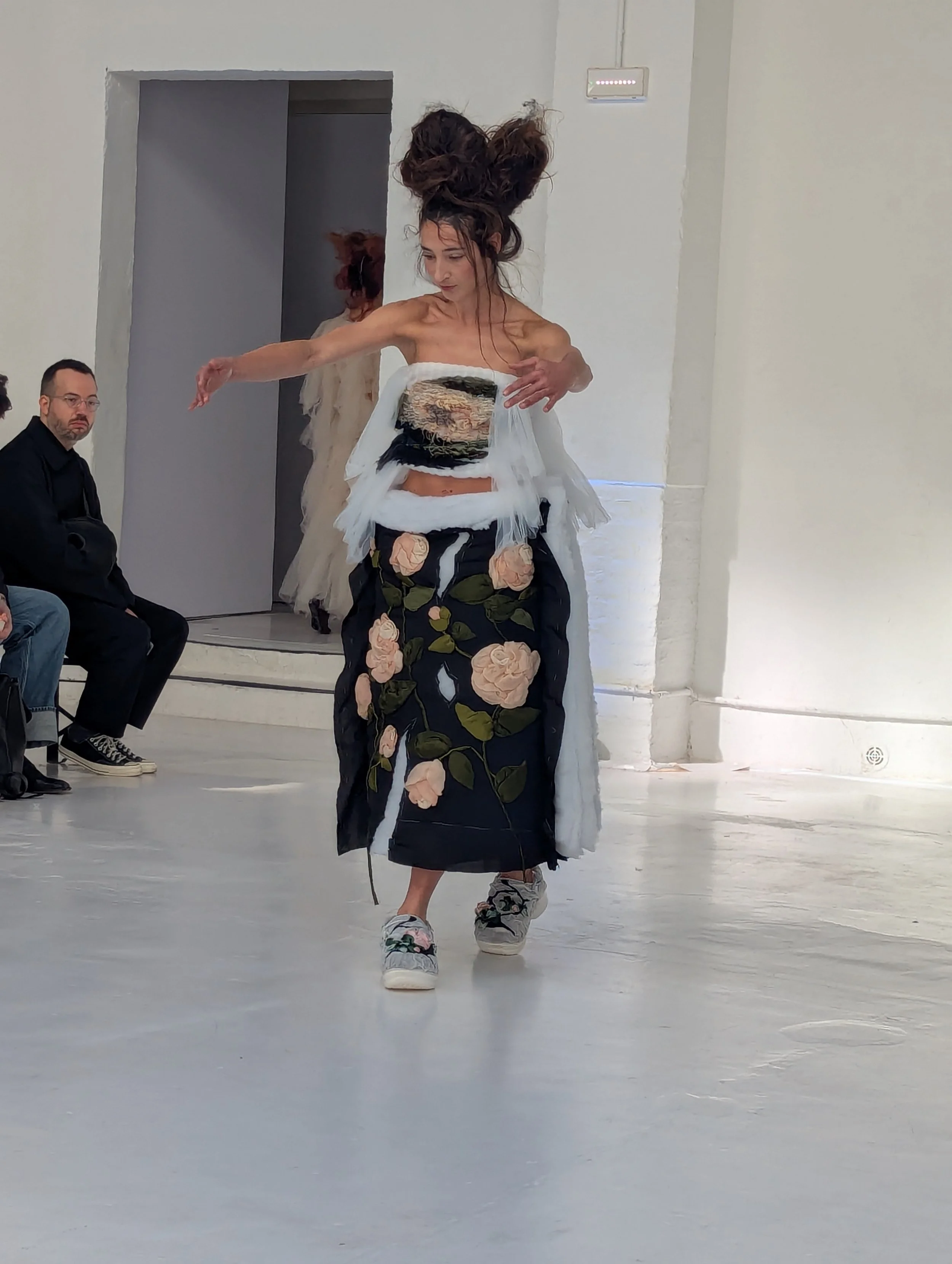
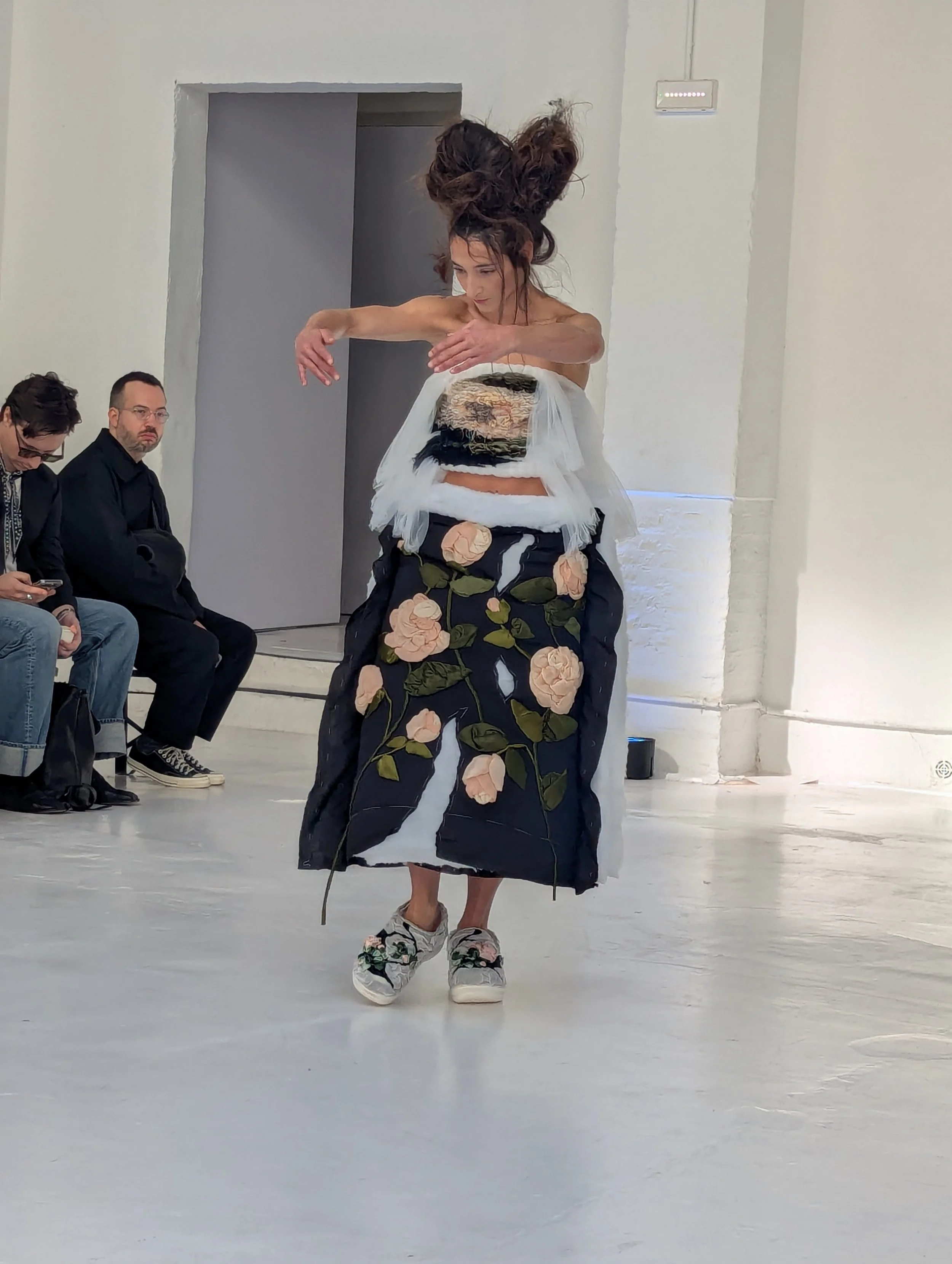
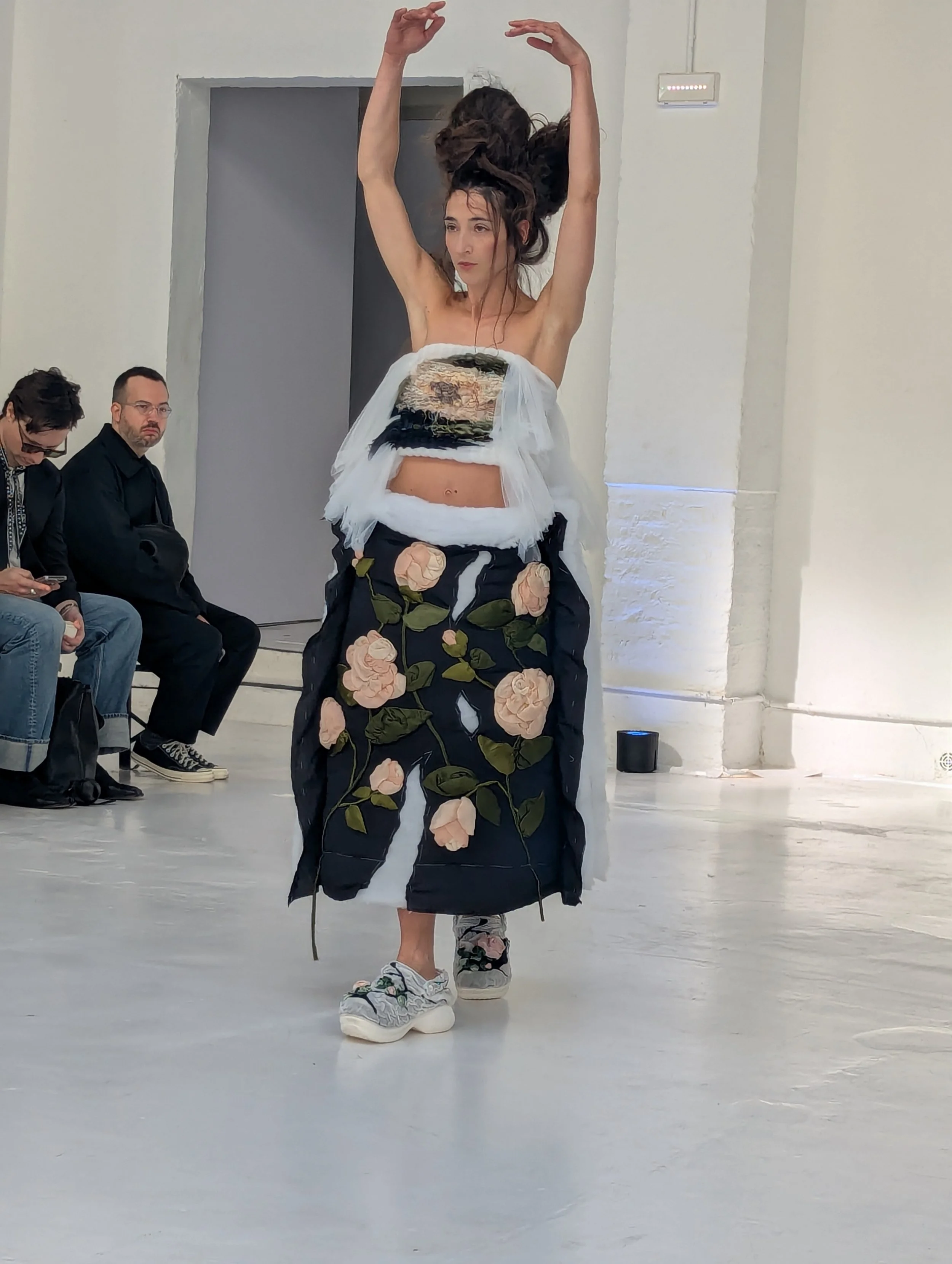
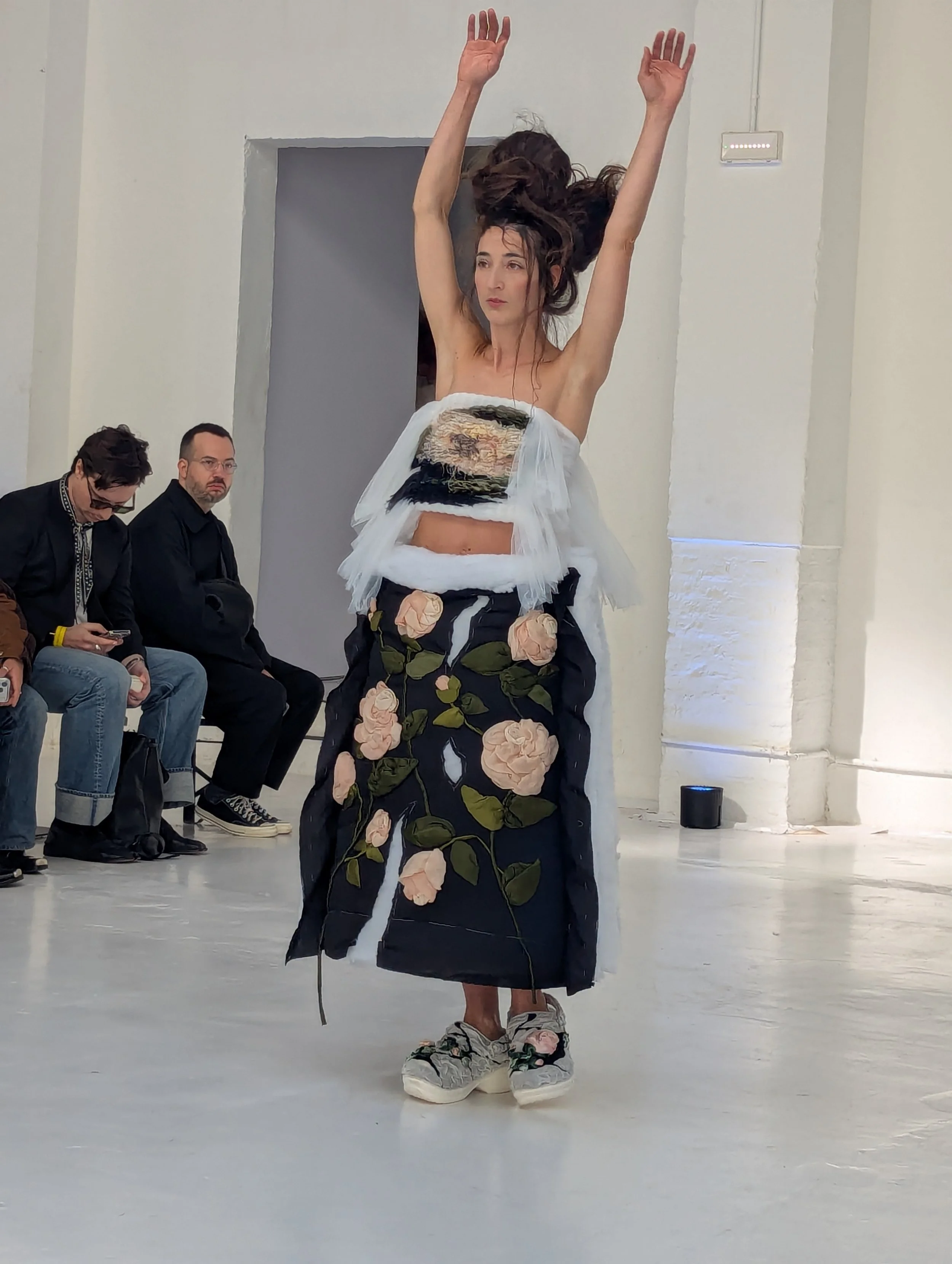
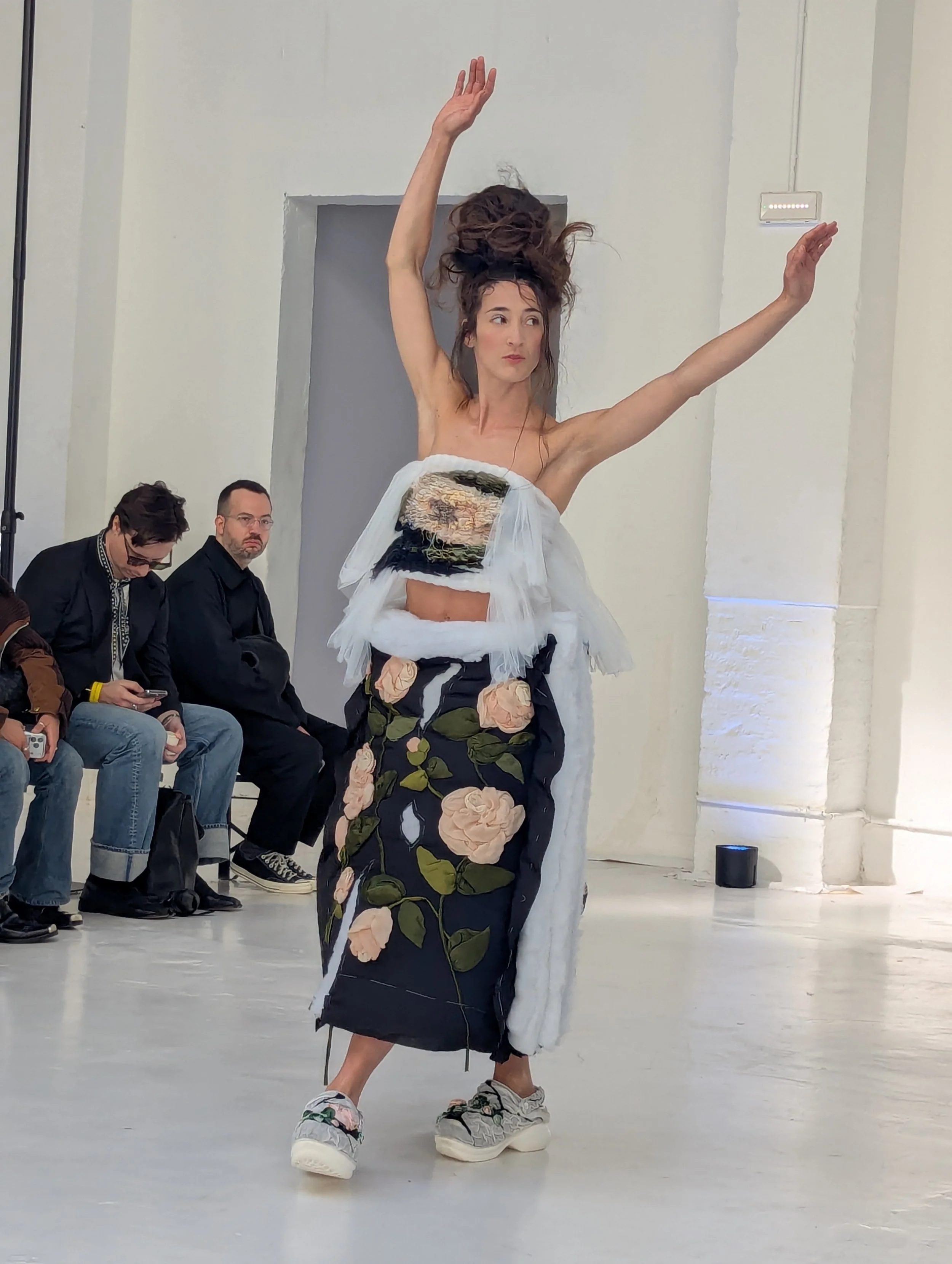
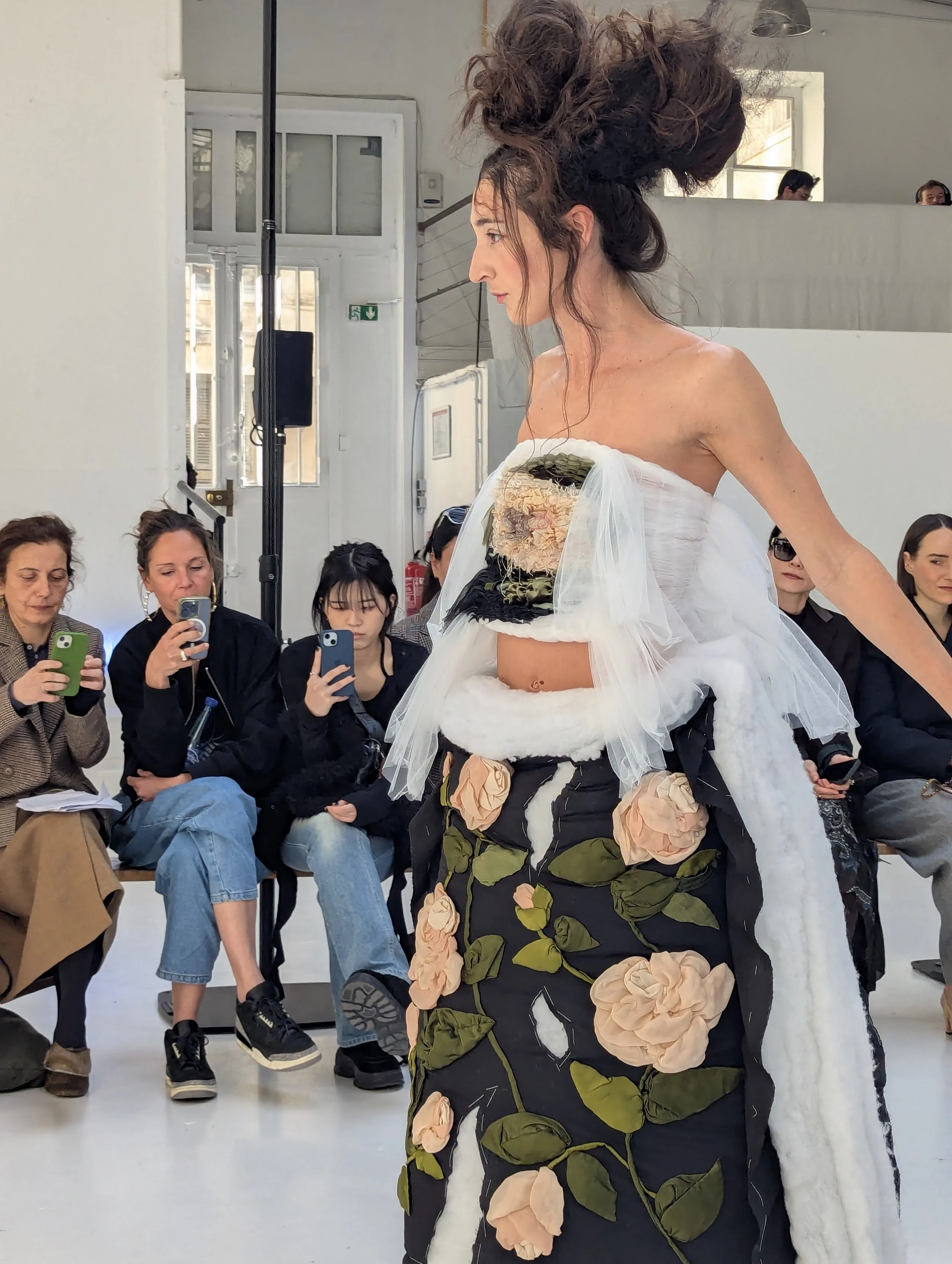
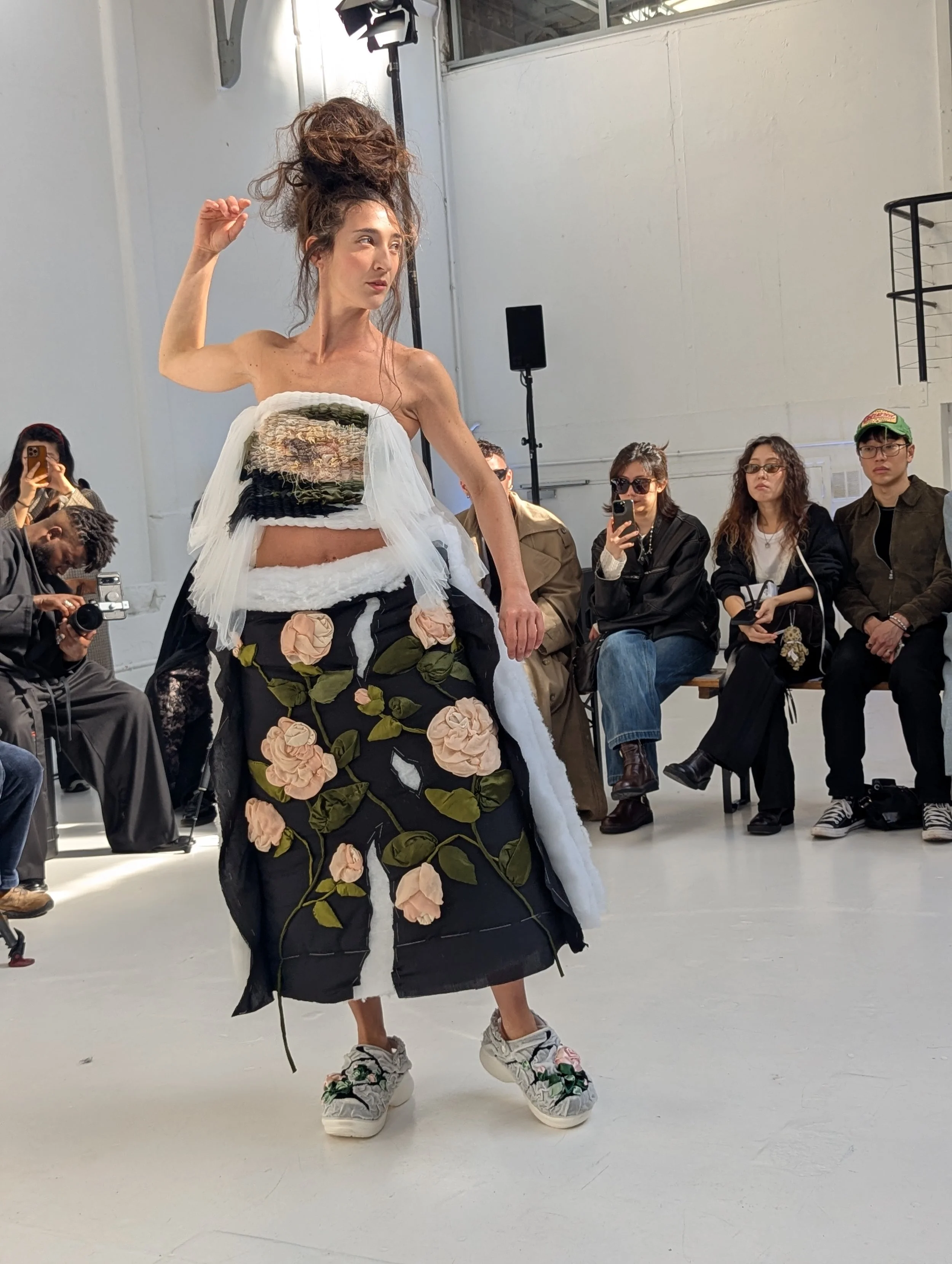
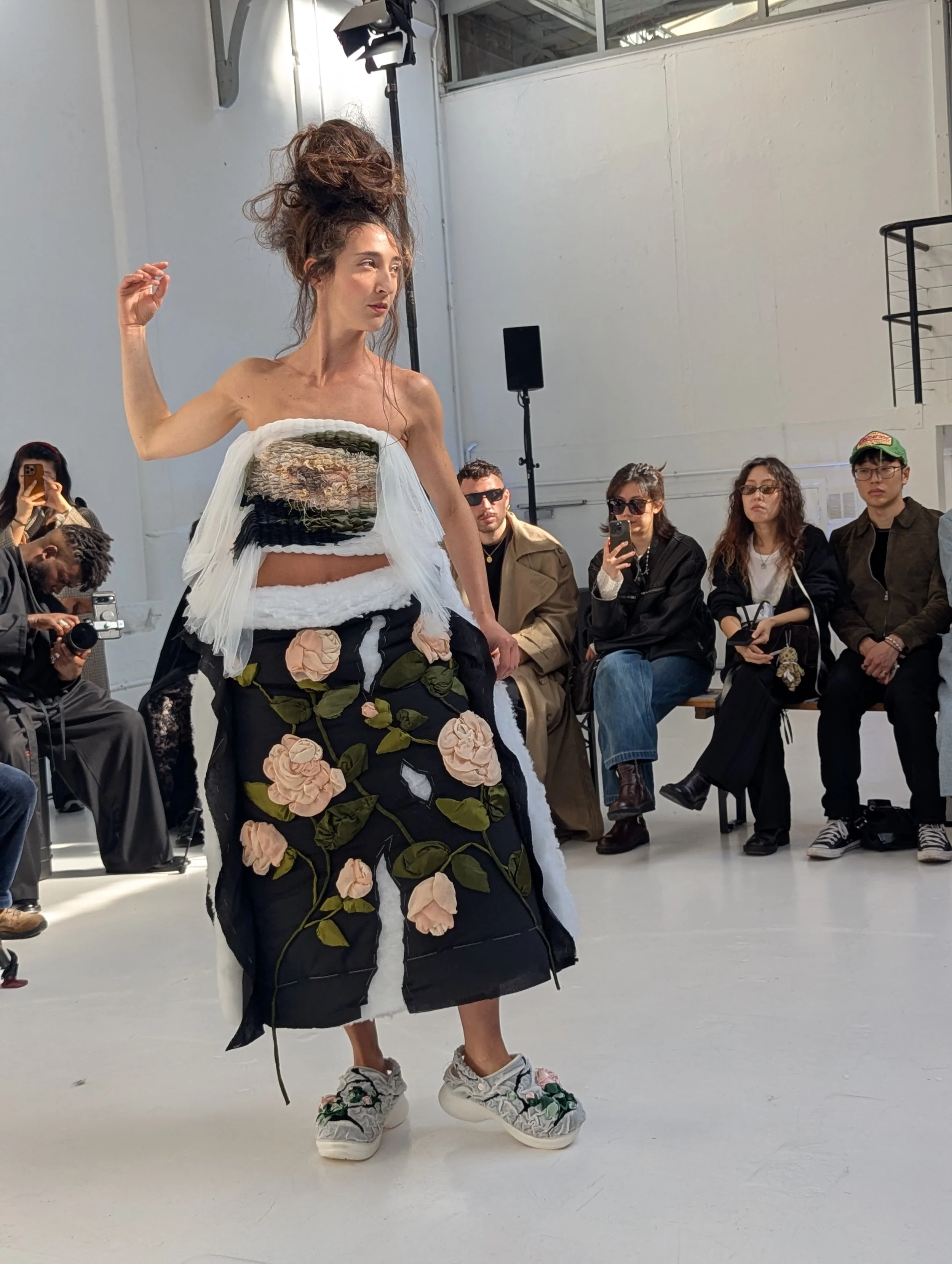
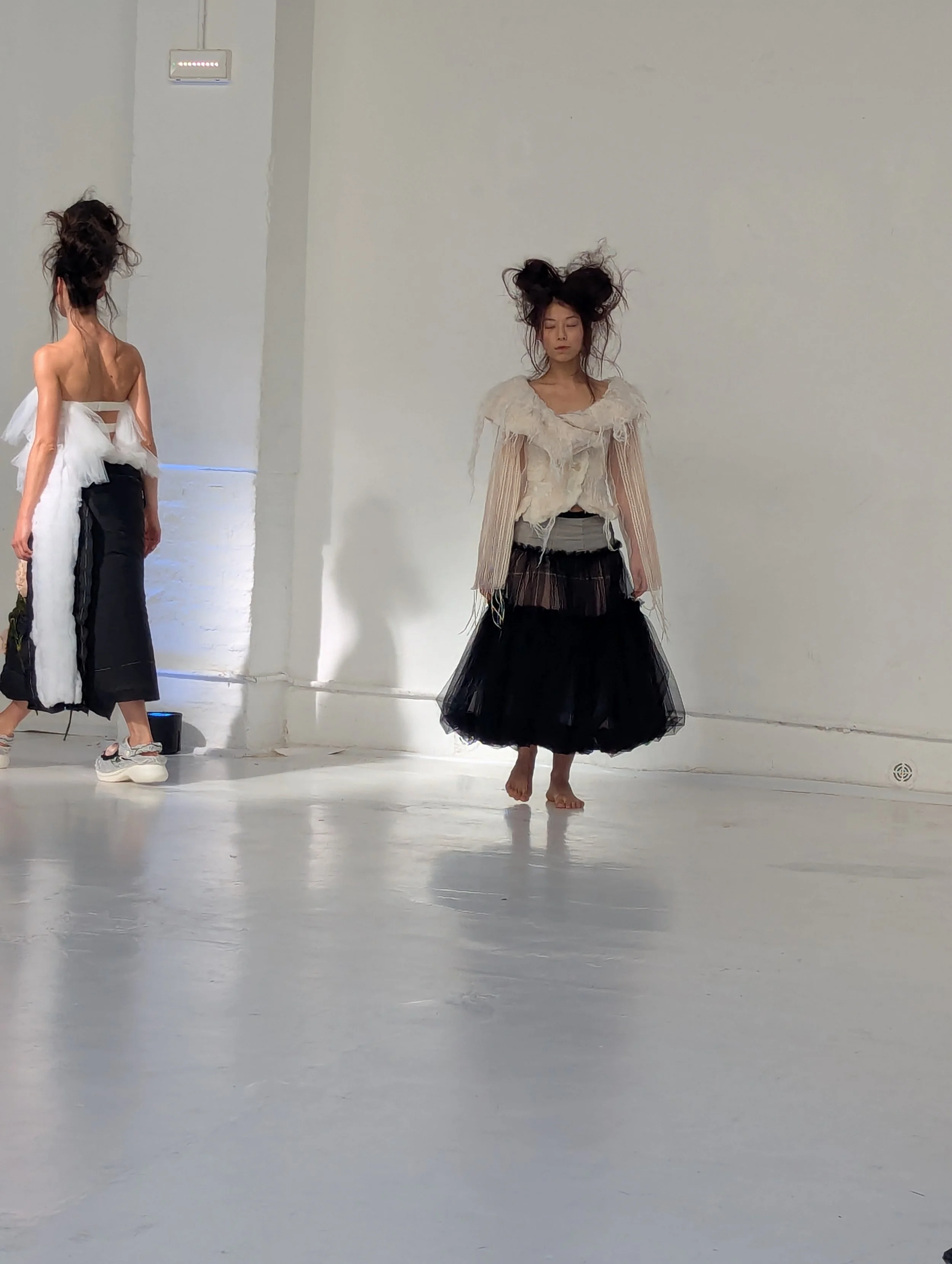
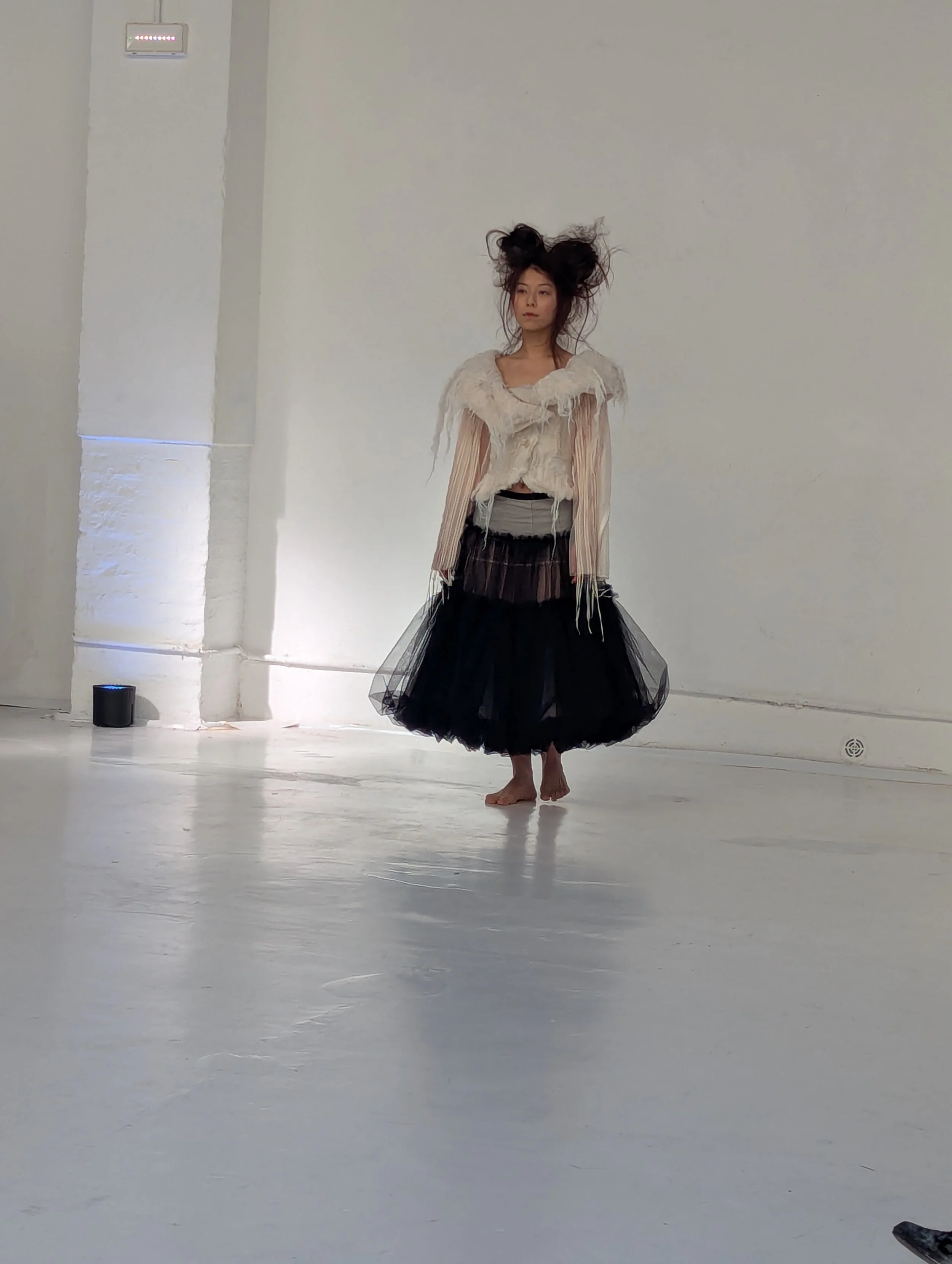
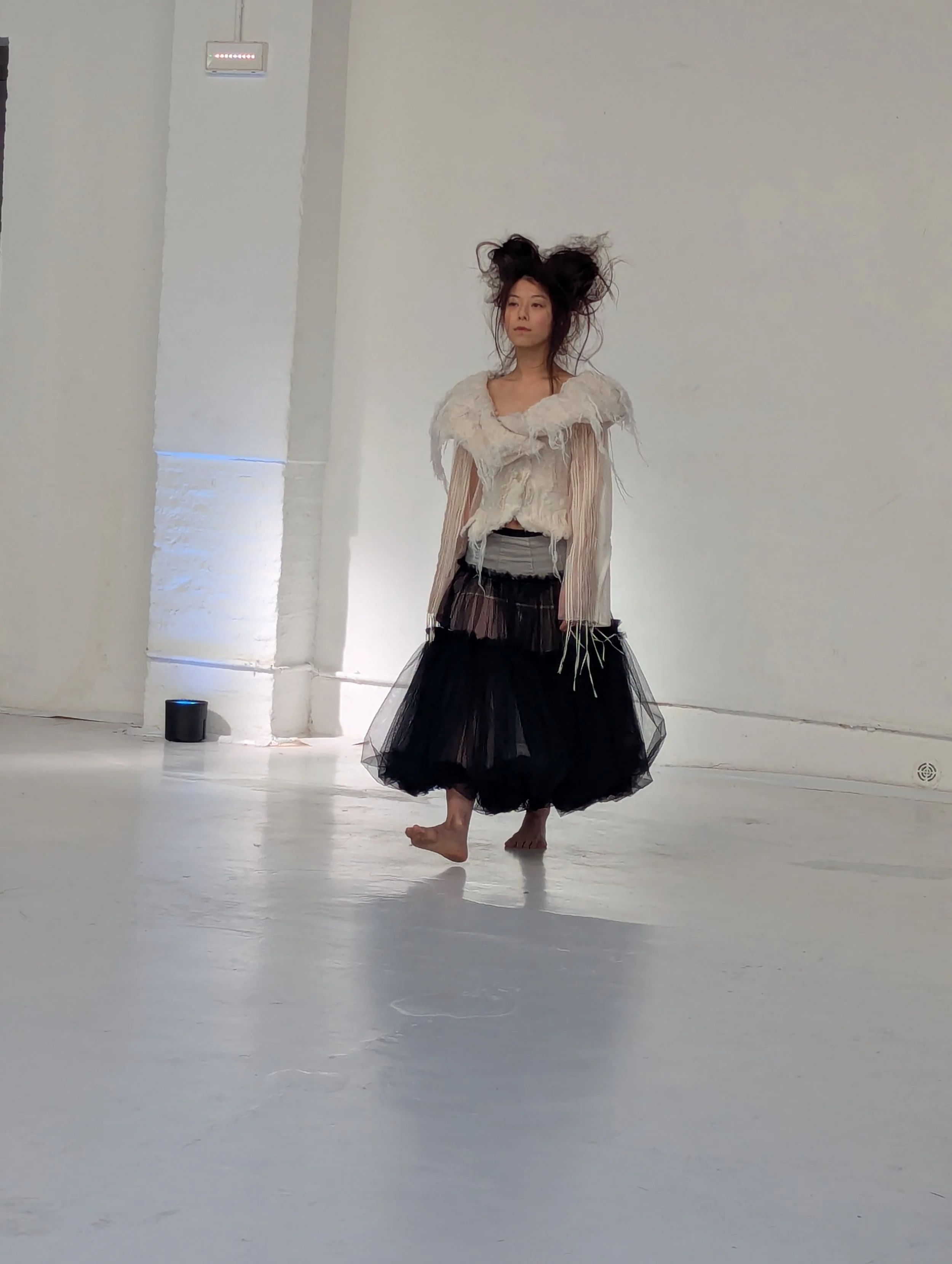
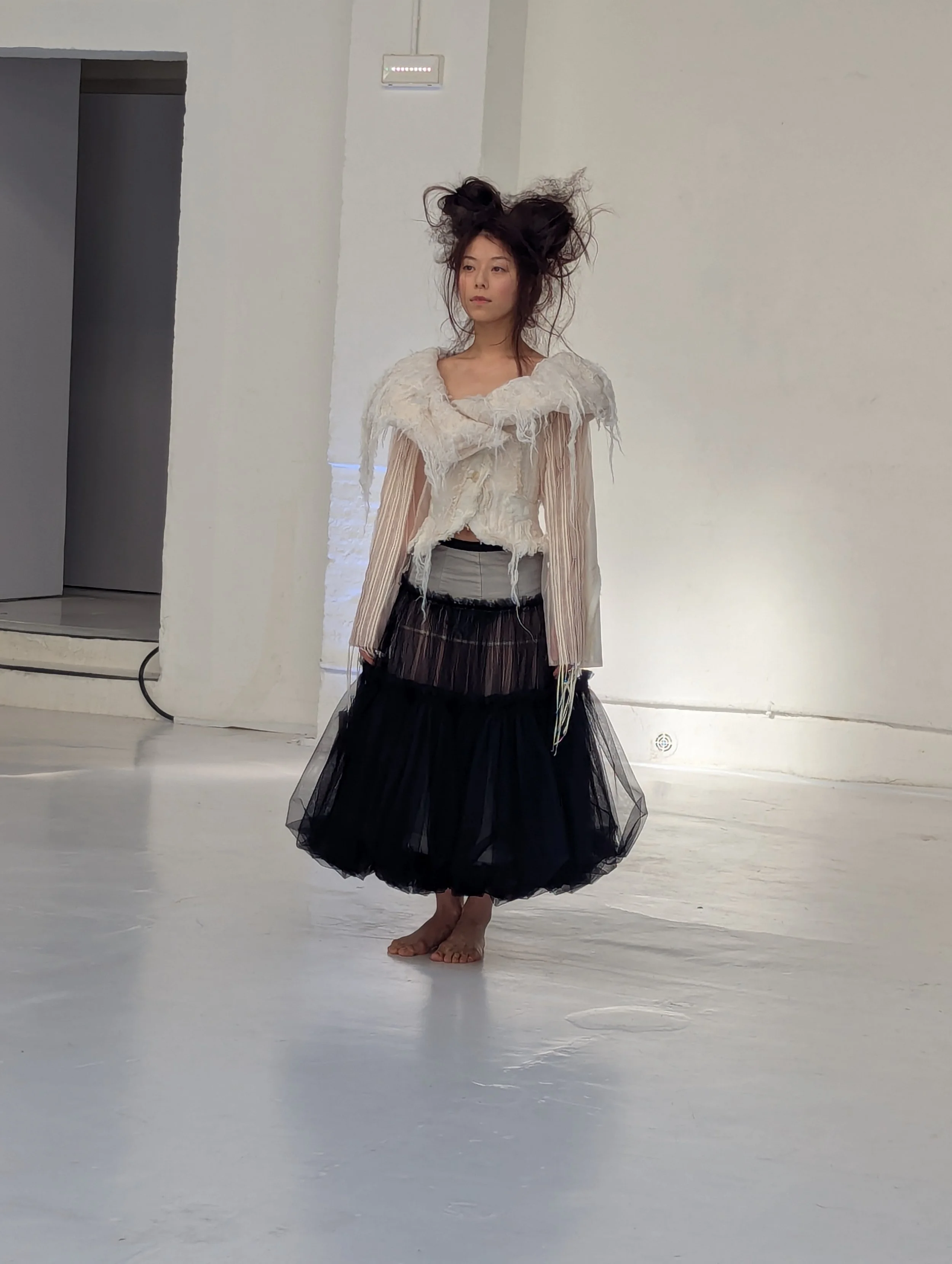
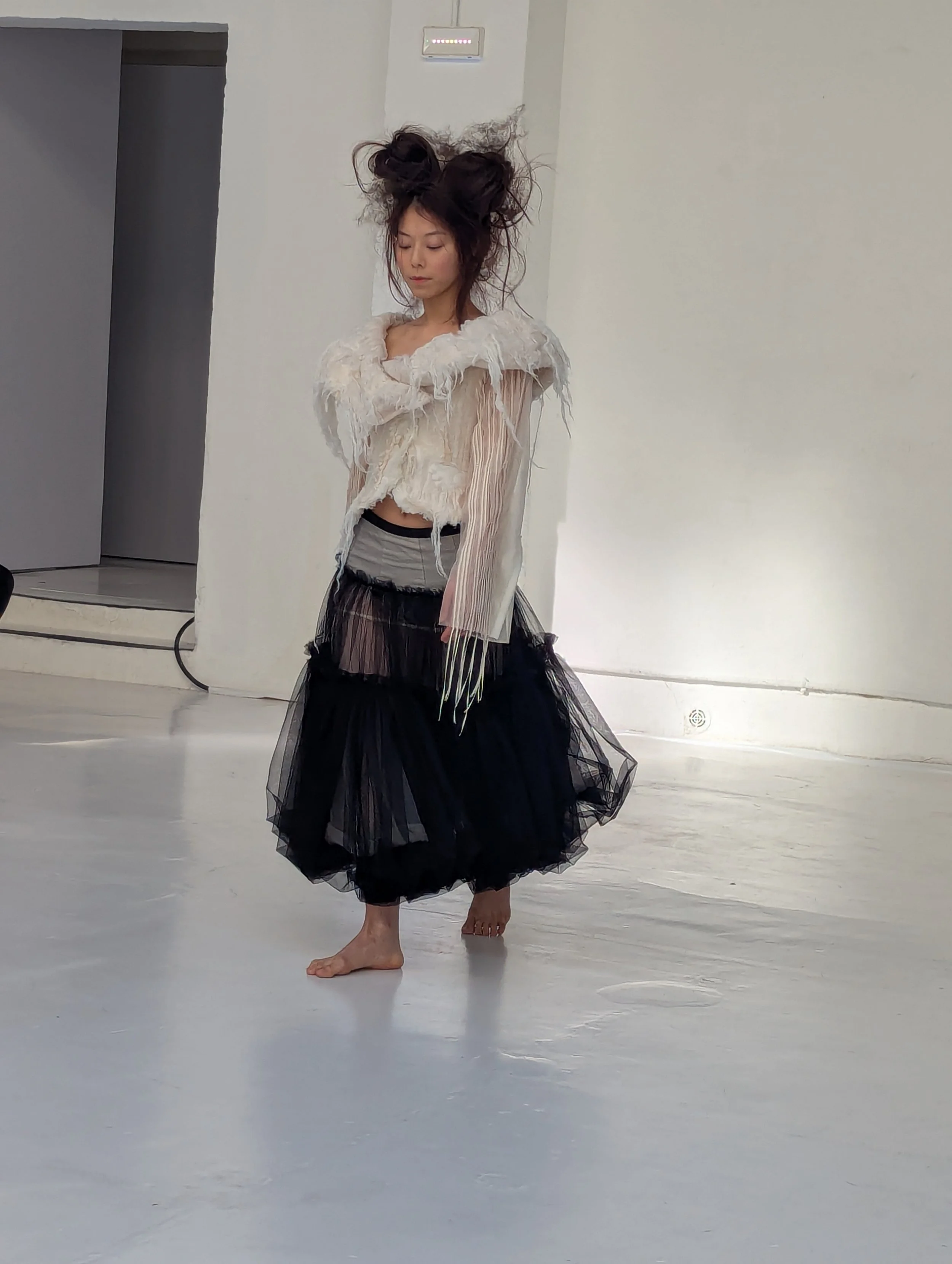
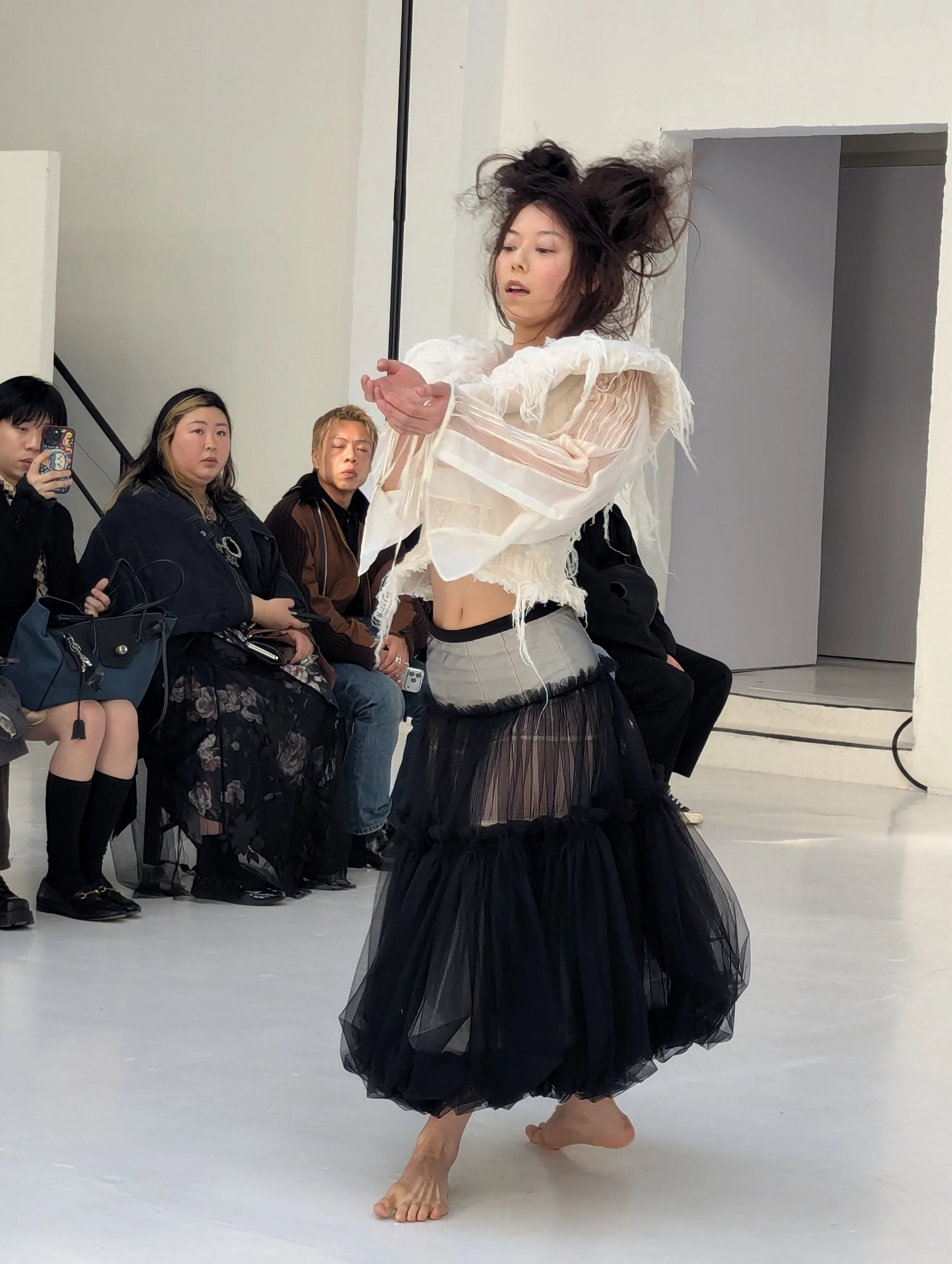
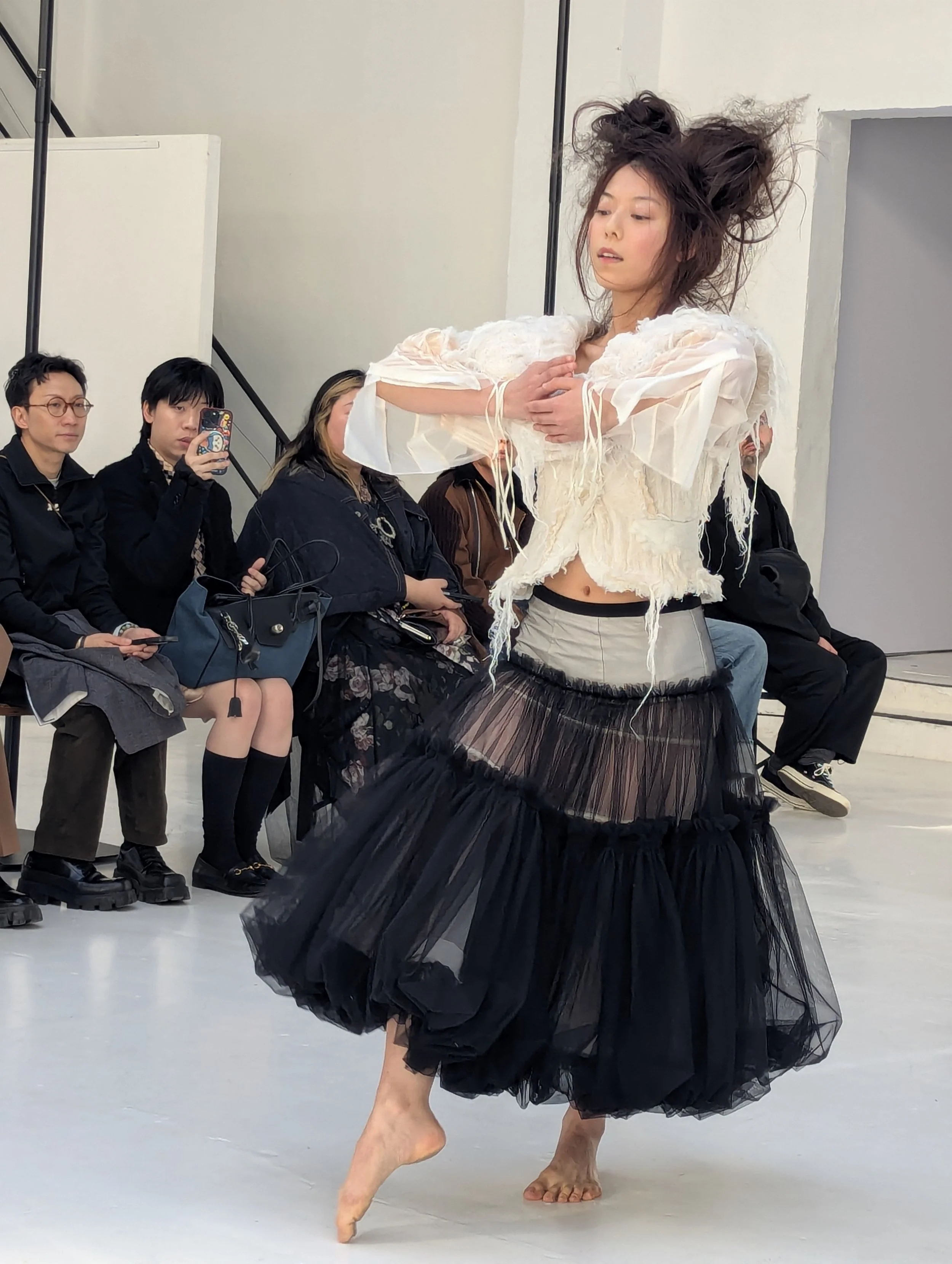
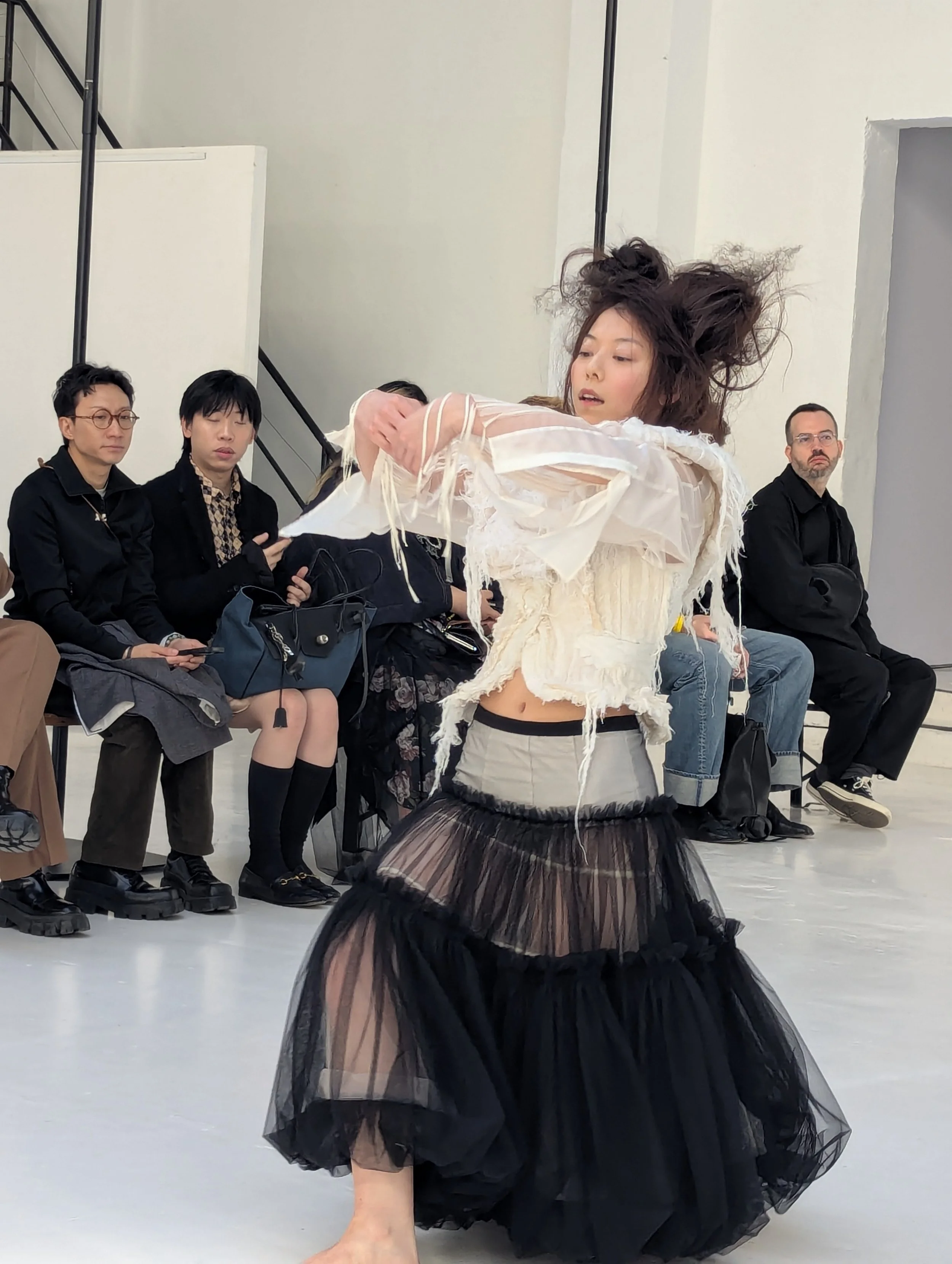
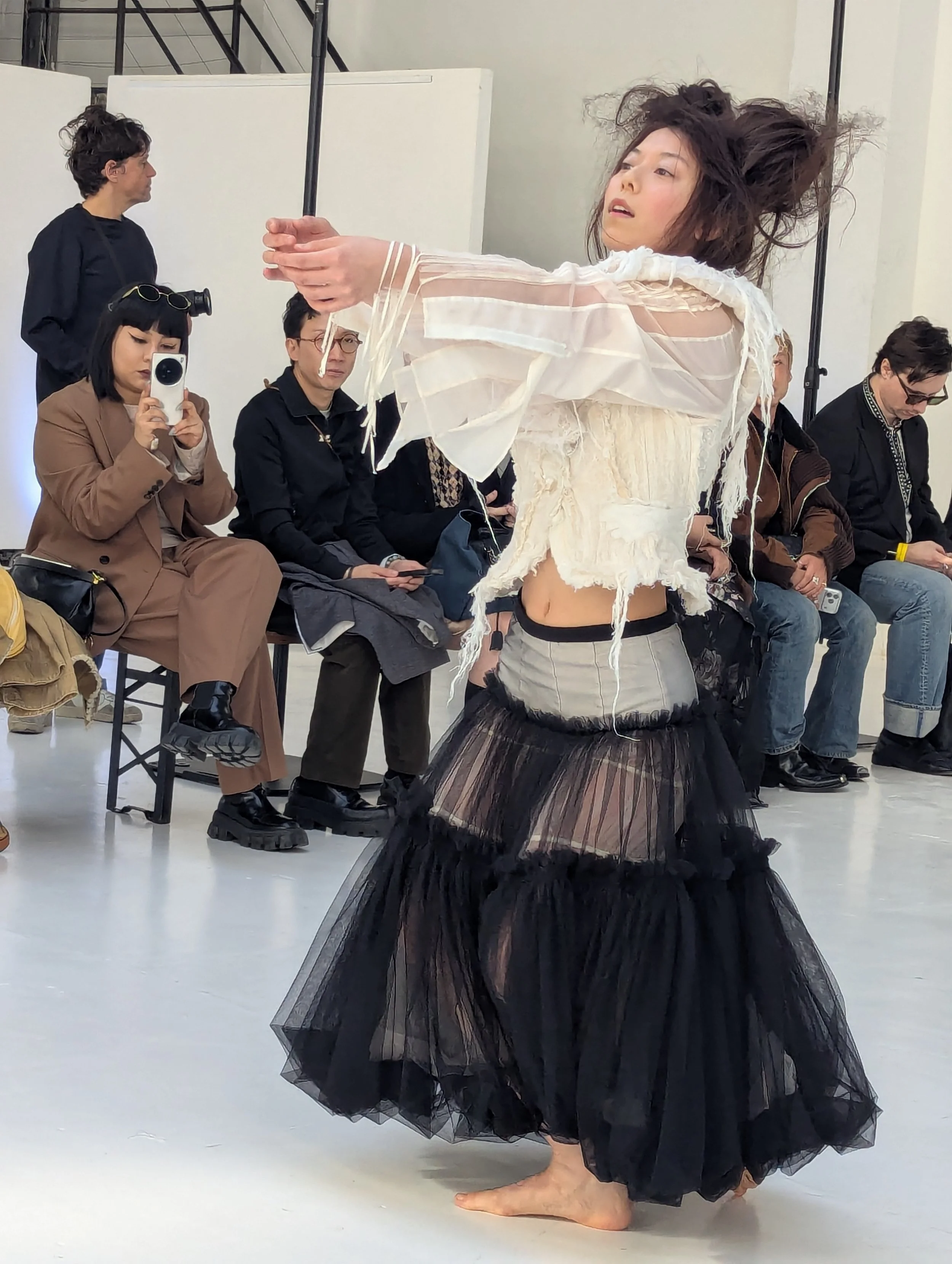
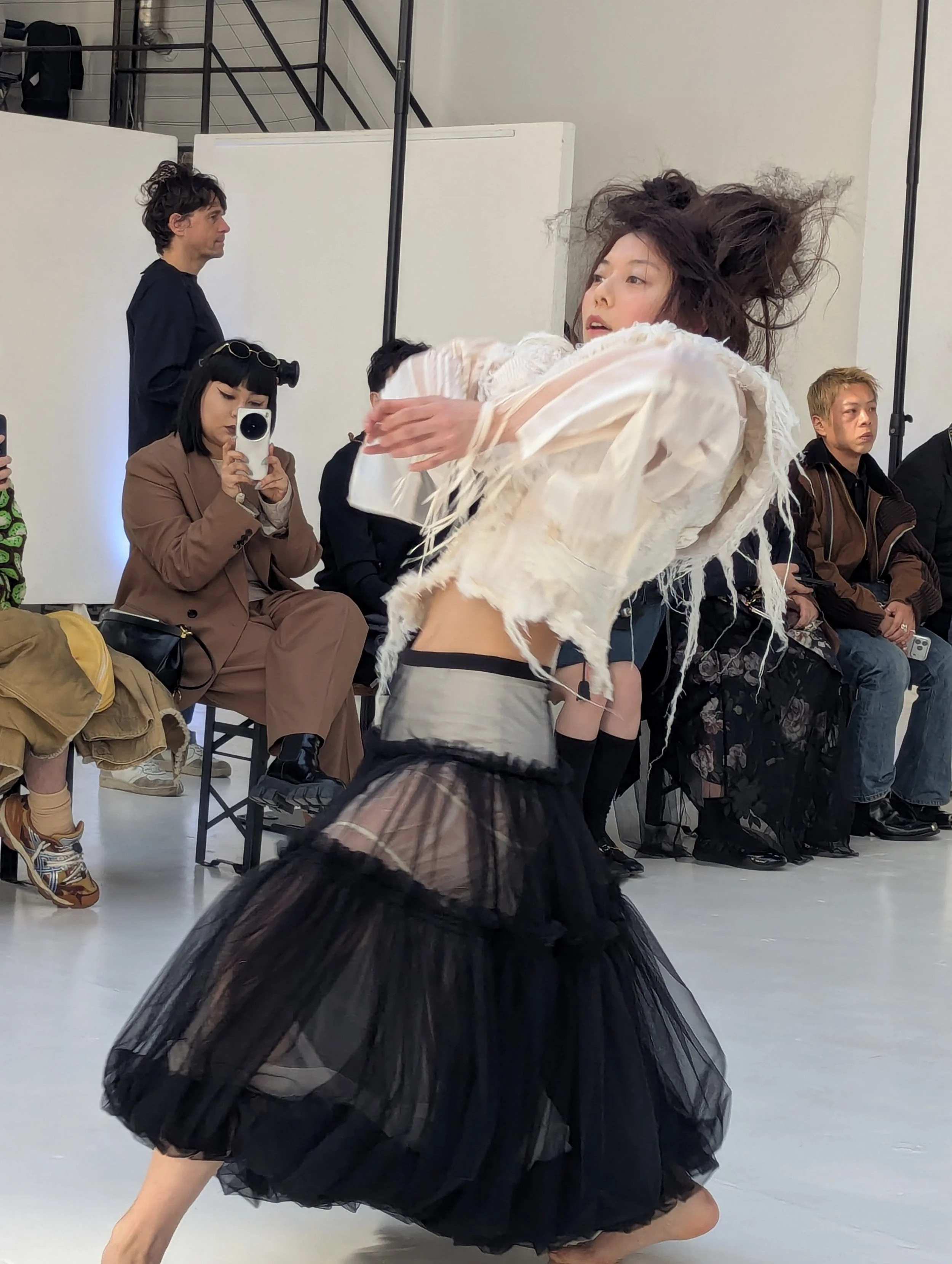
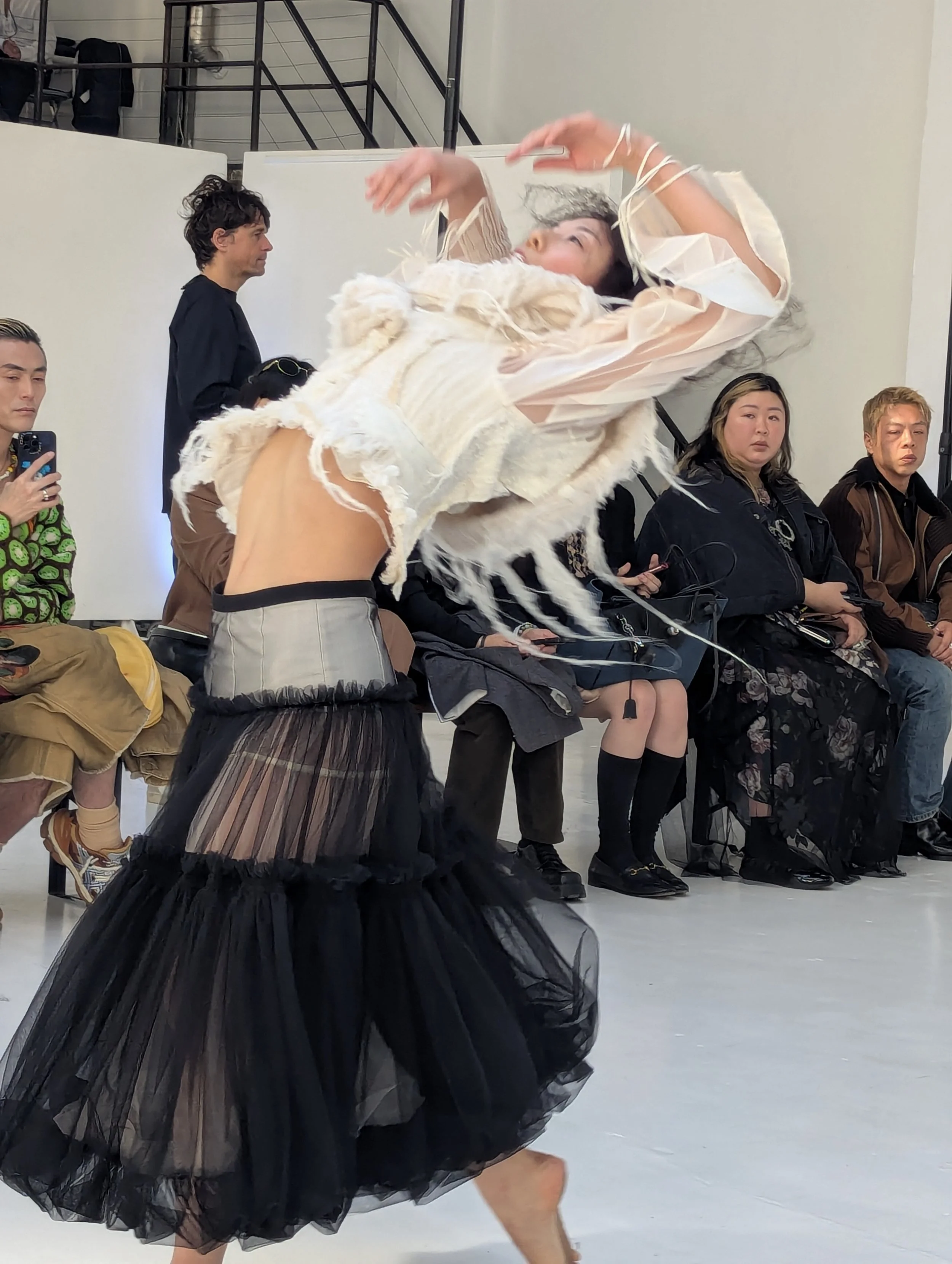
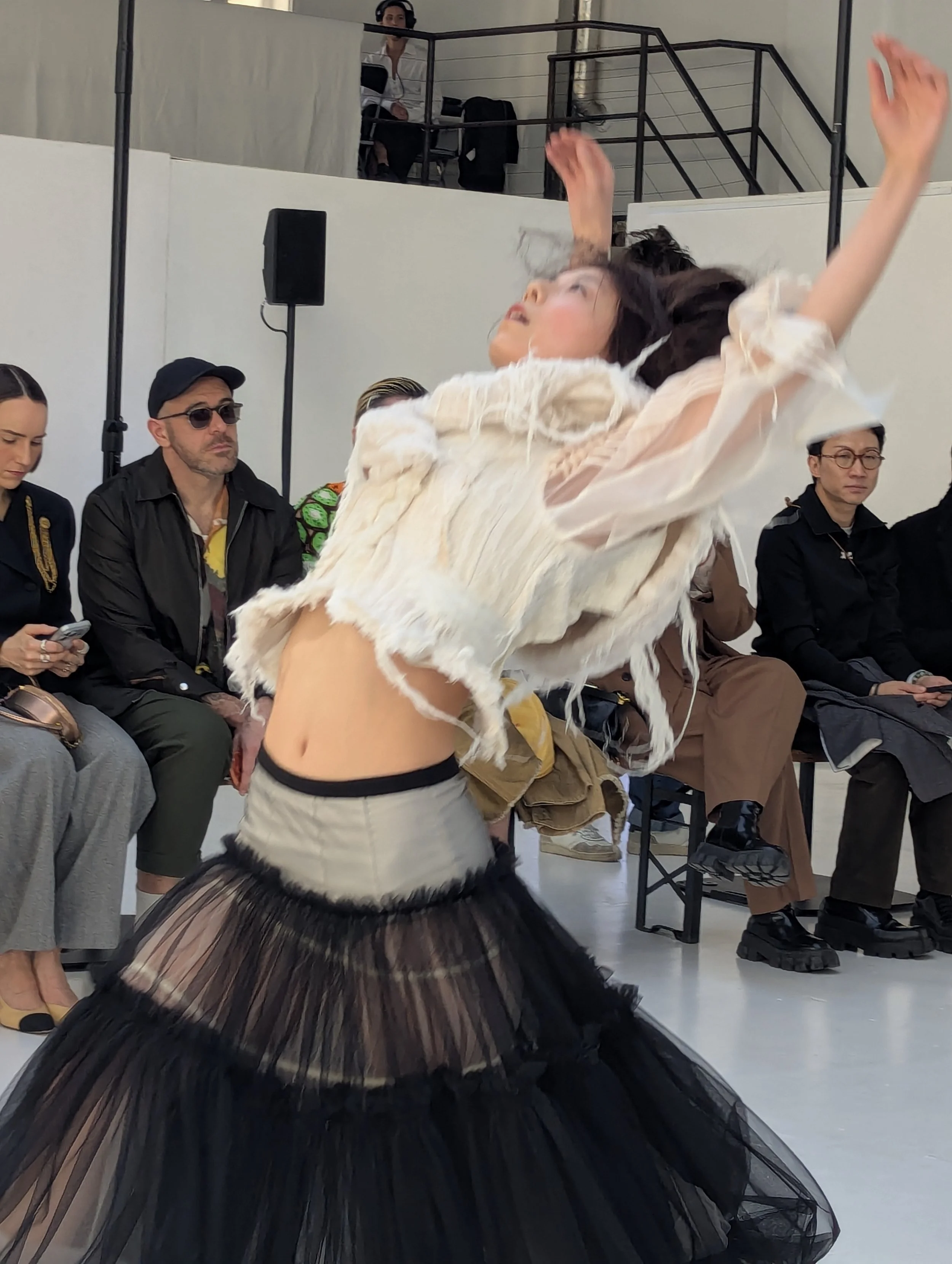
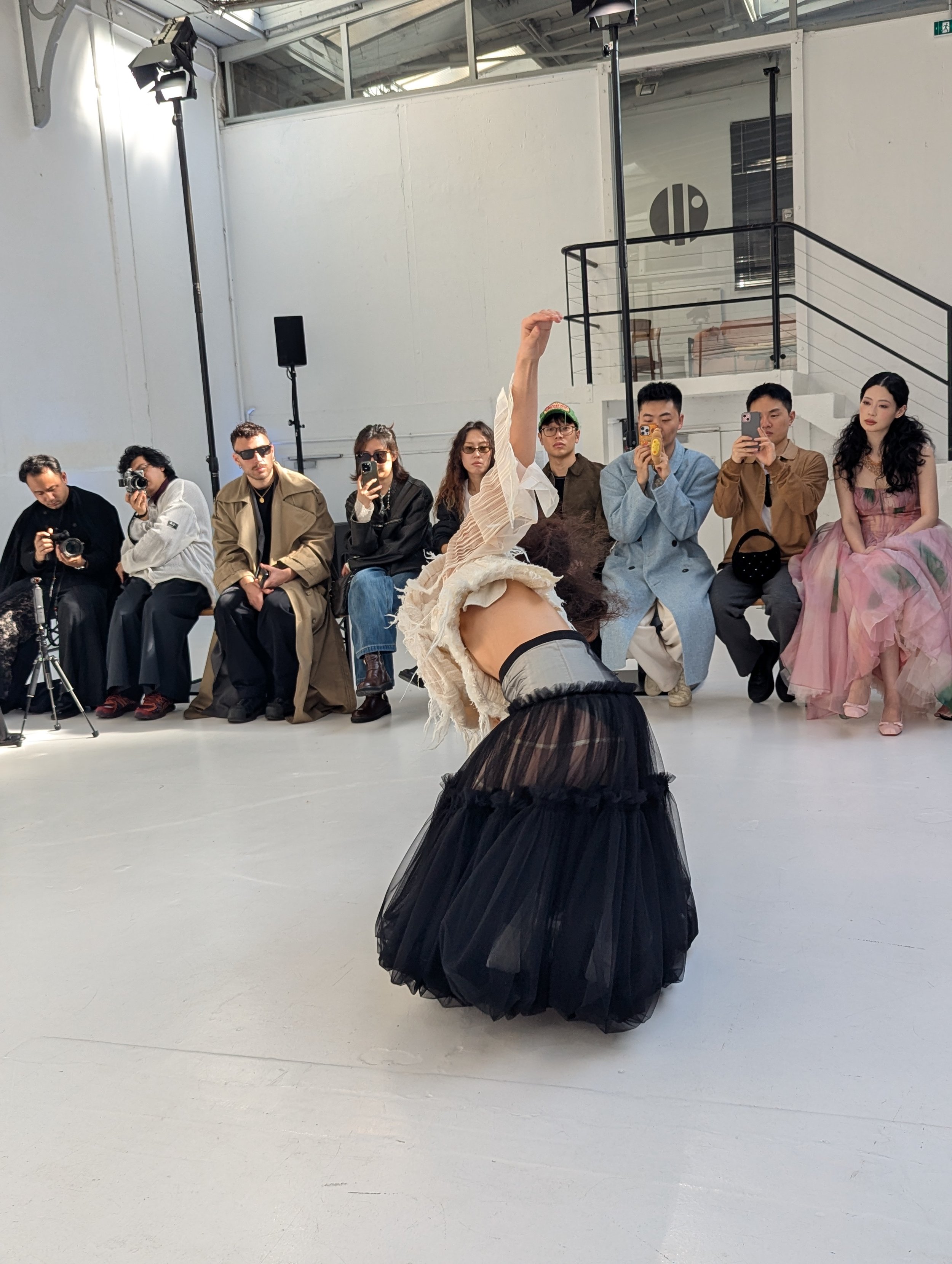
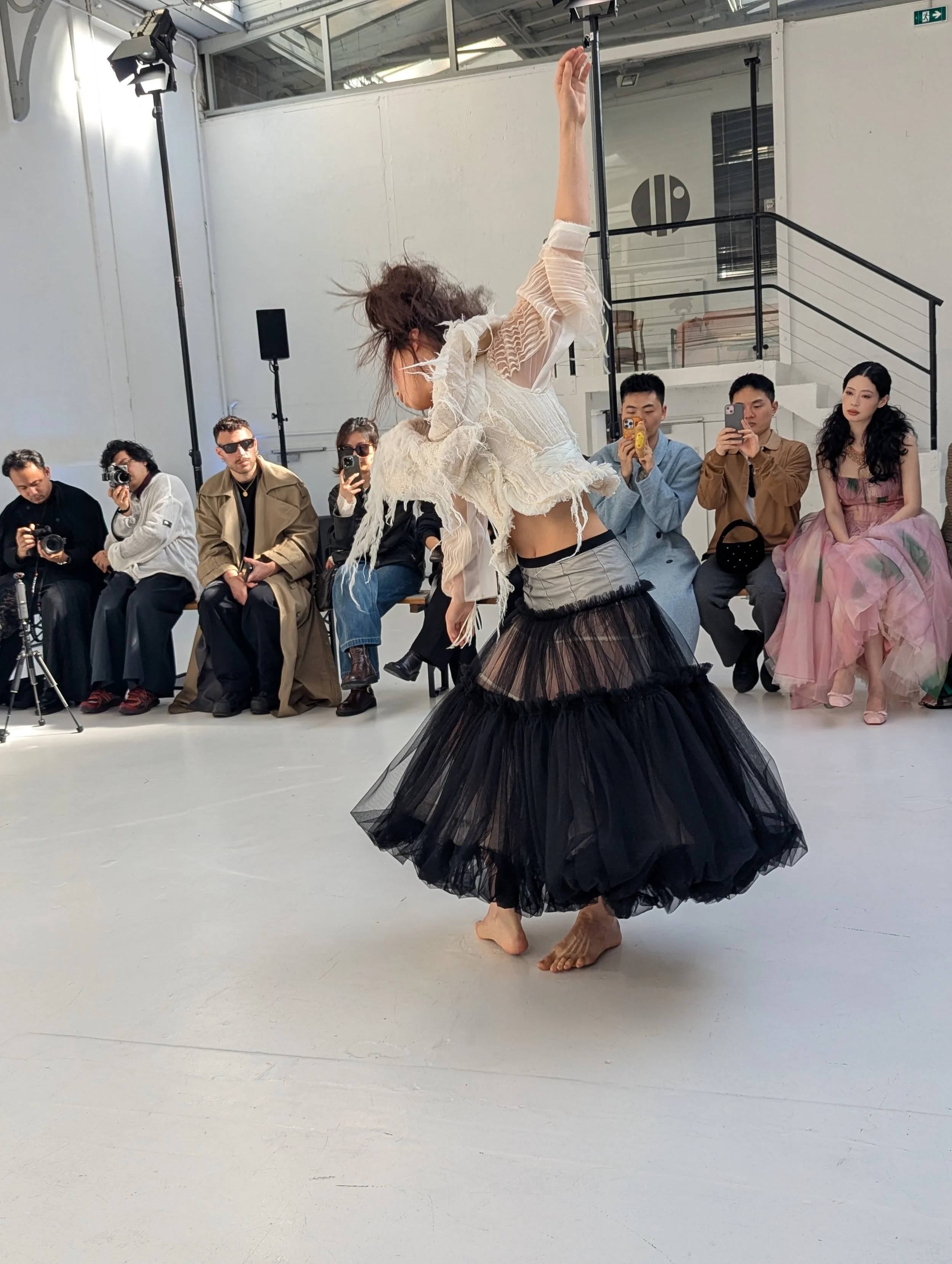
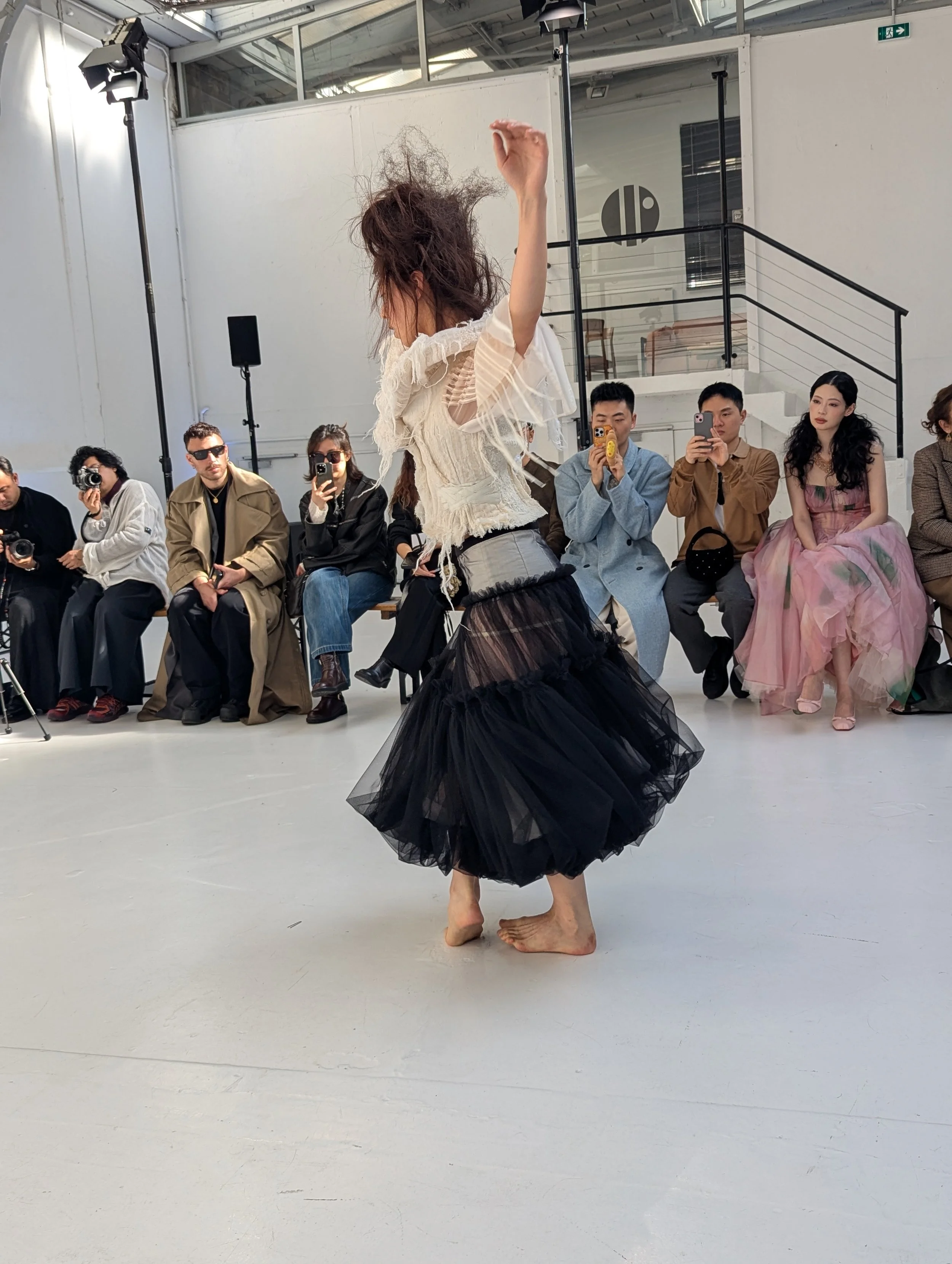
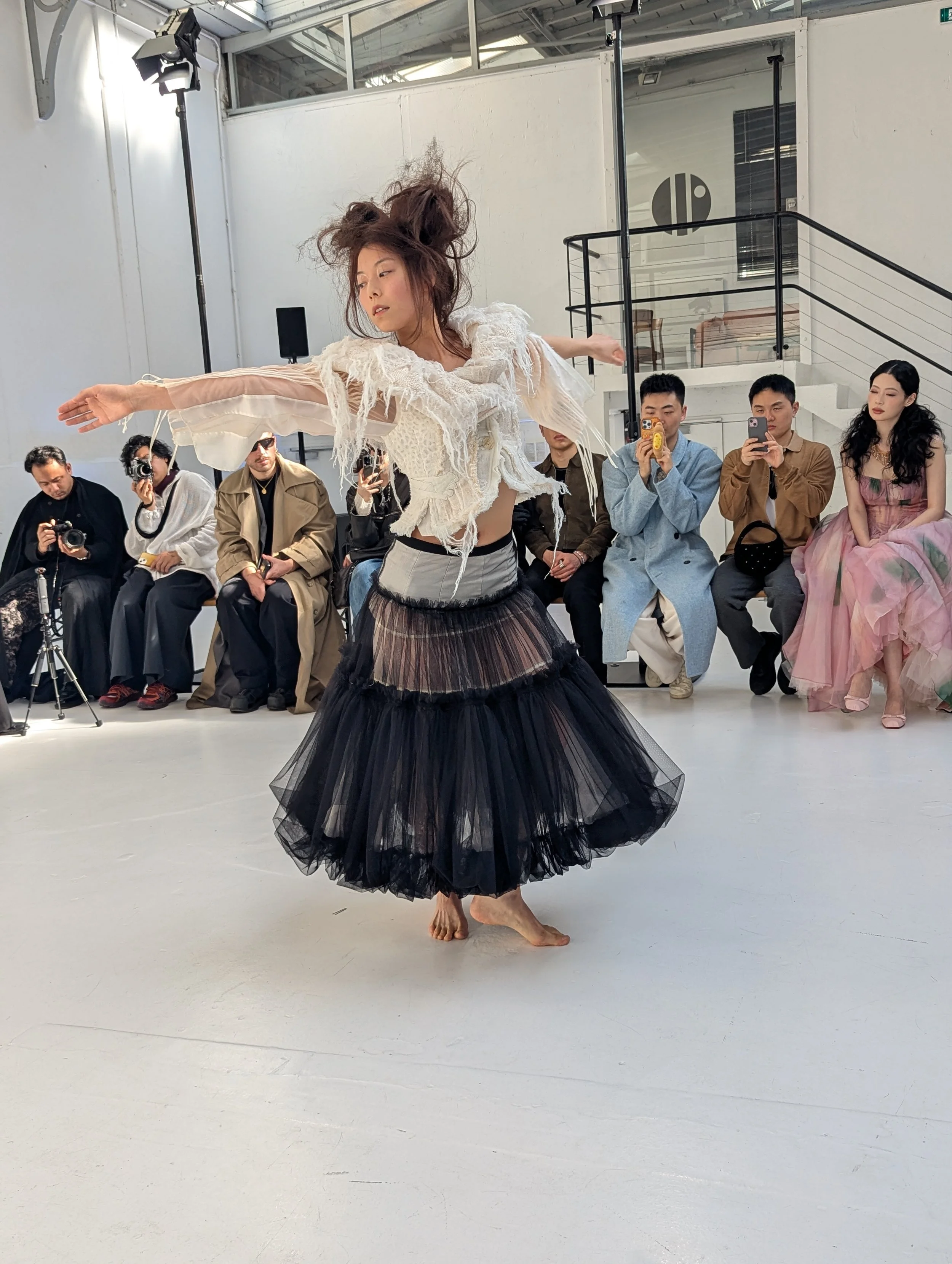
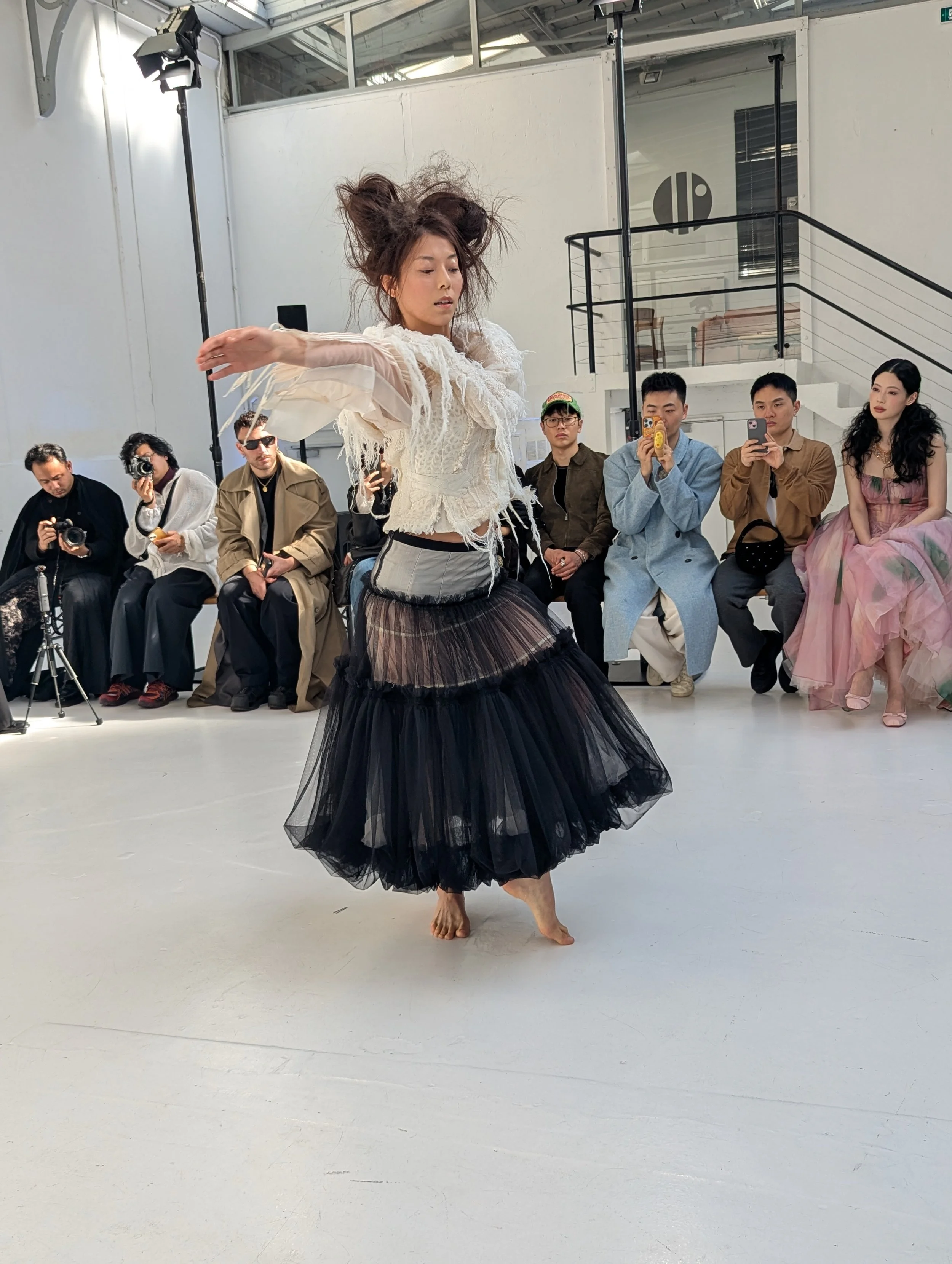
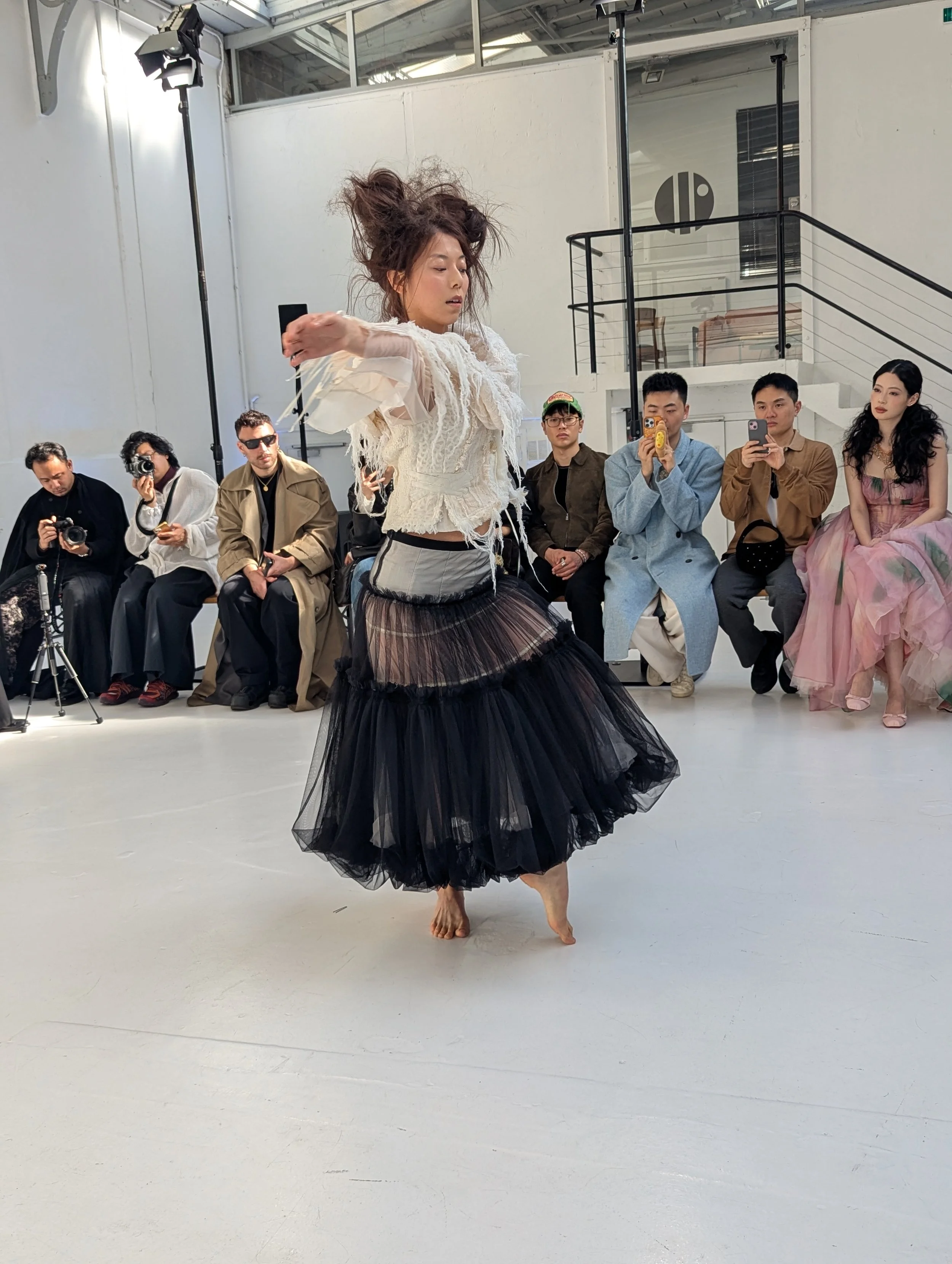
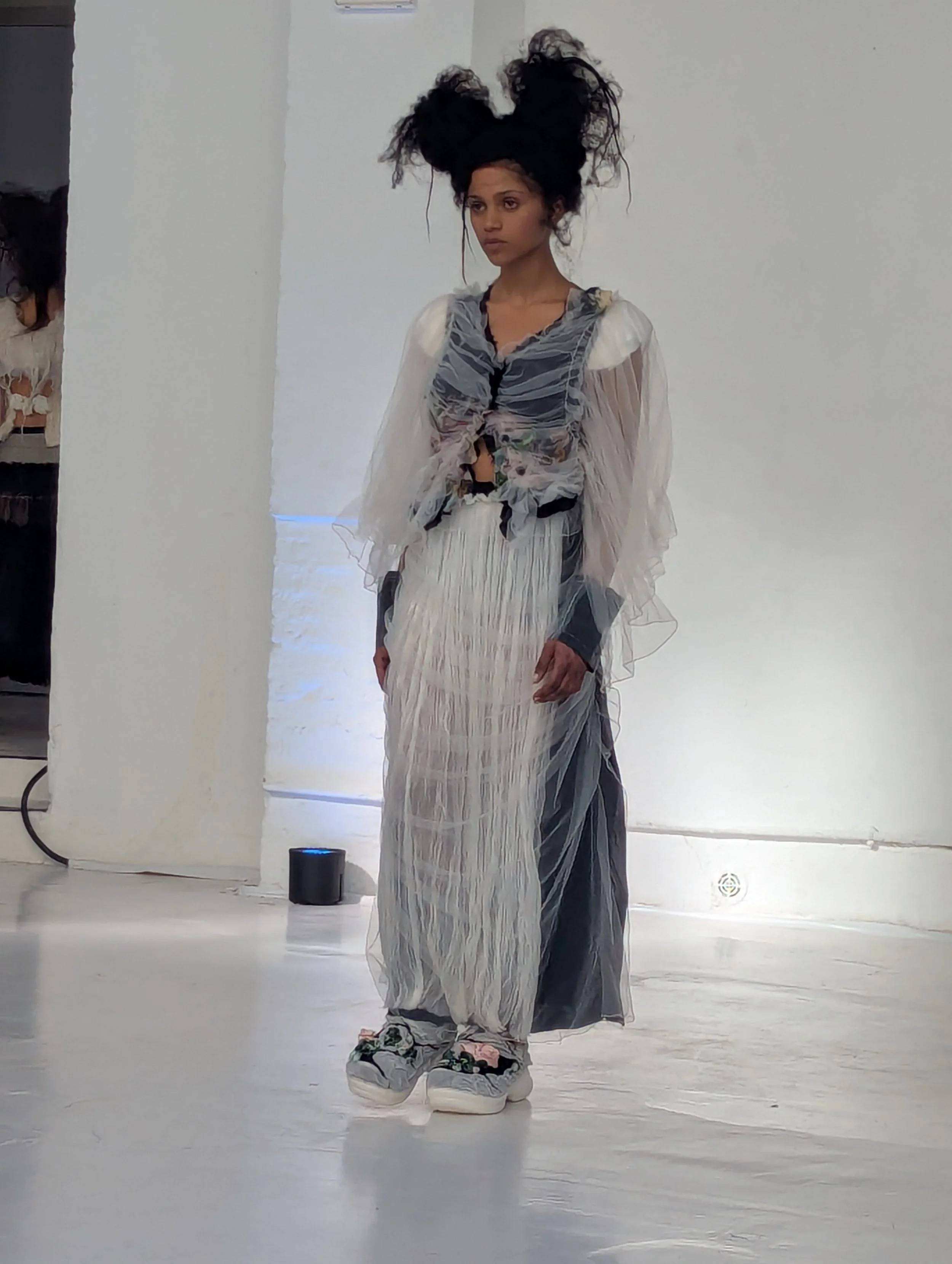
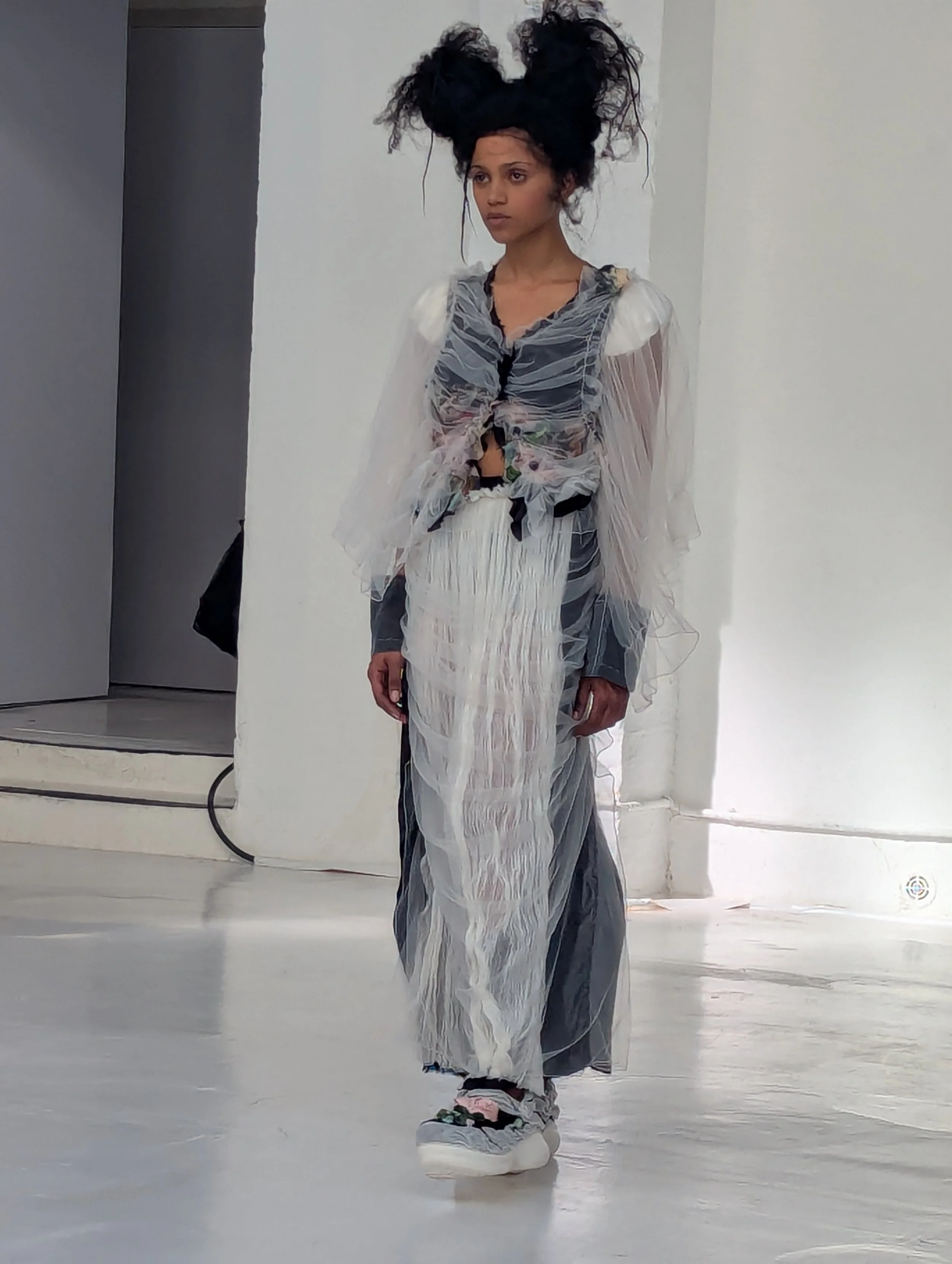
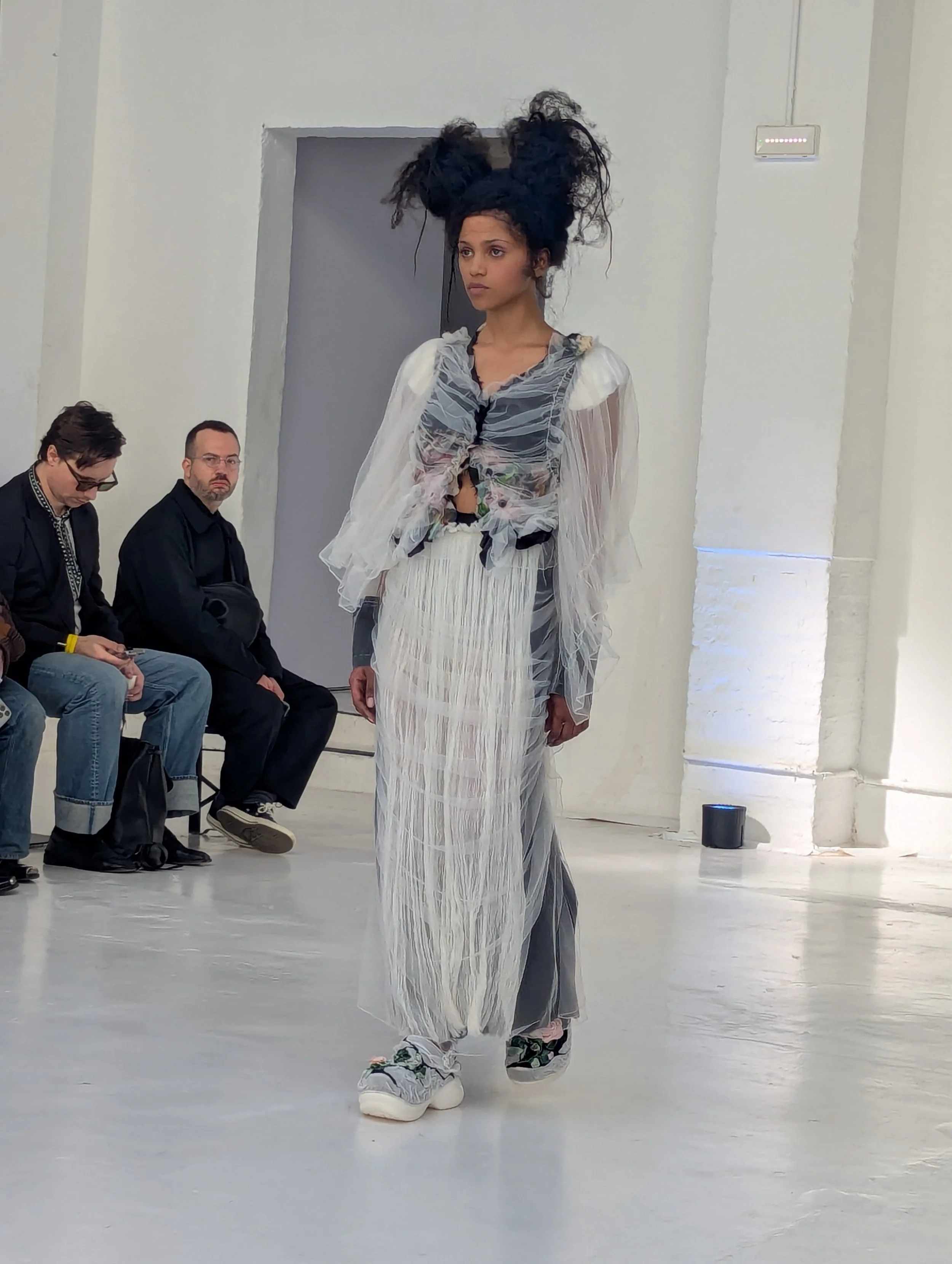
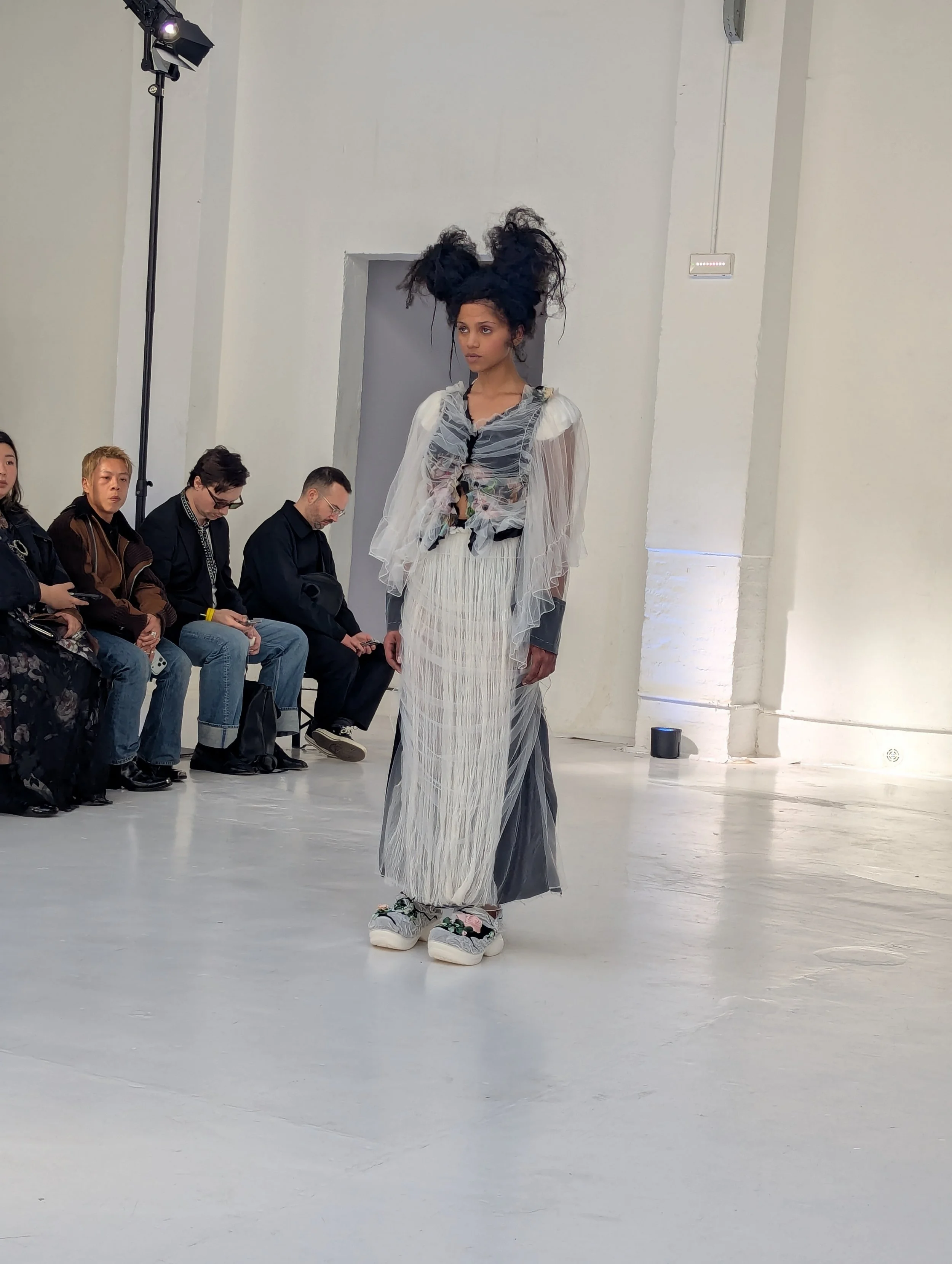
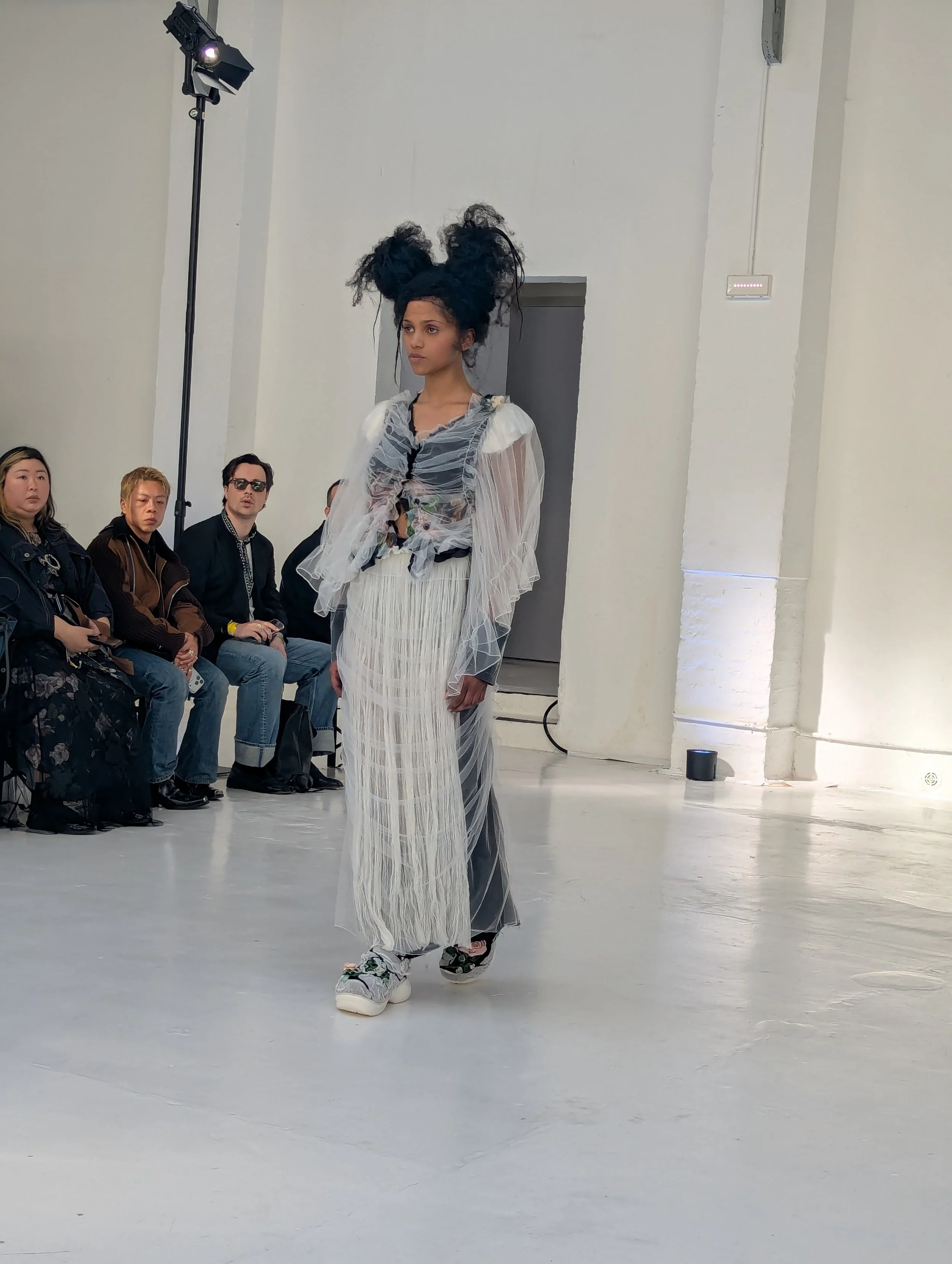
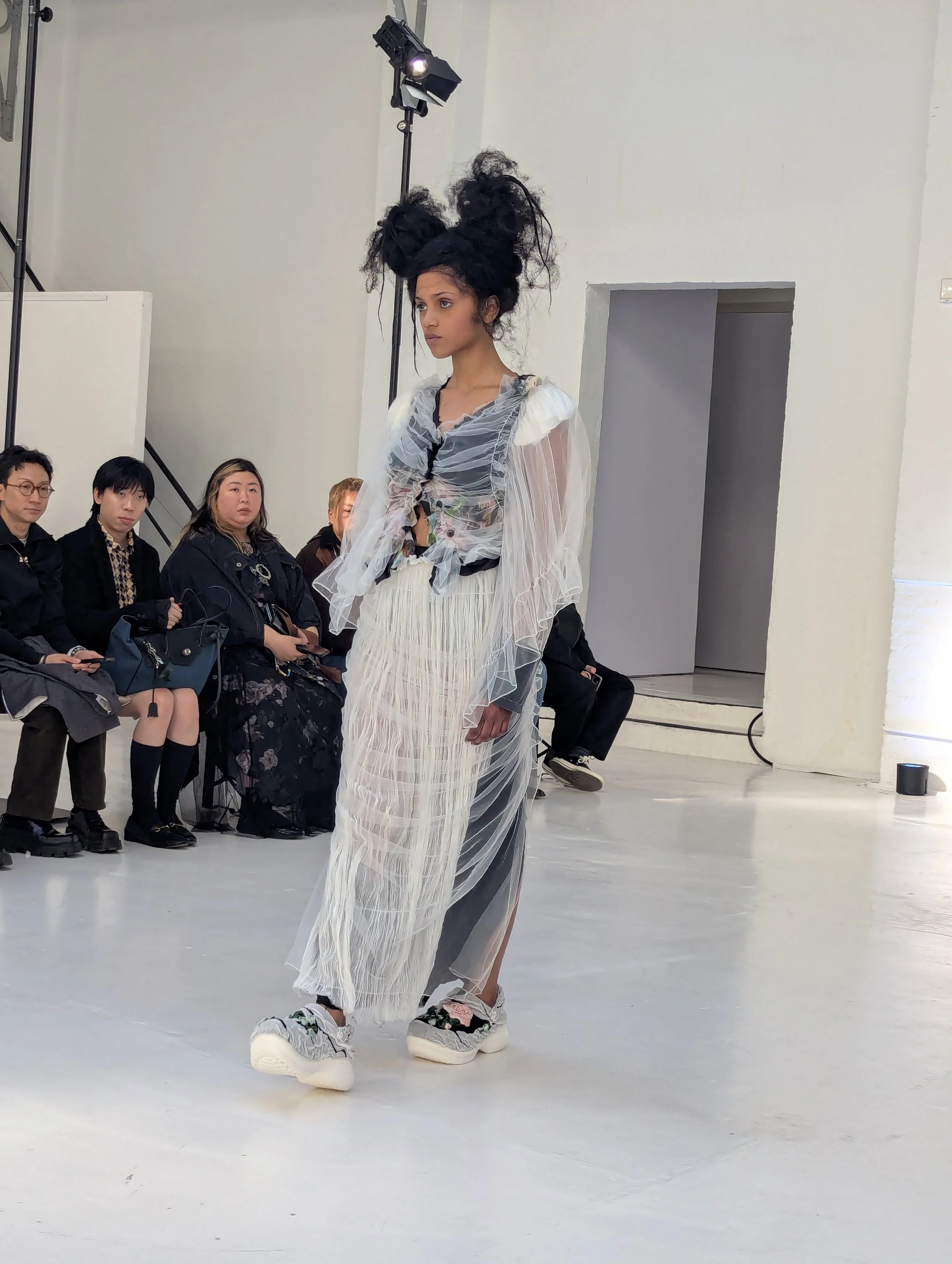
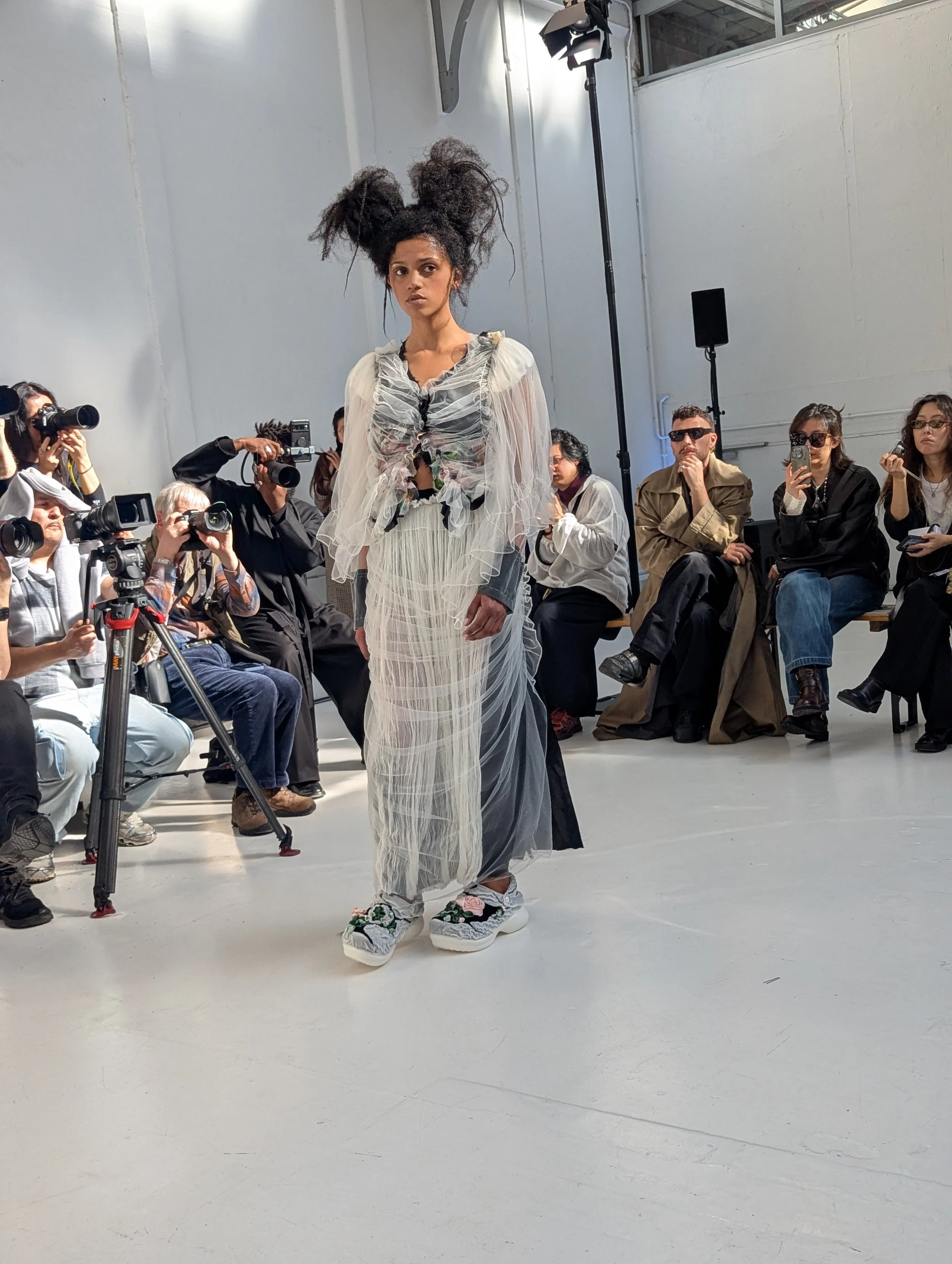
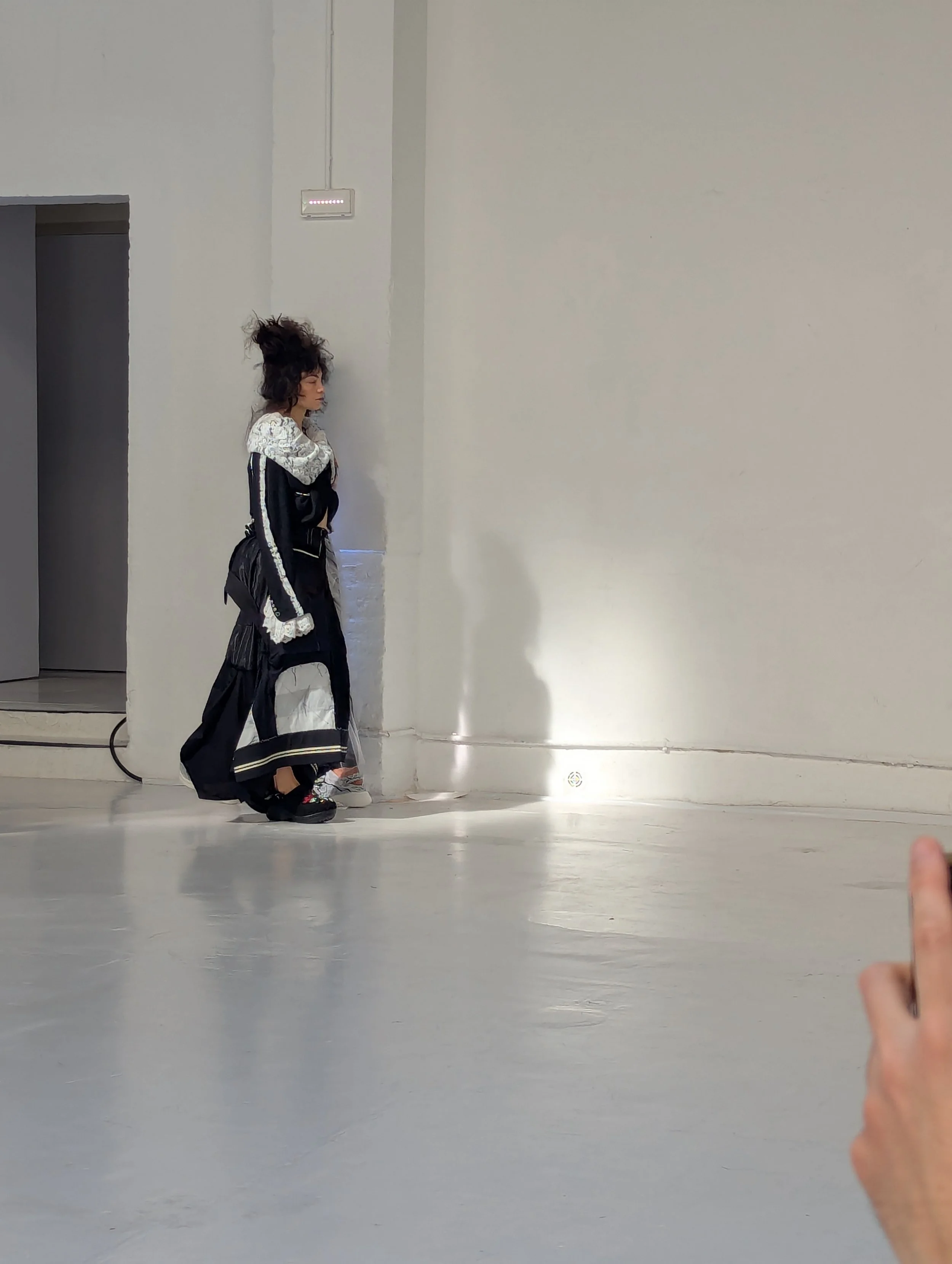
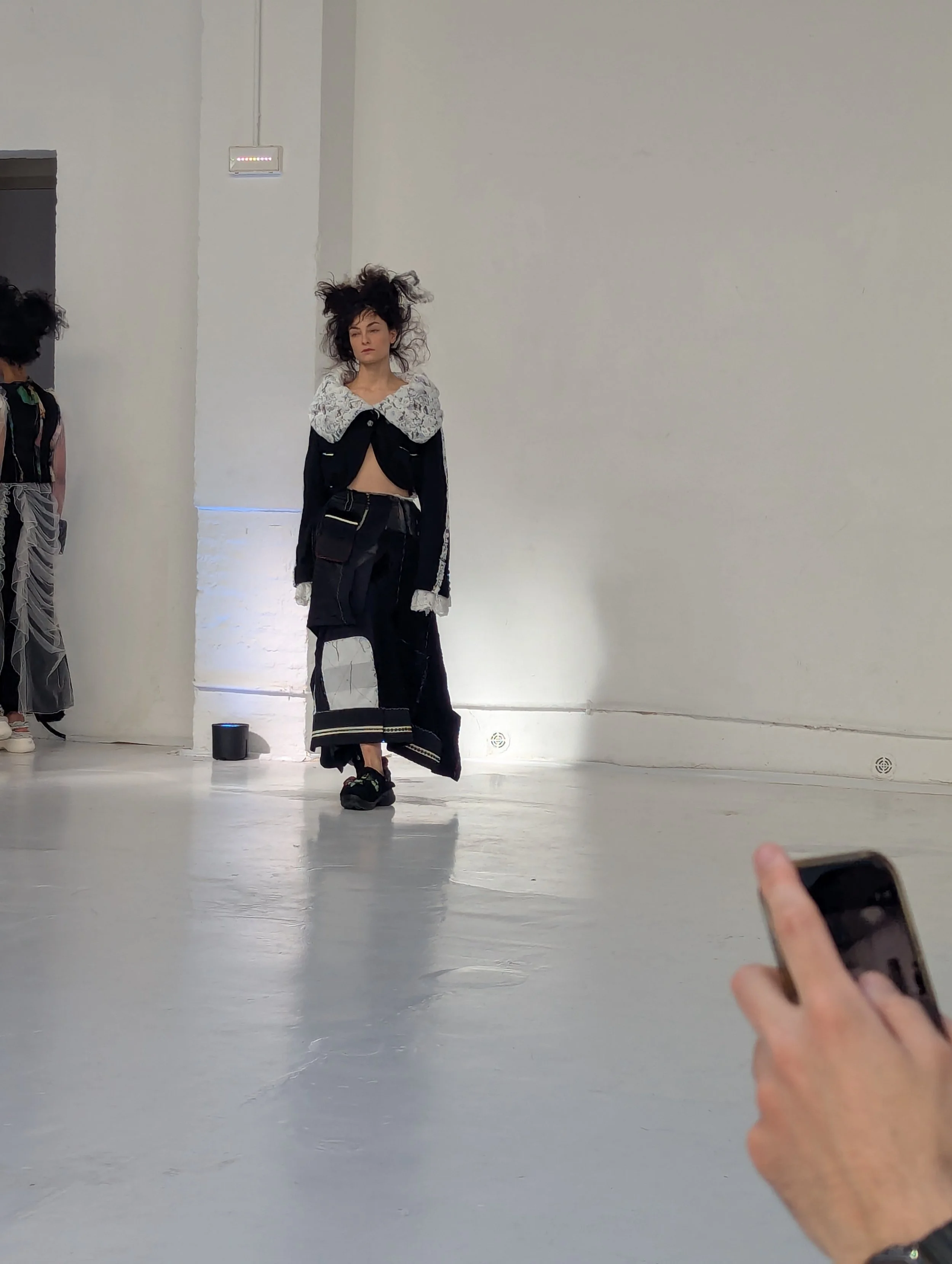
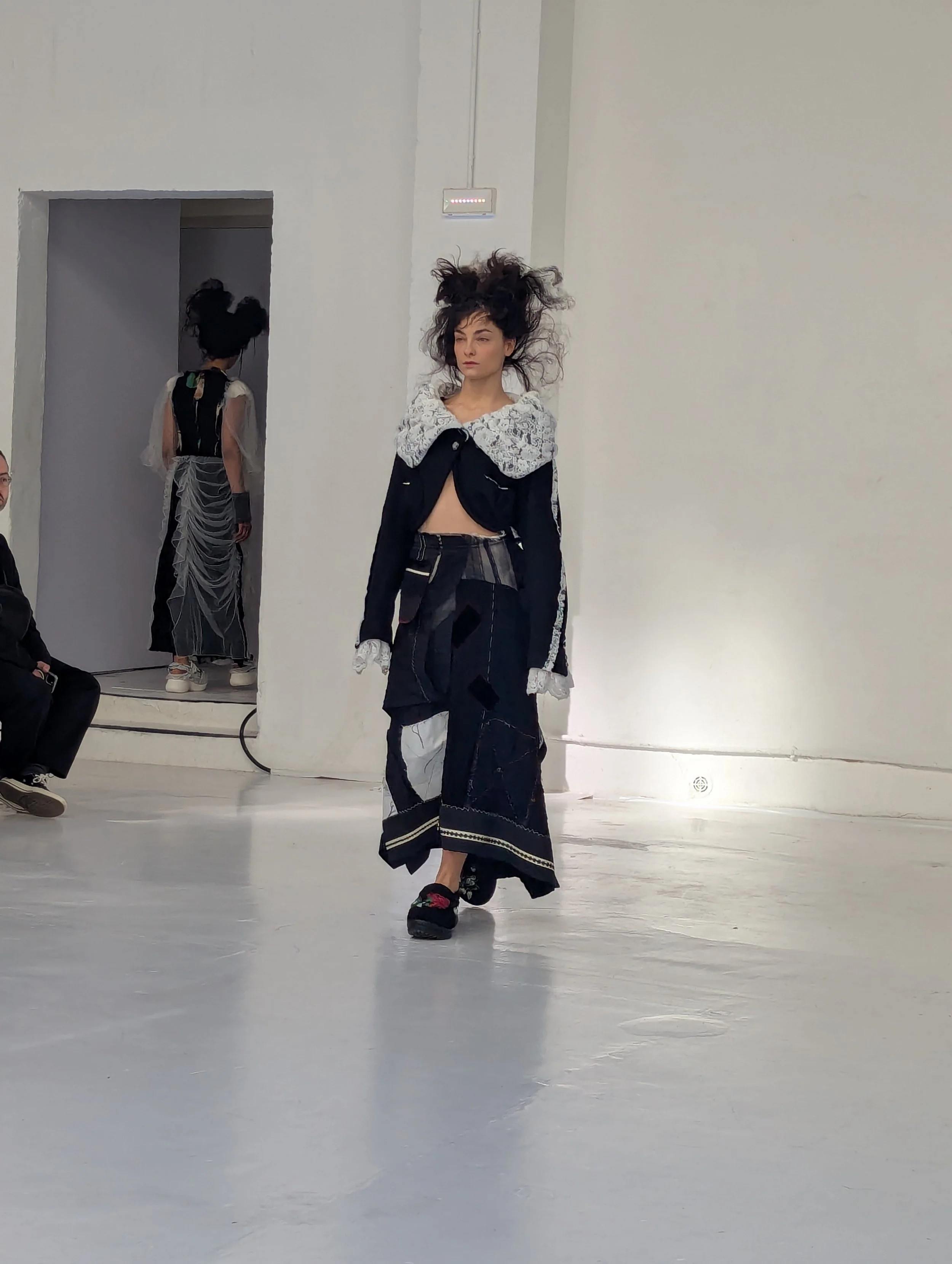
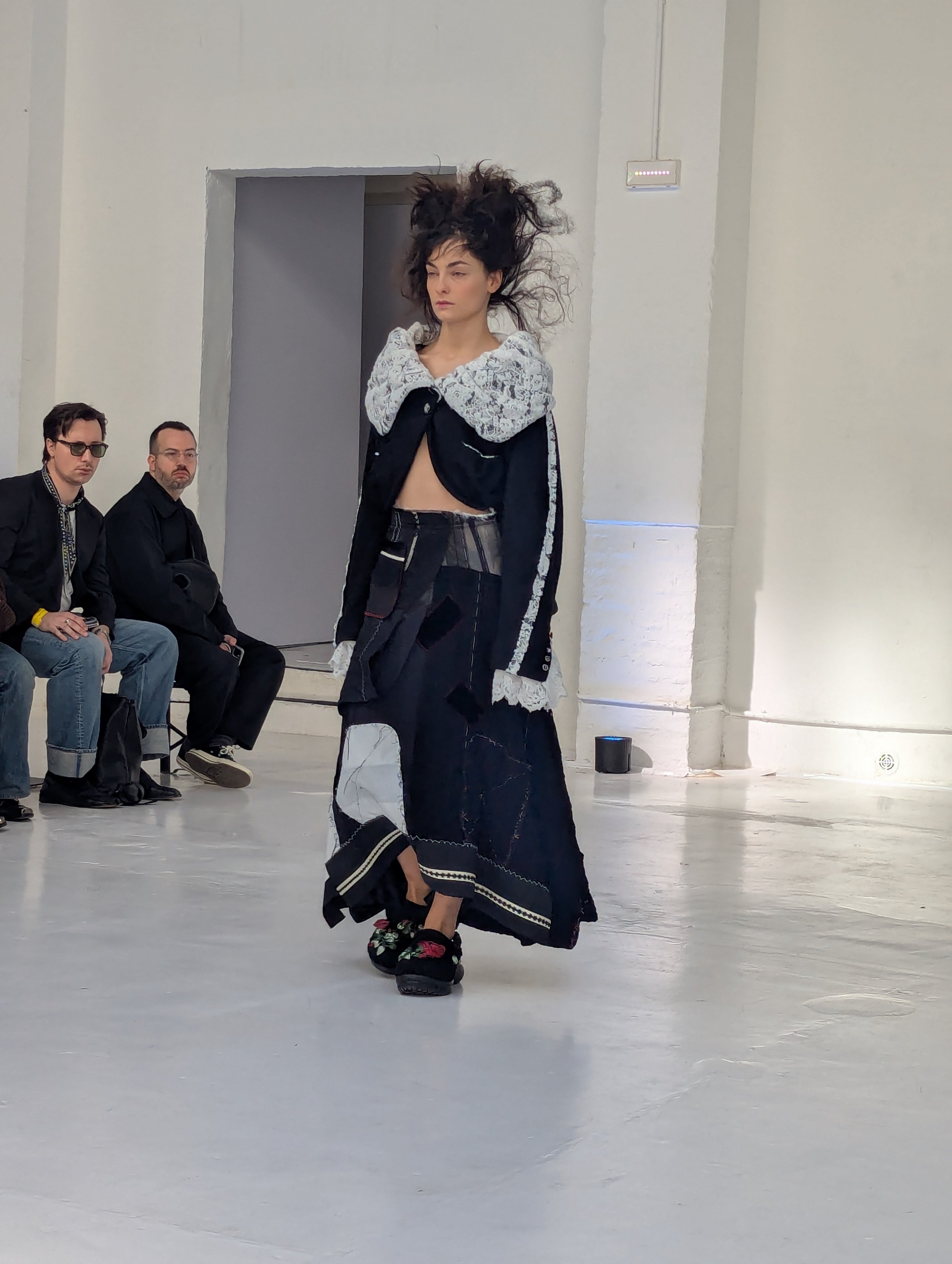
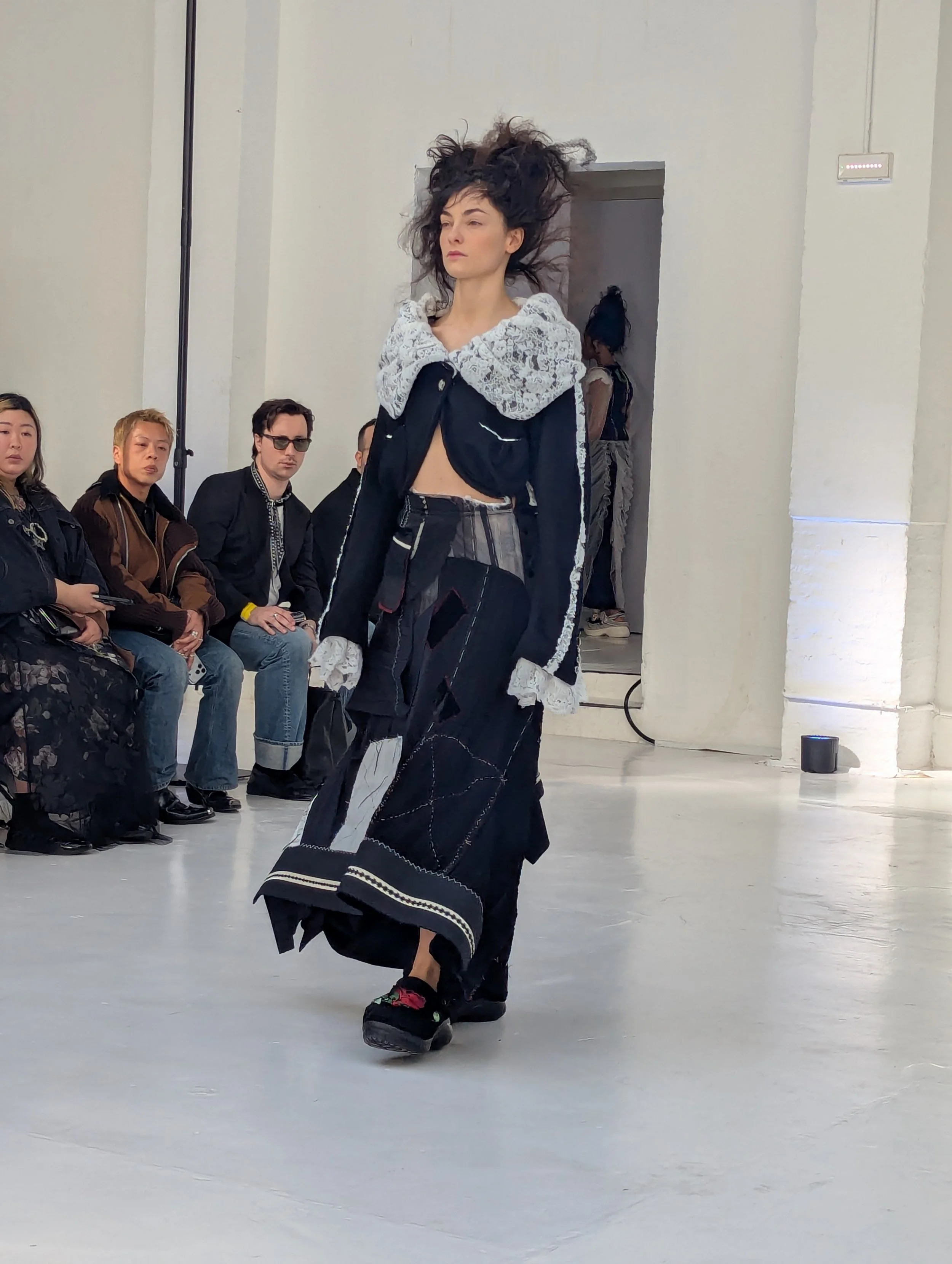
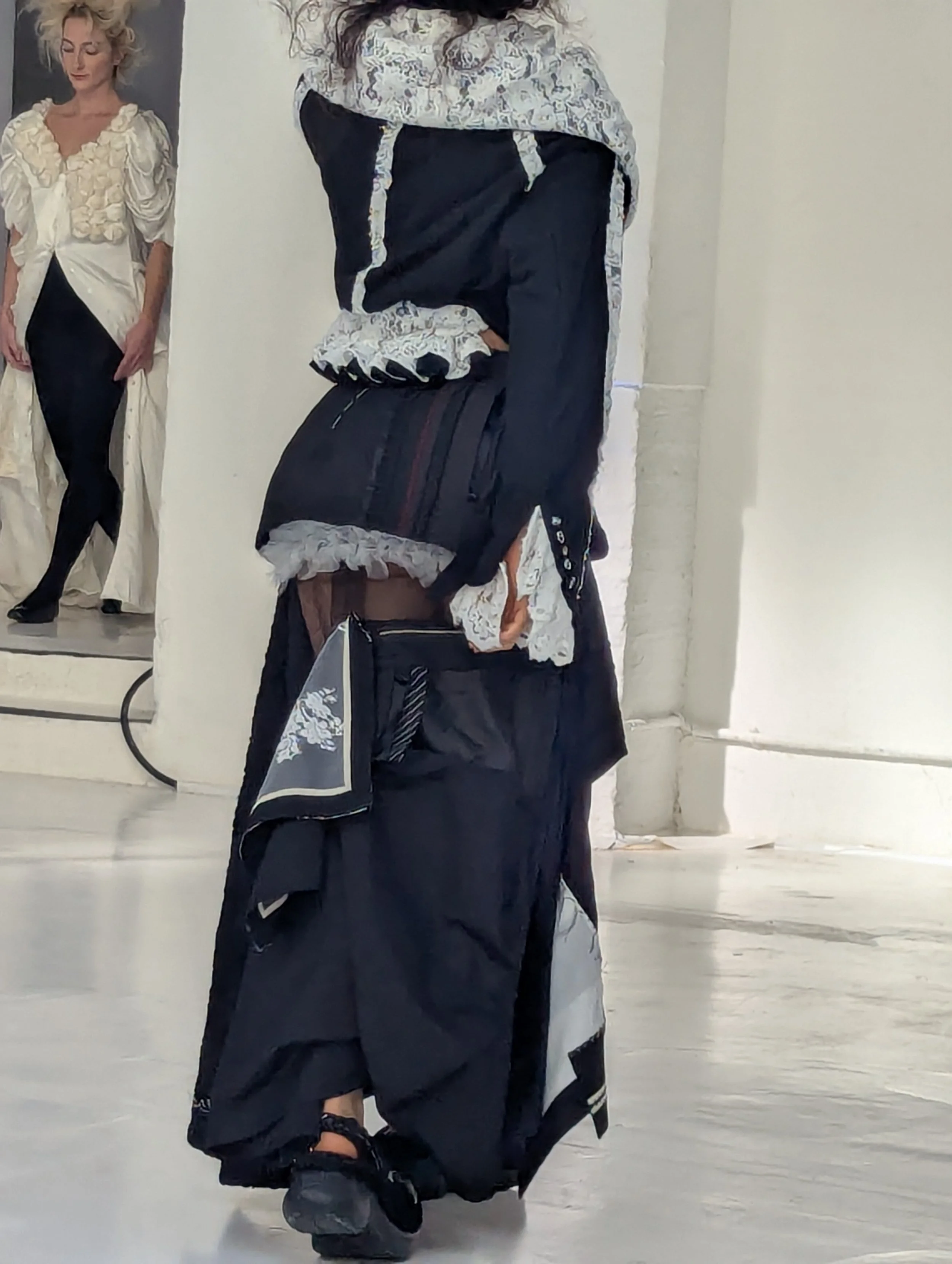
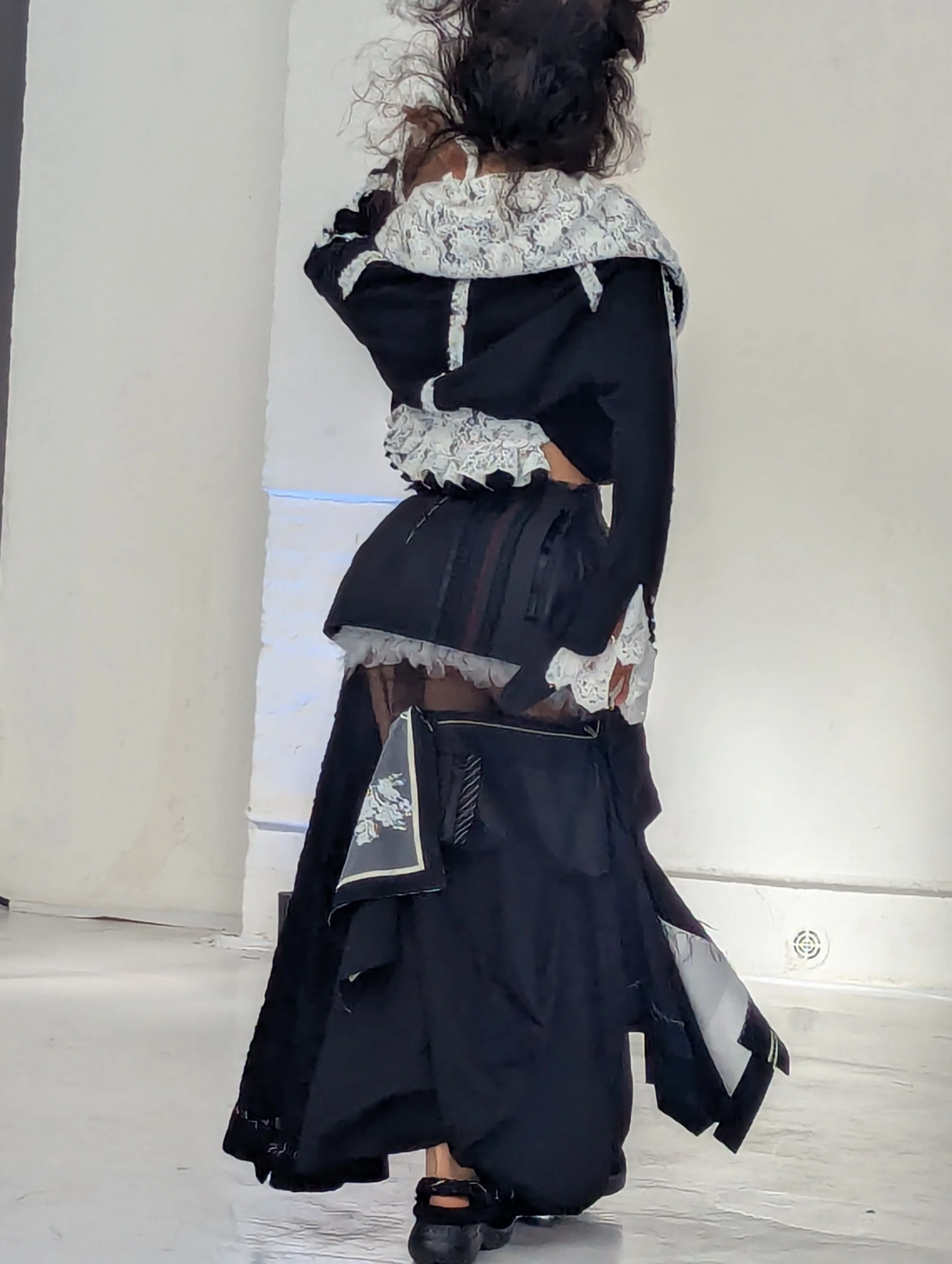
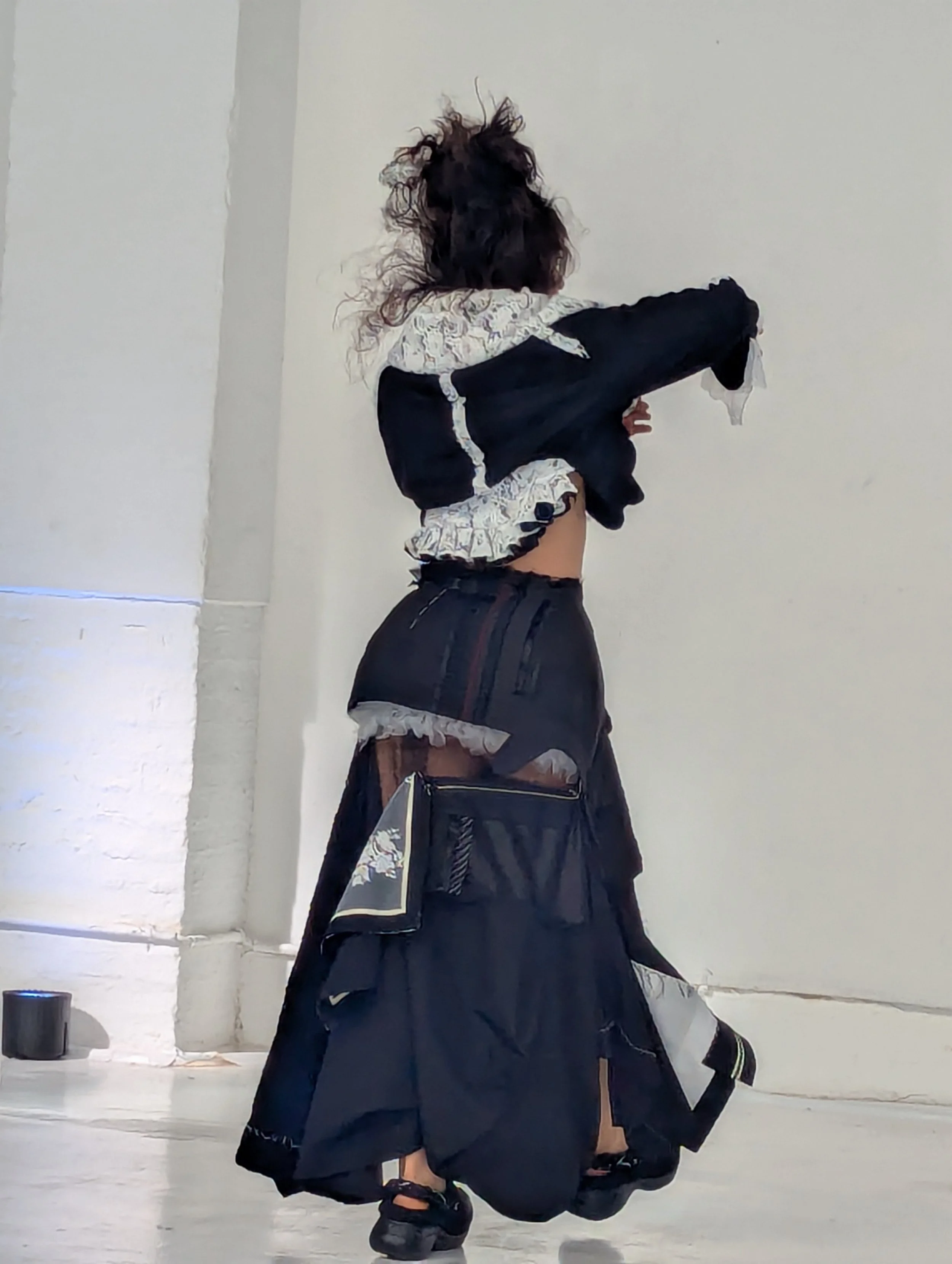
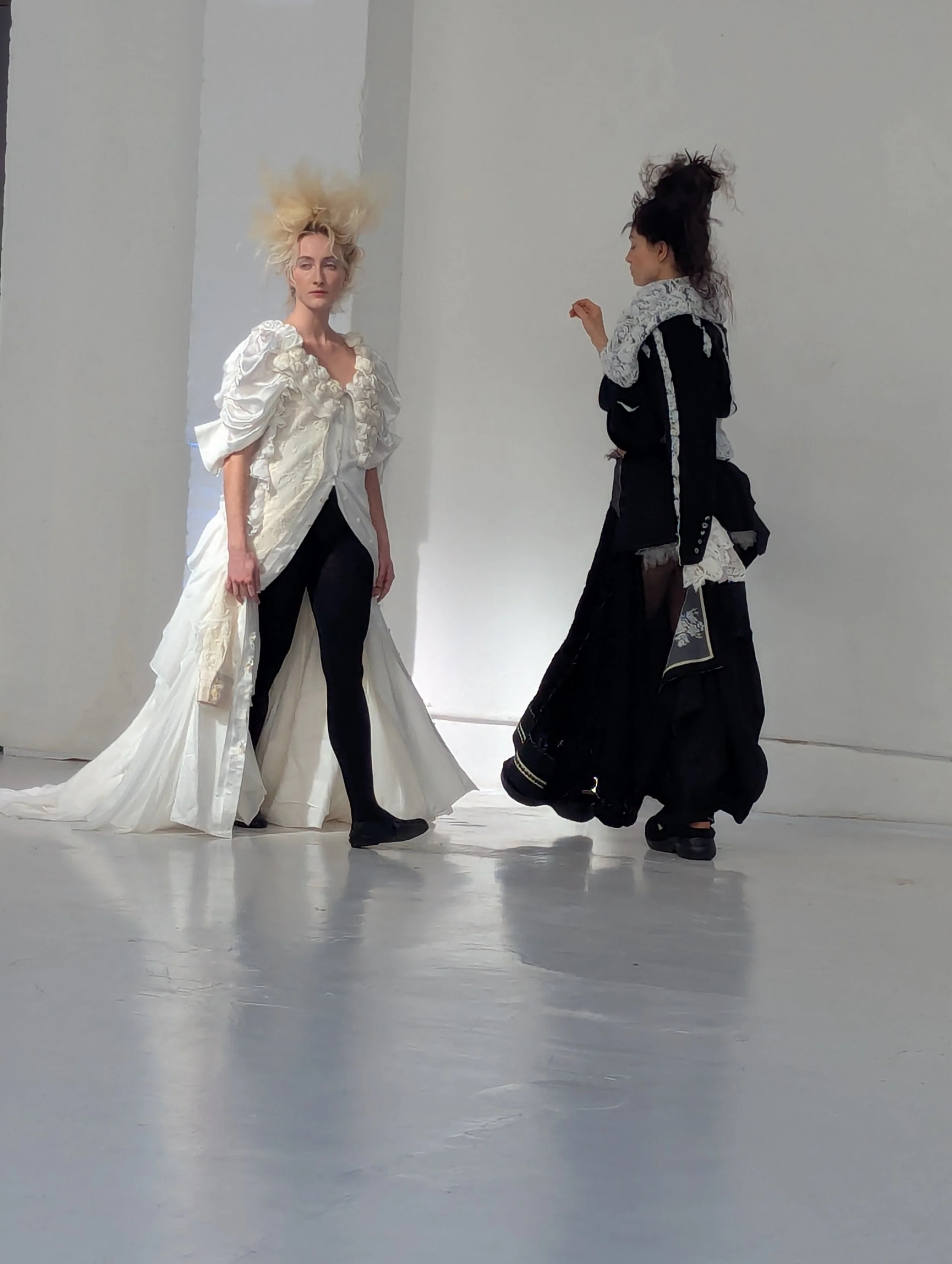
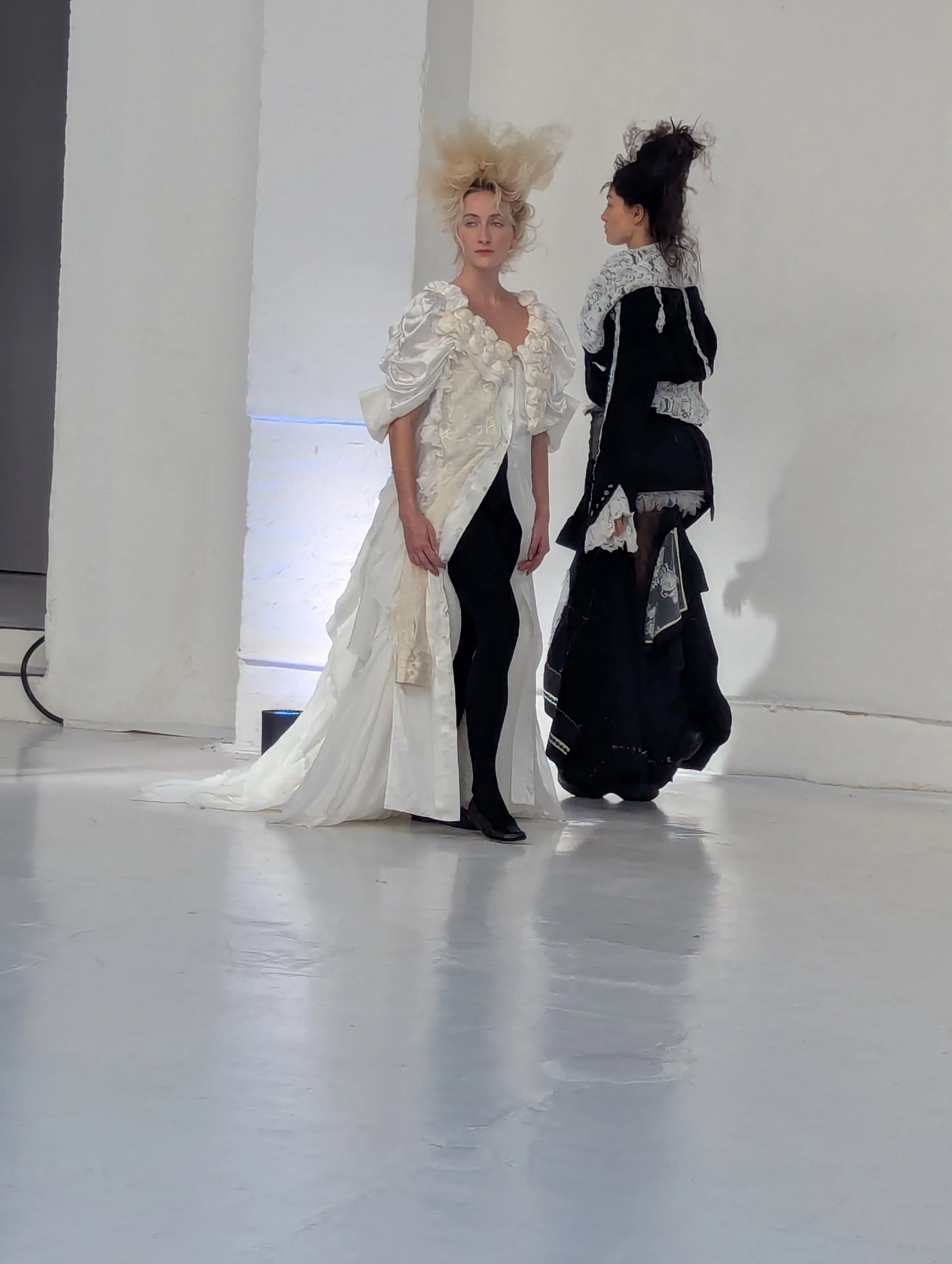
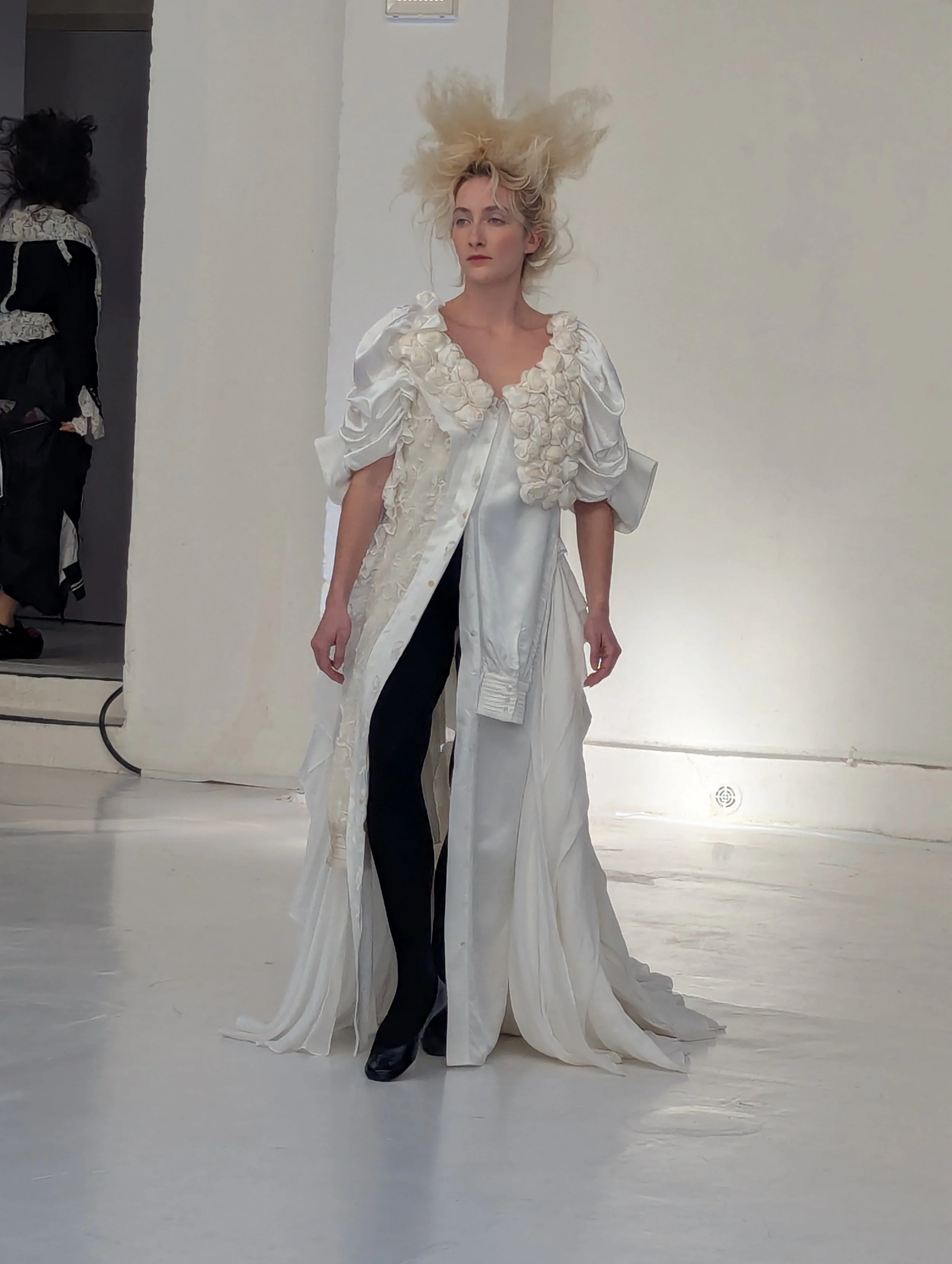
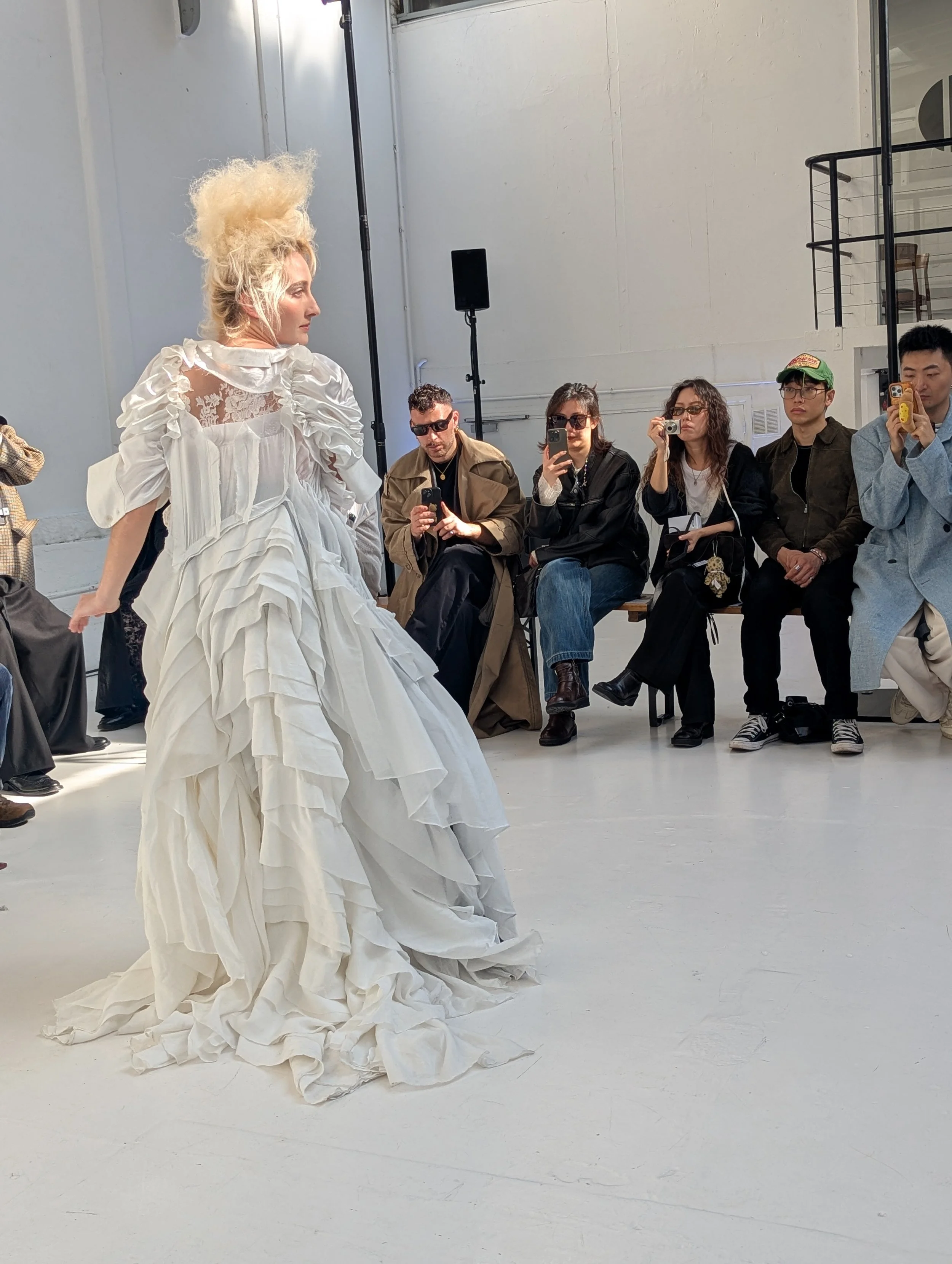
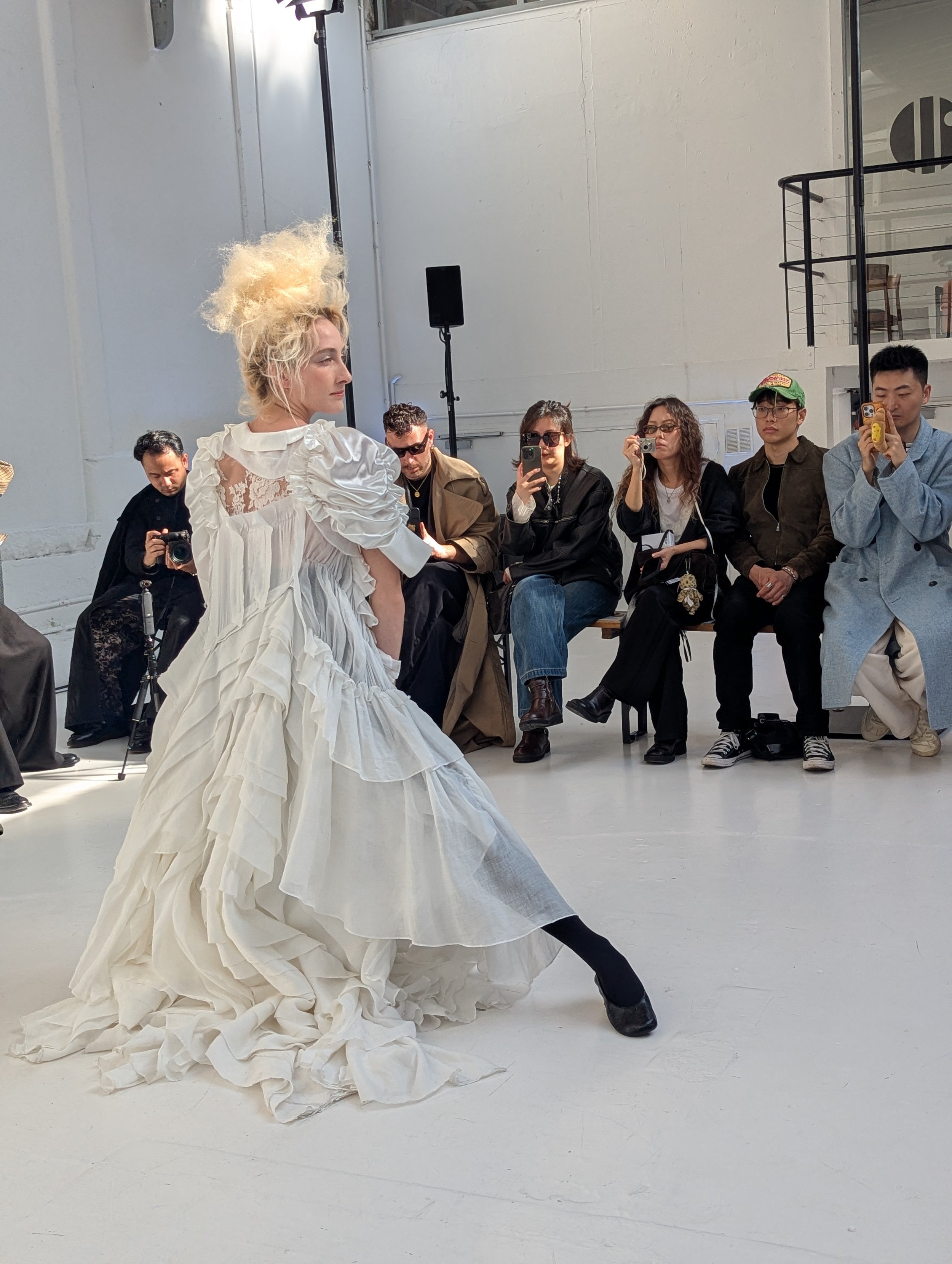
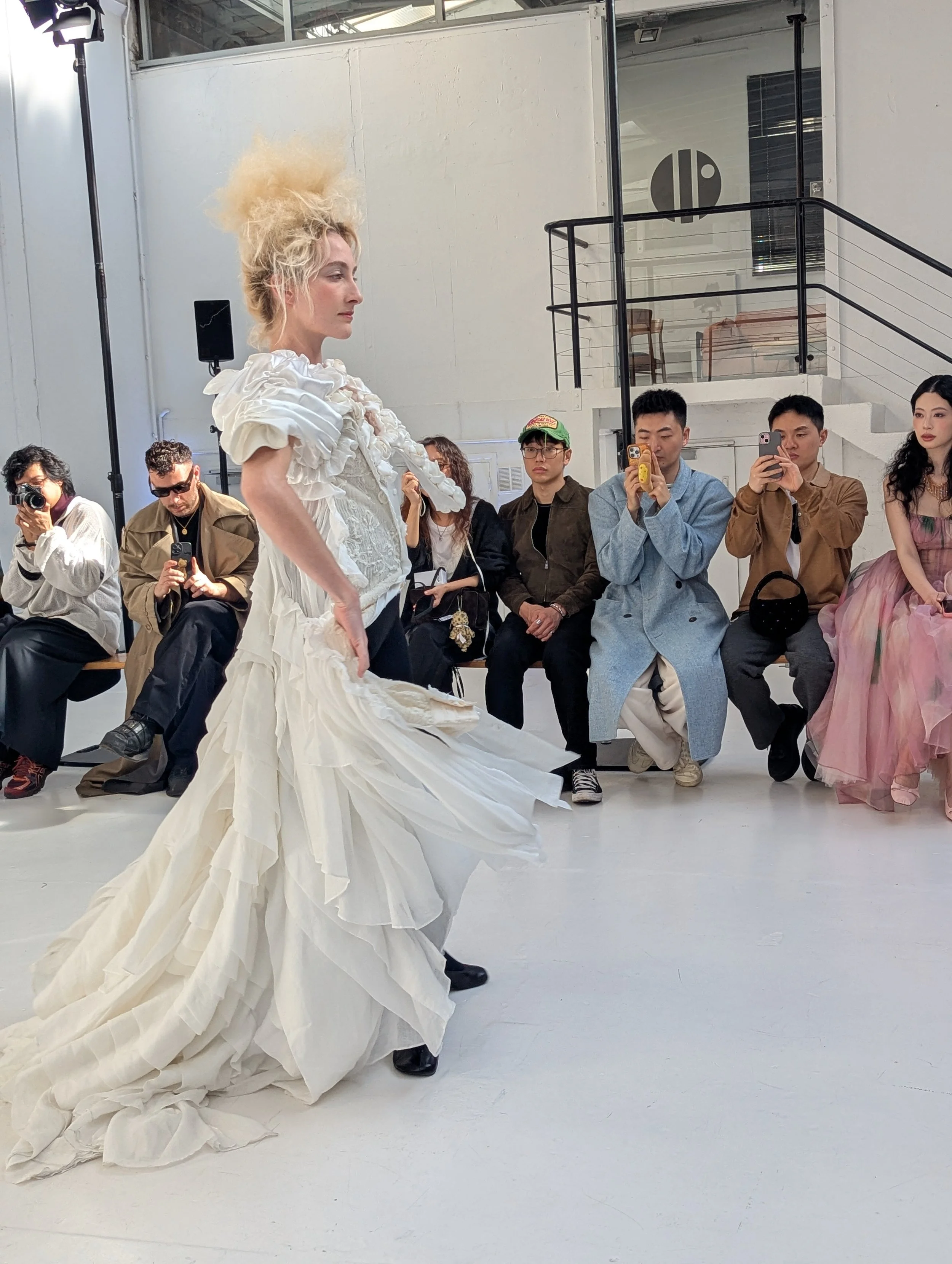
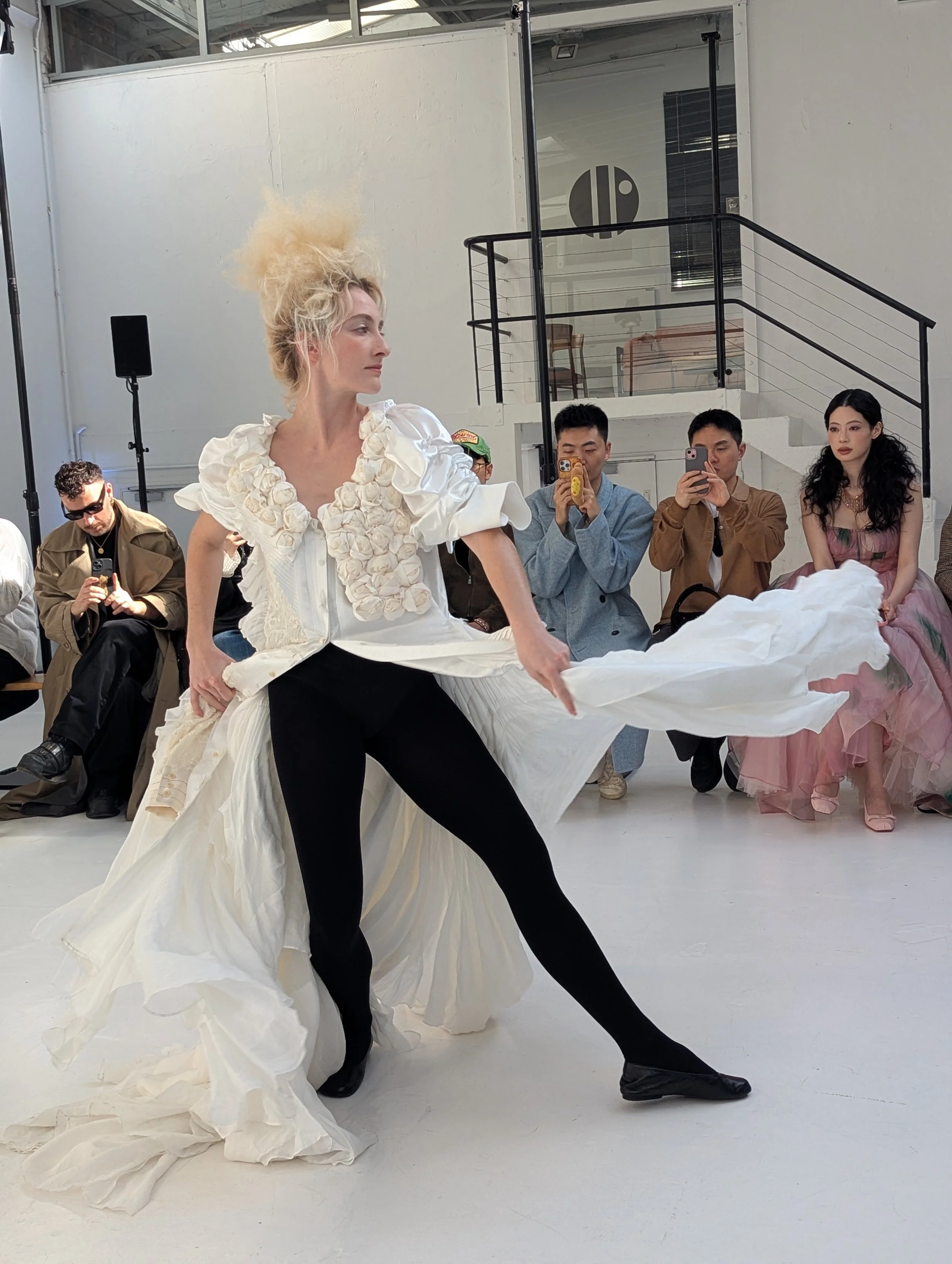
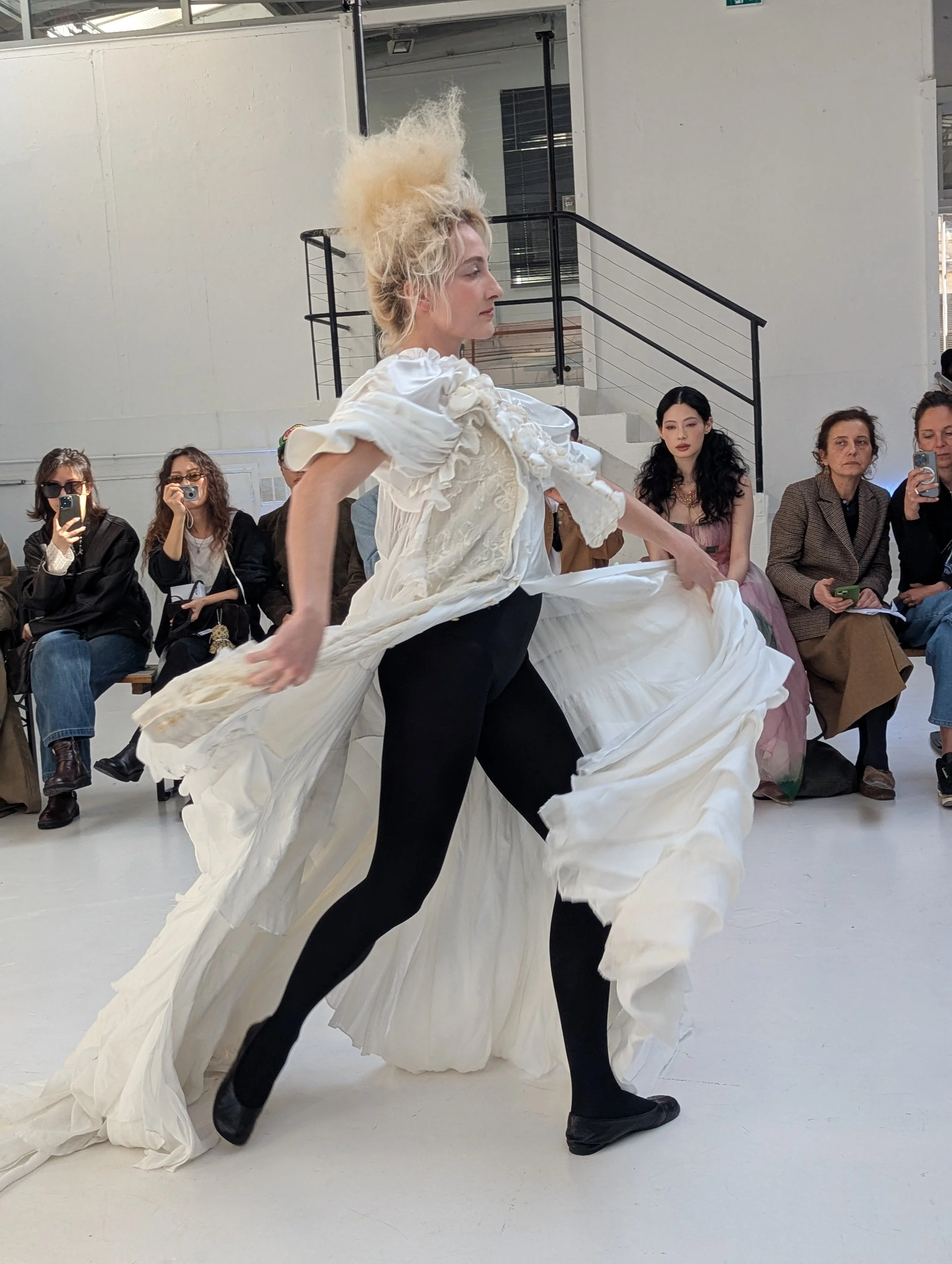
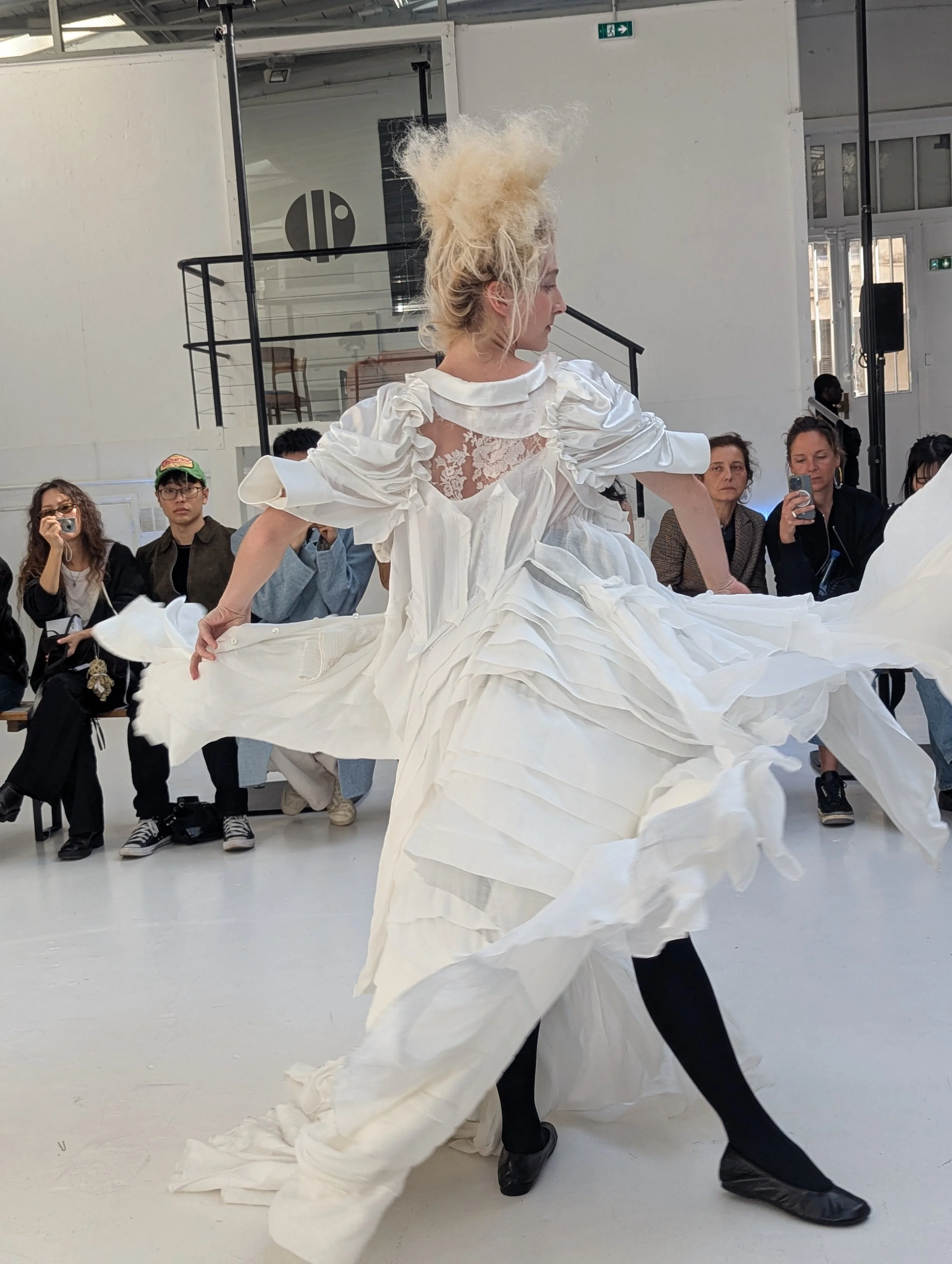
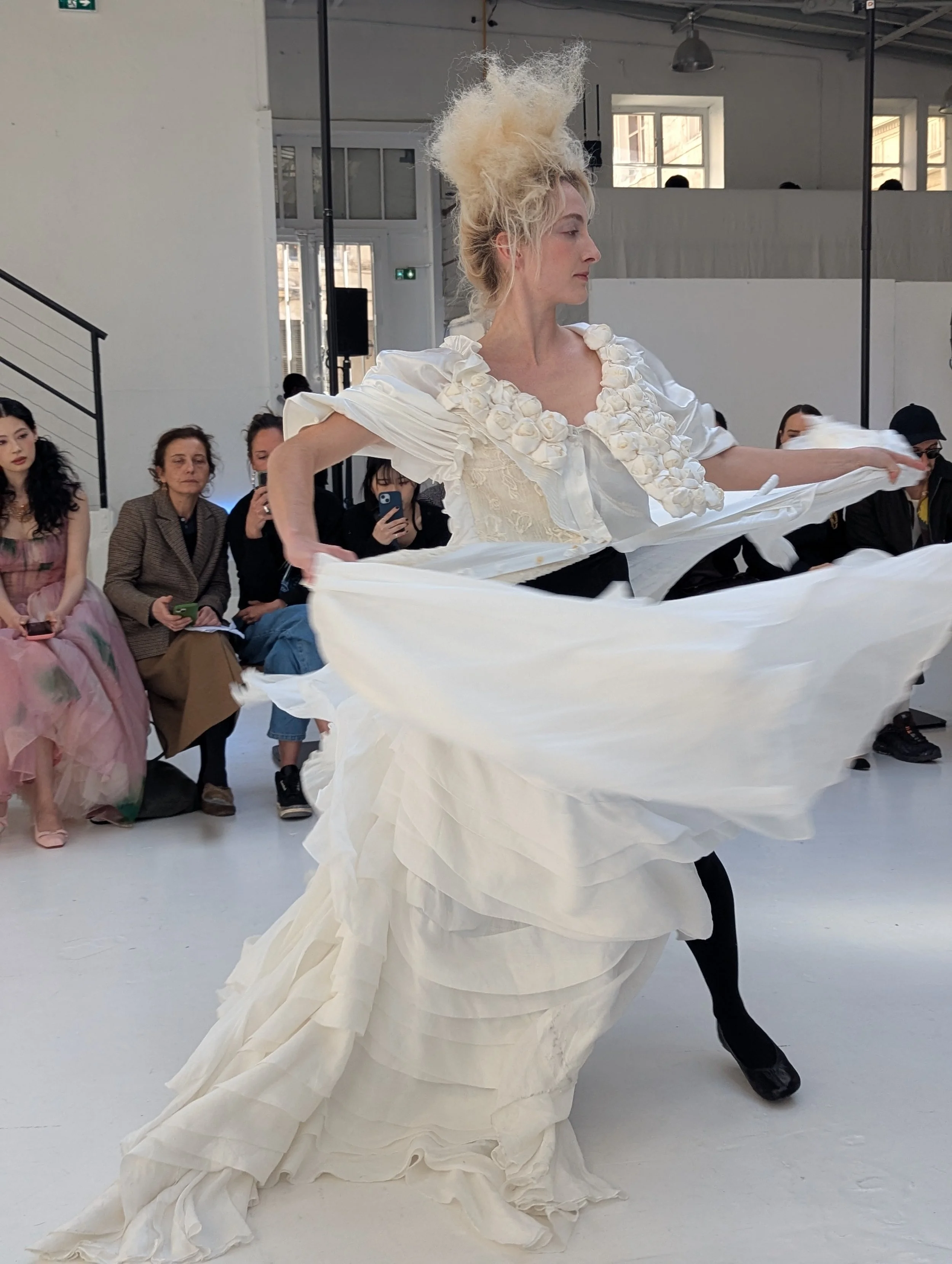
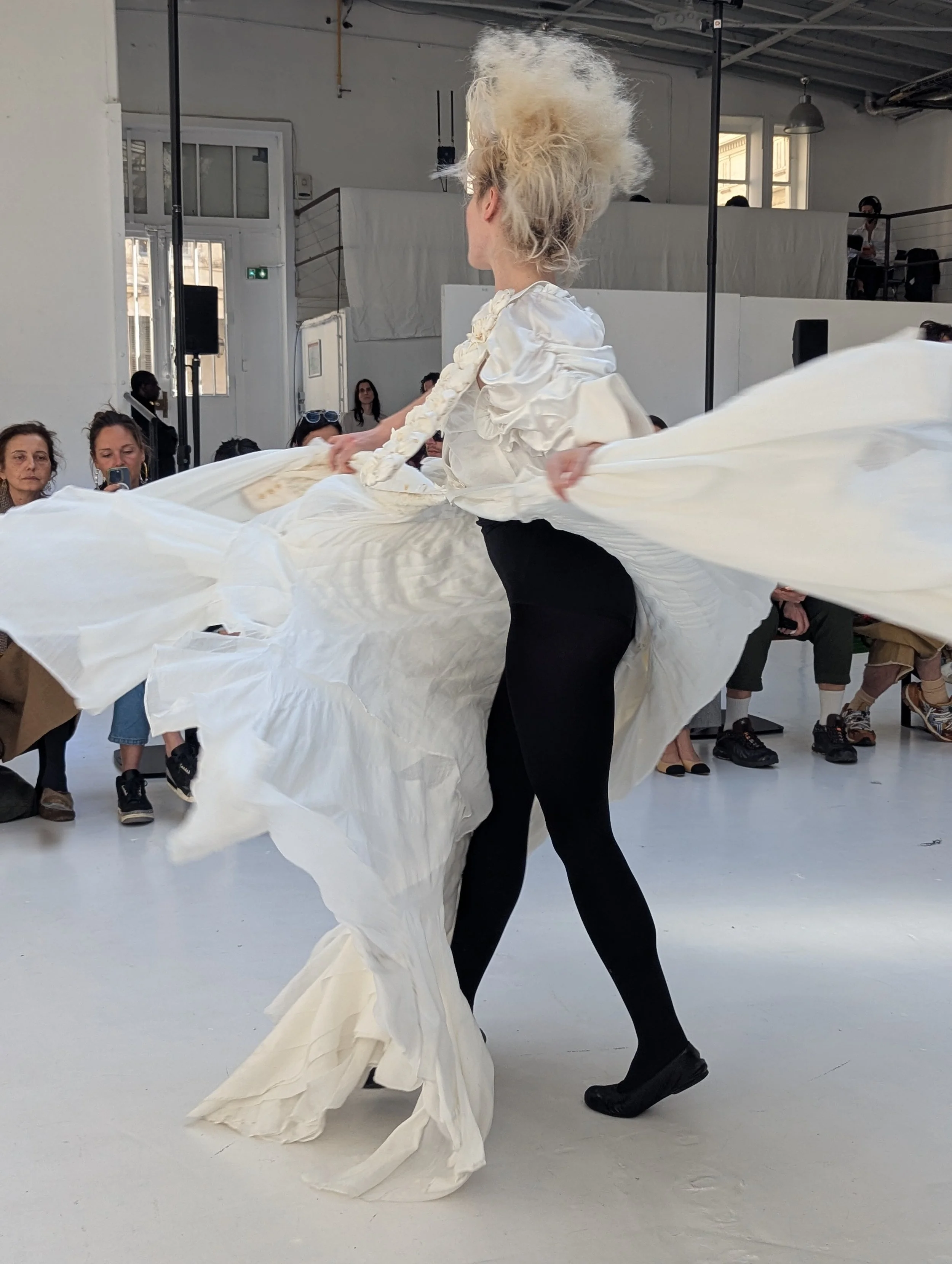
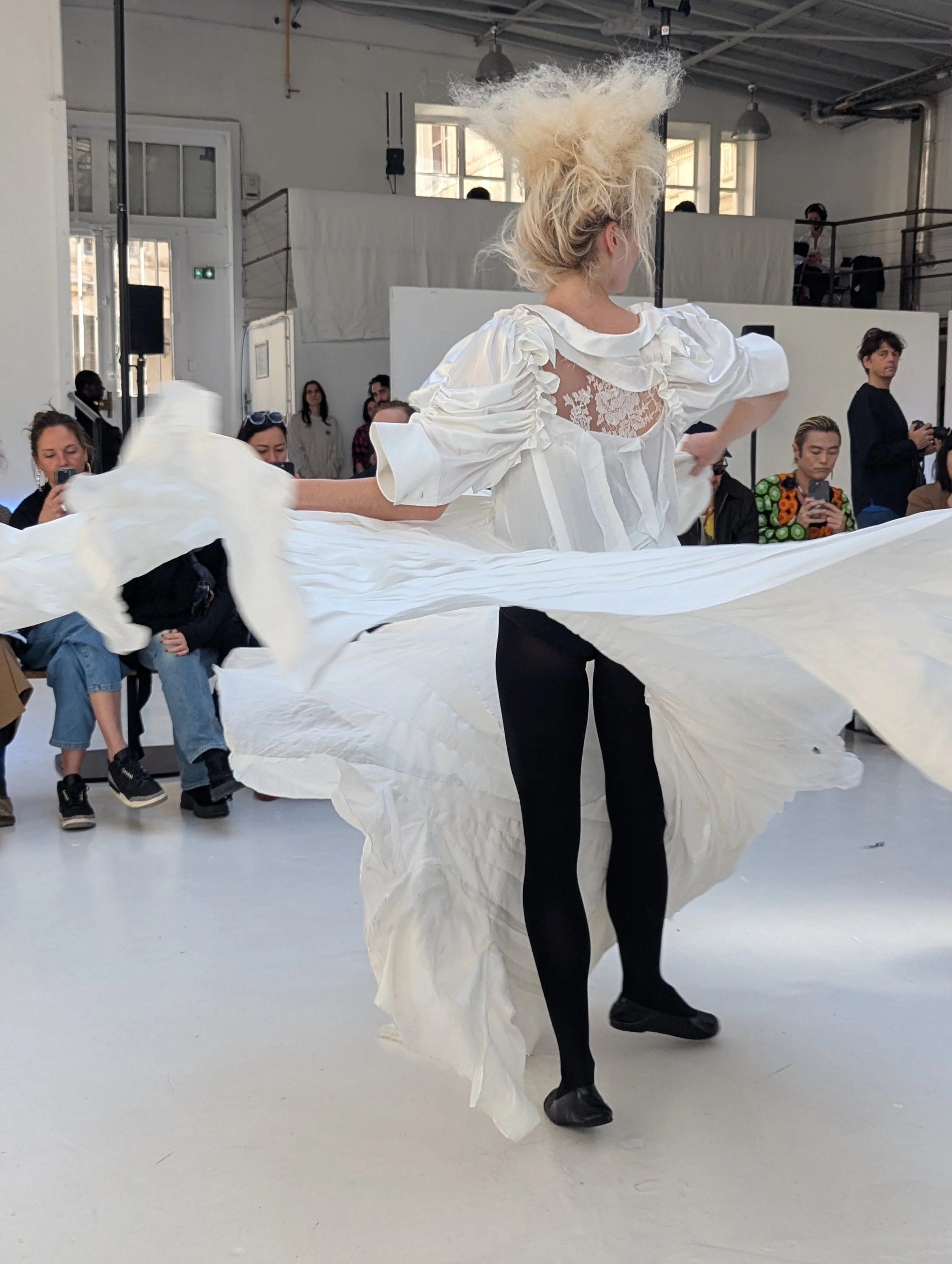
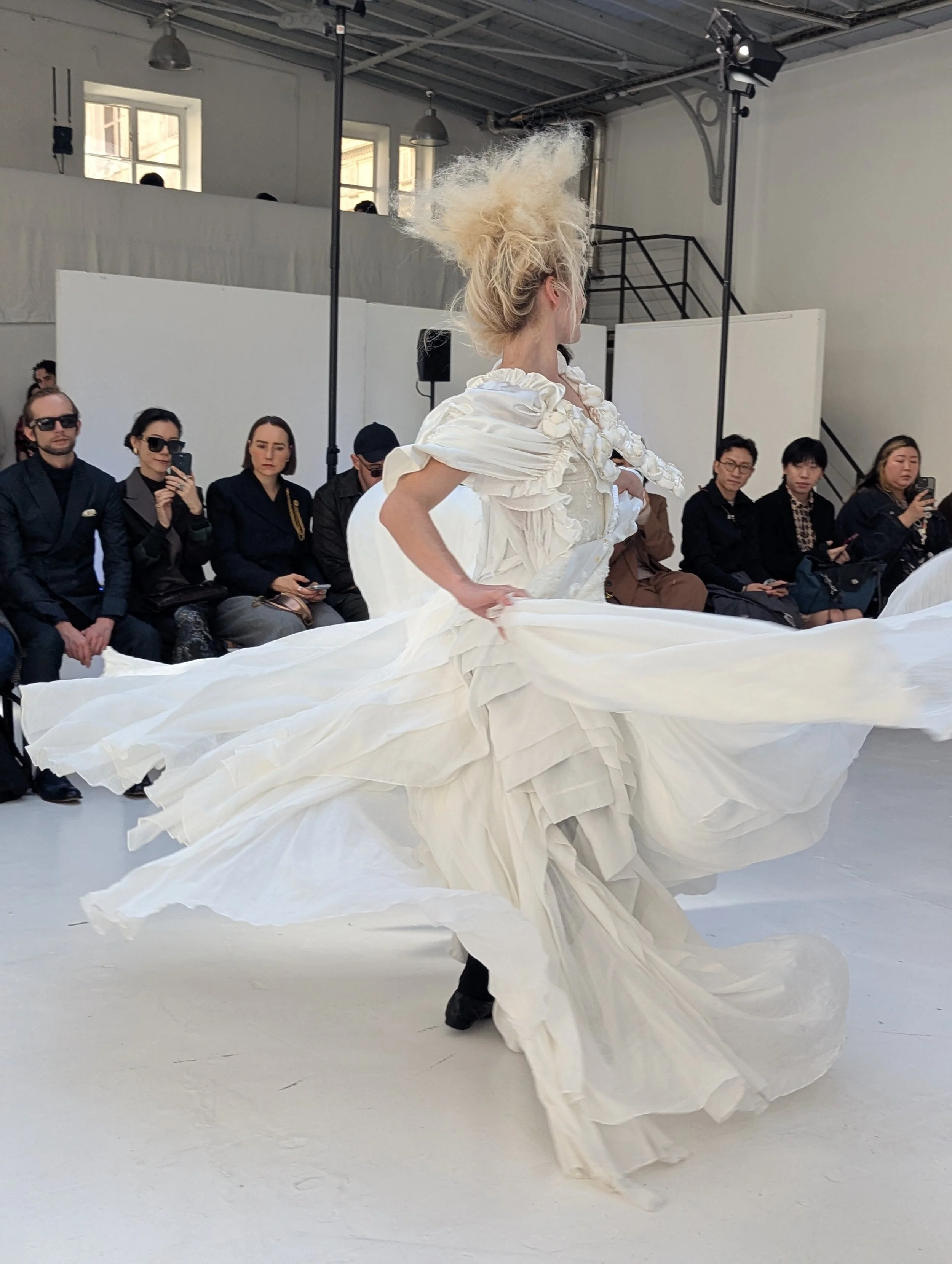
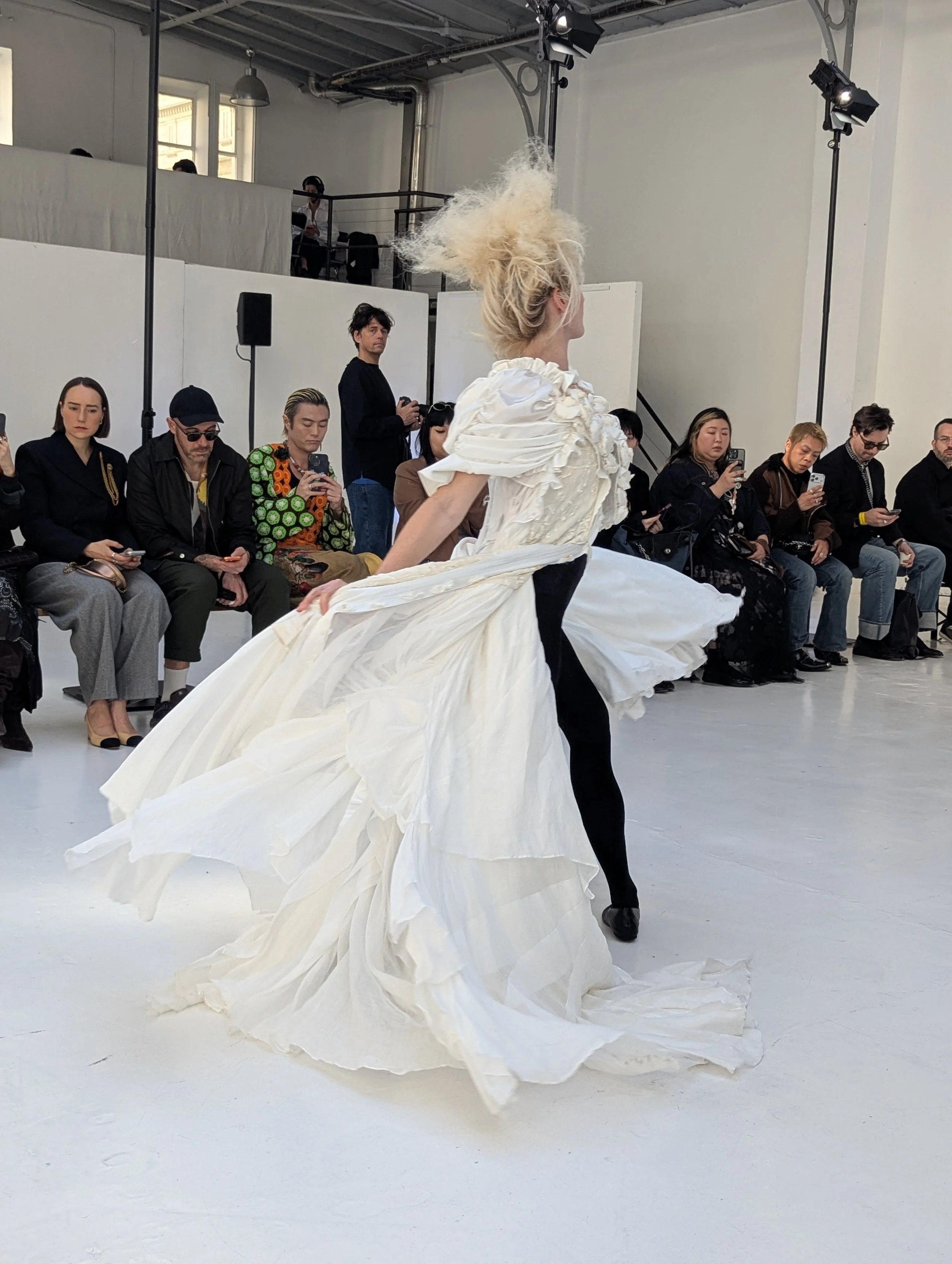
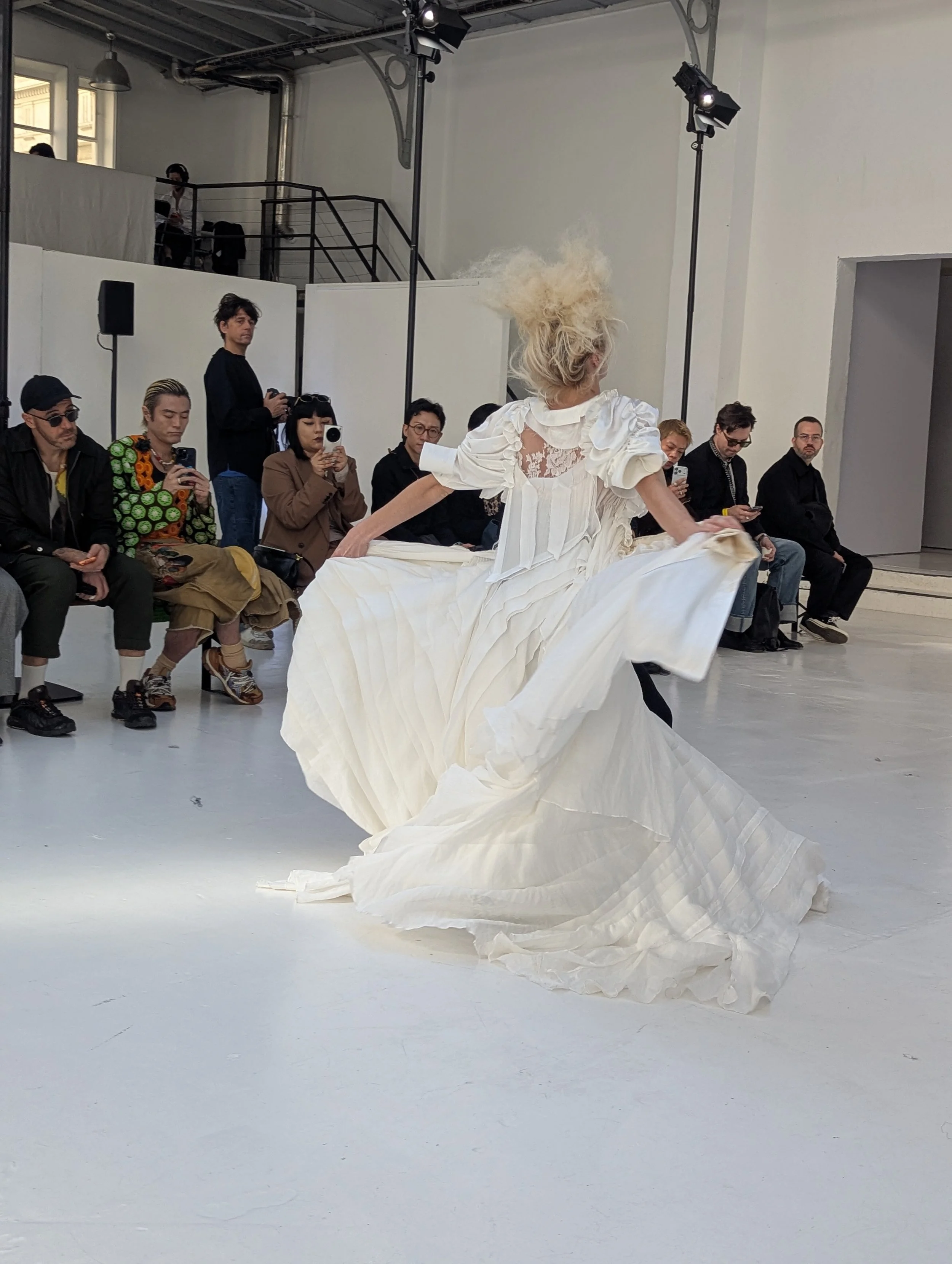
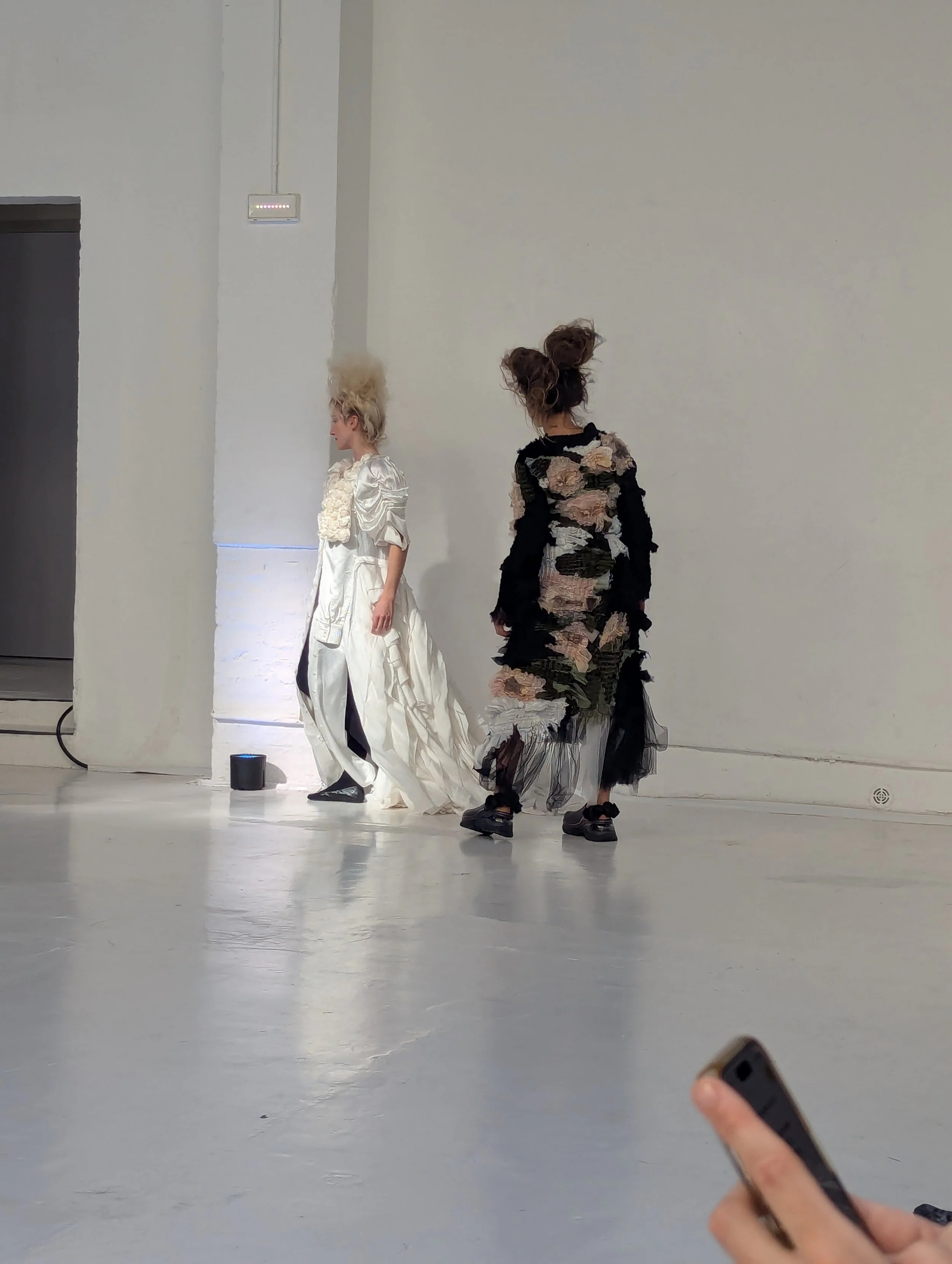
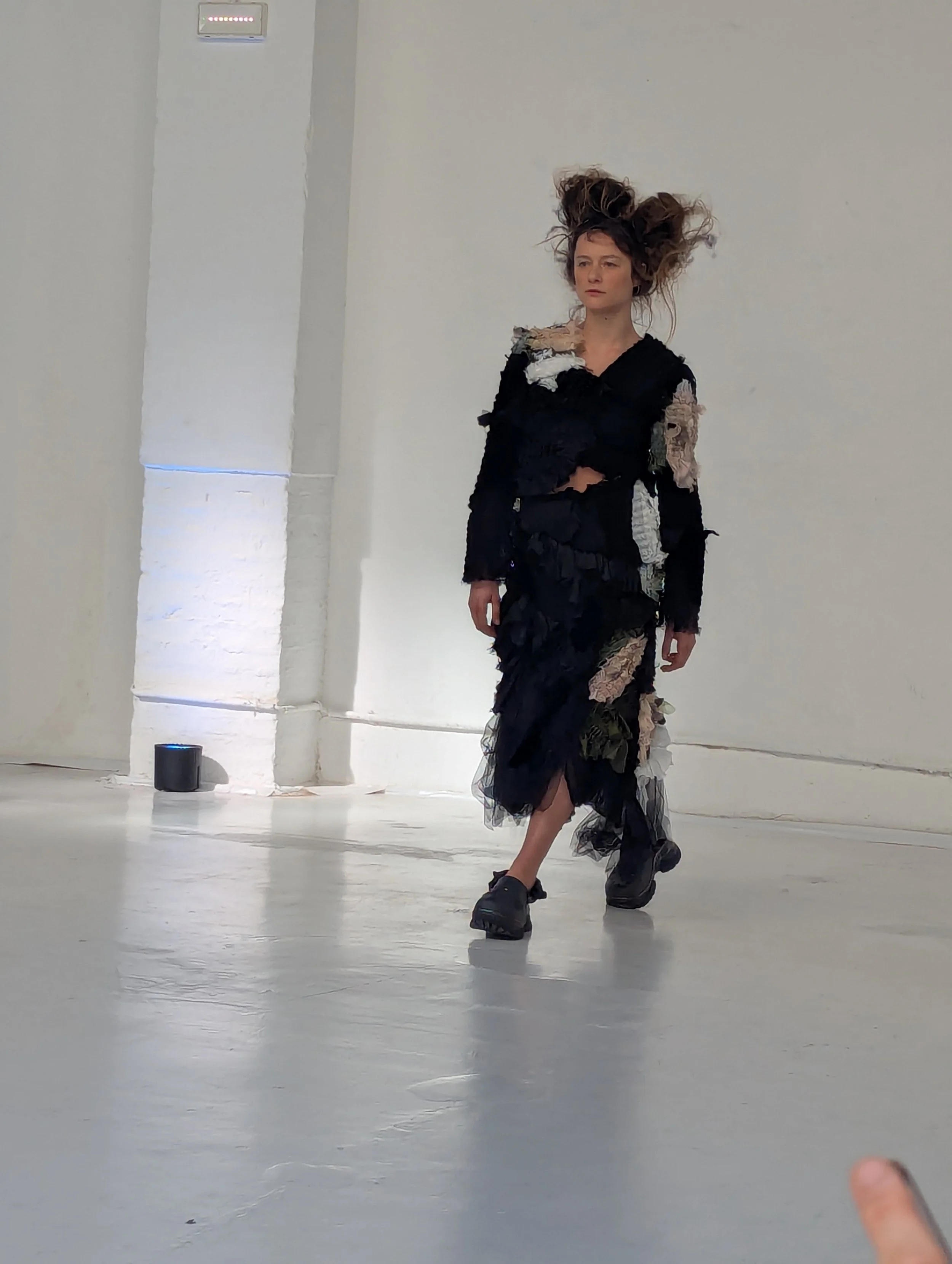
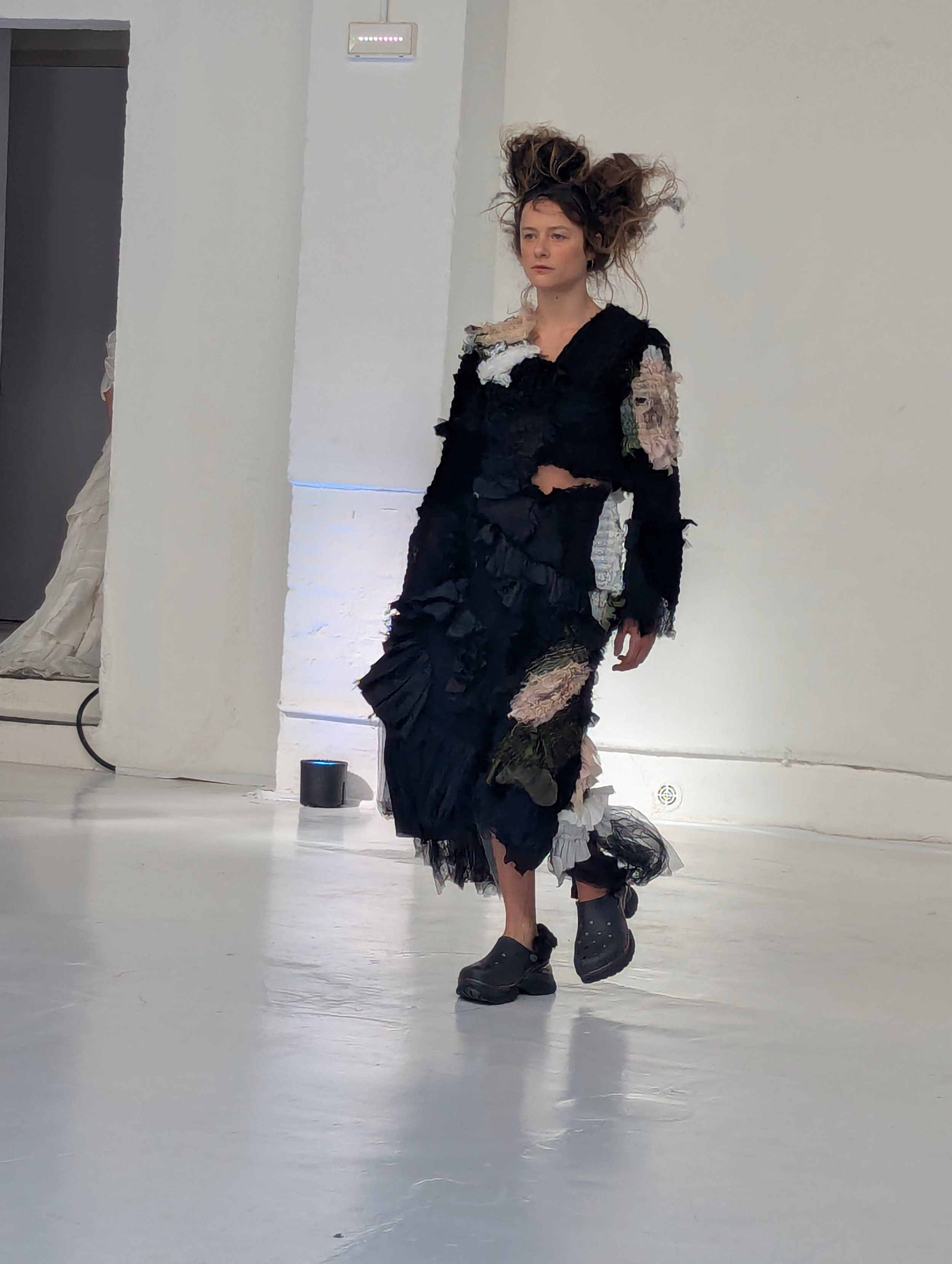
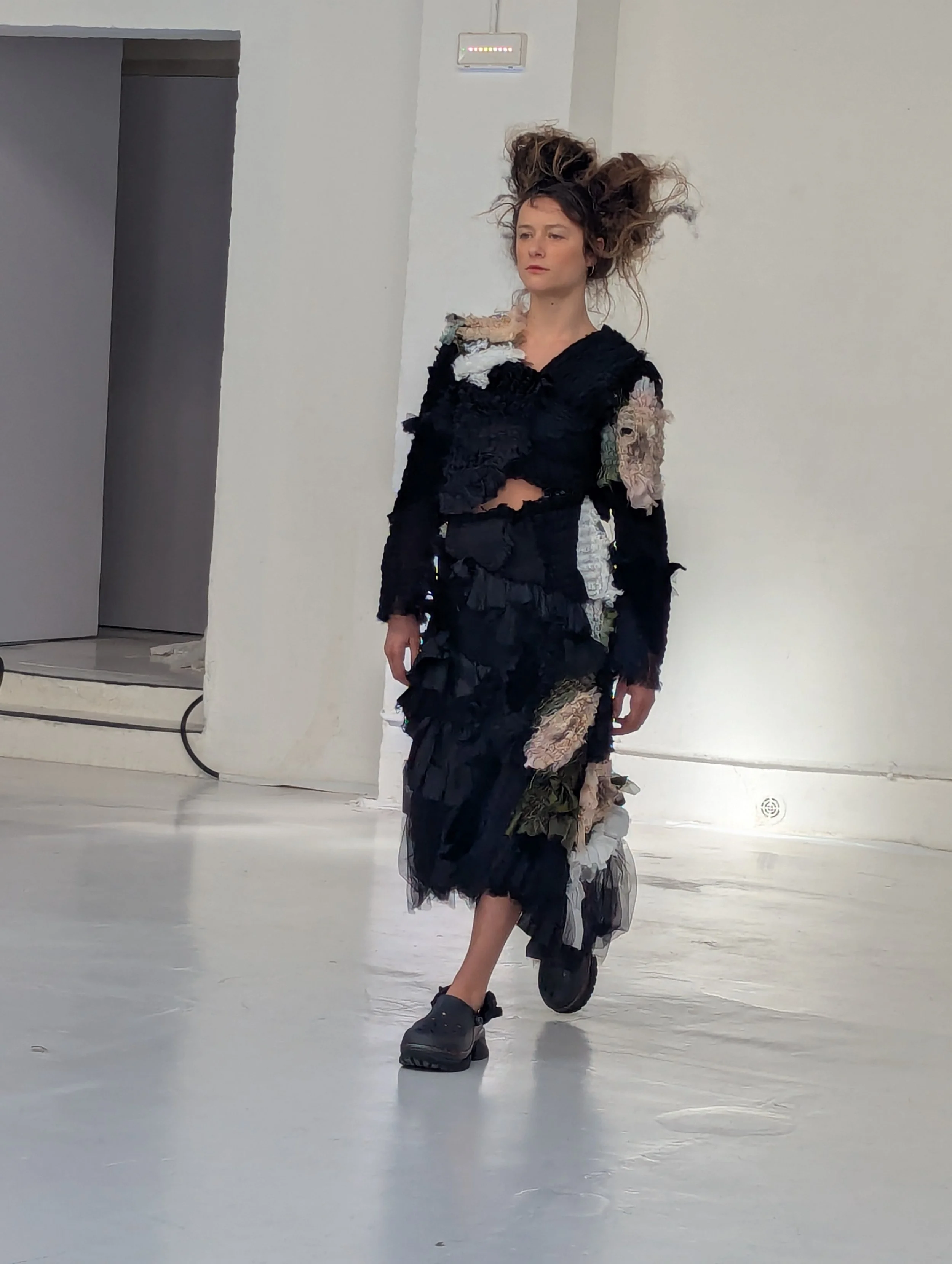
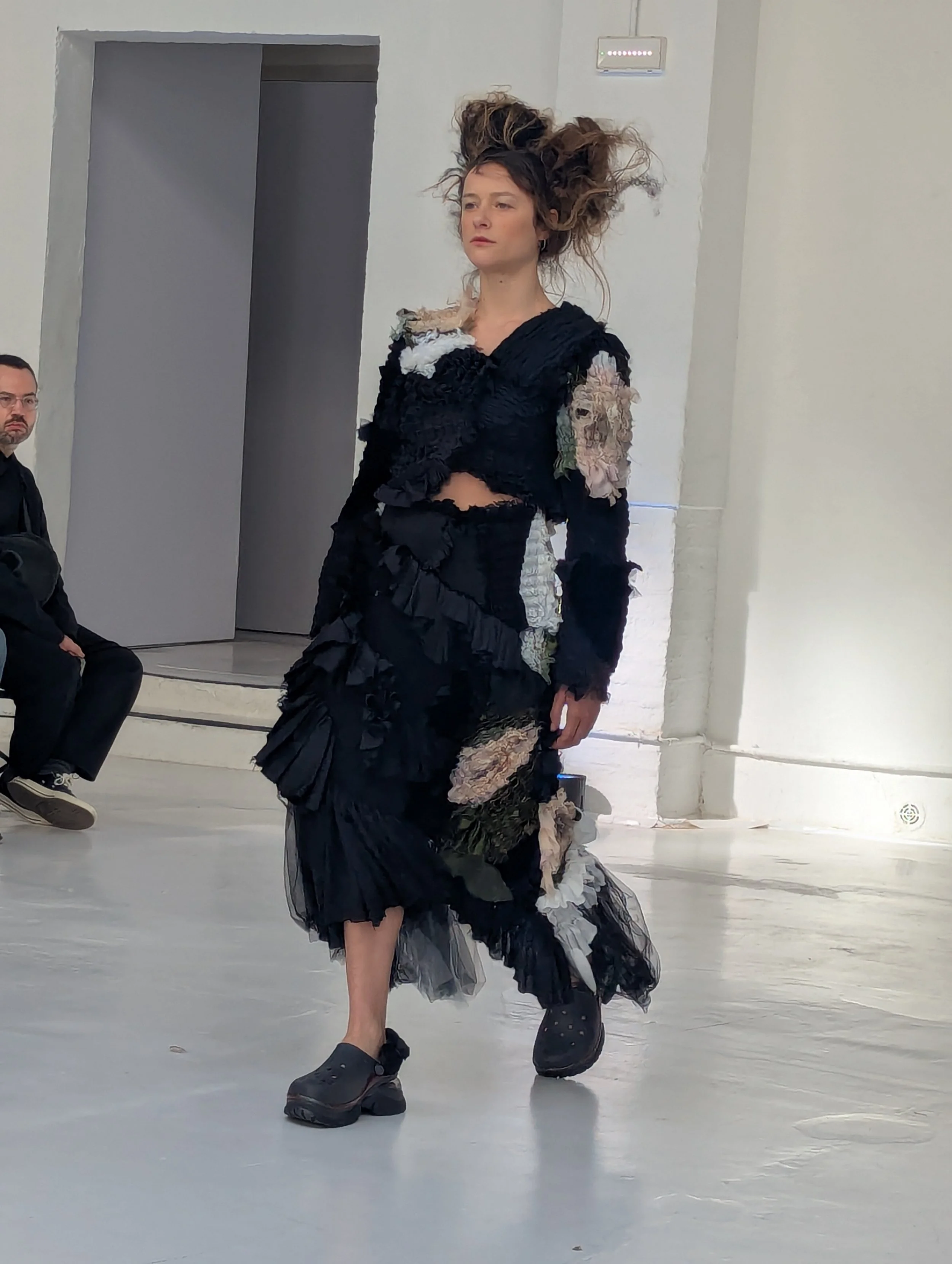
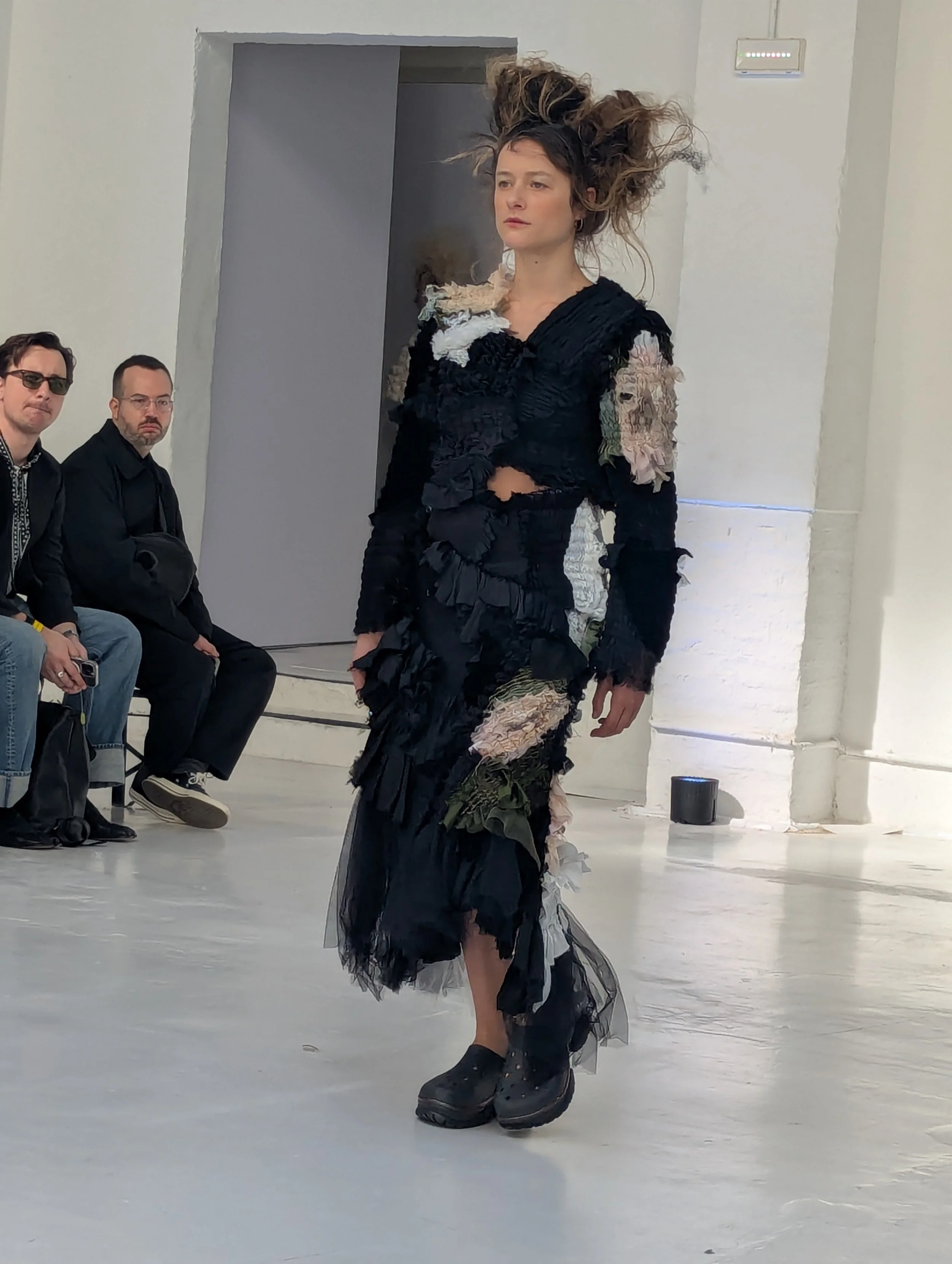
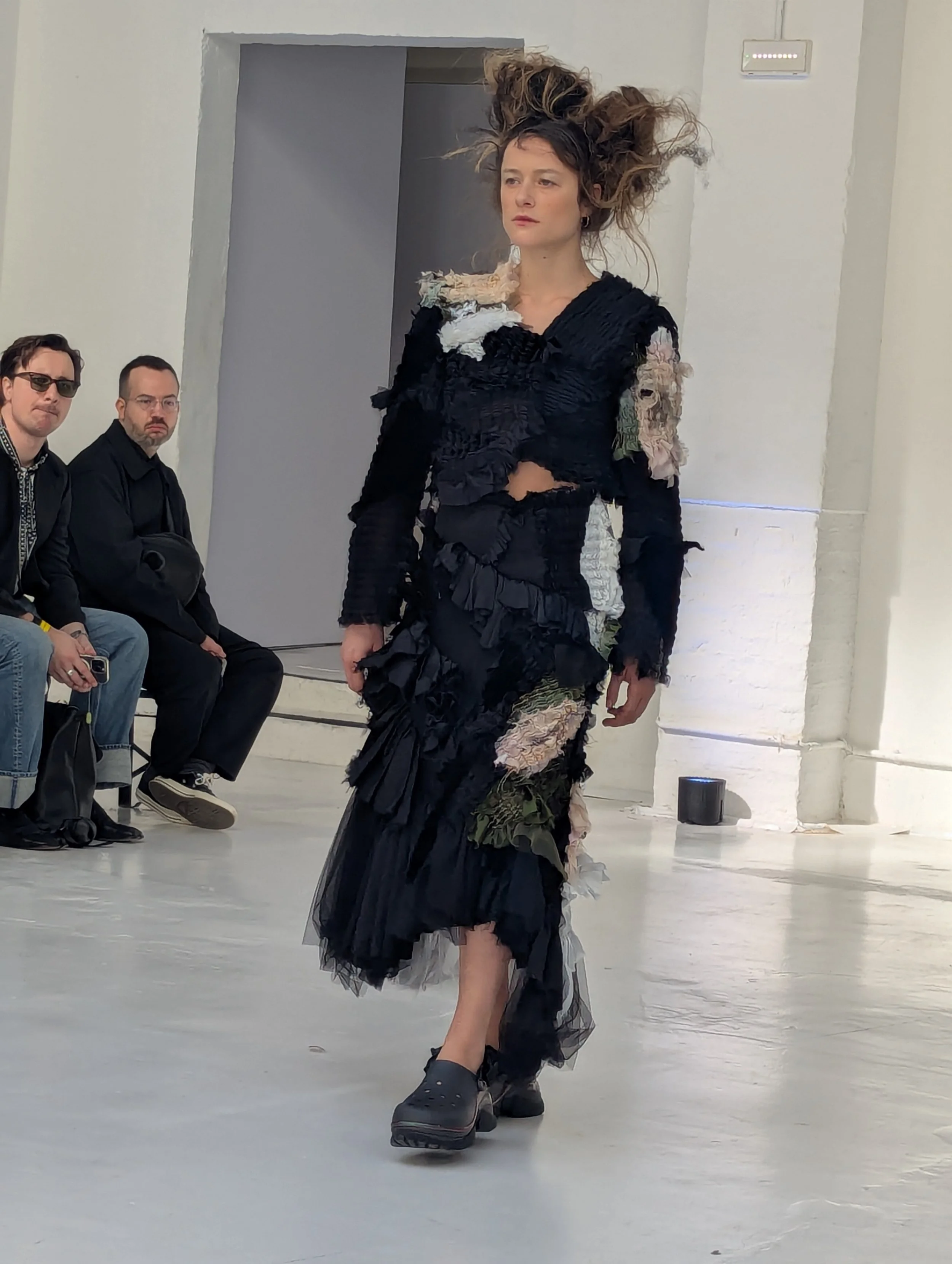
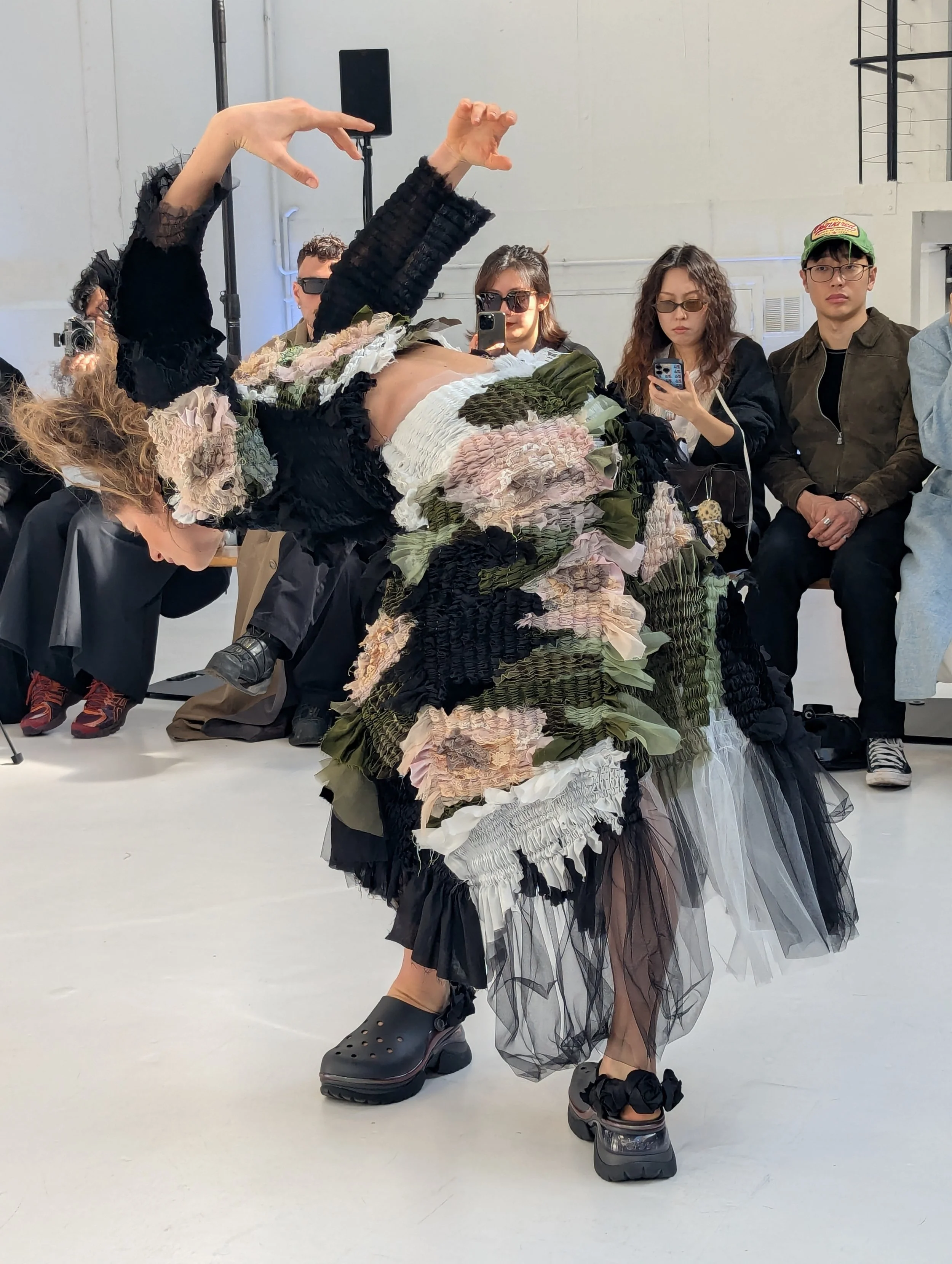
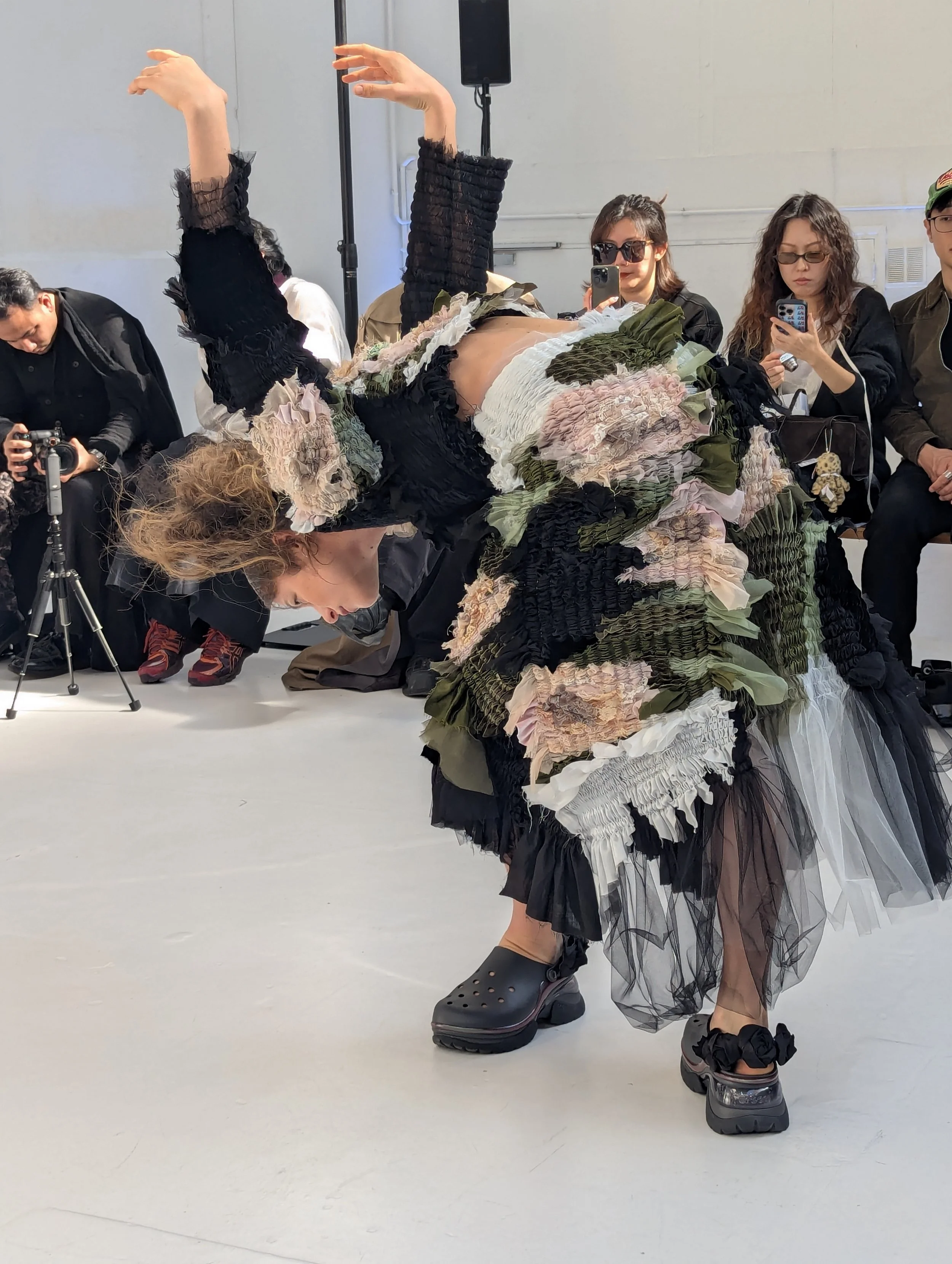
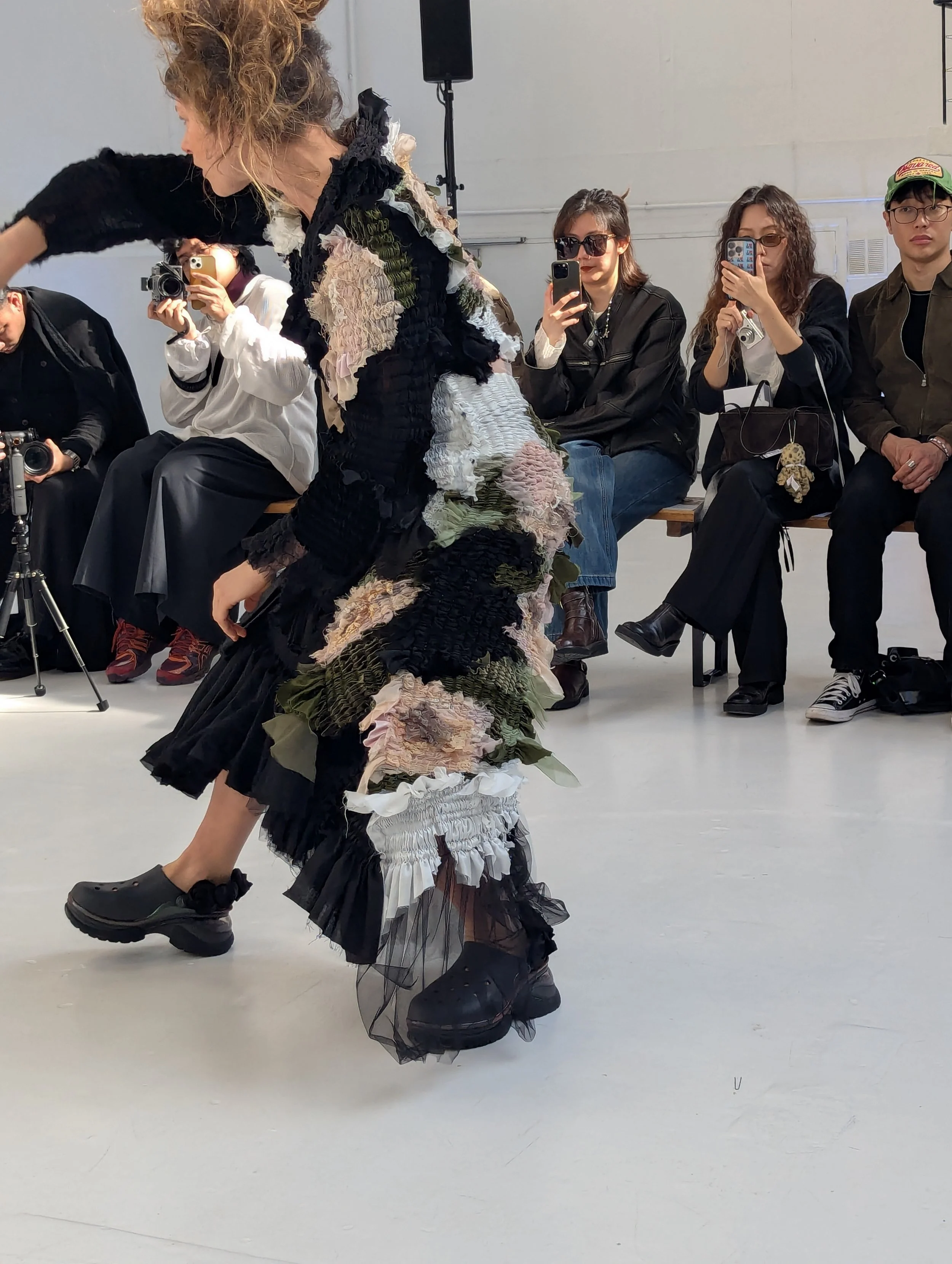
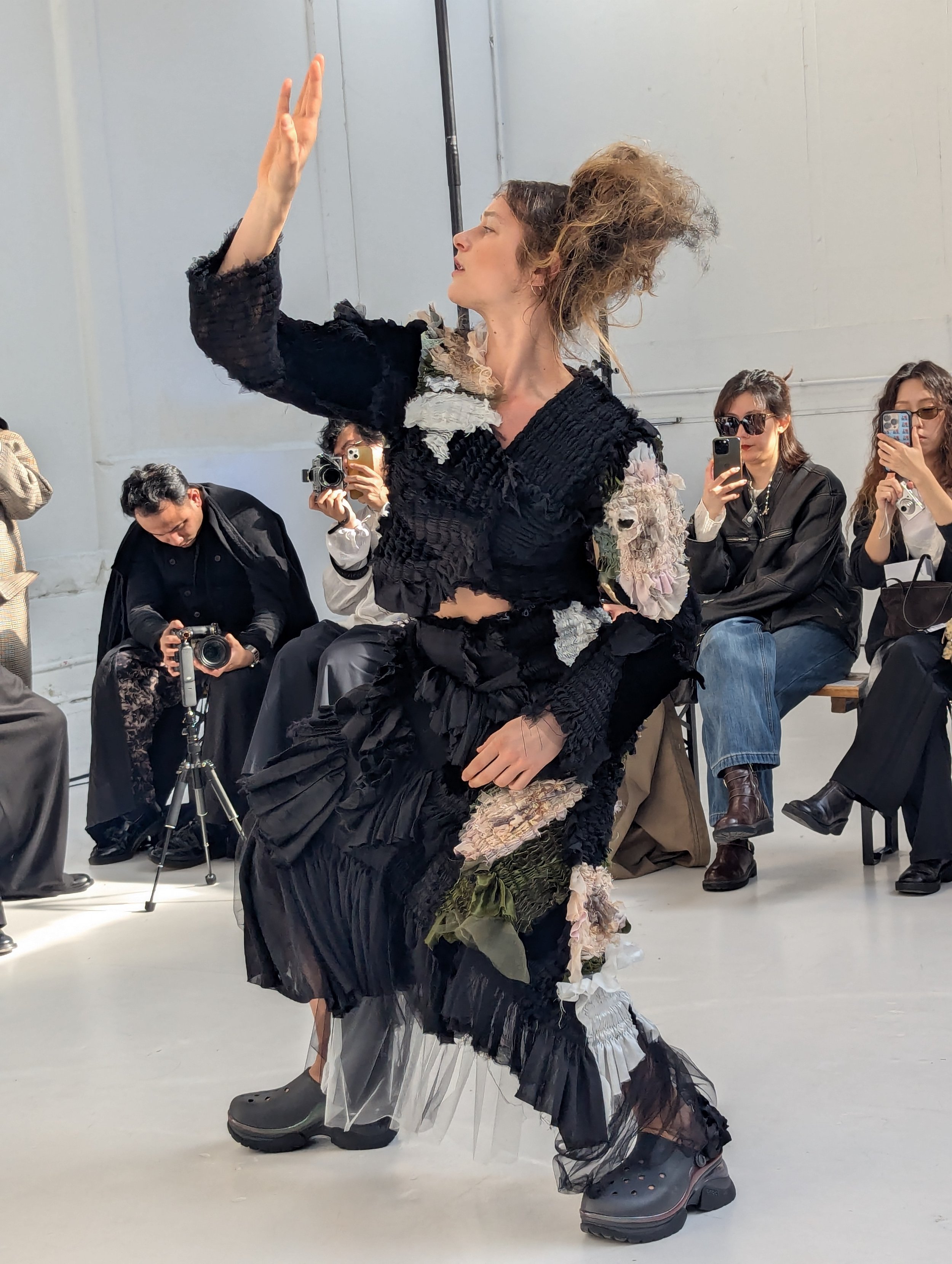
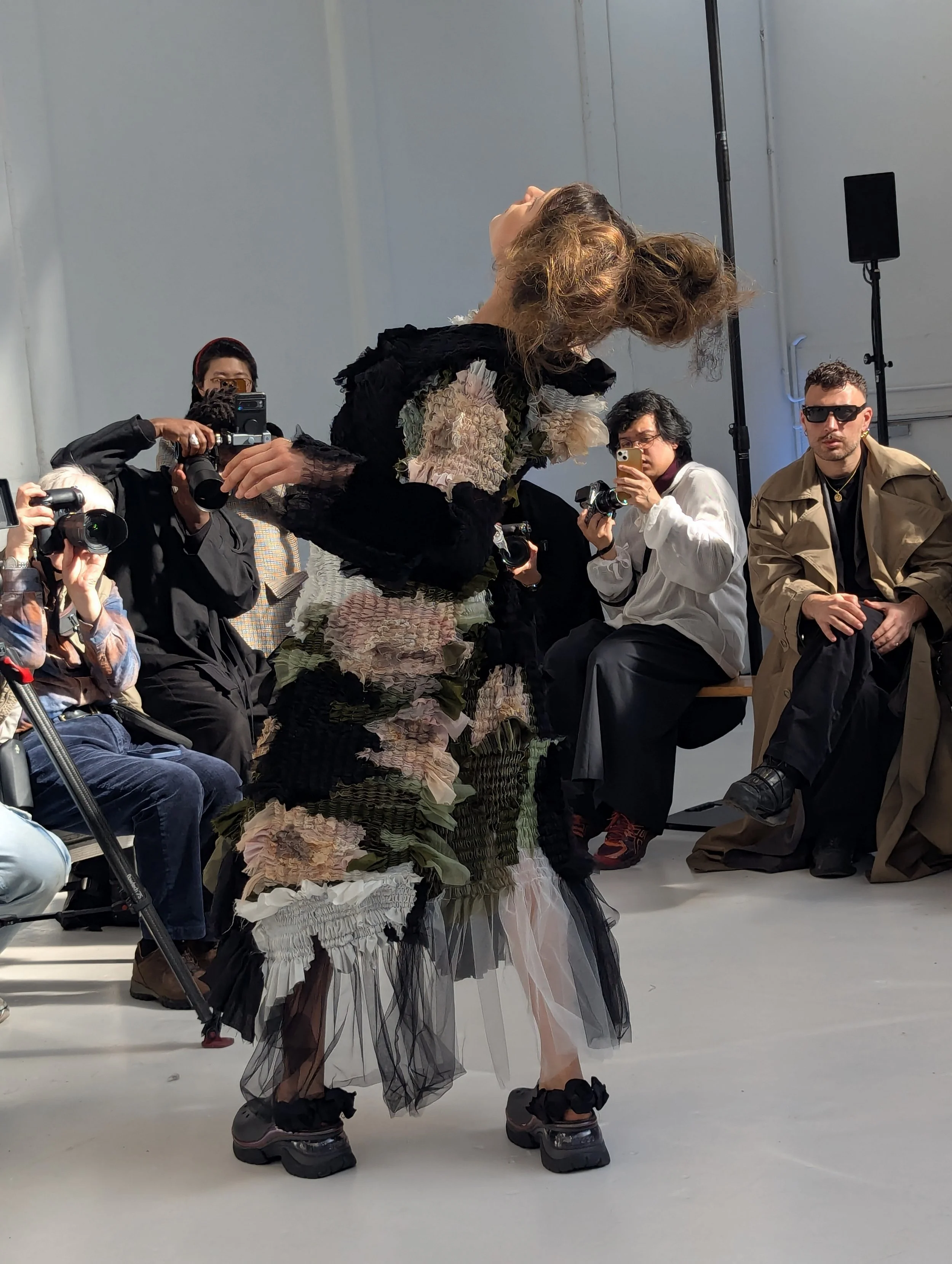
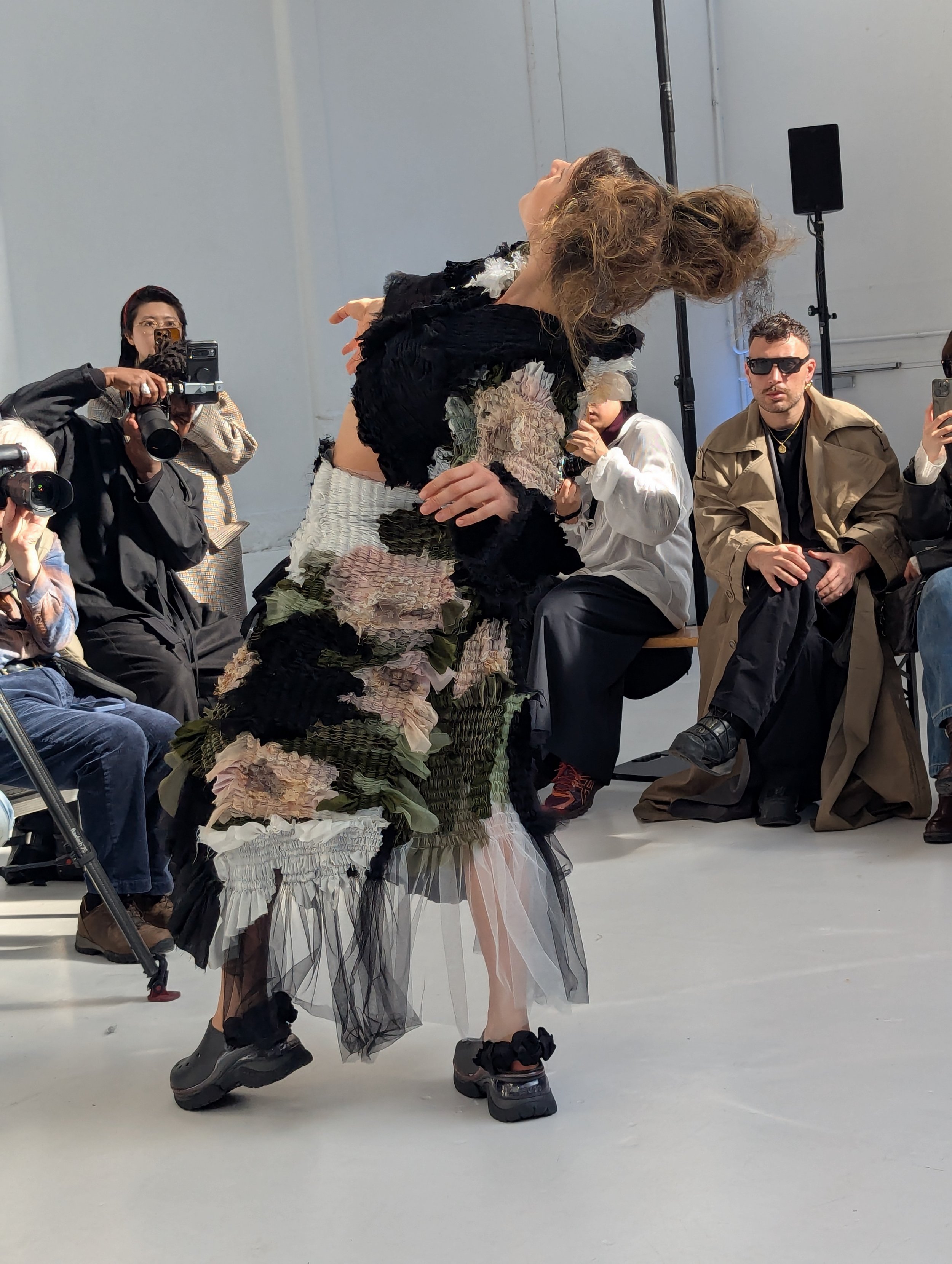
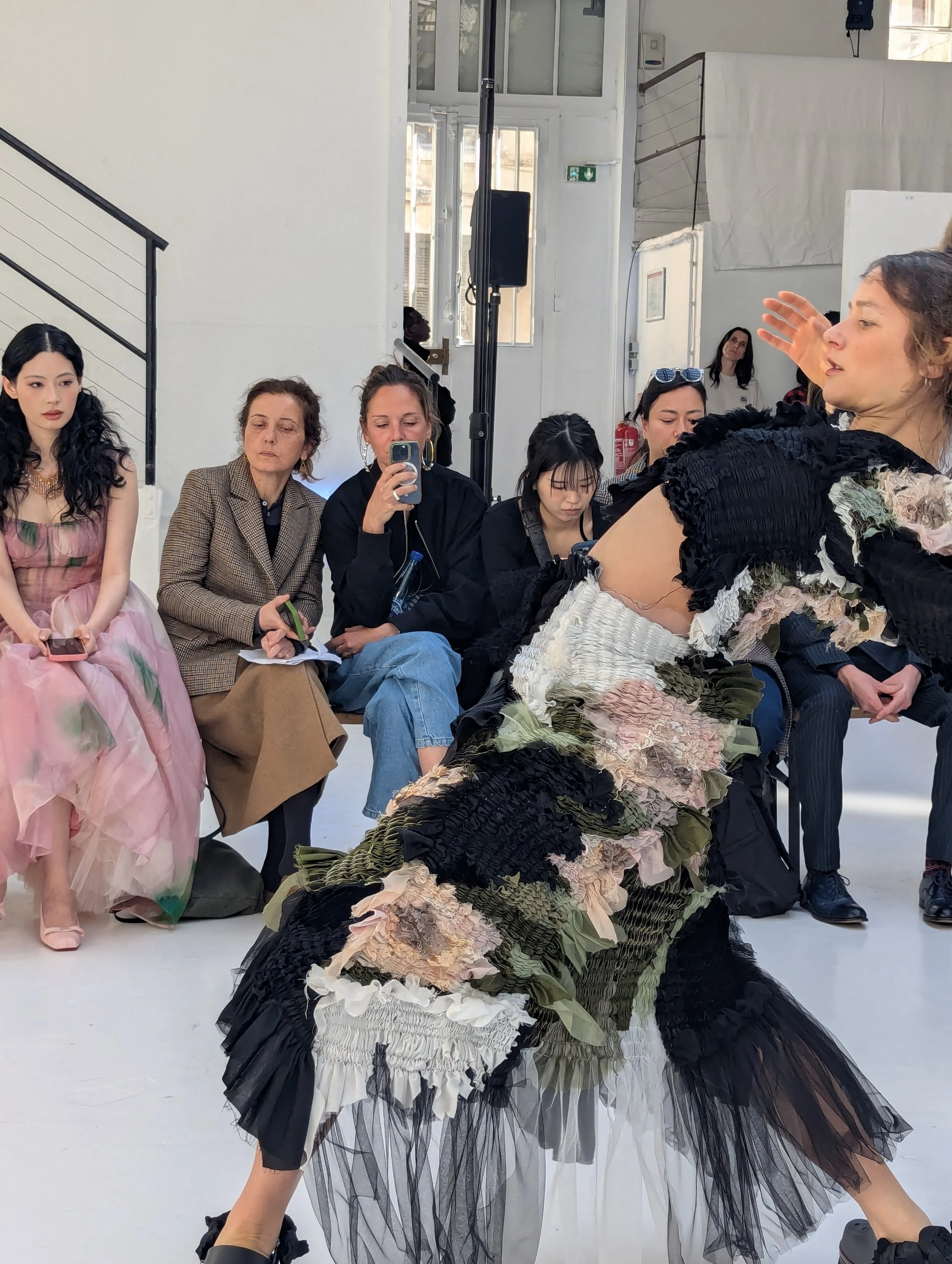
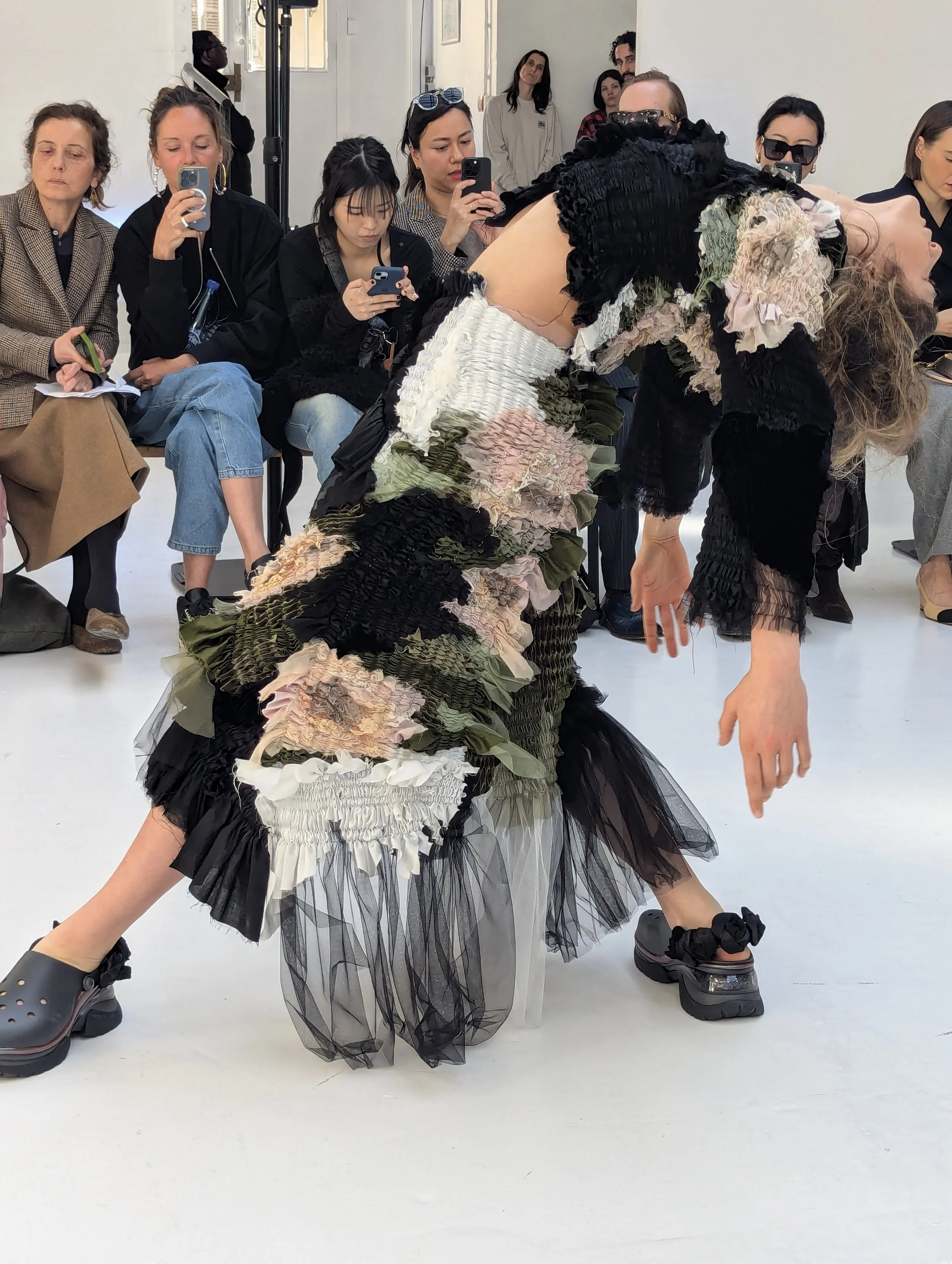
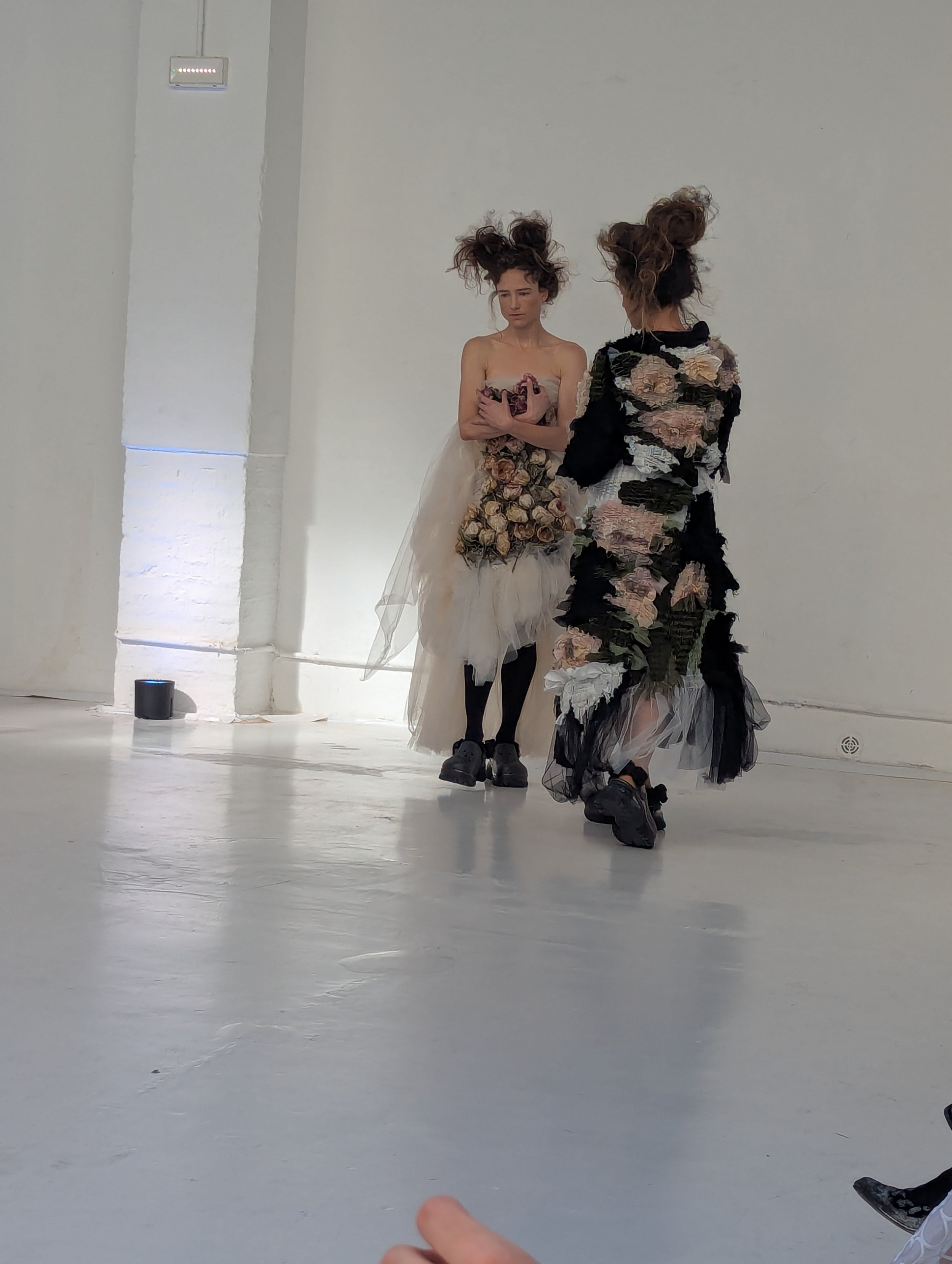
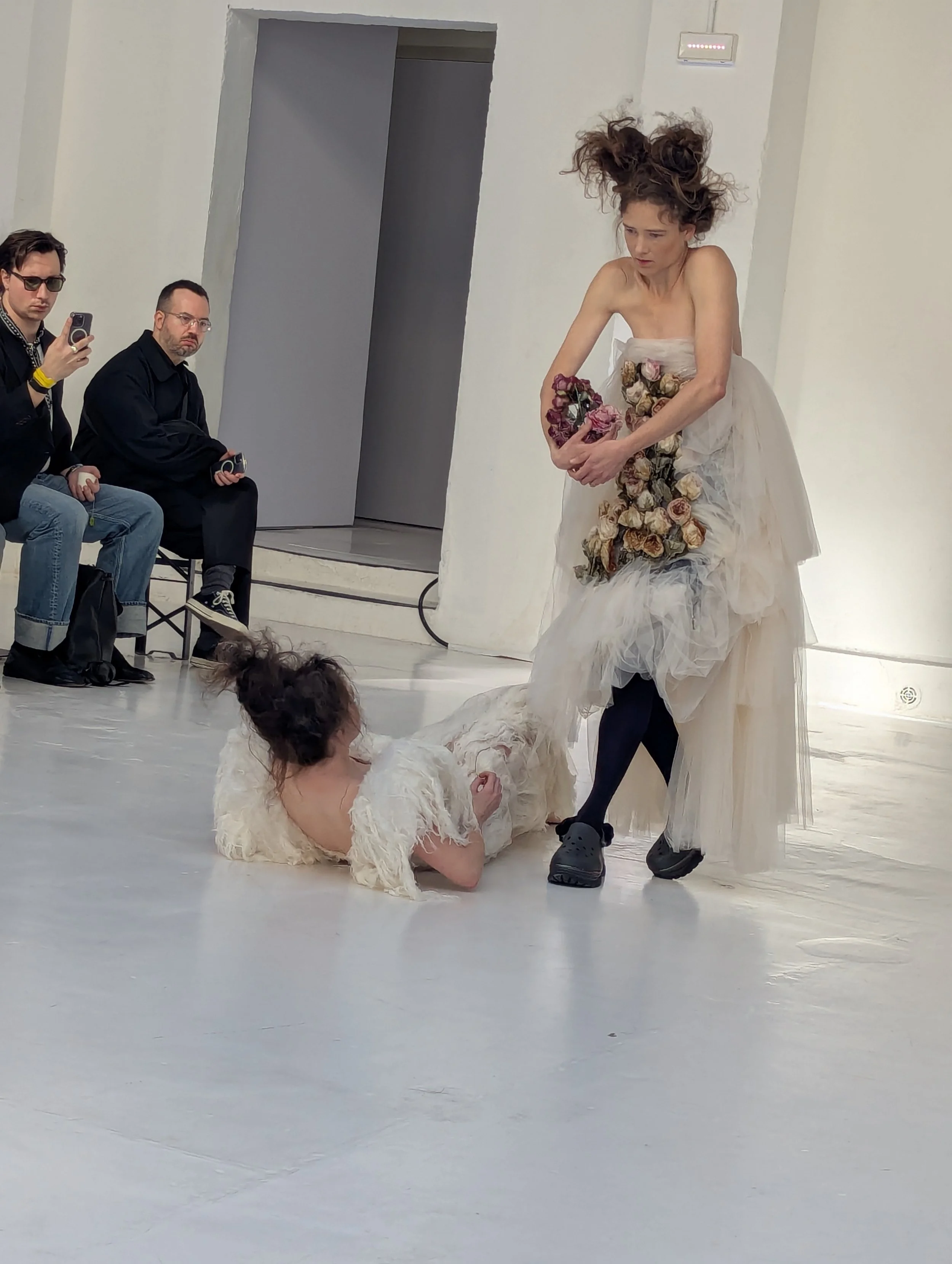
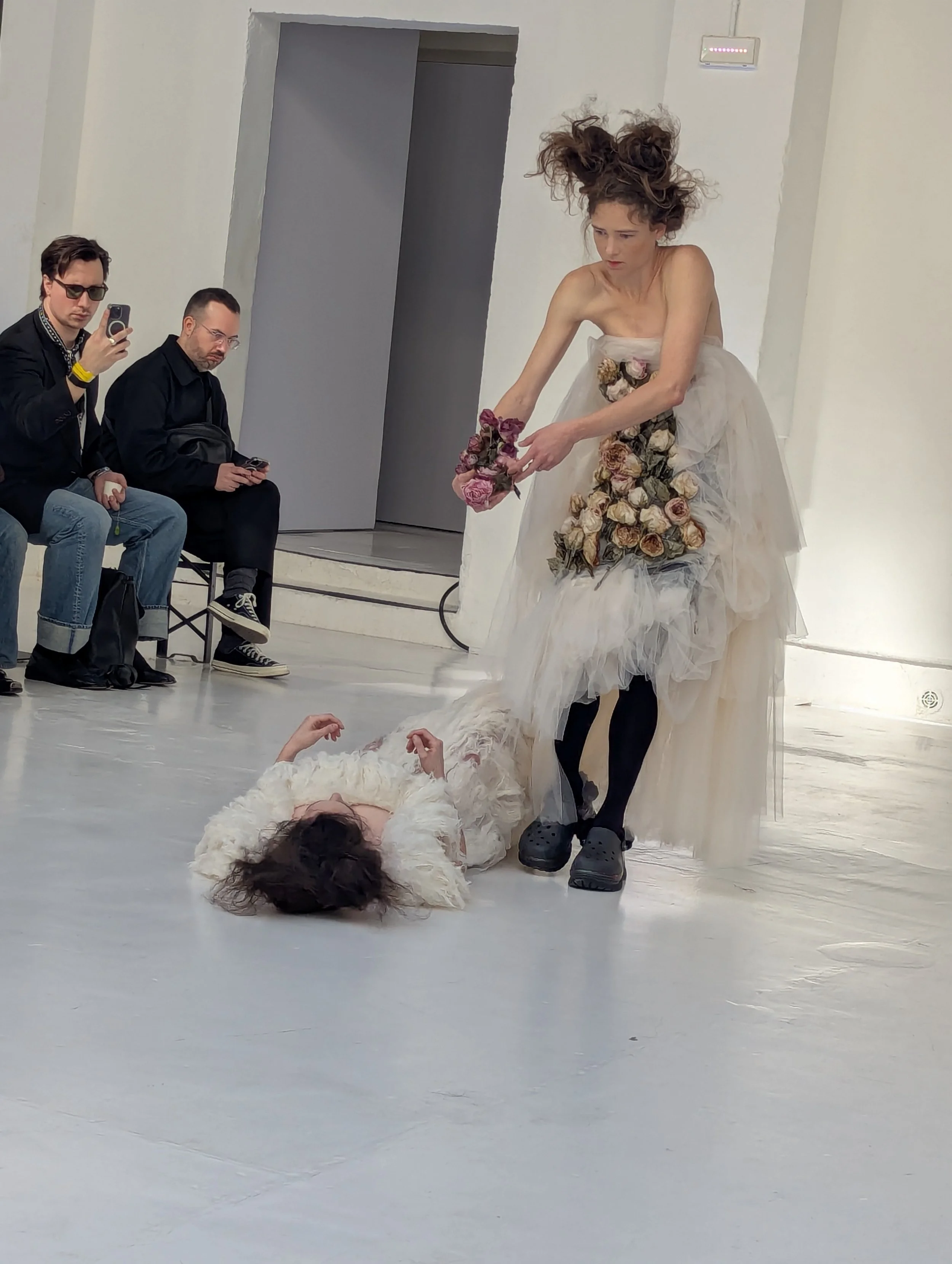
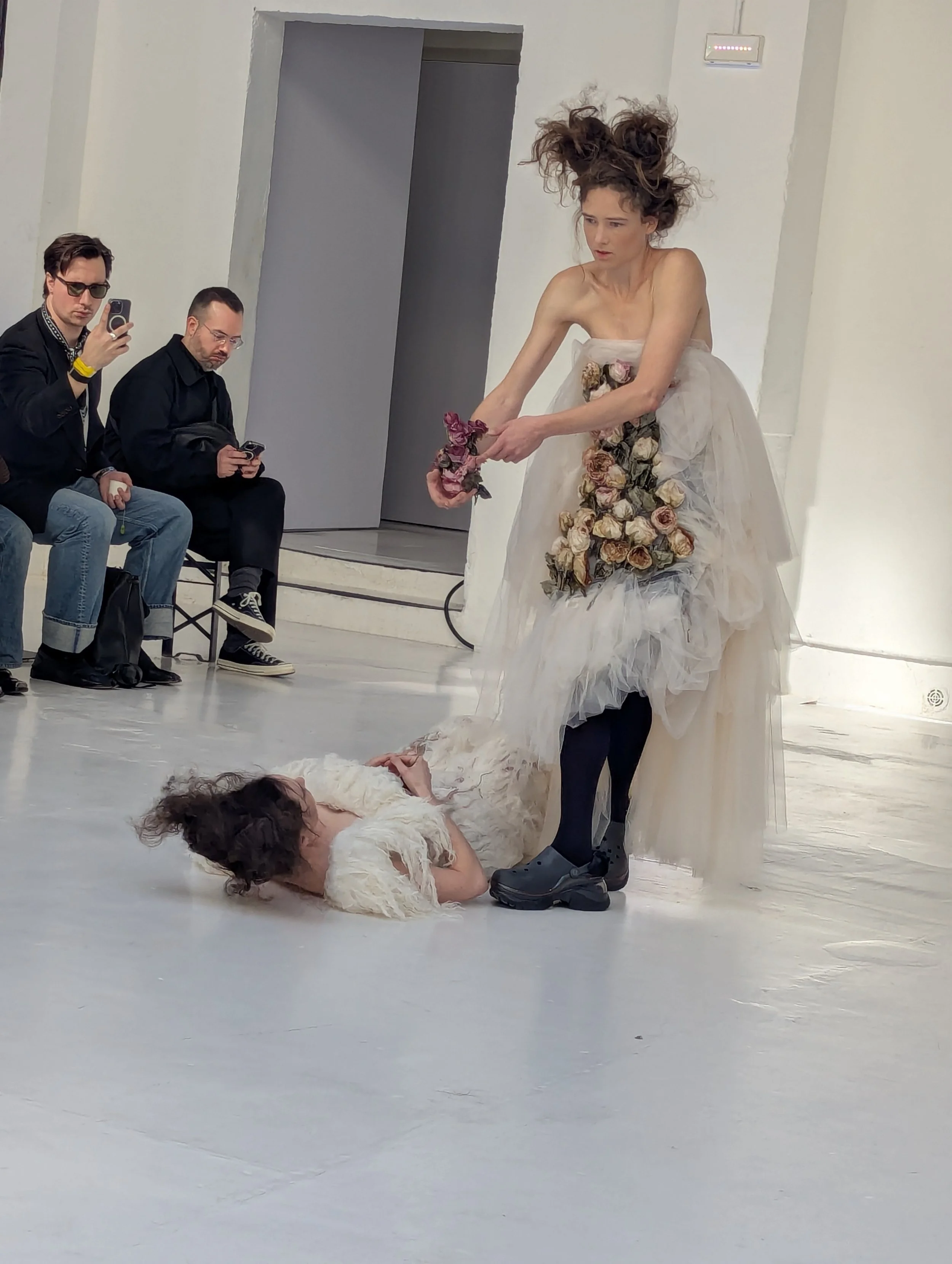
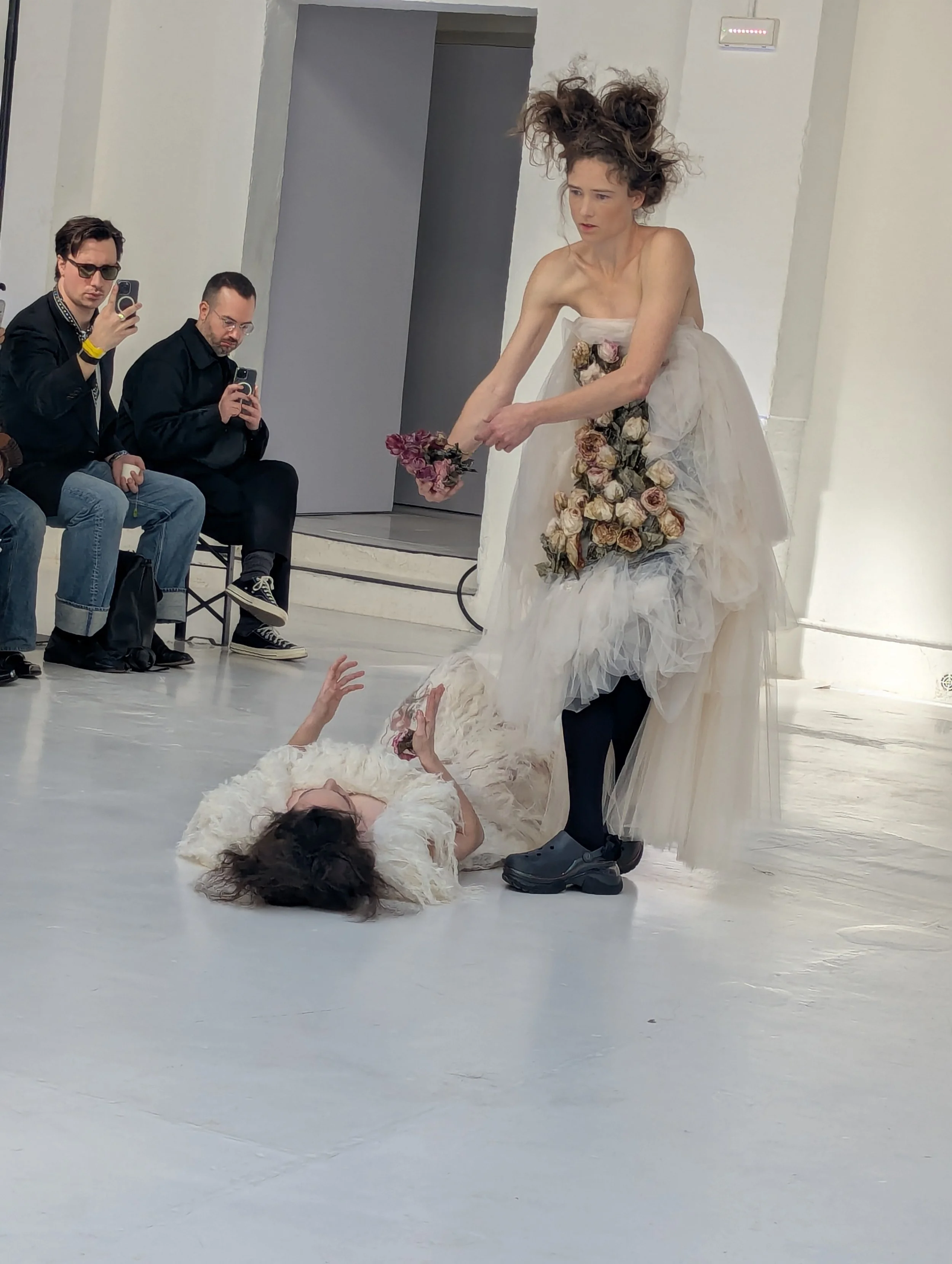
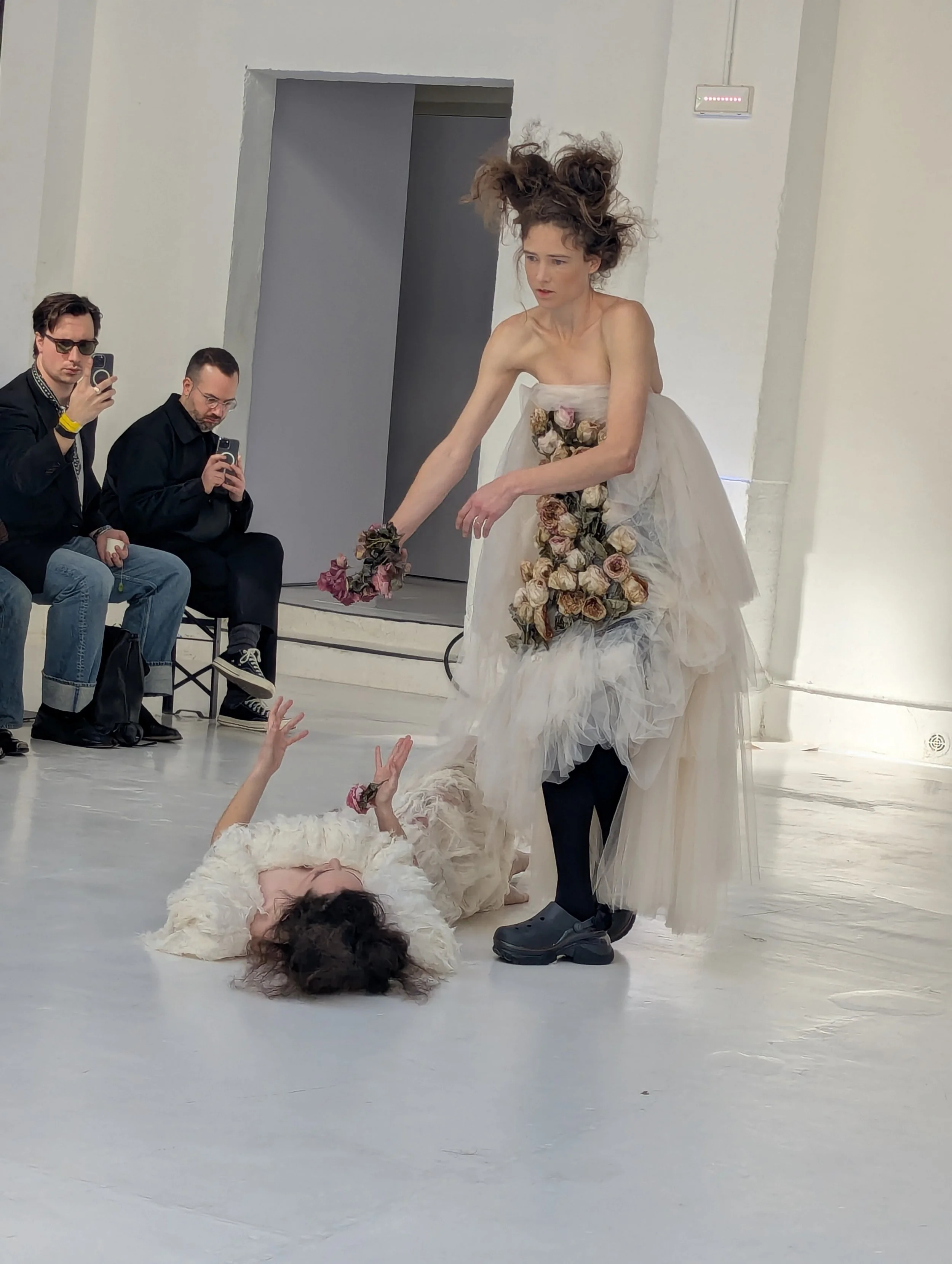
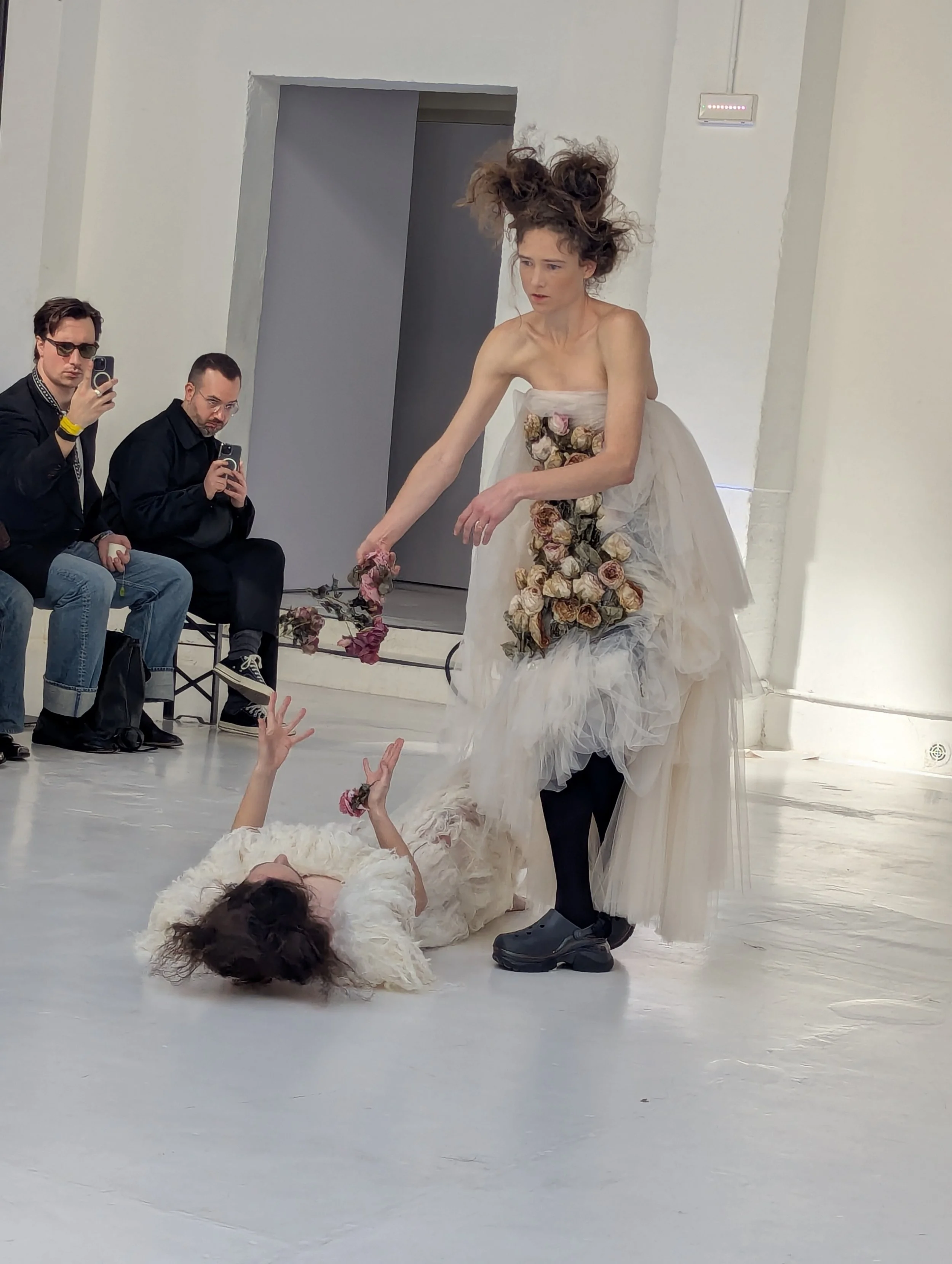
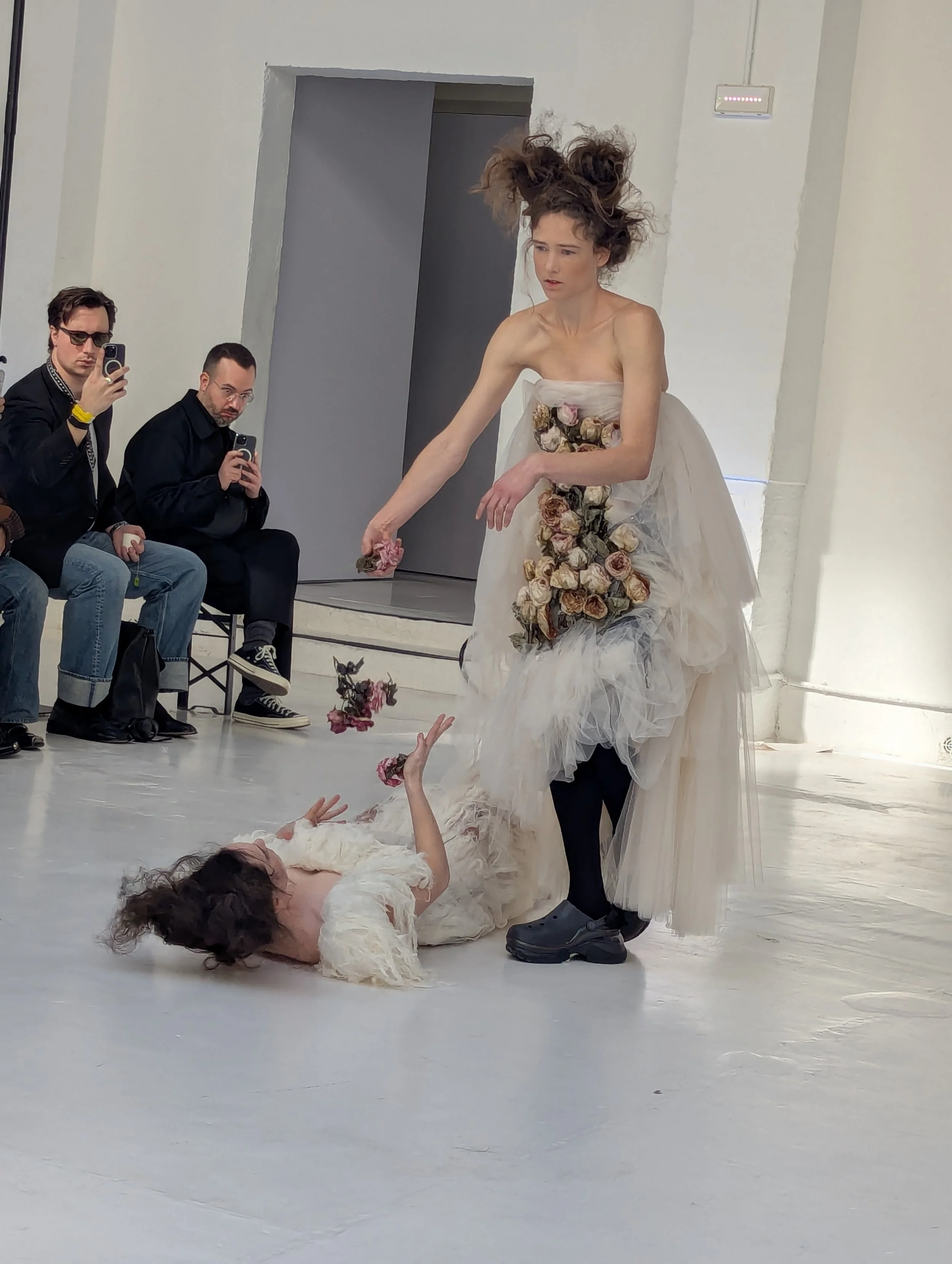
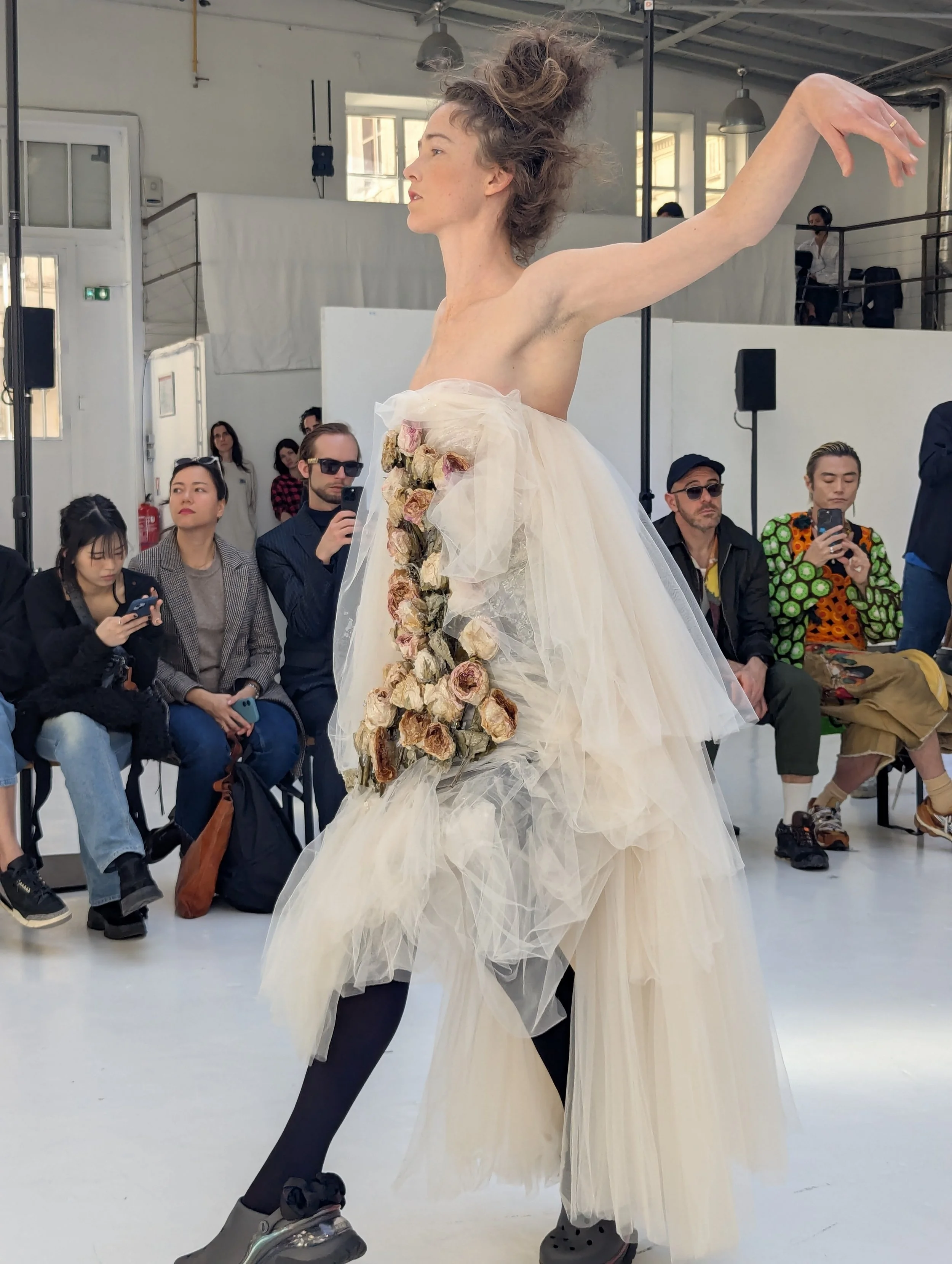
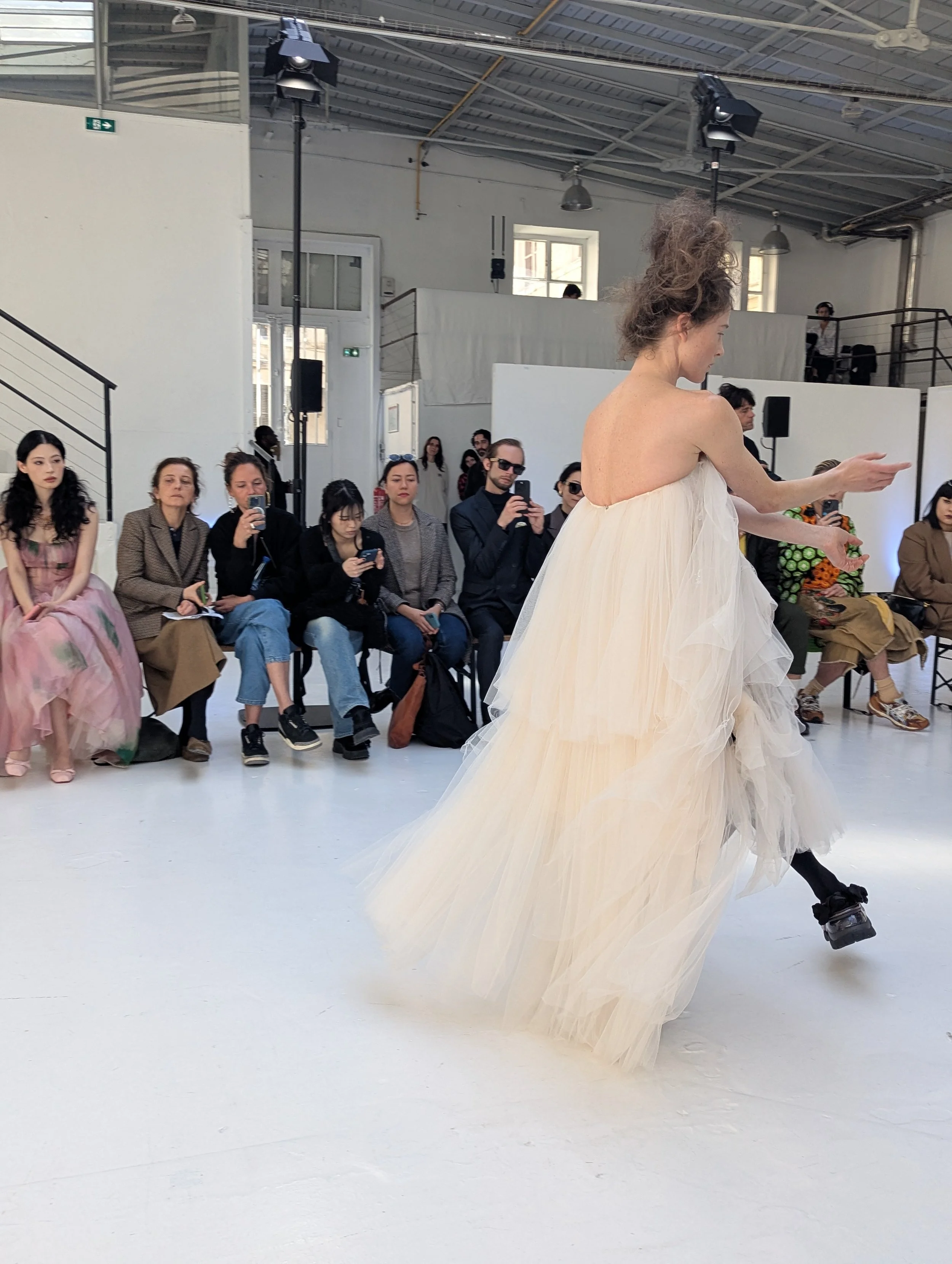
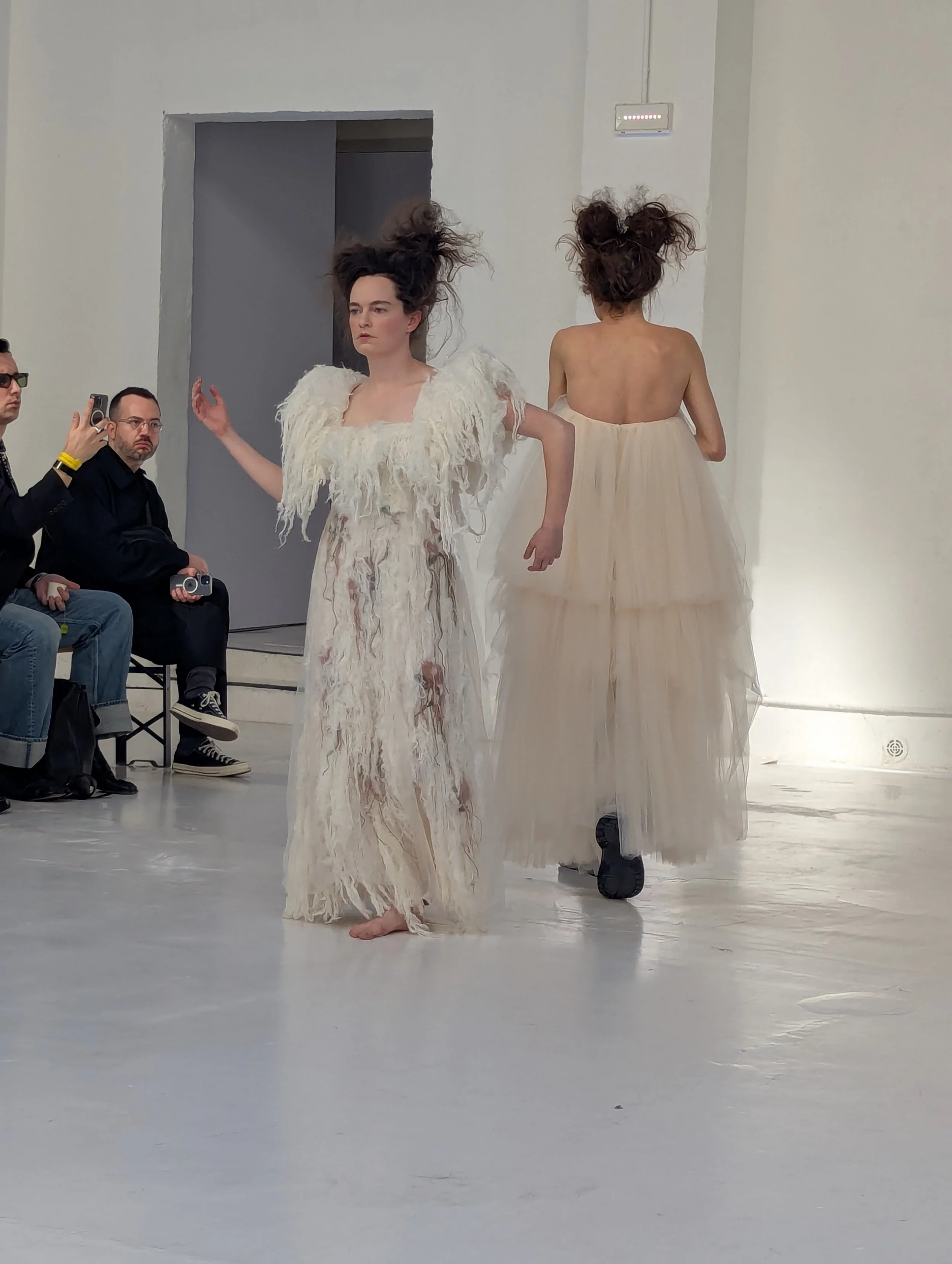
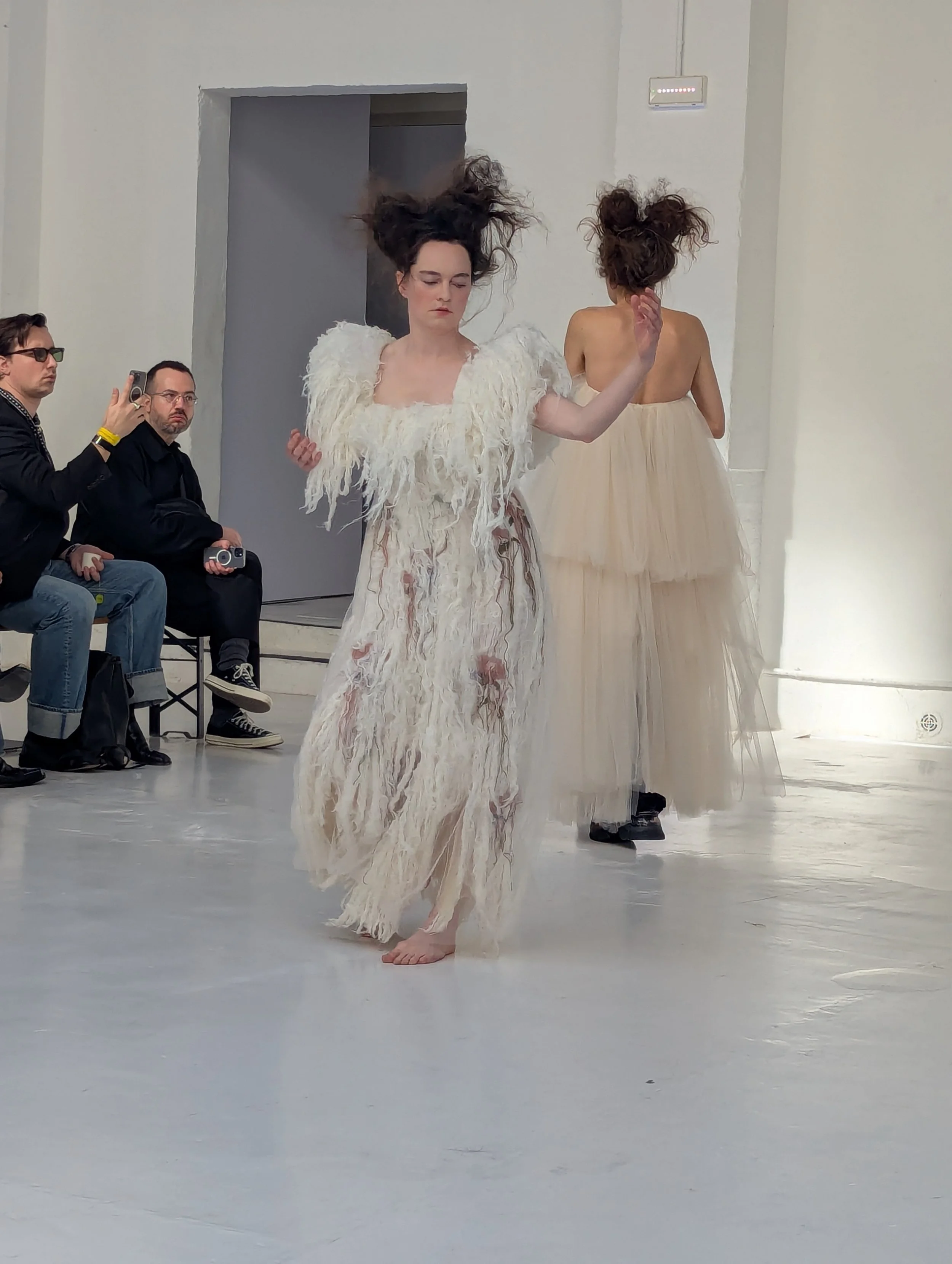
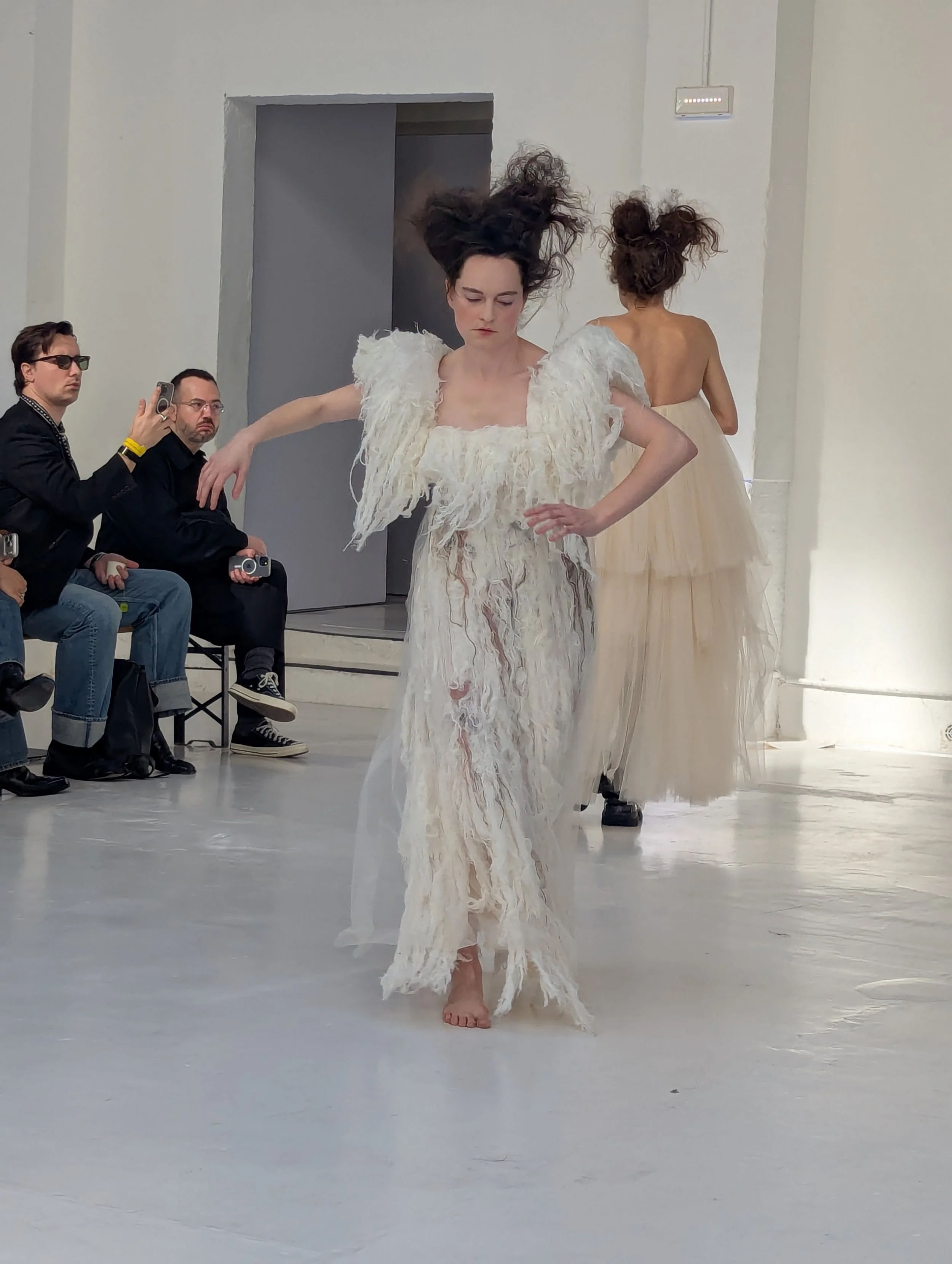
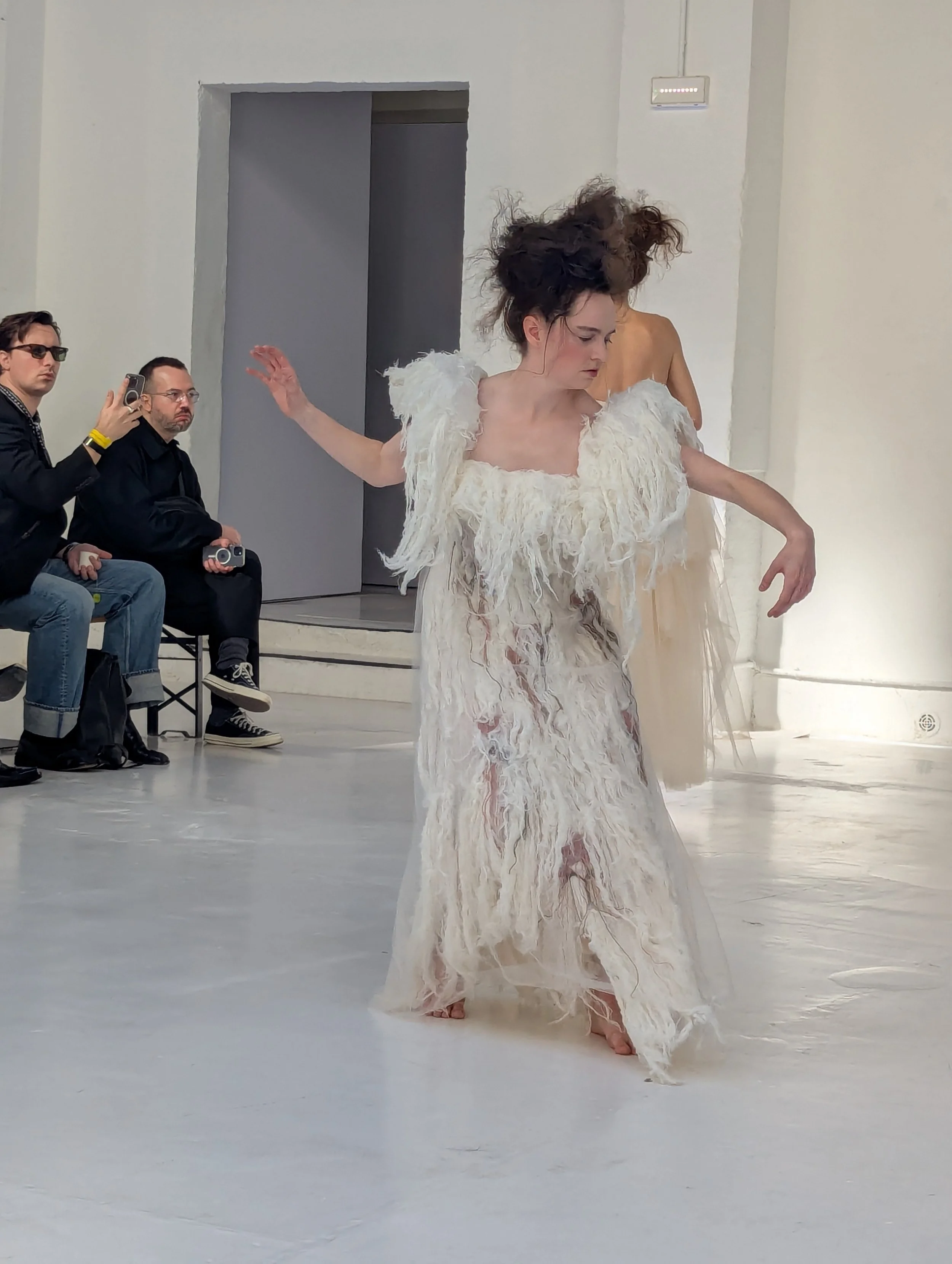
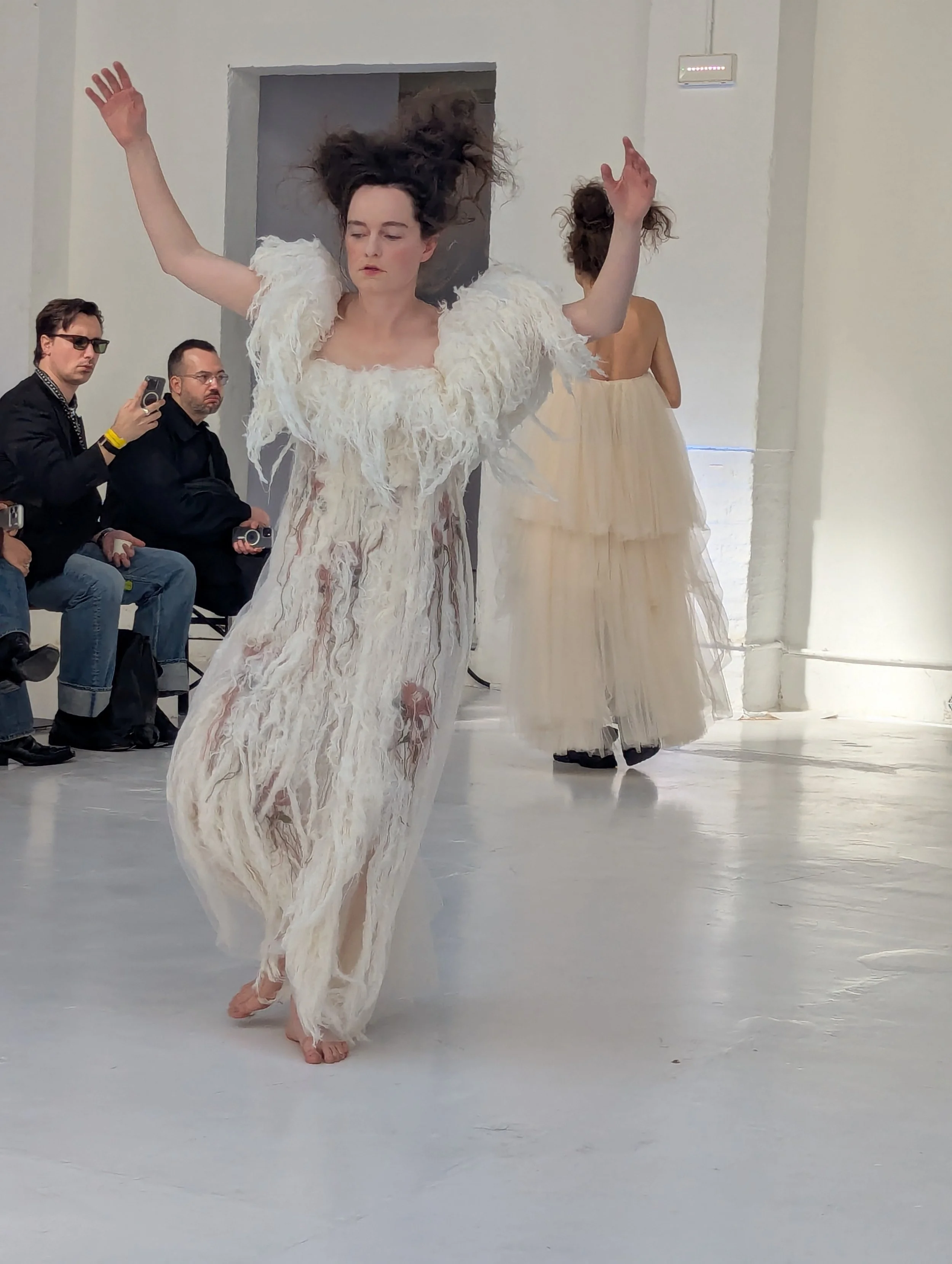
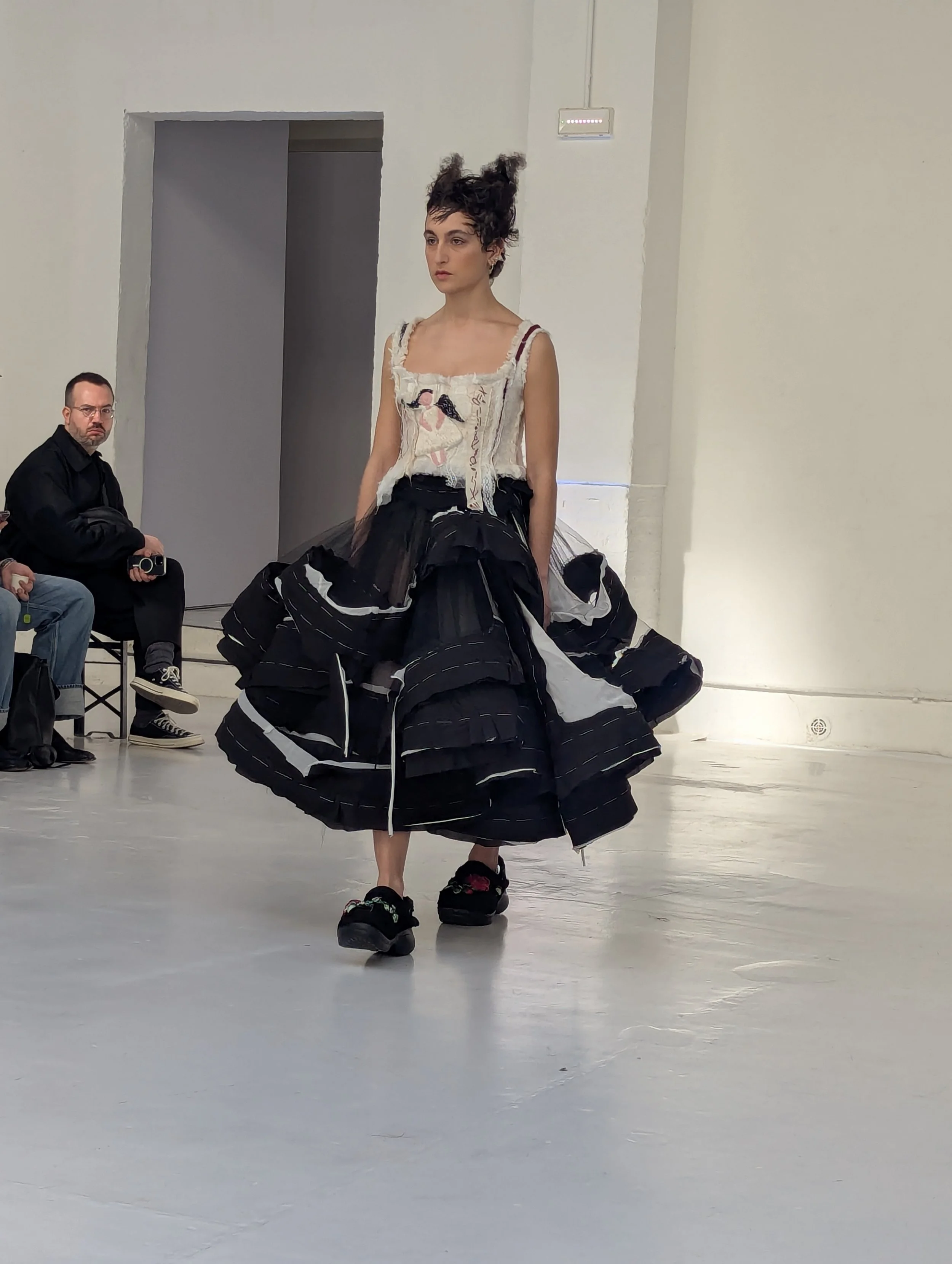
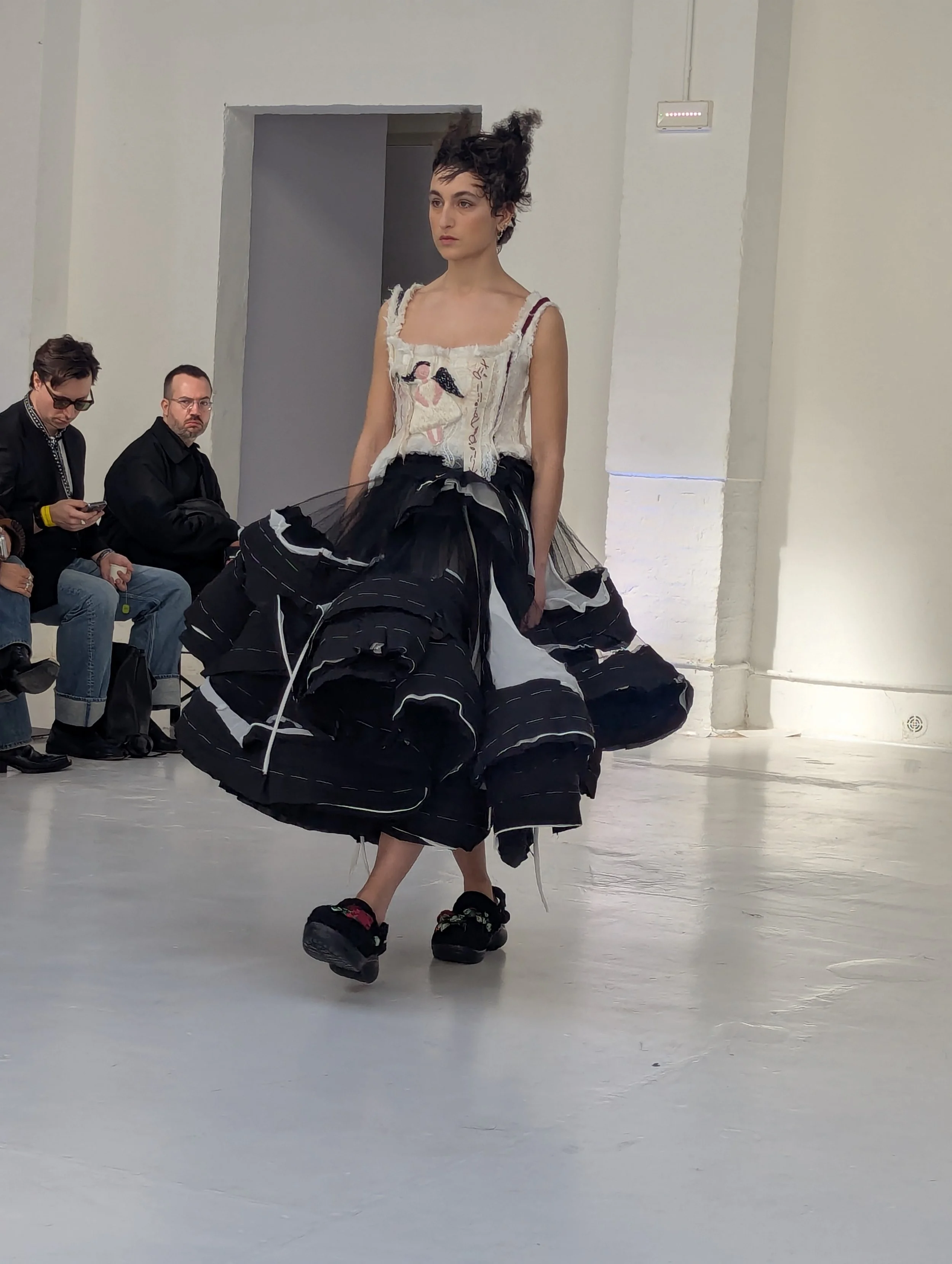
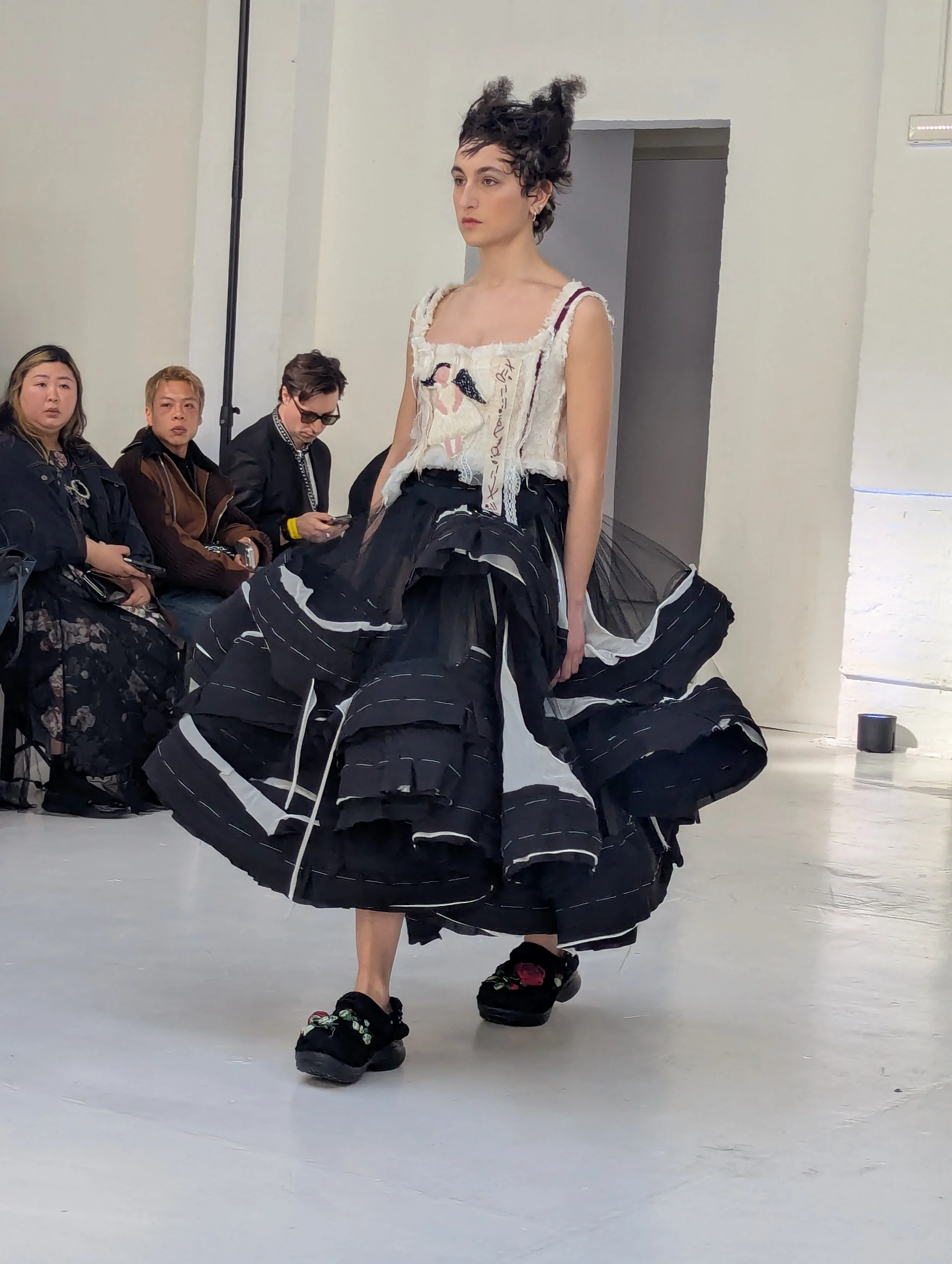
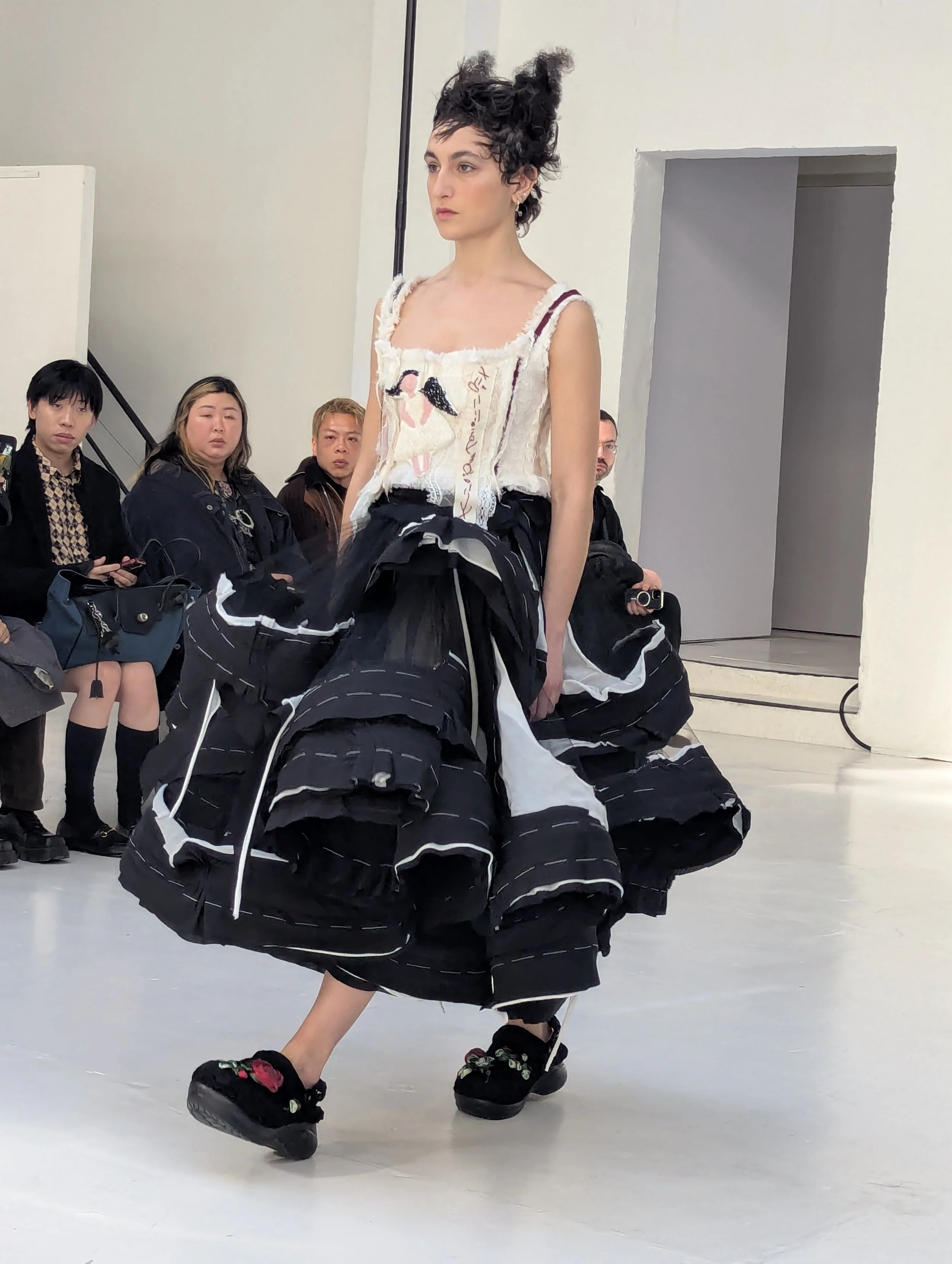
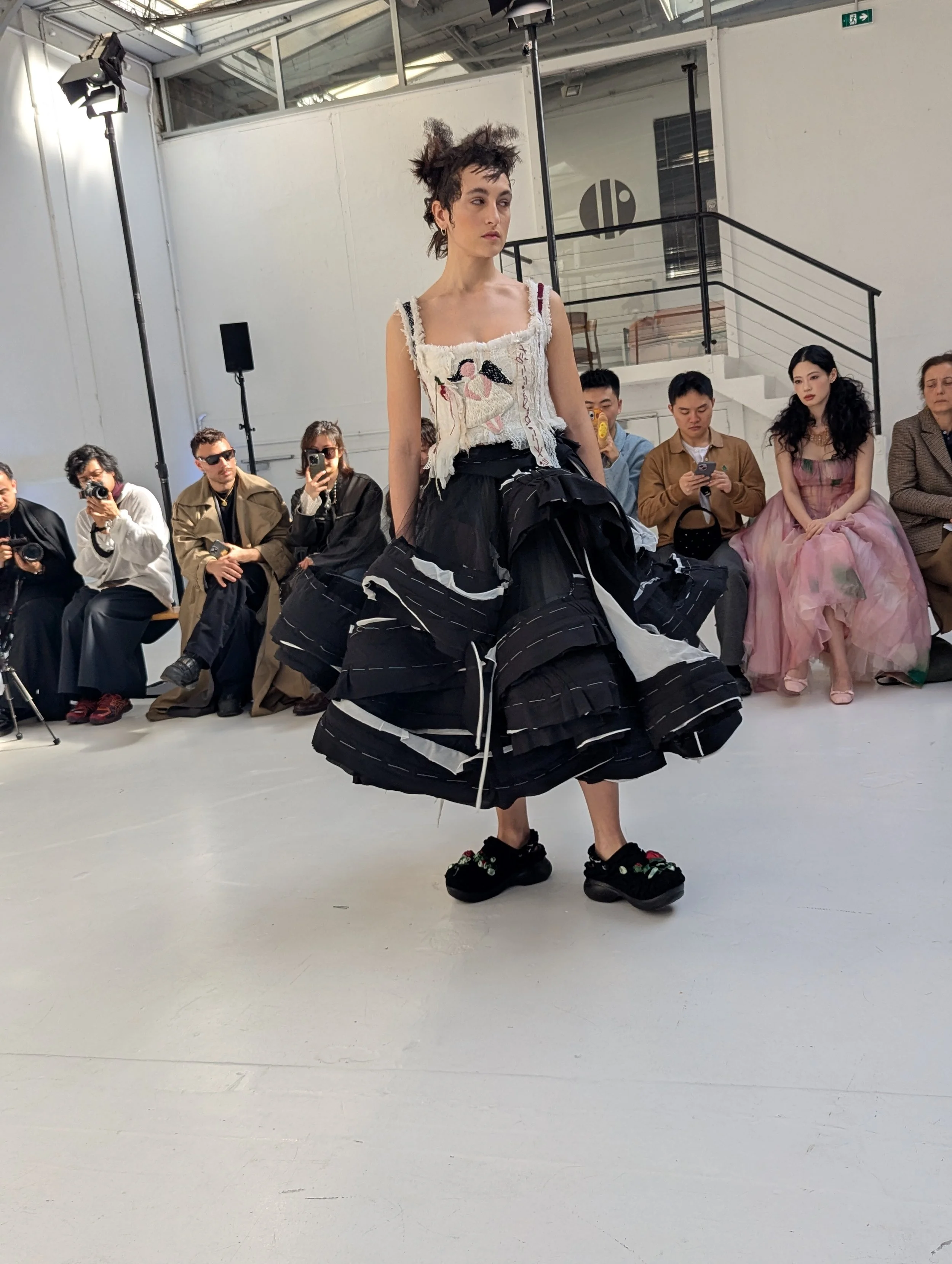
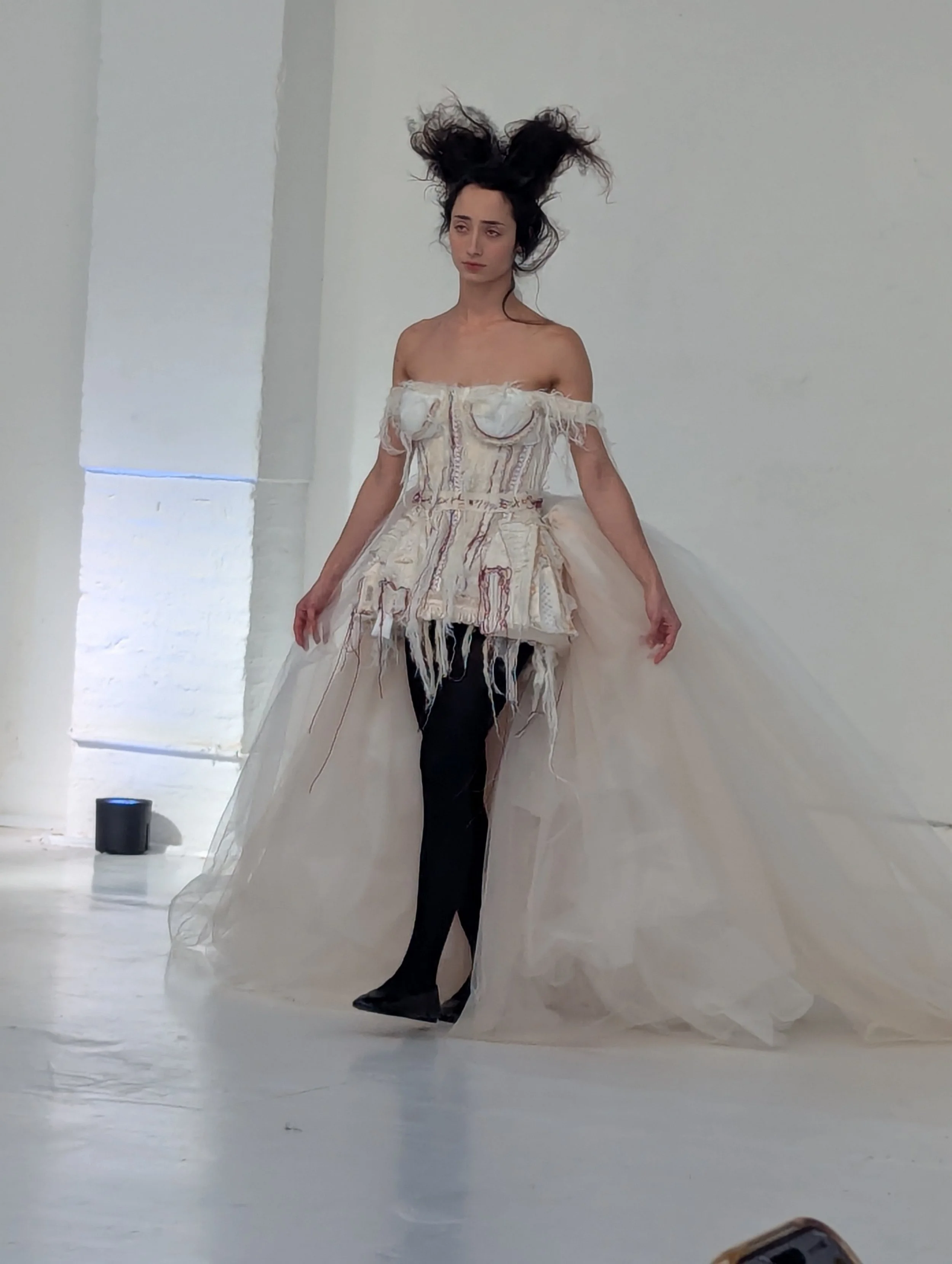
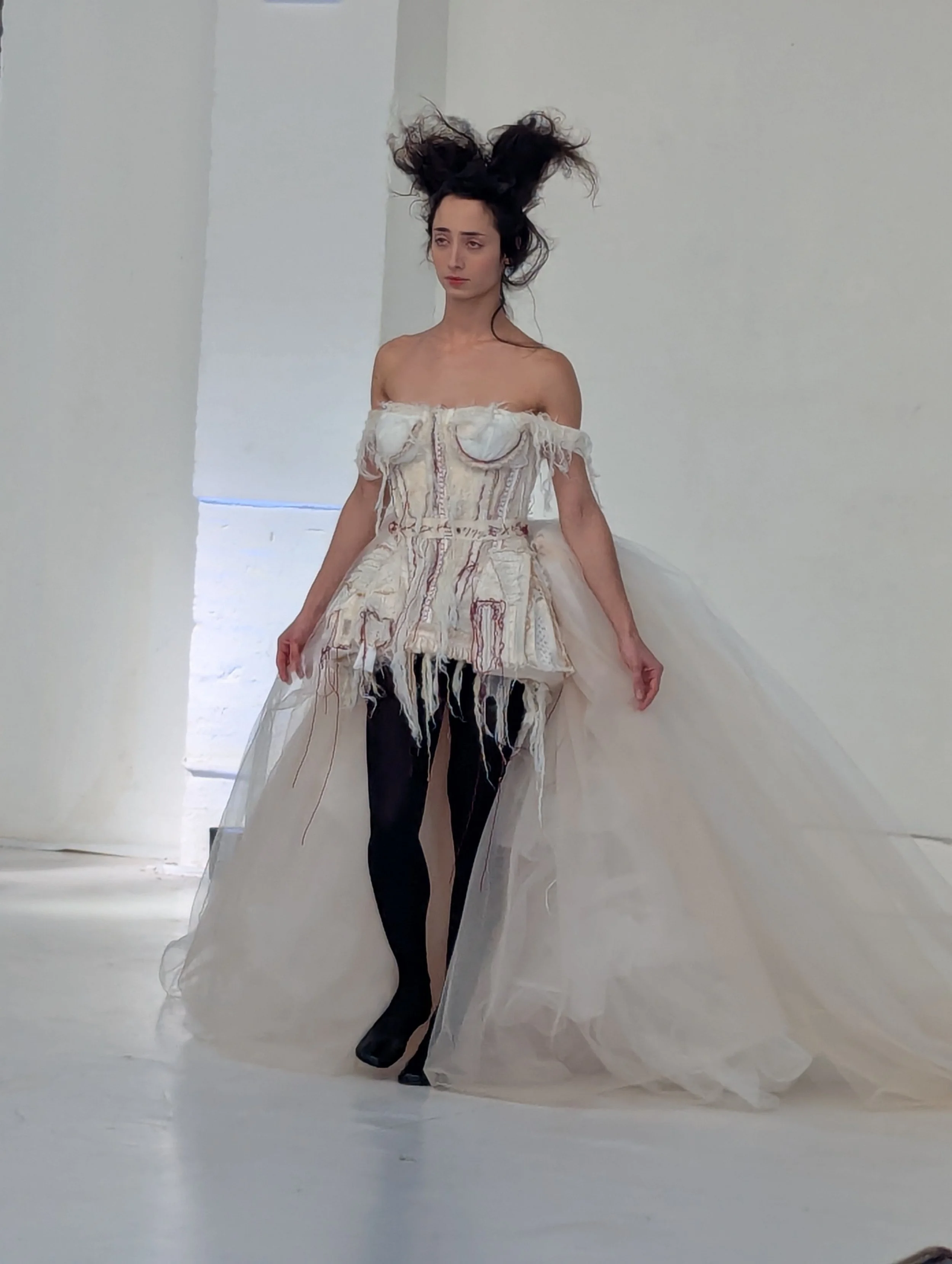
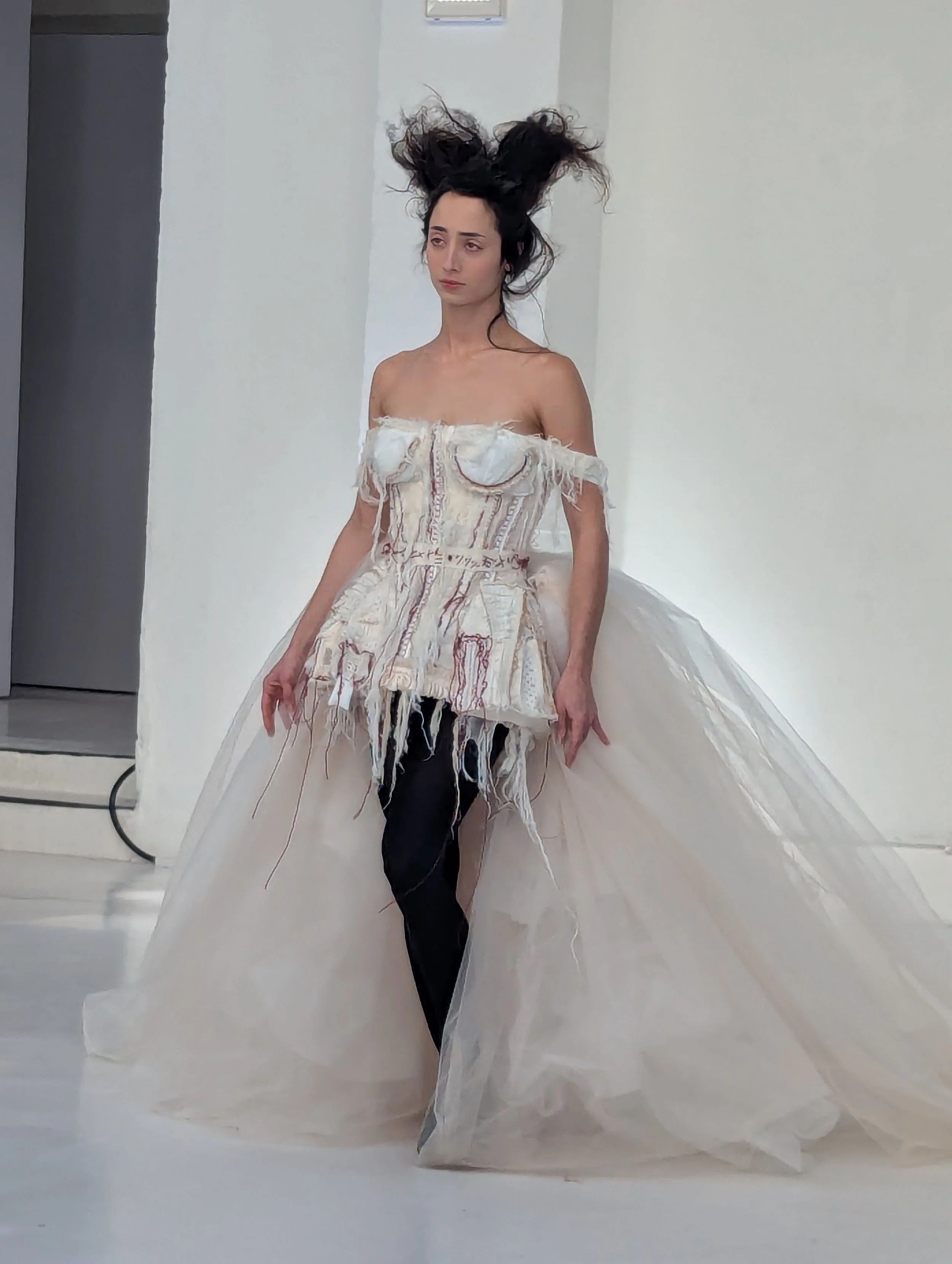
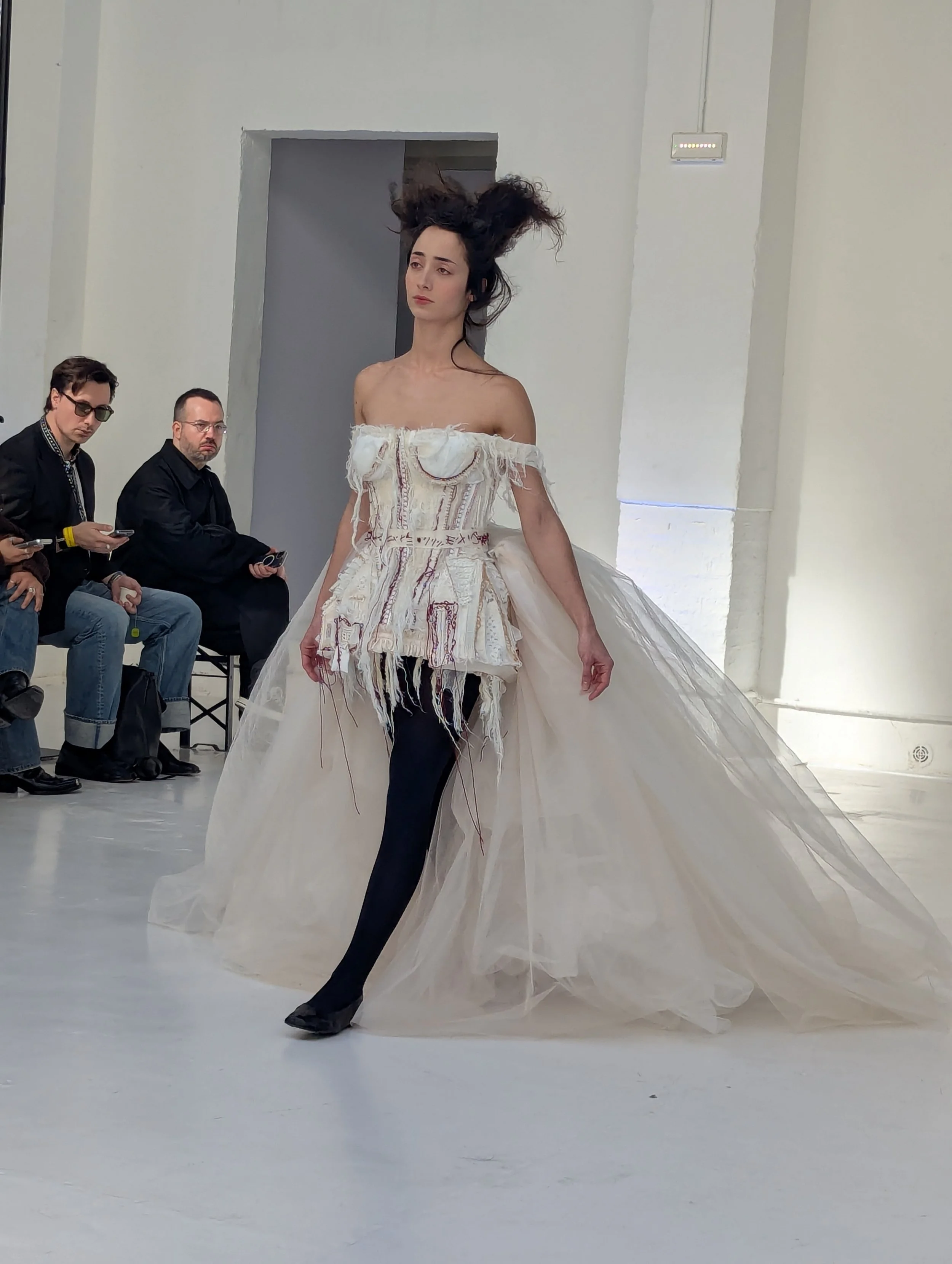
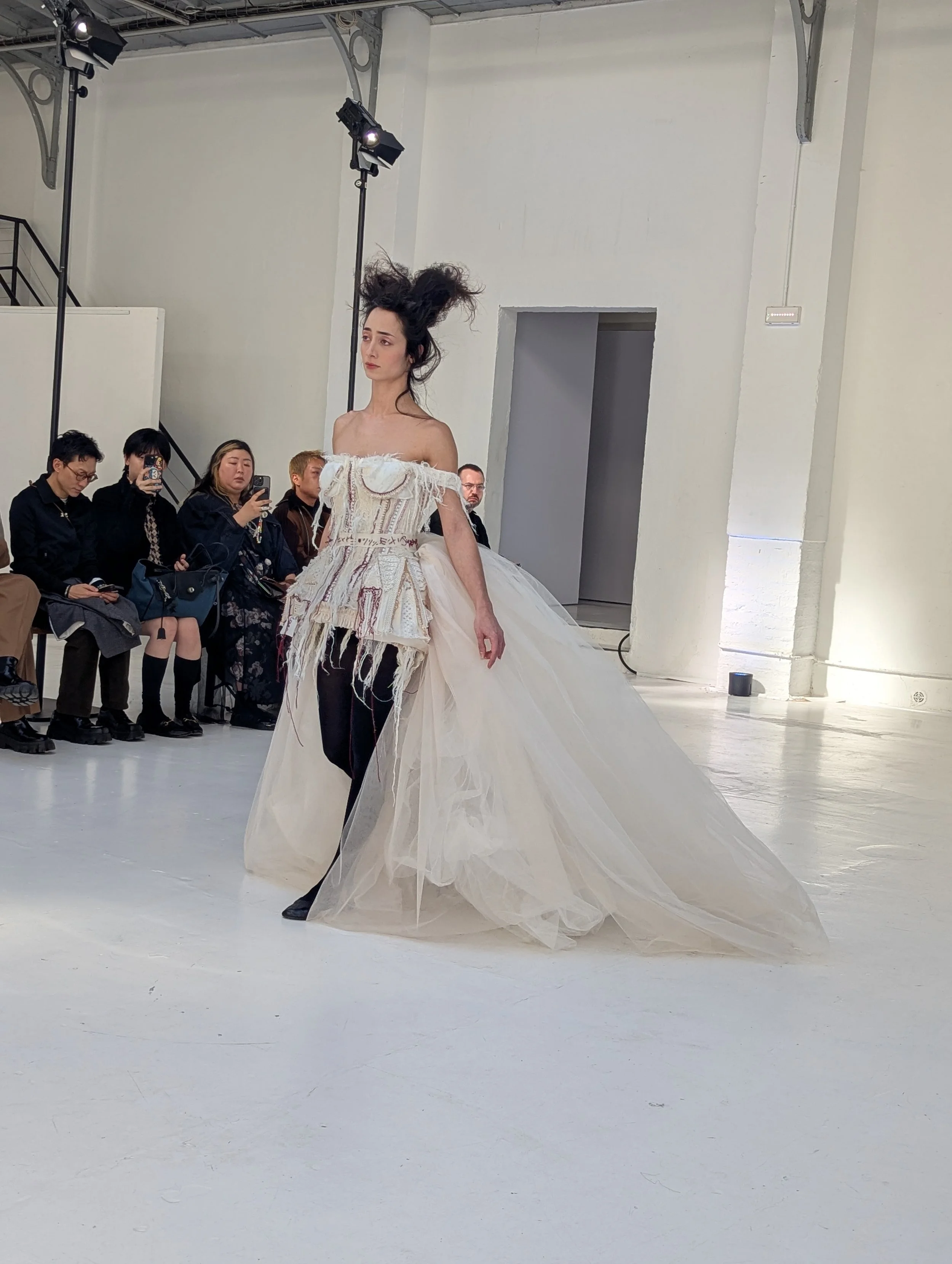
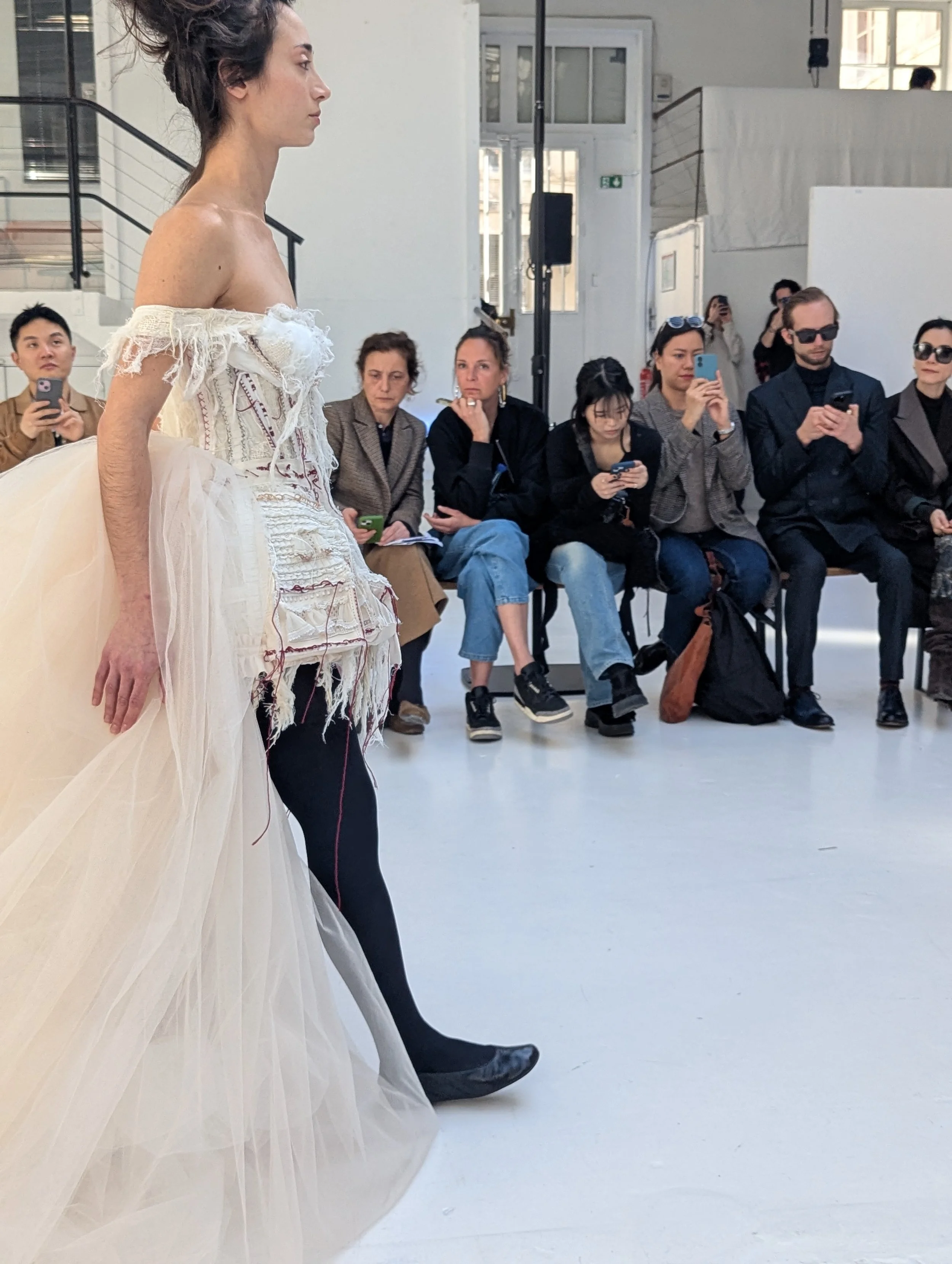
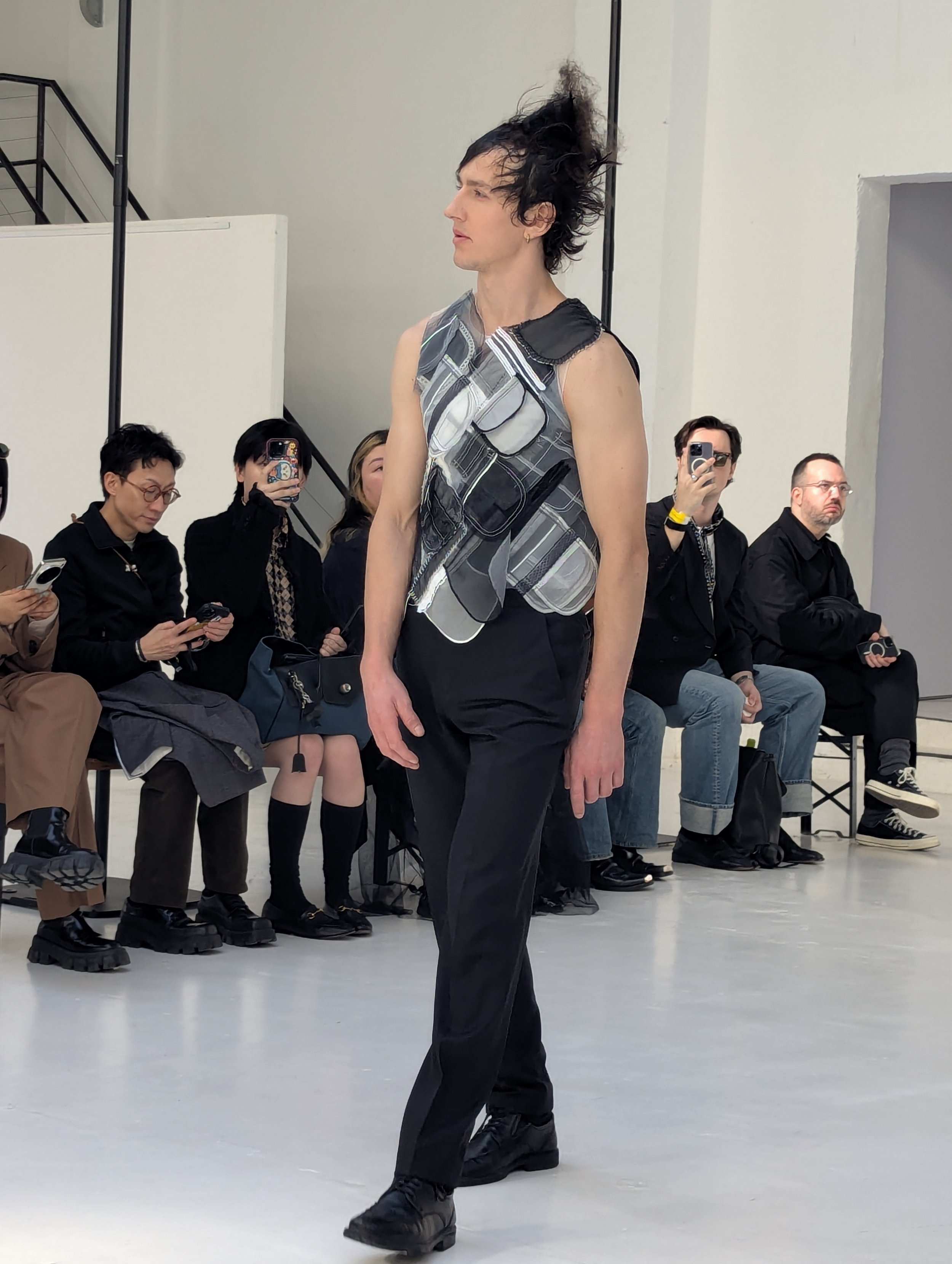
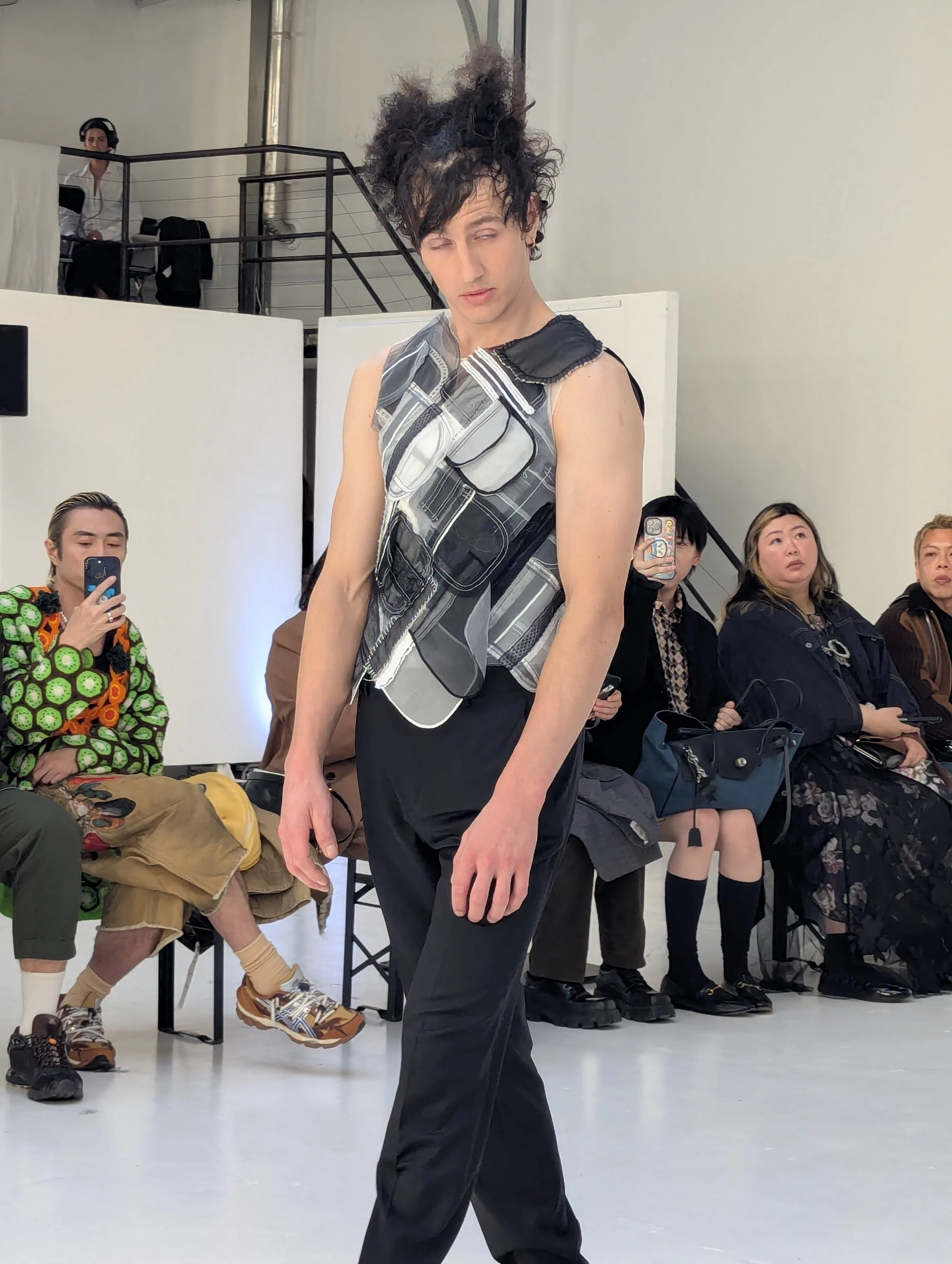
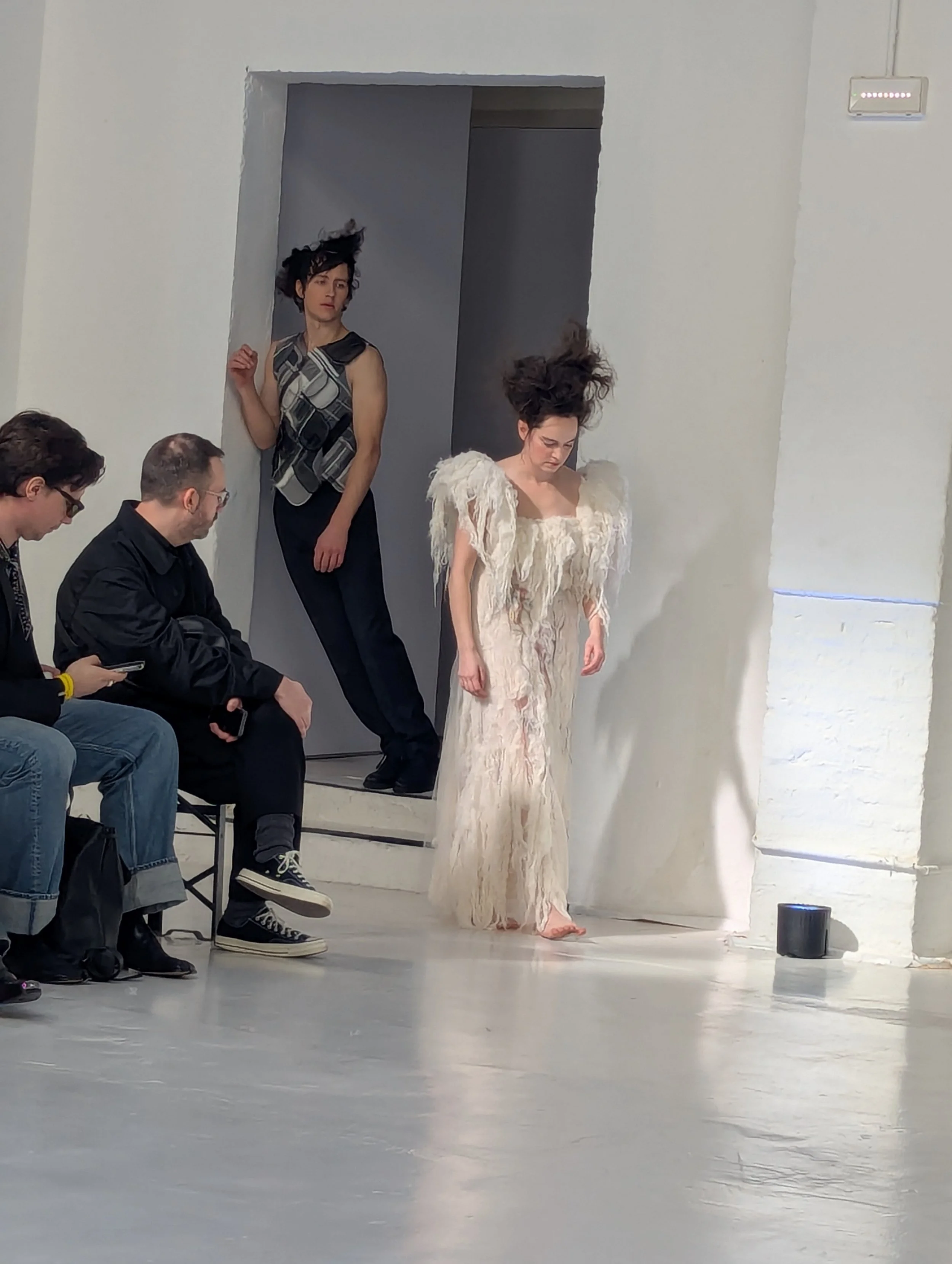
There are designers who create clothing, and then there are designers like Reverie by Caroline Hú who create emotional landscapes. For Autumn/Winter 2026, Caroline Hú delivered one of Paris Fashion Week’s most quietly devastating collections; a meditation on memory, softness, and the objects we hold onto long after they have lost their original purpose. AW26 turned inward, drawing inspiration from aged garments, forgotten furniture, and deeply personal keepsakes. At the center of the collection was an intimate reference point: a worn towel Hú has kept since childhood, transformed in her imagination into a vessel of comfort, nostalgia, and emotional permanence. That sense of tenderness echoed throughout the runway. Fabrics appeared weathered yet precious, distressed cotton mesh frayed delicately at the edges, cloud-like embroidery floating across tulle, and layers of textile manipulation that felt less constructed than organically grown. Hú treated garments almost like living memories, allowing them to unravel, reform, and evolve in motion.
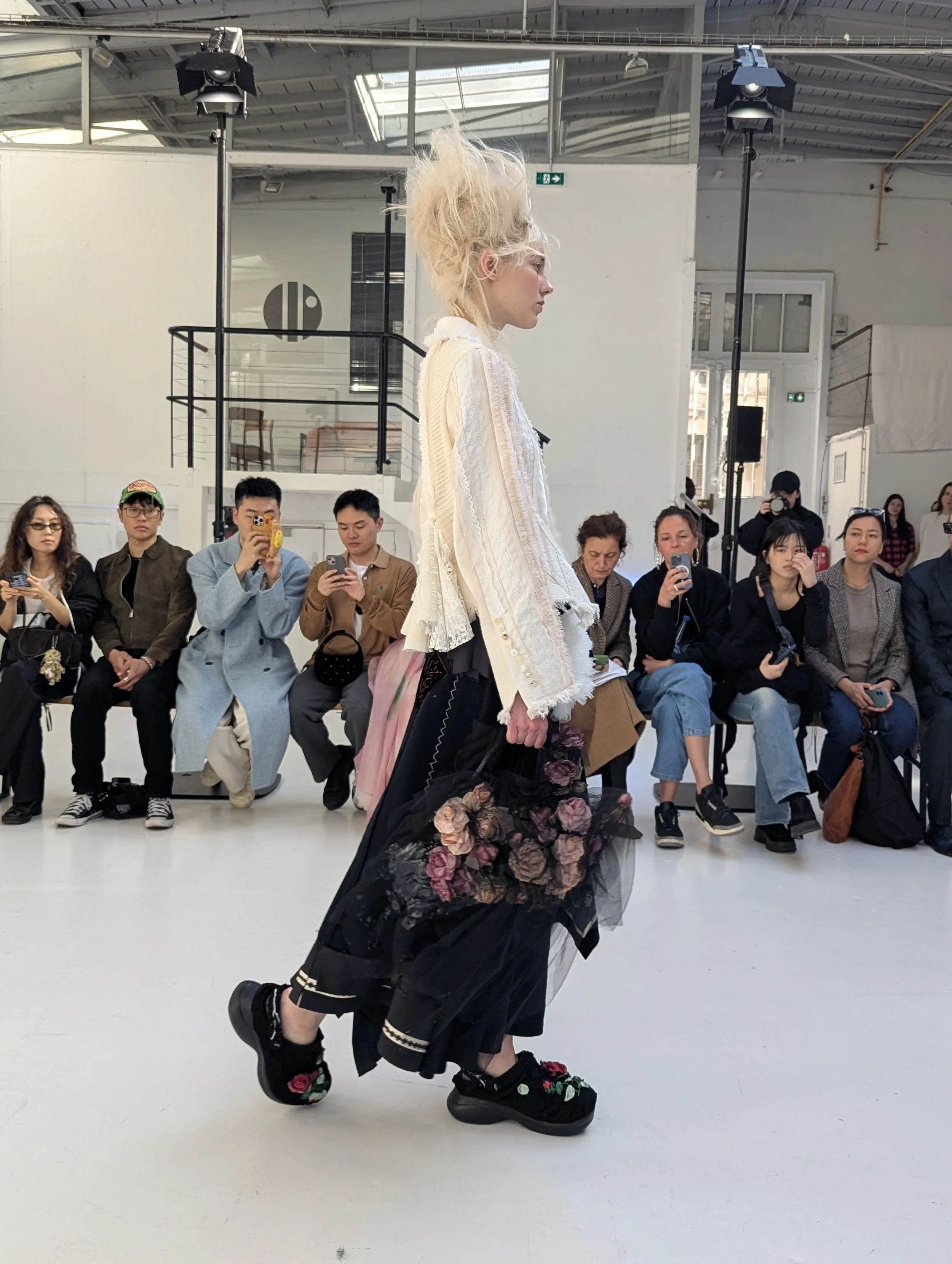
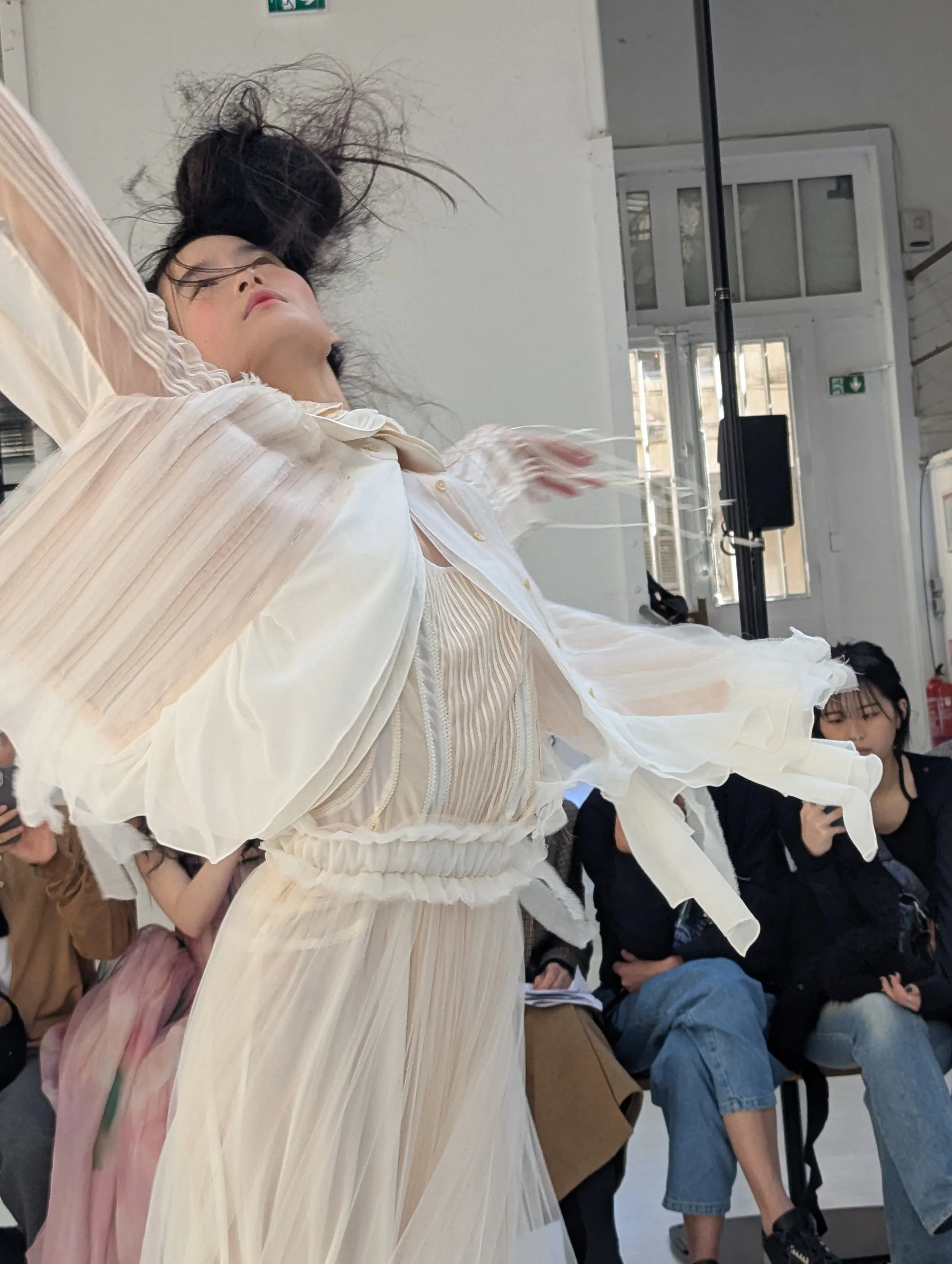
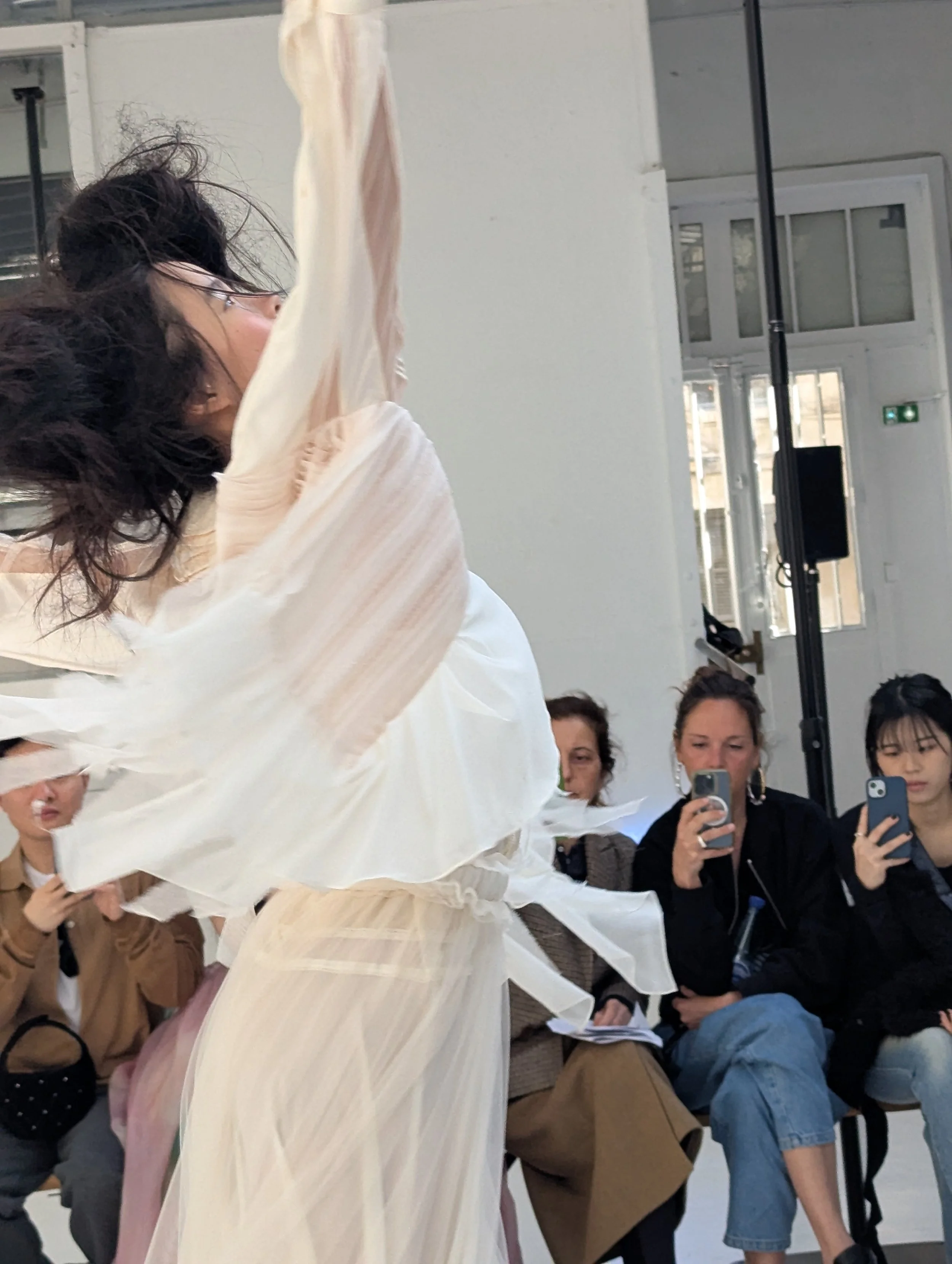
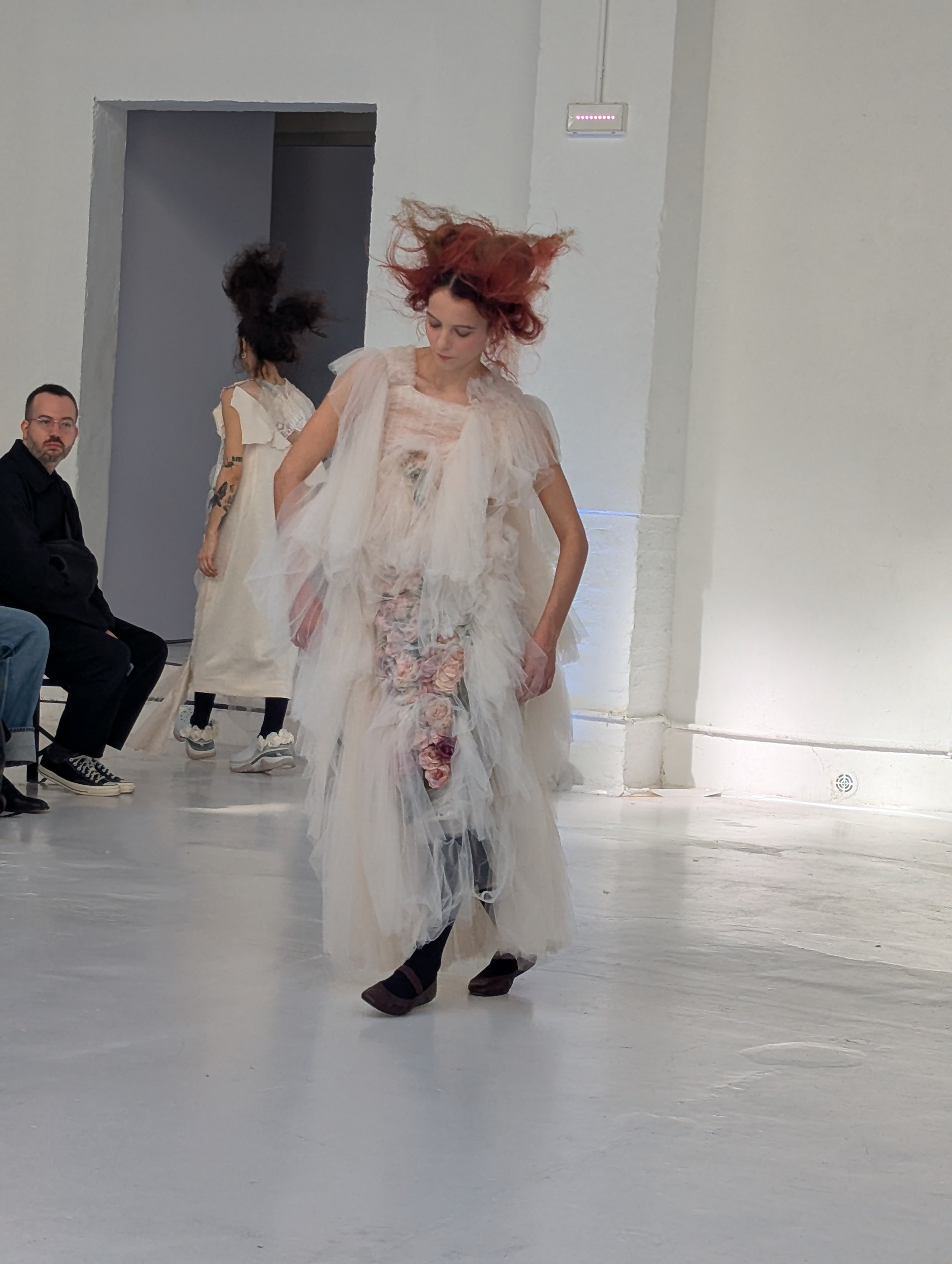
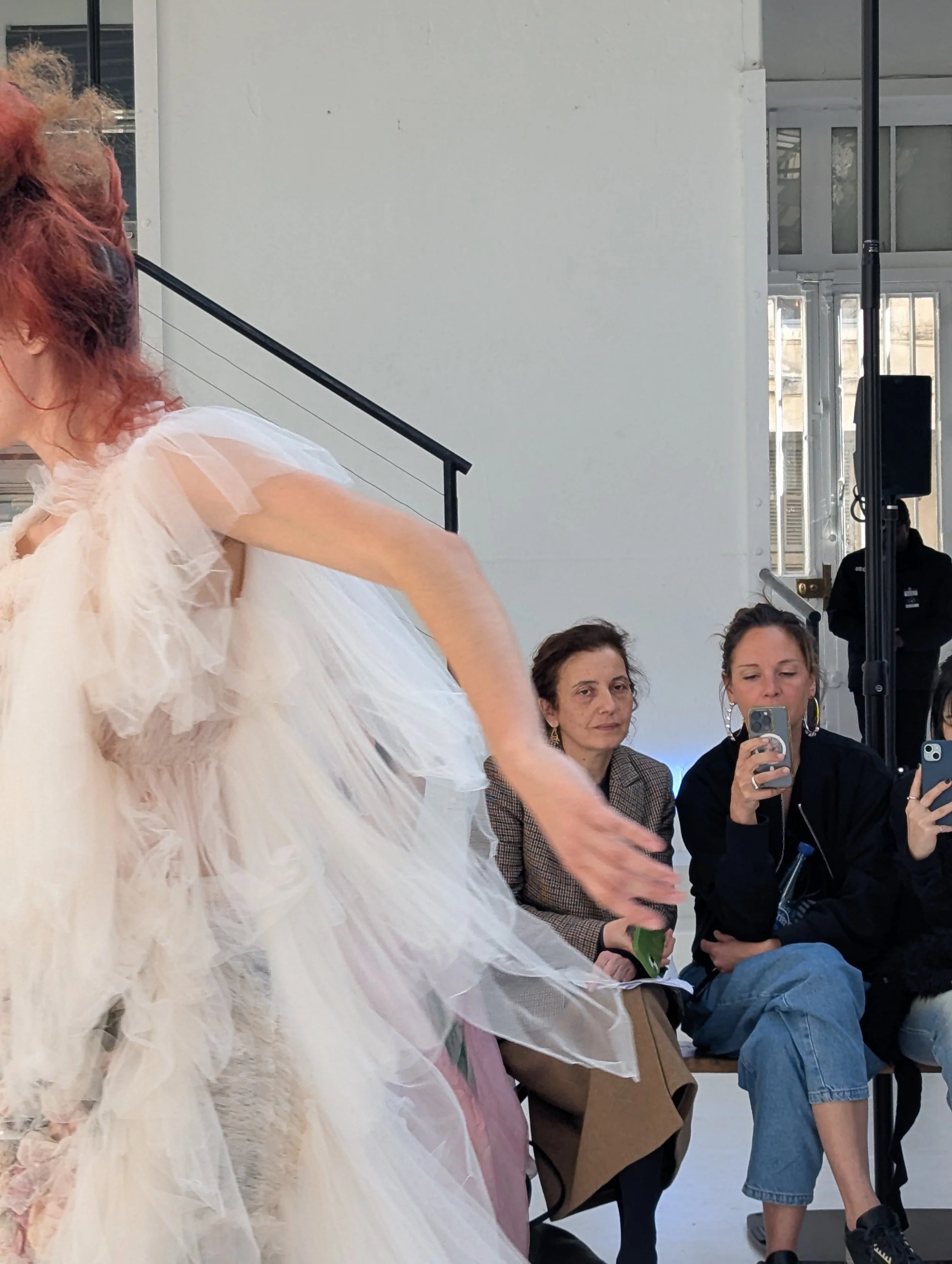
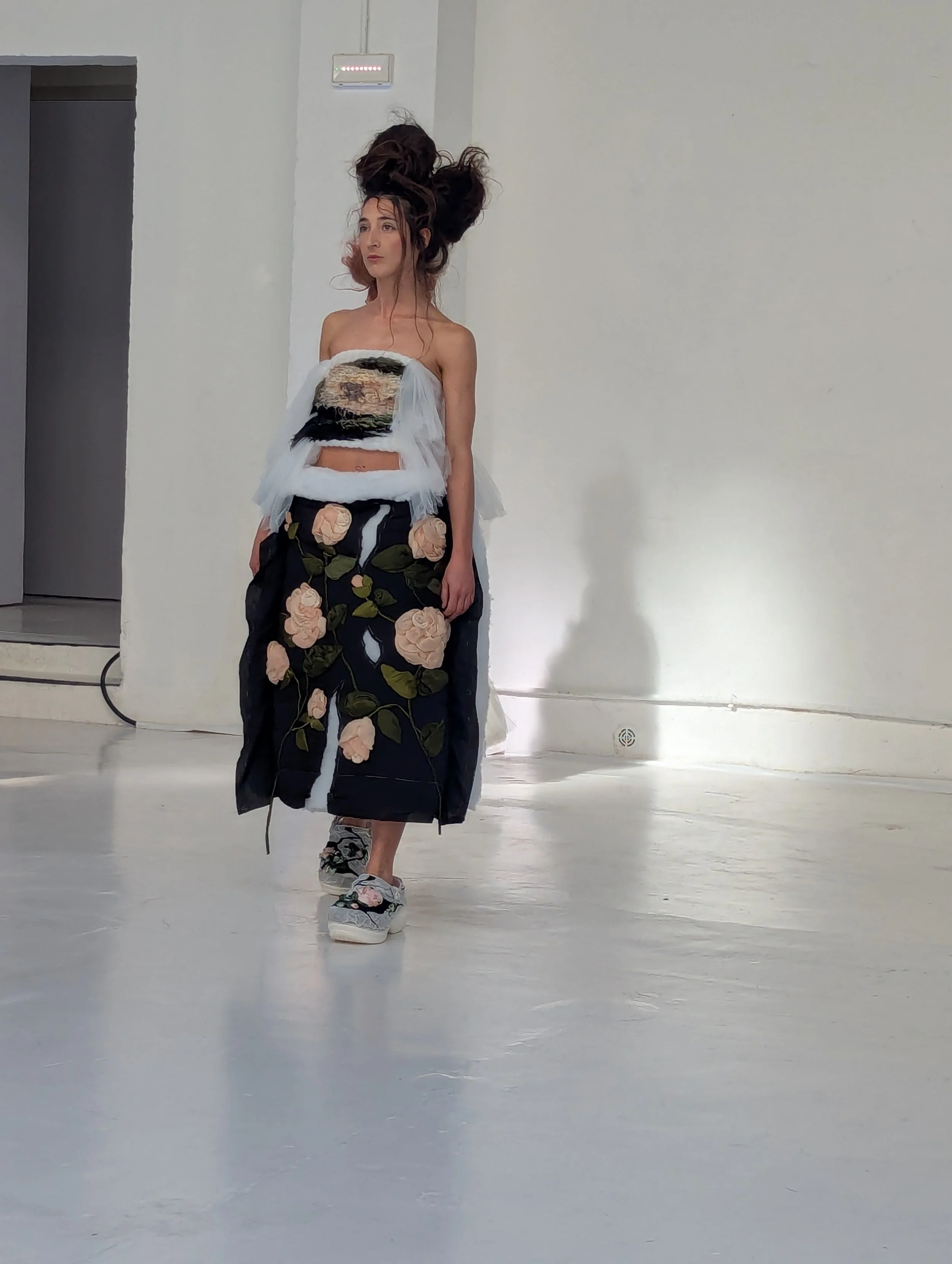
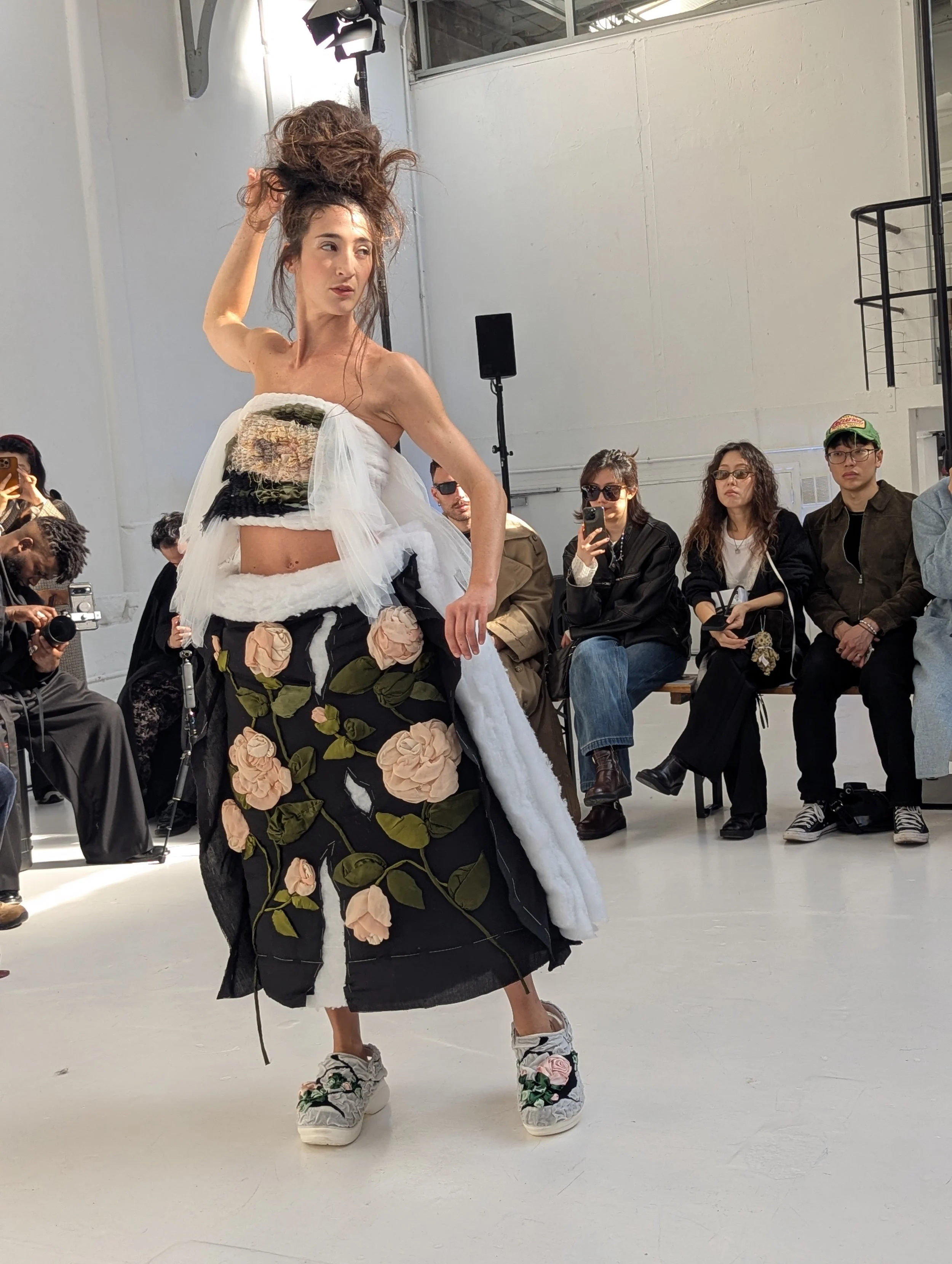
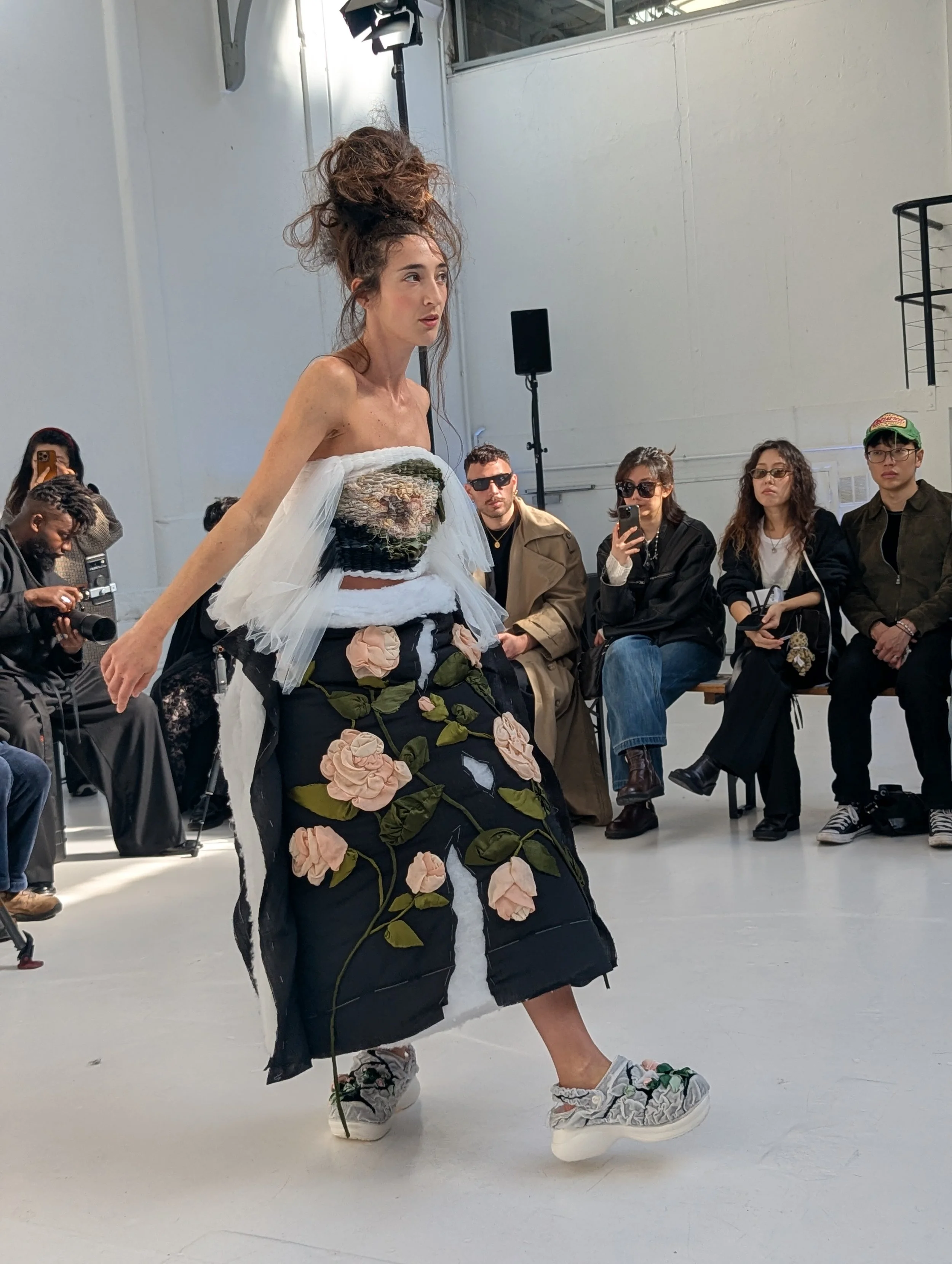
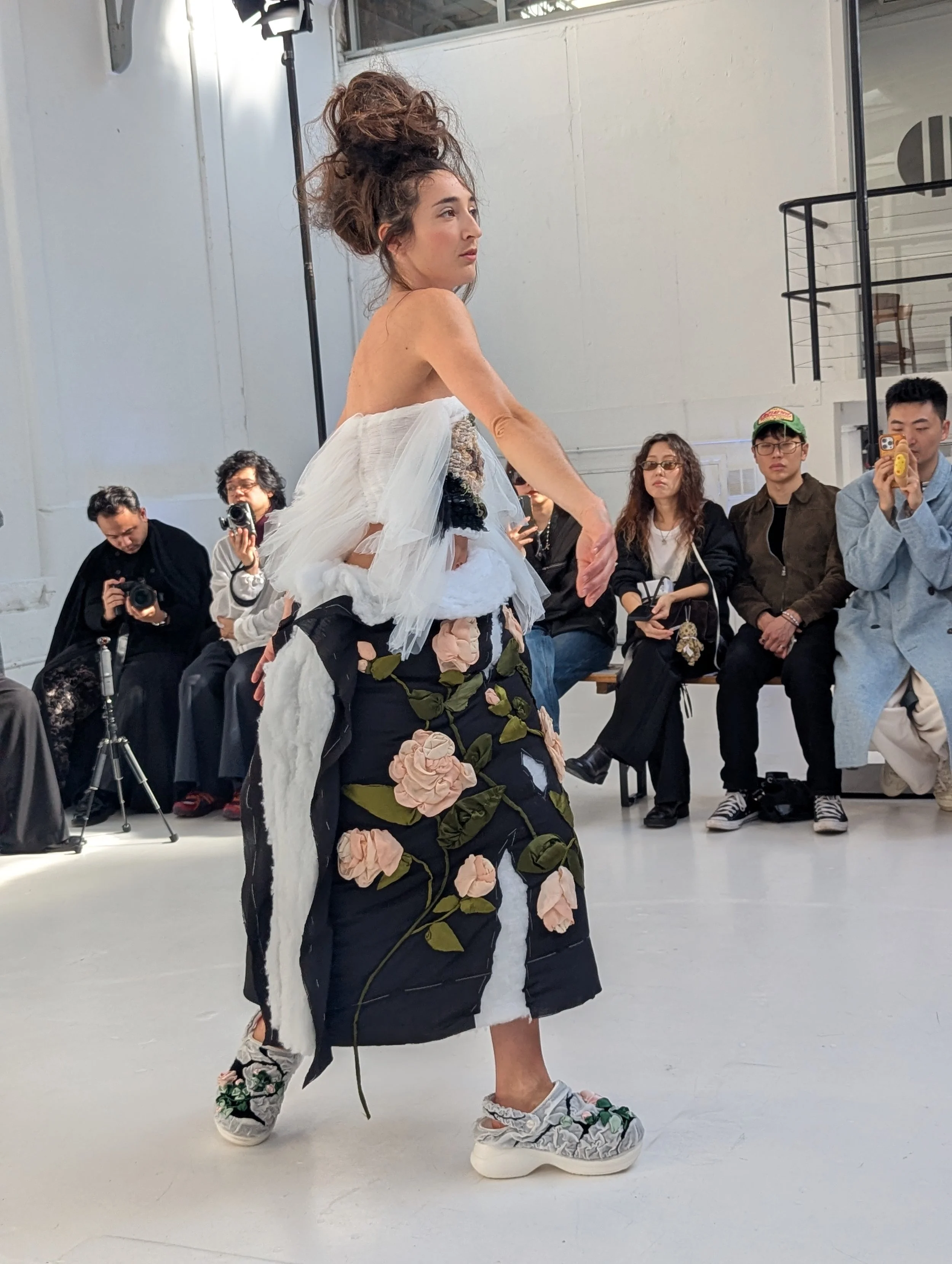
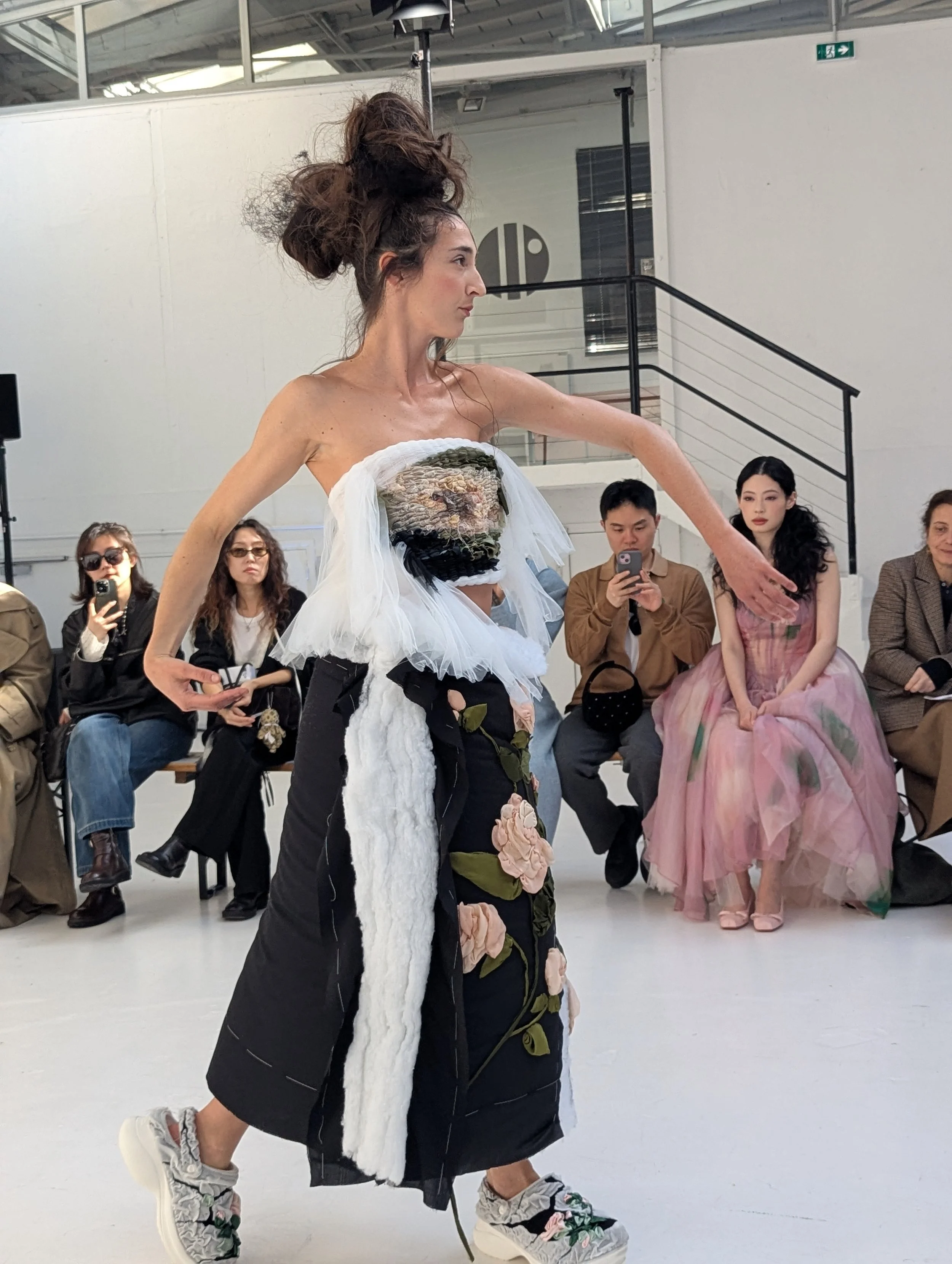
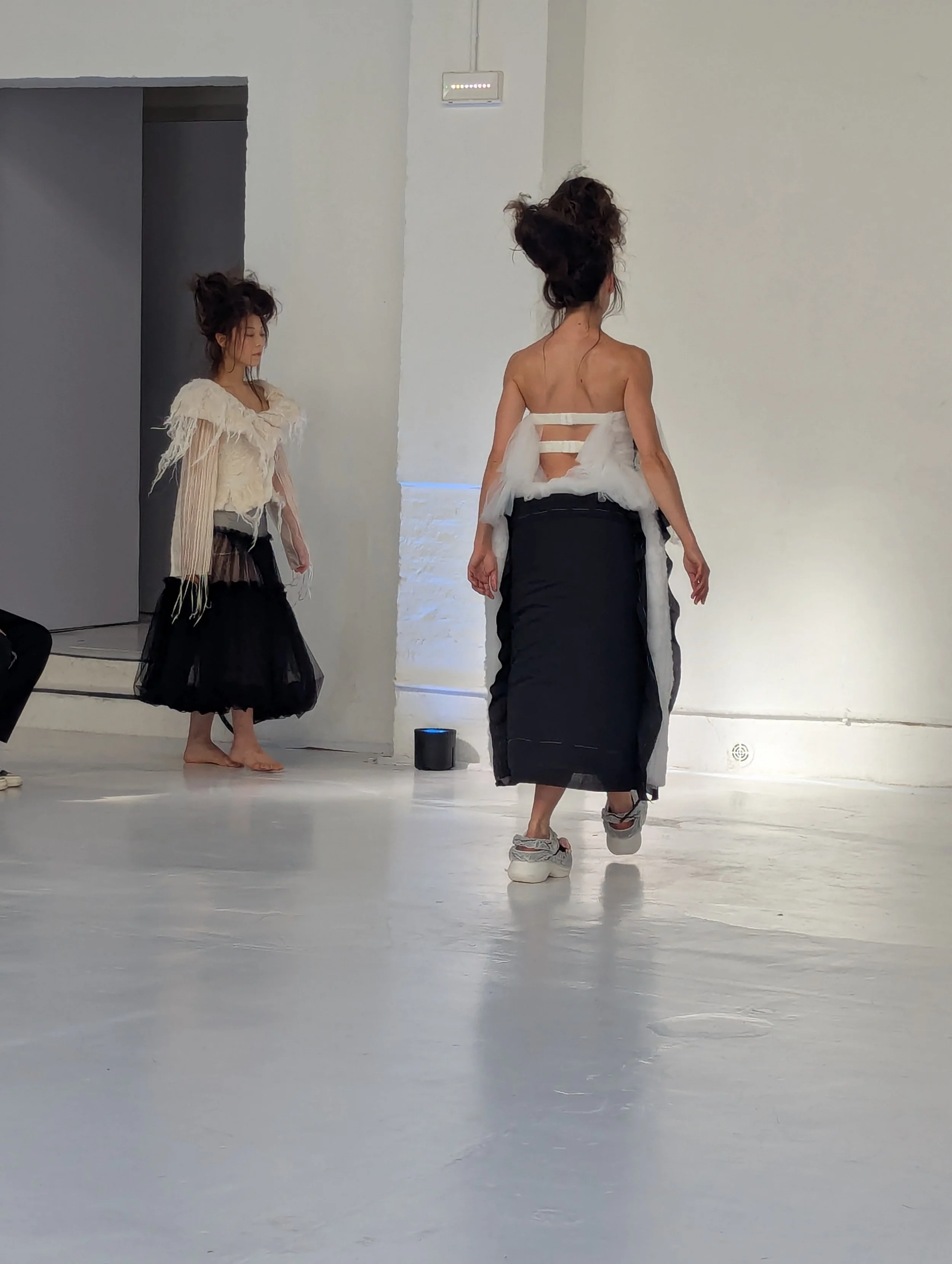
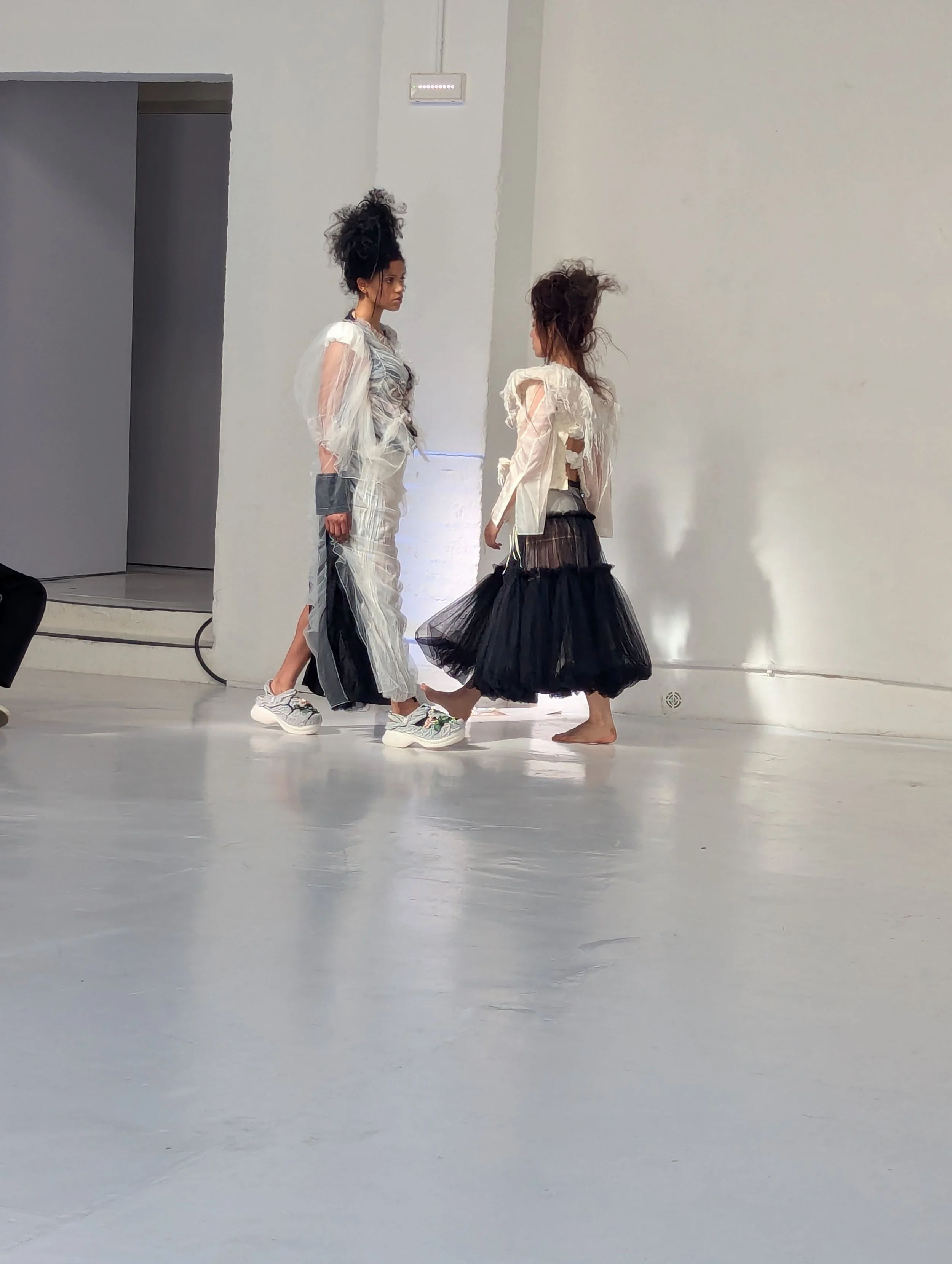
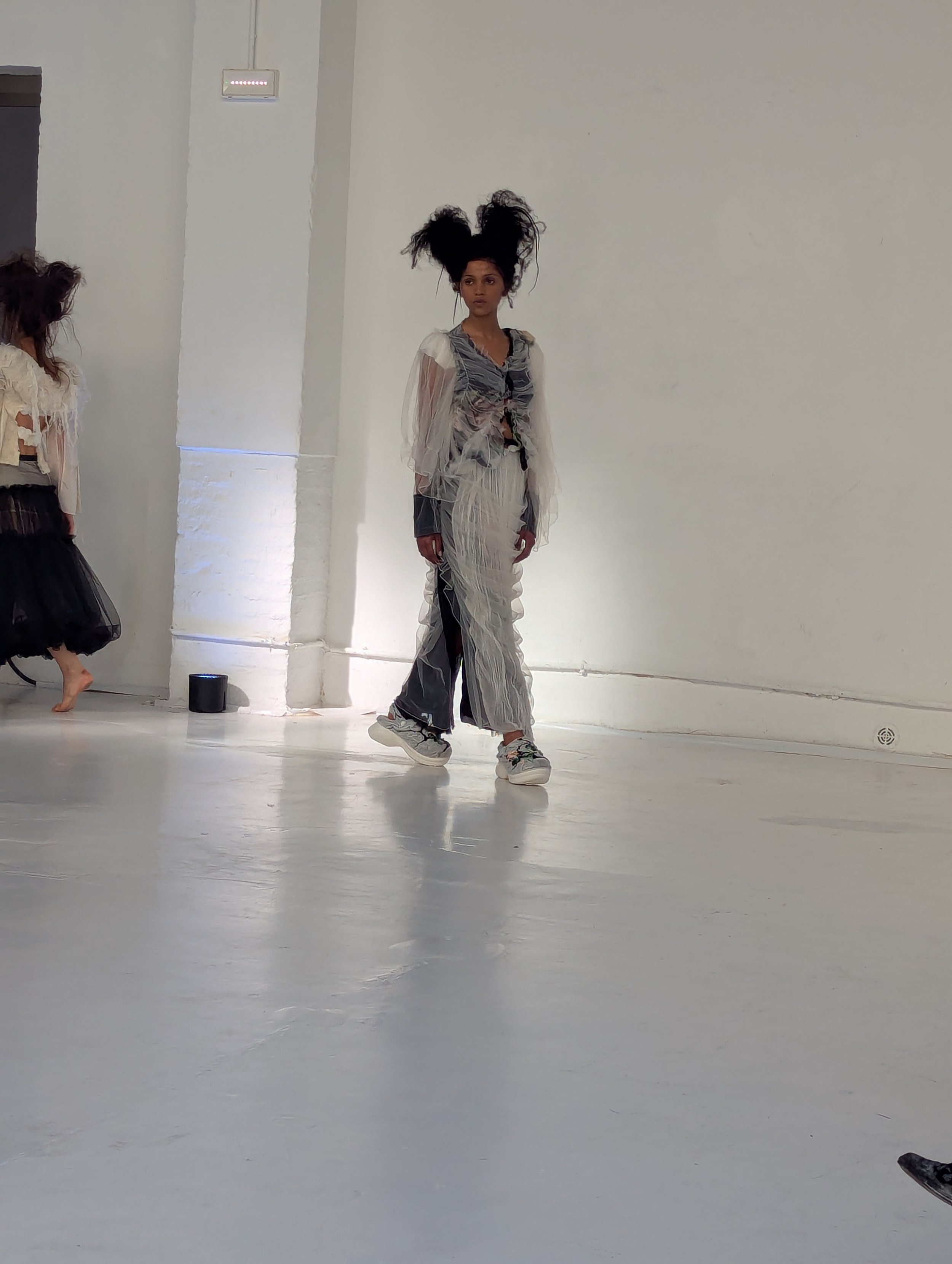
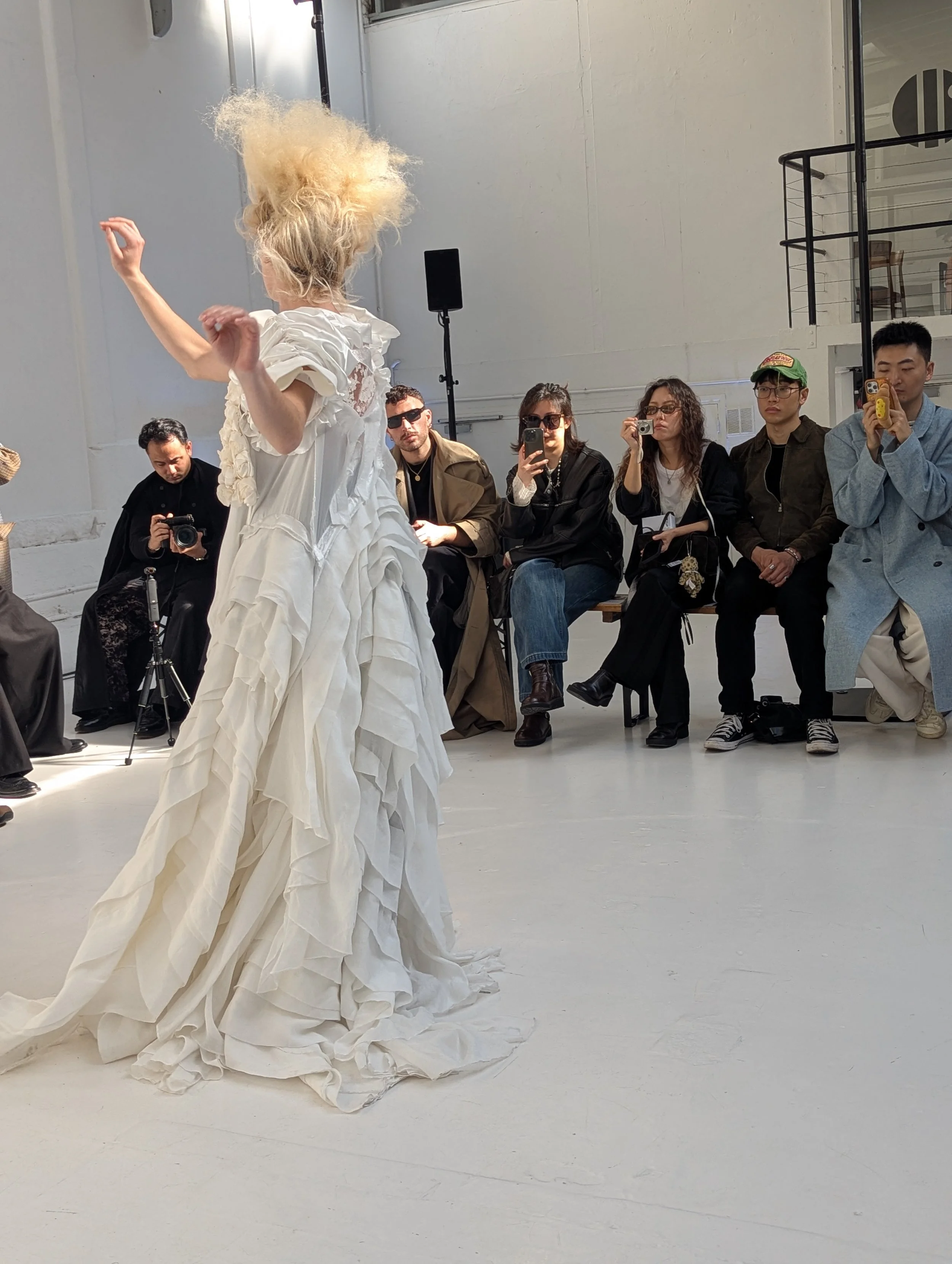
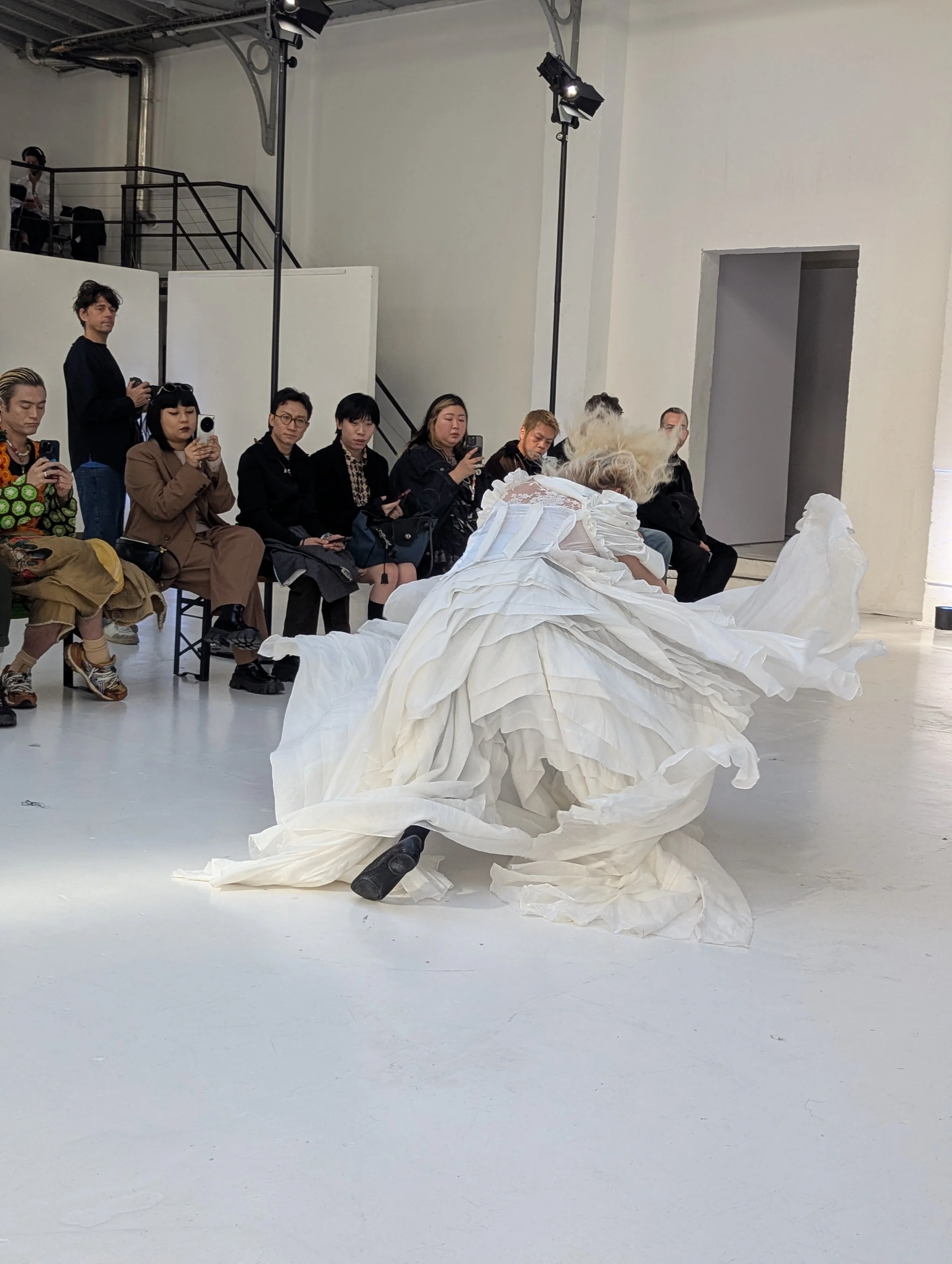
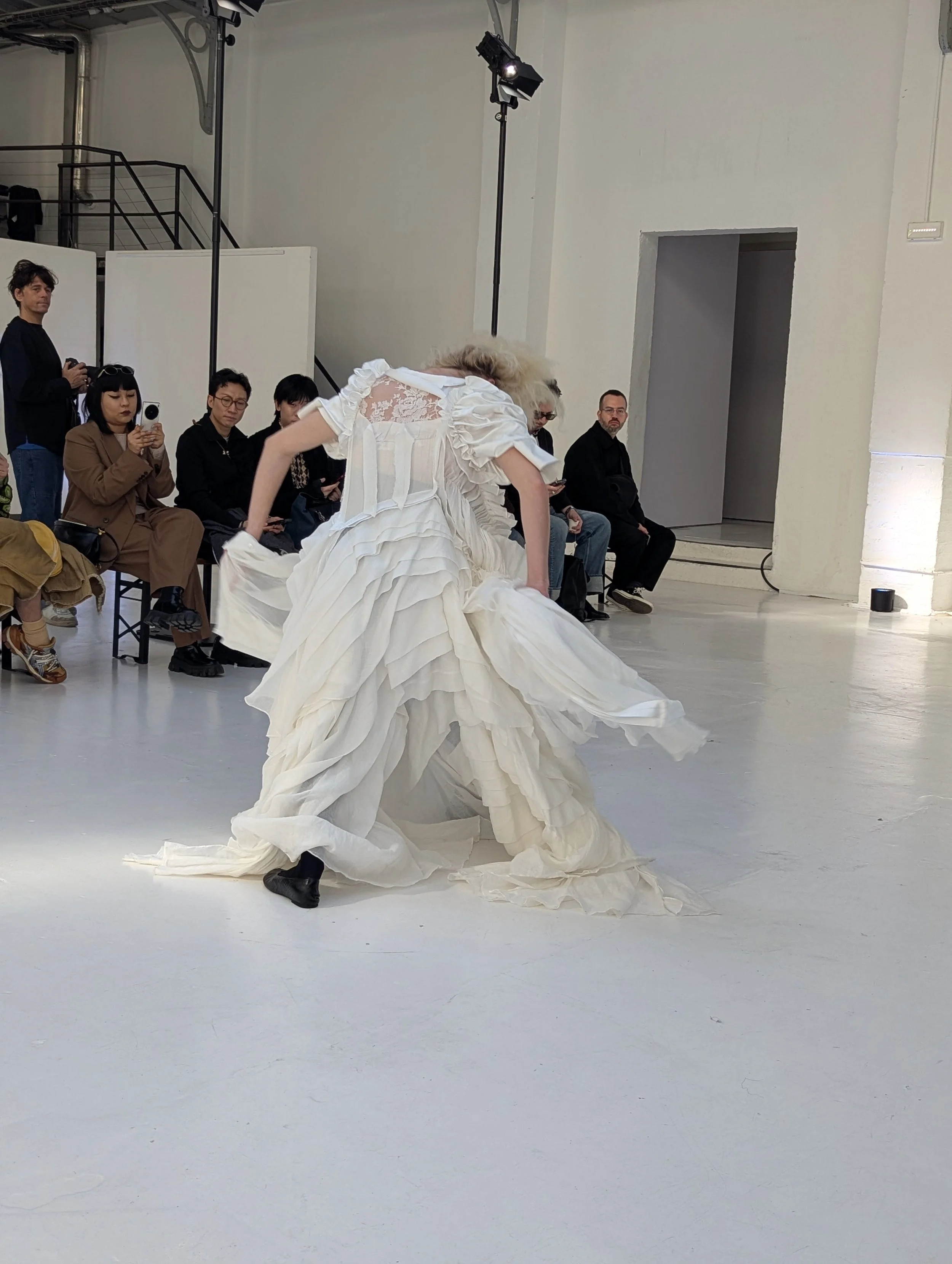
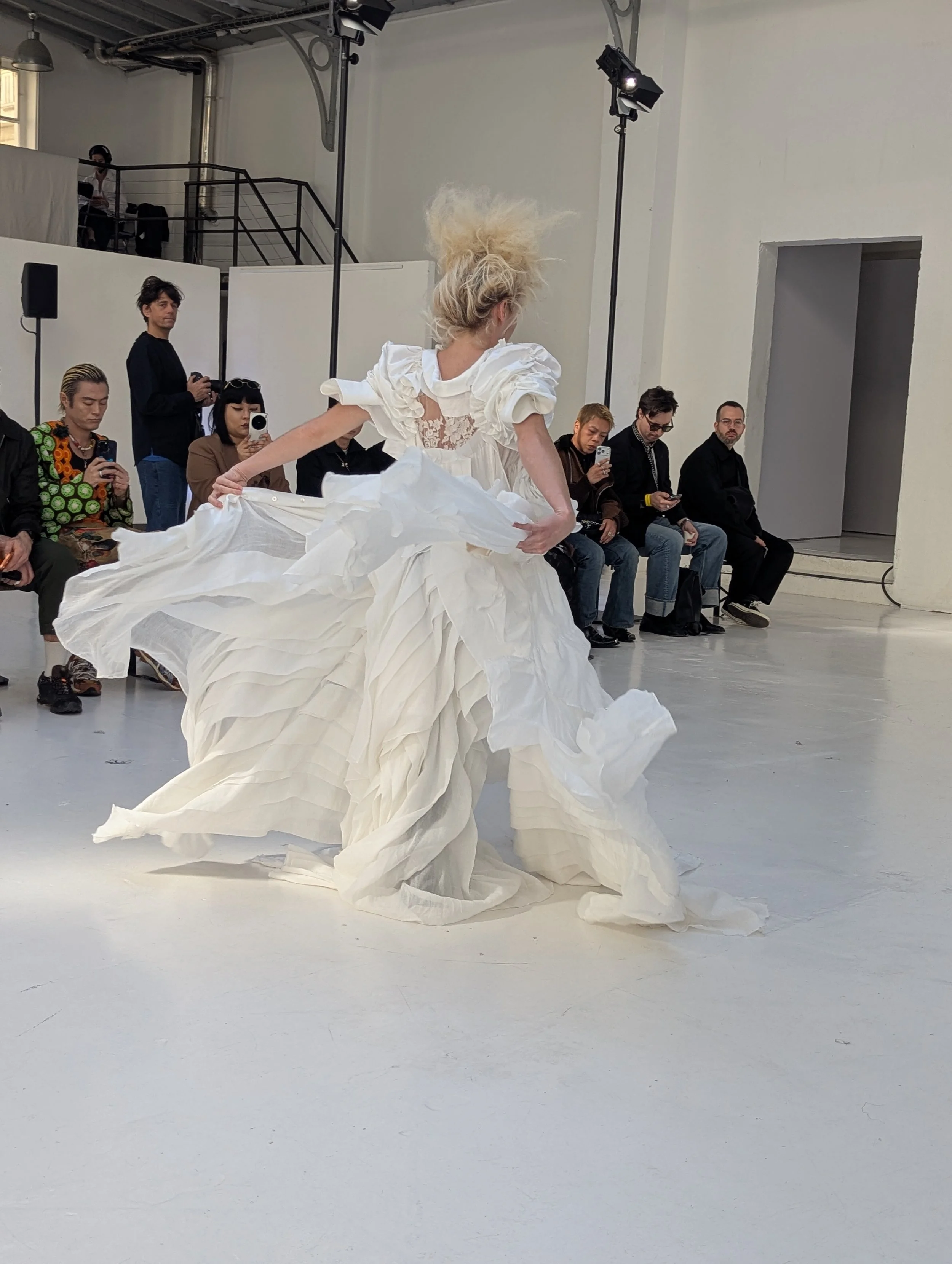
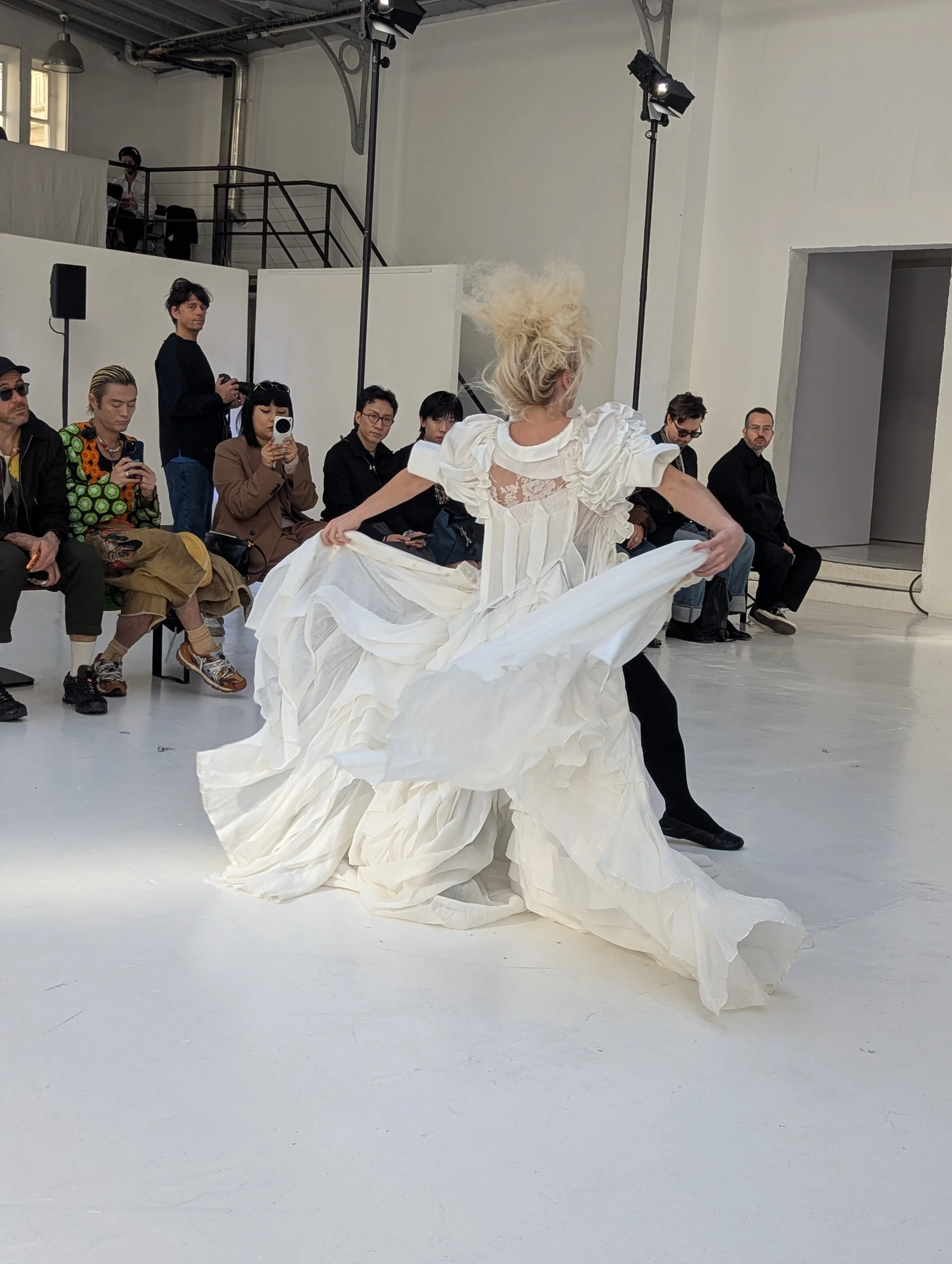
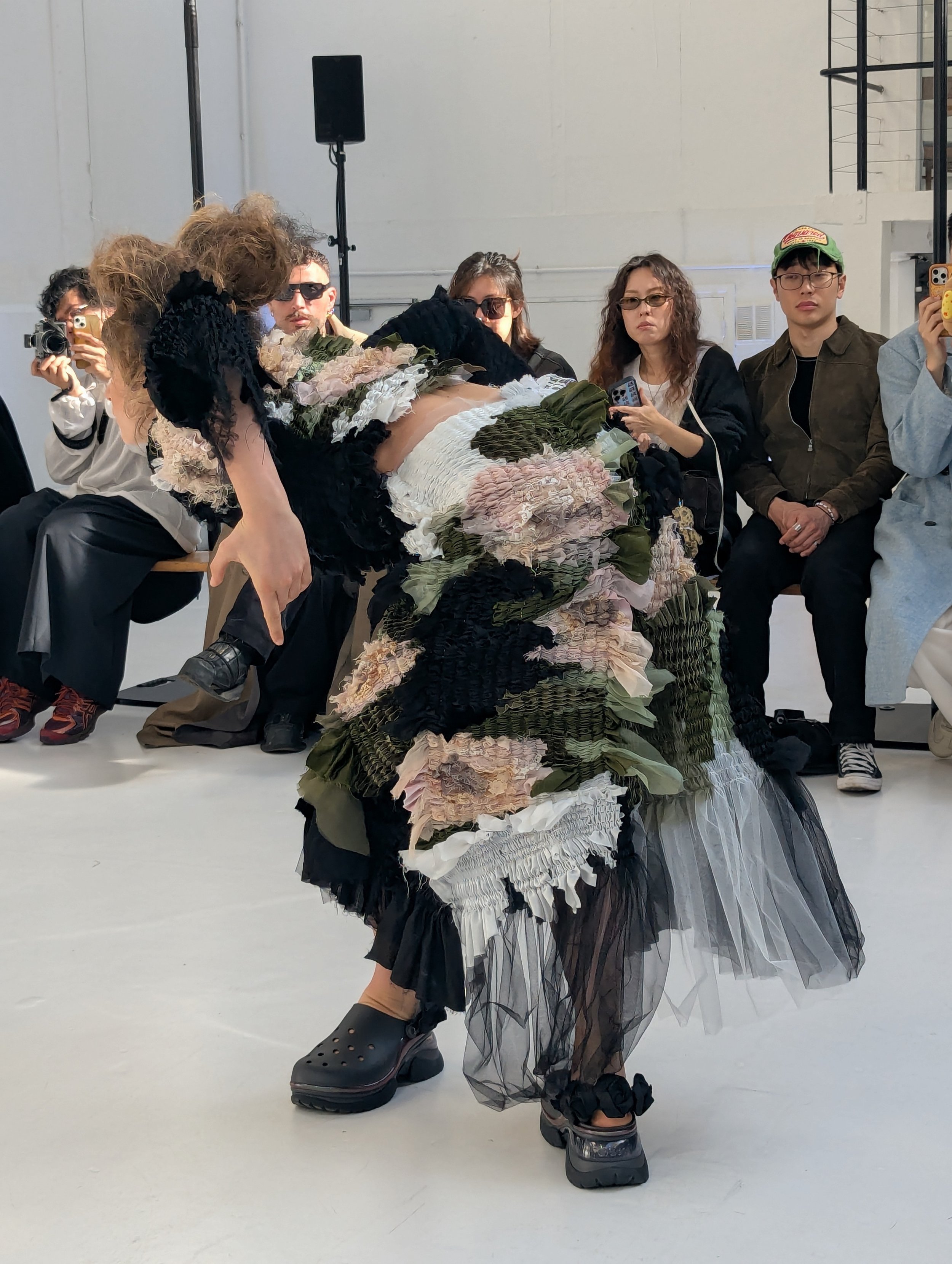
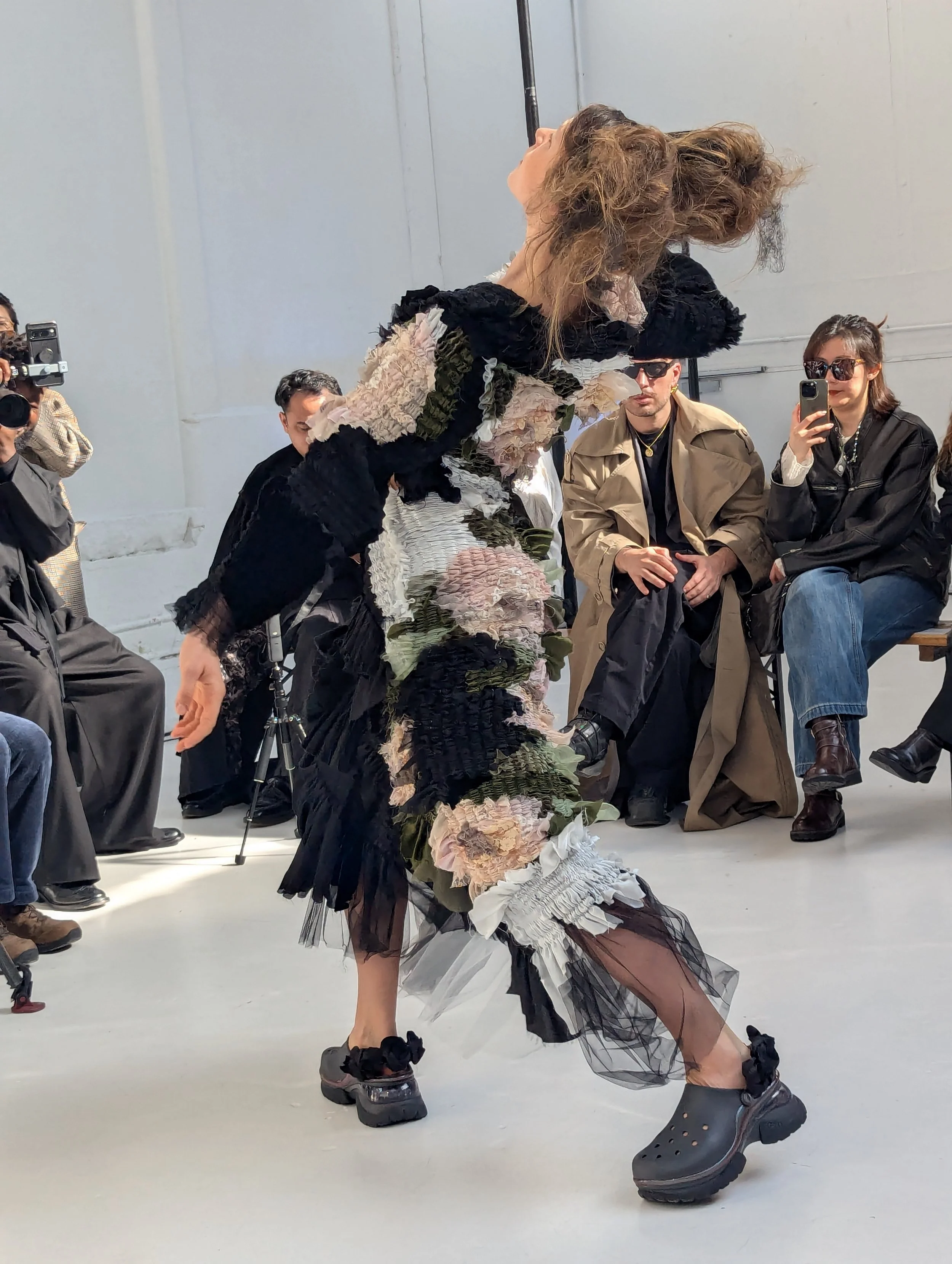
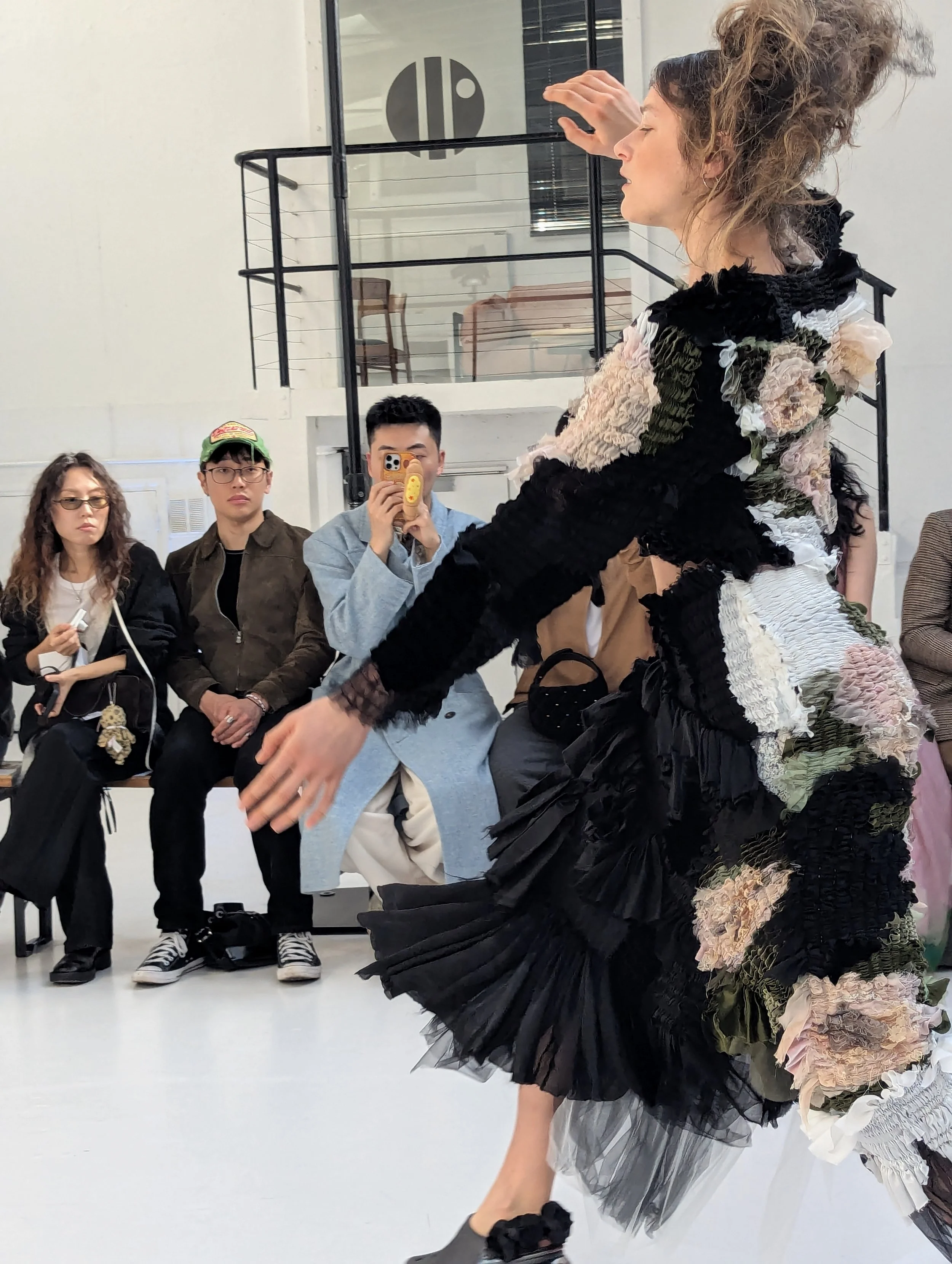
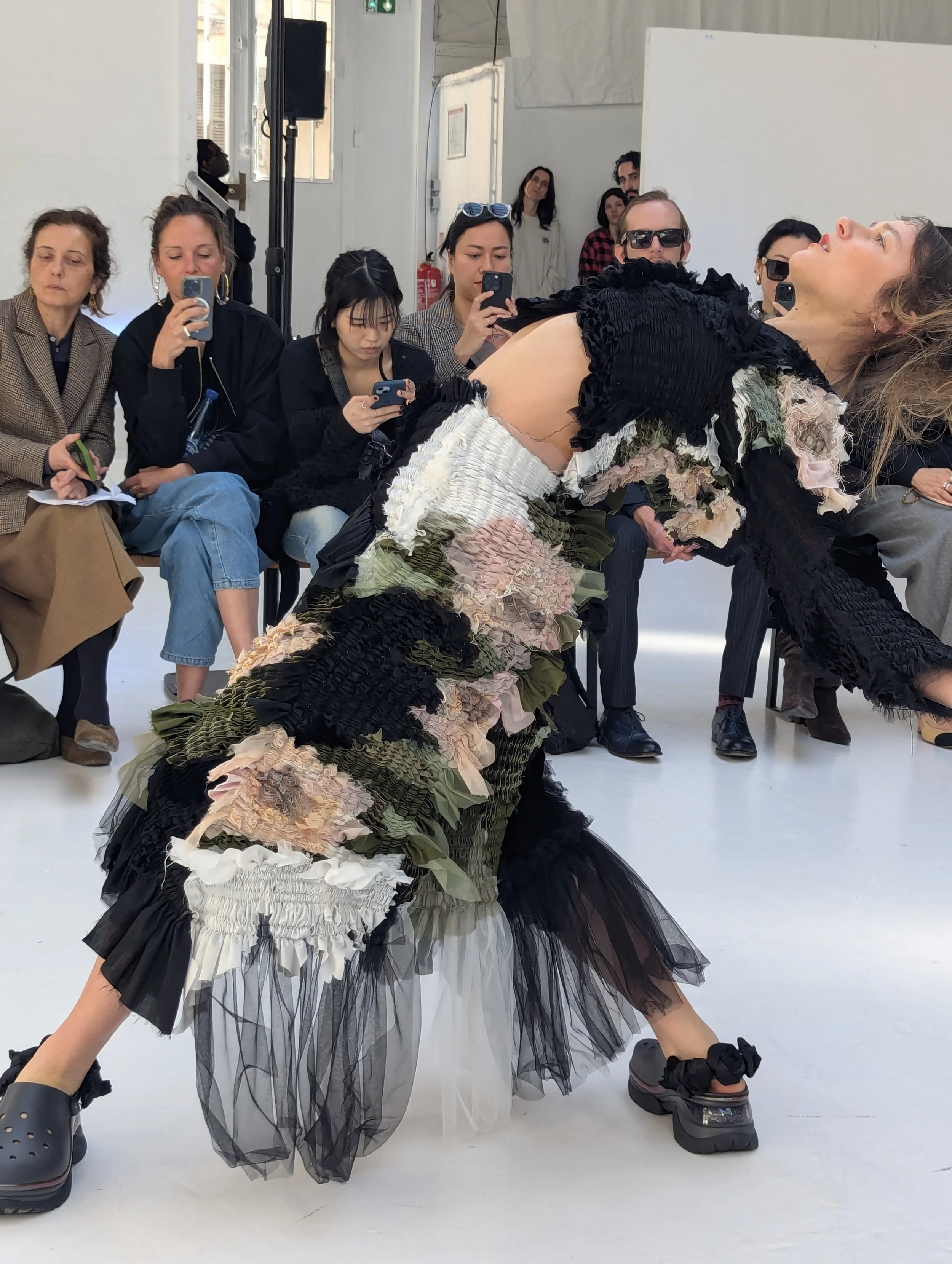
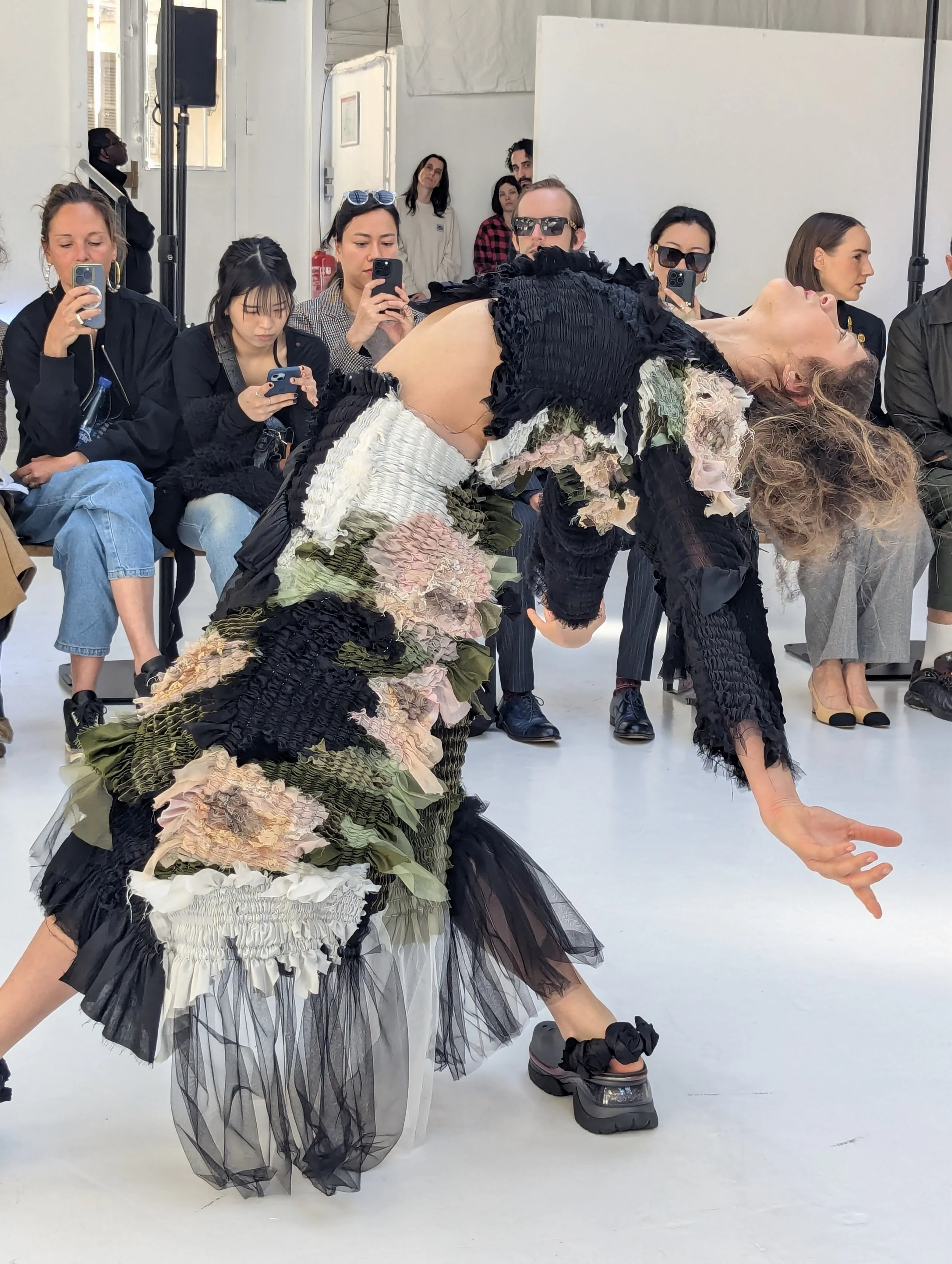
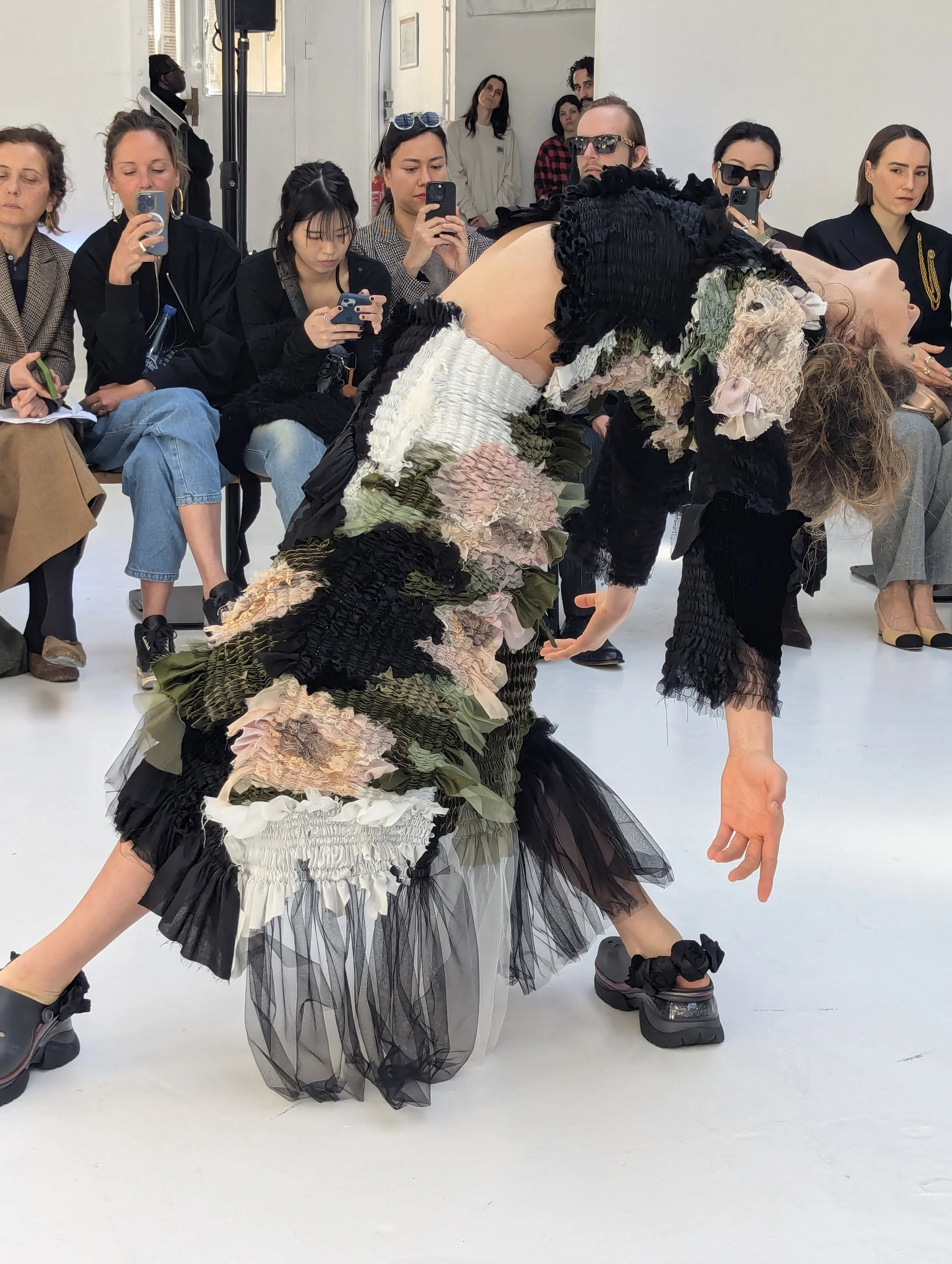
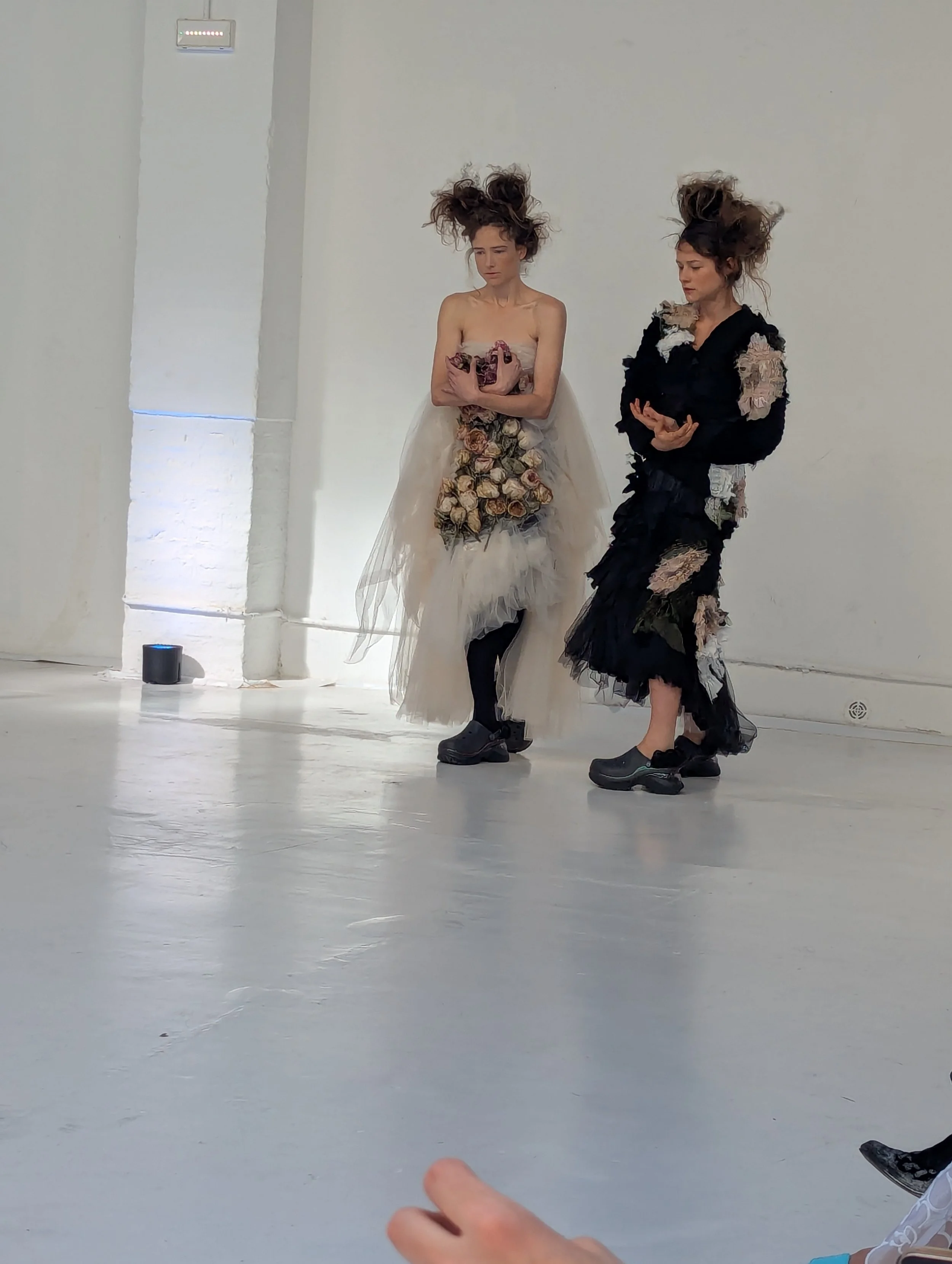
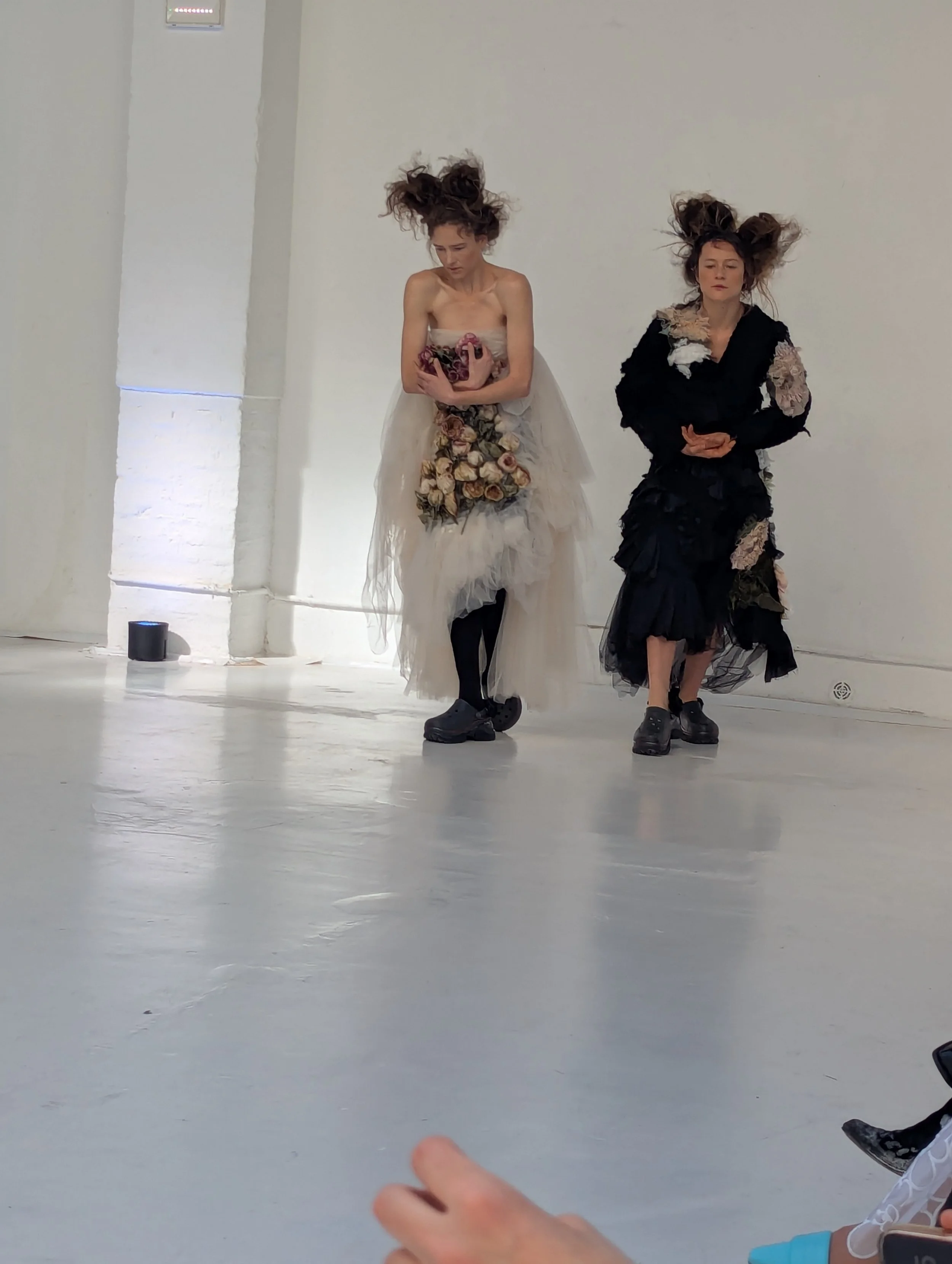
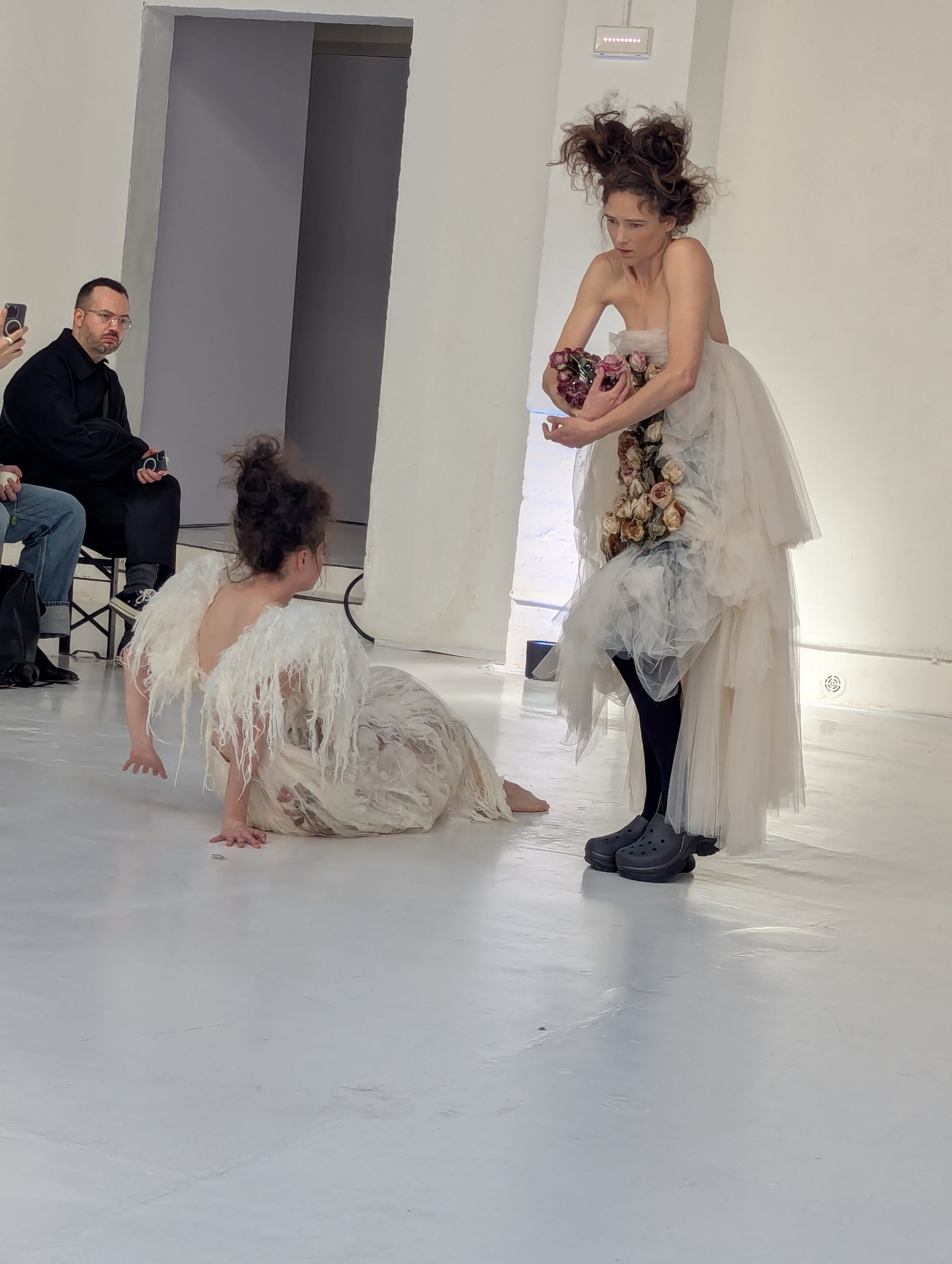
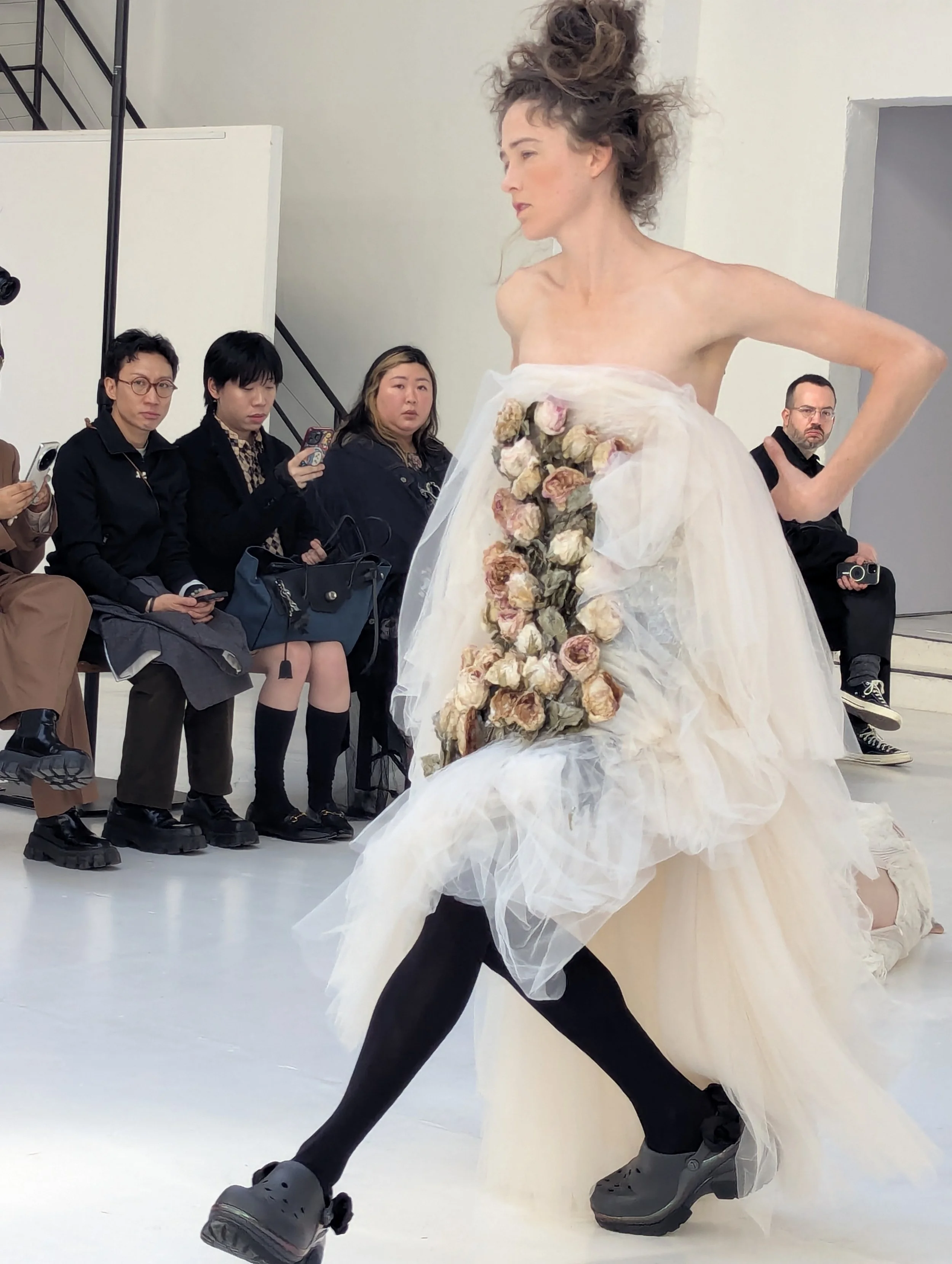
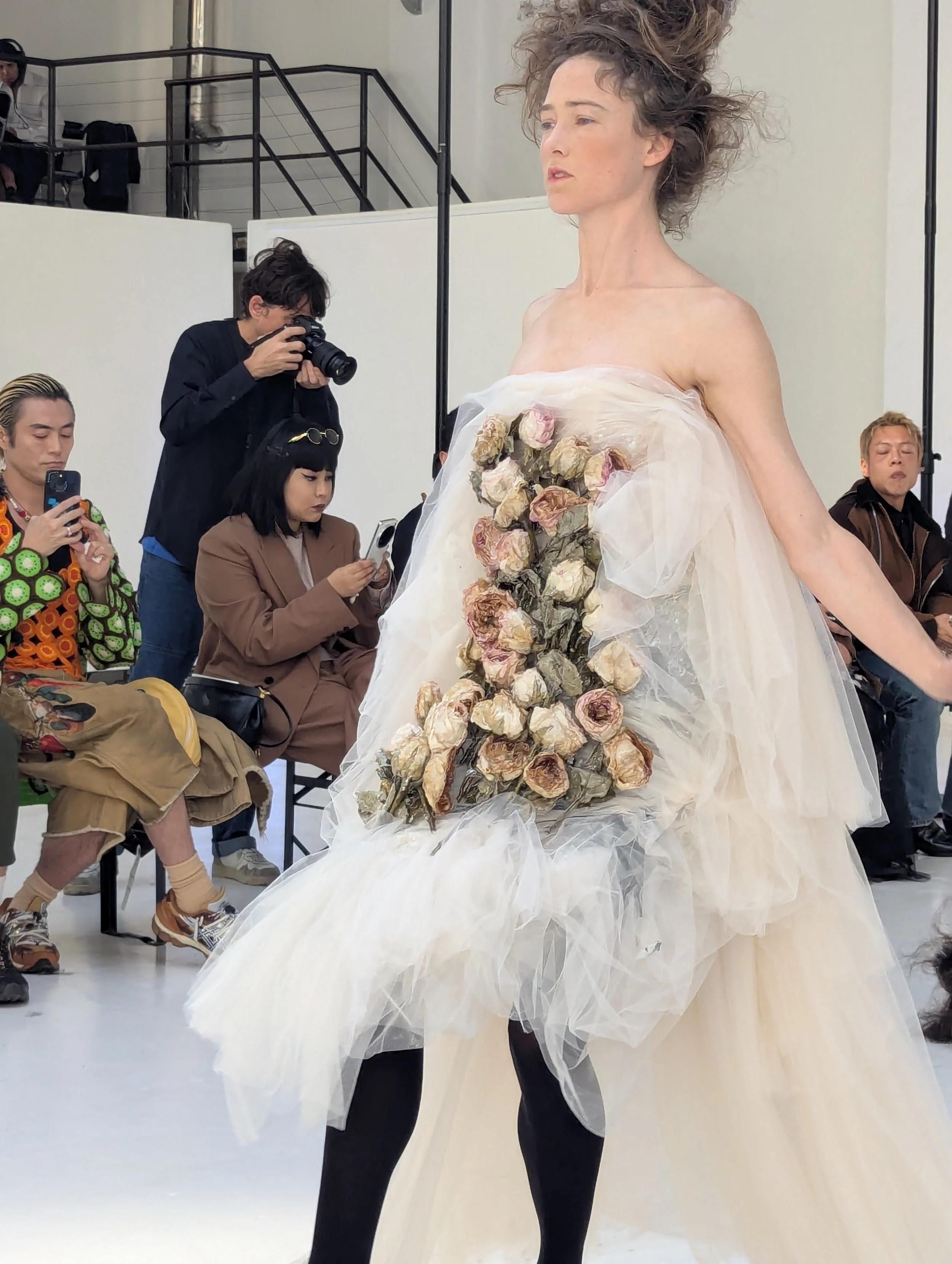
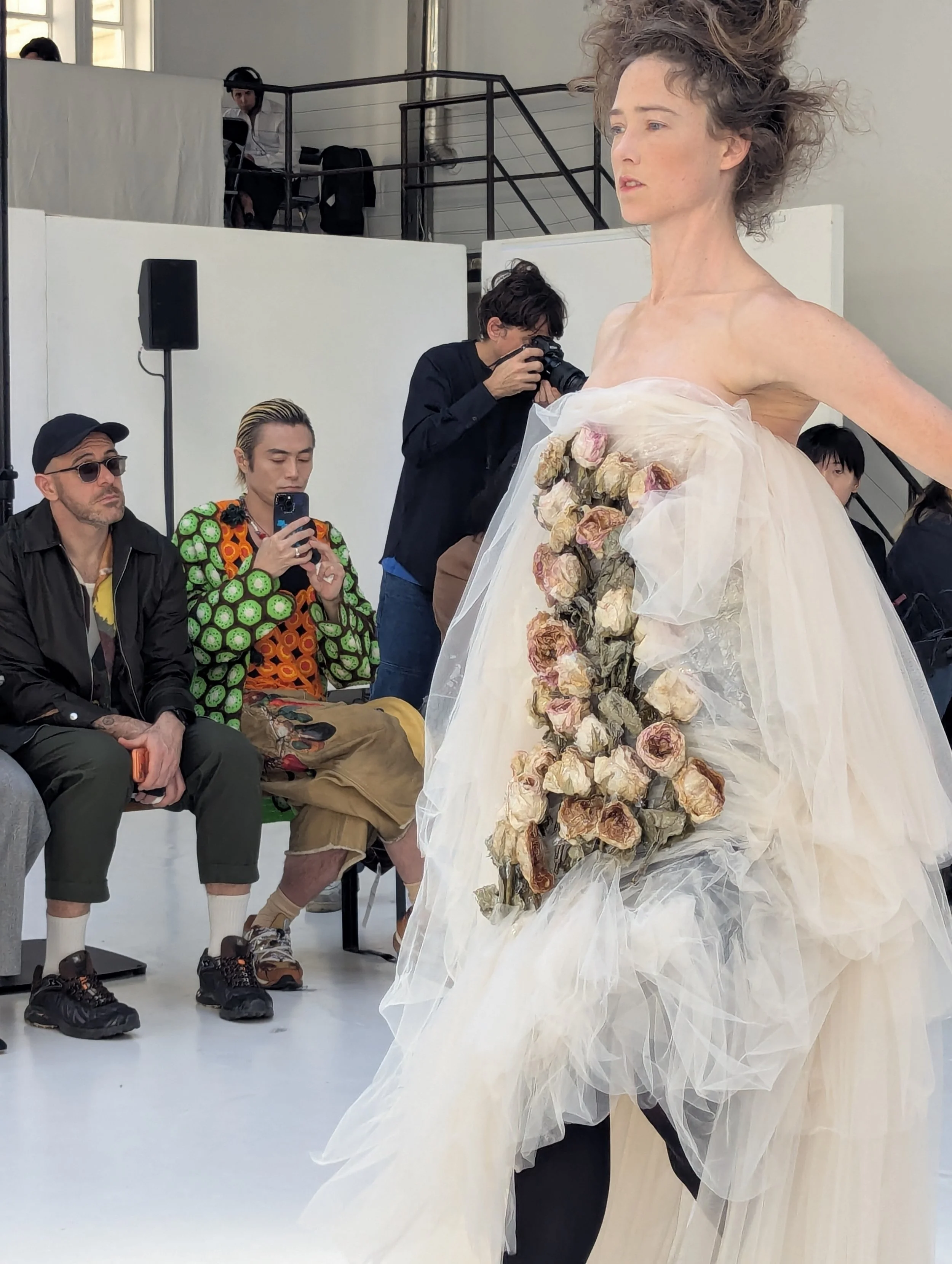
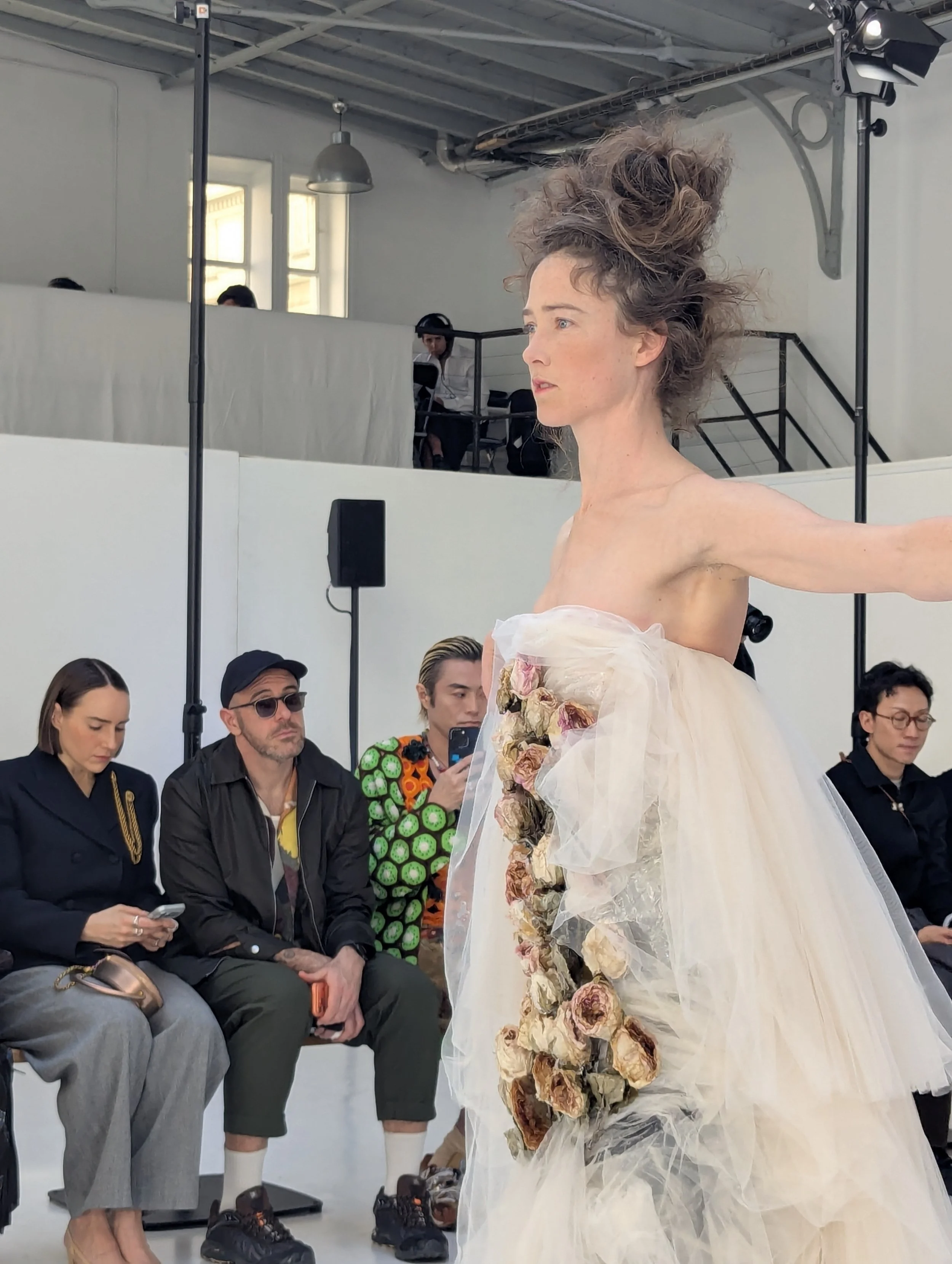
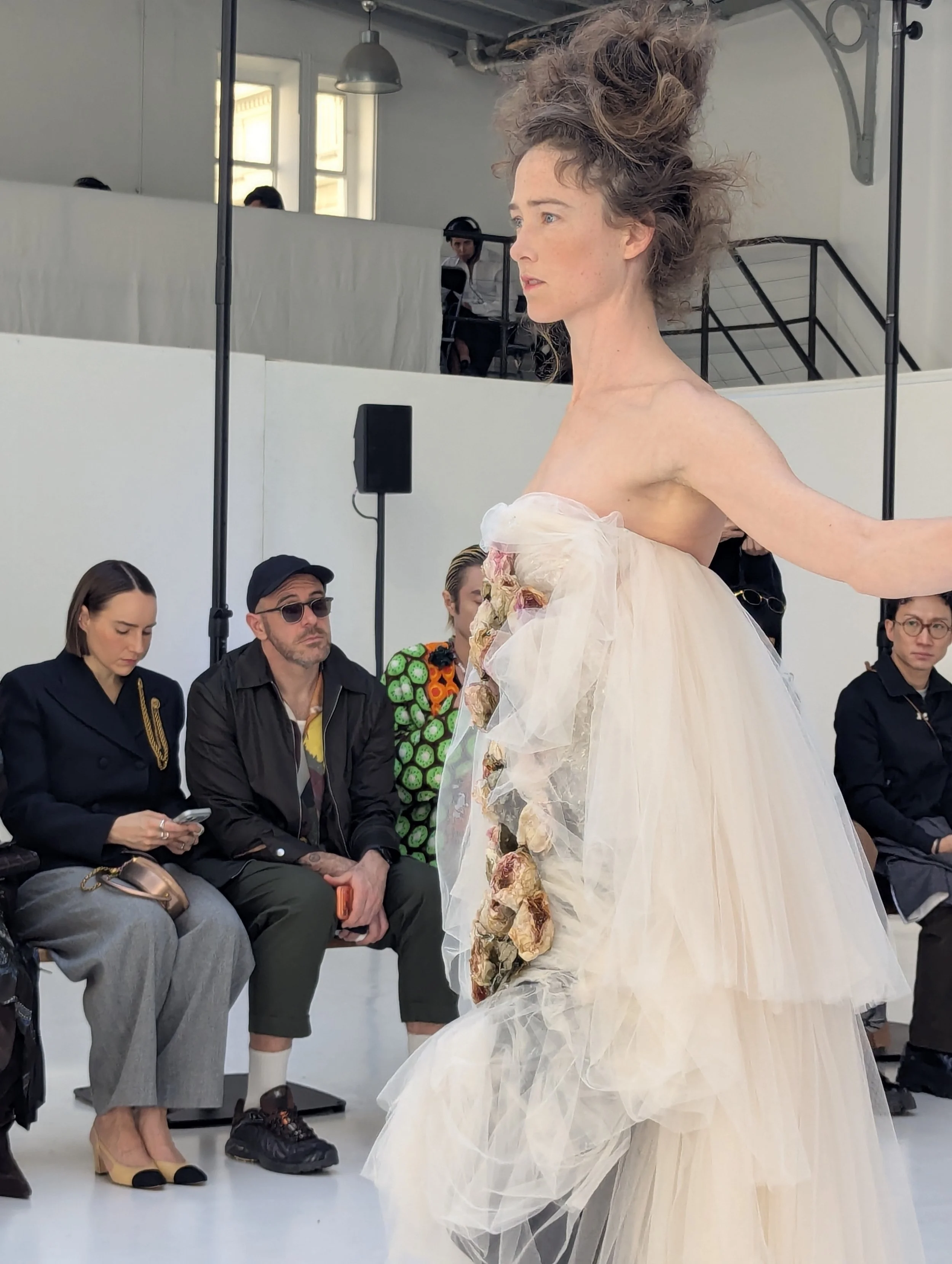
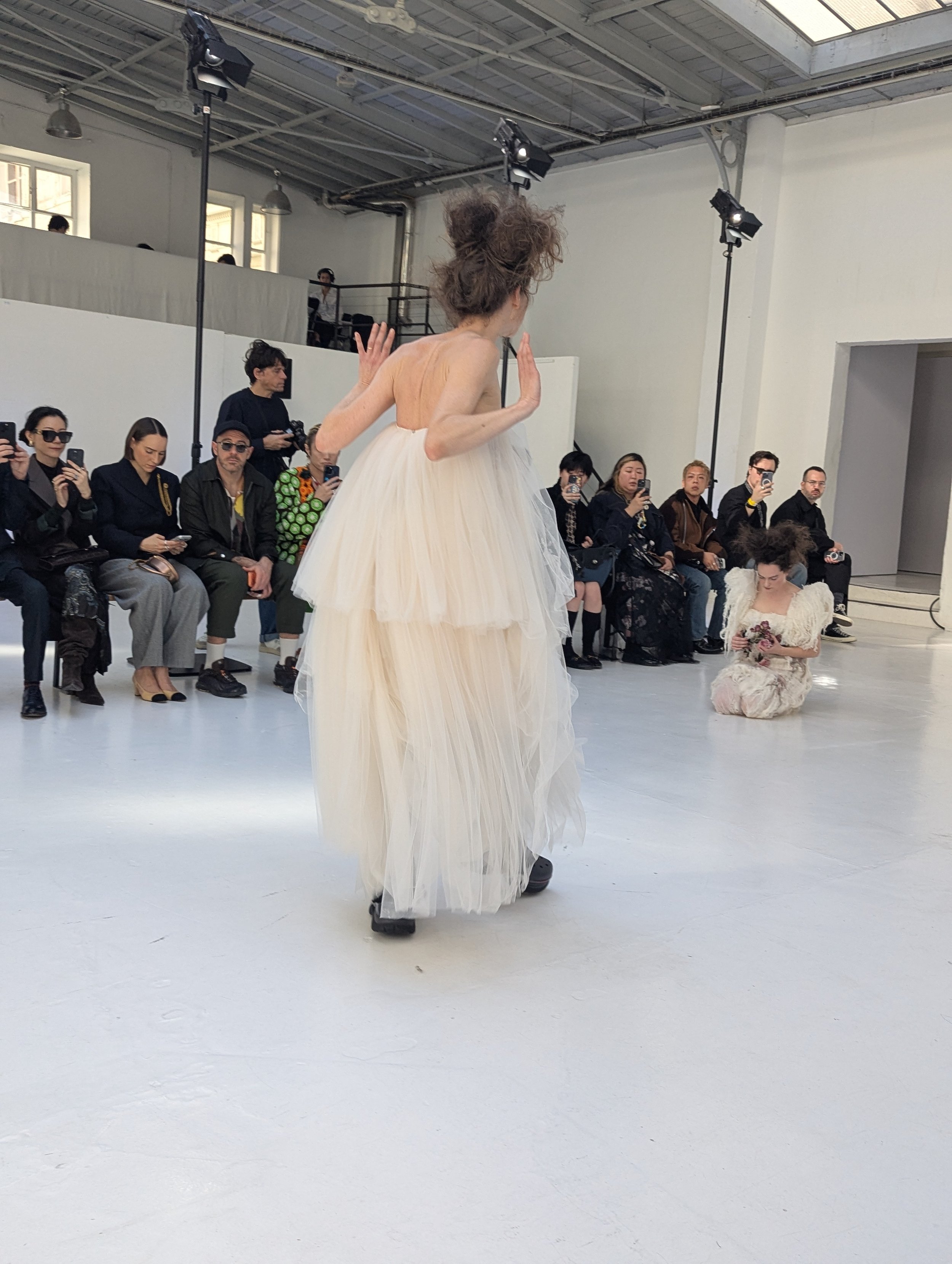
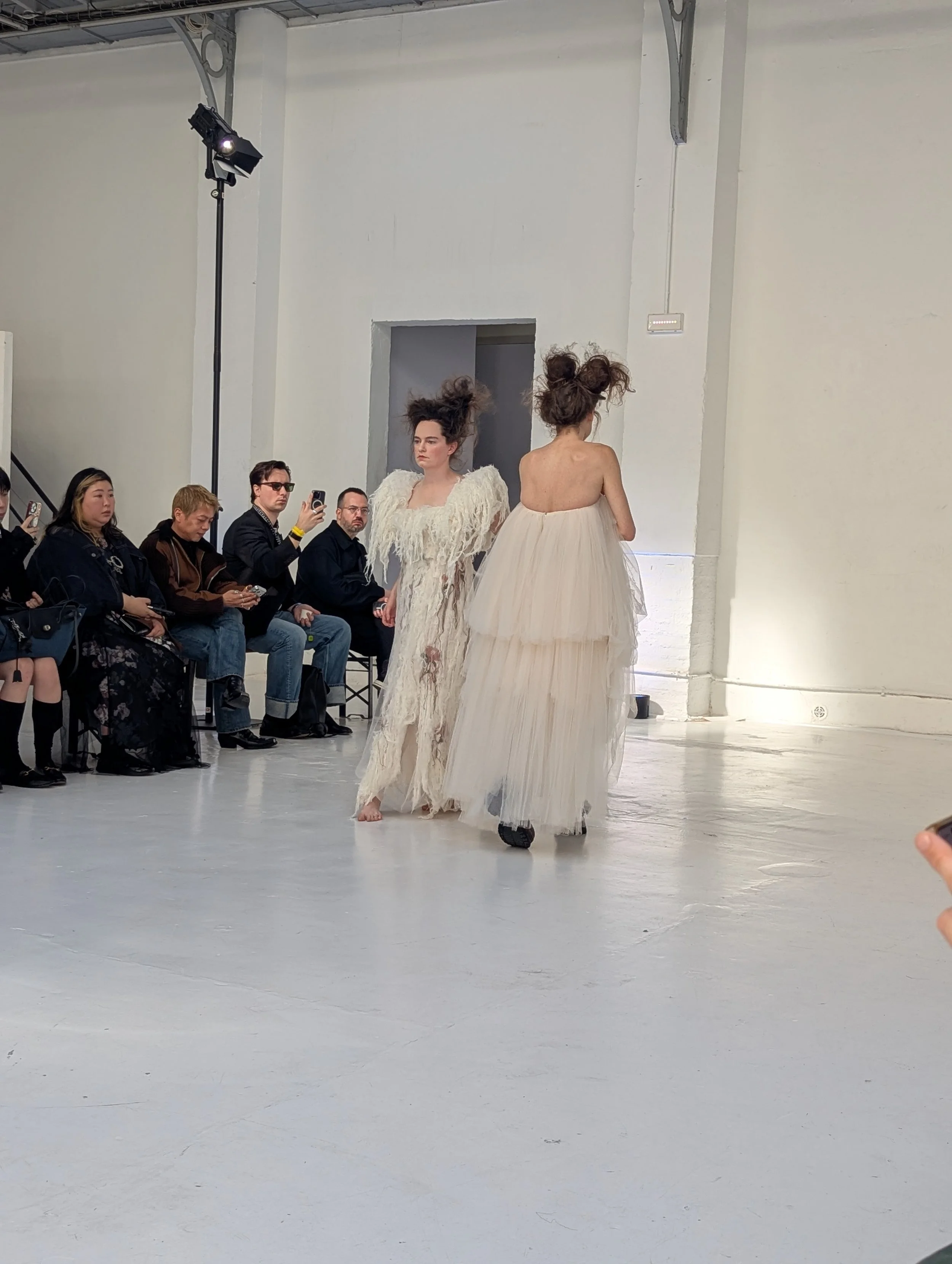
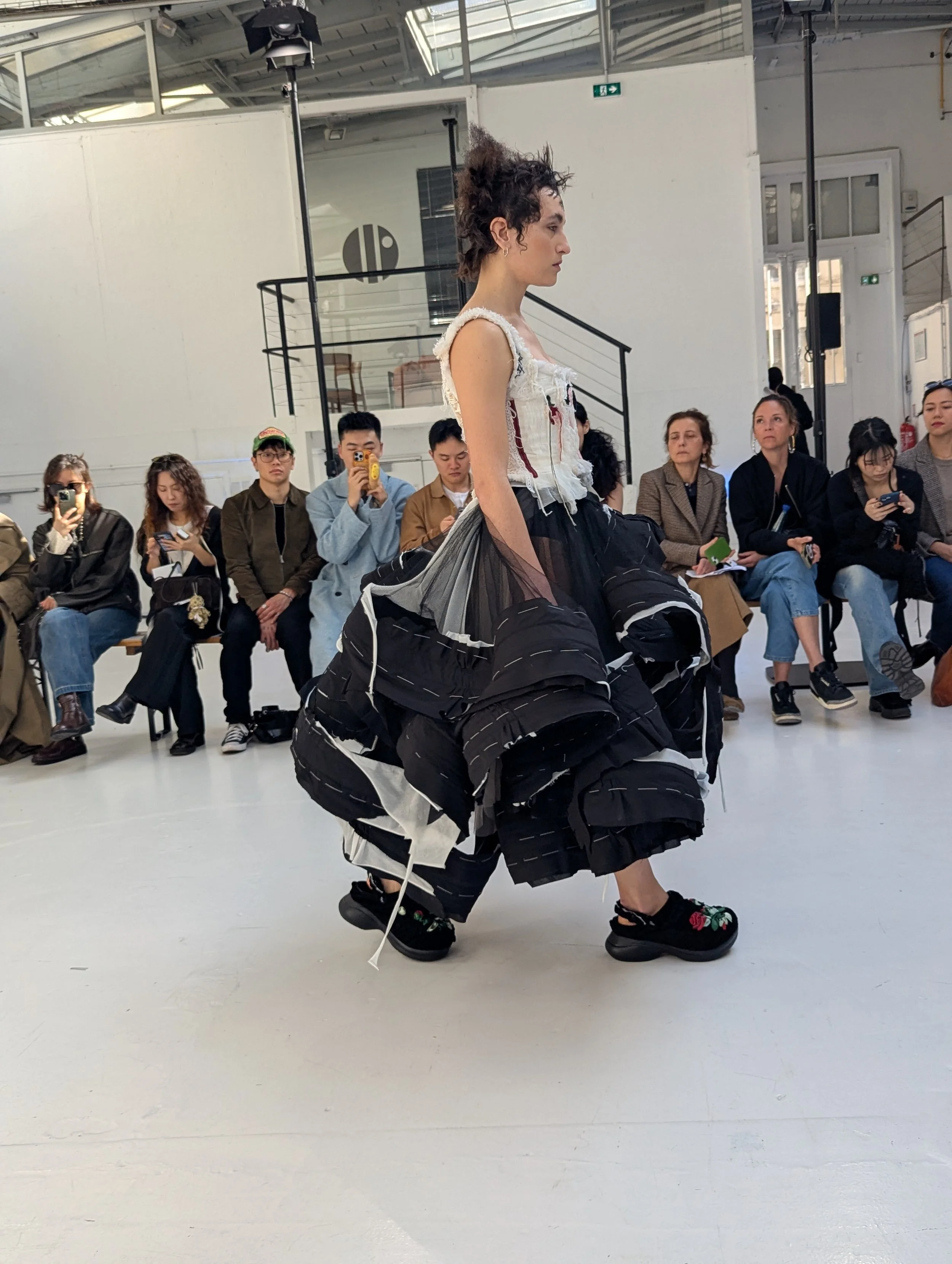
What made the collection especially compelling was its tactile depth. Hú’s work has always balanced romance with experimentation, but AW26 sharpened that dialogue into something more emotionally raw. Multiple materials coexisted within a single look; silicone-coated florals embedded into translucent layers, cracked knit textures beside impossibly soft tulles, and sculptural forms softened by movement. Silhouettes floated between fragility and protection. Oversized cocoon shapes enveloped the body, while delicate floral appliqués emerged from fractured surfaces almost like flowers growing through concrete. The garments never felt overly polished; instead, they embraced imperfection as part of their beauty. There was also a notable maturity to the styling this season. While earlier Reverie collections often leaned heavily into dreamlike fantasy, AW26 grounded its romanticism in something more lived-in and introspective. The result was less escapism and more emotional archaeology.
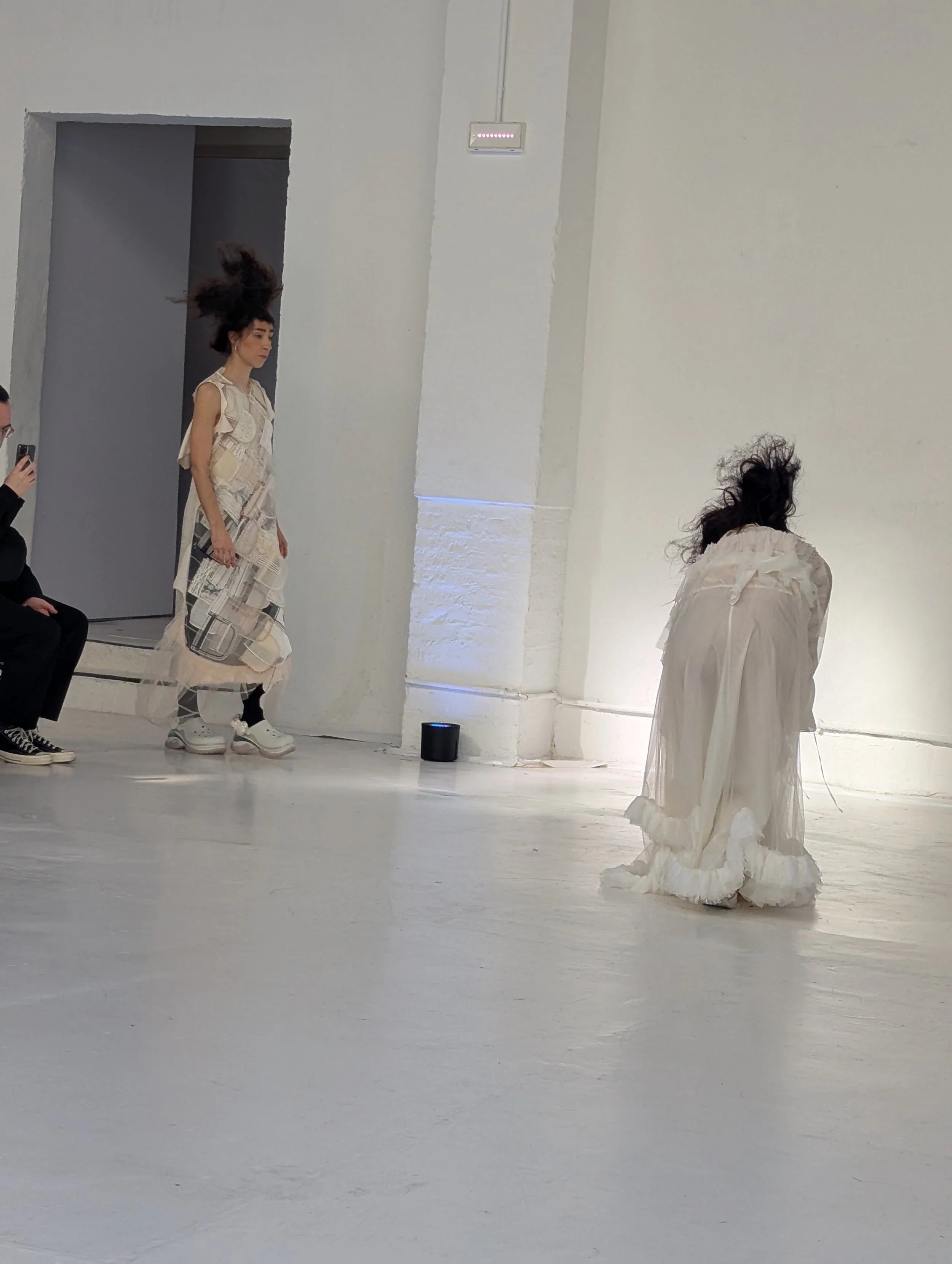
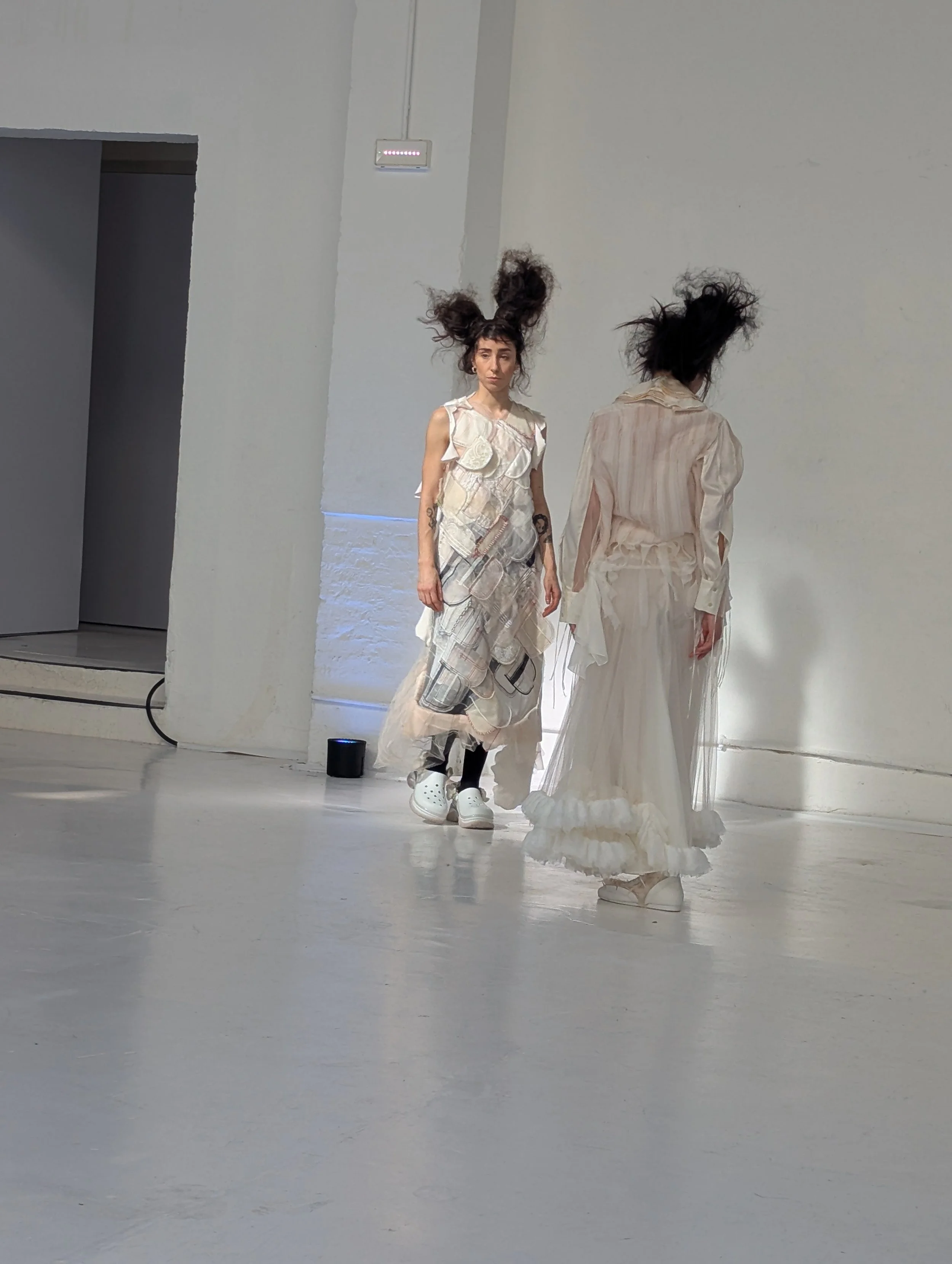
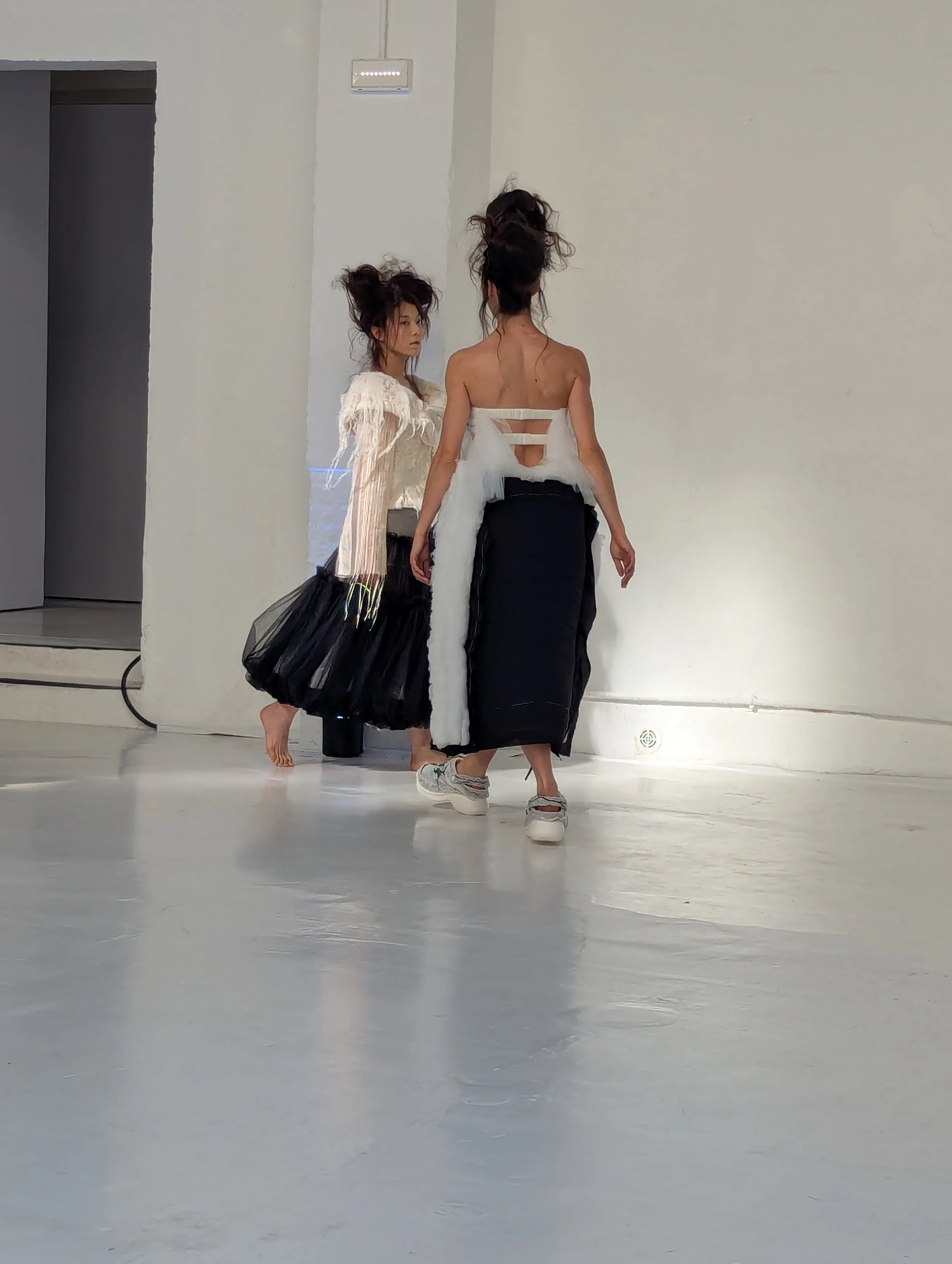
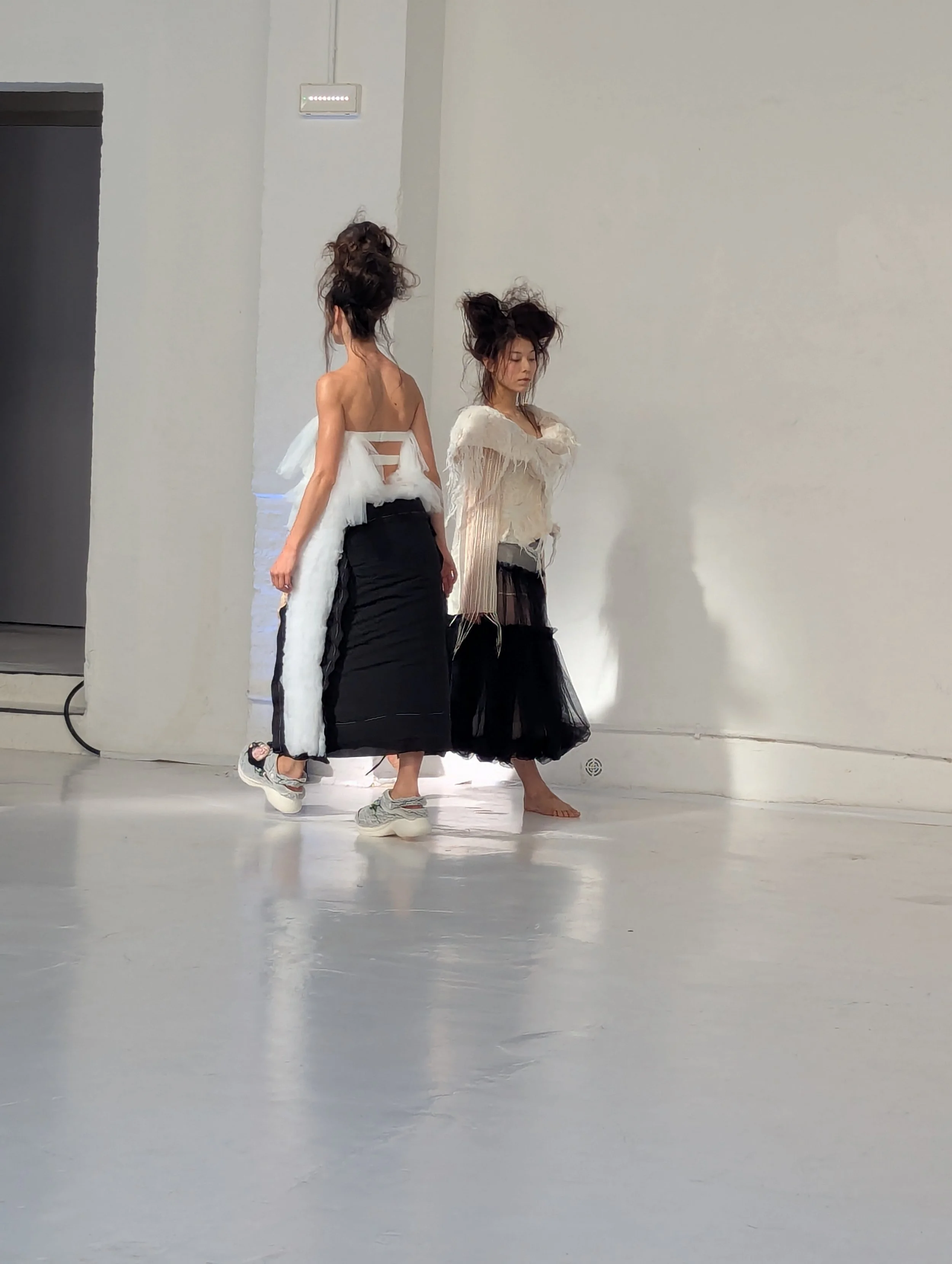
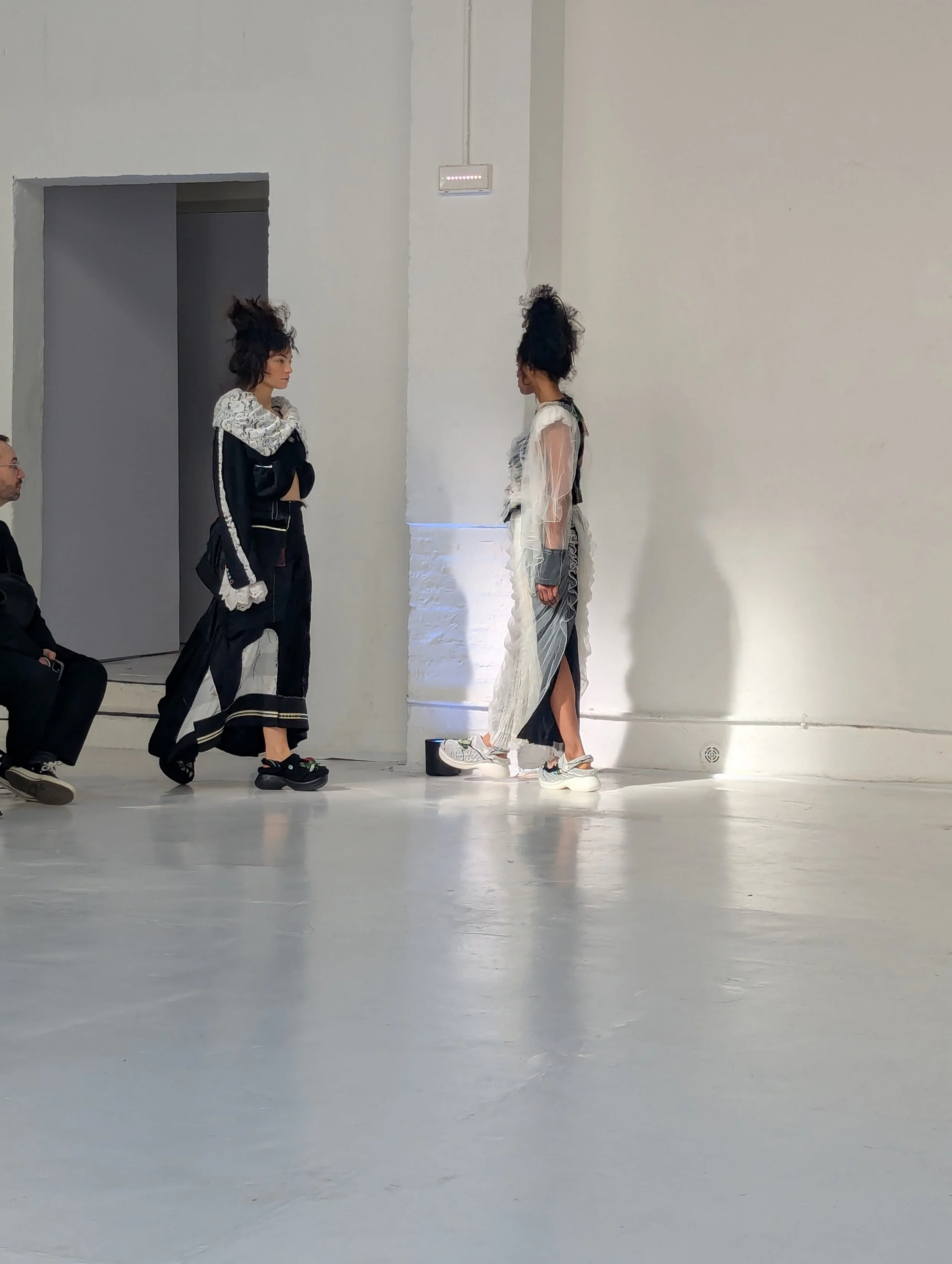
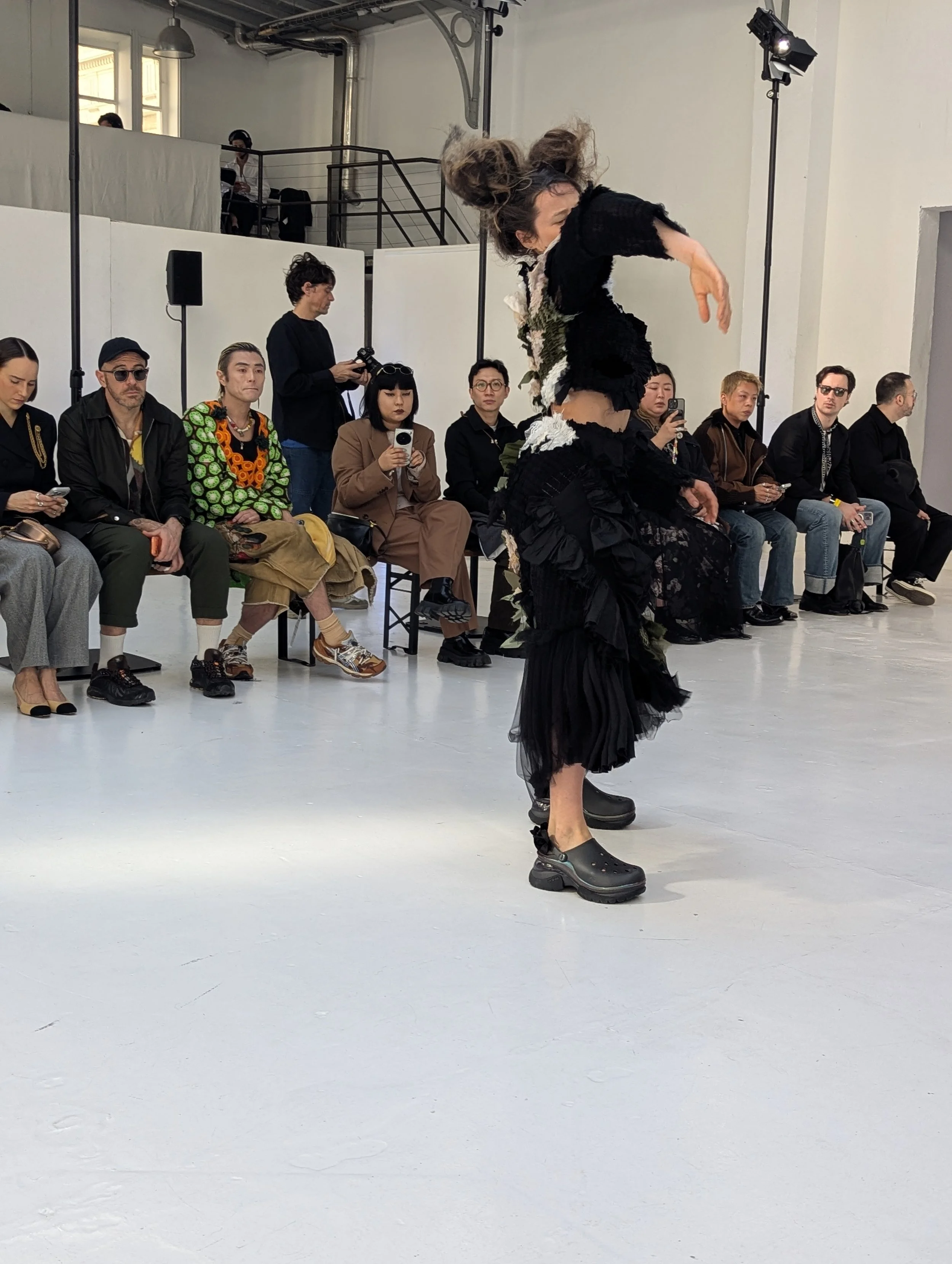
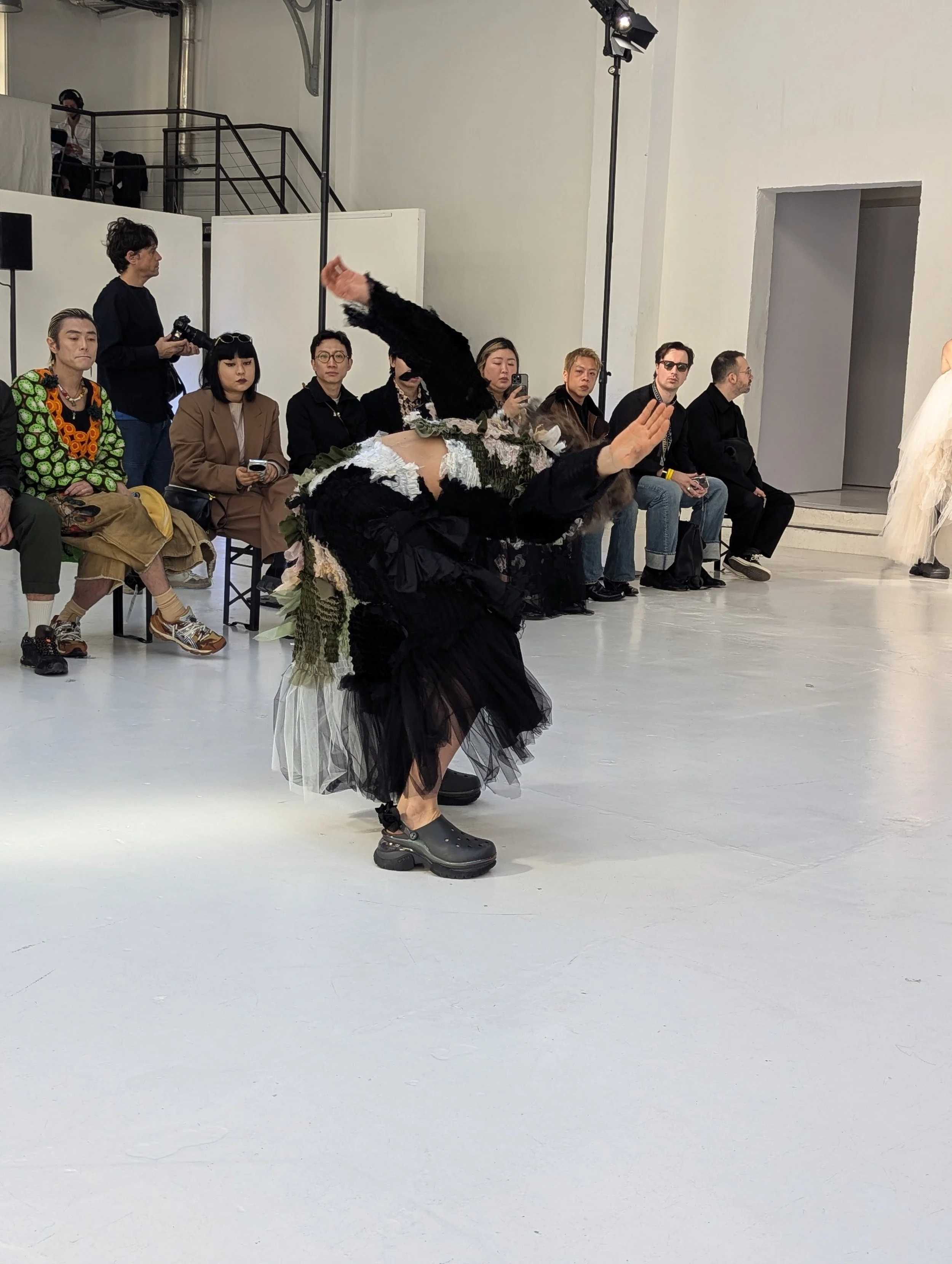
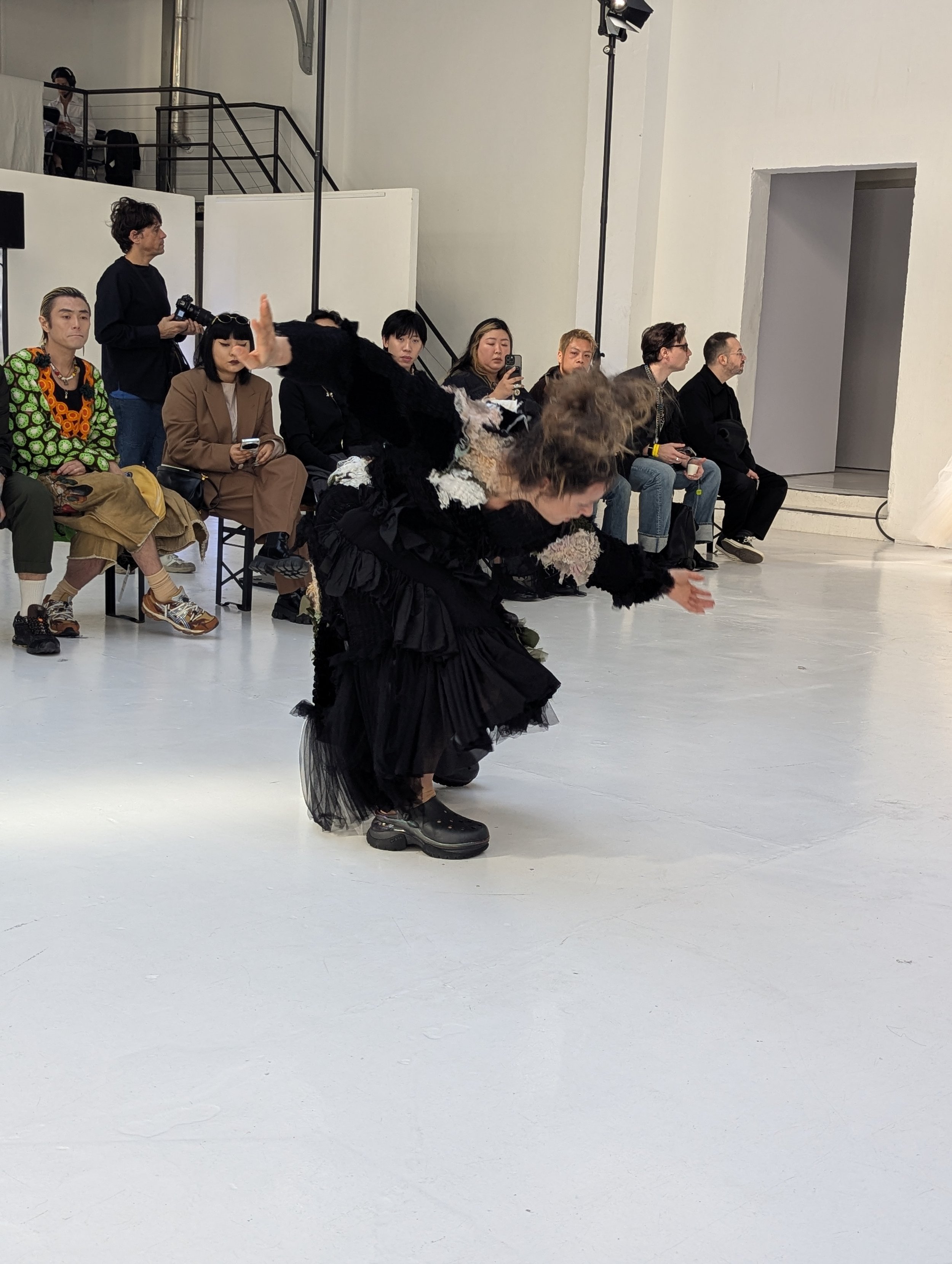
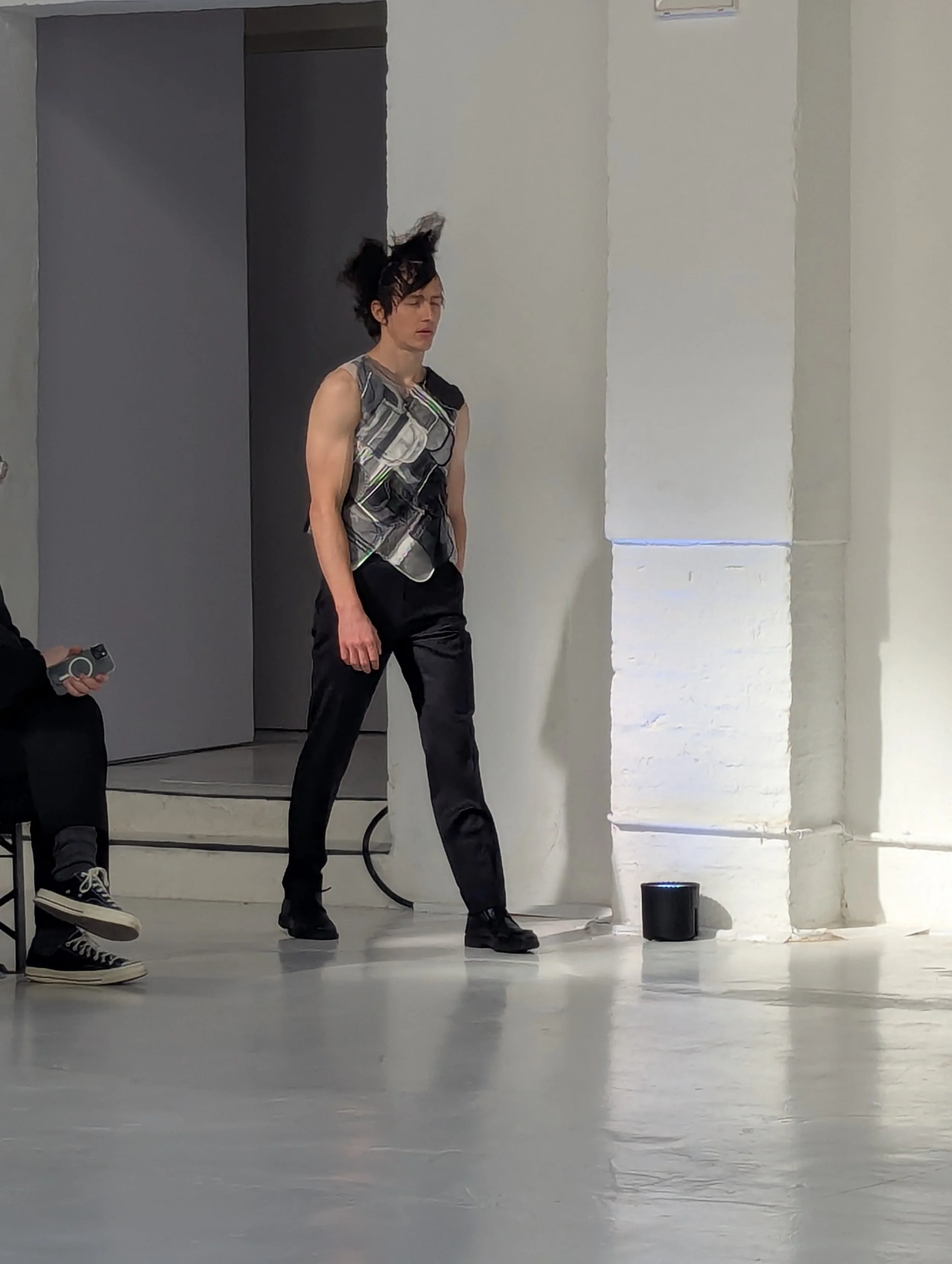
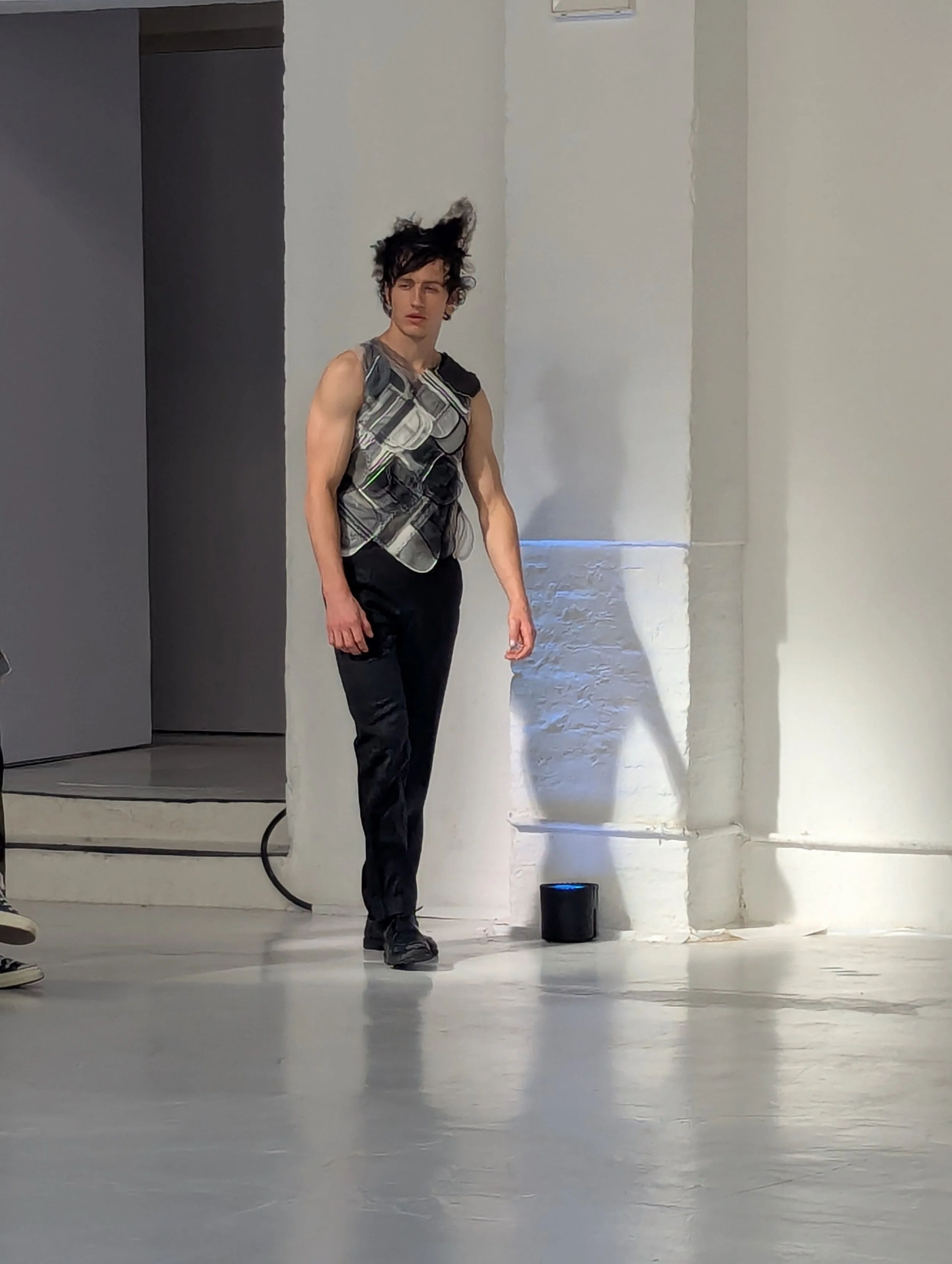
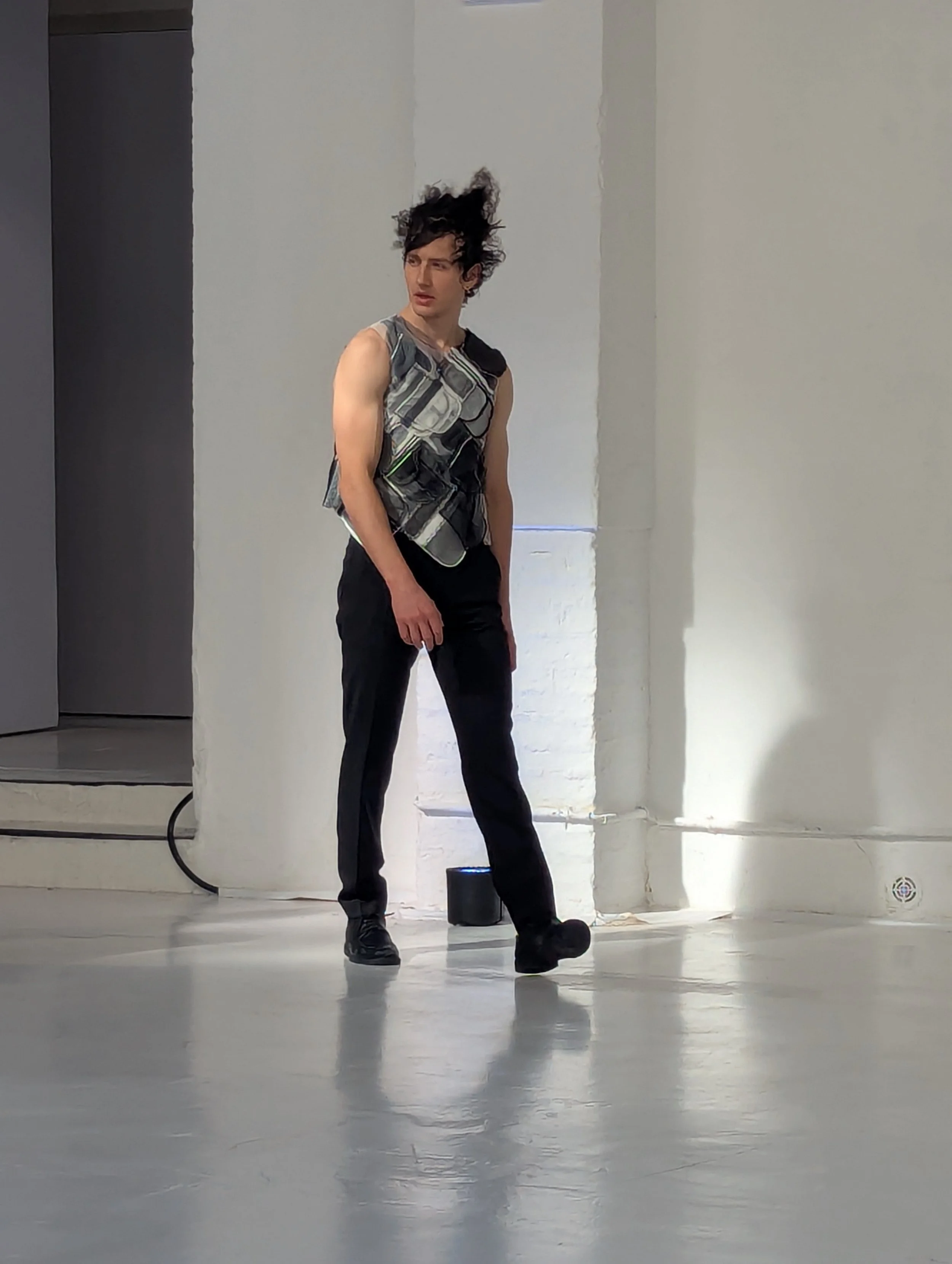
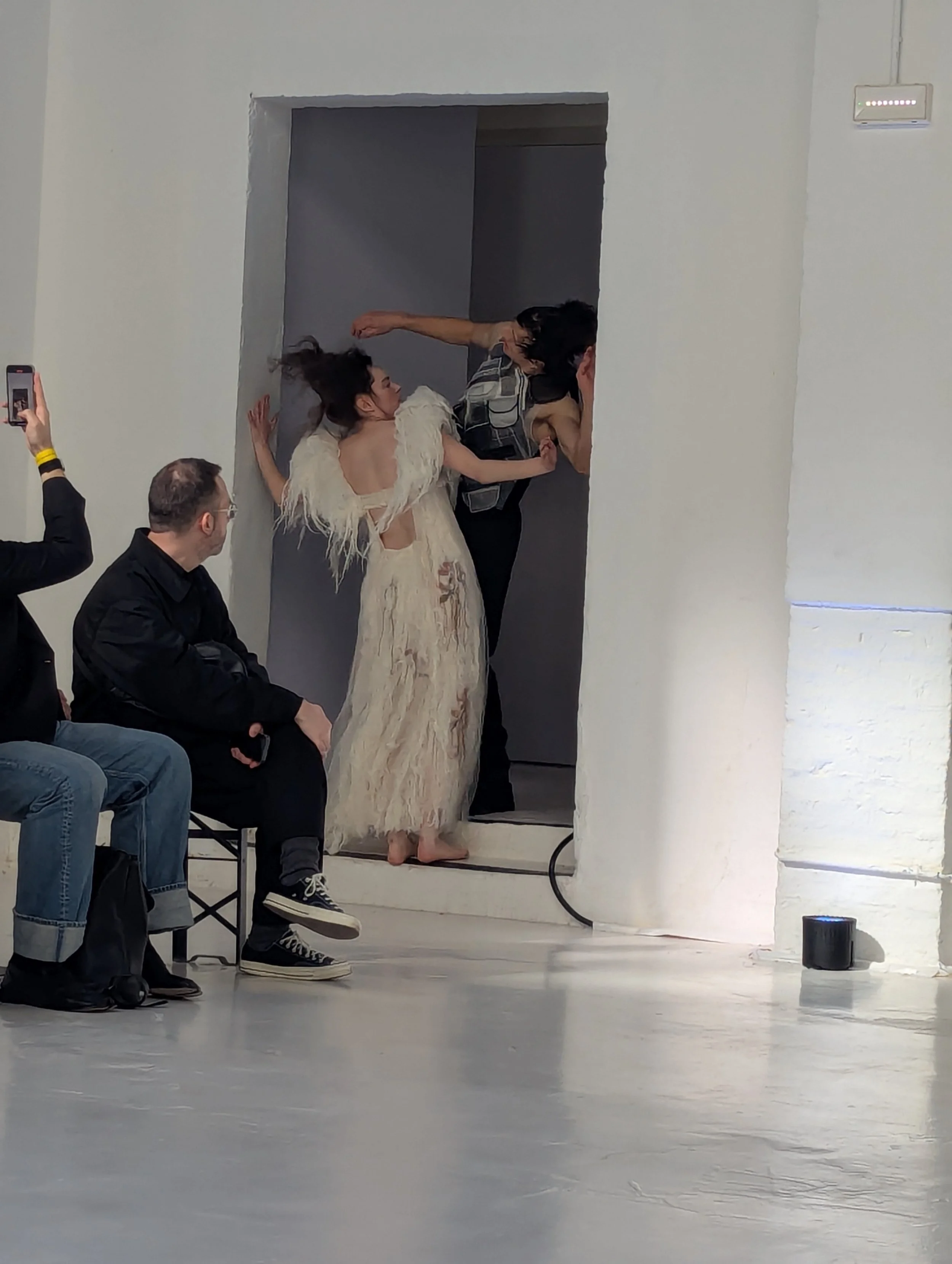
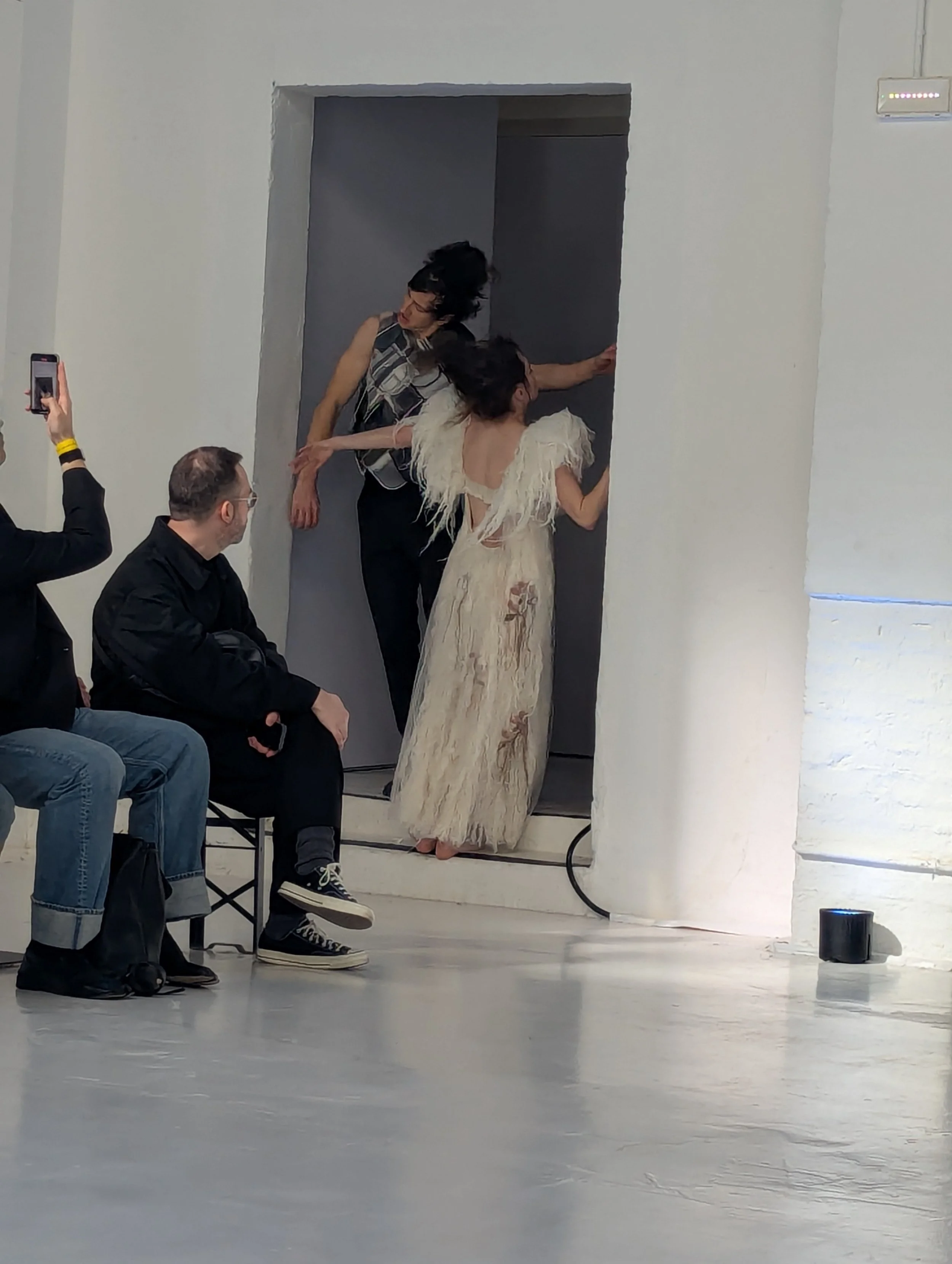
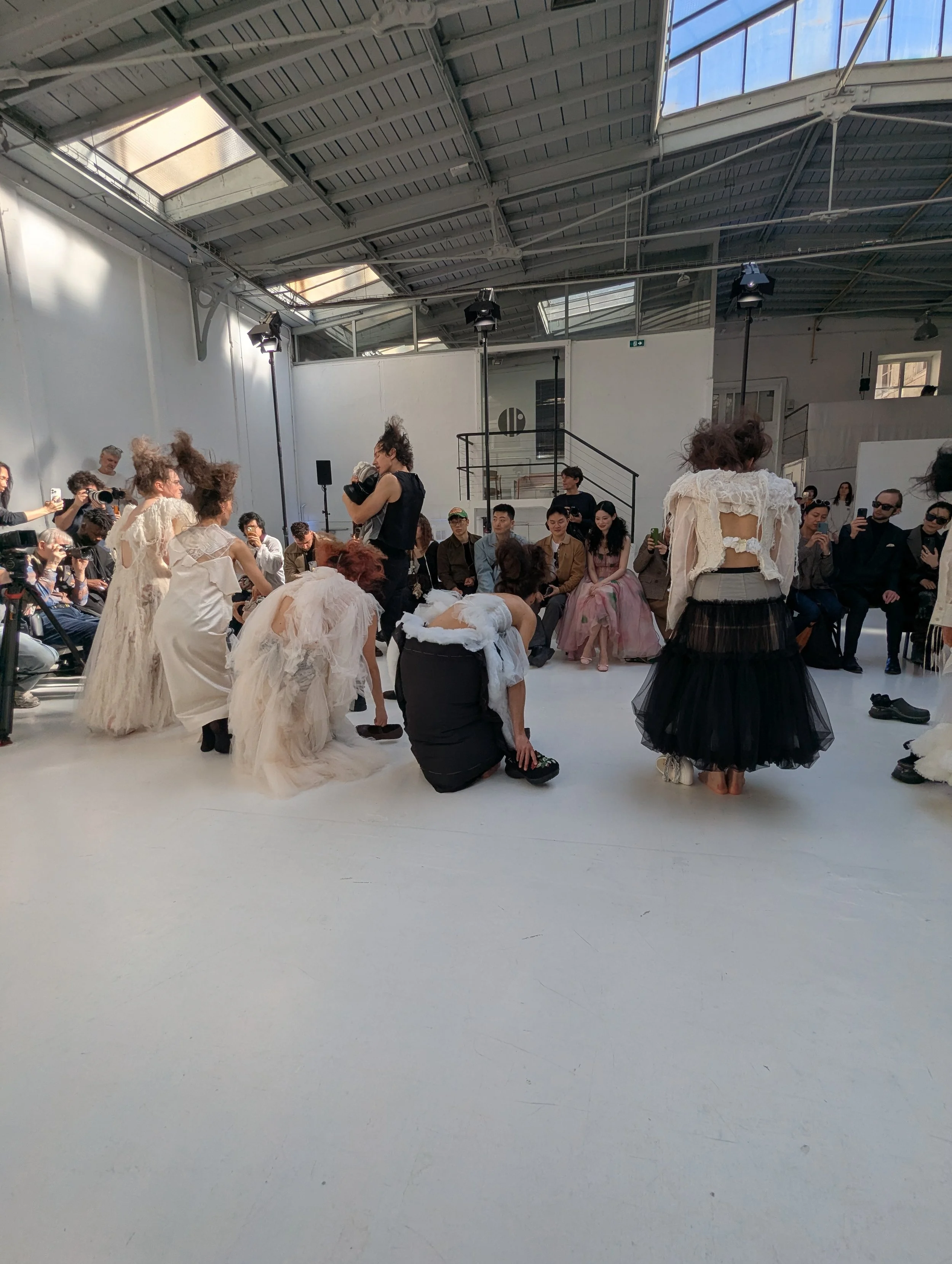
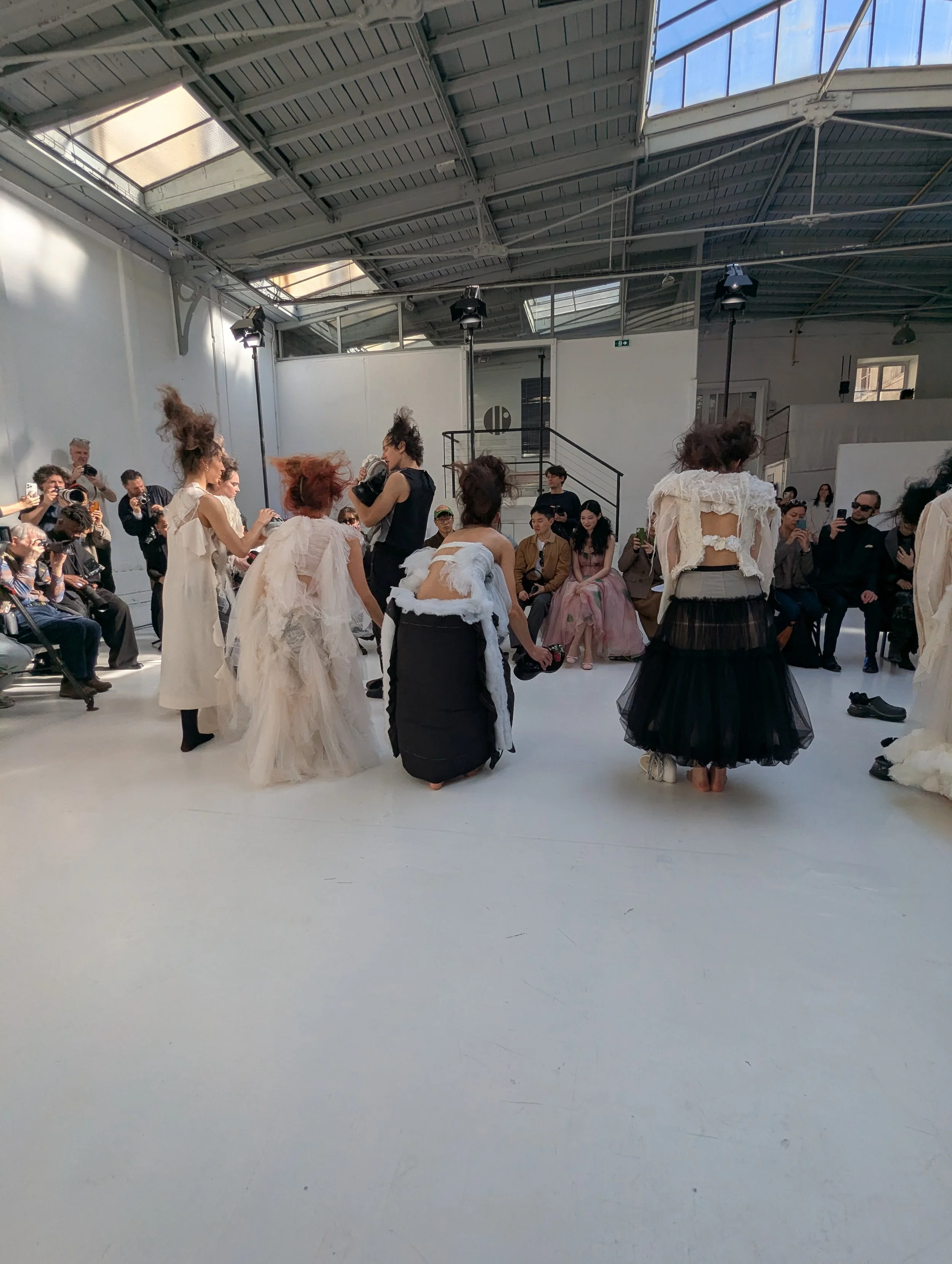
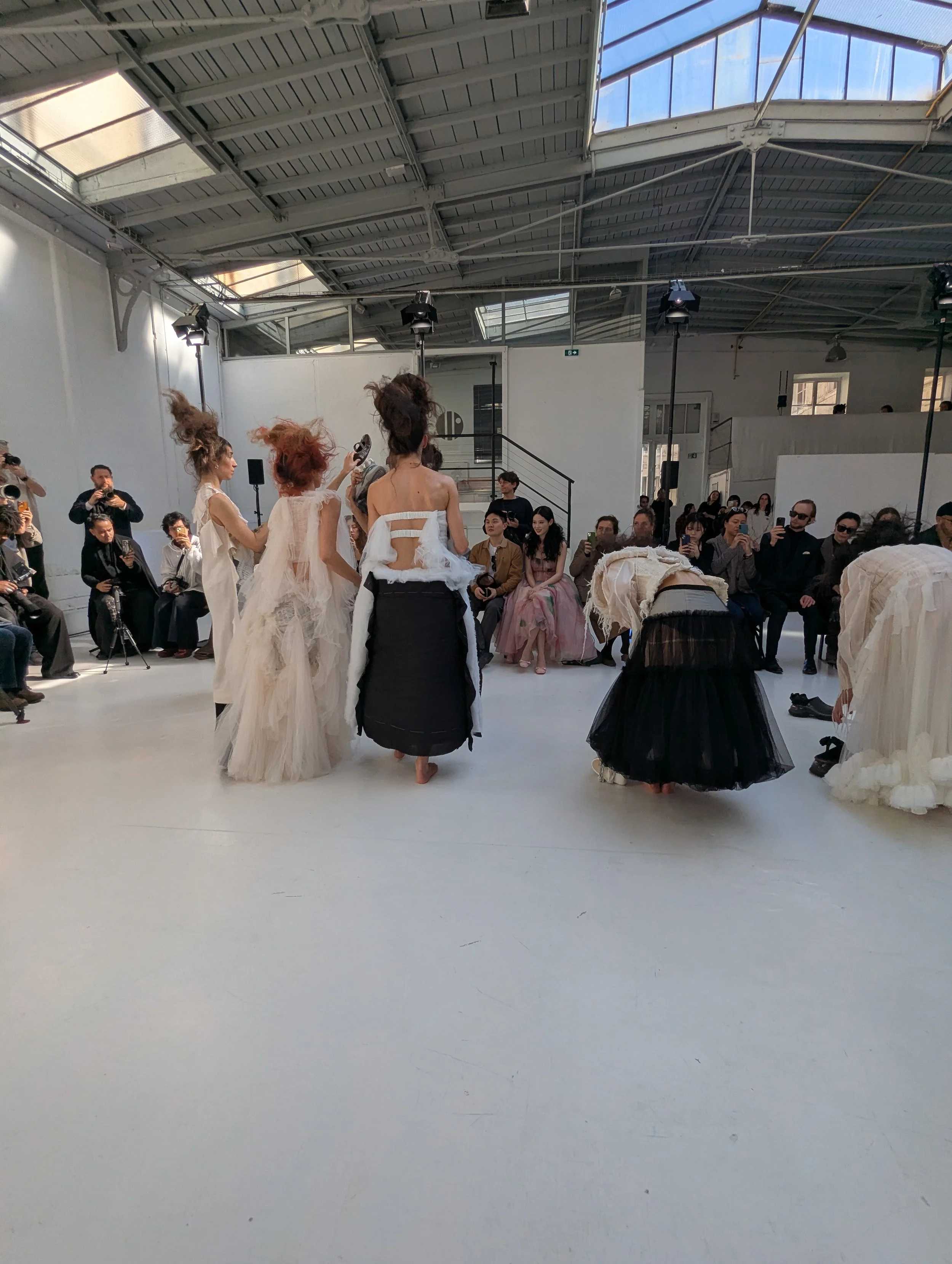
In one of the collection’s strongest creative decisions, Hú replaced traditional runway casting with dancers Emma Portner and Matt McCreary, allowing movement to become part of the storytelling. Their choreography transformed the runway into something almost theatrical, emphasizing the fluidity and emotional vulnerability of the clothes. Rather than presenting fashion as static perfection, the performance highlighted the collection’s core themes; tenderness, rupture, and the tension between holding on and letting go.
One of the more unexpected moments came via Hú’s collaboration with Crocs, which debuted a reimagined Bae Clog adorned with cracked knitted uppers and hand-embroidered silk ribbon flowers. In another designer’s hands, the concept could have felt gimmicky. Here, it became an extension of the collection’s emotional language, beauty emerging from wear, softness pushing through damage. It also reinforced Hú’s growing ability to bridge avant-garde craftsmanship with commercially recognizable objects without compromising her identity.
What continues to set Caroline Hú apart is her refusal to chase spectacle for spectacle’s sake. In an industry increasingly driven by immediacy and viral moments, Reverie by Caroline Hú remains deeply personal, almost stubbornly emotional. AW26 was not about trends or sharp cultural commentary; it was about intimacy, memory, and the emotional residue objects leave behind. The collection felt less like a fashion show and more like stepping inside someone’s dream journal; fragile, imperfect, romantic, and profoundly human. With AW26, Caroline Hú reaffirmed herself as one of the most emotionally intelligent voices working in fashion today.