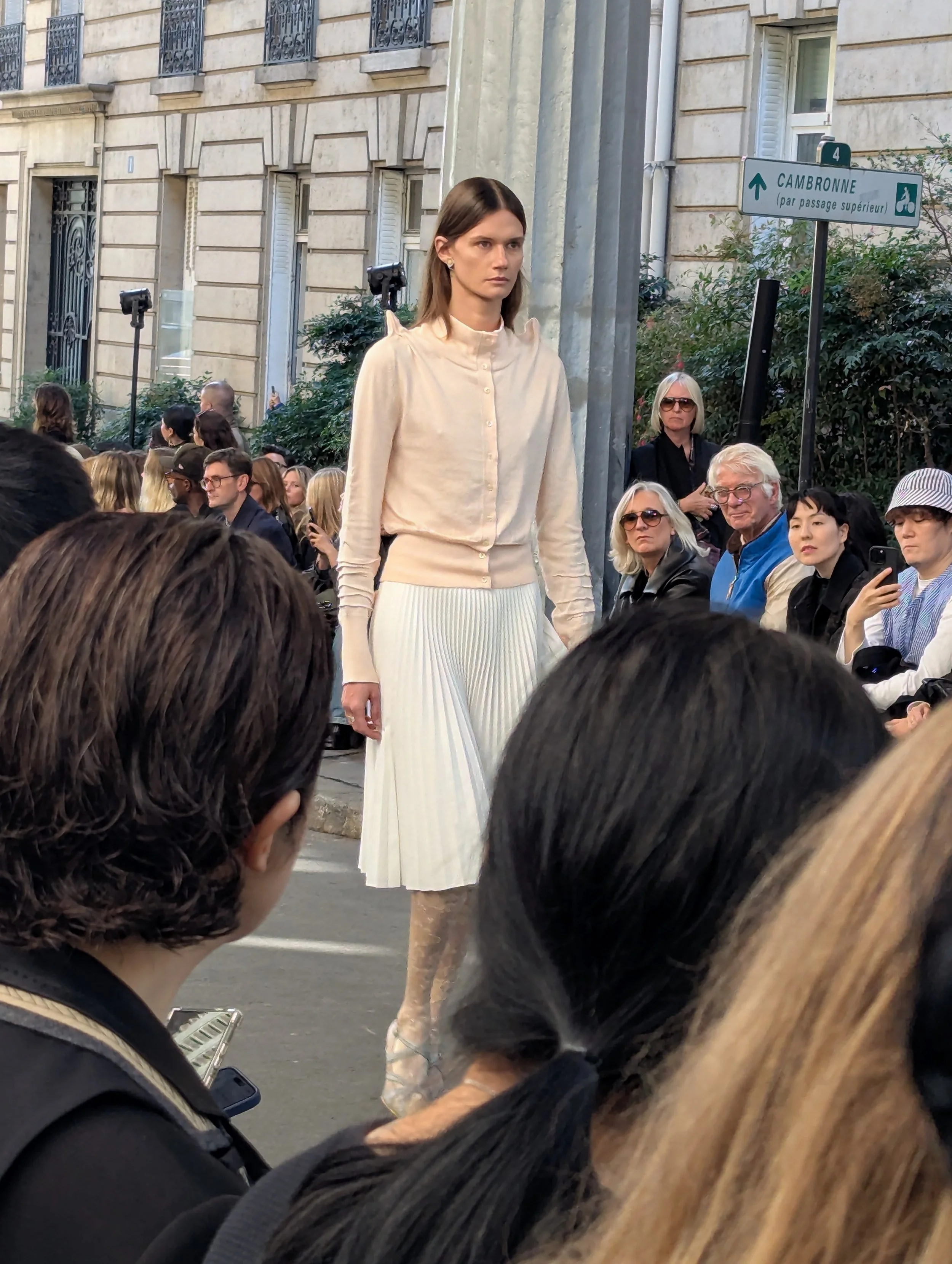
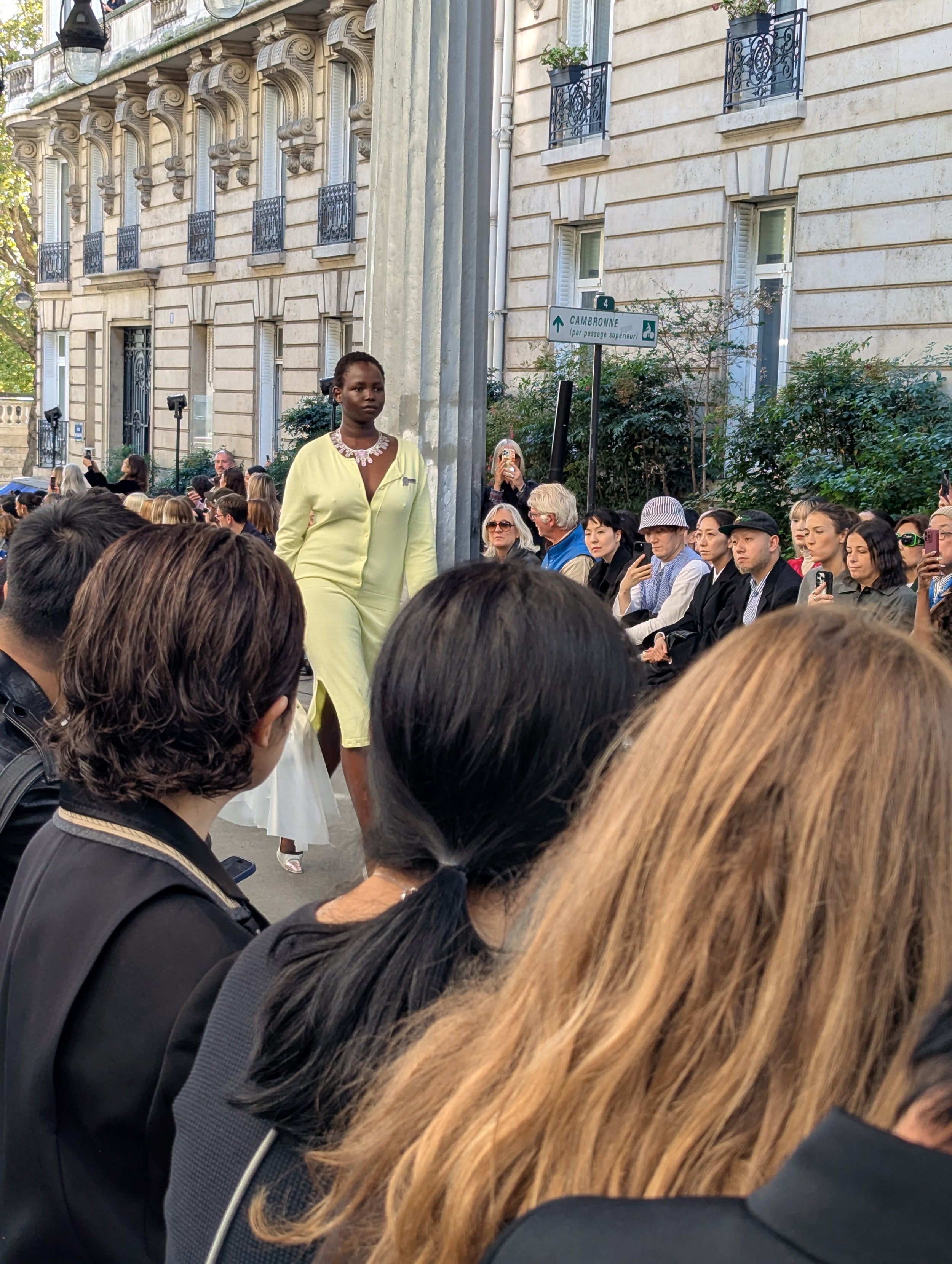
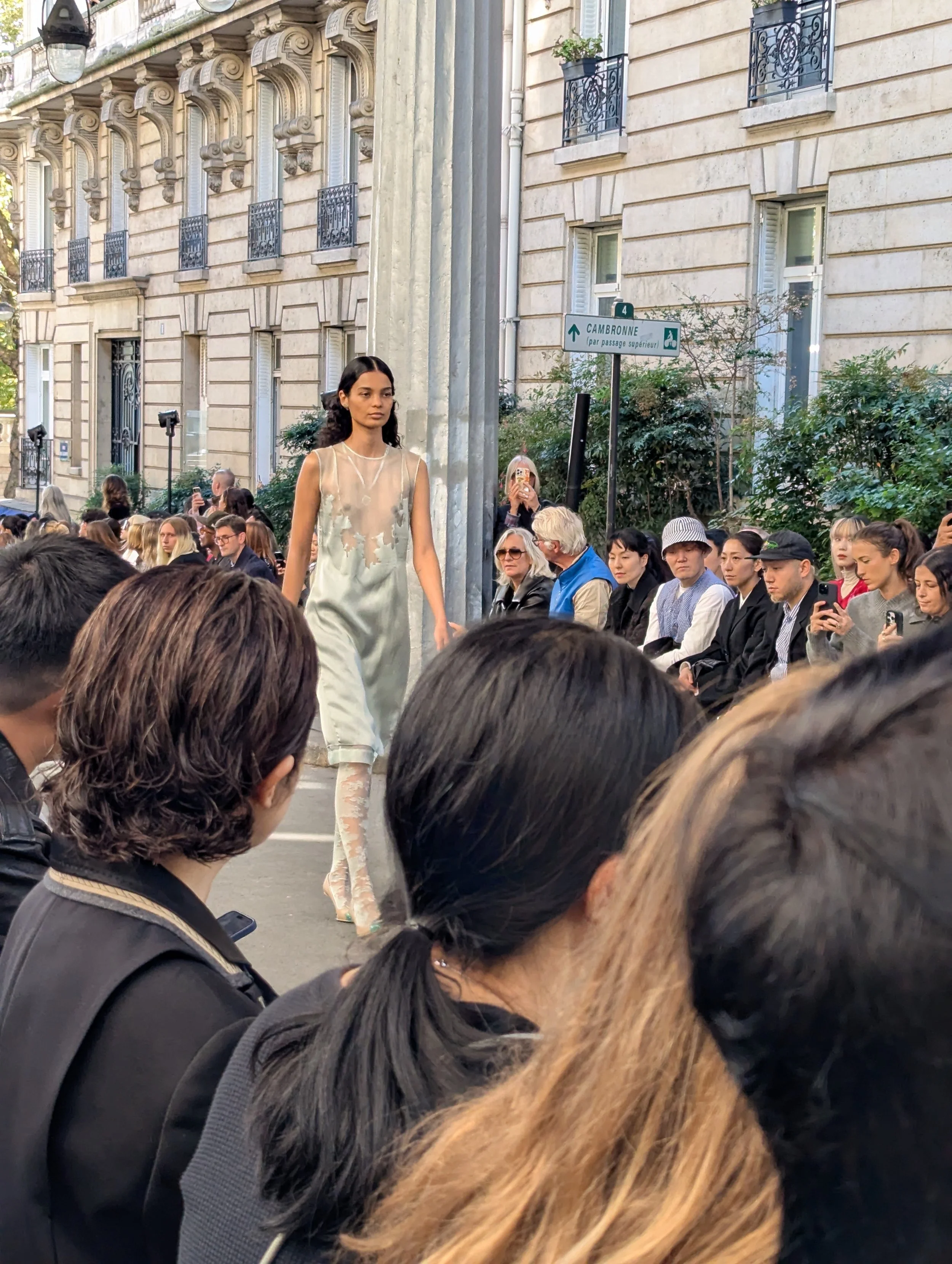
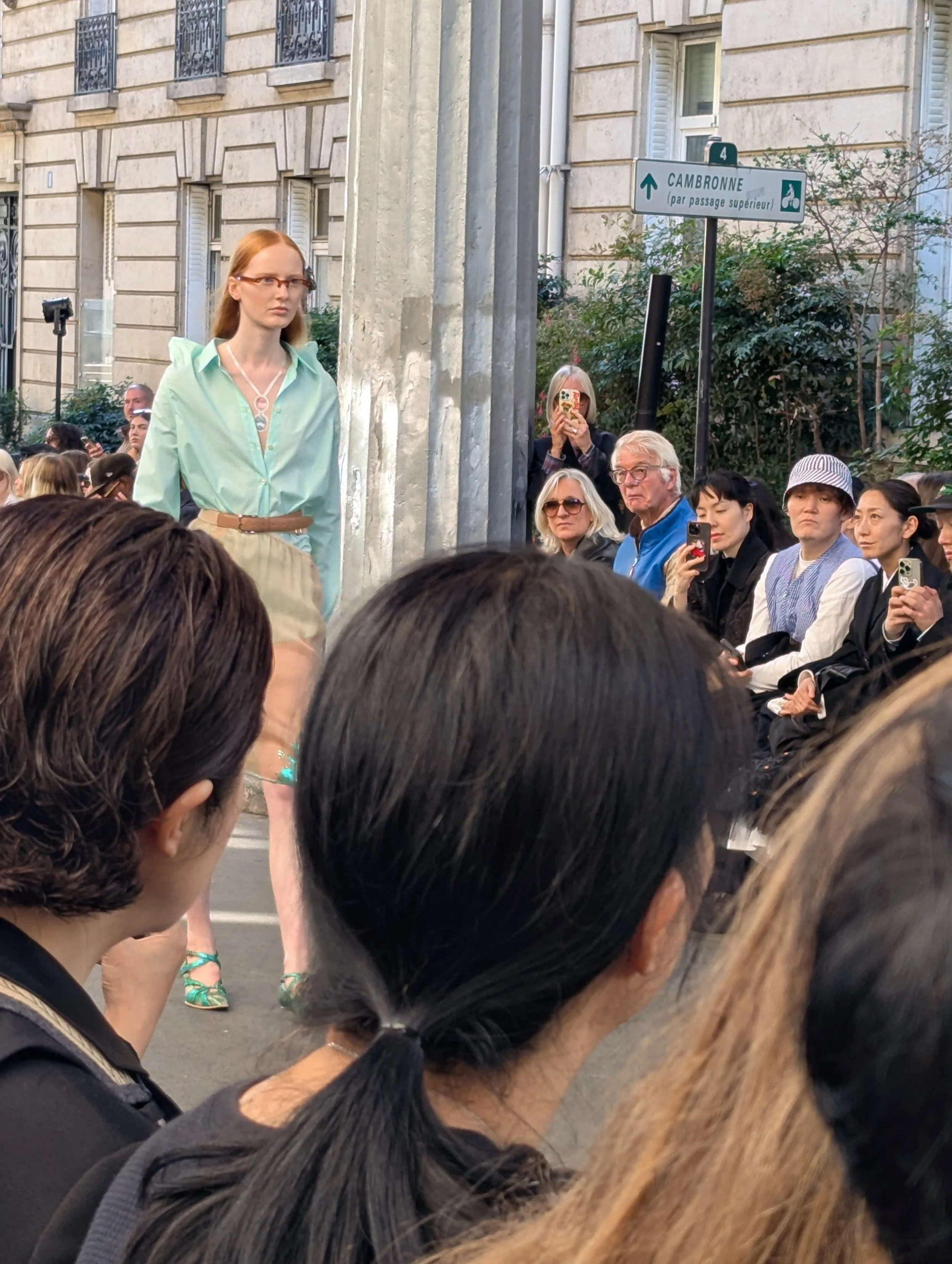
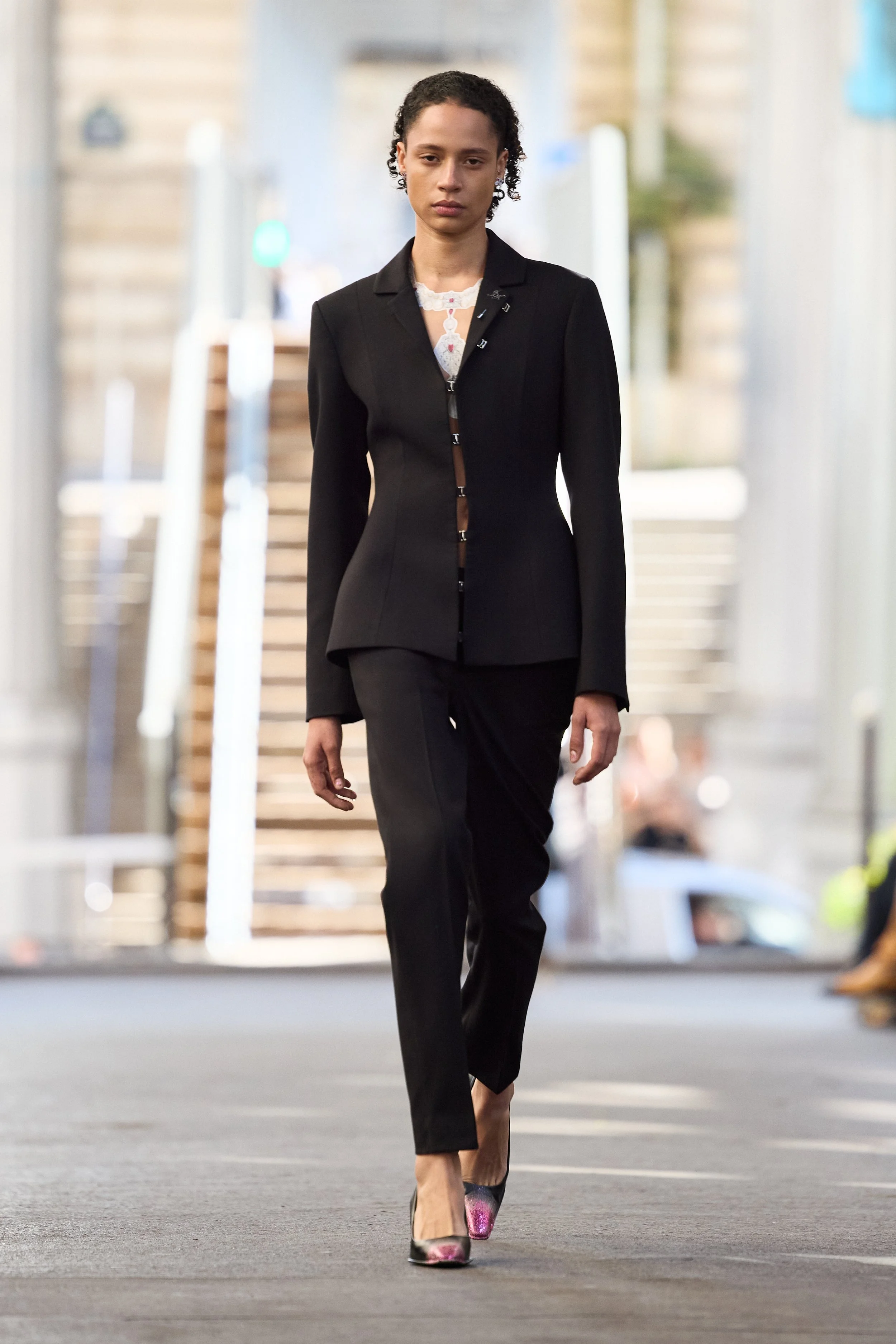
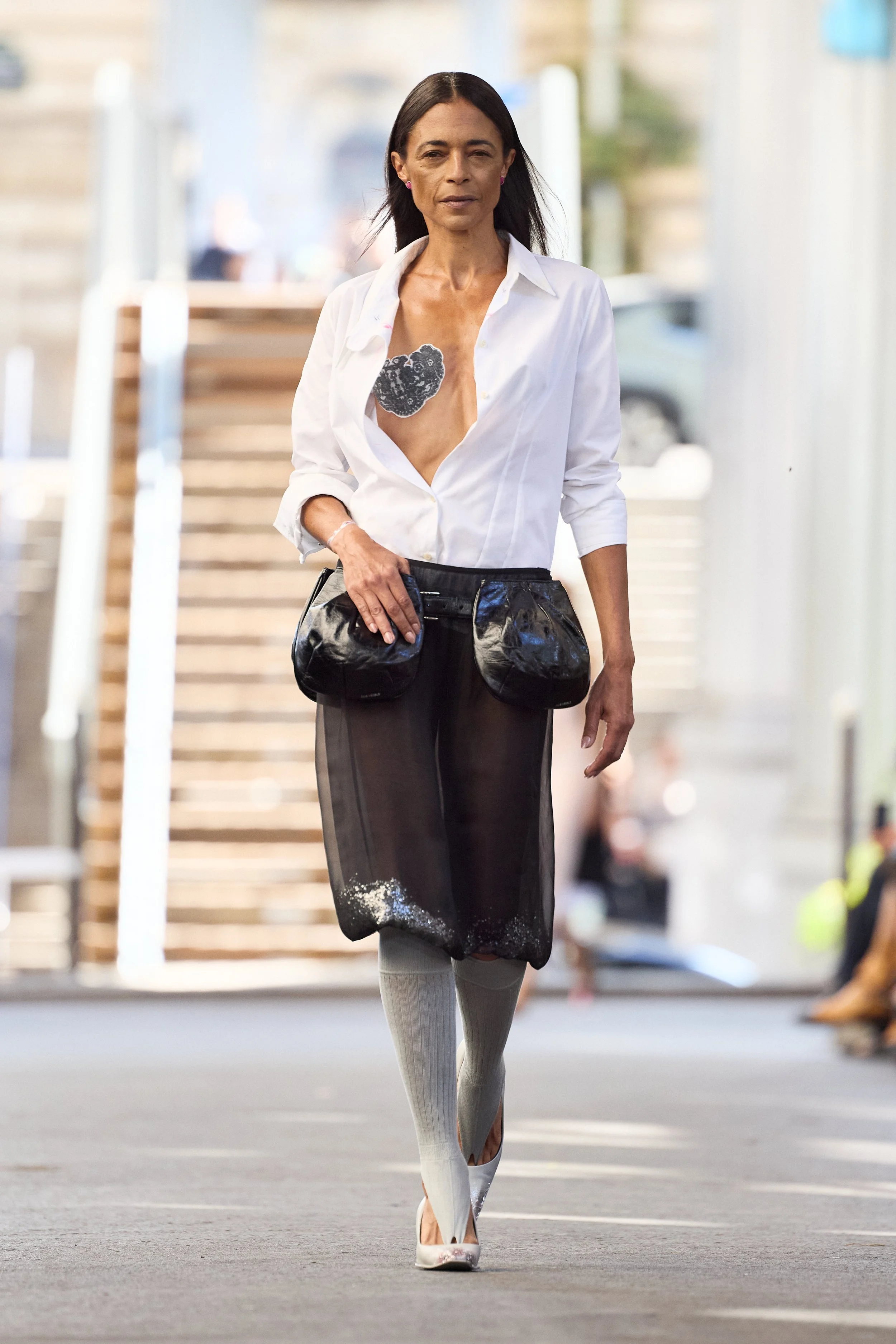
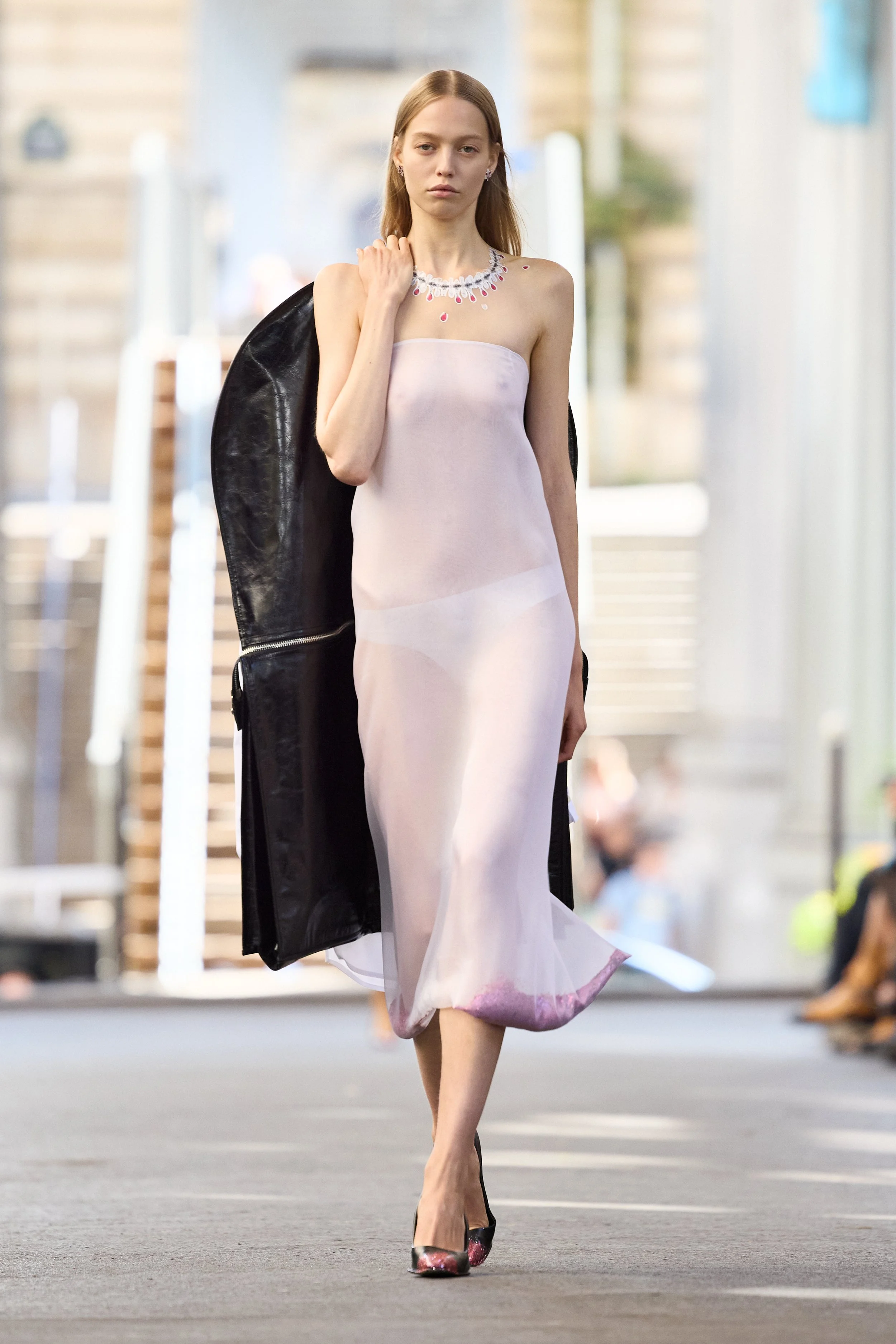
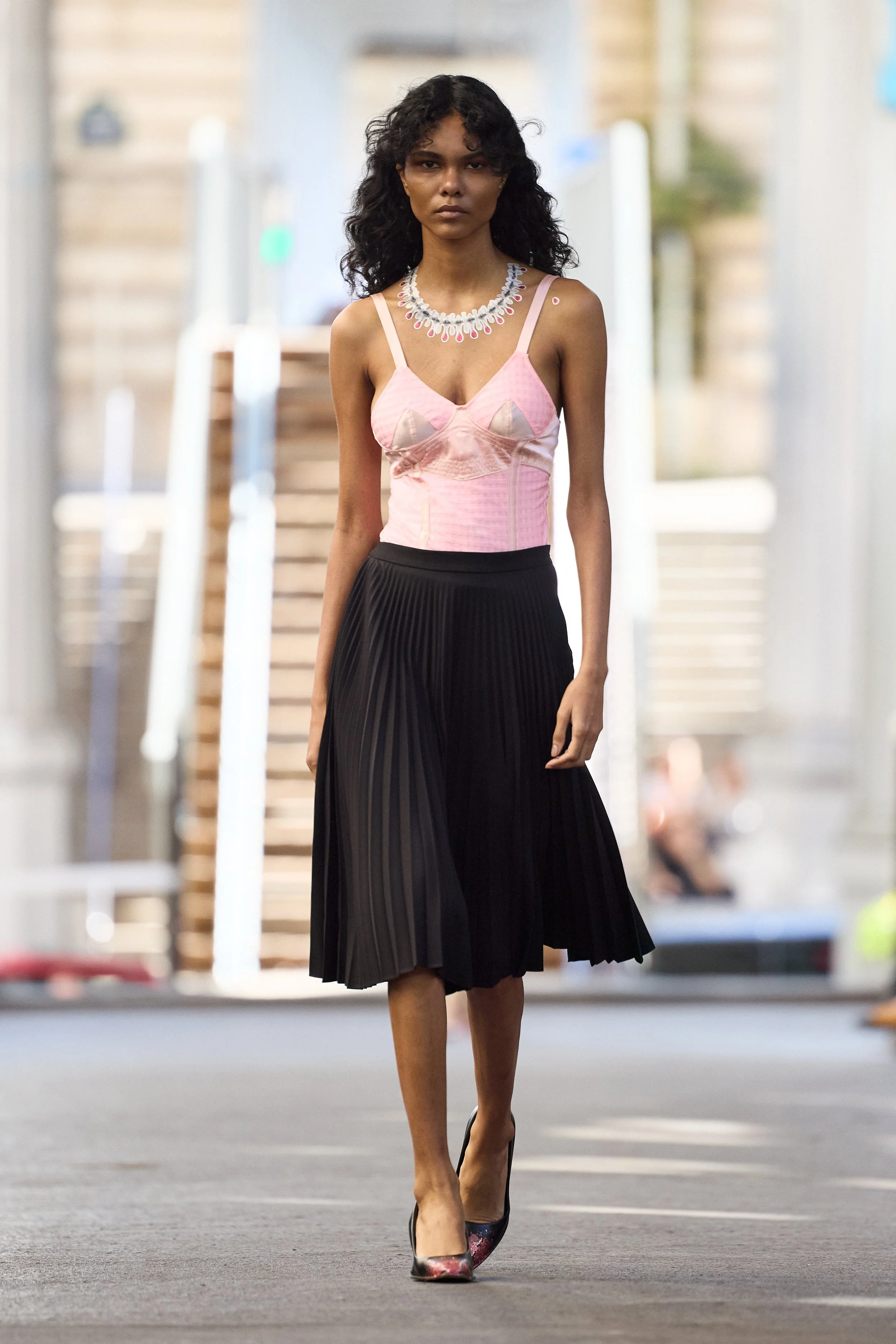
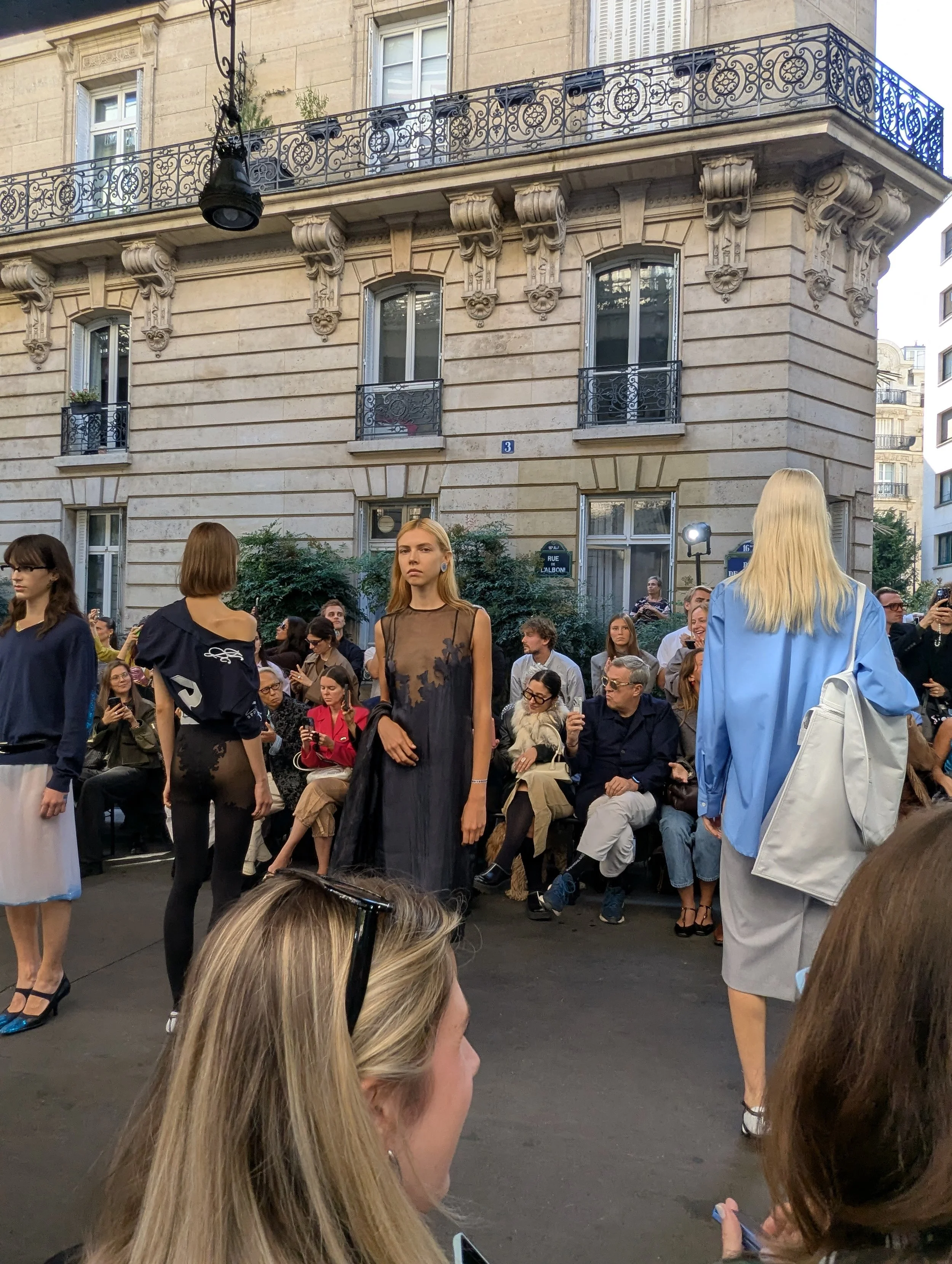
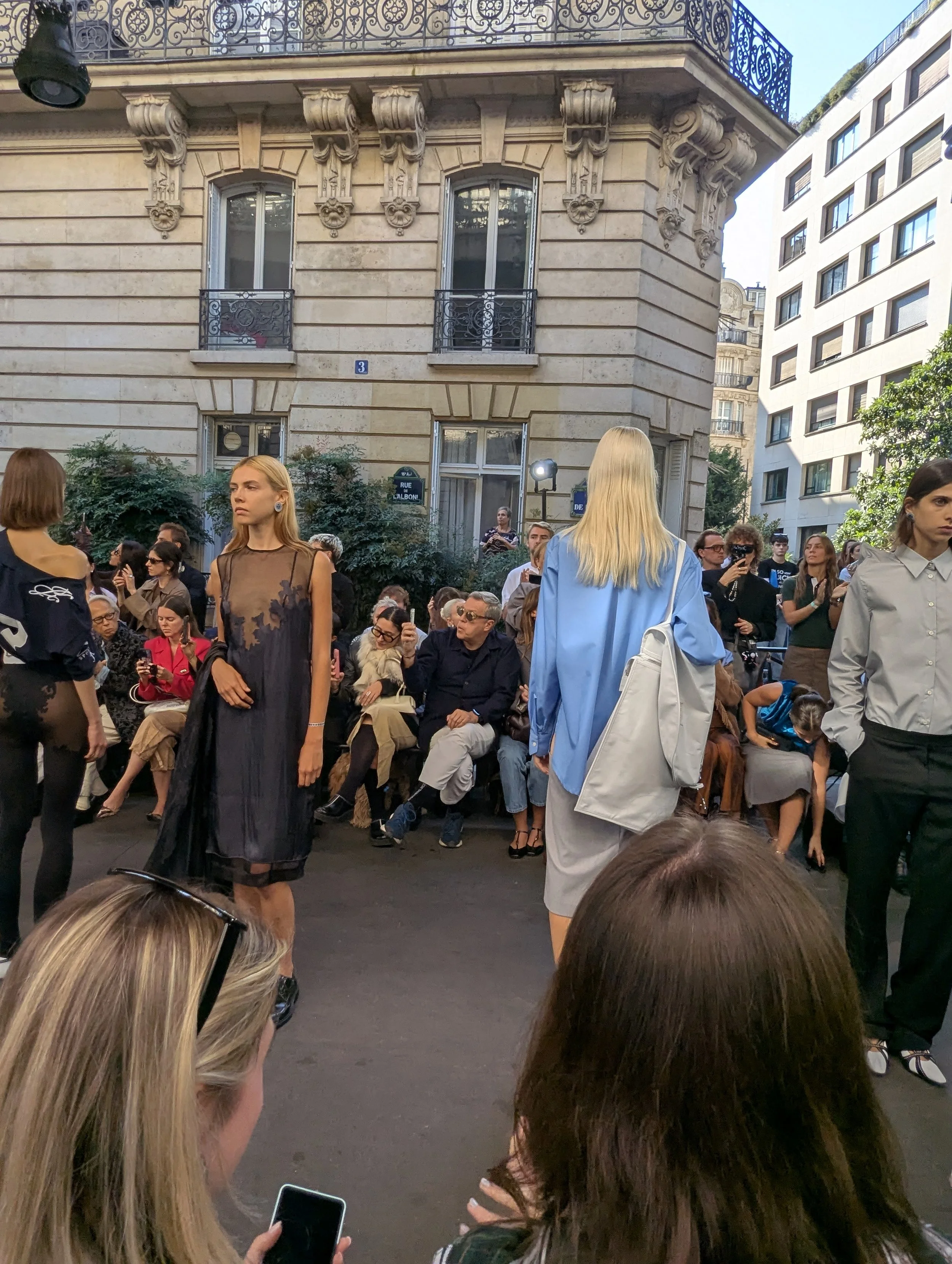
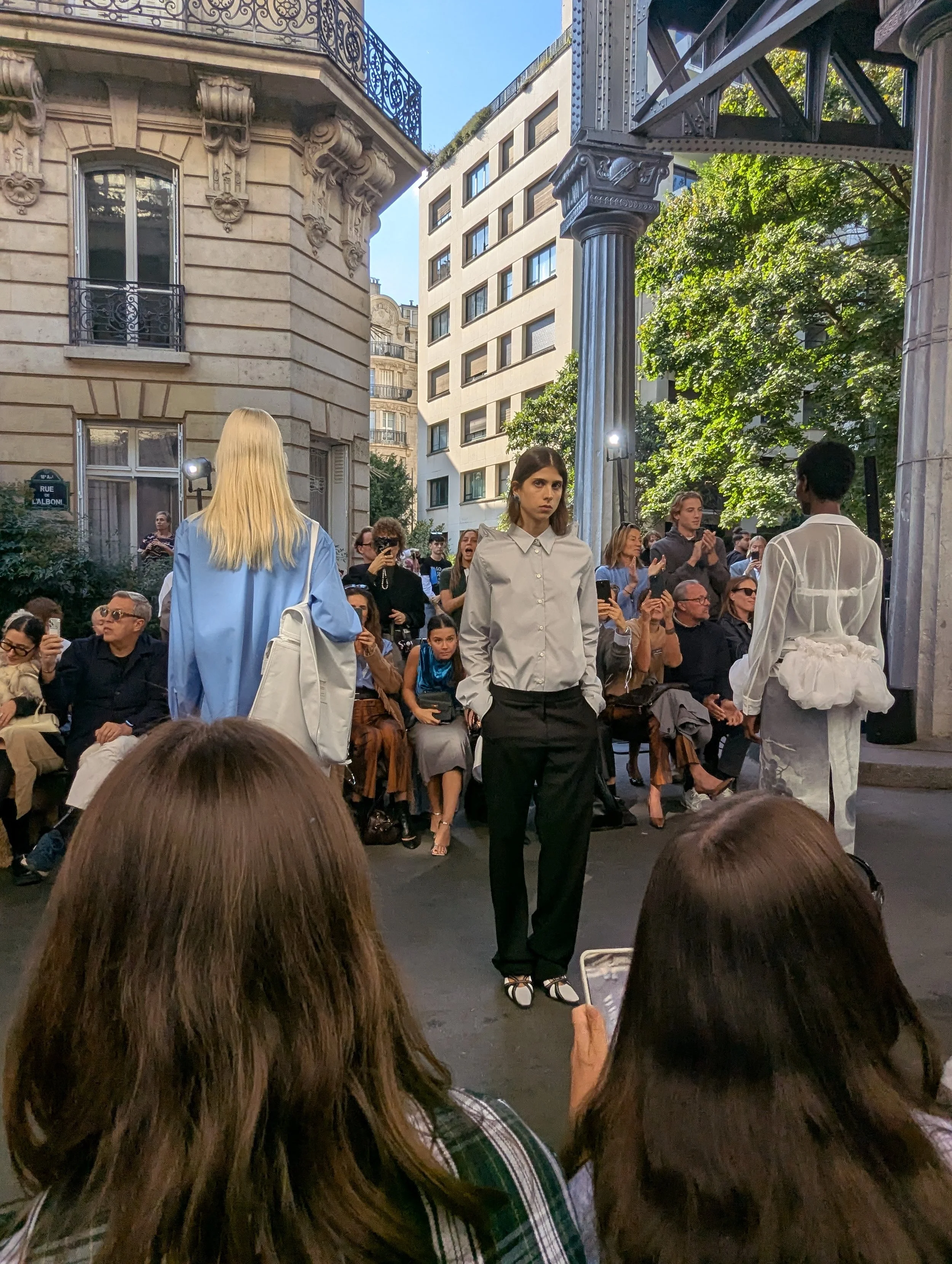
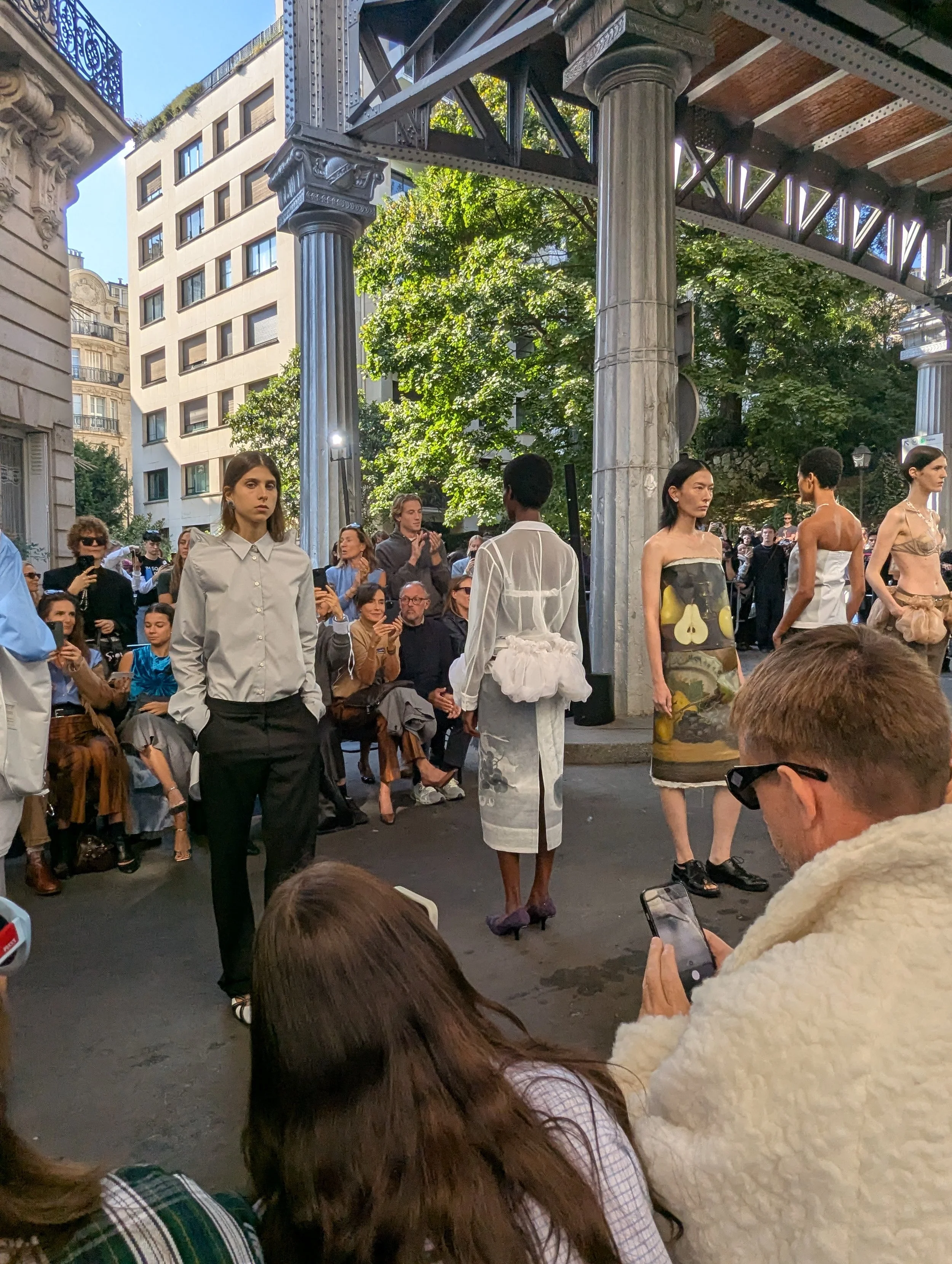
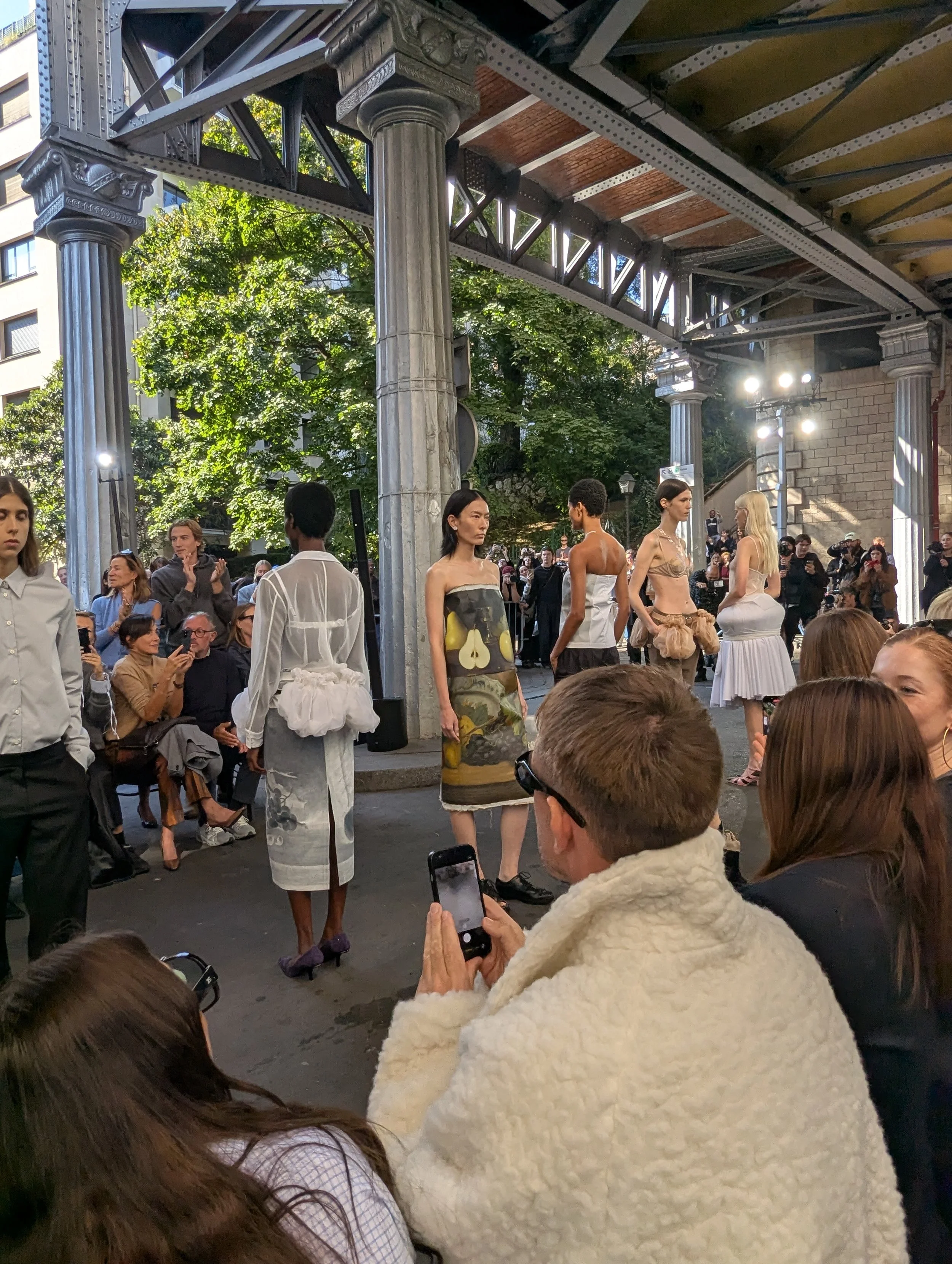
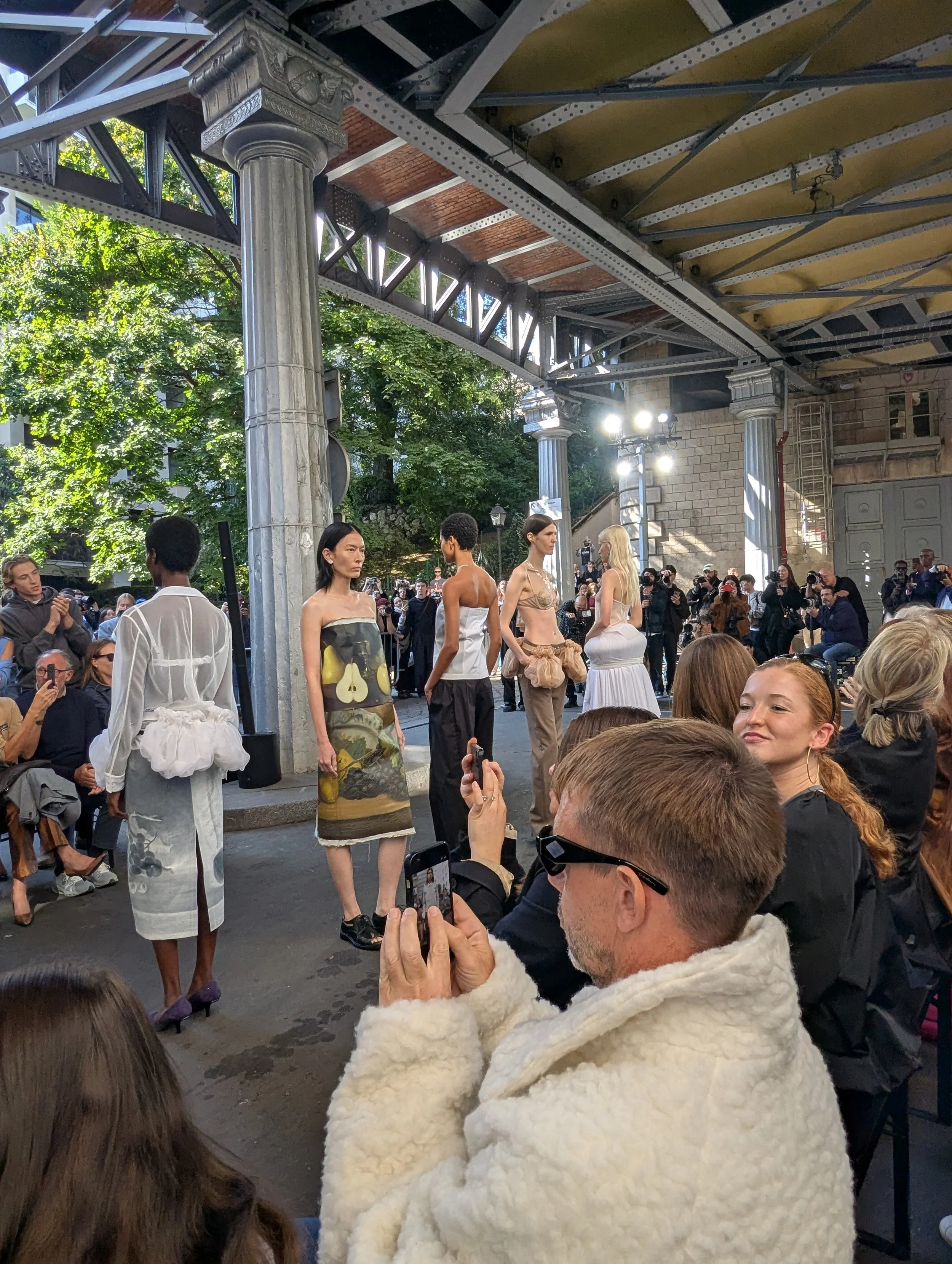
Julie Kegels SS26
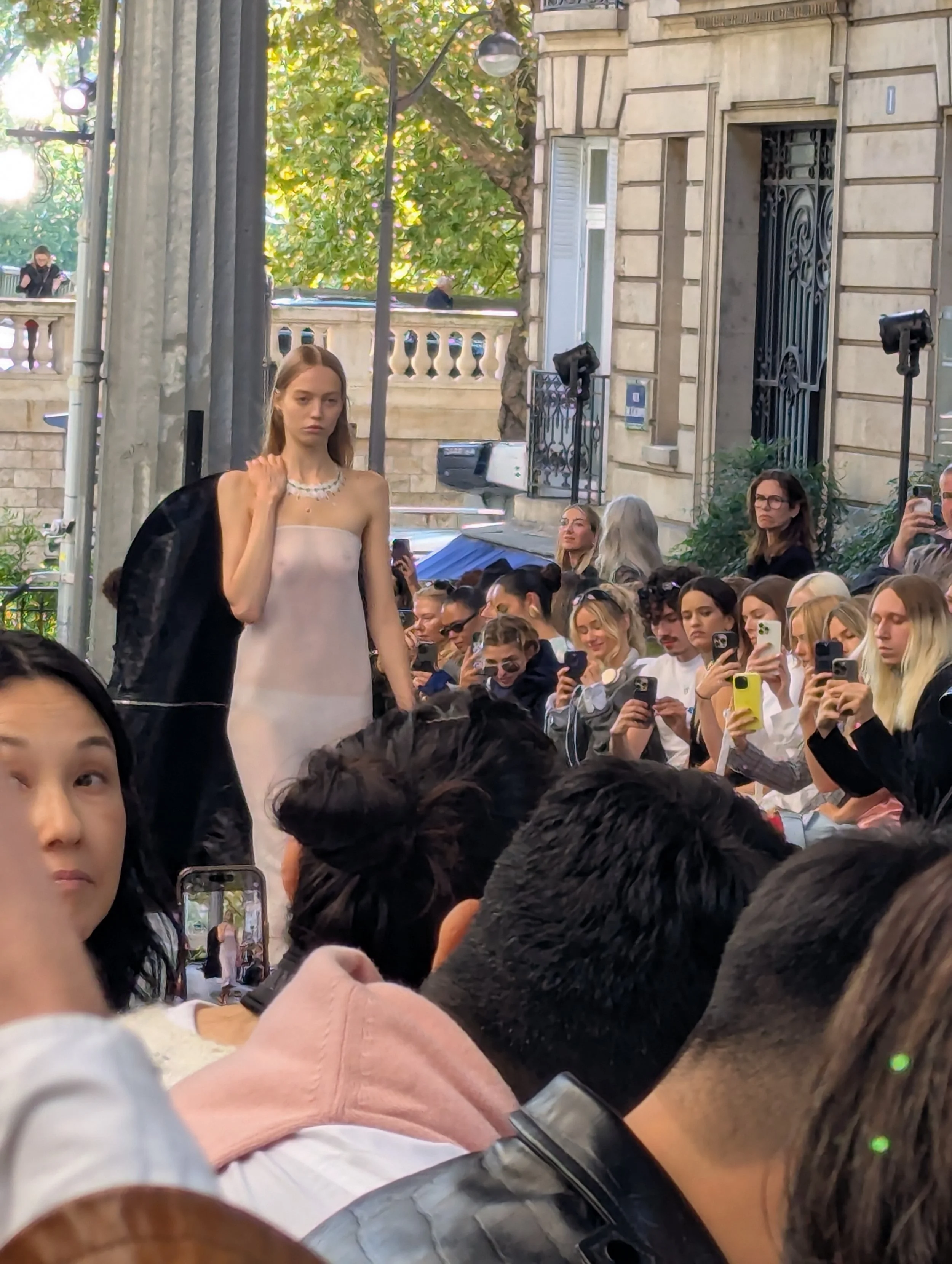
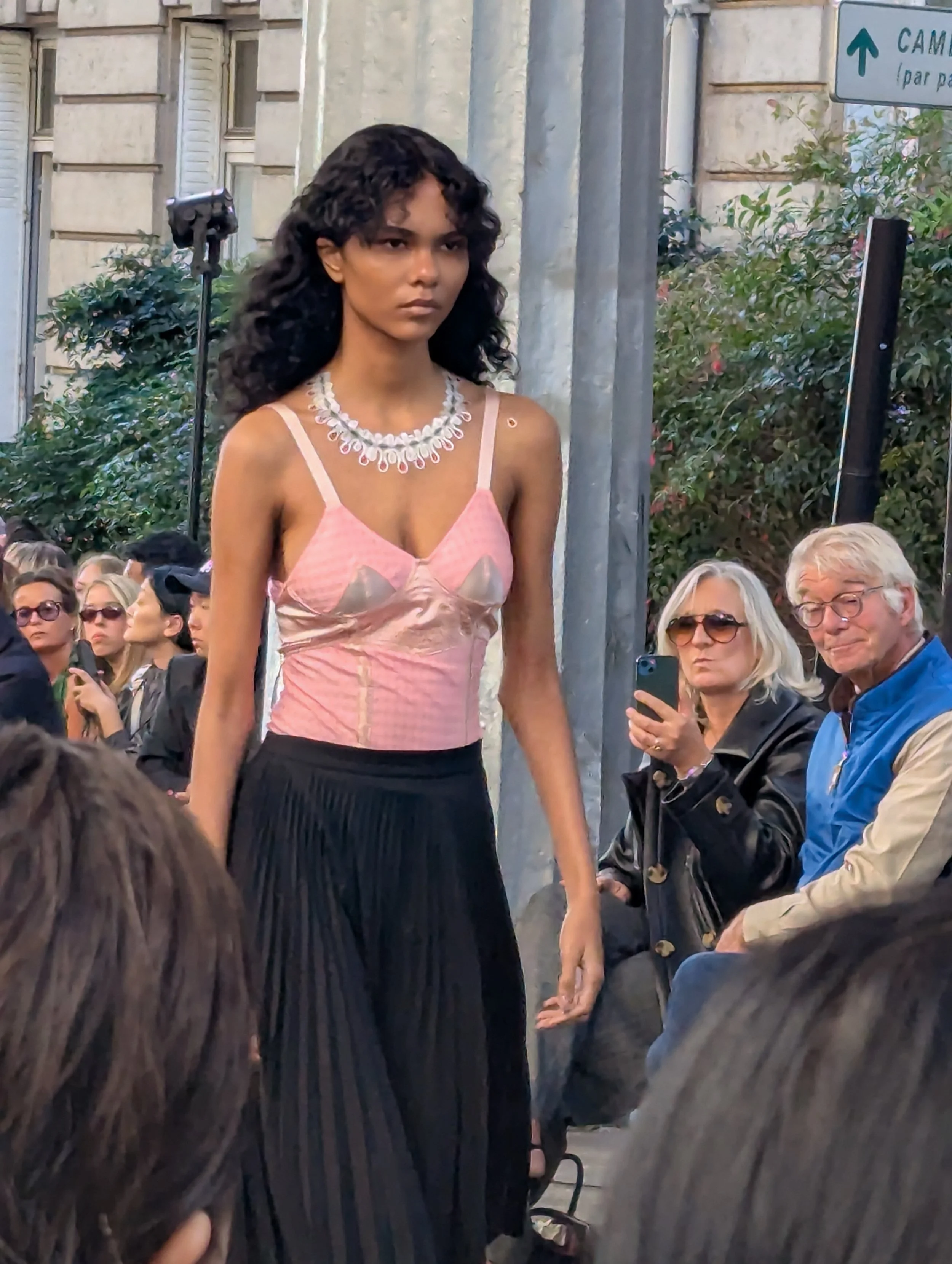
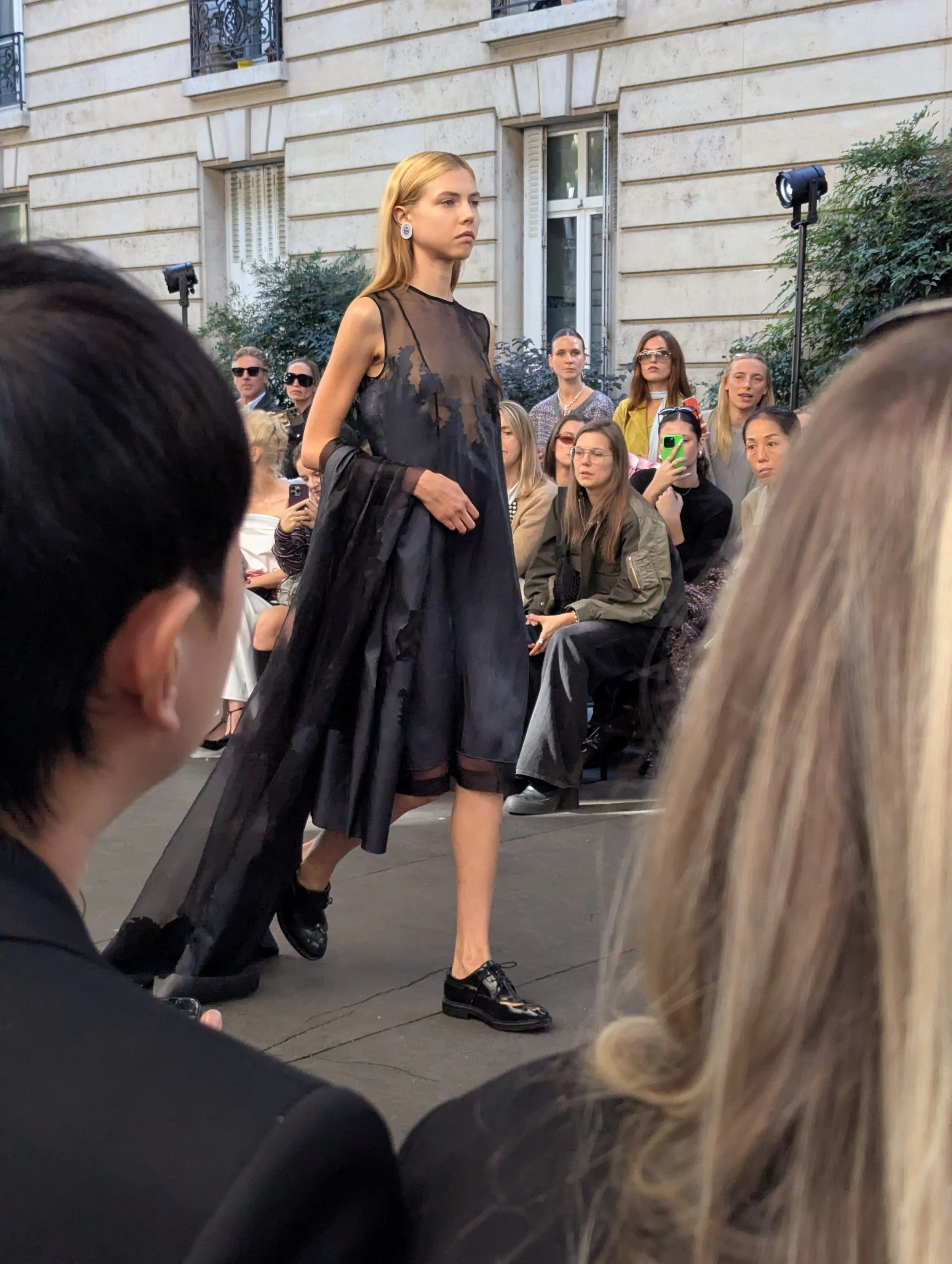
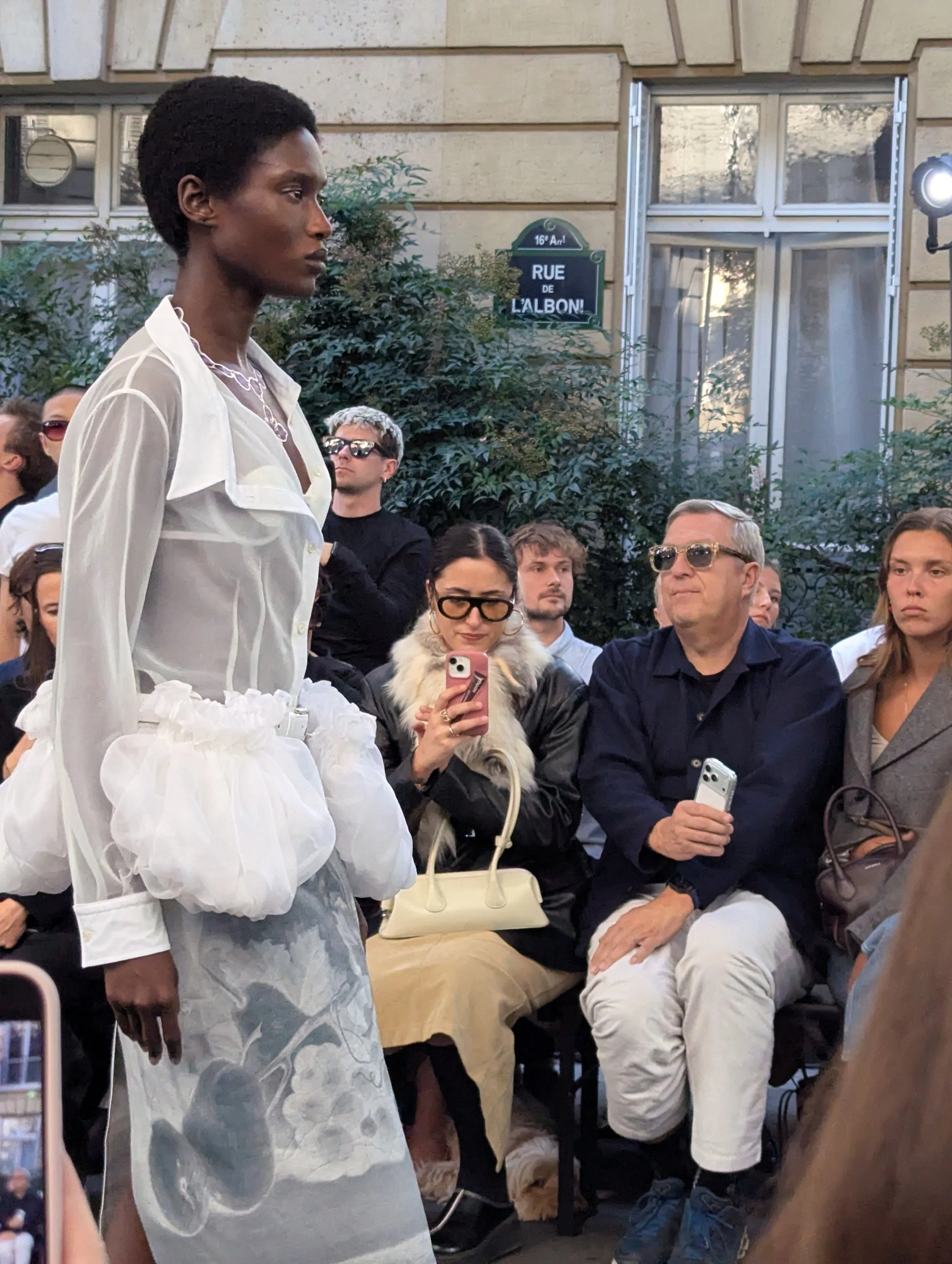
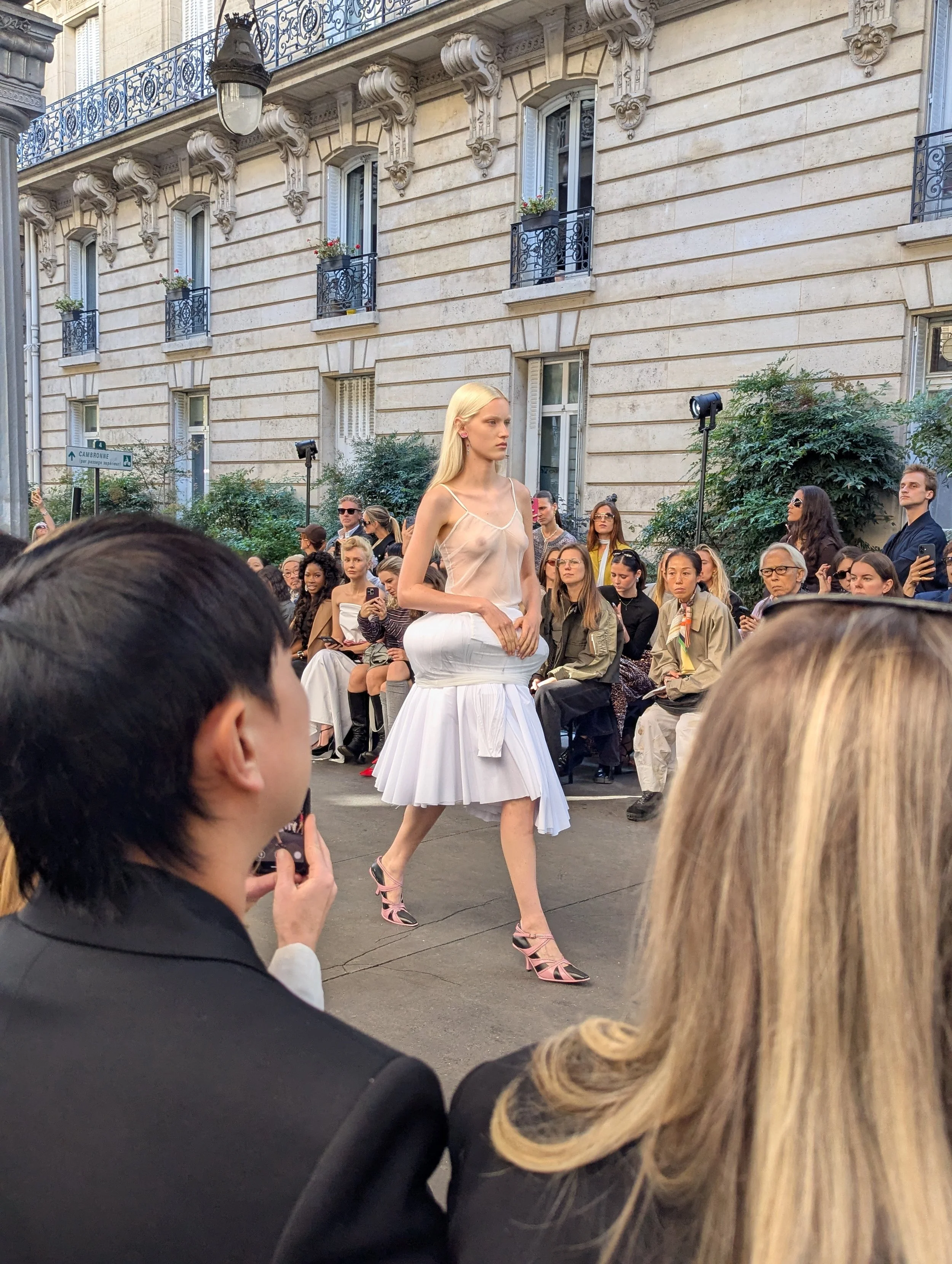
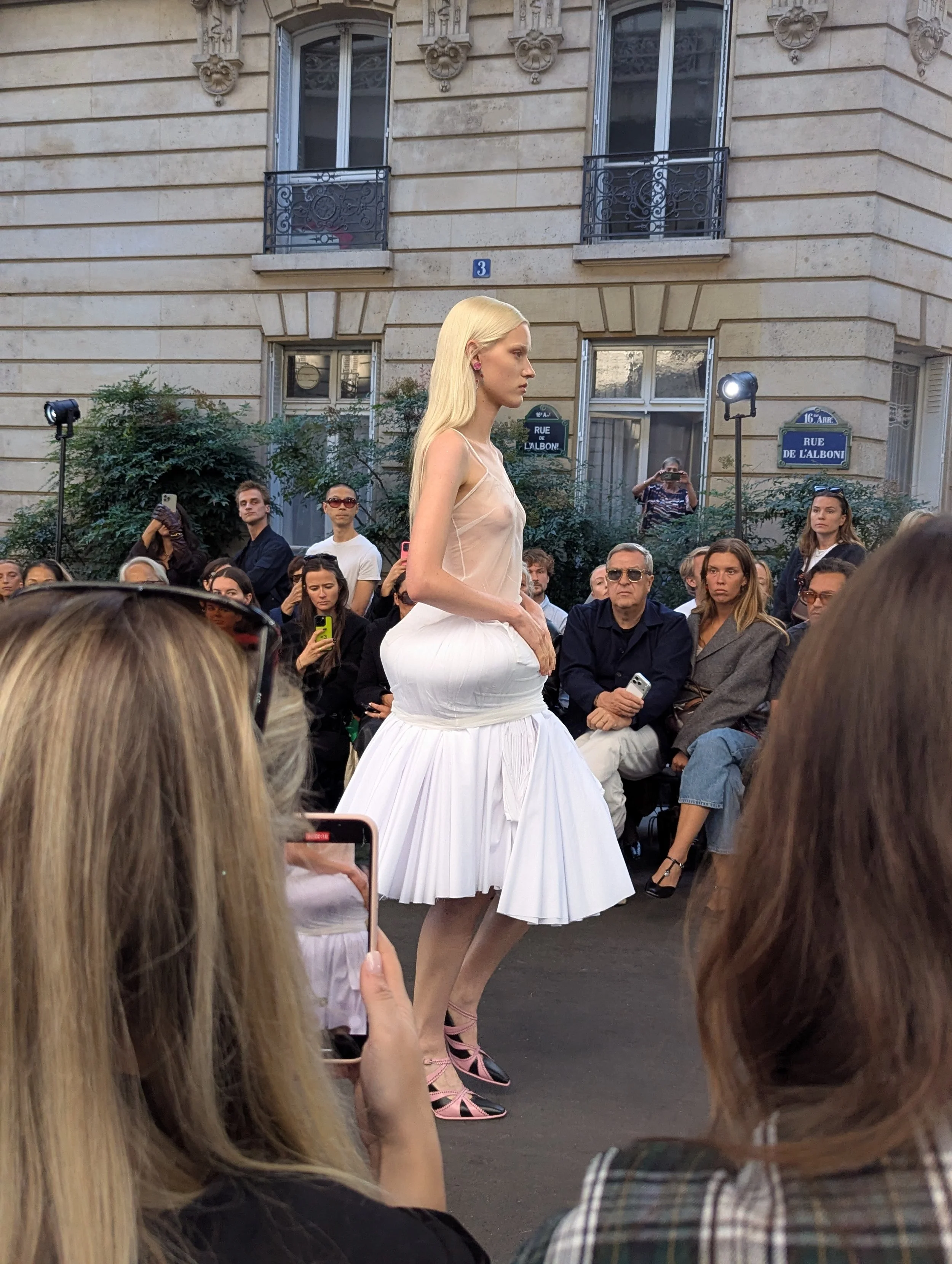
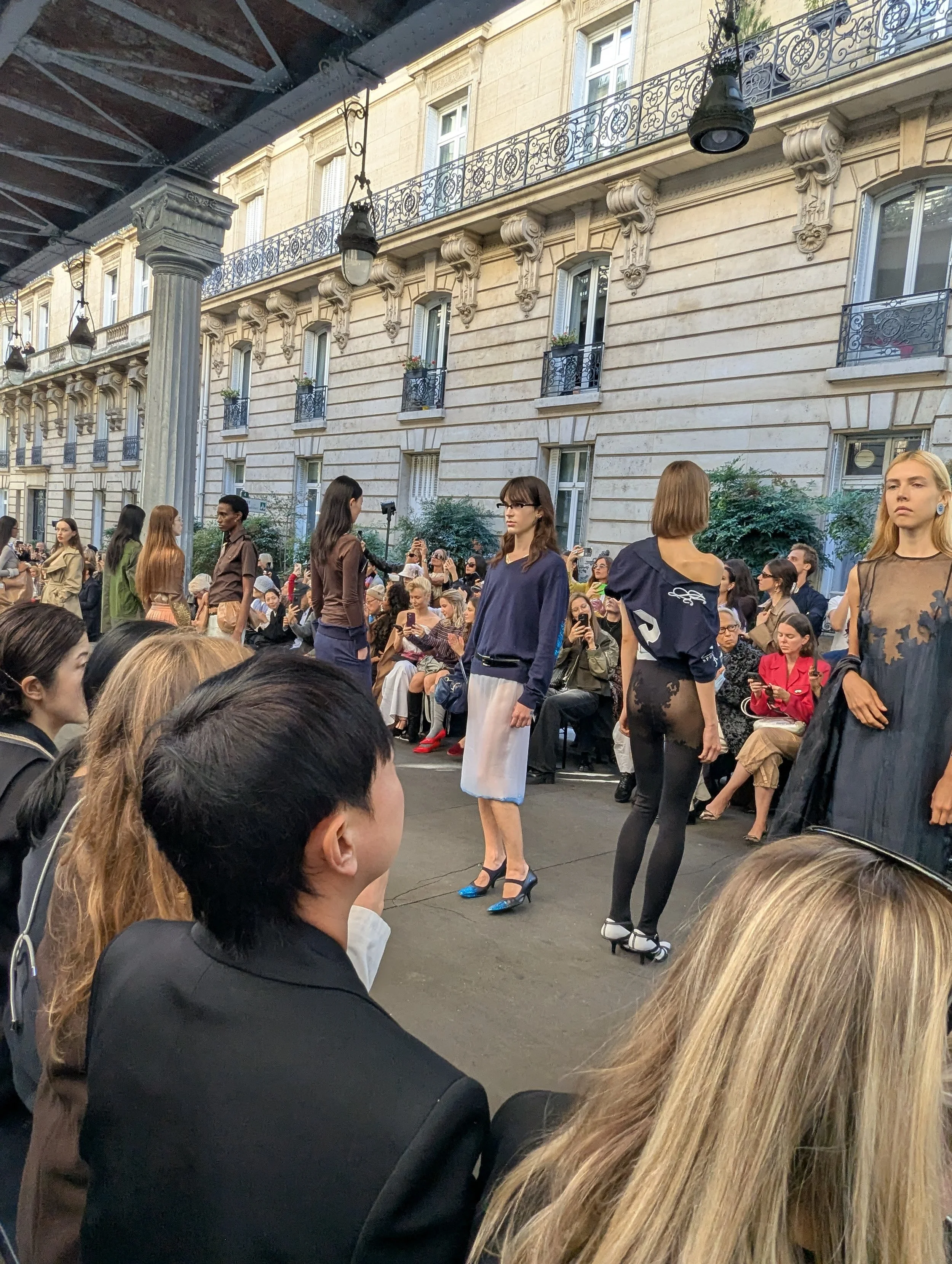
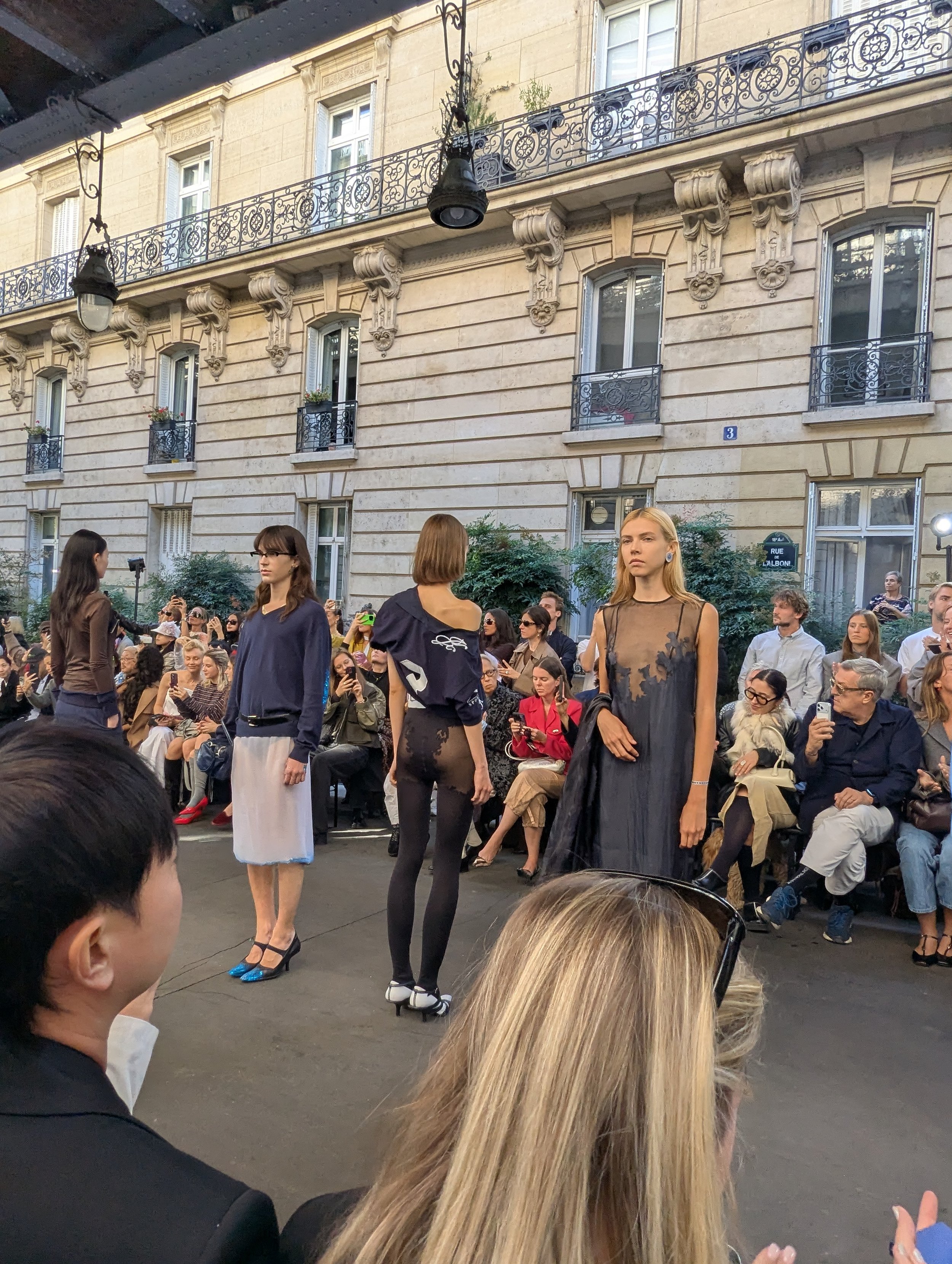
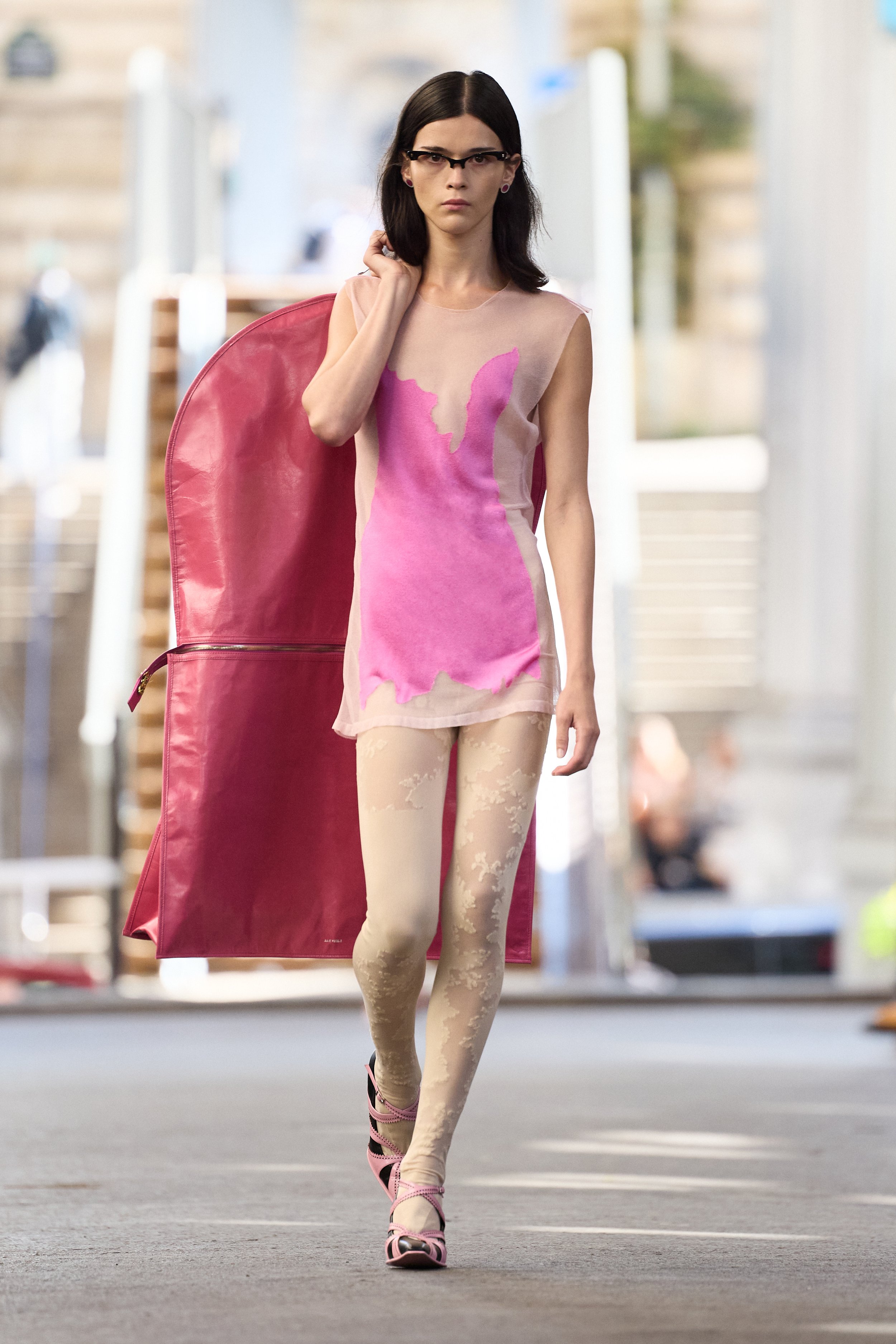
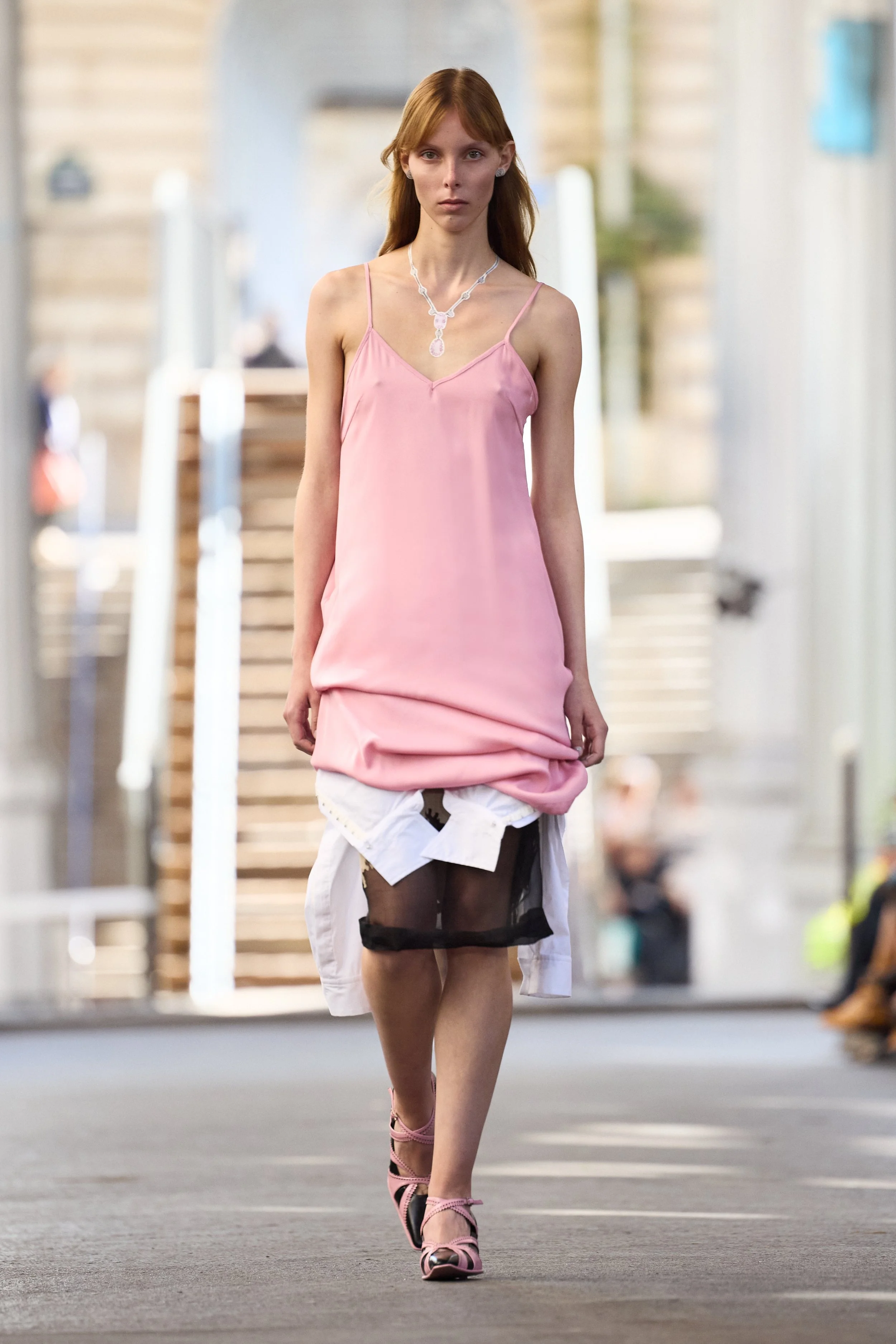
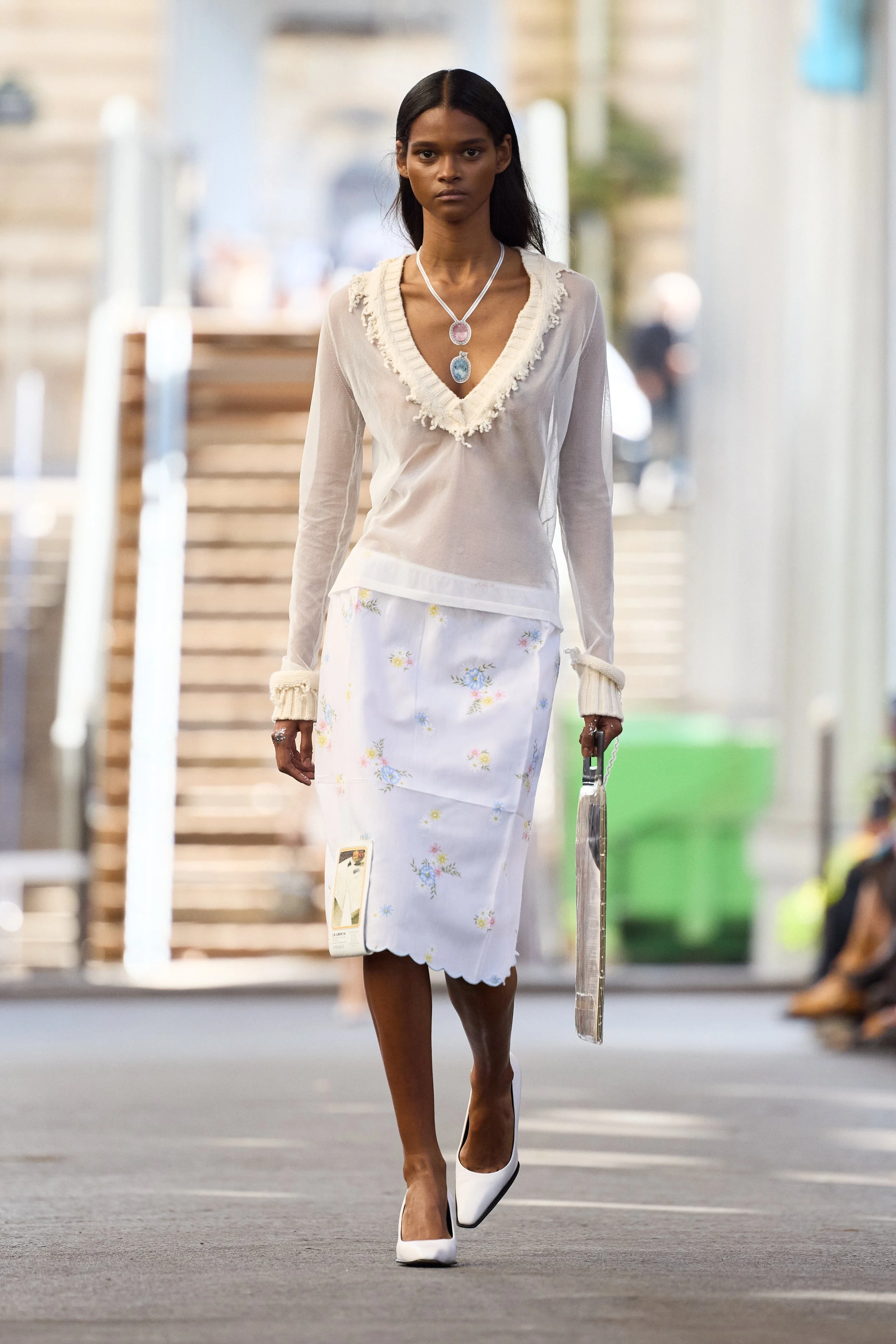
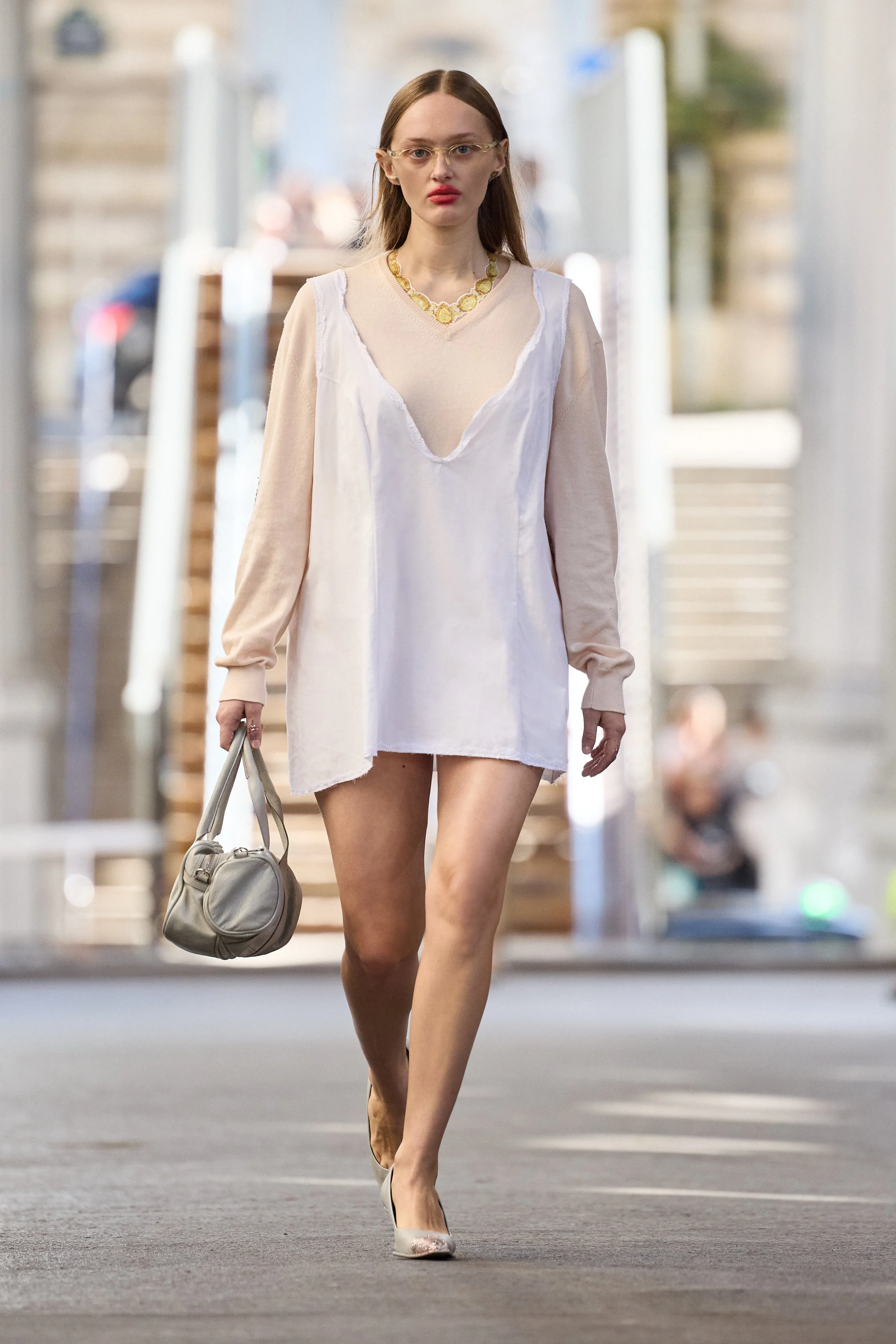
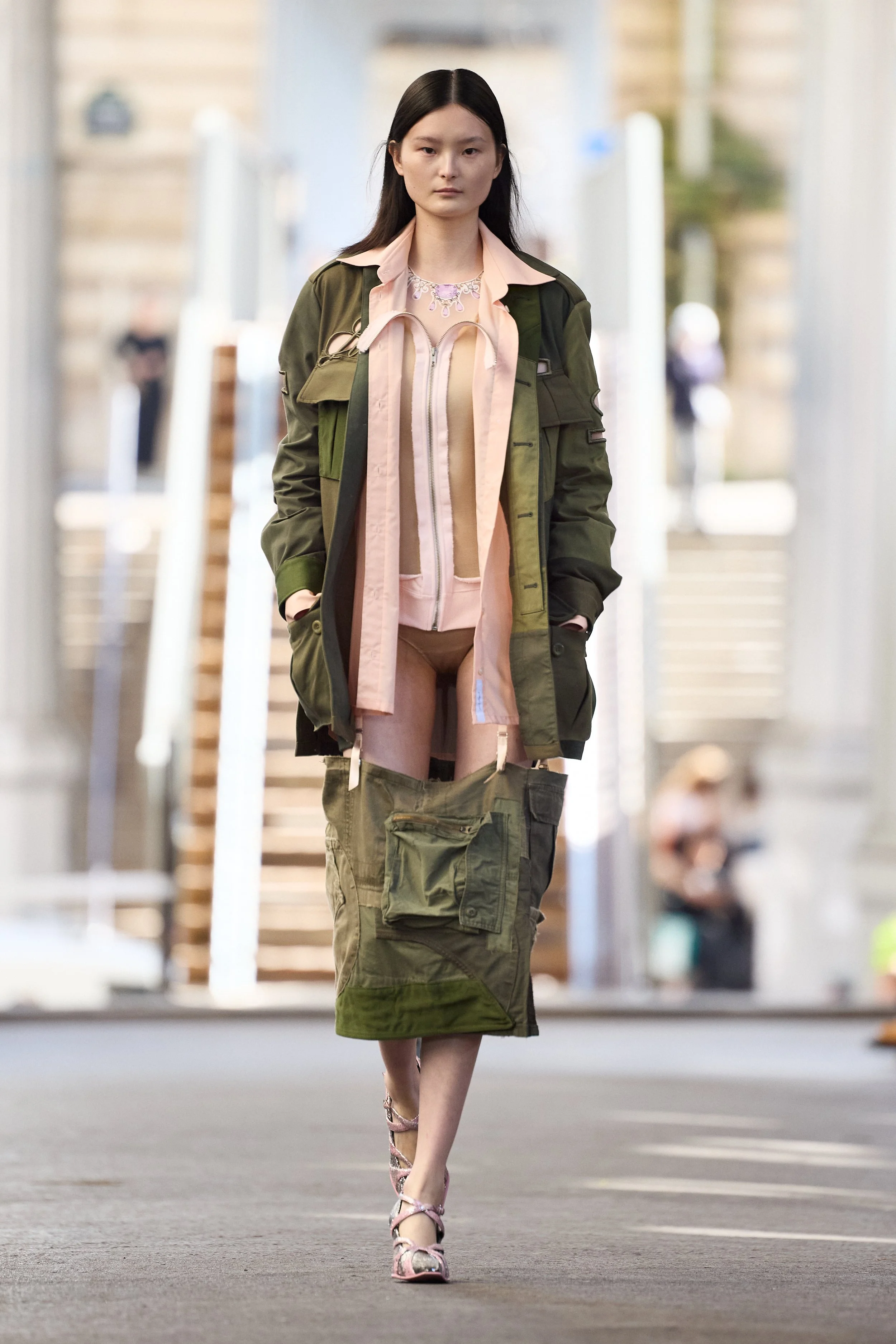
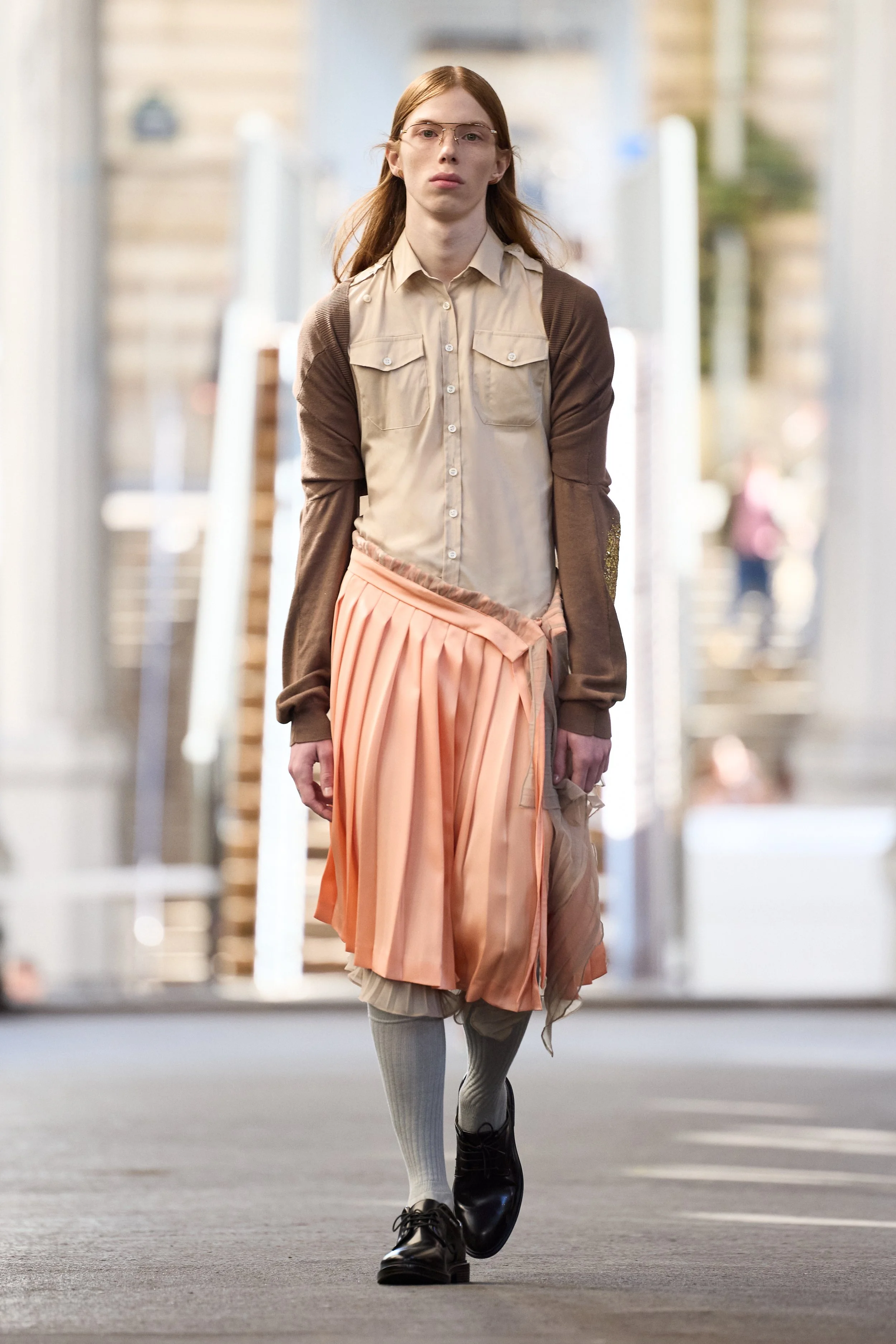
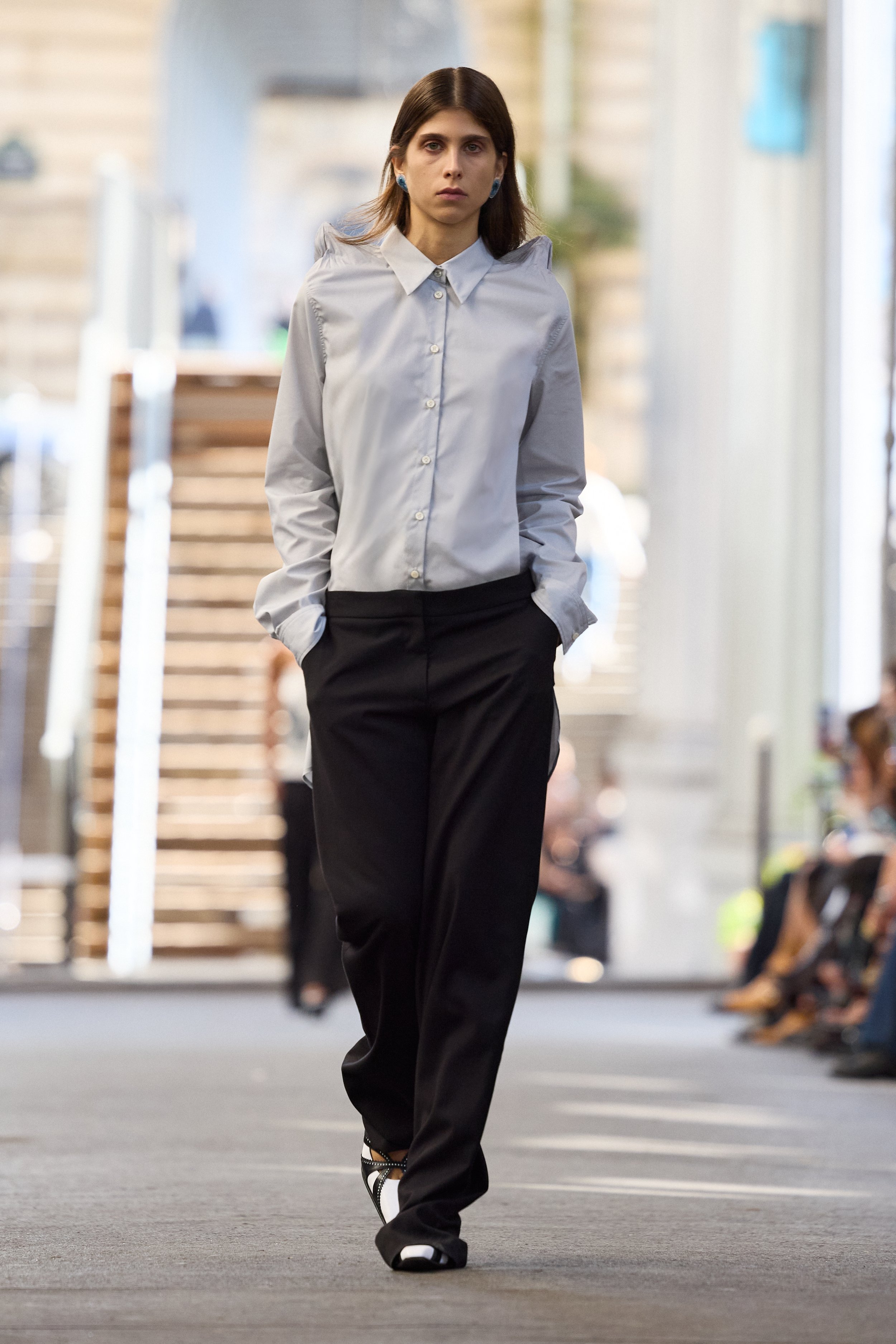
Julie Kegels’ SS26 show at Passy felt like stepping into the split-screen of a woman’s interior life; one half breathless commute, one half suspended daydream, stitched together in lace, wrinkles, stains, and sparkle. In this collection, change is not a tidy before and after arc but a restless loop. Always en route, never fully arrived. Made visible in garments that revel in imperfection and quick shifts of identity.
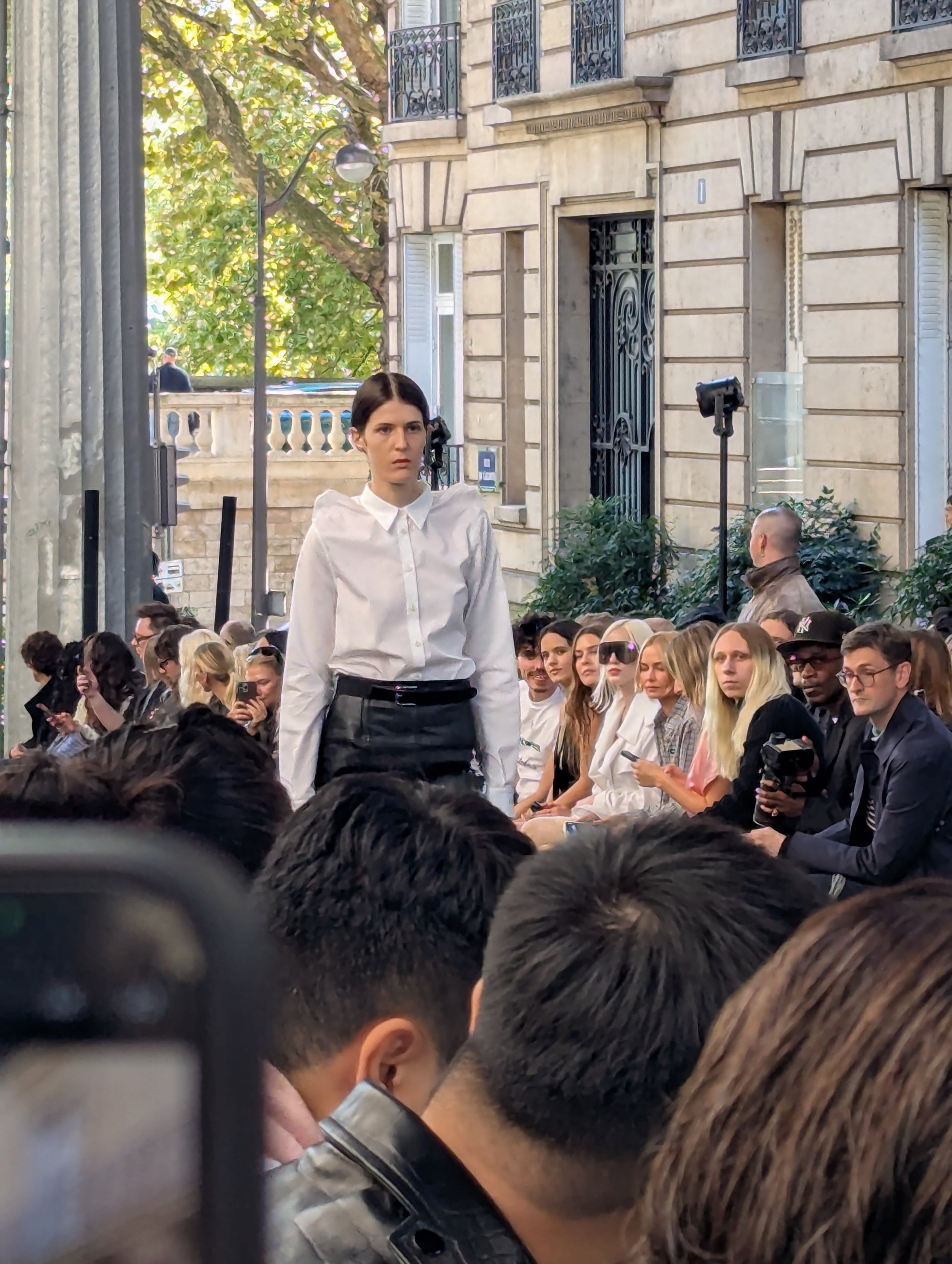
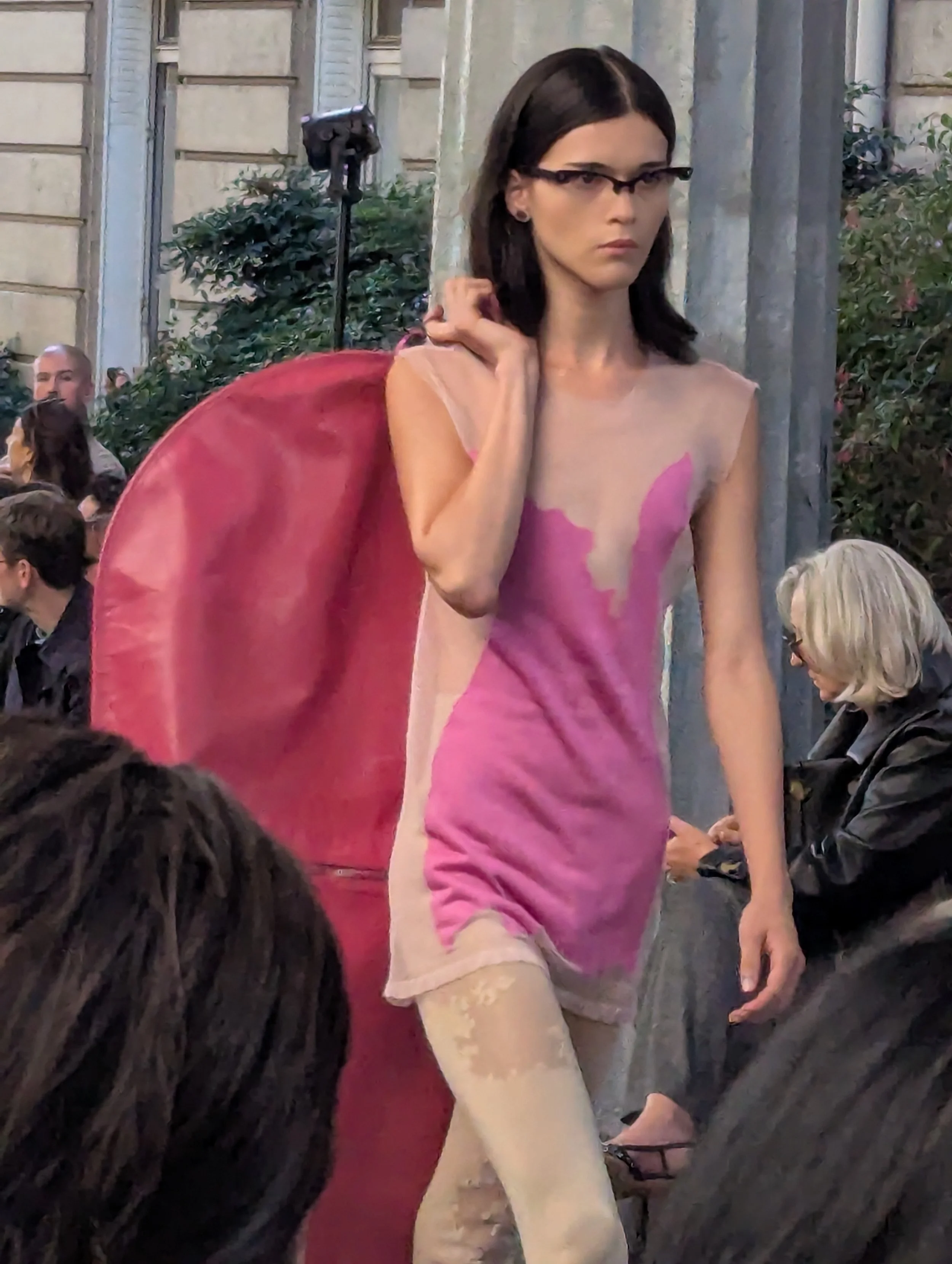
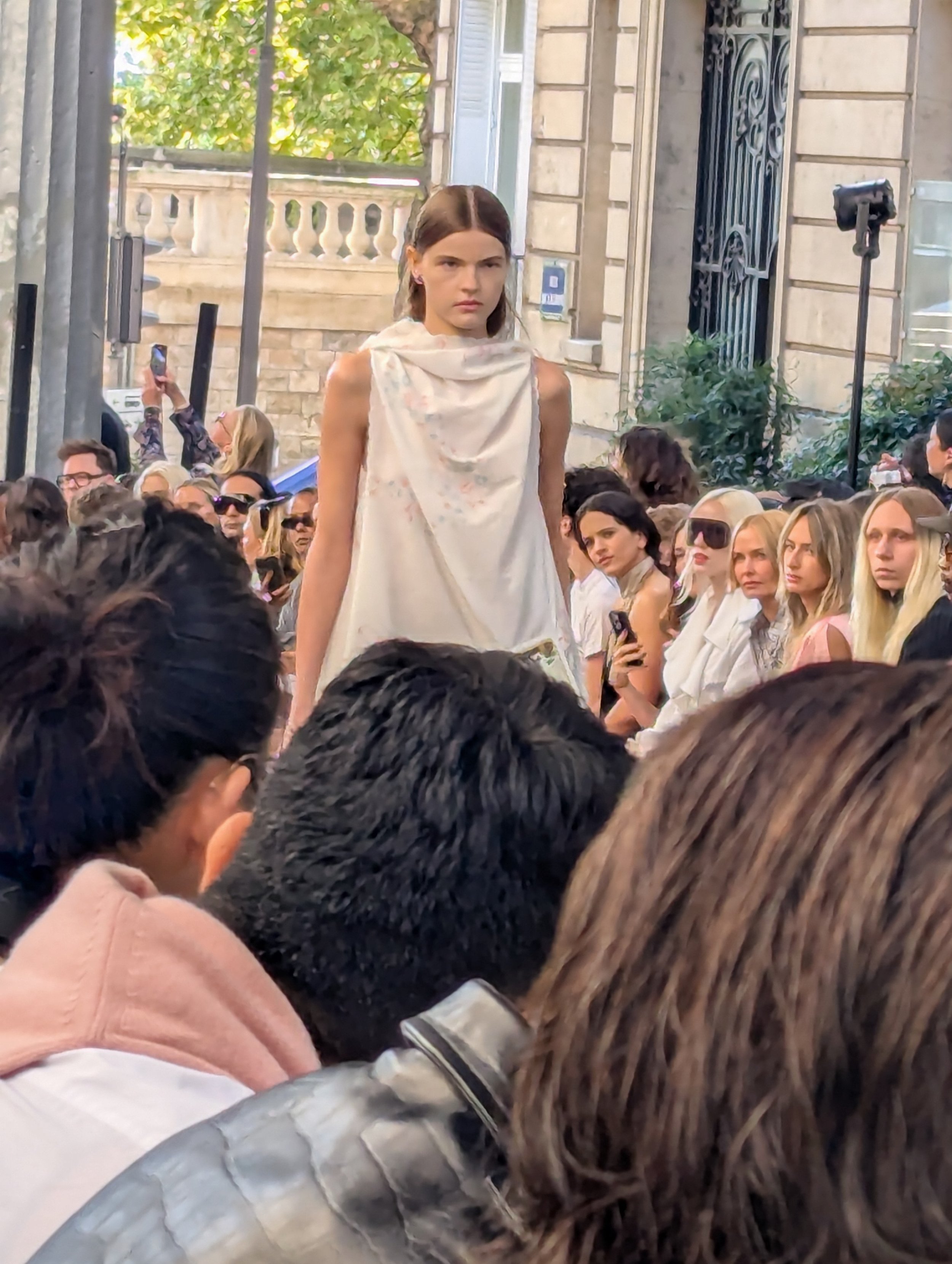
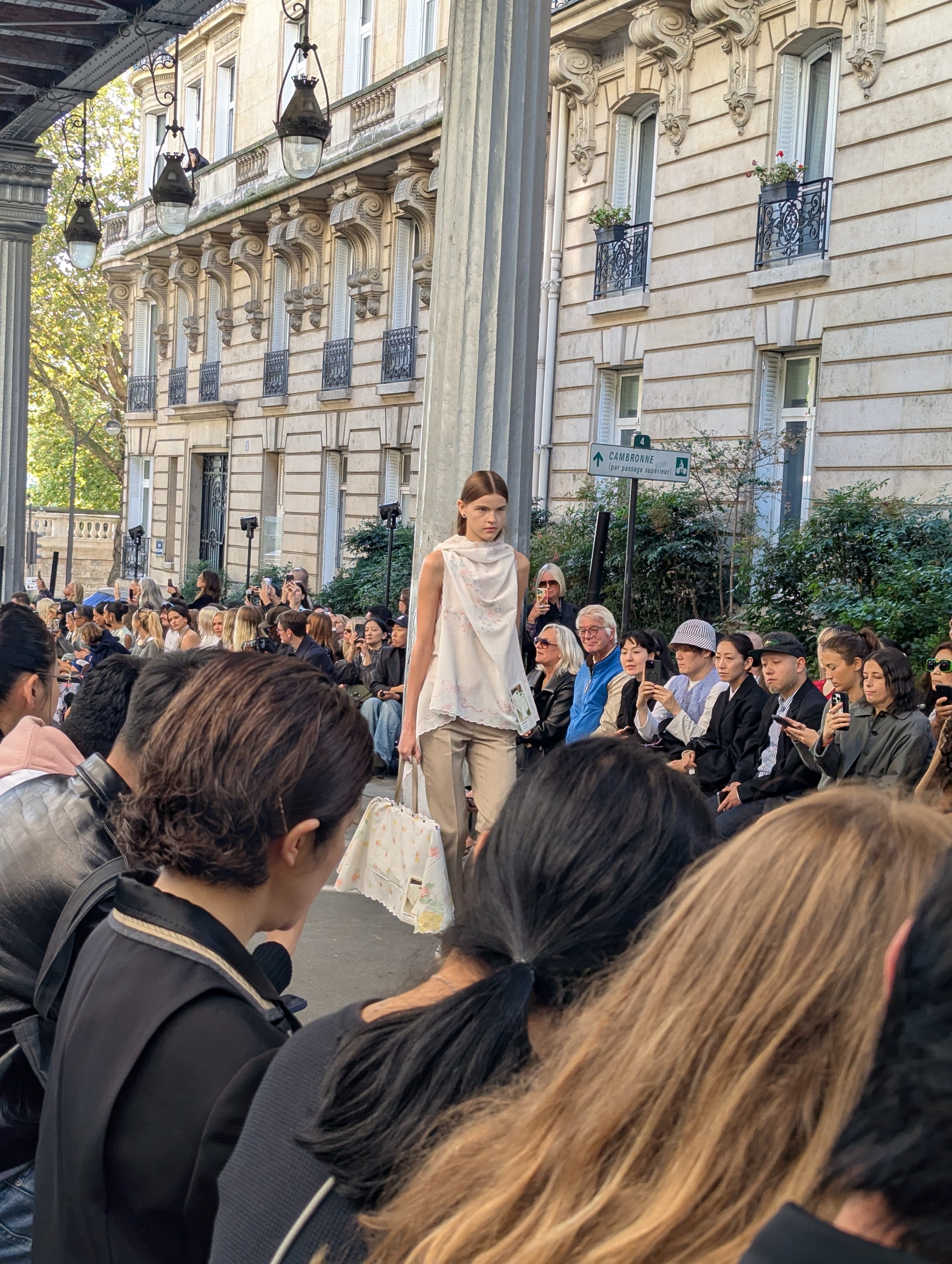
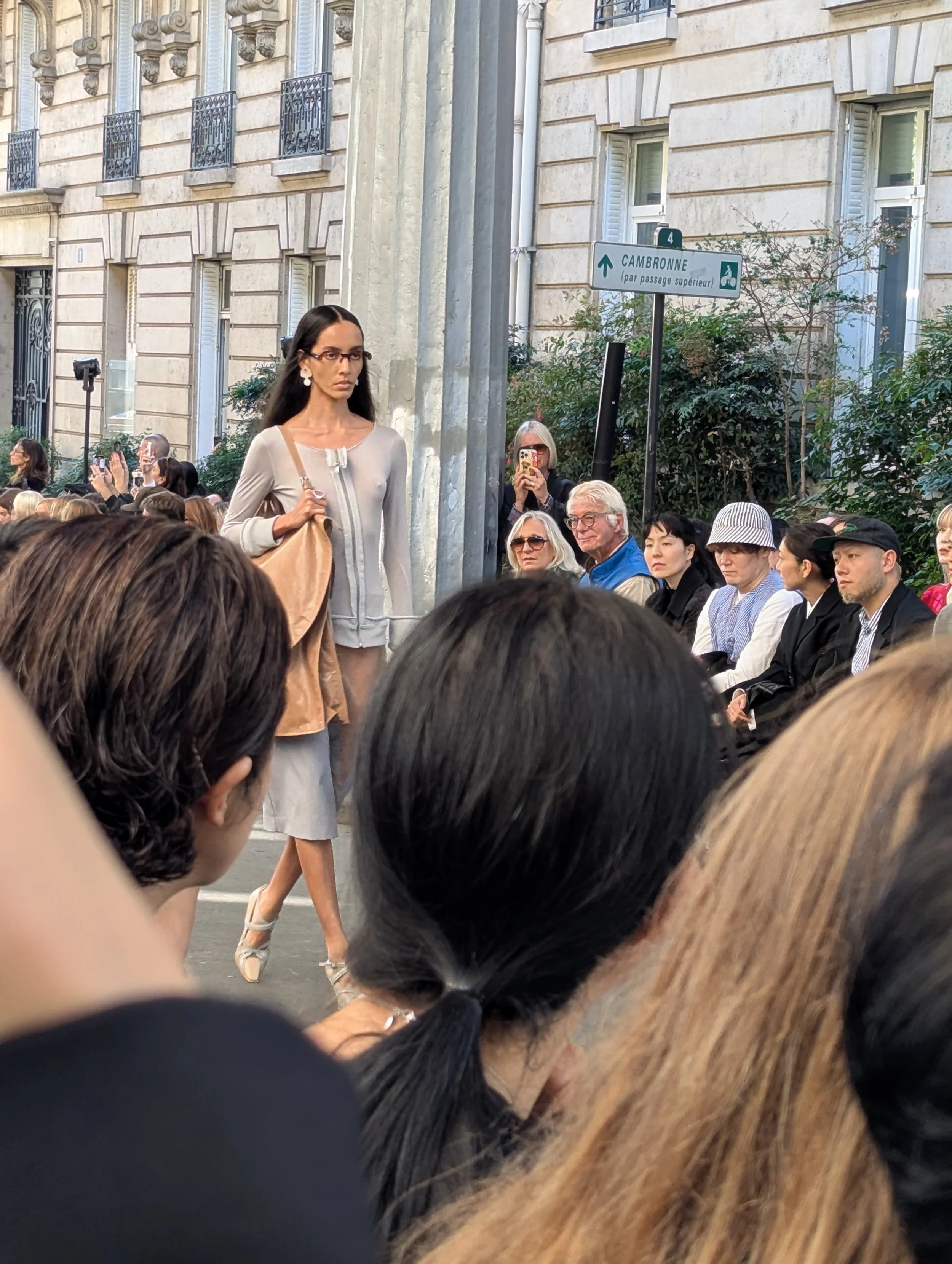
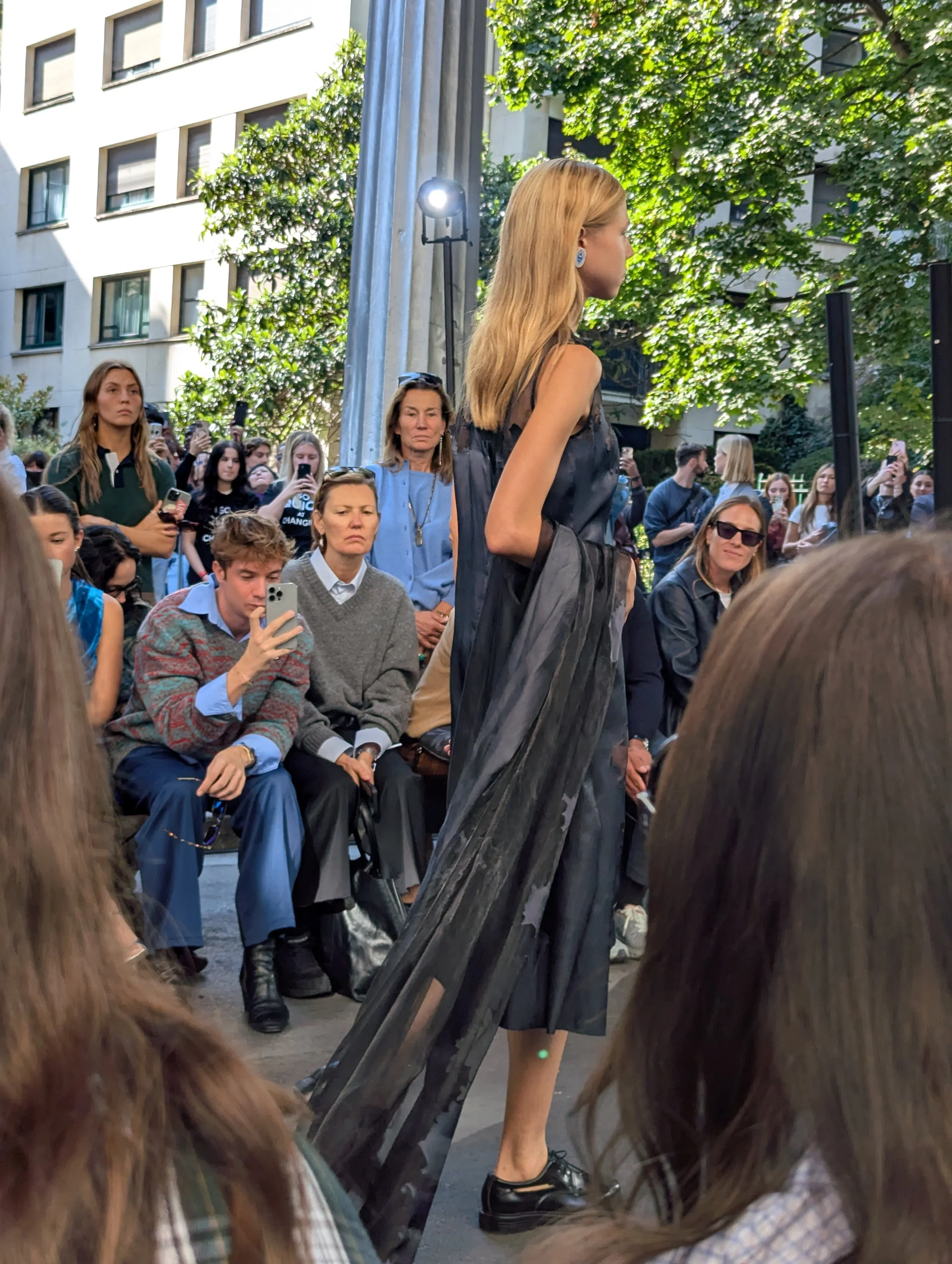
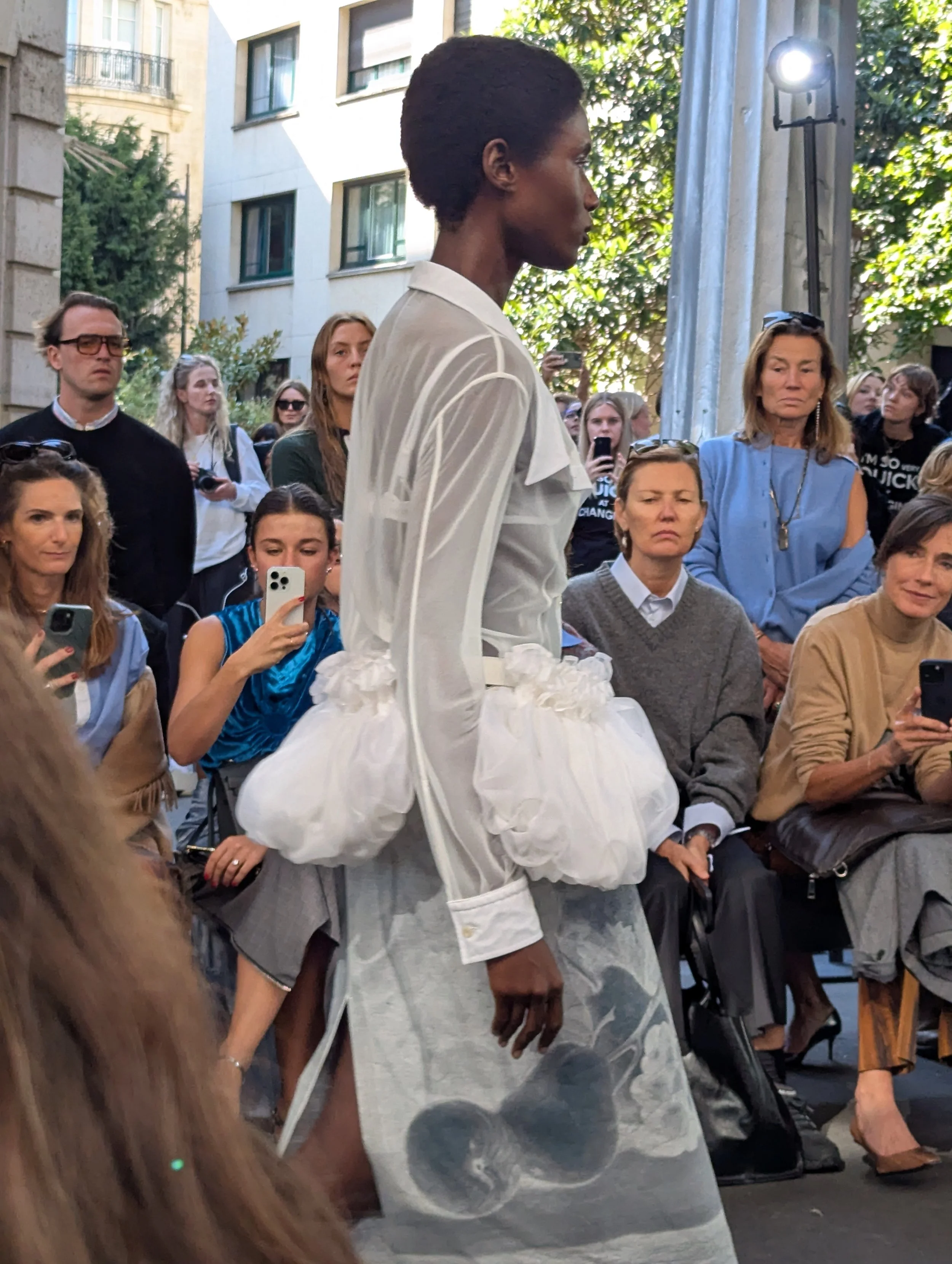
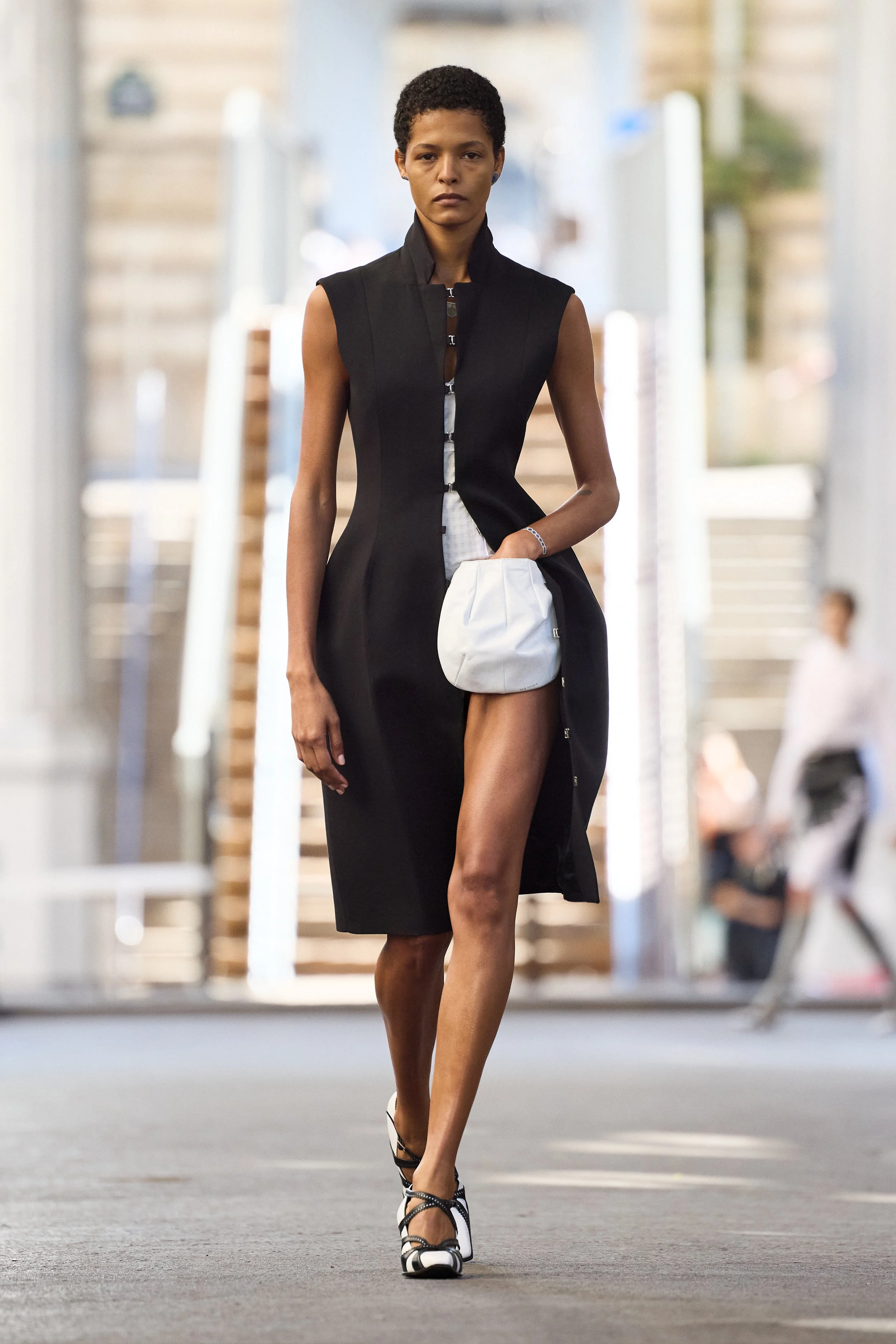
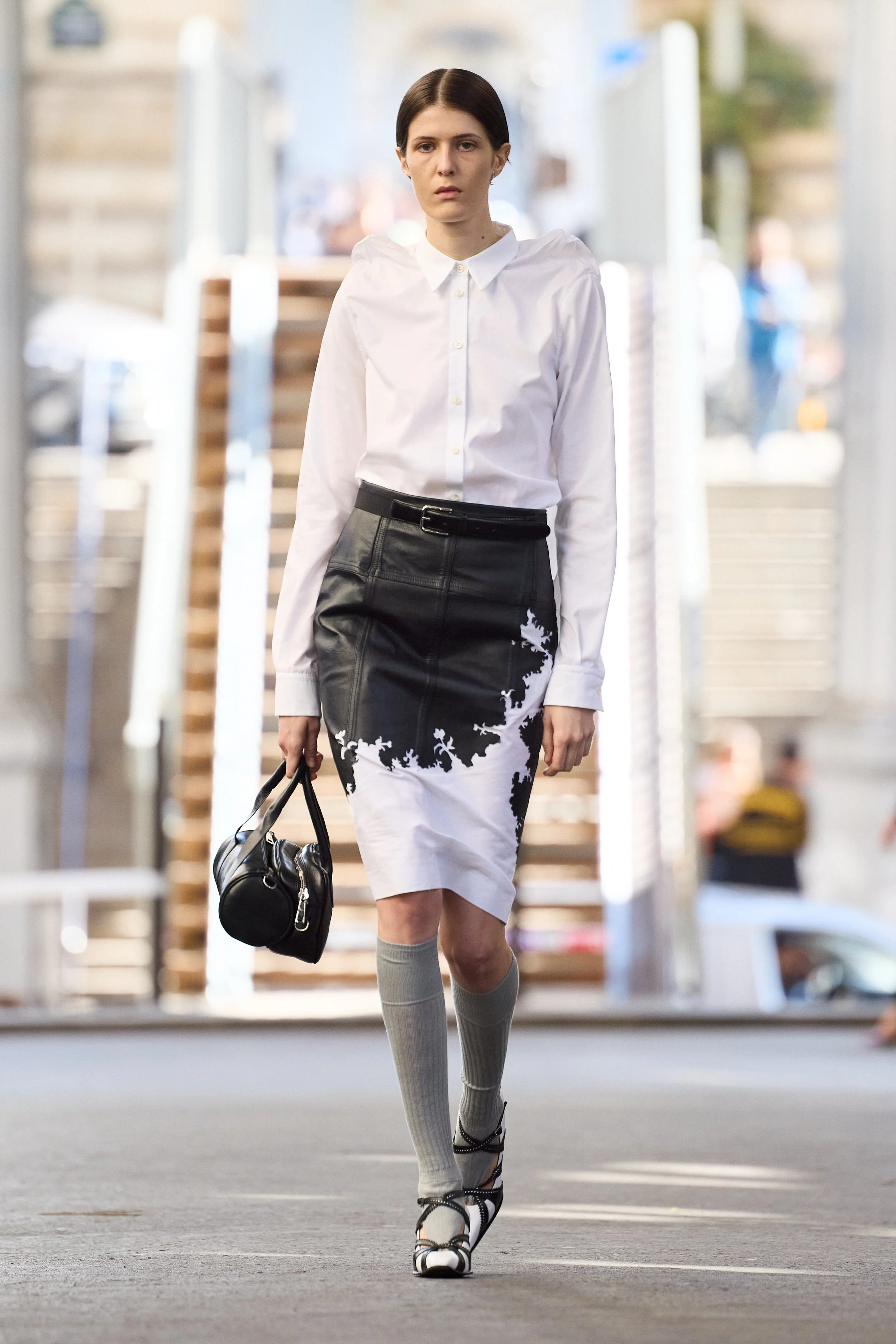
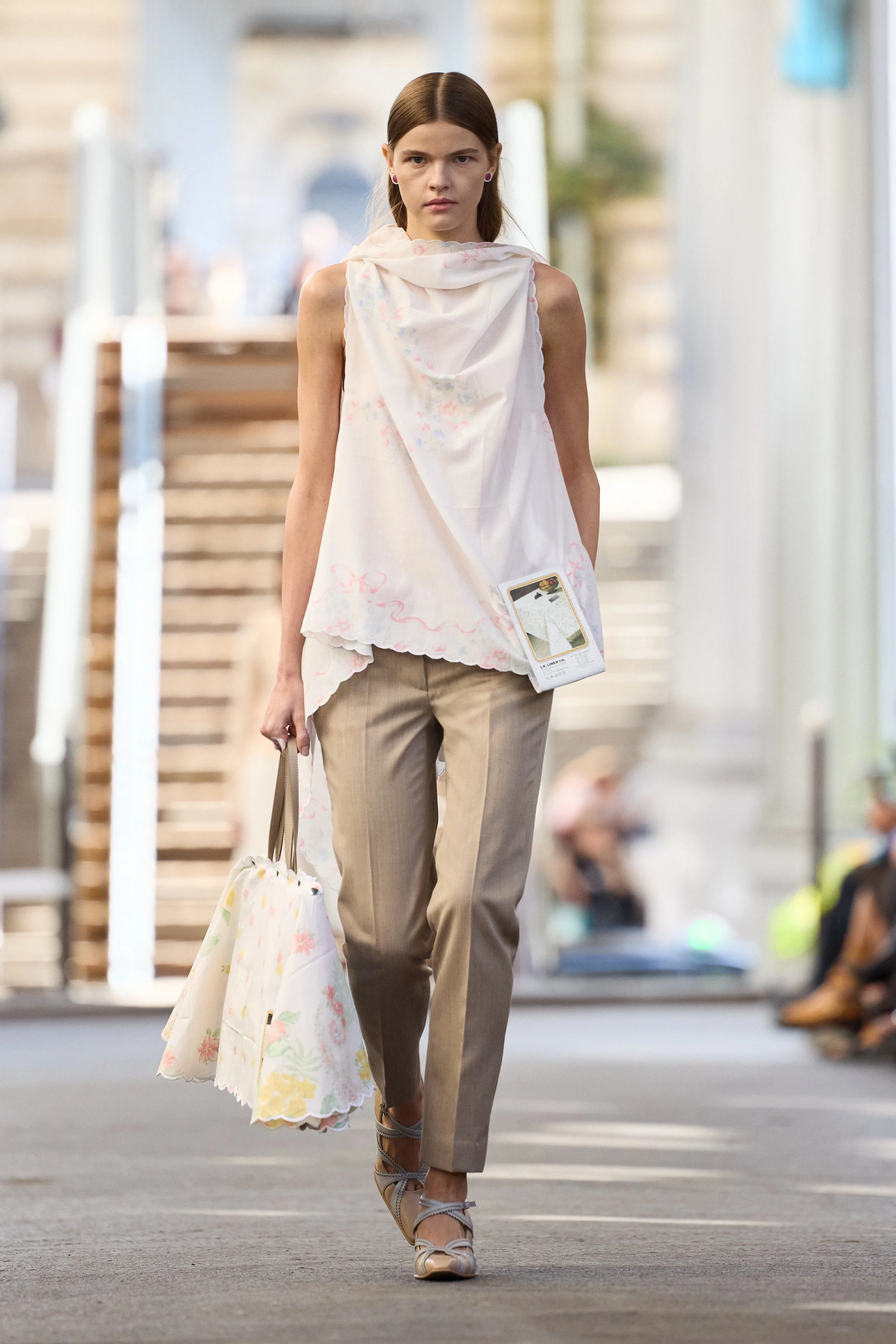
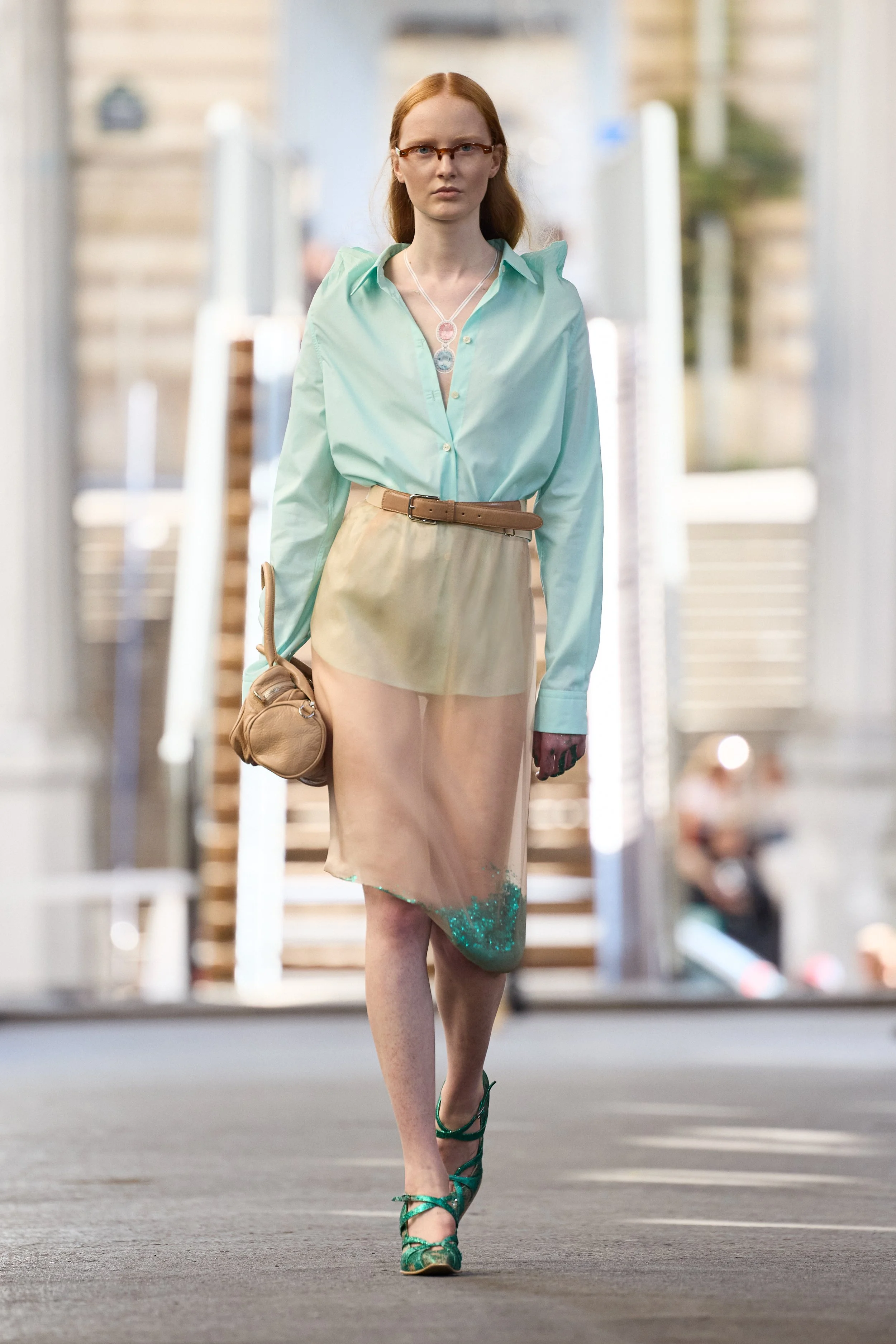
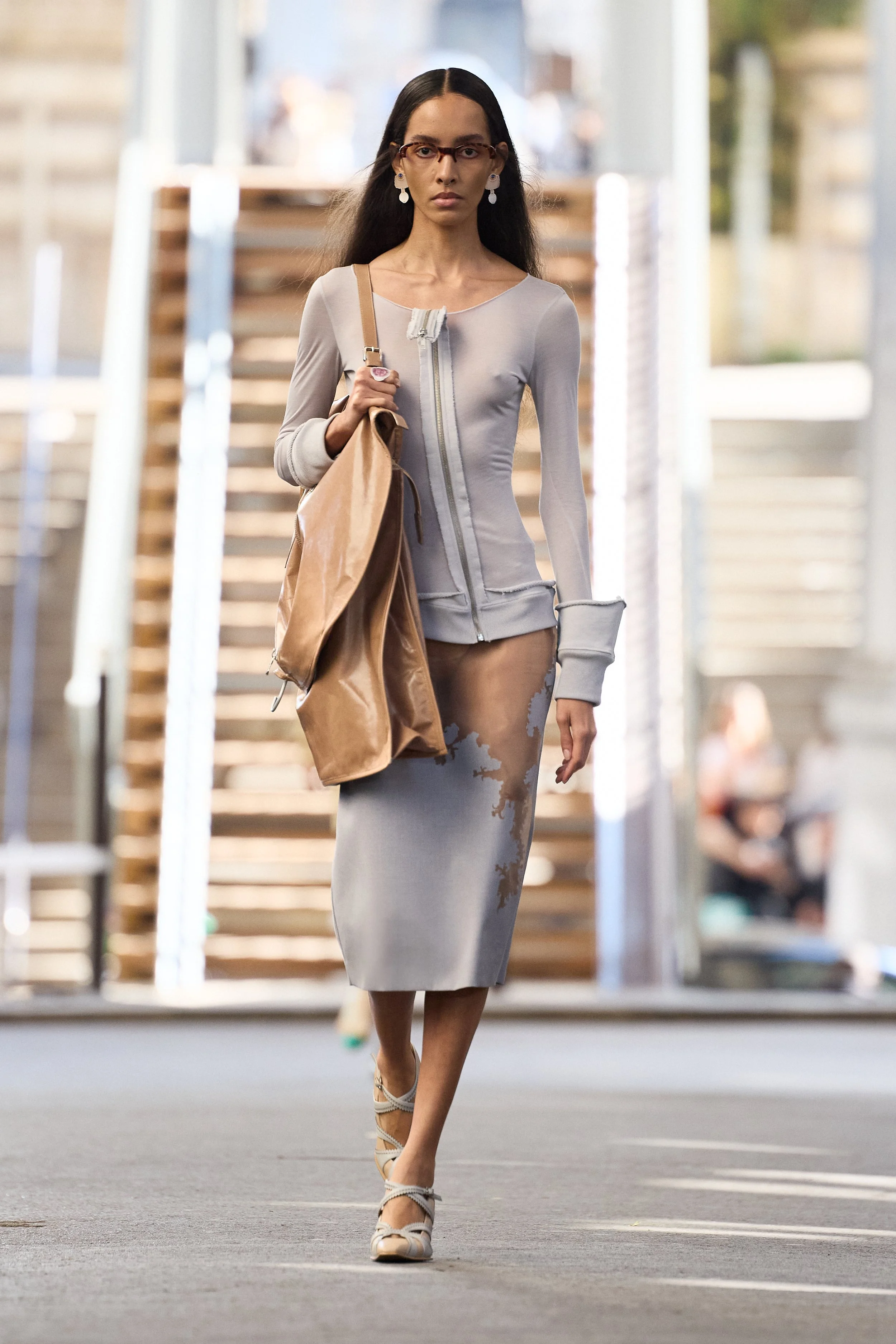
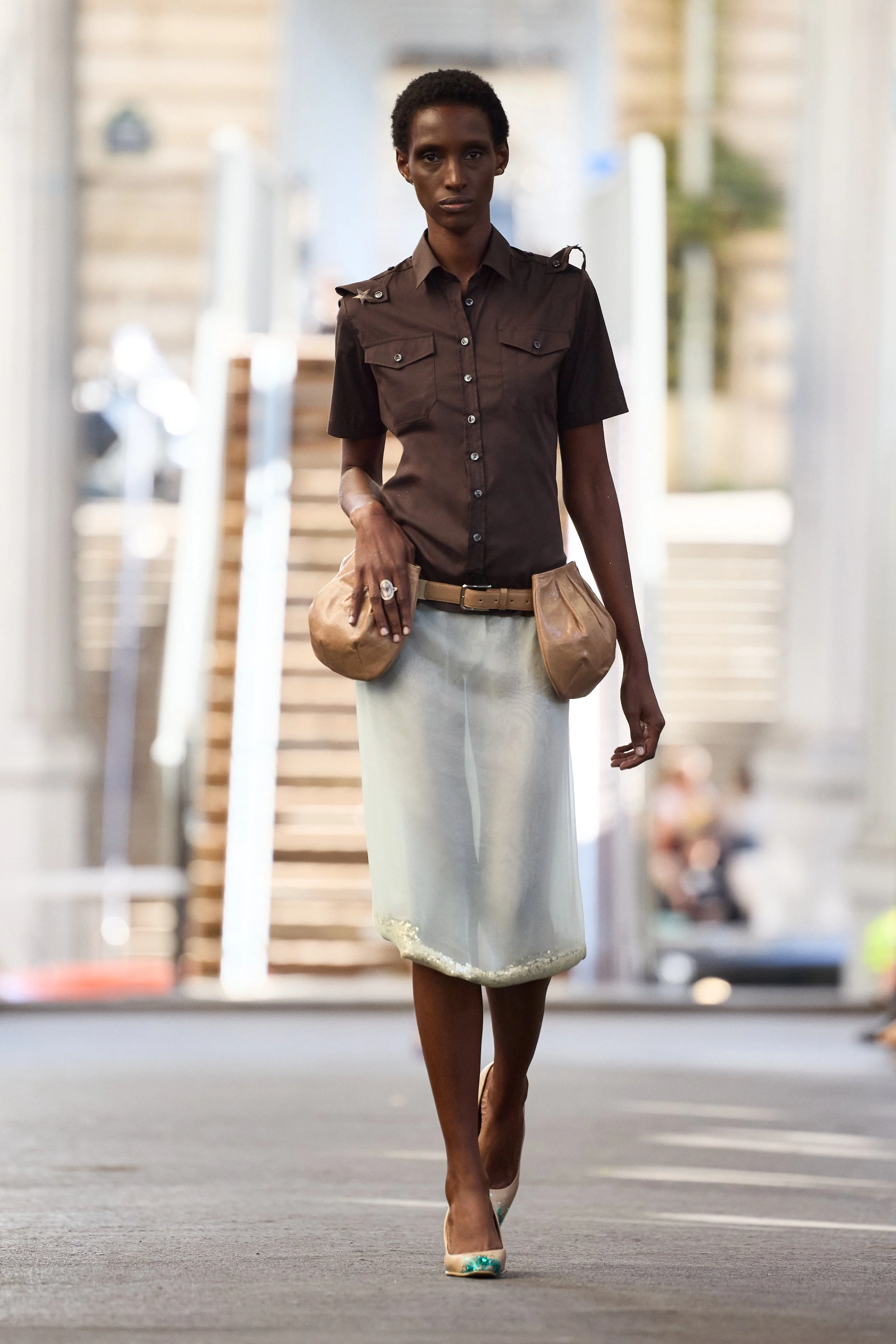
I love being able to live life through the lens of a Julie Kegels woman season after season. There is so much hidden humor and absurdity in these creations, if you are not paying attention you will surely miss it. Exaggerated and accentuated body contours and accessories have always been a staple within the collection, and this season only sharpened that signature with shoulders that jut, crumple, and hold a pose like they’ve been frozen mid washing line flutter, and bags that feel less like accessories and more like co conspirators in a life lived slightly off schedule. The Julie Kegels woman is not a pristine fantasy; she is late, distracted, luminous, and entirely present in every crease and smudge of her clothes.
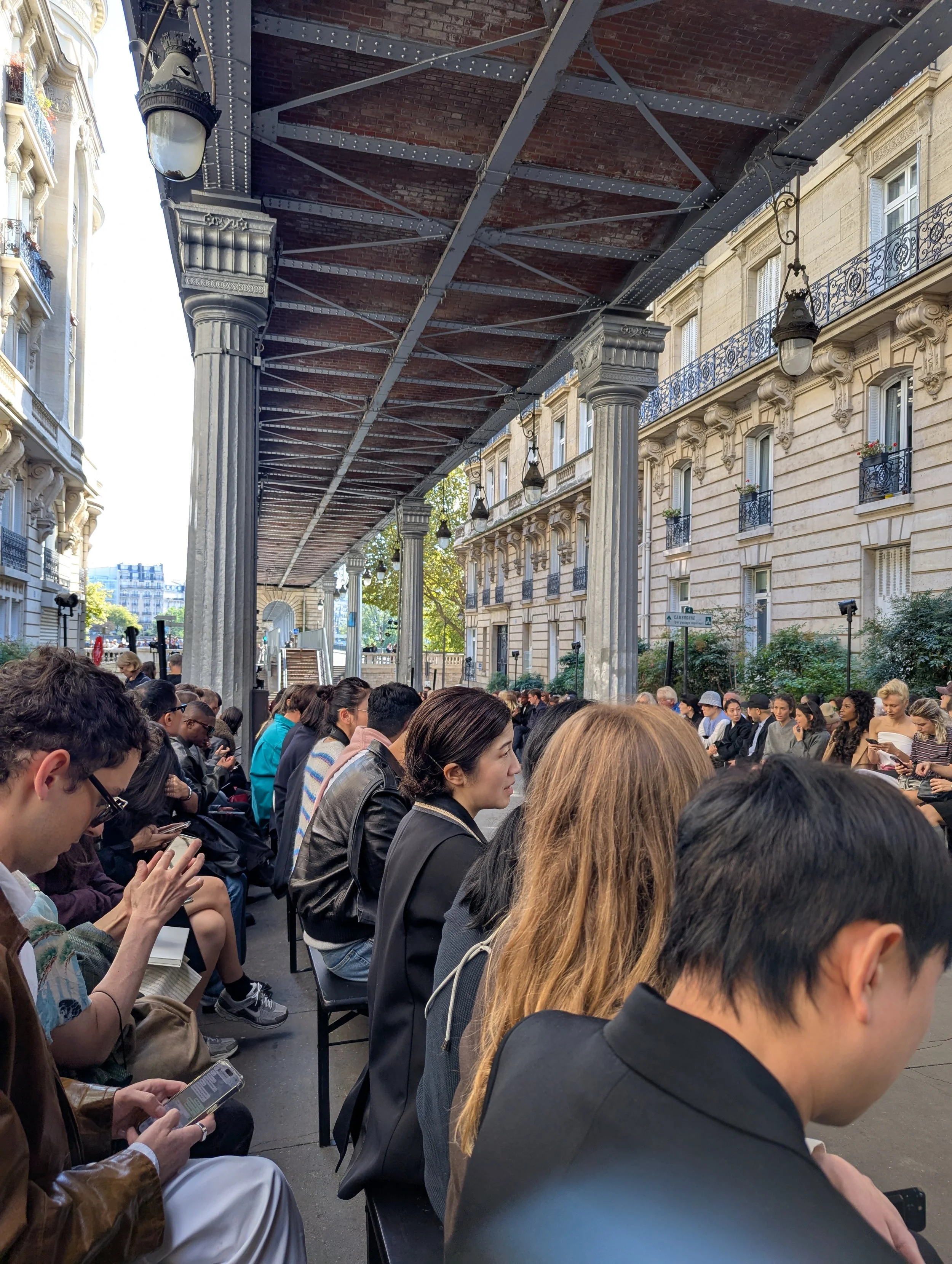
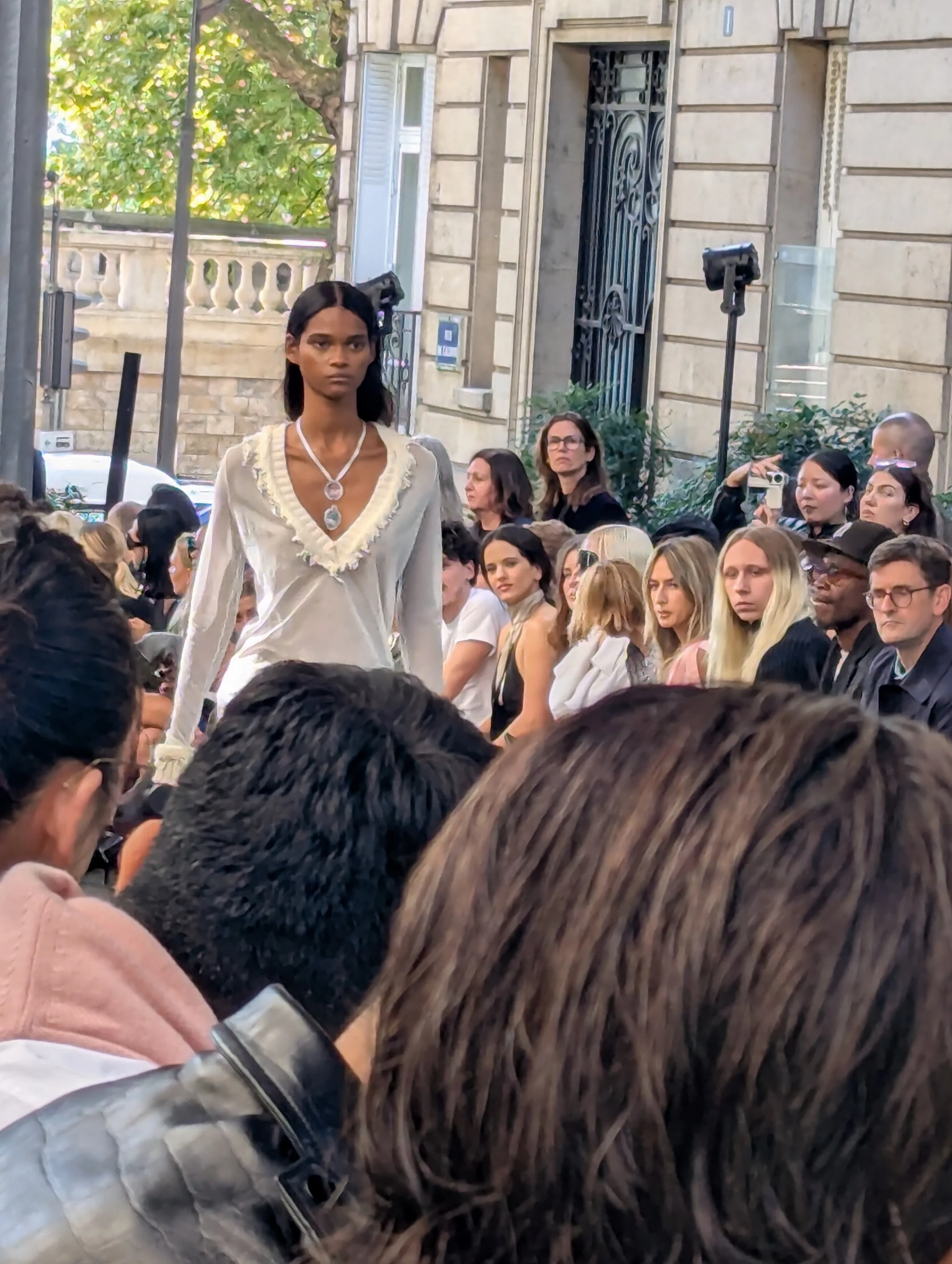
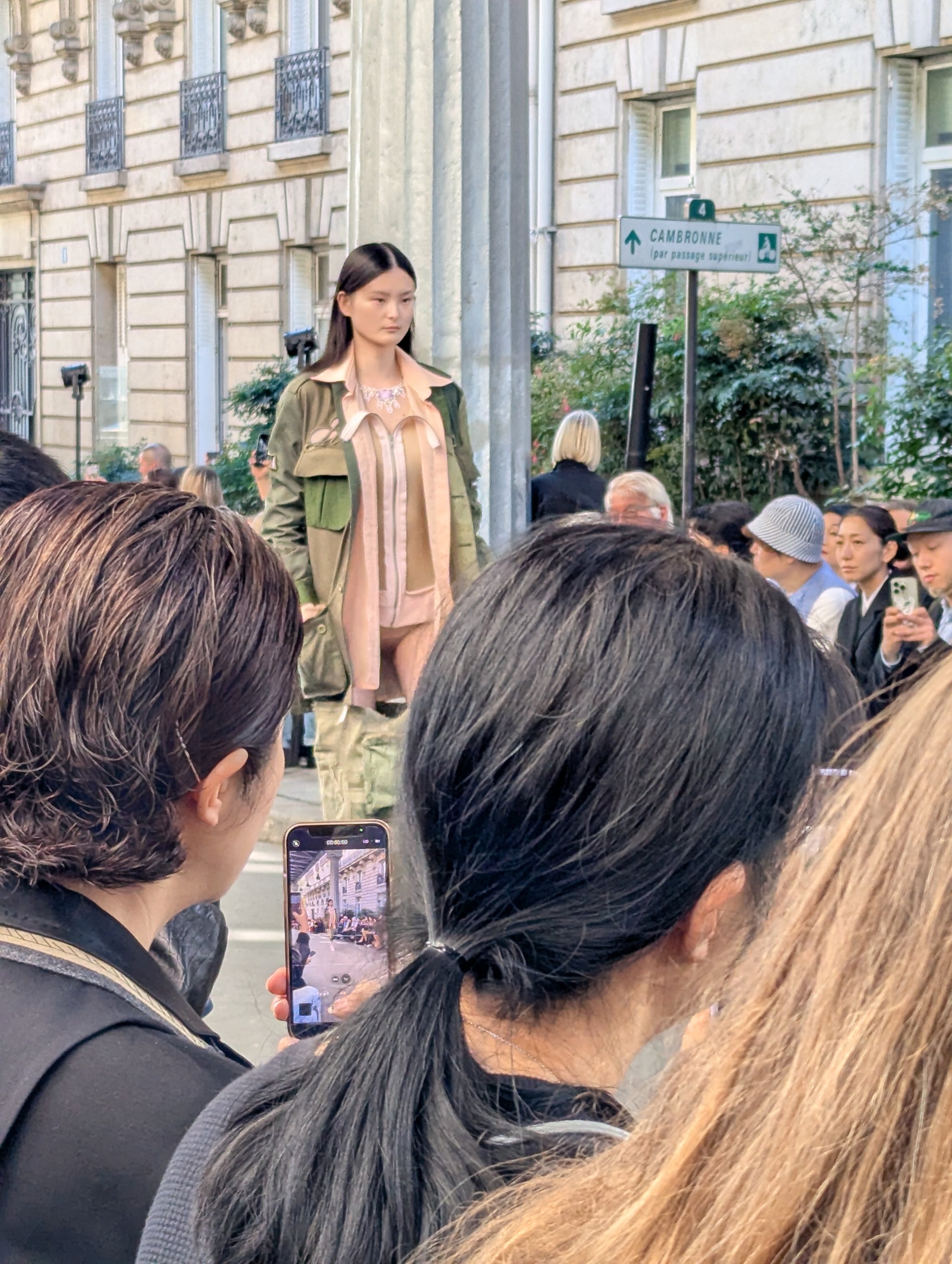
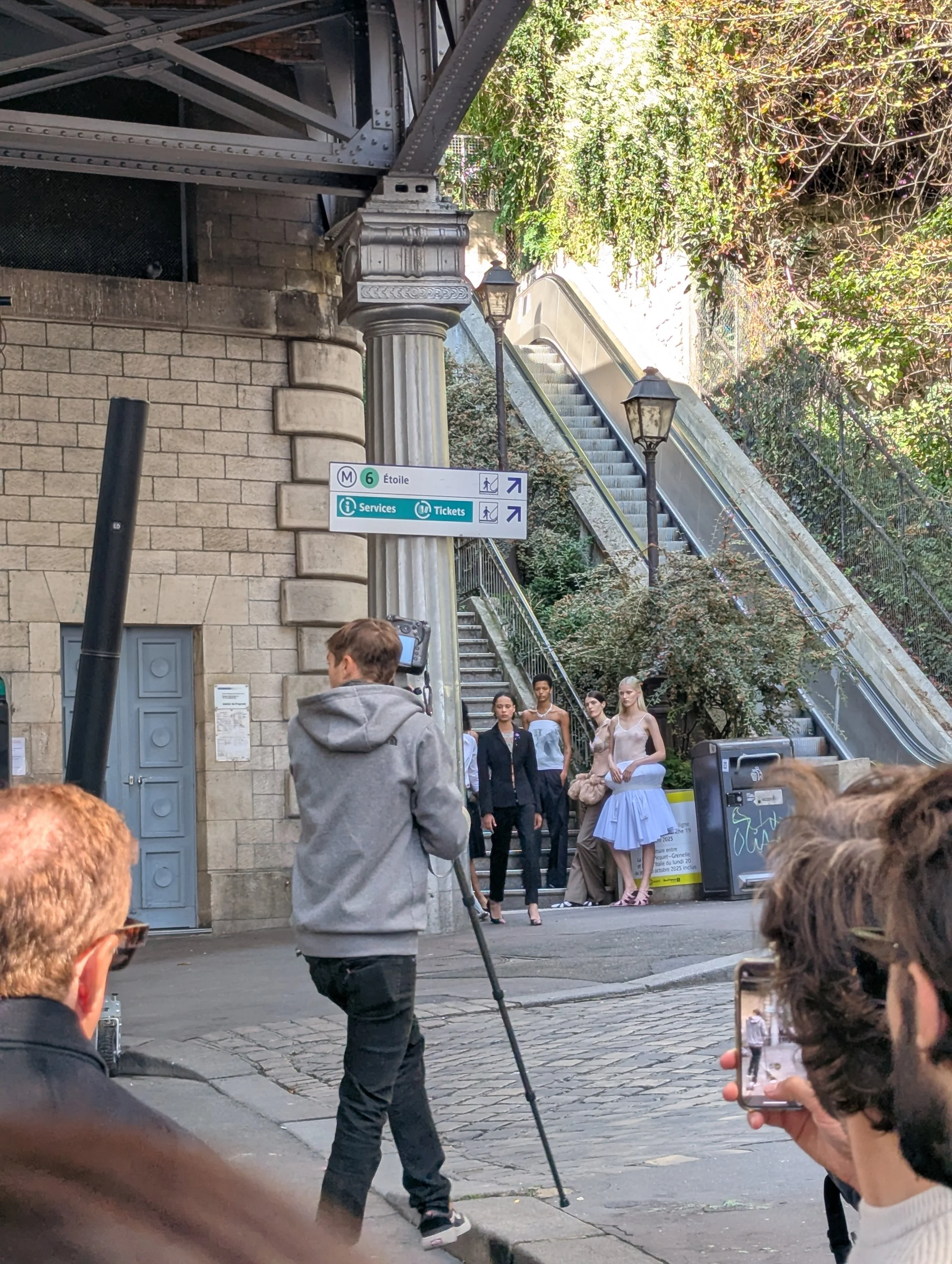
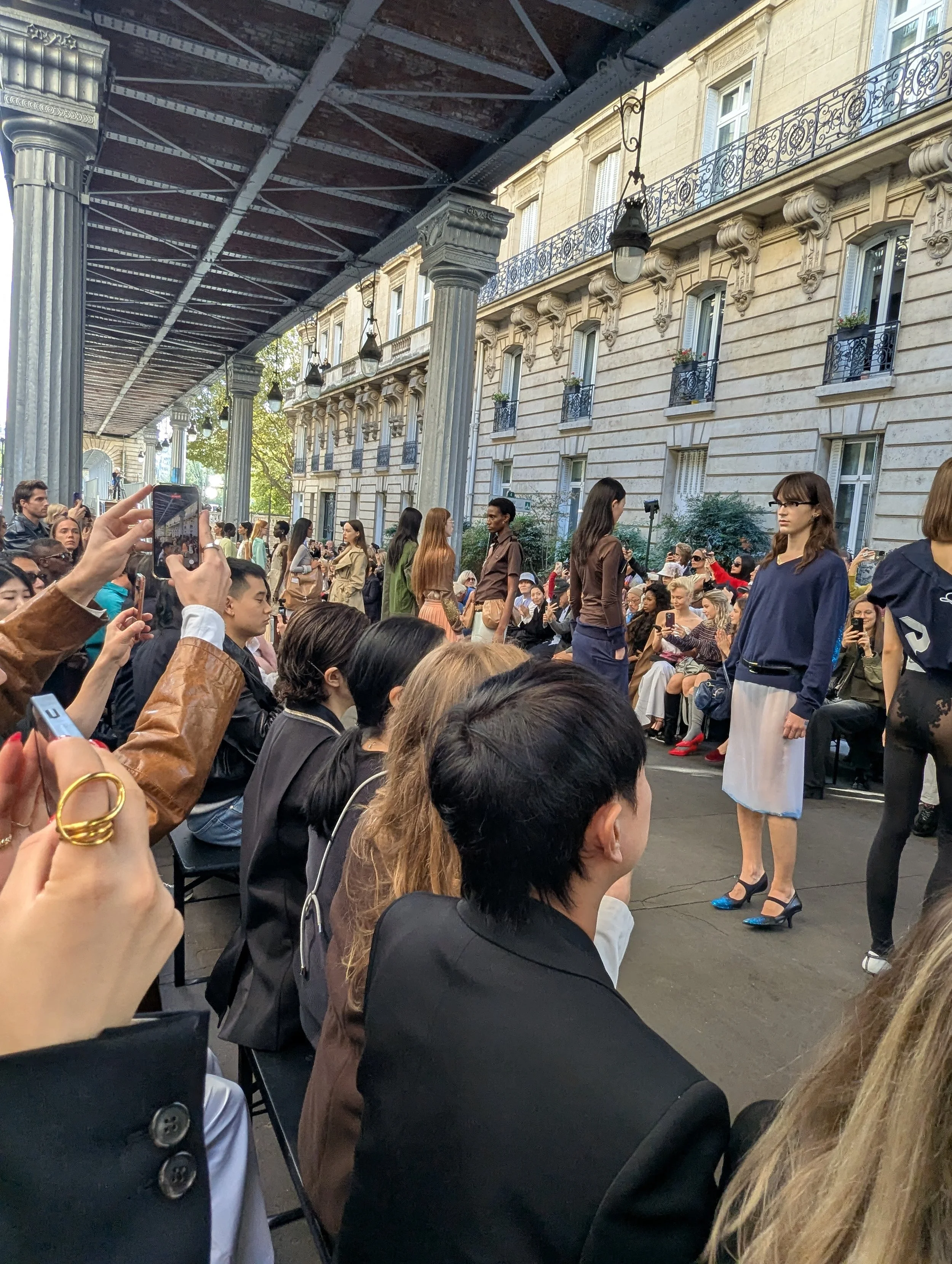
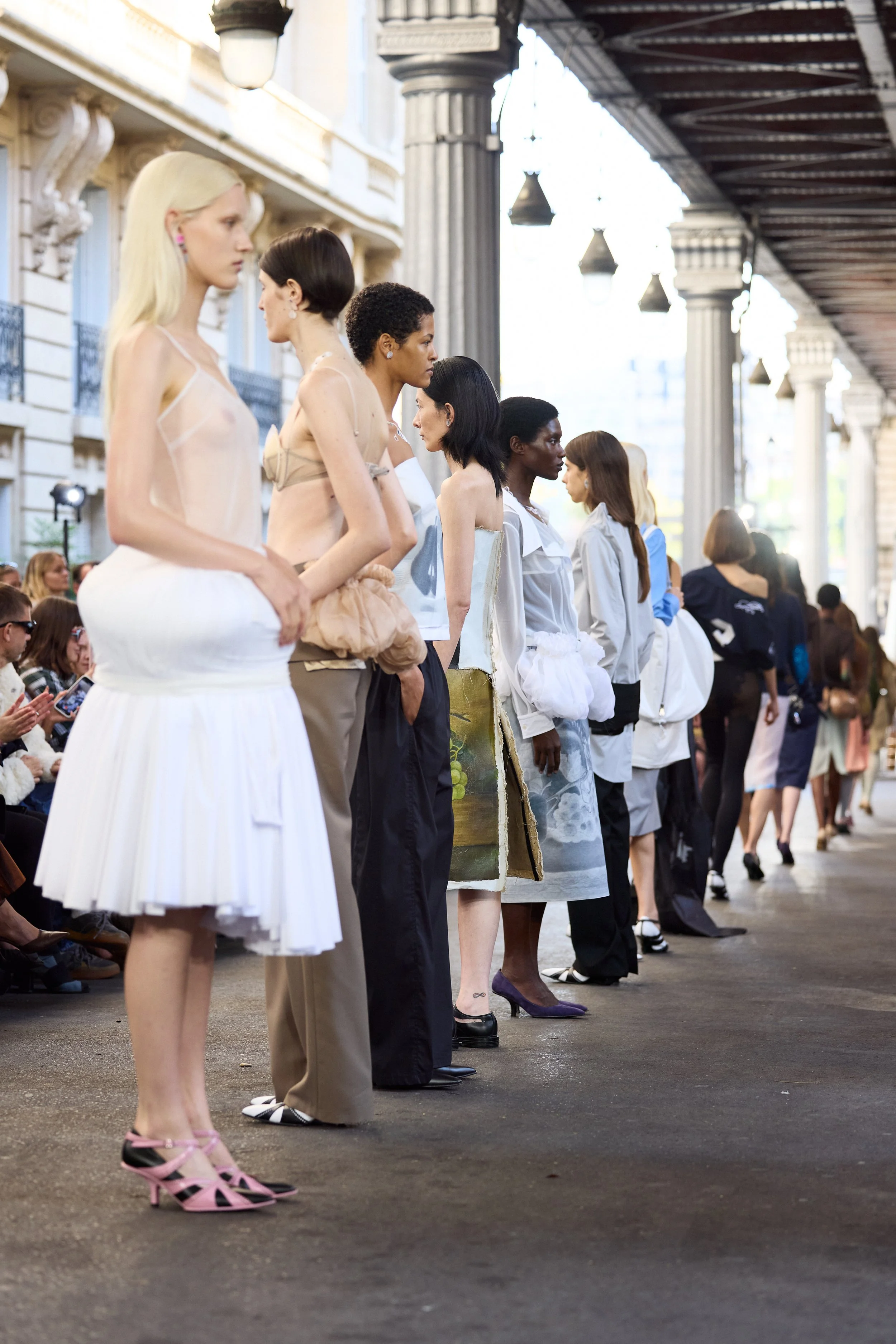
Julie Kegels’ show unfolded at the metro stop Passy in Paris’ 16th arrondissement, models spilling out of an apartment door like they had just remembered, mid-thought, that they were late to somewhere else. Caught in between never arriving and always on the move, they walked to a soundtrack of 32 women’s voices, internal monologues drifting from anxious to hopeful to blank. “Change. Change. Left, right, left, right. Don’t trip. Don’t forget your head.”, turning the runway into a collective stream of consciousness. Kegels opened her collection with three words scribbled in her notes app; “change change change,” and from that mantra unfolded a narrative of a woman in constant motion, rushing from office to celebration, always a few steps behind time yet somehow emotionally ahead of it.
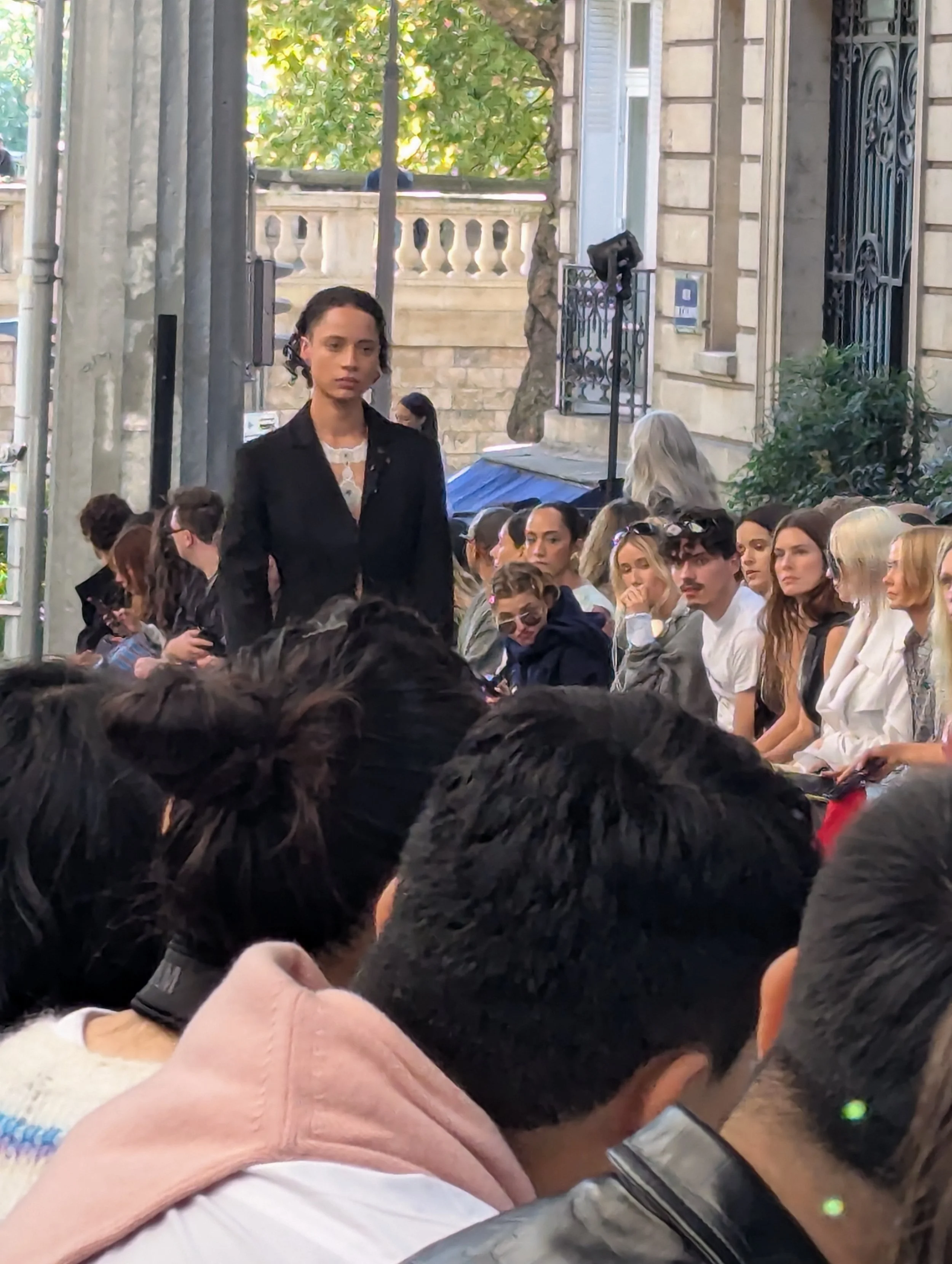
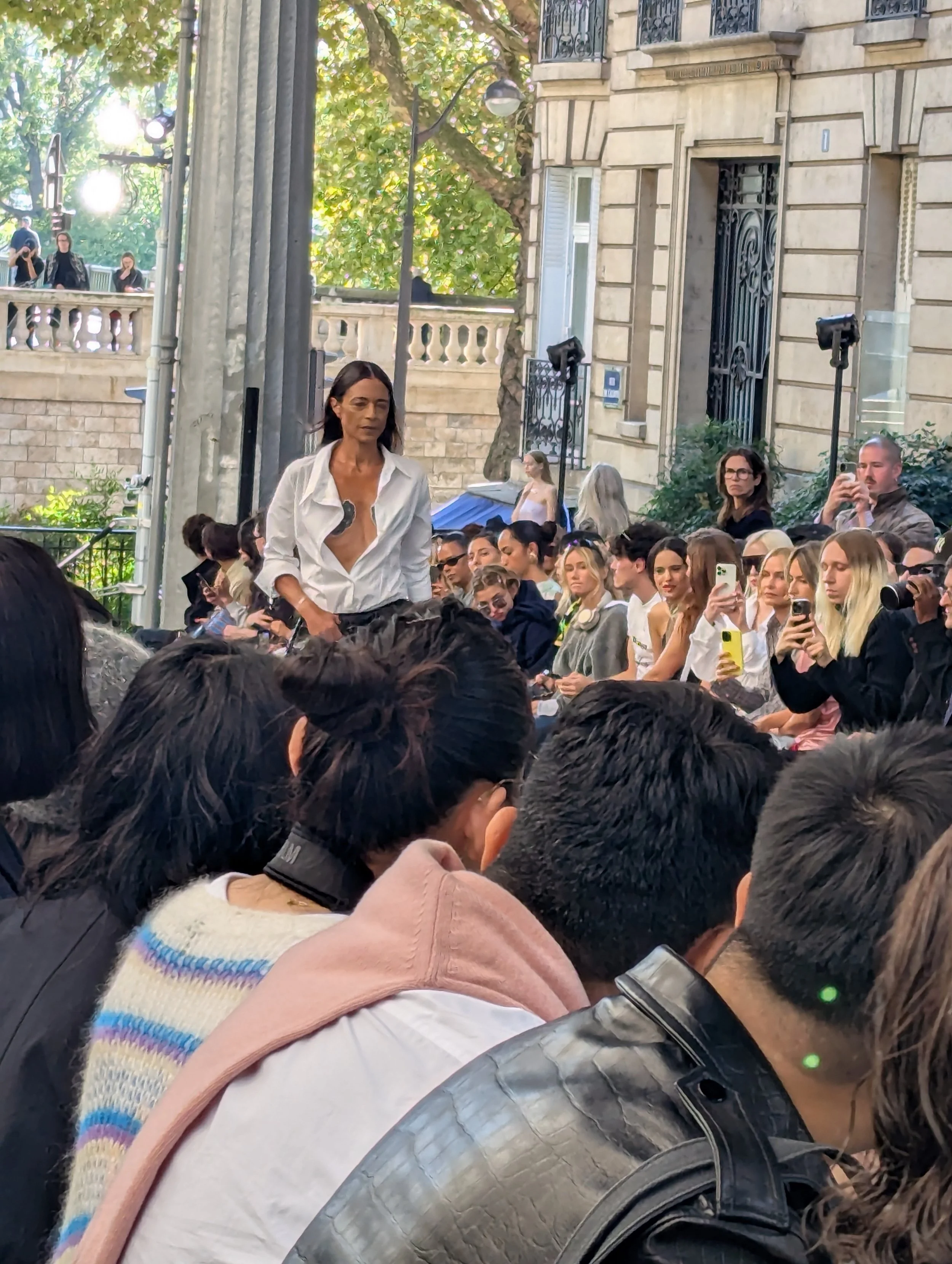
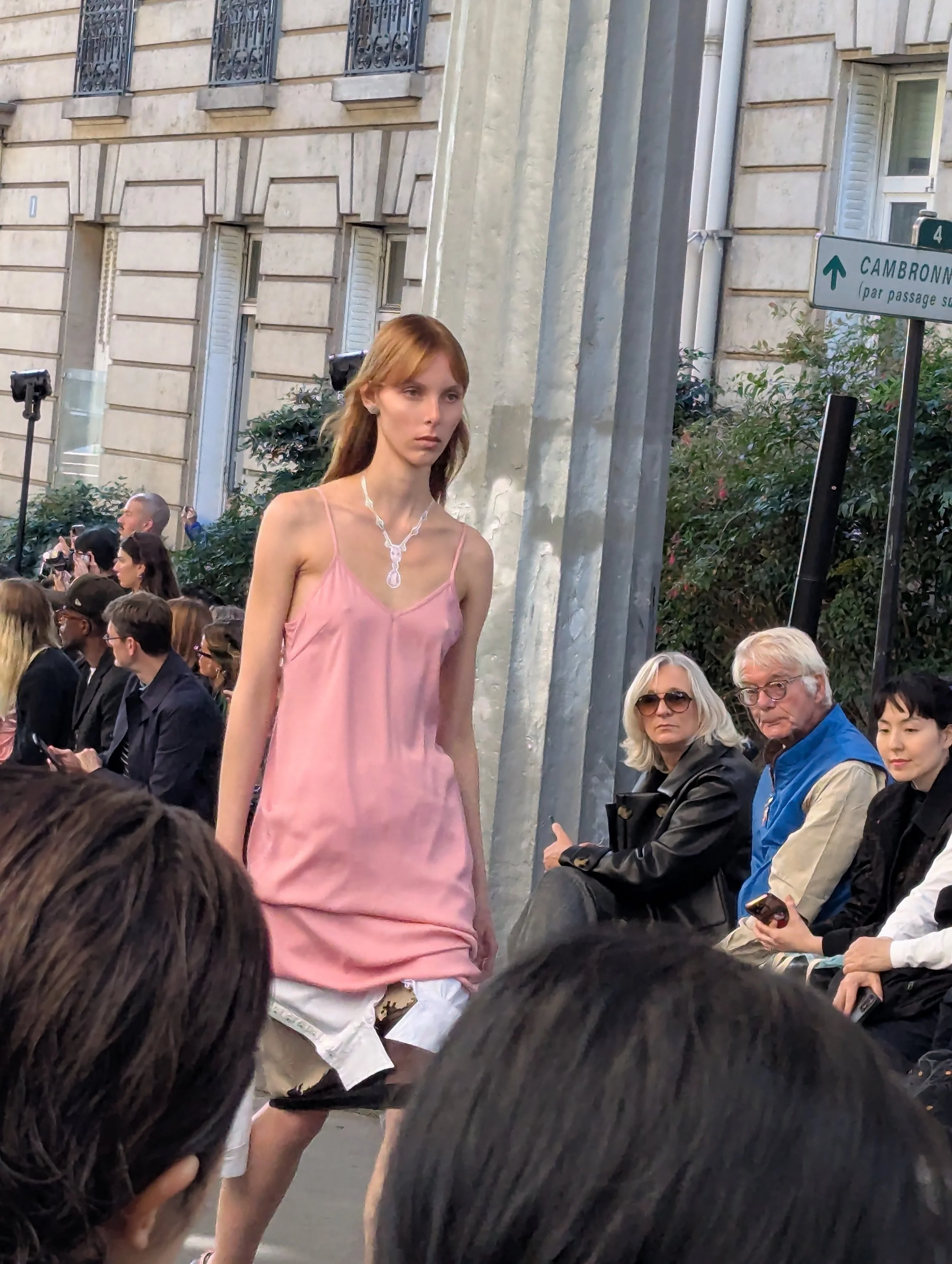
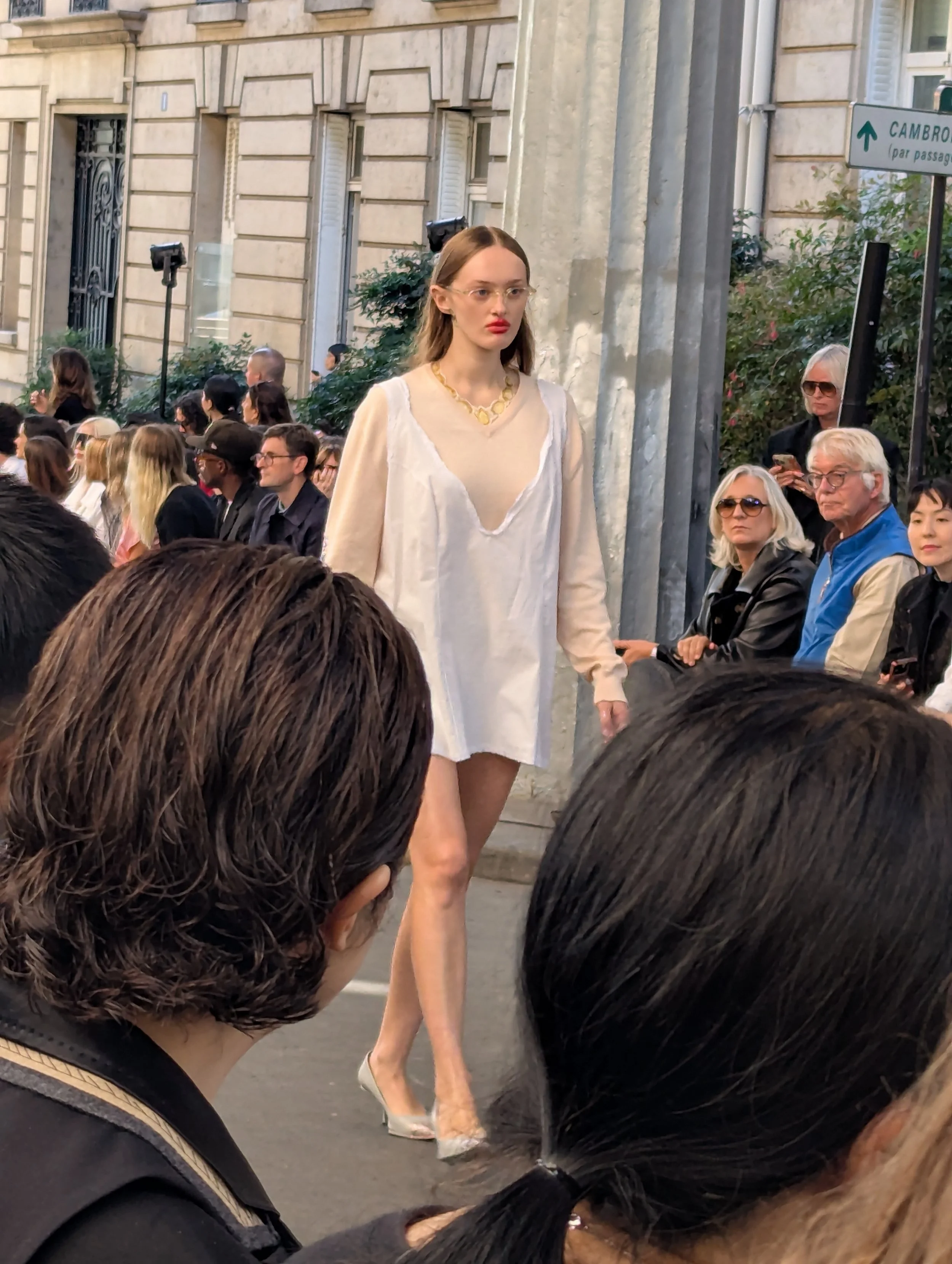
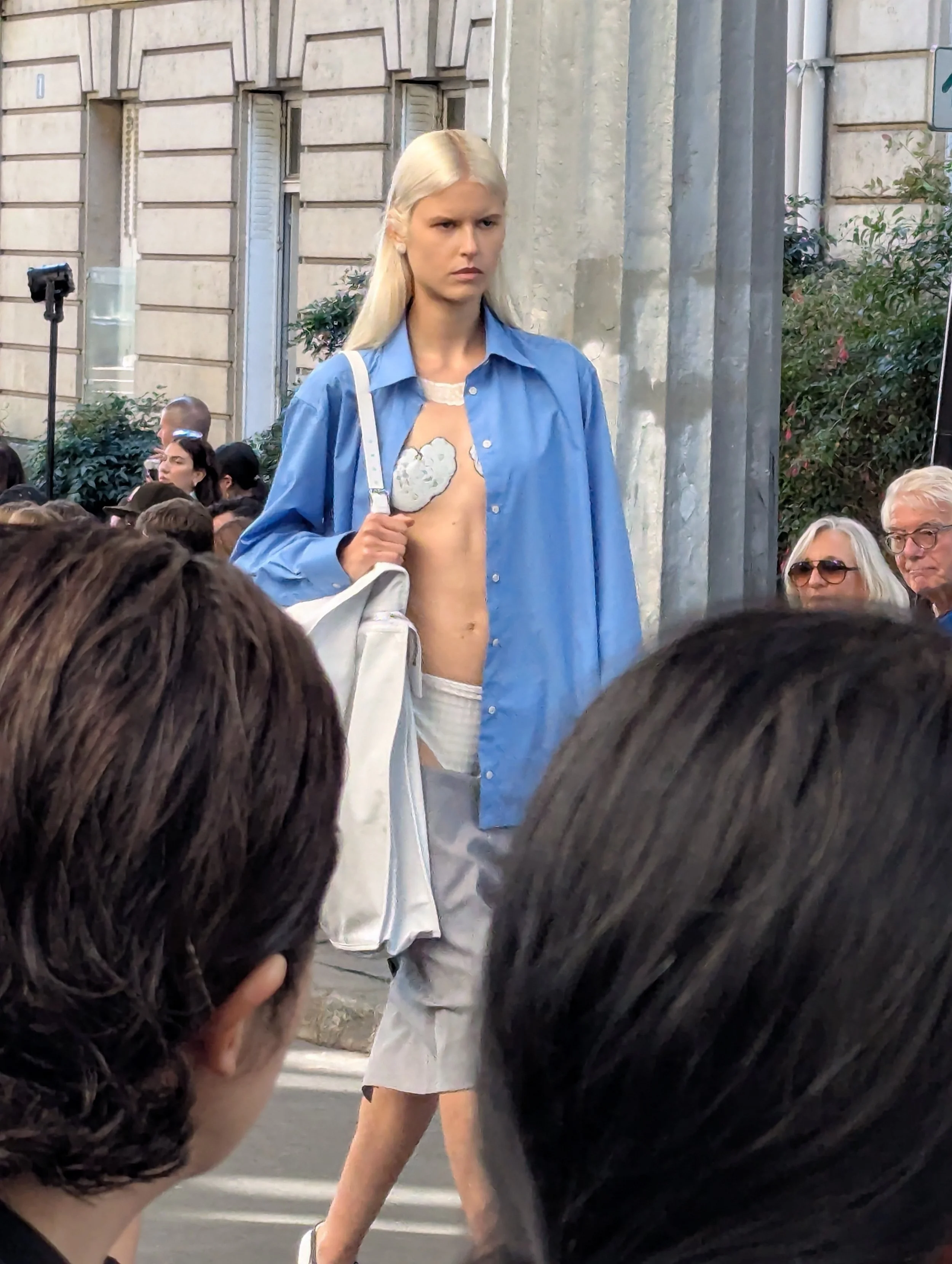
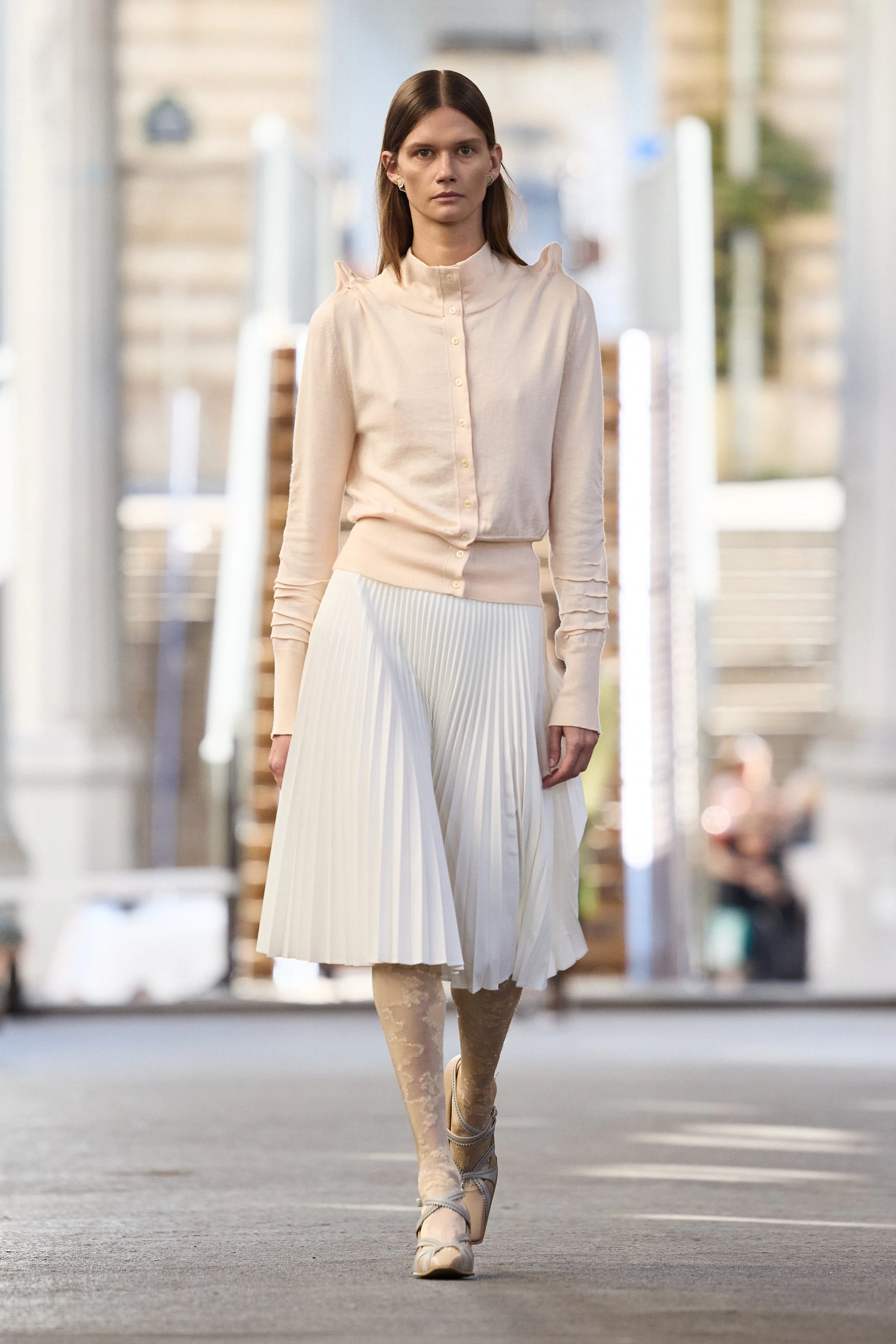
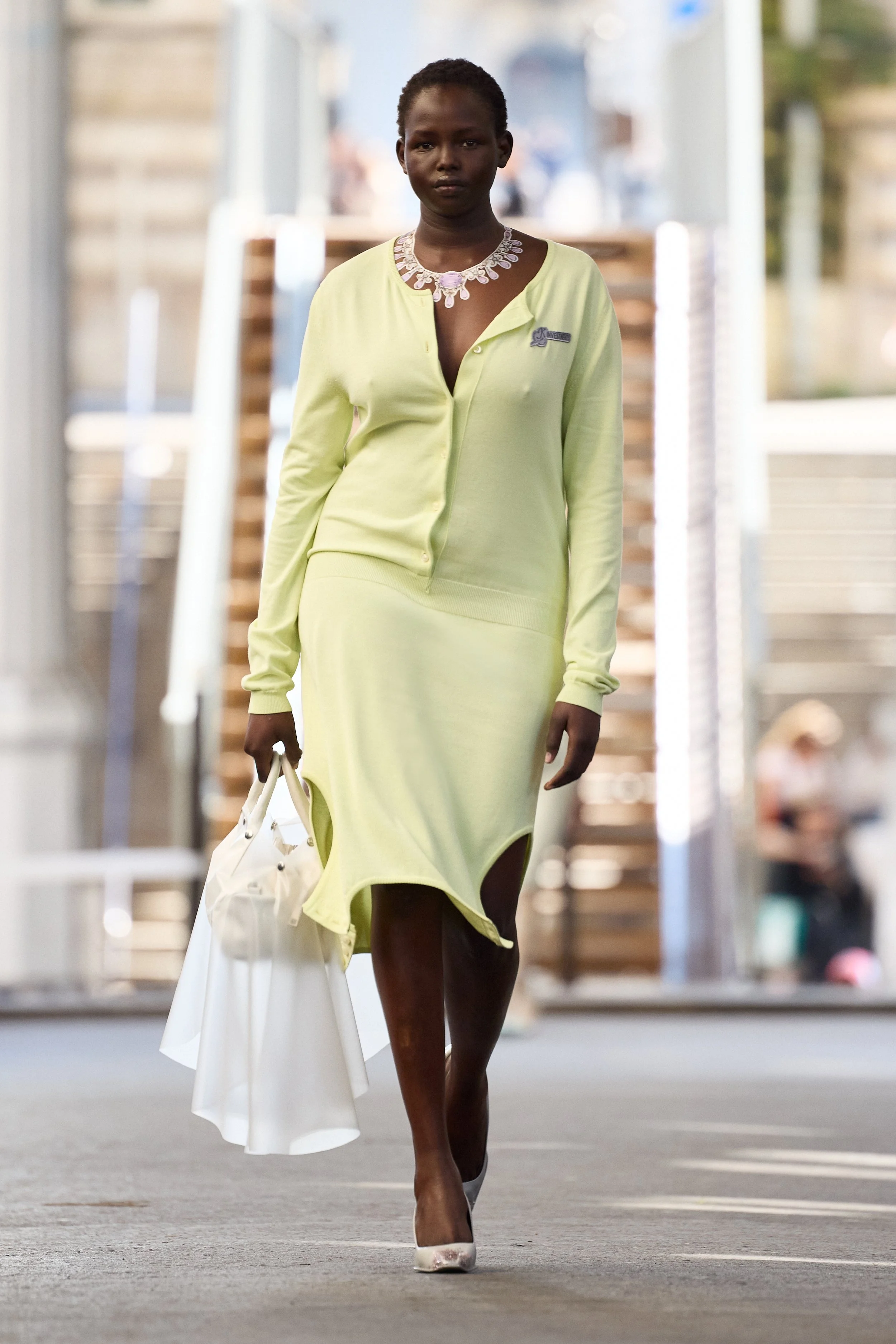
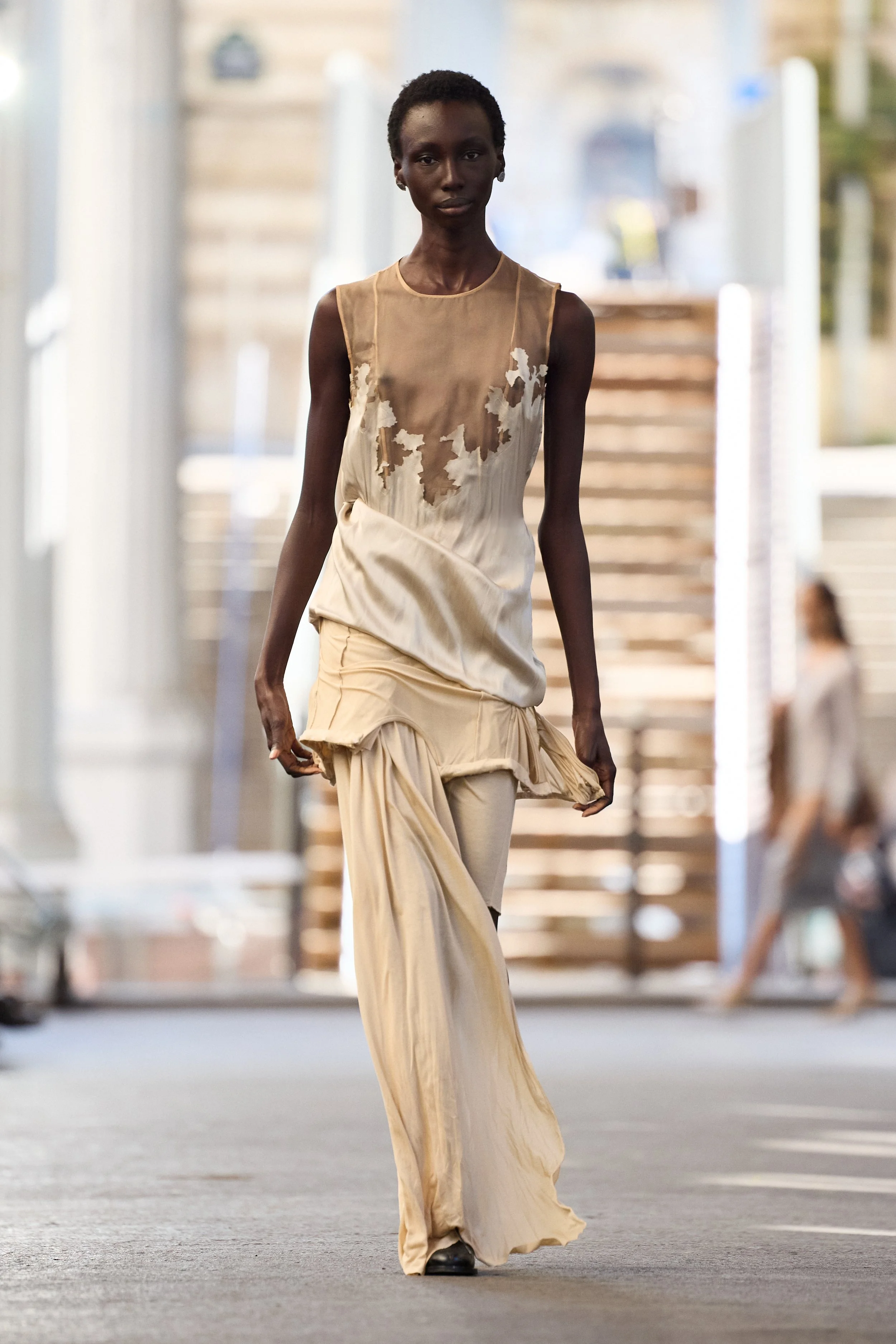
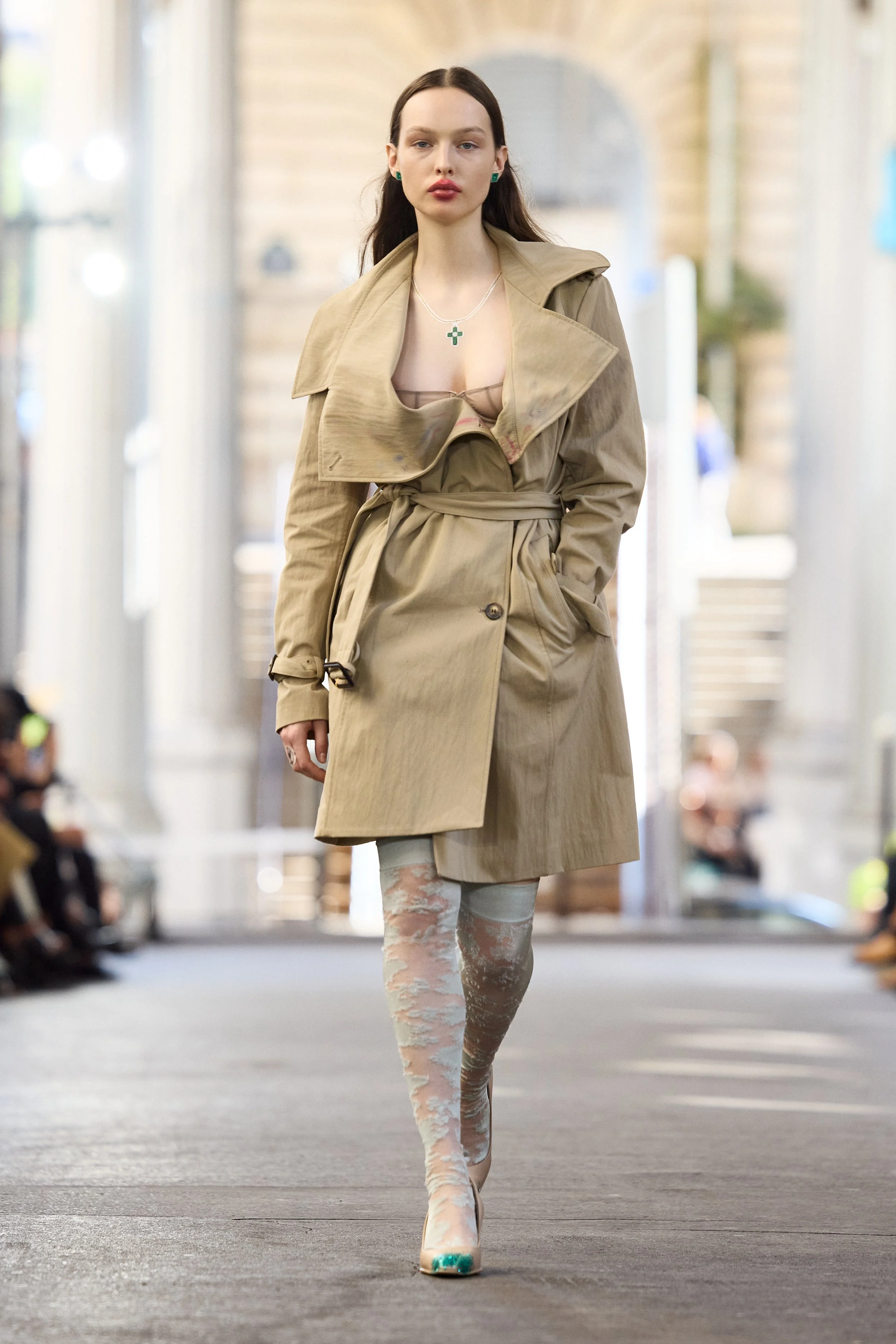
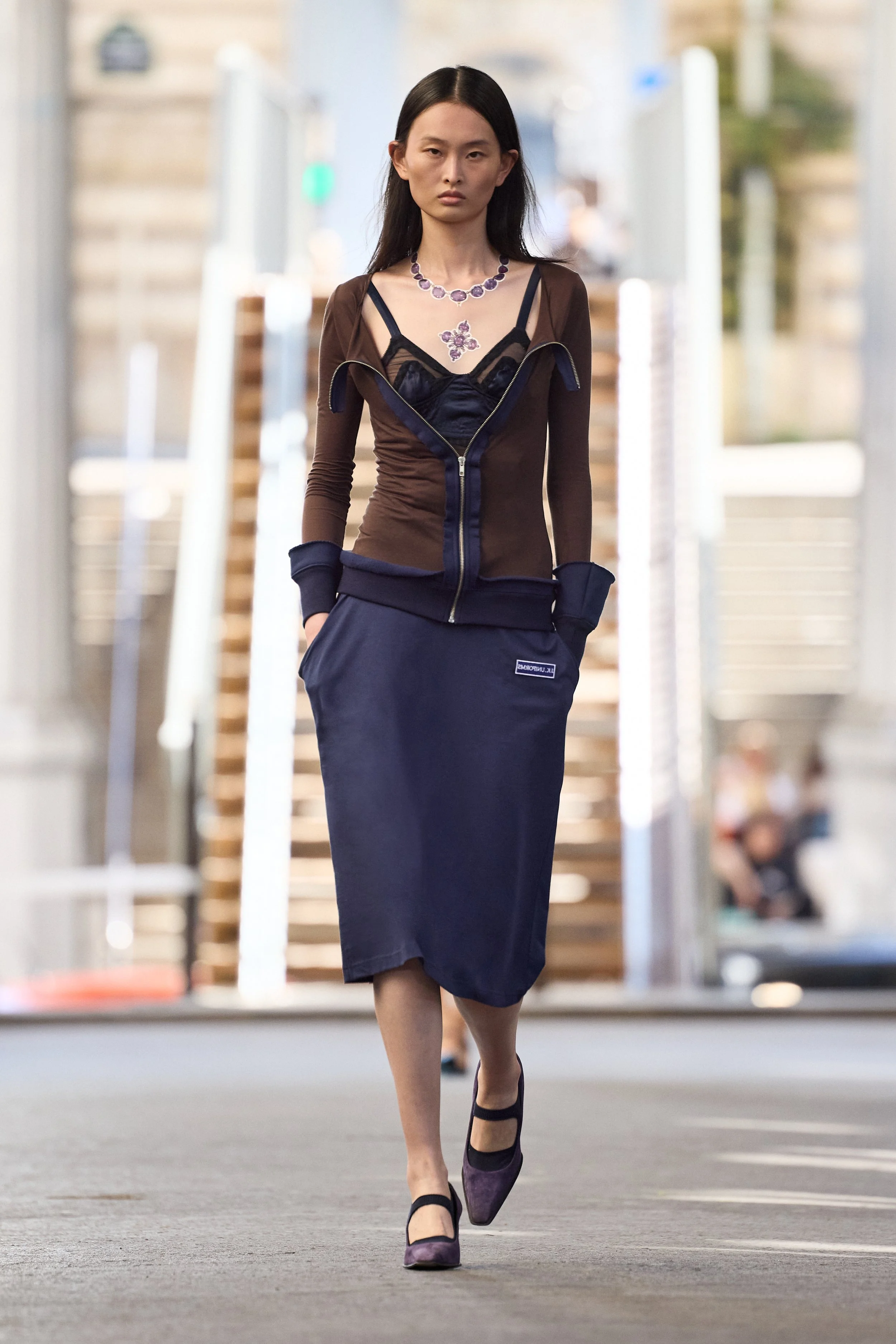
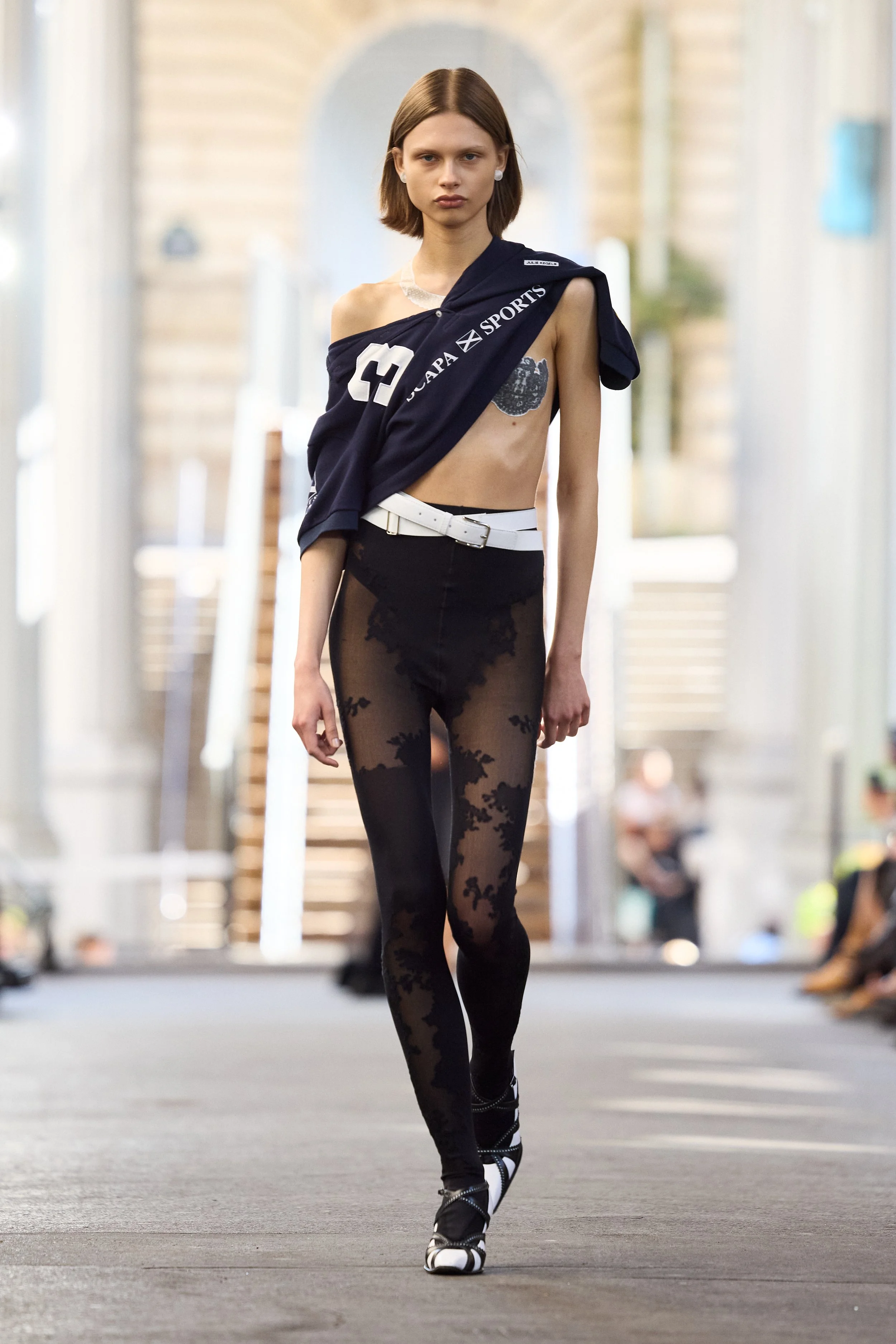
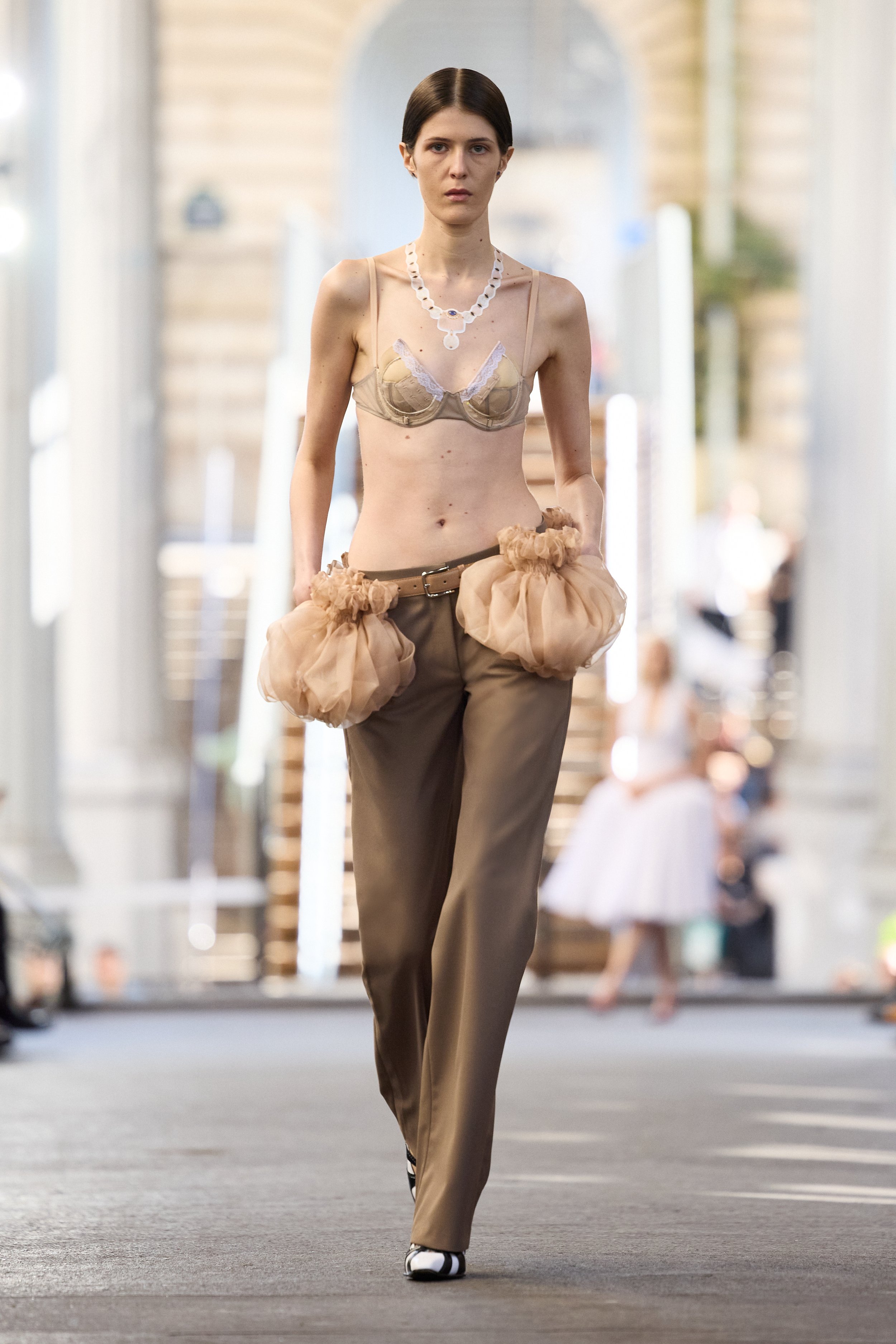
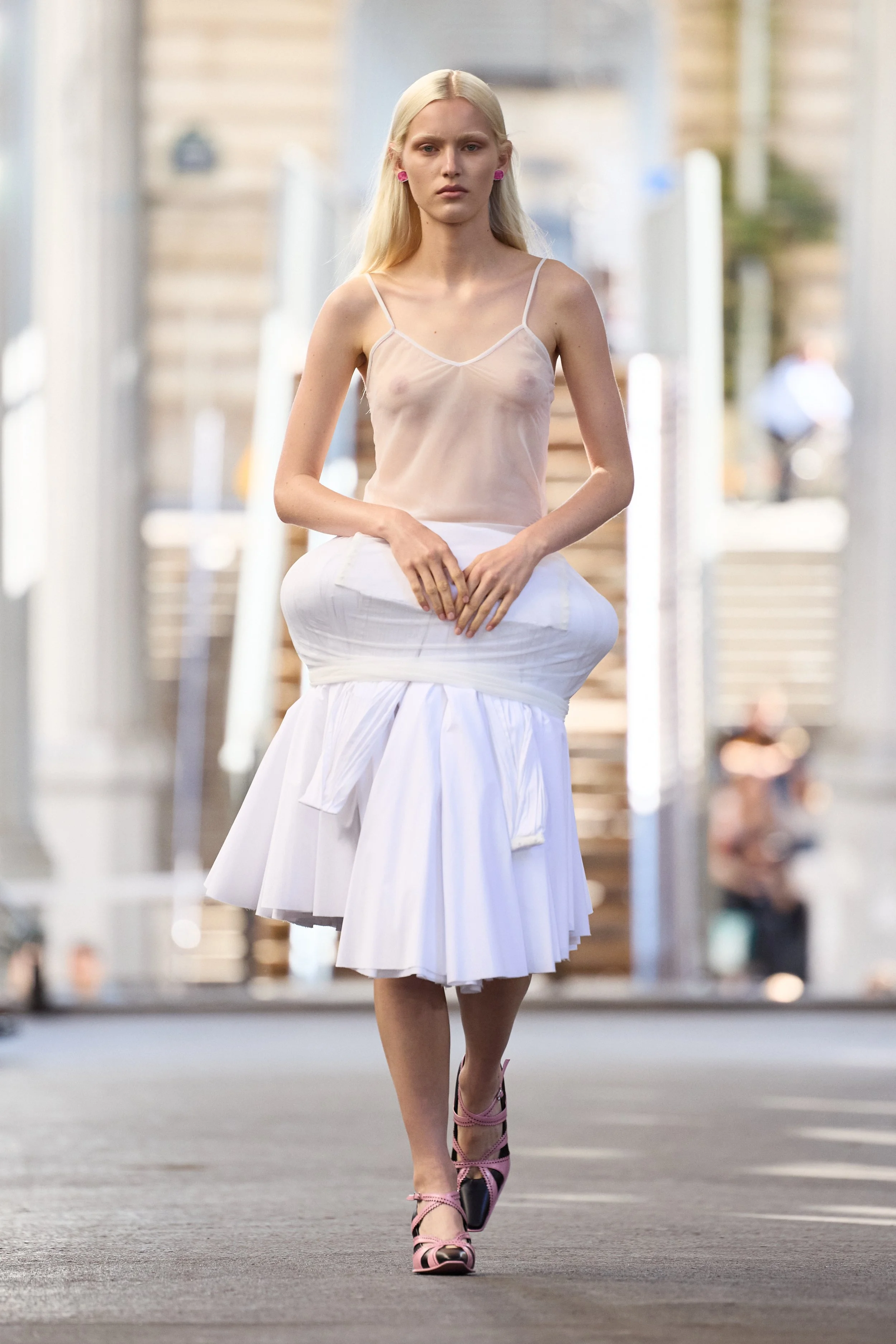
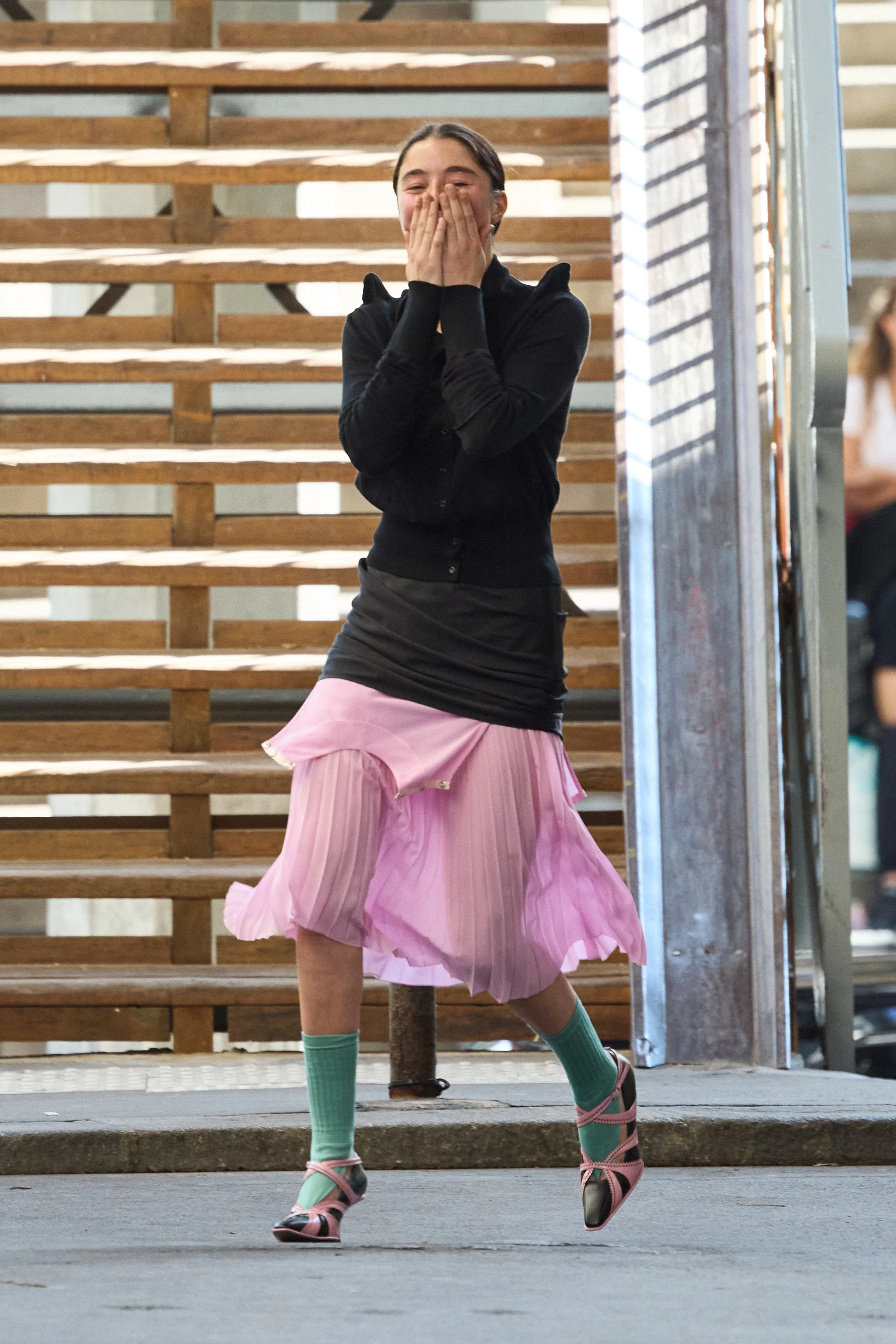
Here, change becomes both struggle and strength, and you see it most clearly in the deliberate “mistakes” that cling to each look like memories you can’t fully shake. She dresses while running; bra straps hastily knotted, collars stretched from forgotten buttons and smudged with makeup, hems snagged in haste, turning the familiar panic of getting dressed too quickly into an aesthetic language of its own. Imperfection lingers not as failure but as imprint. Stains become prints, wrinkles become structure, seams become memory, and a recurring sharp, crumpled shoulder line appears across dresses, shirts, and cardigans as if each garment is still holding the ghost of the body that shrugged it on and off.
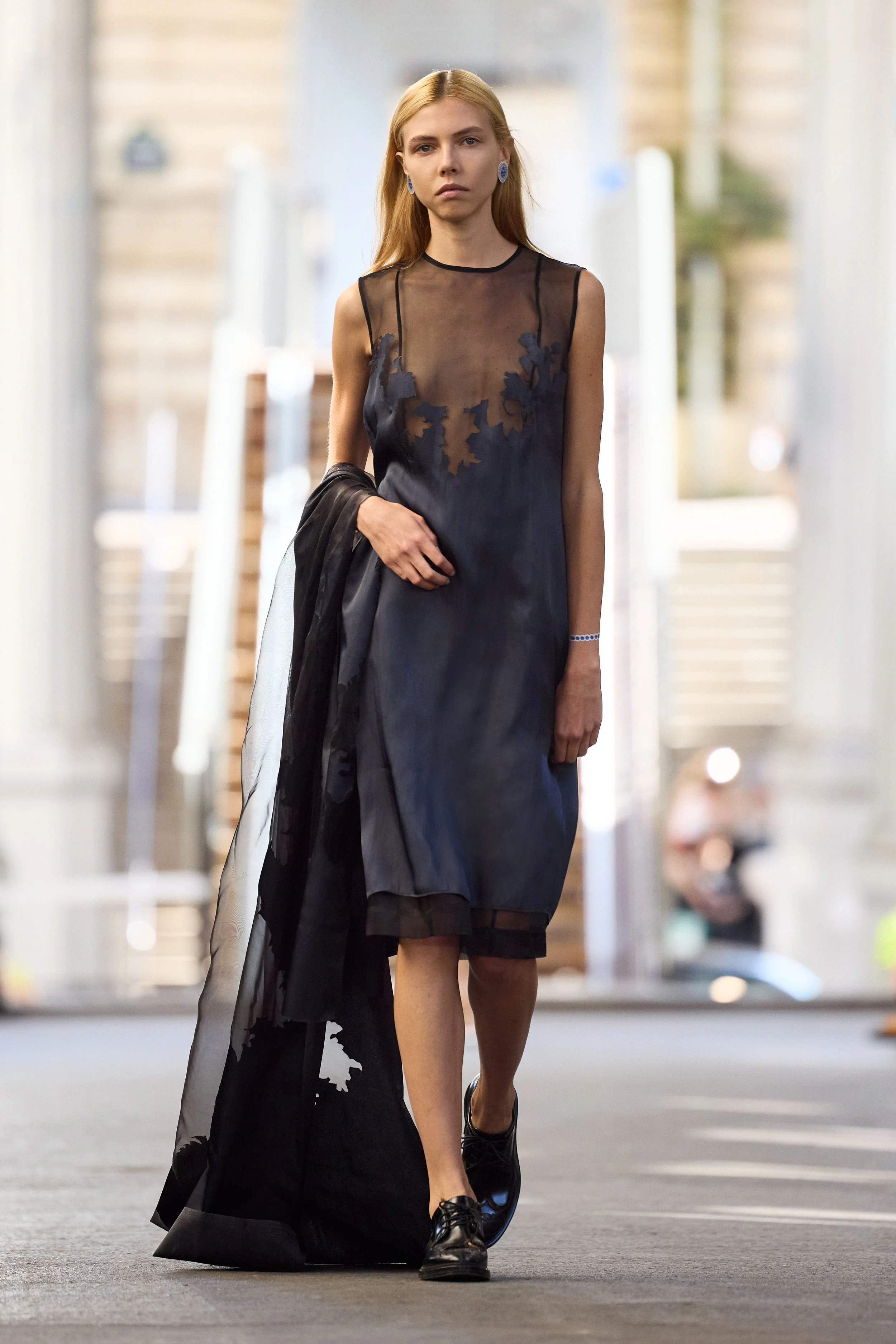
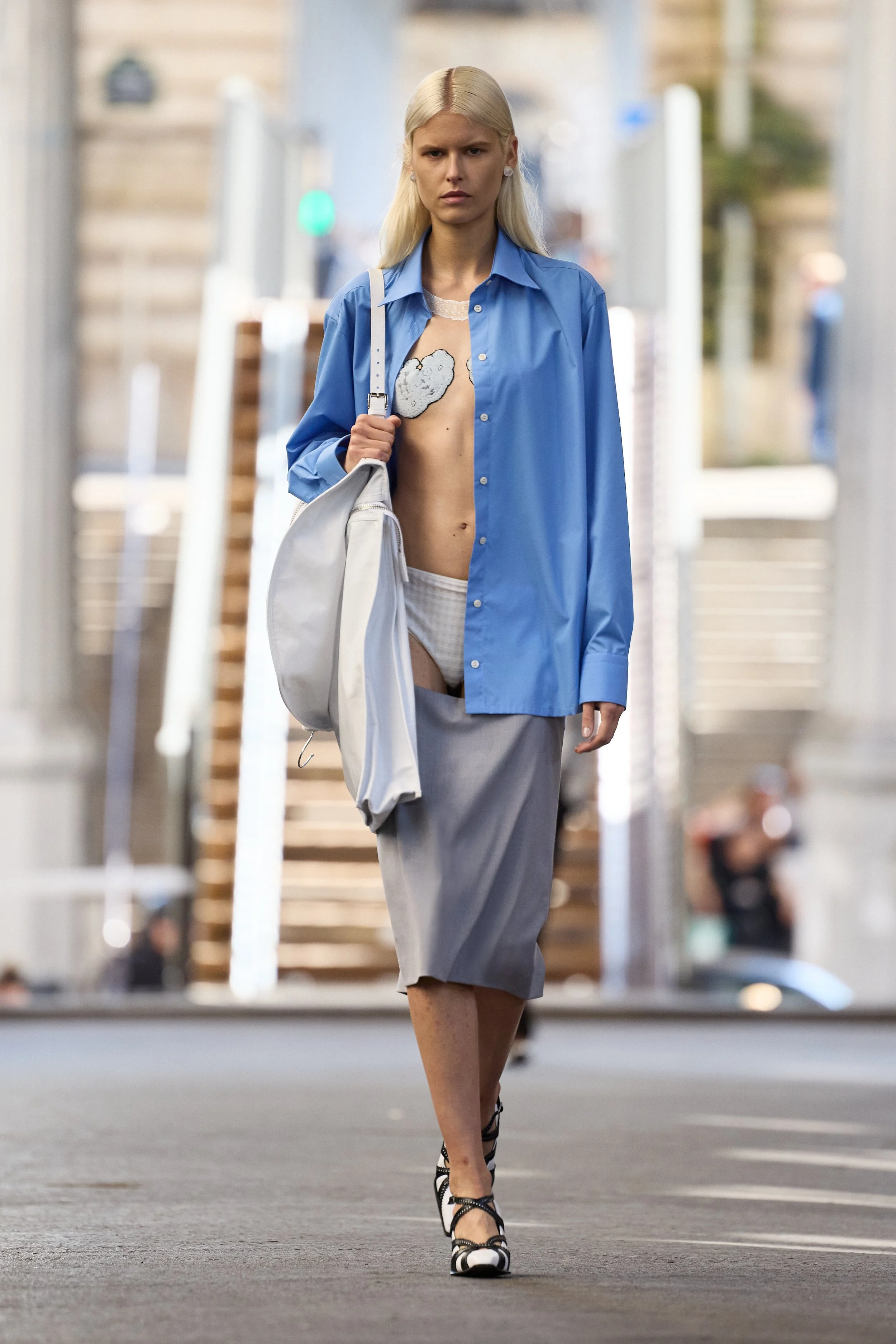
One of the collection’s most potent gestures lies in its literal on runway transformations. Through Quick Change techniques, three silhouettes shift in seconds: a pencil skirt and shirt melt into a slip dress, fine draping collapses and reassembles as a satin gown, and a Monroe inspired gown reveals its fragile double, like a glamourous echo trailing behind the original. Change here is illusion, spectacle, desire. The costume changes of a woman who might be an office worker at 4, a lover at 9, a ghost of herself at midnight, all compressed into the same twenty-four hours. Her constant companion is a garment messenger bag, carrying the next three lives she will inhabit before the night is done, a portable wardrobe of alternate timelines slung casually over one shoulder.
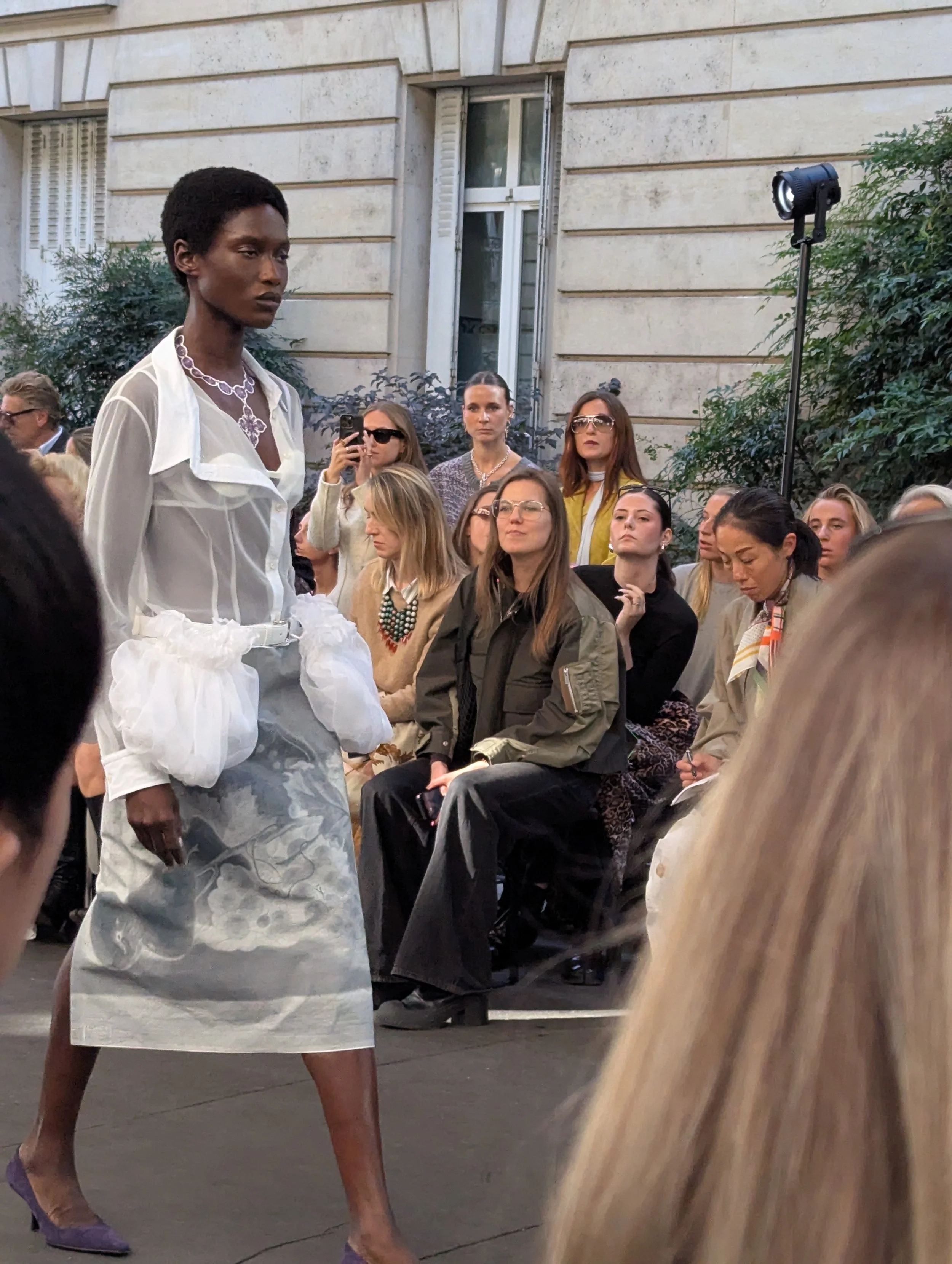
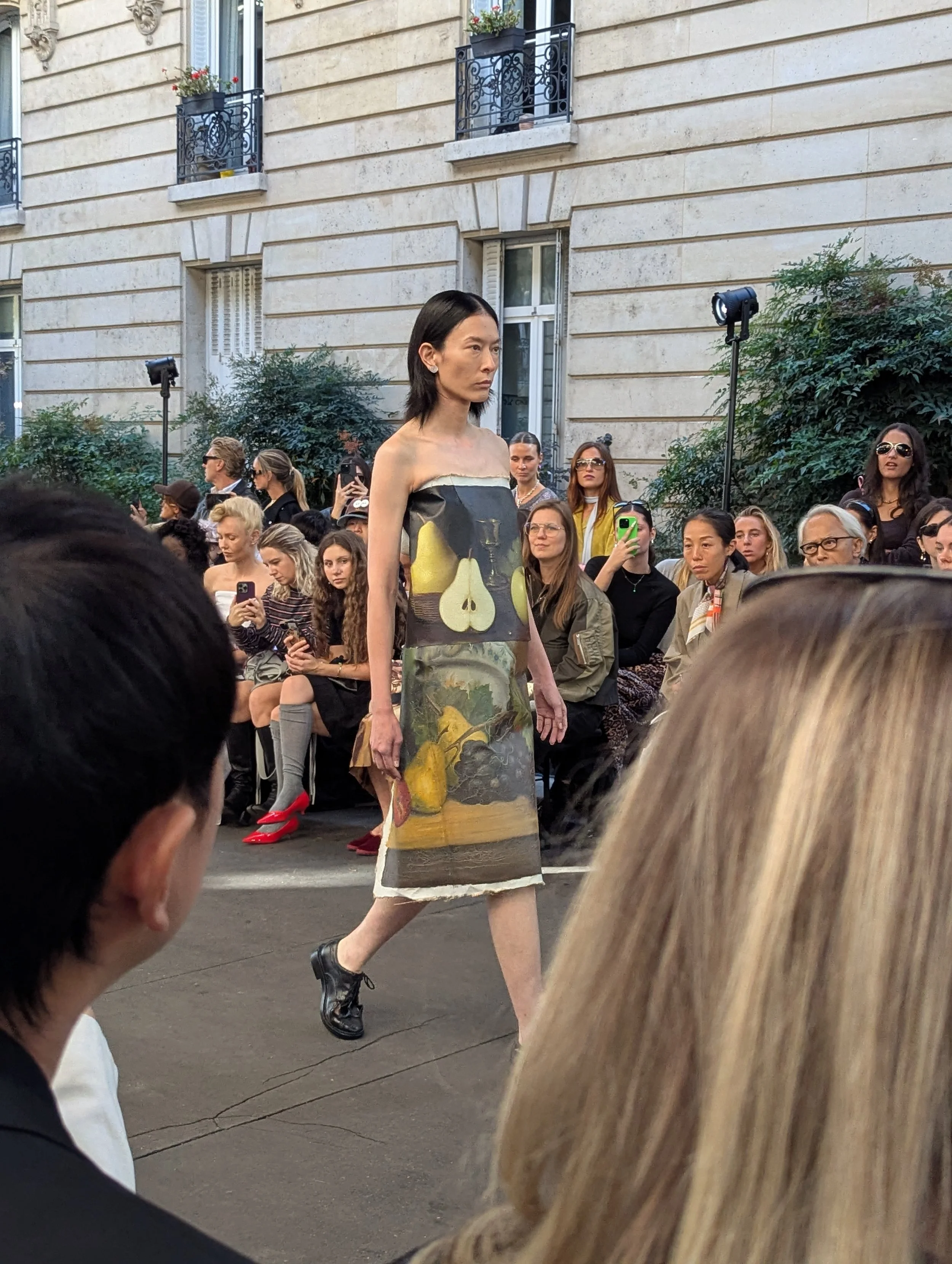
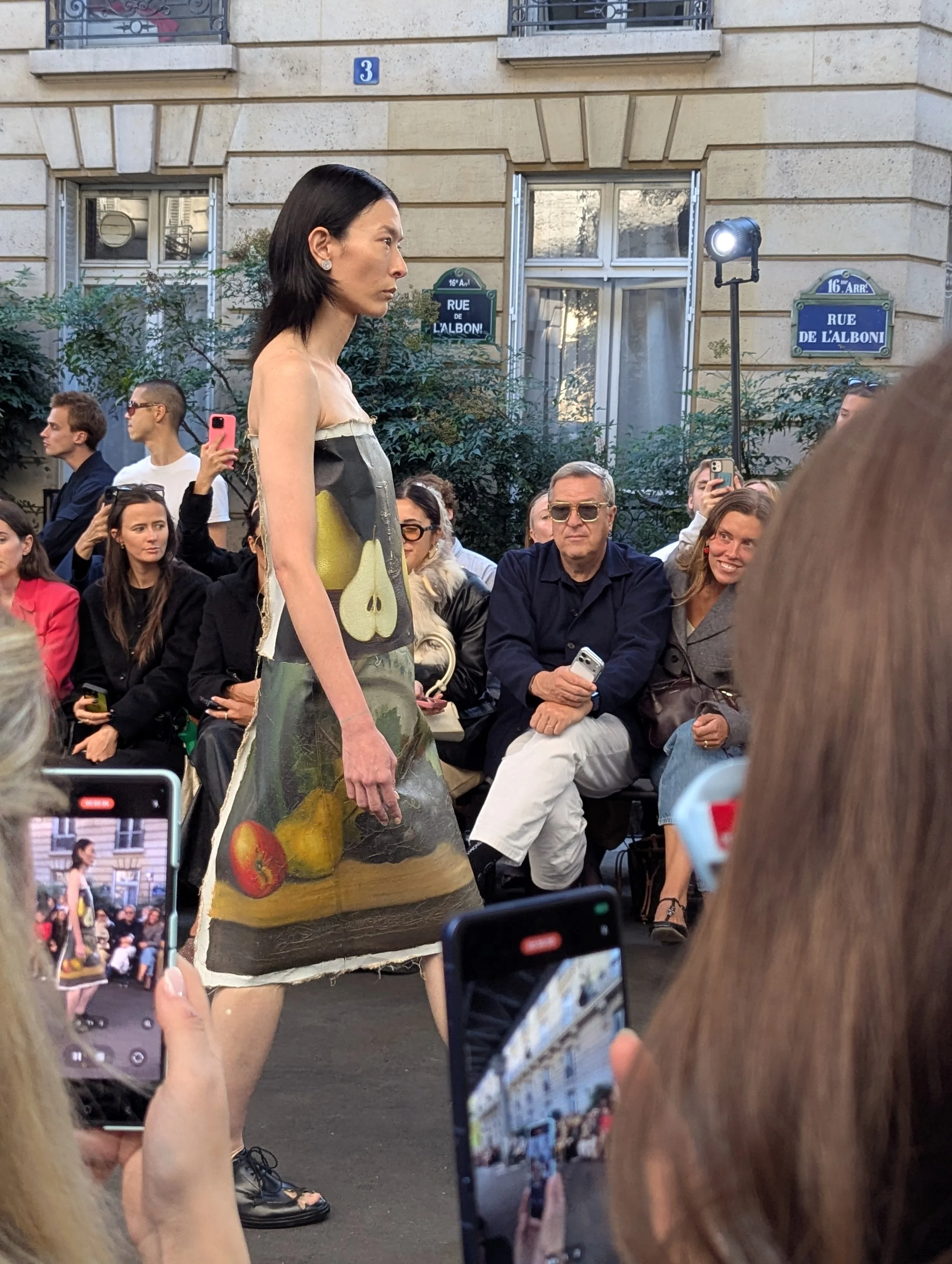
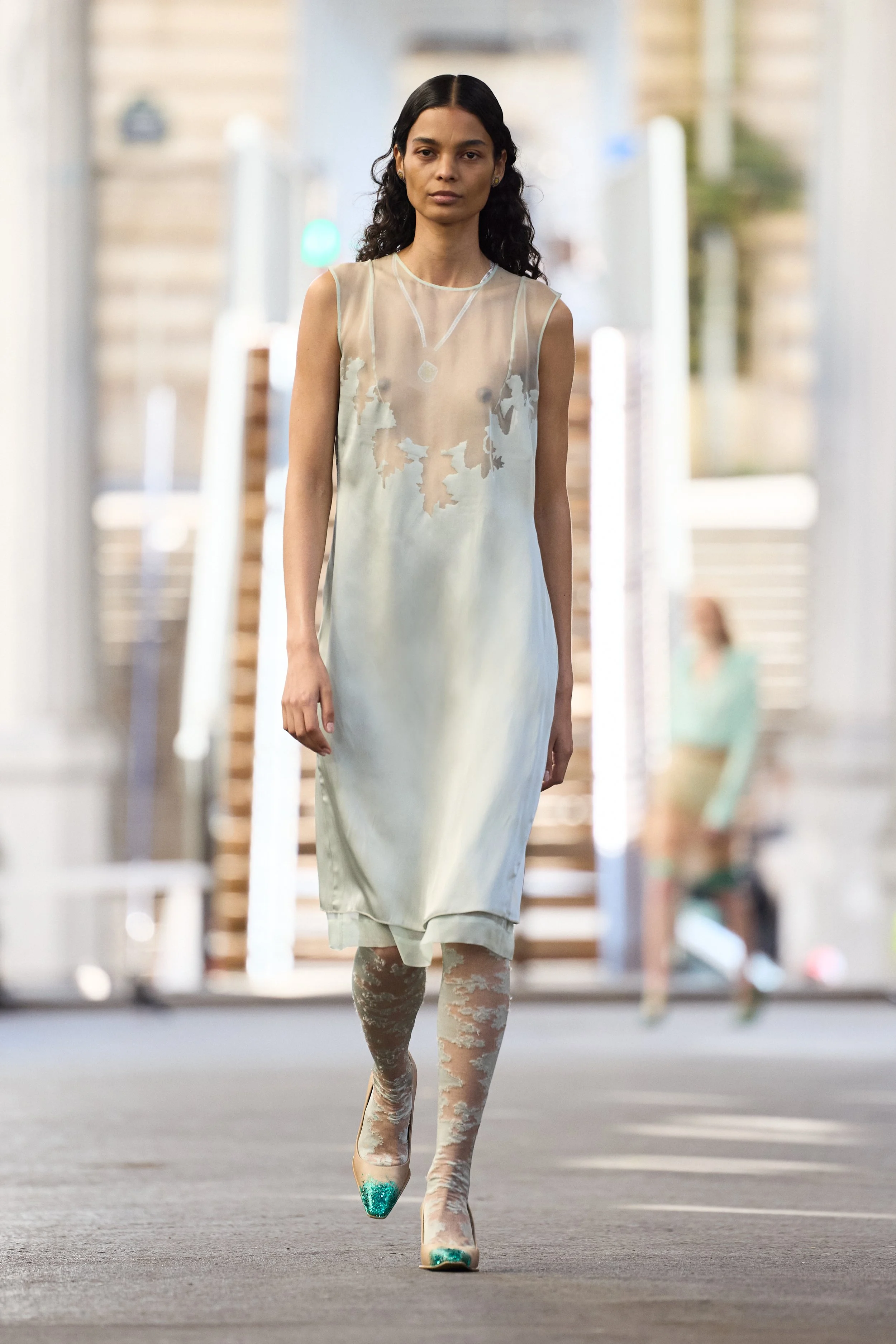
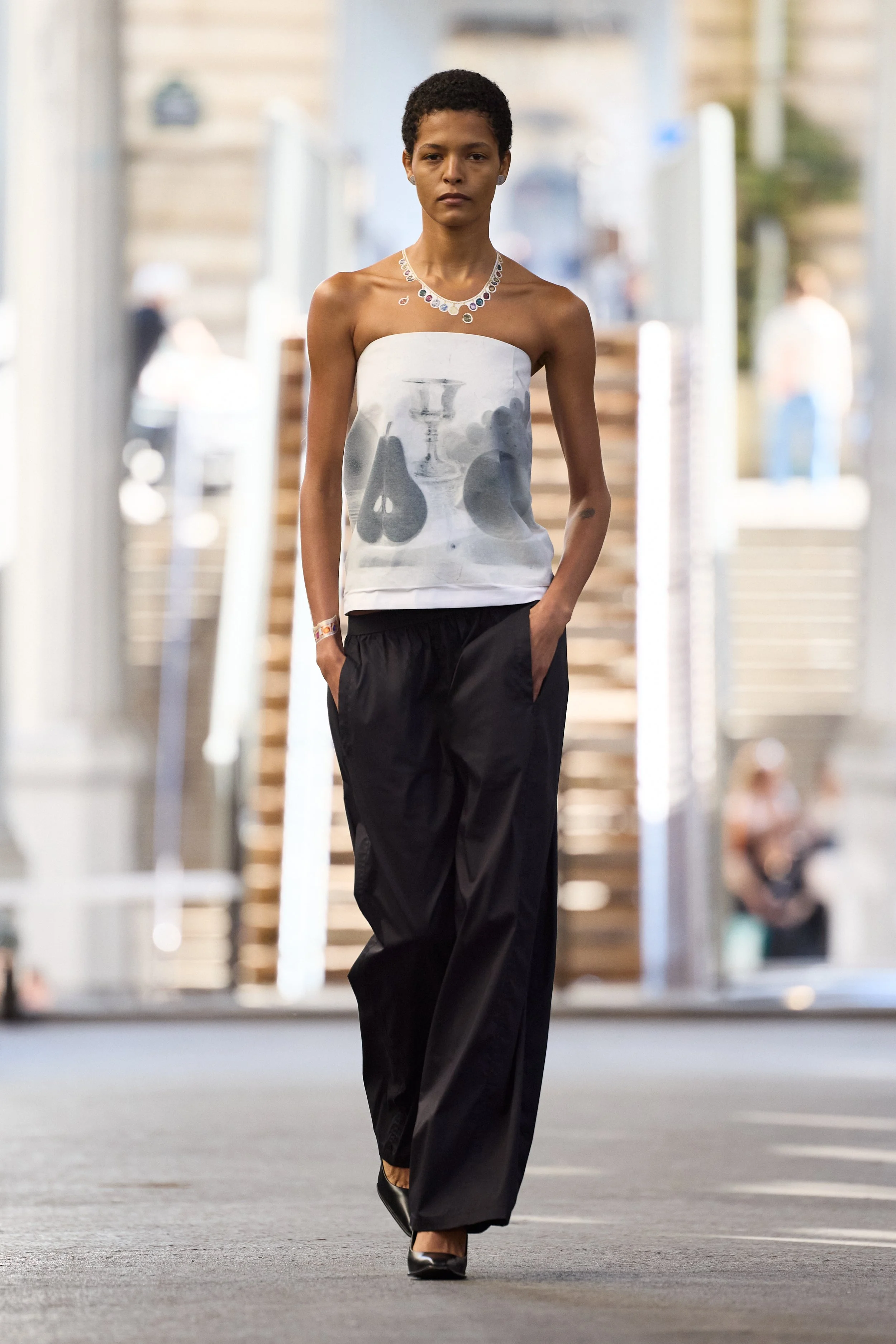
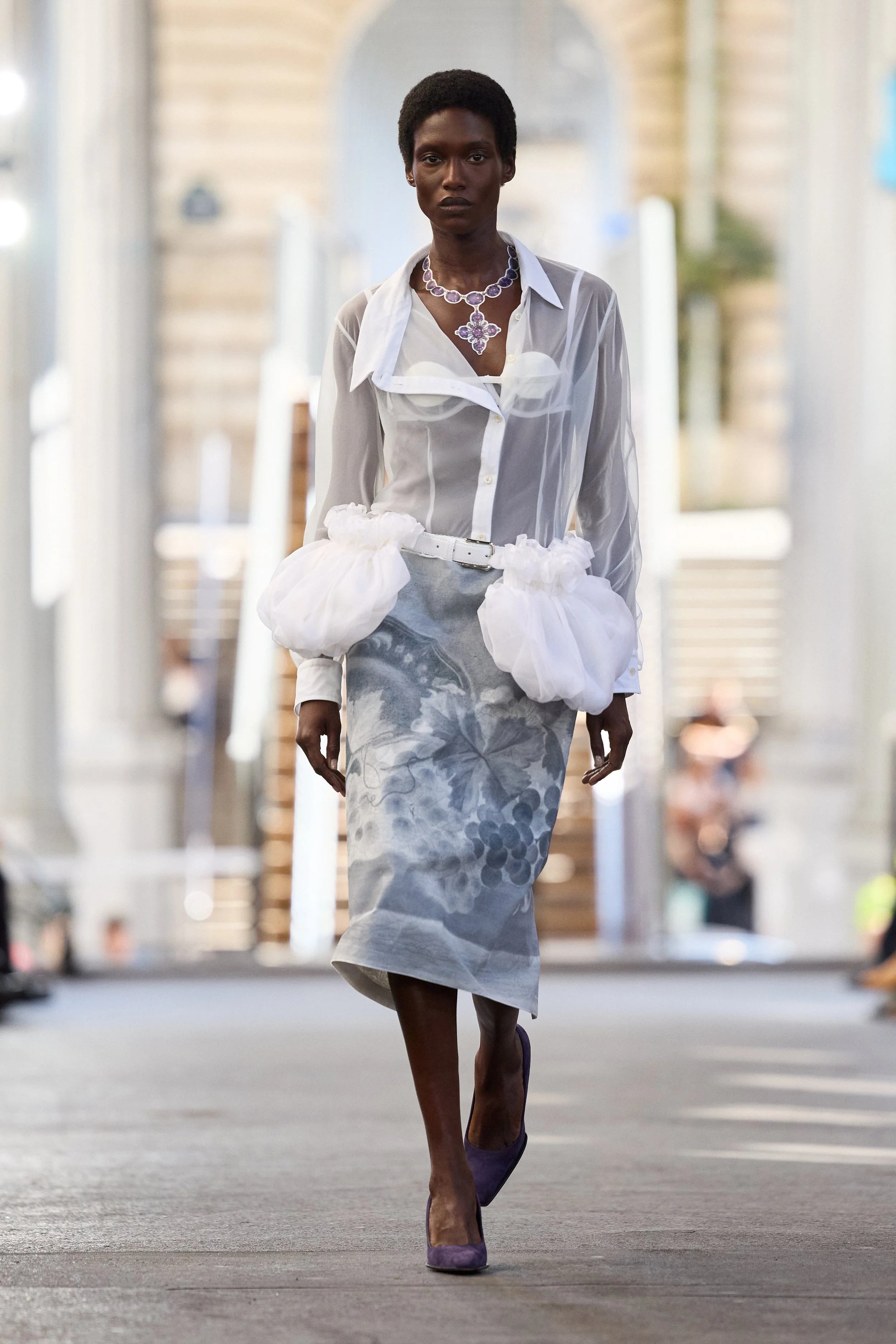
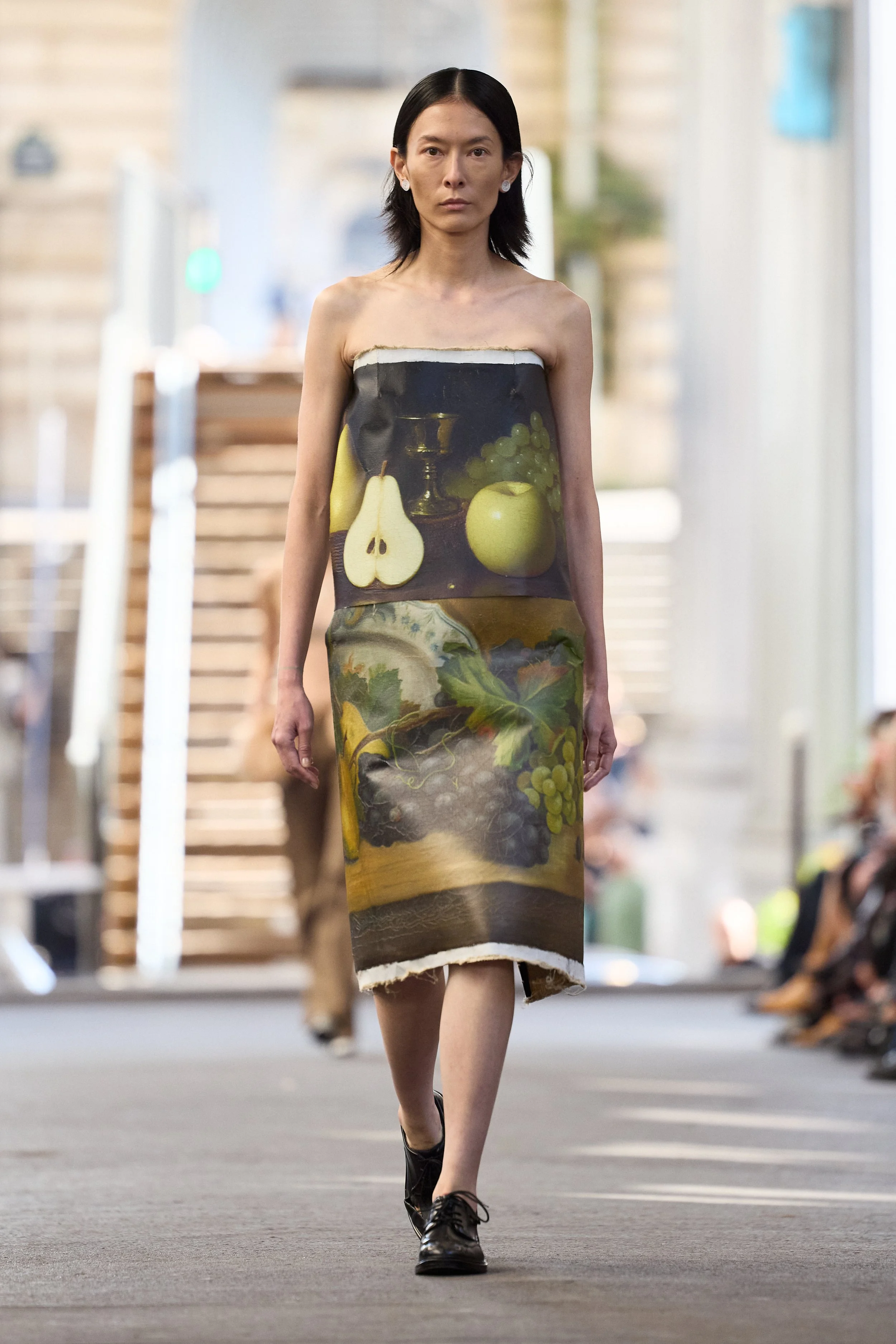
Alongside this relentless rush lives its opposite; a dream of stillness, of time paused long enough to exhale. Lace cut from satin nightgowns leaves behind sensual negative shapes, as if Kegels has literally carved out the parts of beauty that felt too ornamental, leaving absence as presence; having long devoted herself to lace, she now chooses to cut it away, to cut away beauty itself and study what remains. One silhouette evolves from a print of a historical still life into a living painting, worn on the body like a canvas in motion, while tournure inspired cutouts, slits, and draped tailoring slip in as historical echoes, gentle reminders that women’s bodies and their clothes have always been sites where time leaves visible marks.
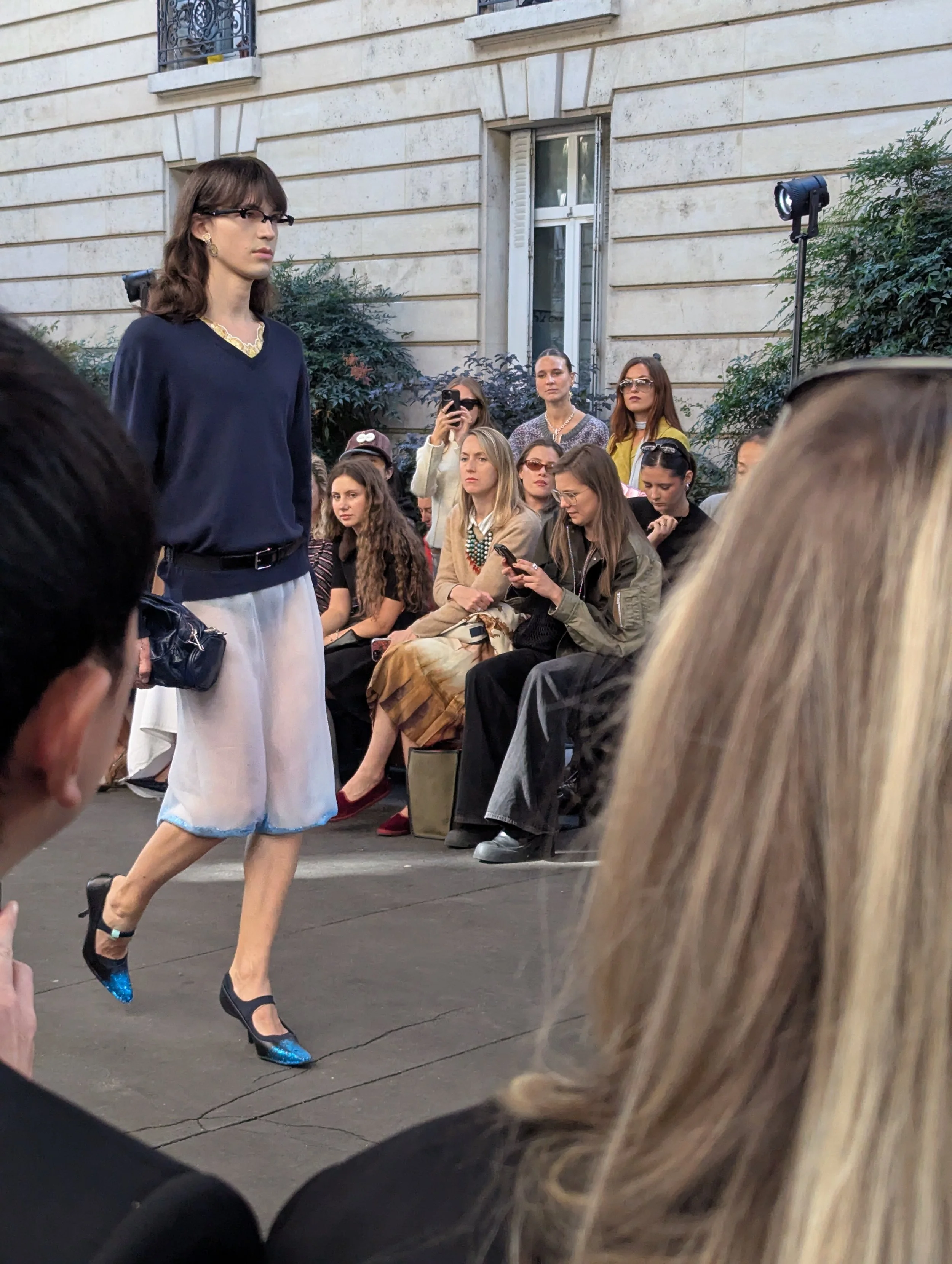
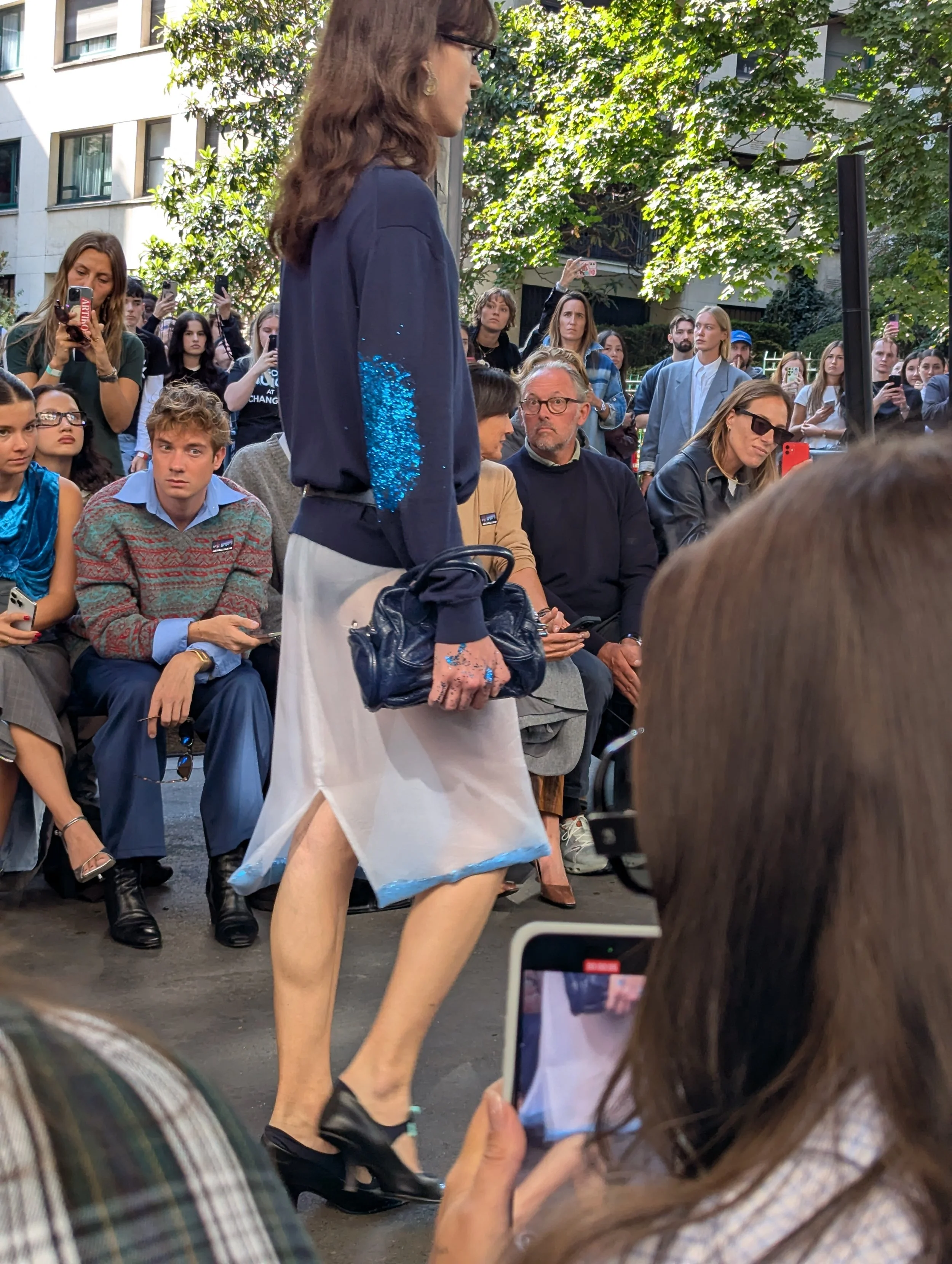
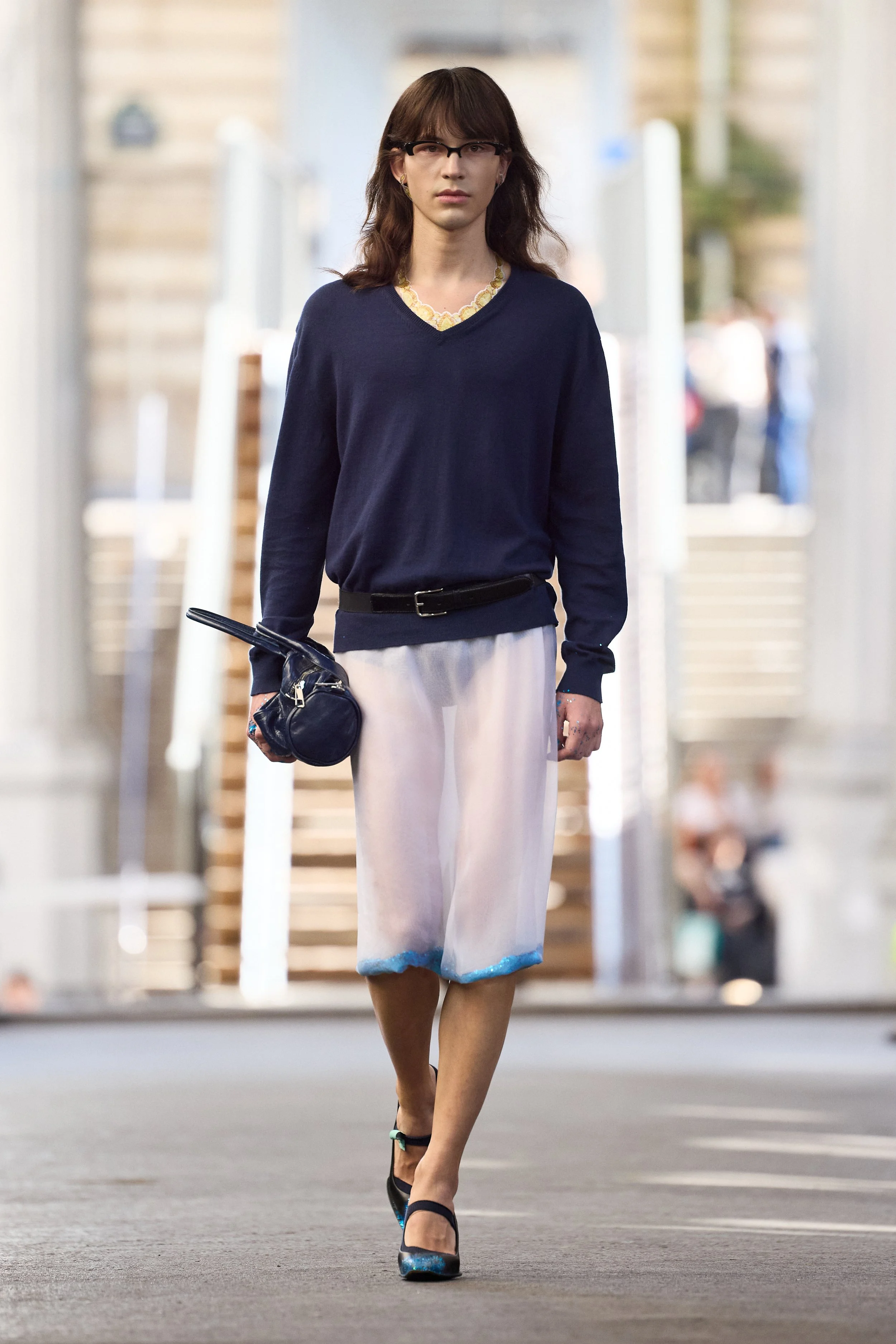
The body in this collection is framed, nudged, and gently teased into focus. Undergarment inspired belts embrace and trace curves, exaggerating and accentuating contours with a wink, while patchwork bras upcycled from deadstock Marie-Jo lingerie lean into a kind of mischievous intimacy, a reminder that the most charged garments are often the ones no one was supposed to see. Archetypes return as uniforms reframed. Police shirts, military jackets, tailored suits. Scapa riding polos, each one a symbol of authority or discipline that Kegels loosens, mis-buttons, or recontours. Transparency and sparkle run through the lineup. Double layer organza skirts filled with bio glitter, glitter dipped pumps and sweaters with glistening elbows, like traces of confetti after a party that ended hours ago. Fleeting flashes of party nights collide with the everyday rush, suggesting that joy, too, can be an imprint. A dusting of glitter clinging to hemlines and cuffs, proof that the woman who is always late is also always living.
What lingers after Passy is less a single “must-have look” and more a feeling. The sense that clothes can hold our micro anxieties and private jokes. It is the accountant of our stains and our deadlines without smoothing them away. In a fashion landscape still obsessed with polish, Julie Kegels builds a quietly radical wardrobe for the woman who knows that real life happens in the in-between. Between metro stops, between outfits, between versions of self where change is messy, funny, and, at its core, profoundly human.