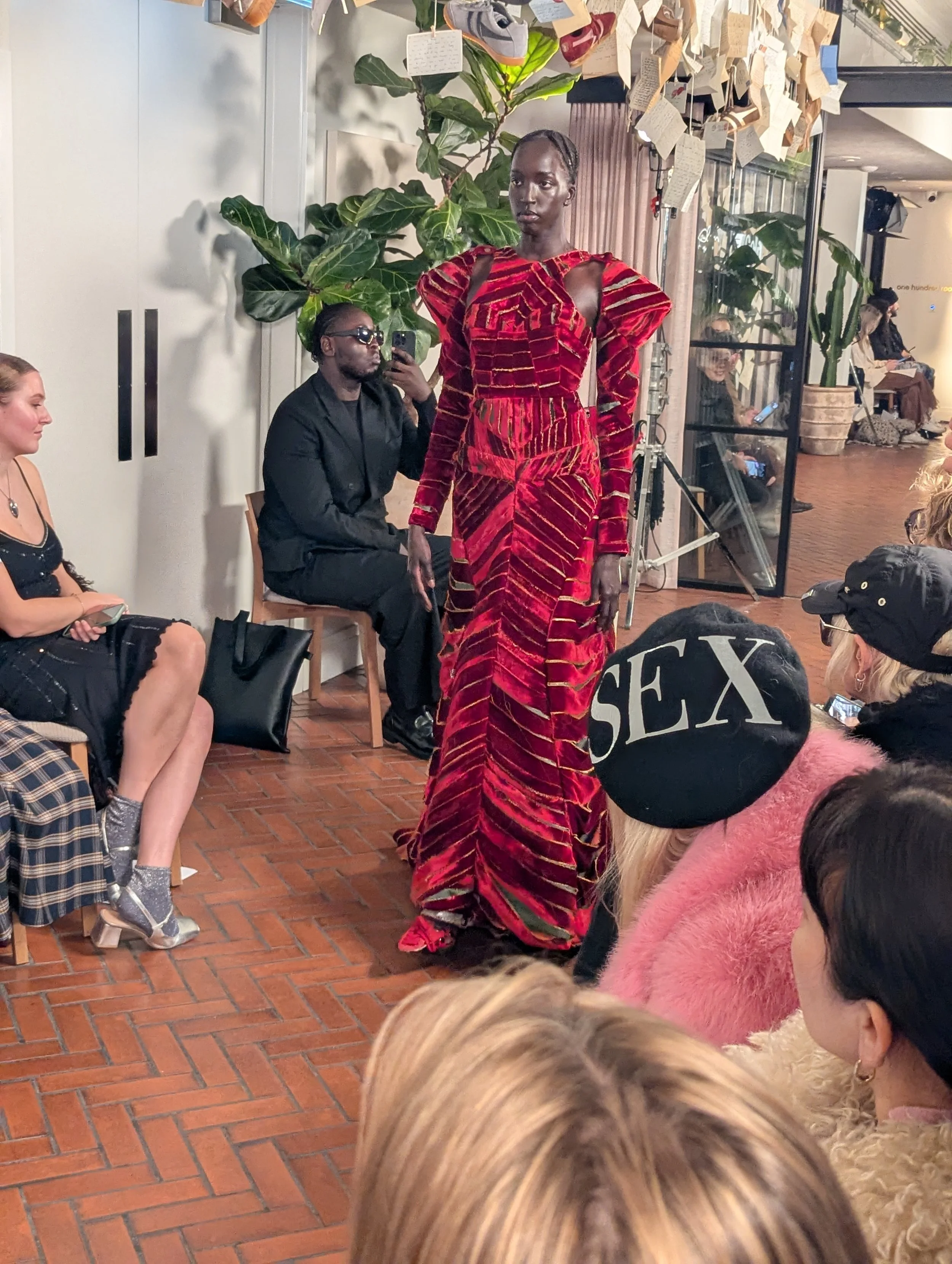
Mazimilian Raynor AW26
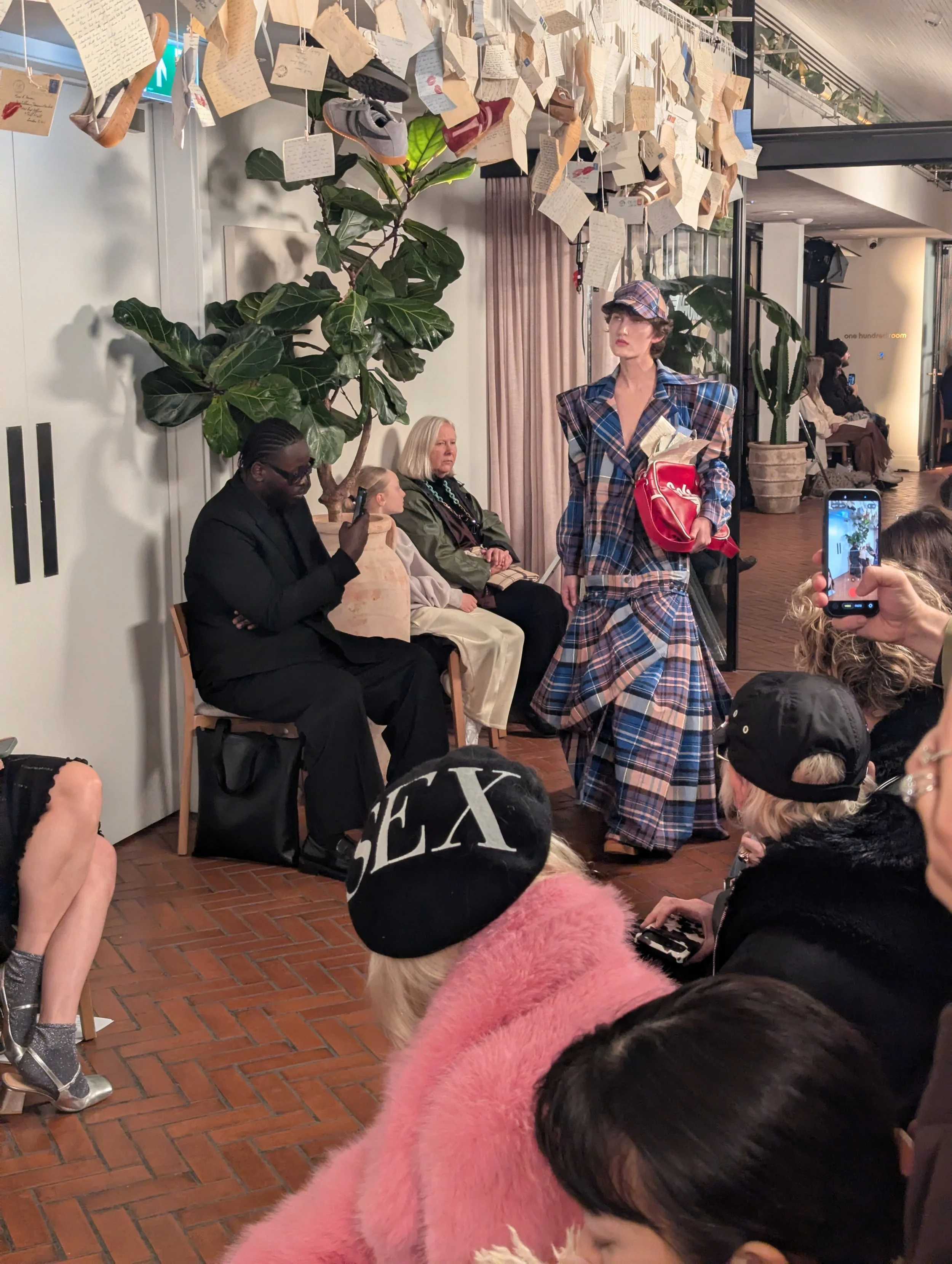
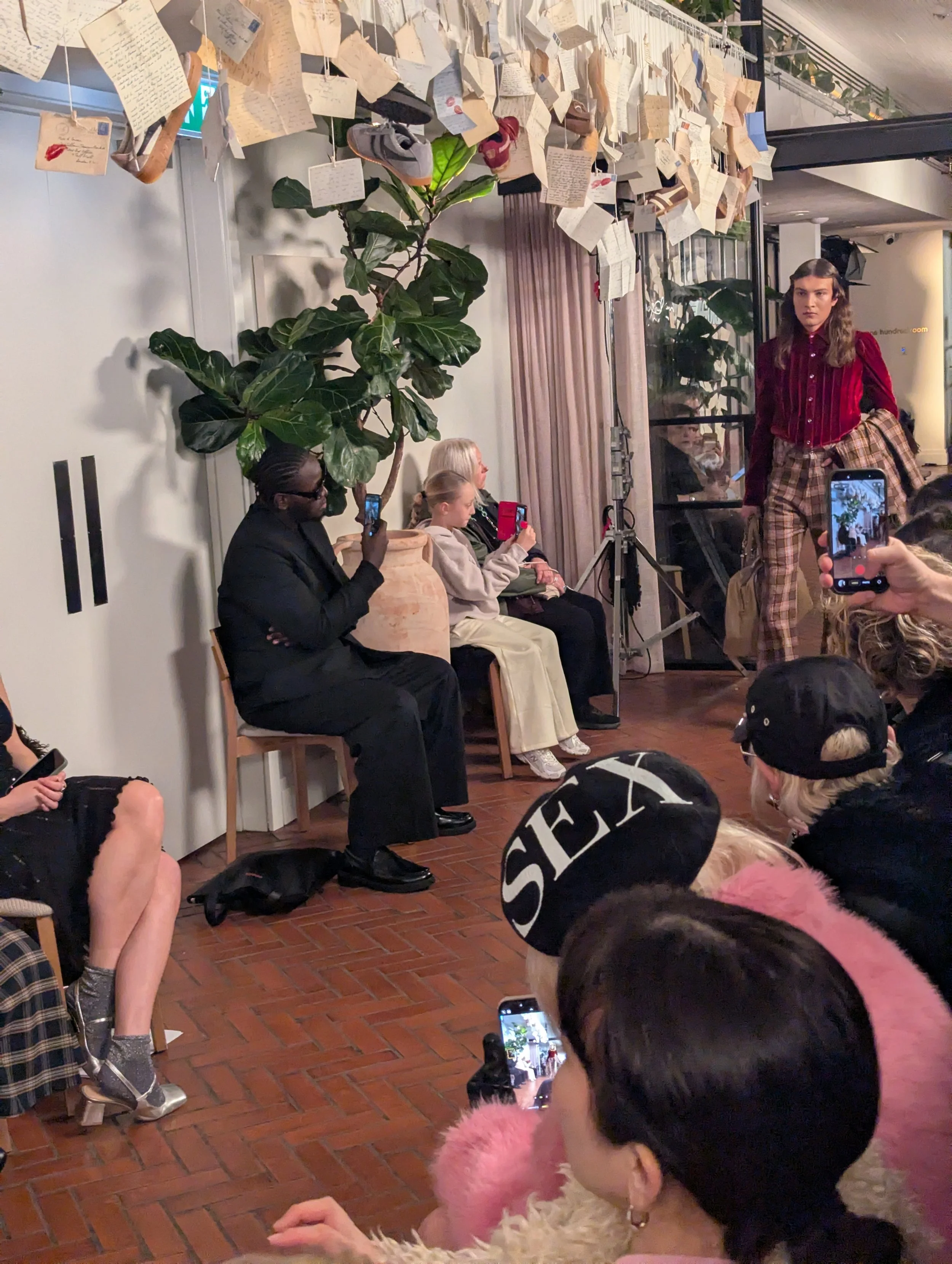
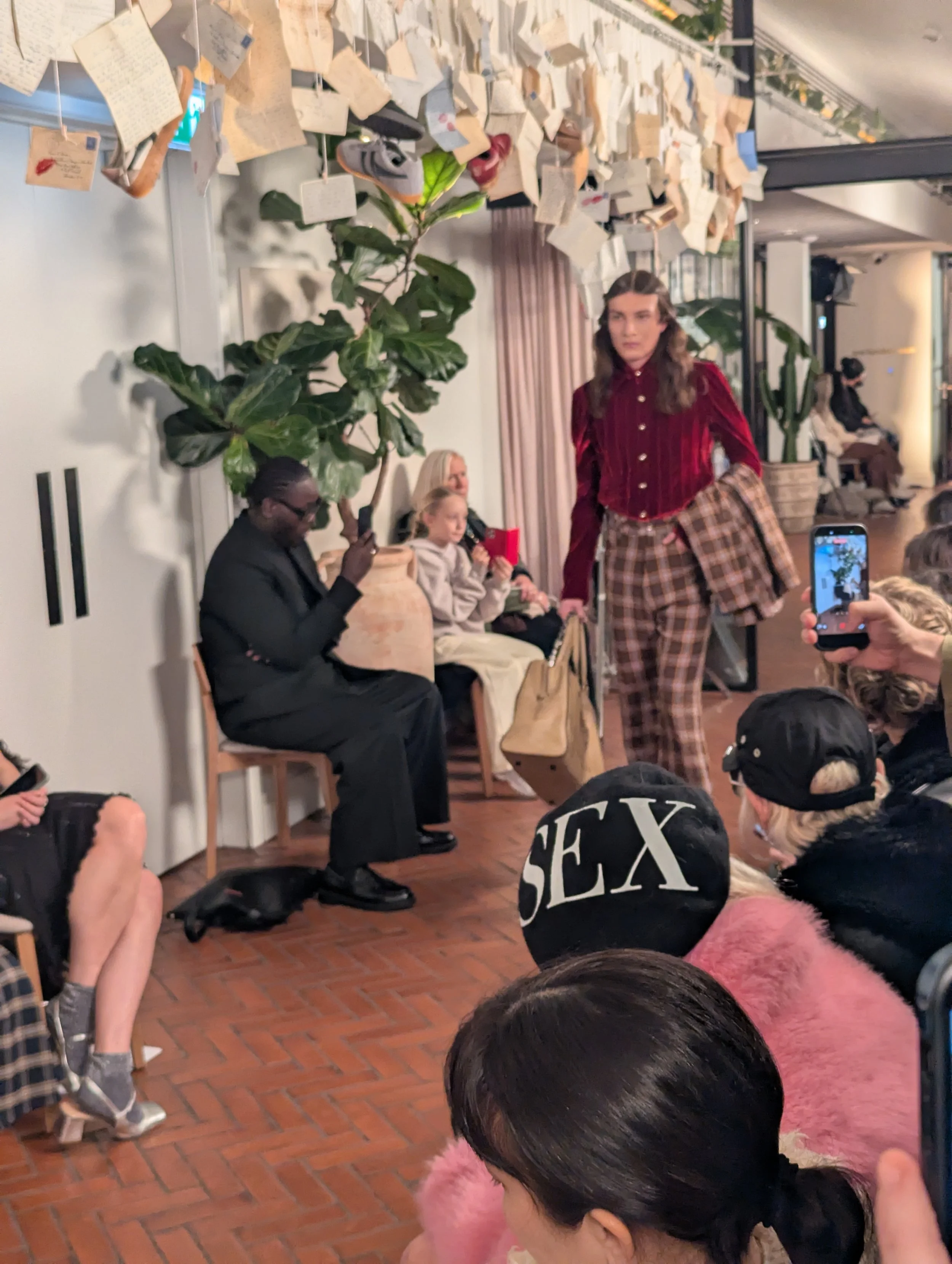
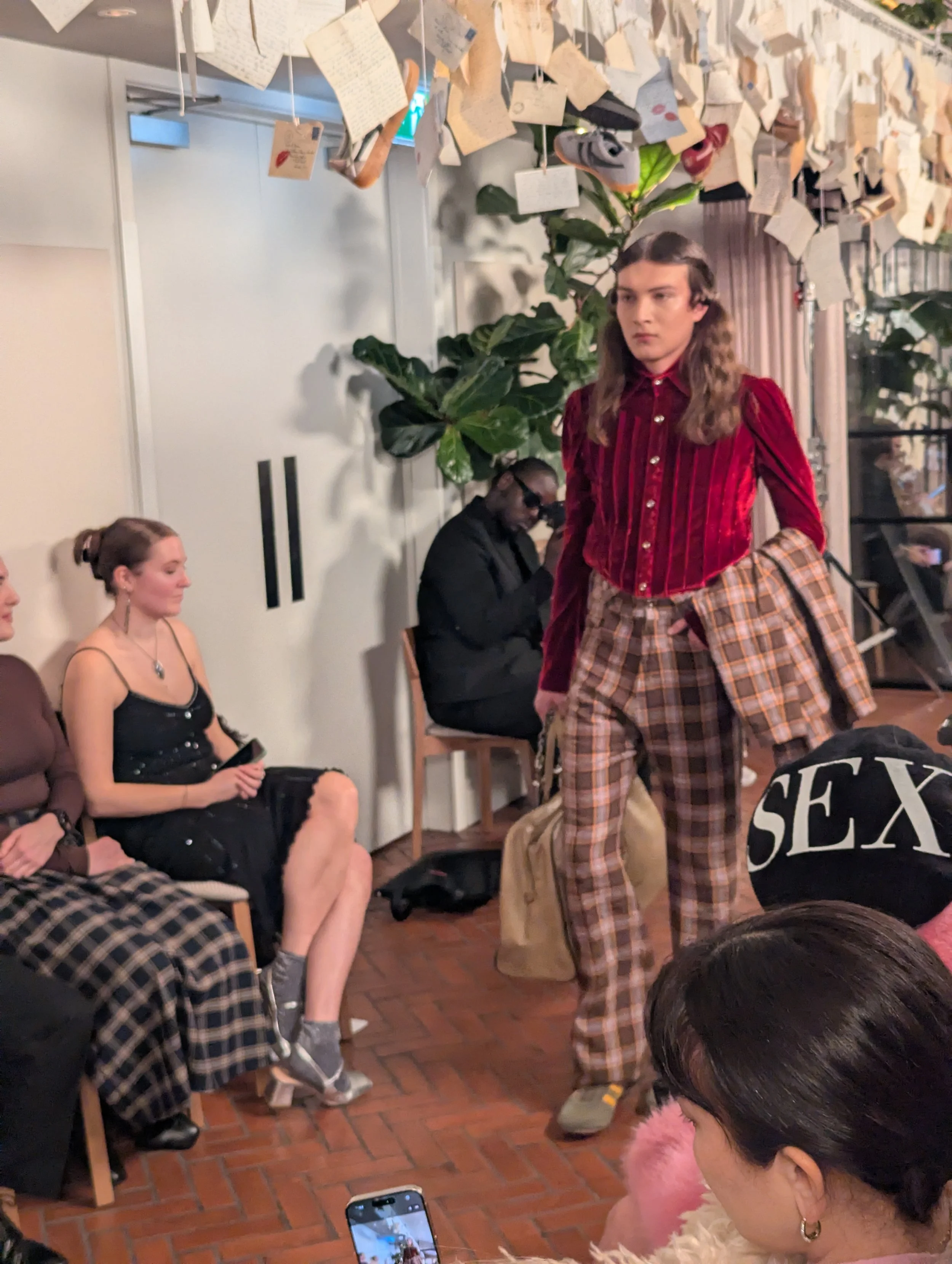
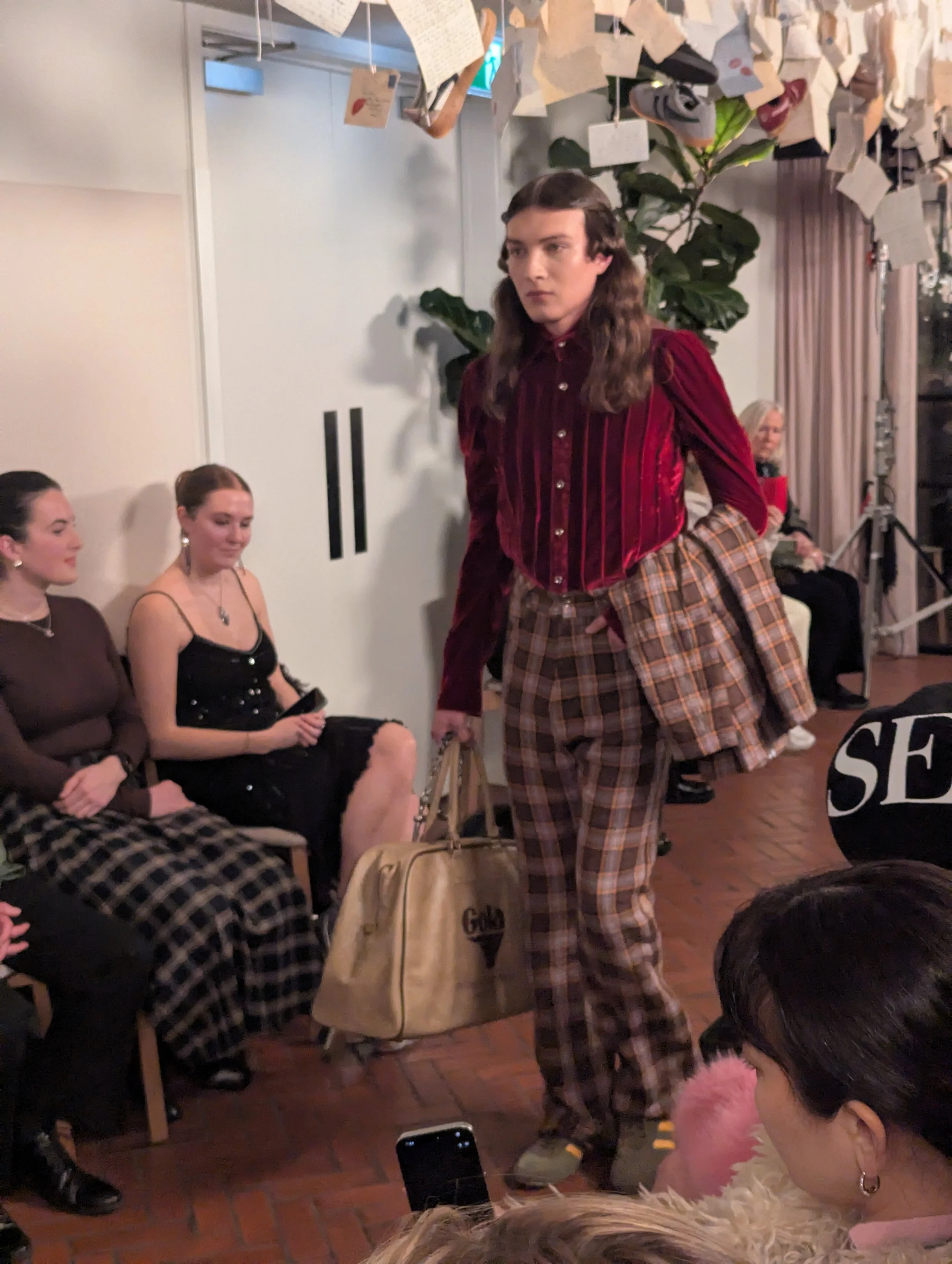
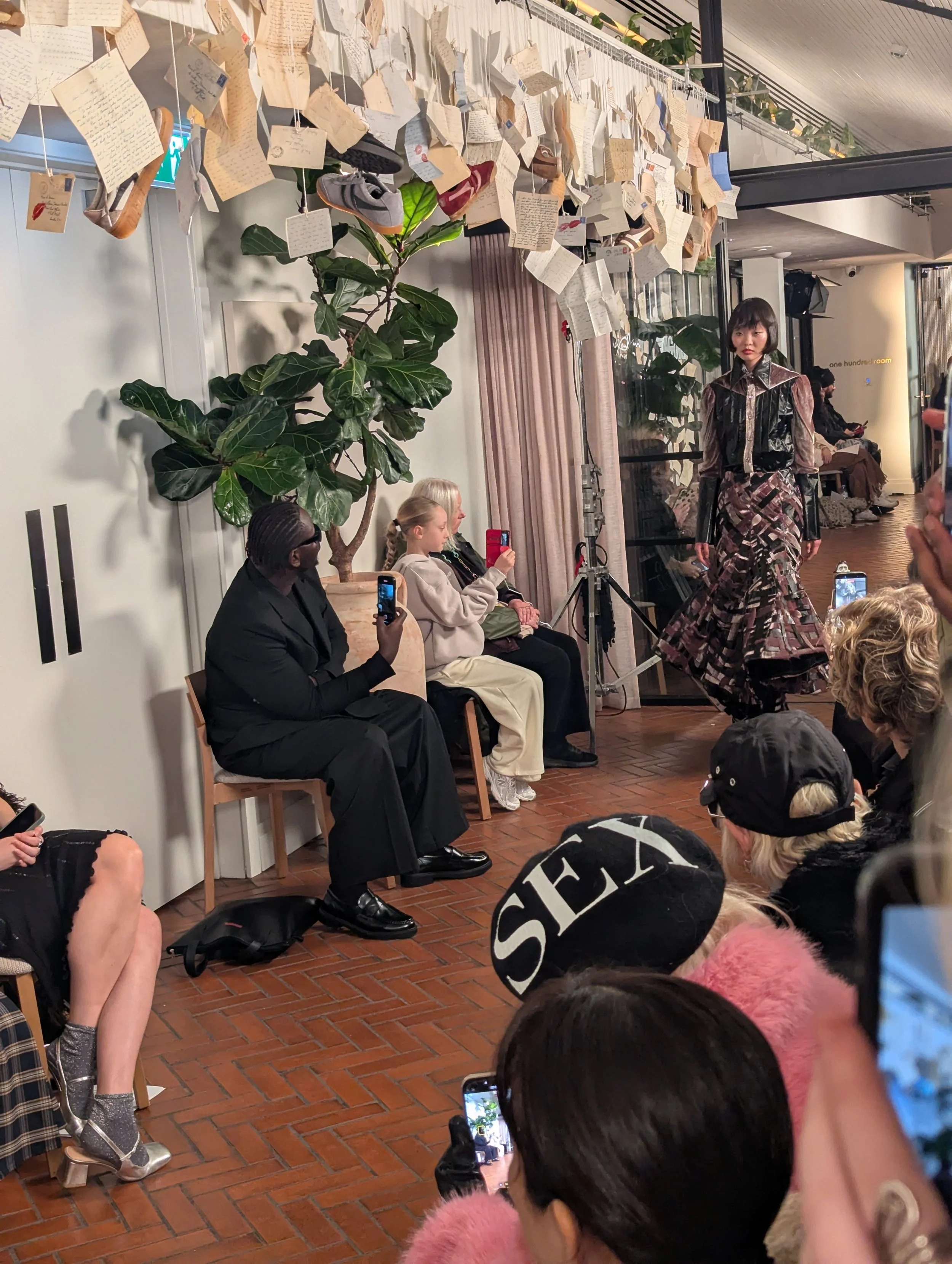
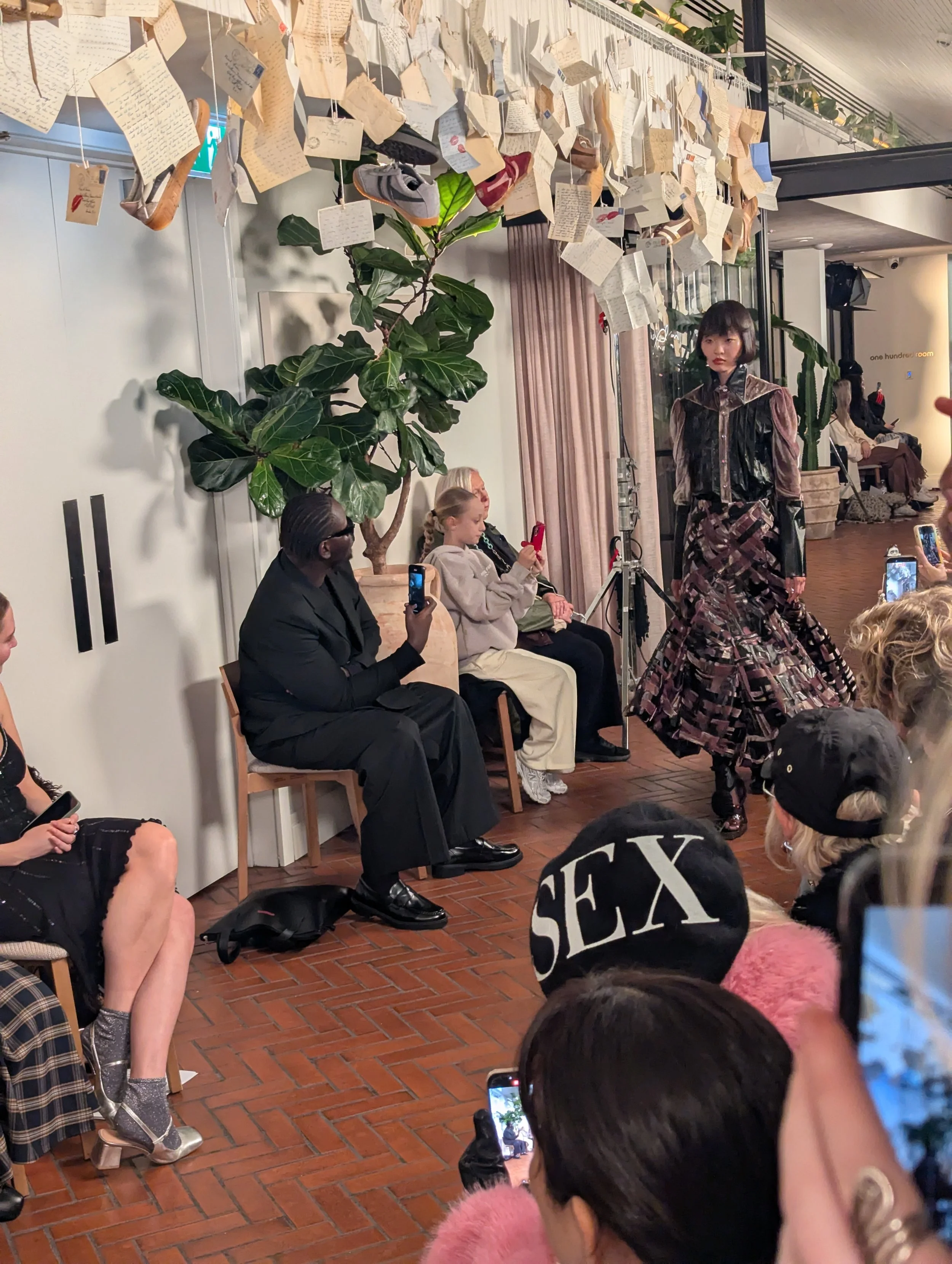
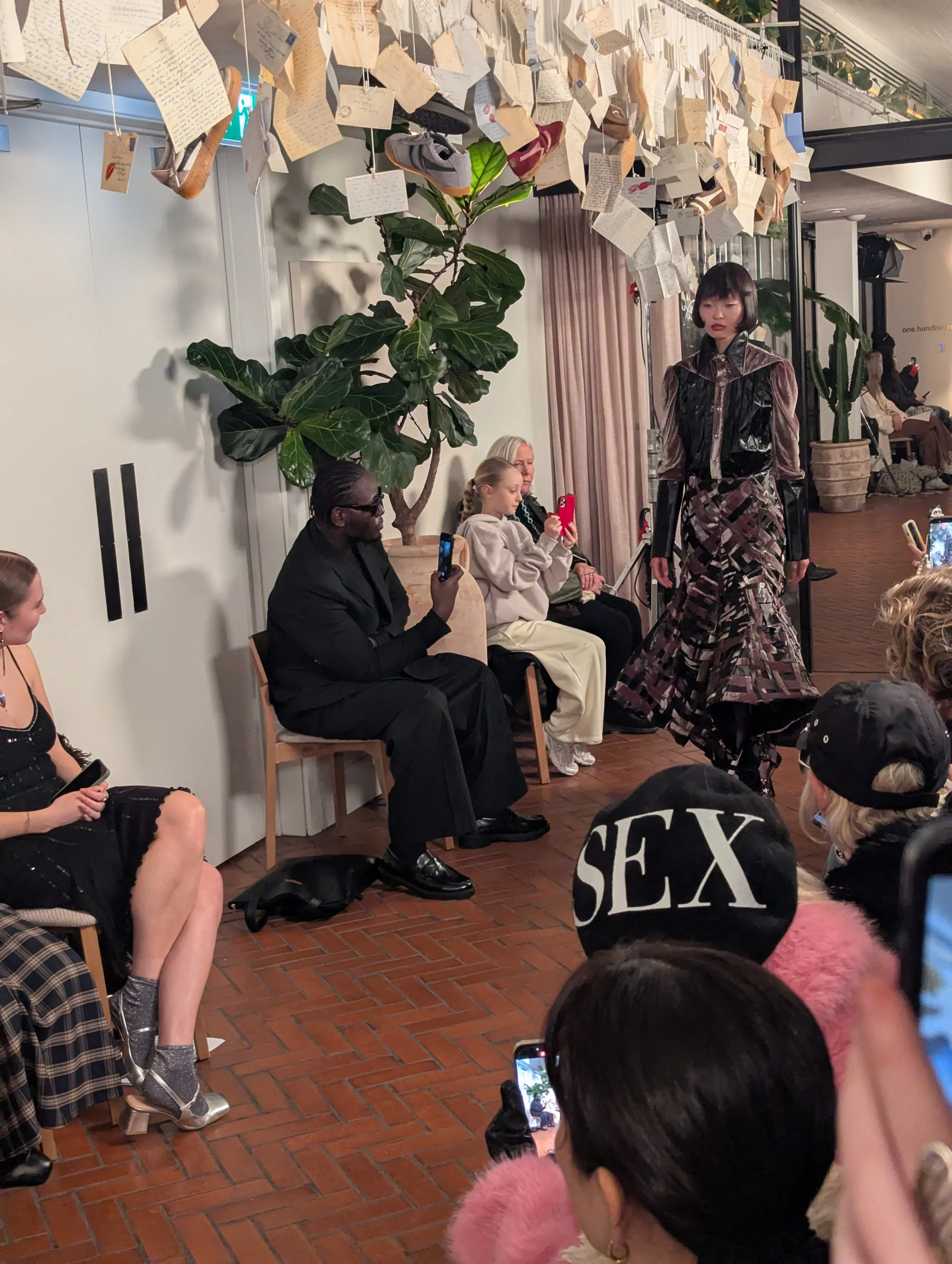
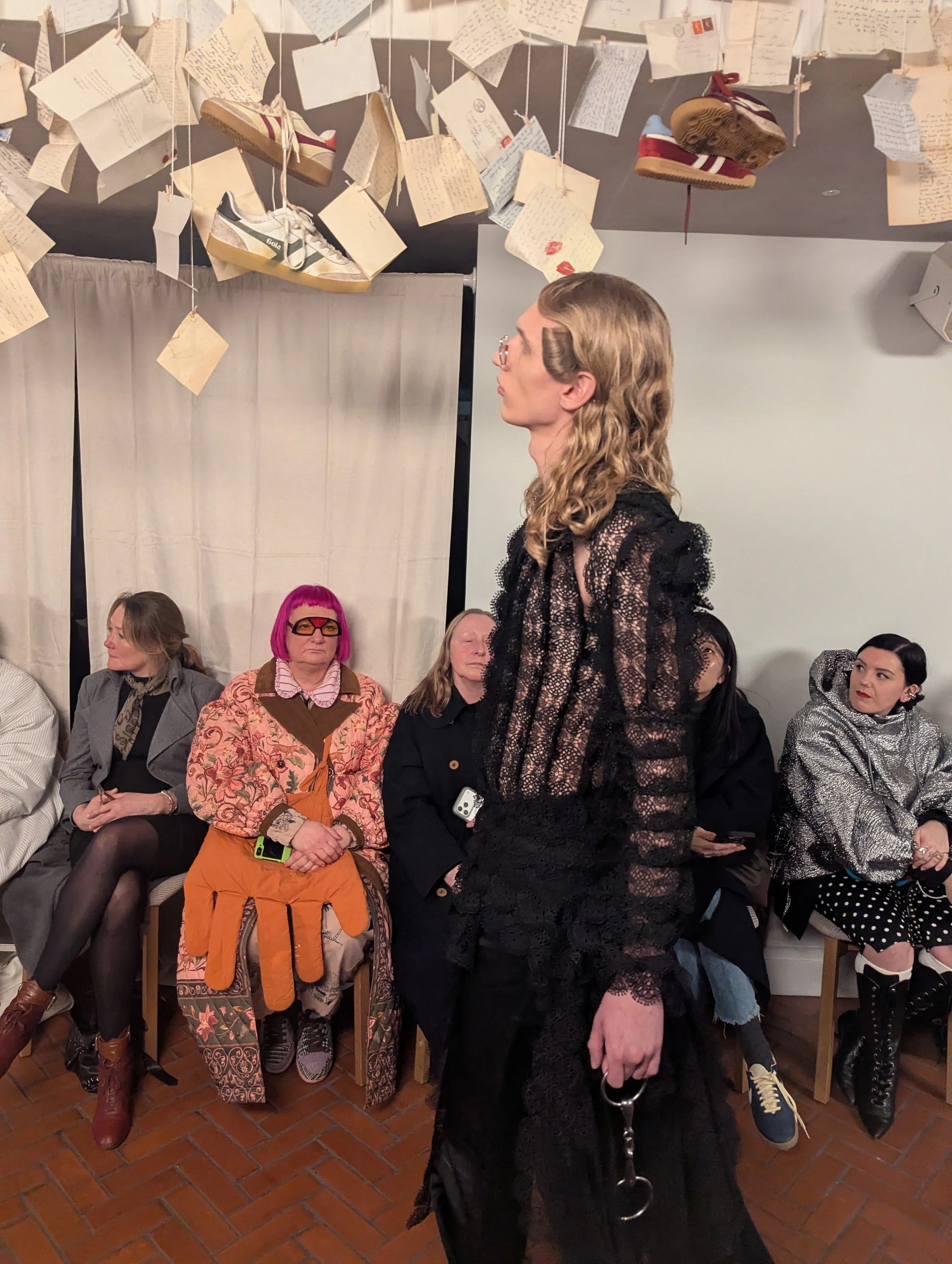
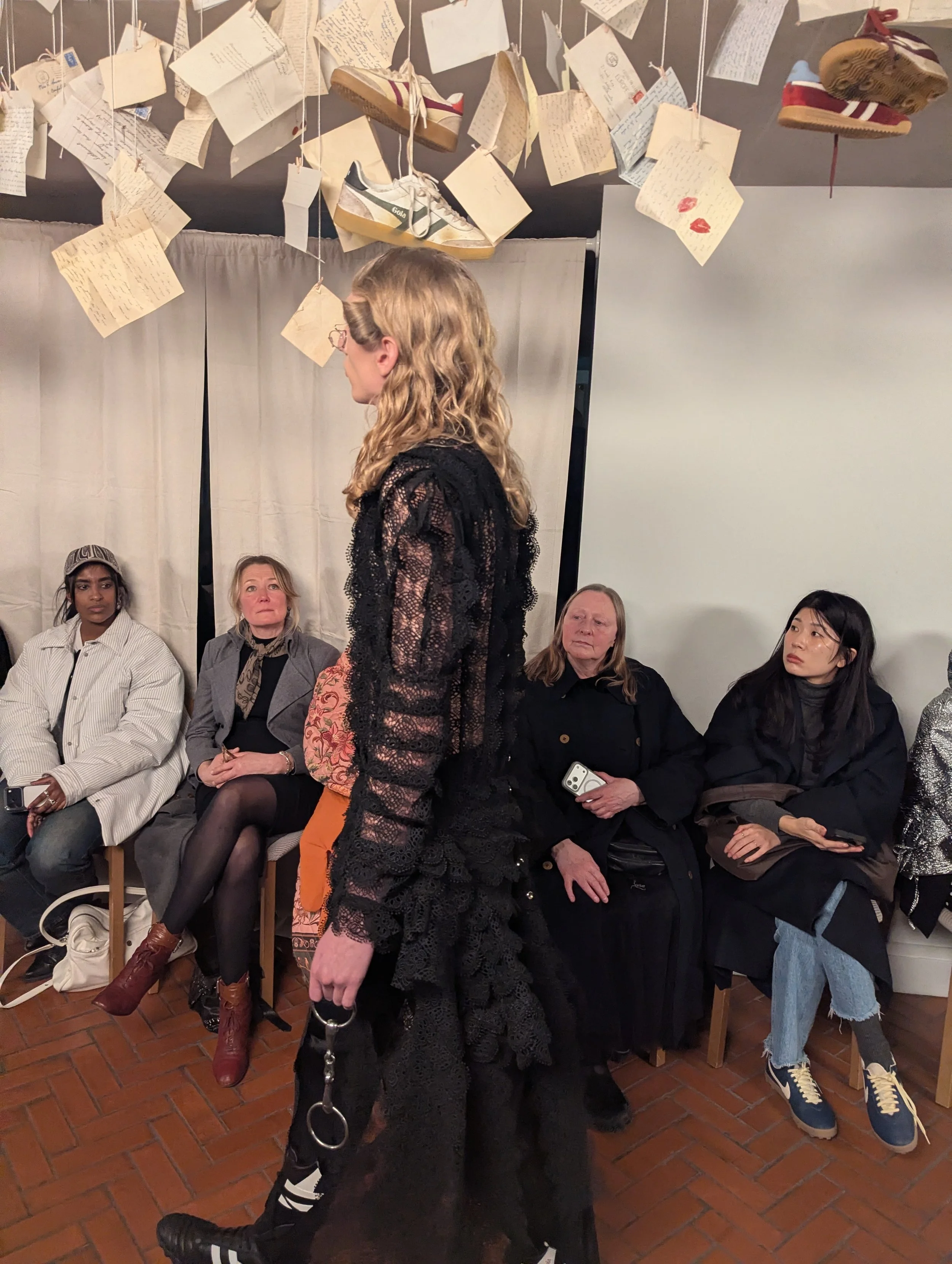
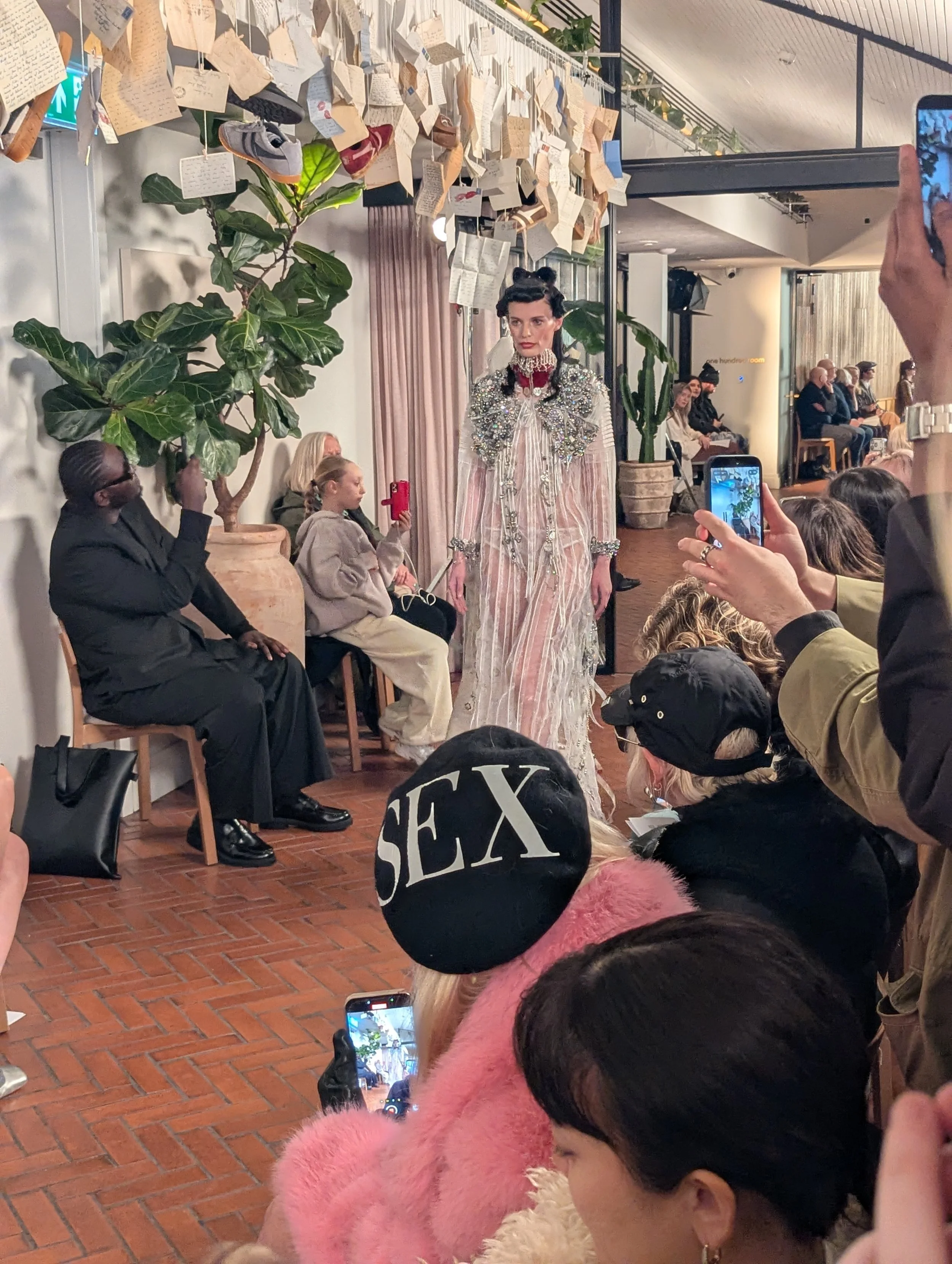
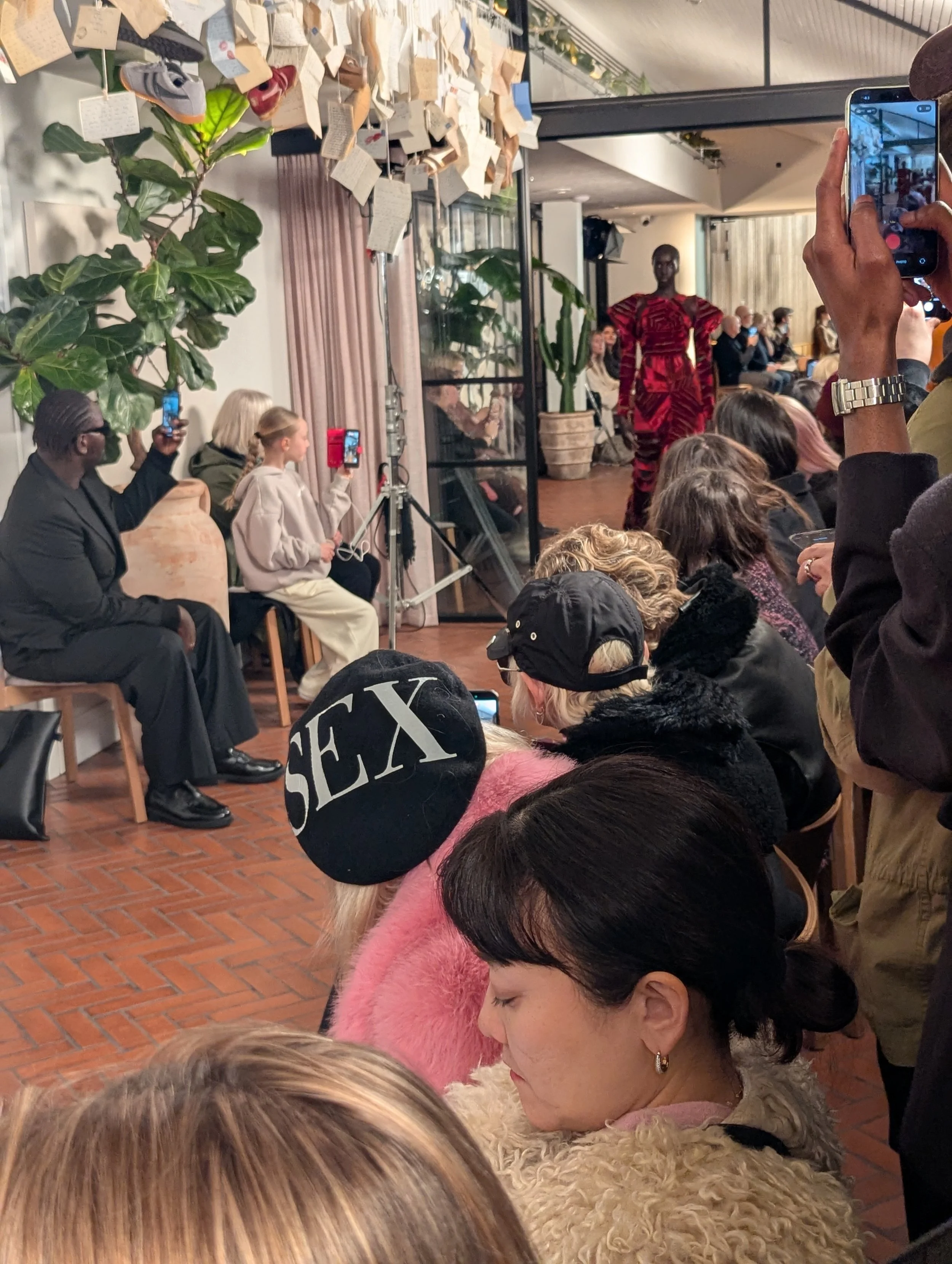
There’s a warm, slightly theatrical hush that descends over London Fashion Week when a designer chooses sentiment over spectacle and Maximilian Raynor’s AW26 show, titled “Post Me One Last Kiss,” did exactly that. The collection arrived like a love letter; intimate, slightly camp, and impeccably staged.
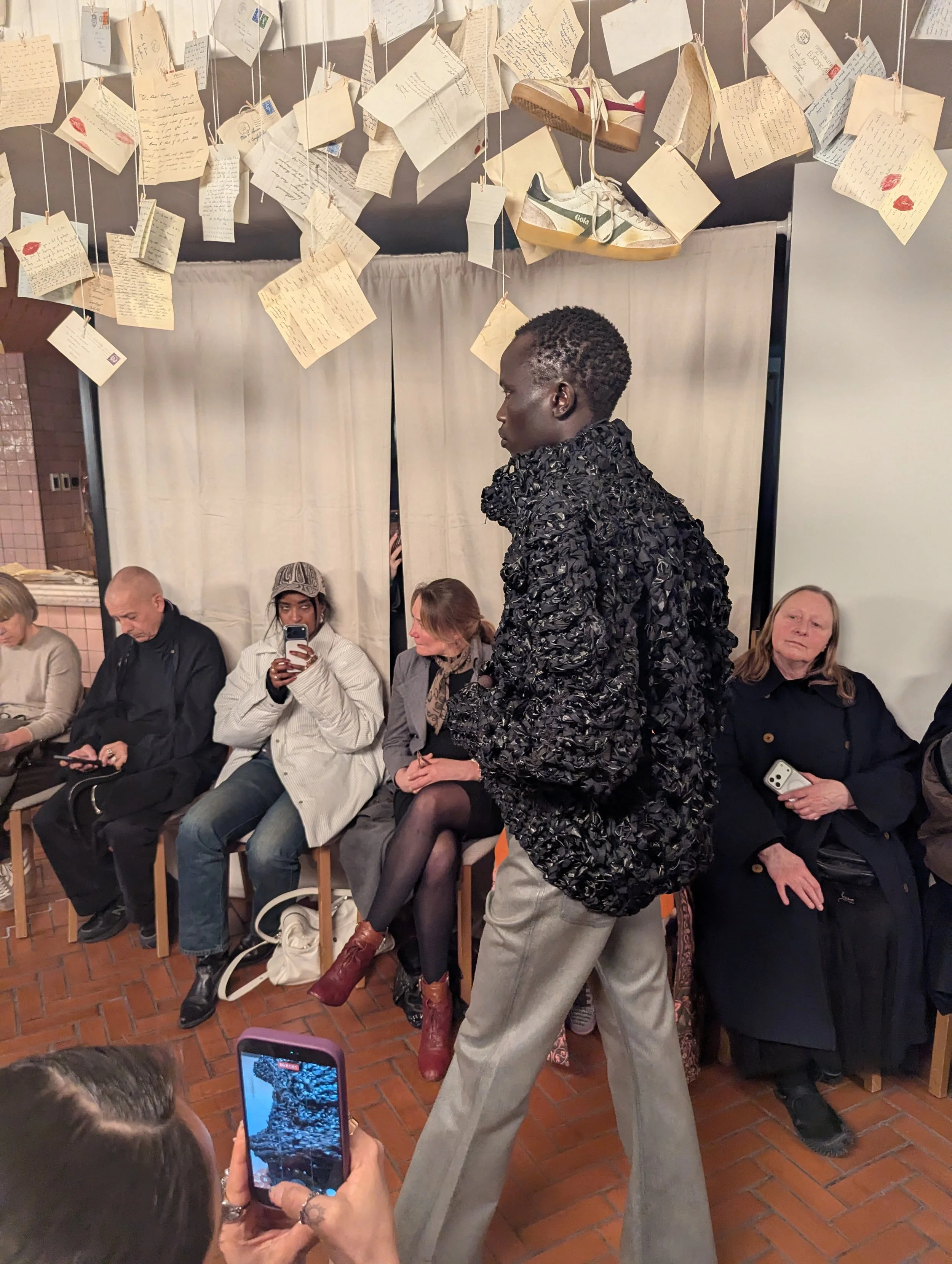
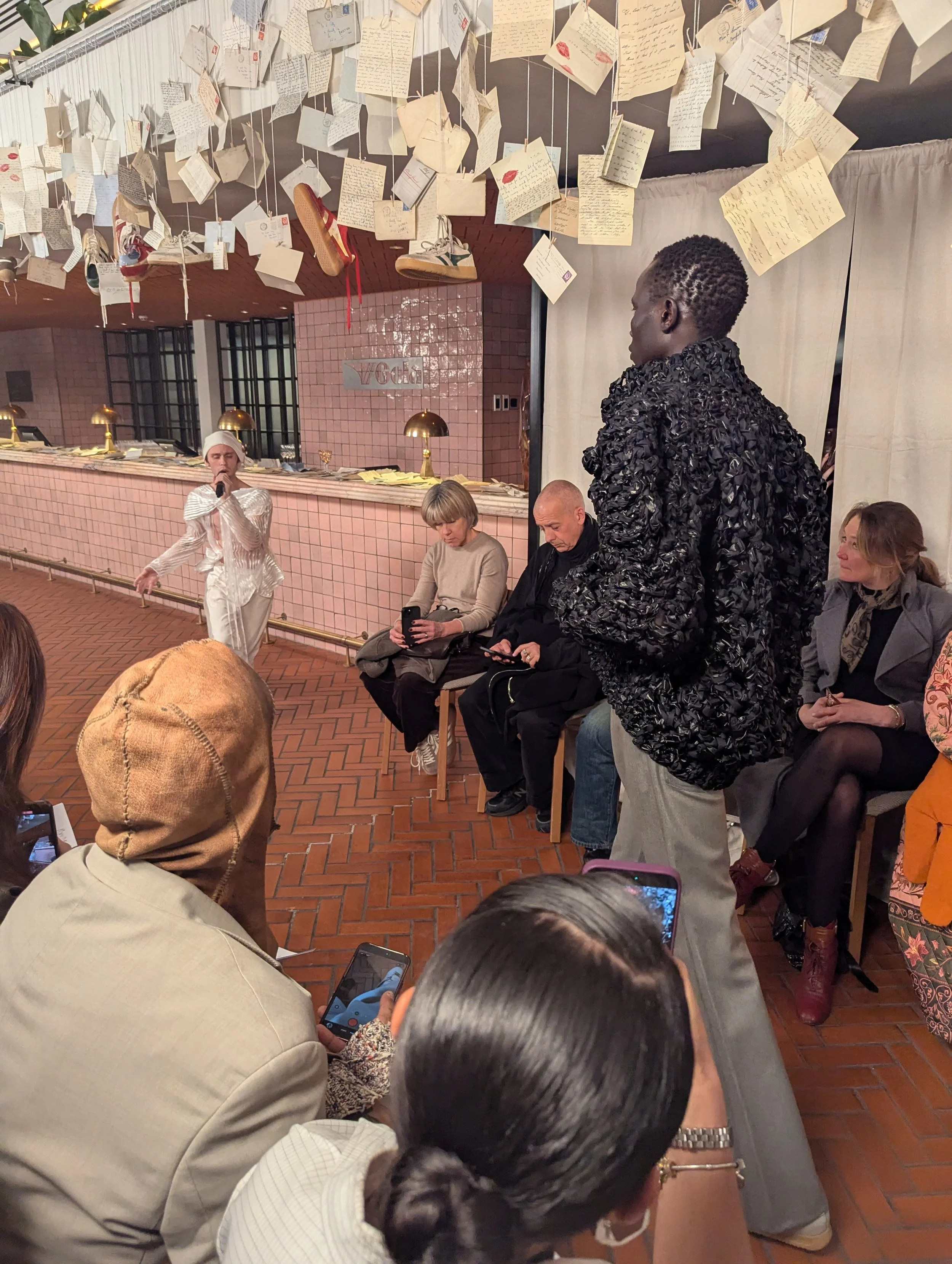
Raynor leaned into postmarked nostalgia; heartbreak as ritual, and postal metaphors as a route to private histories. The press materials and early coverage framed the collection around that idea of letters, delivery and a small, poignant ceremony of goodbyes. The title itself signalled that the runway would be more story than surface.
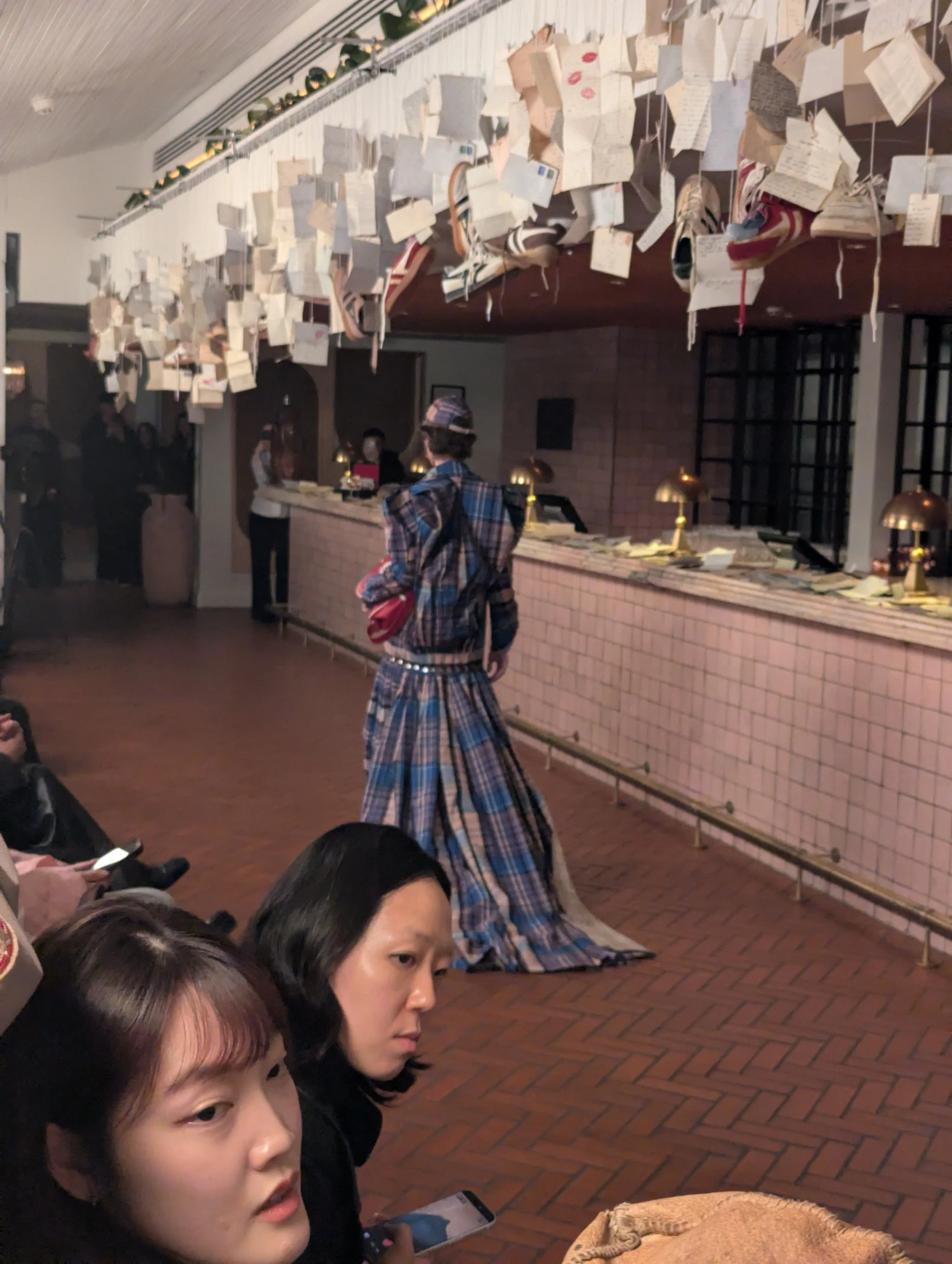
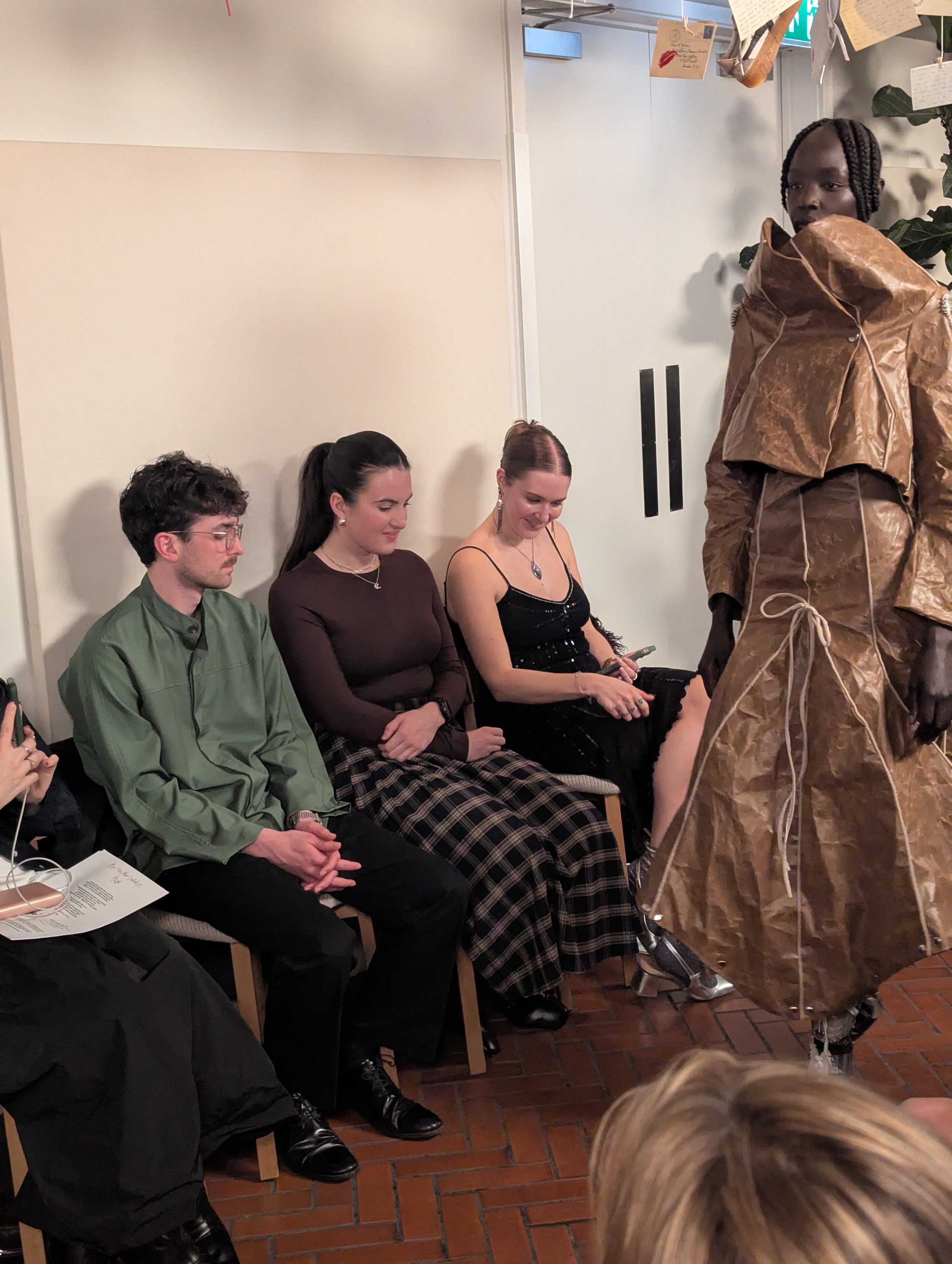
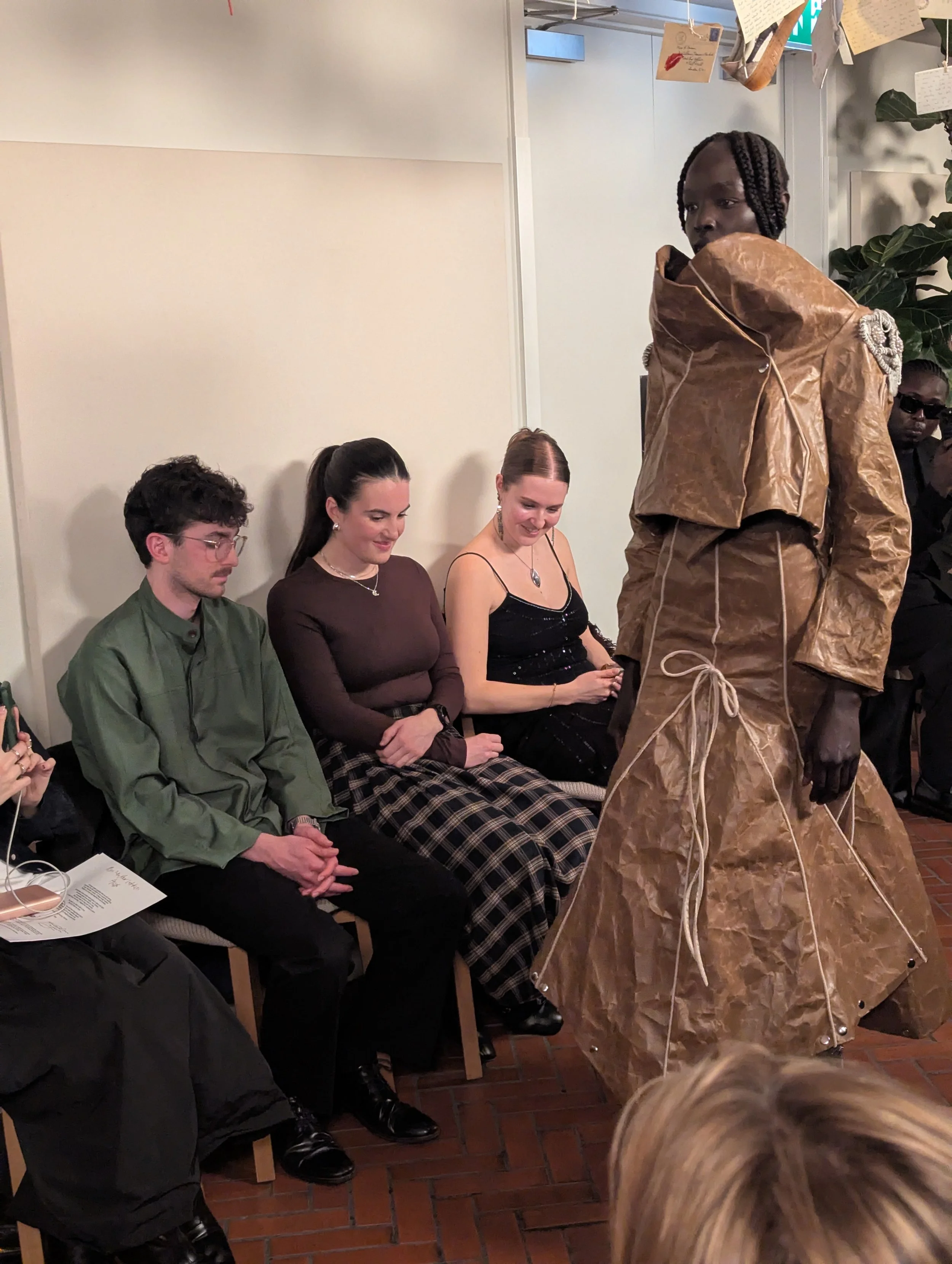
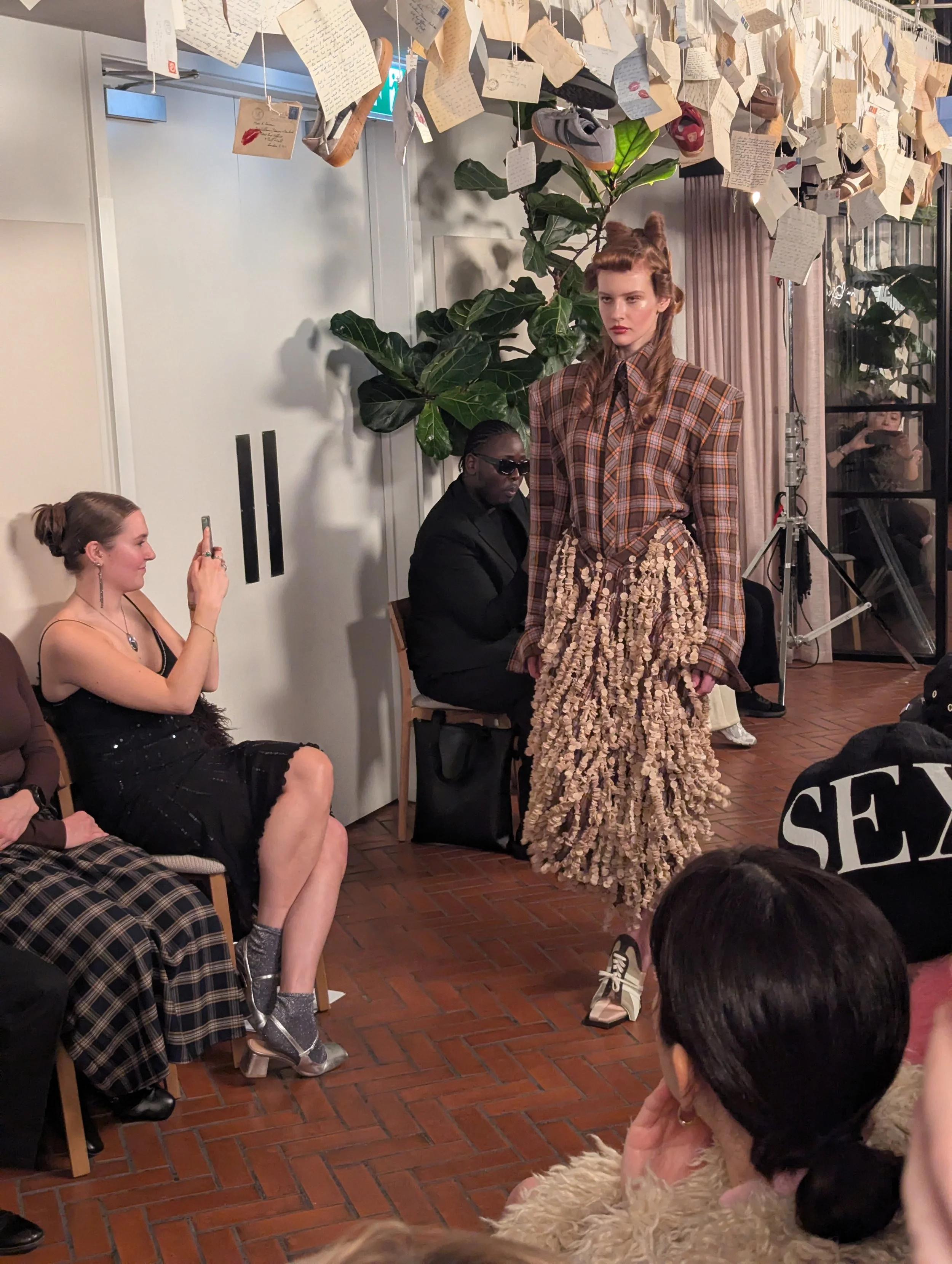
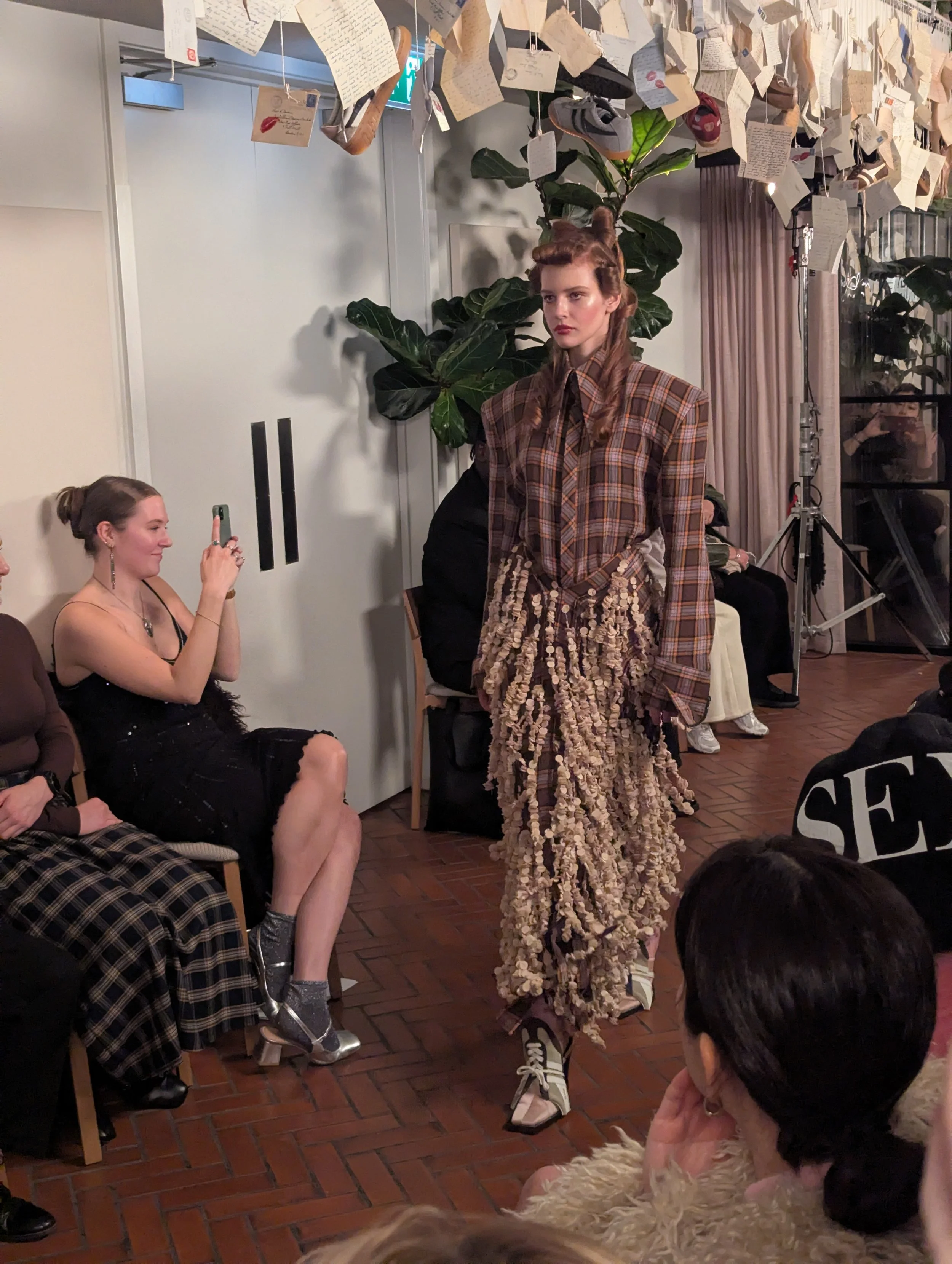
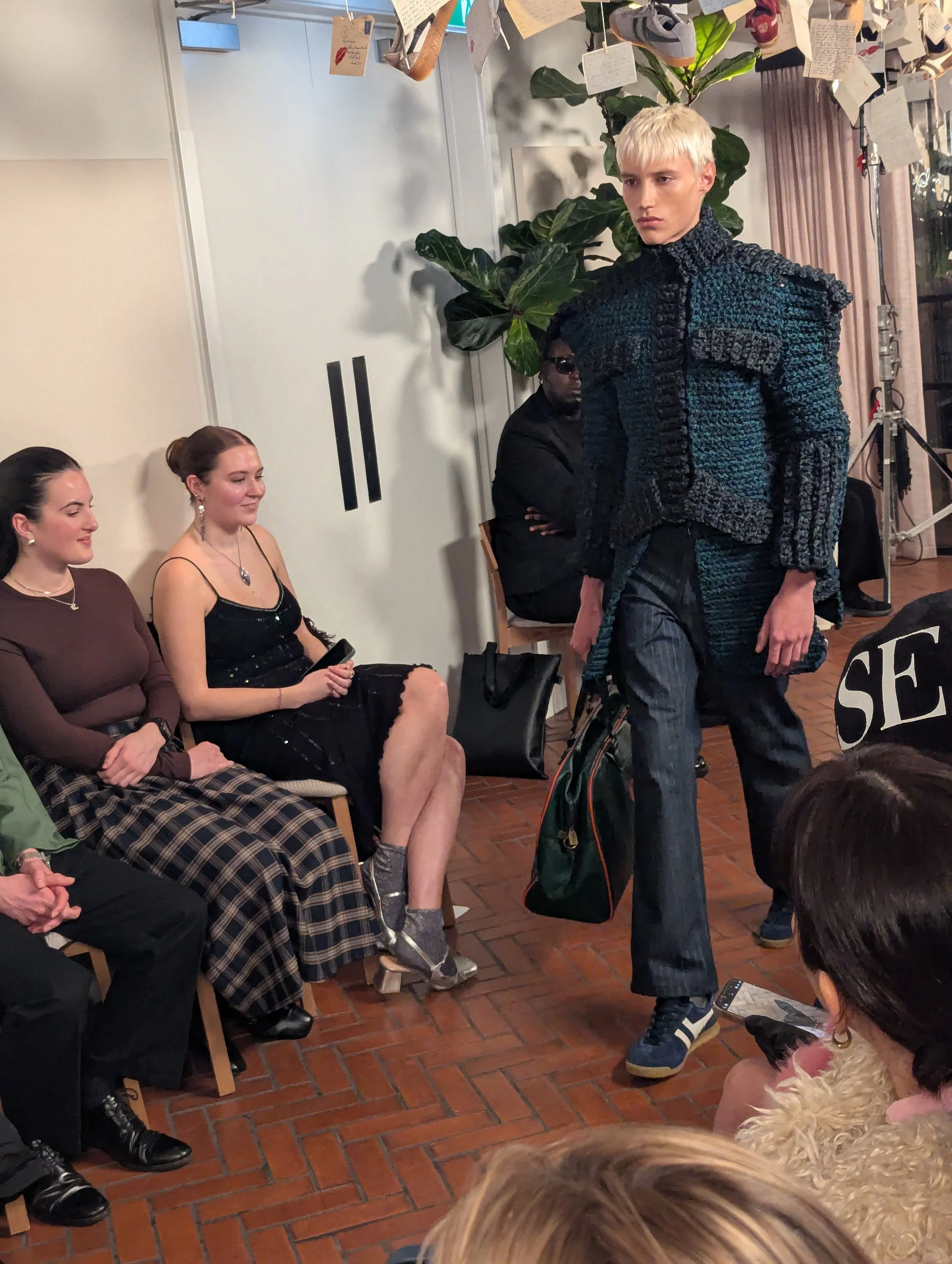
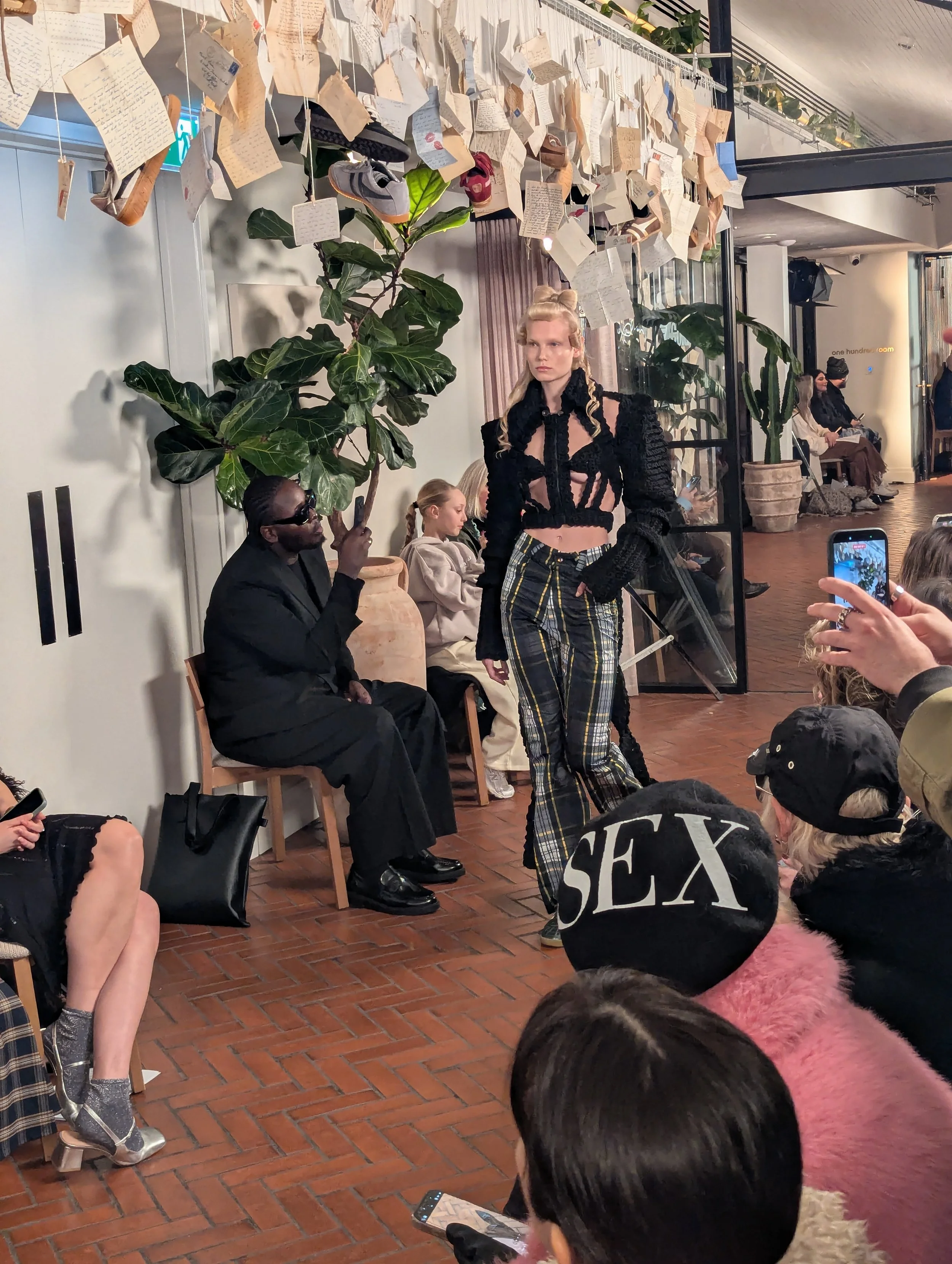
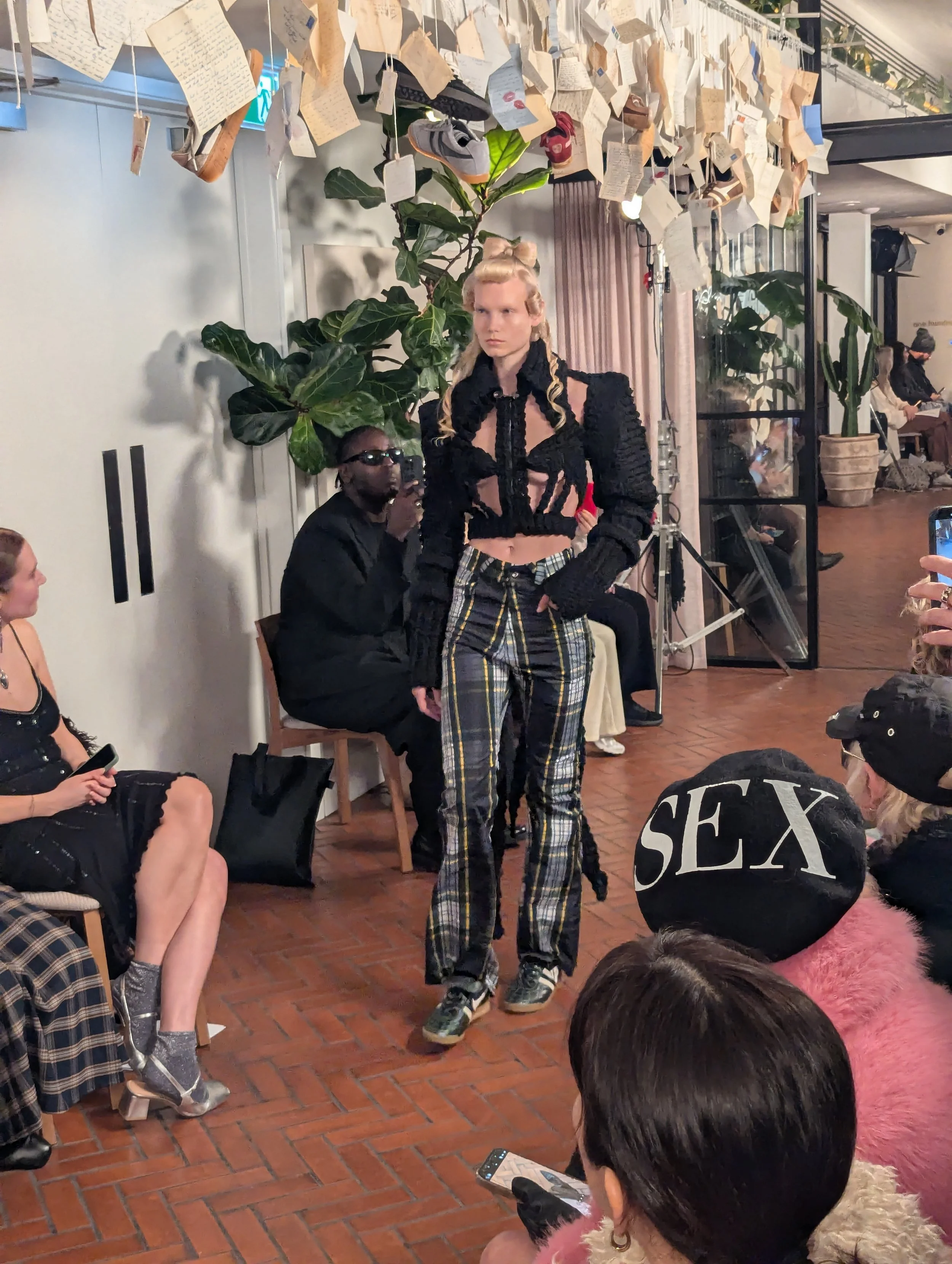
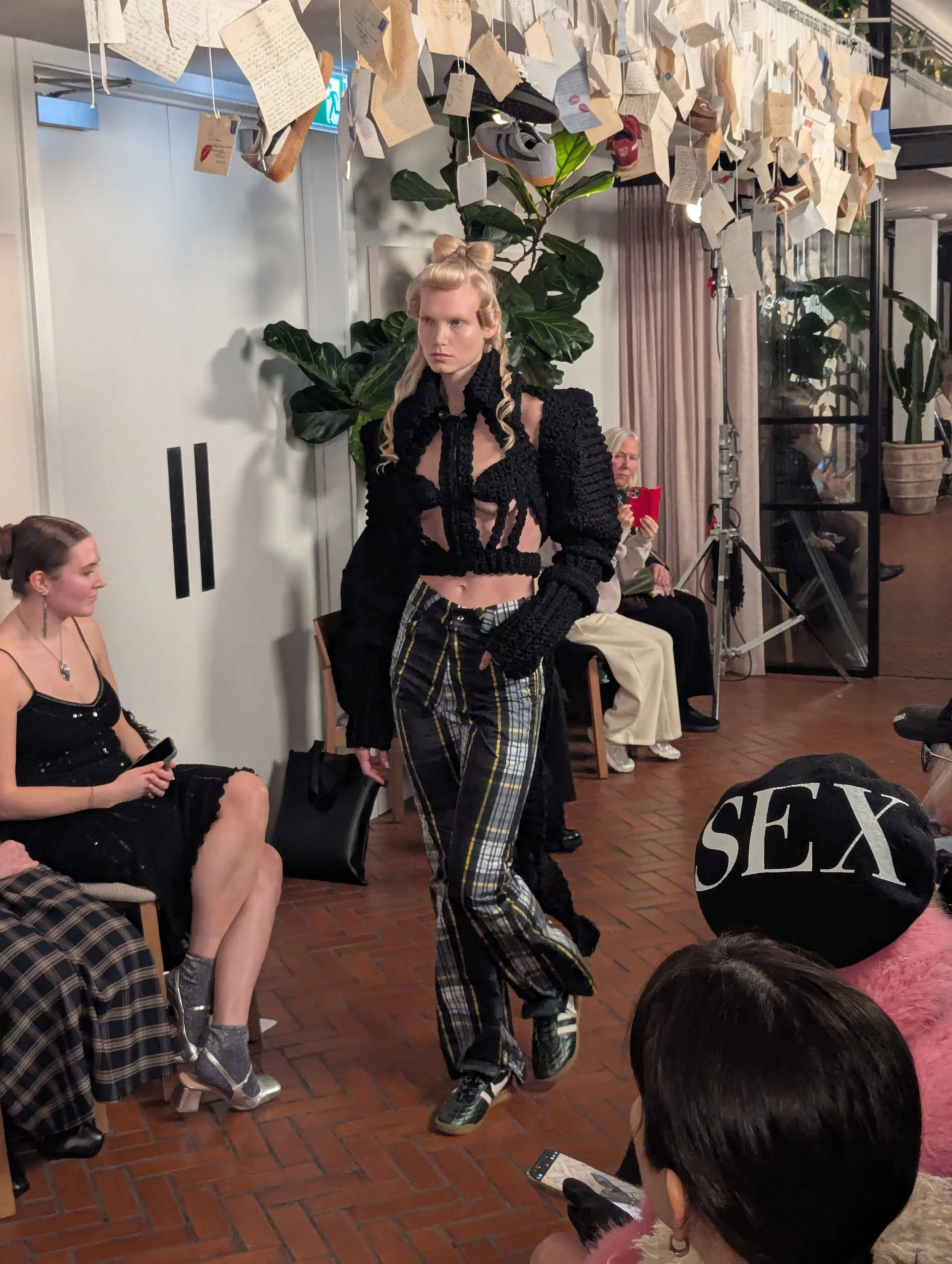
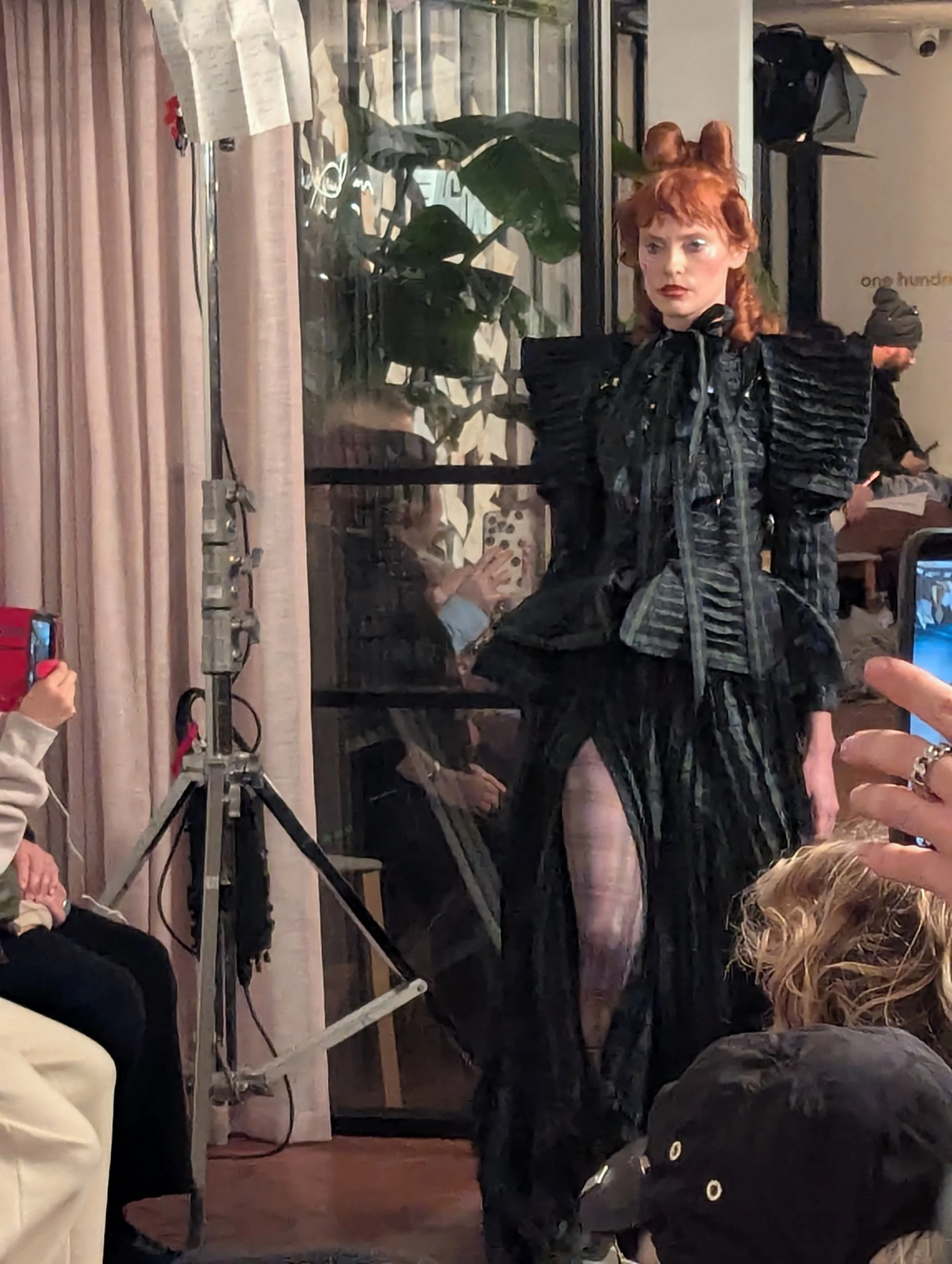
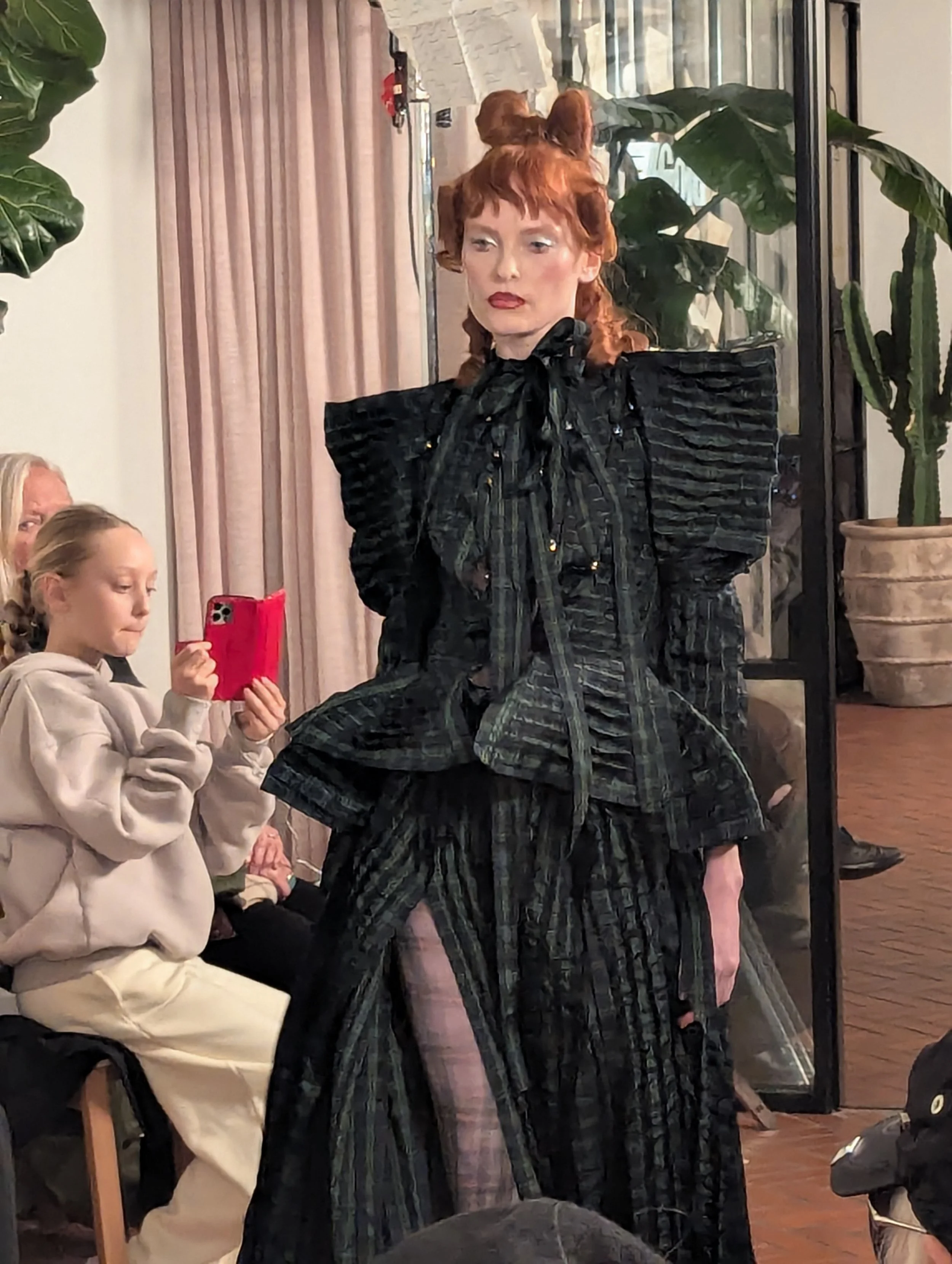
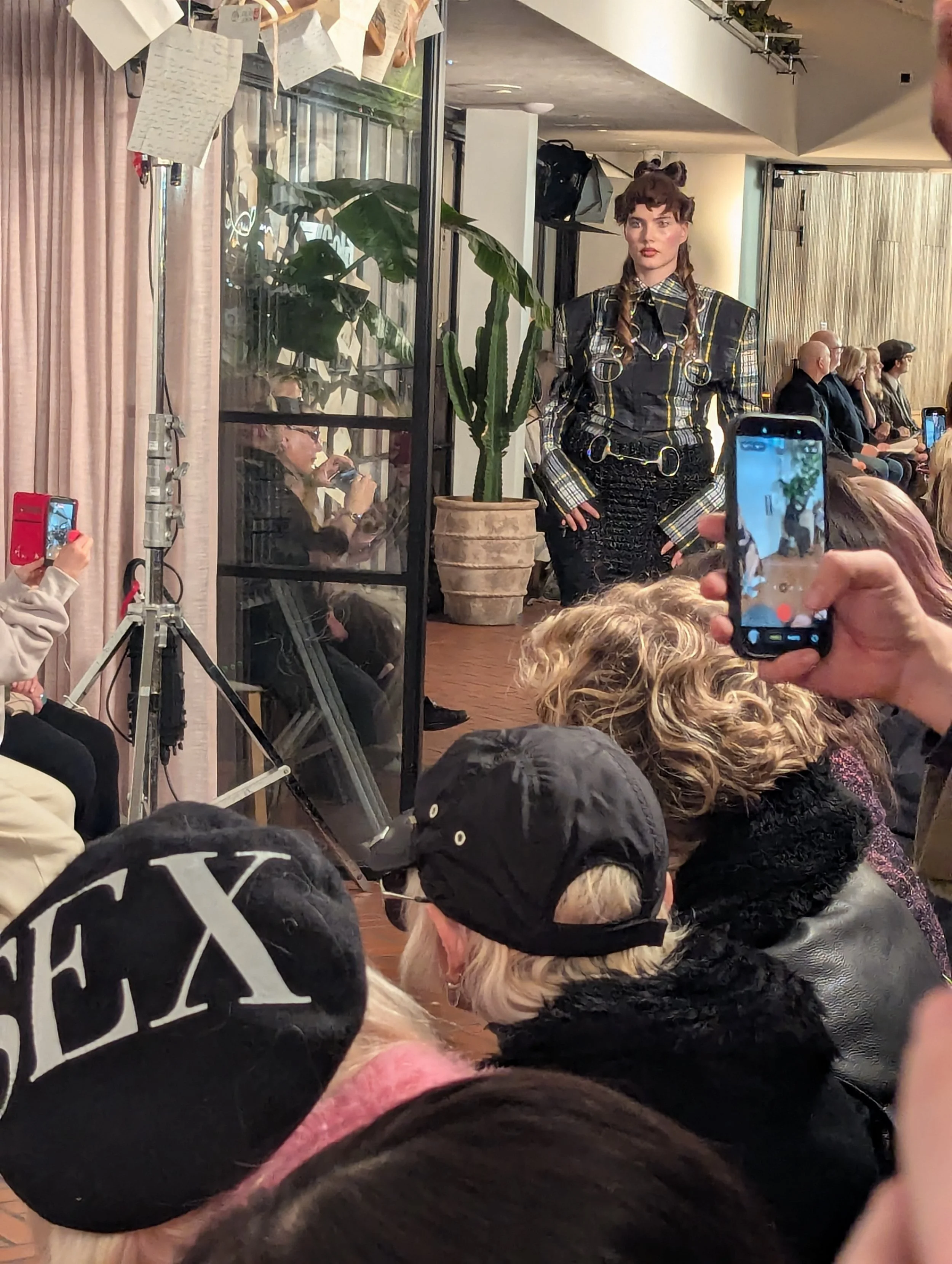
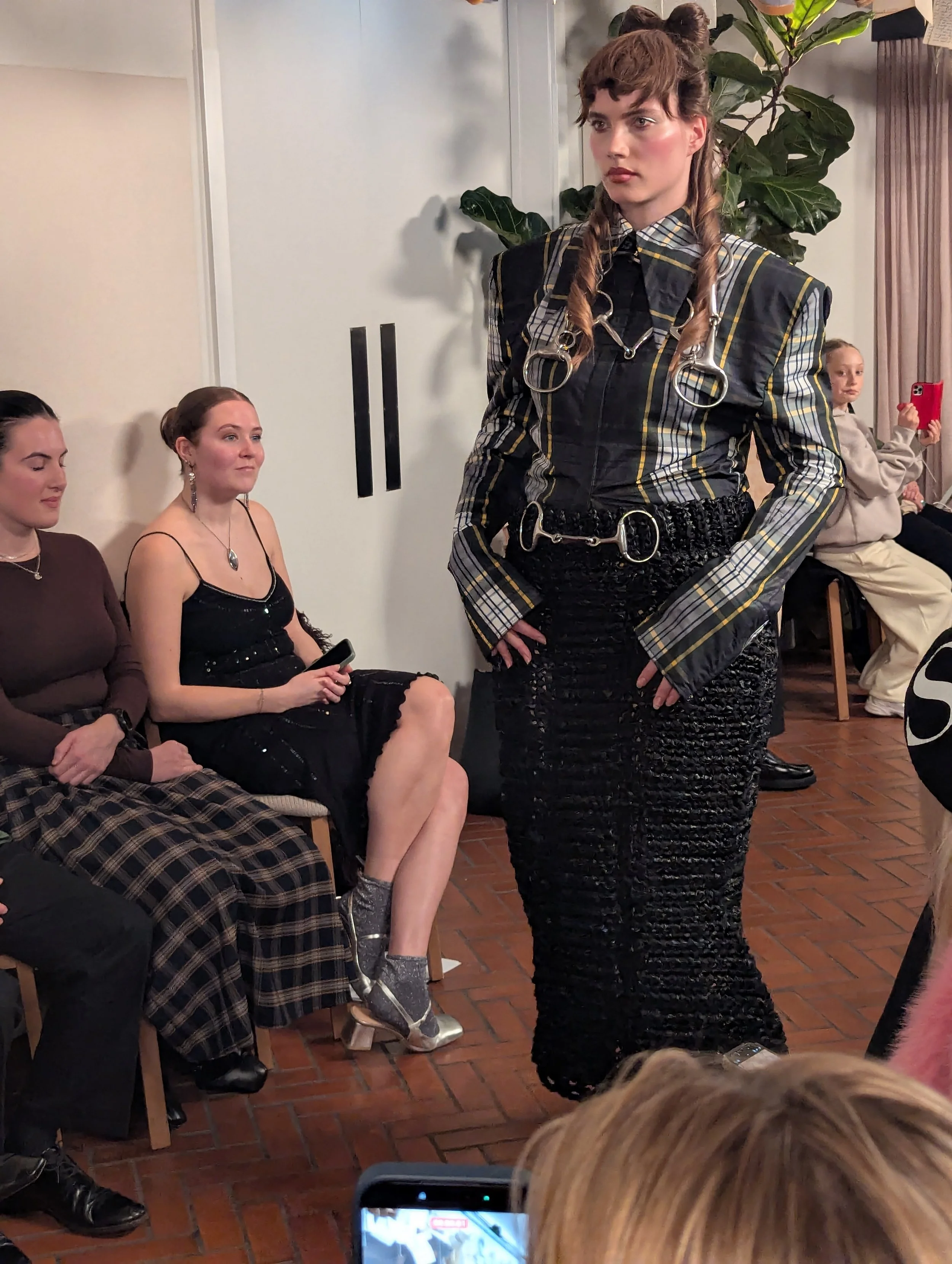
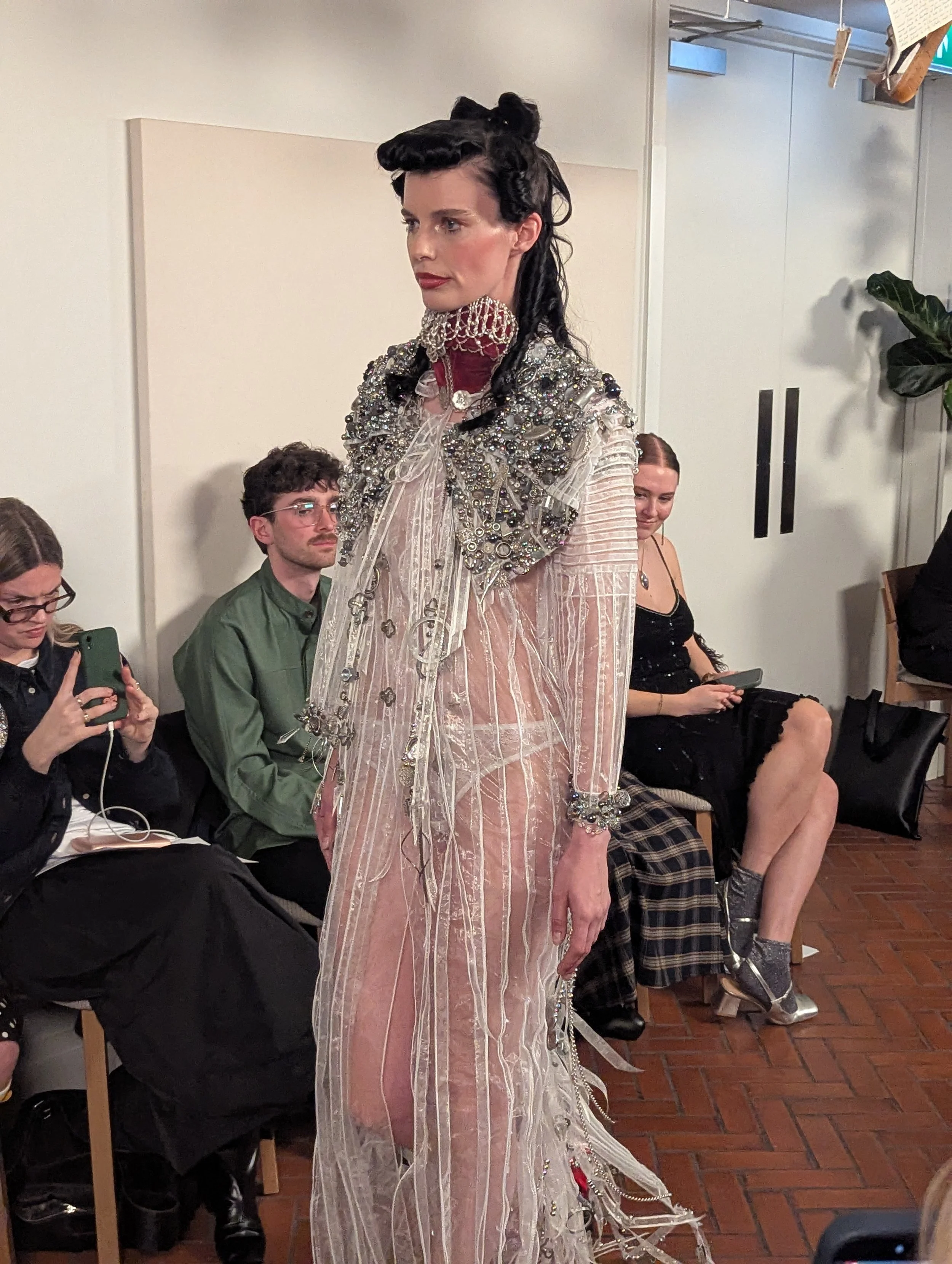
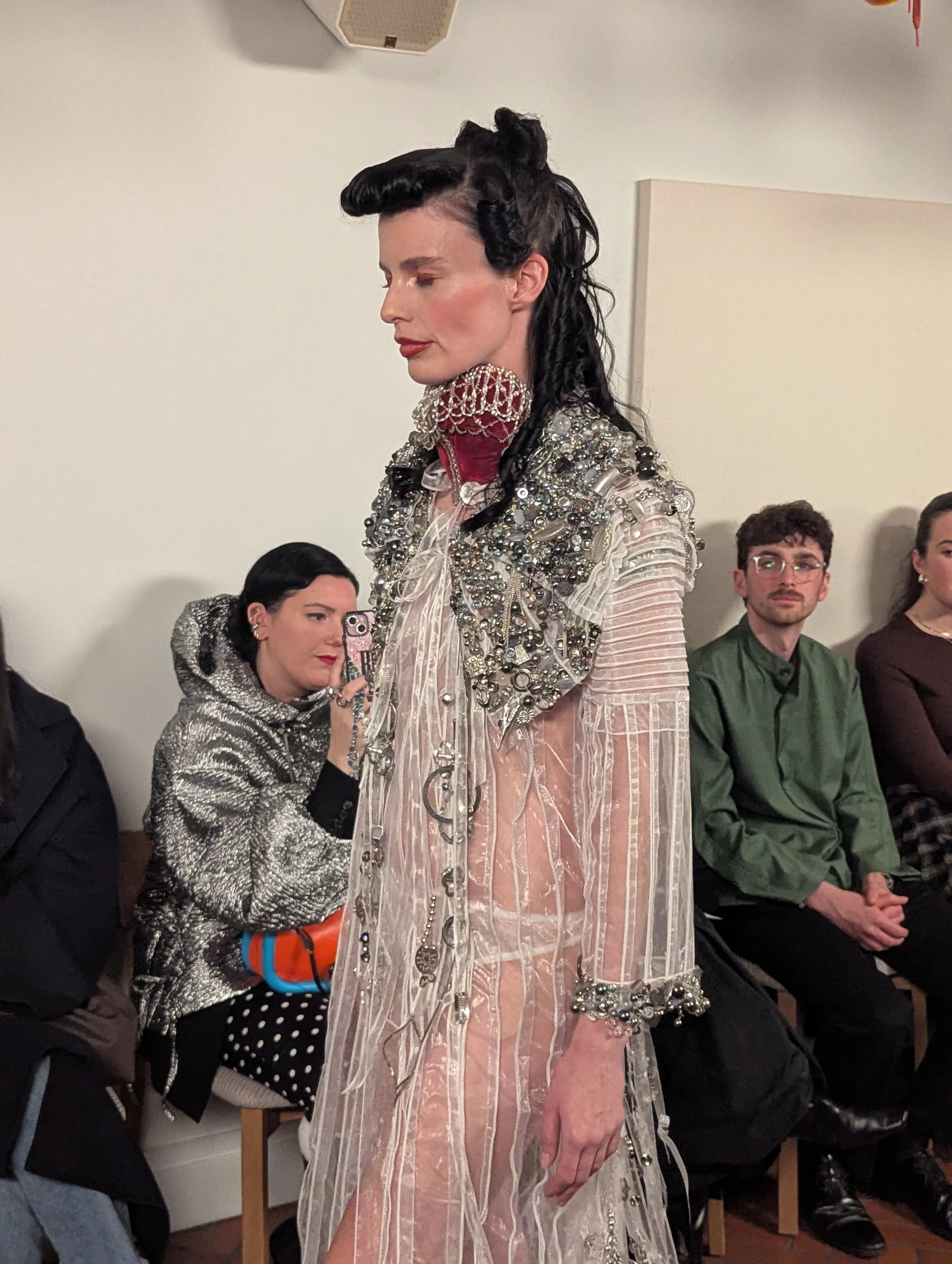
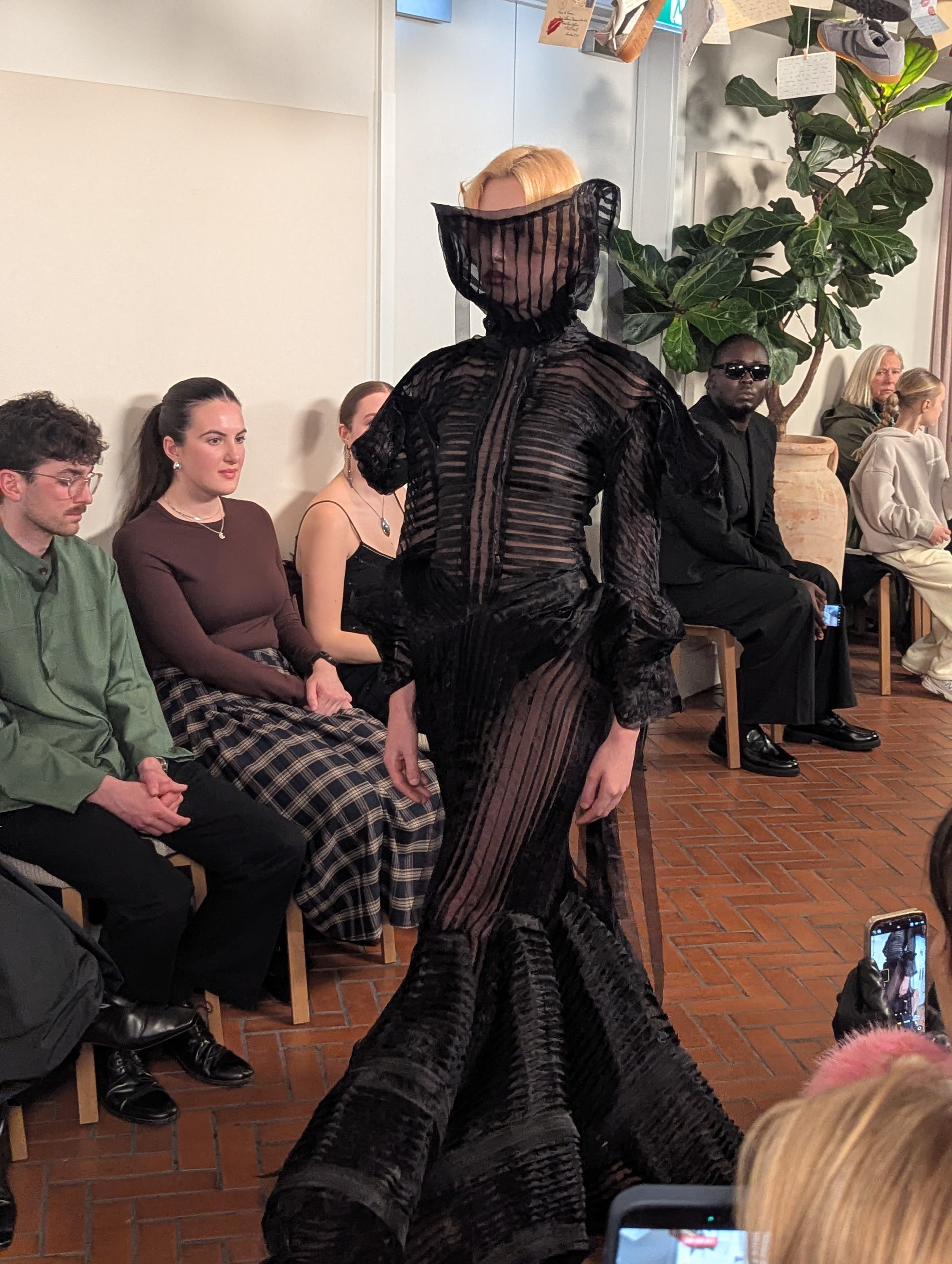
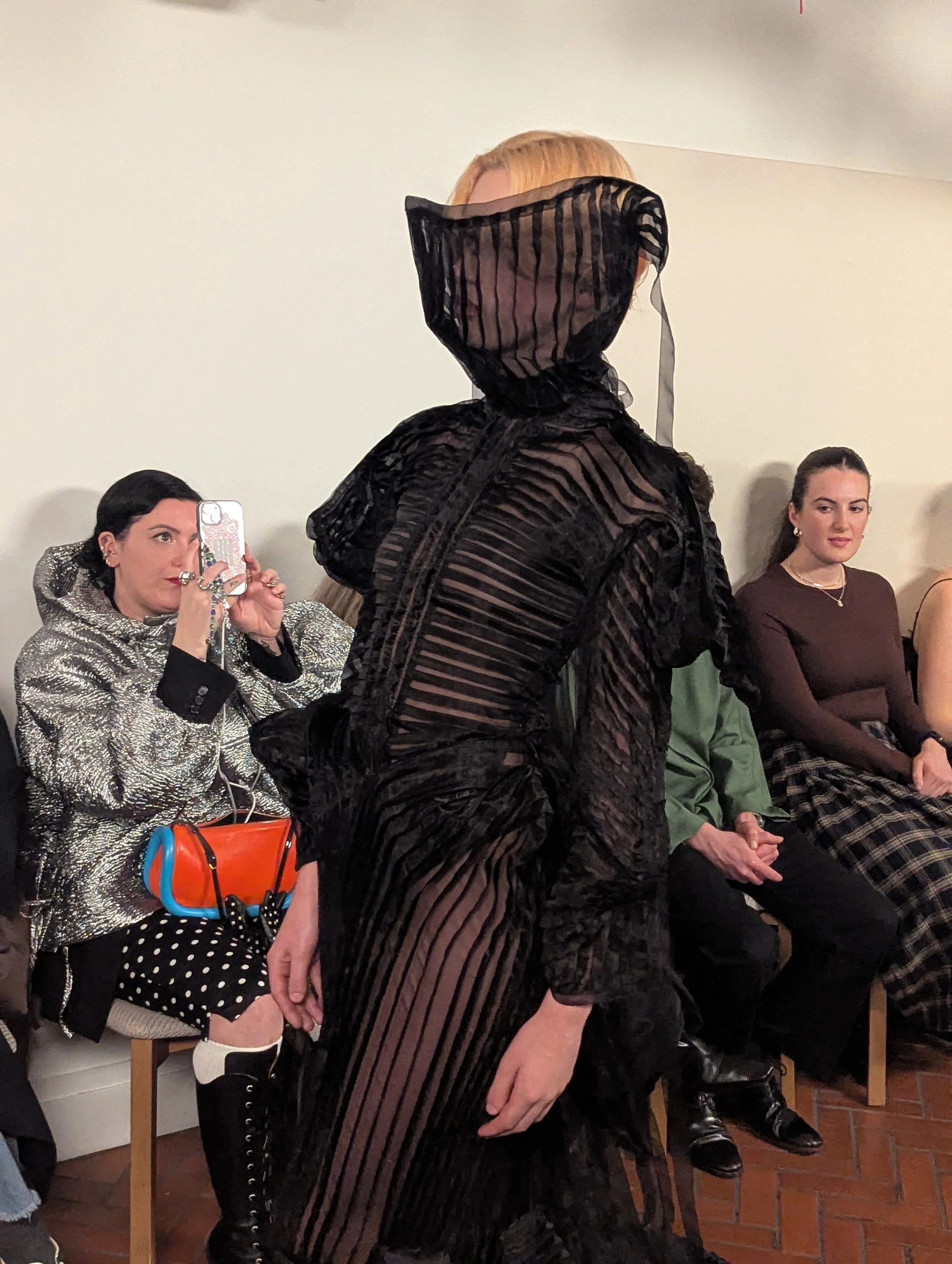
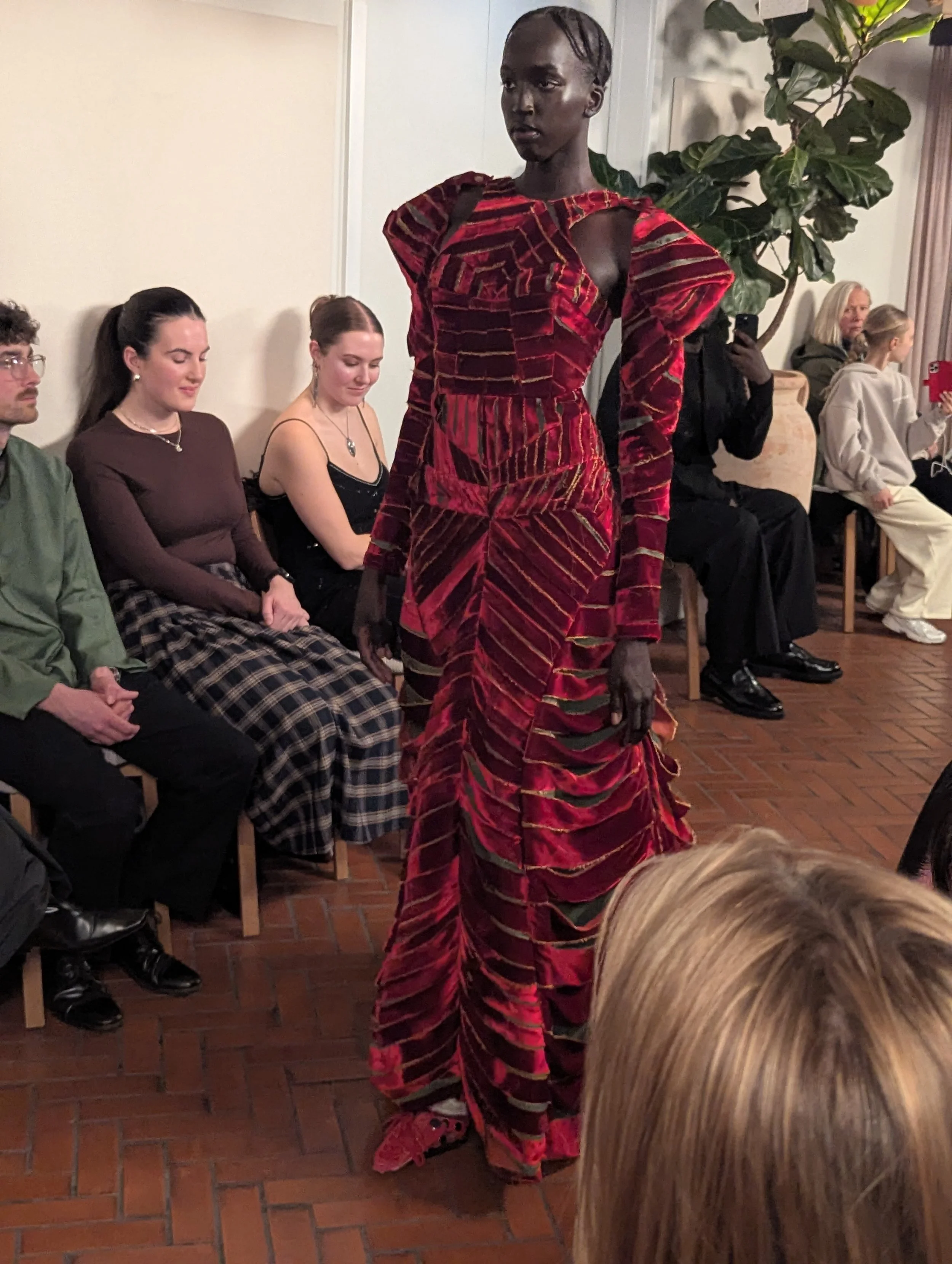
The show opened on a note of domestic grandeur; a voluminous checkered tartan jacket paired with an asymmetric skirt, the kind of playful tailoring that feels hand made for a front row gasp. From there the collection moved through tactile statements; a two piece that read like crumpled parcel paper, knotted woven leathers, and a green plaid ribbon dress that nodded to Victorian formality while remaining wholly contemporary. The finale was a deconstructed red velvet gown composed of geometric panels; theatrical, but earned.
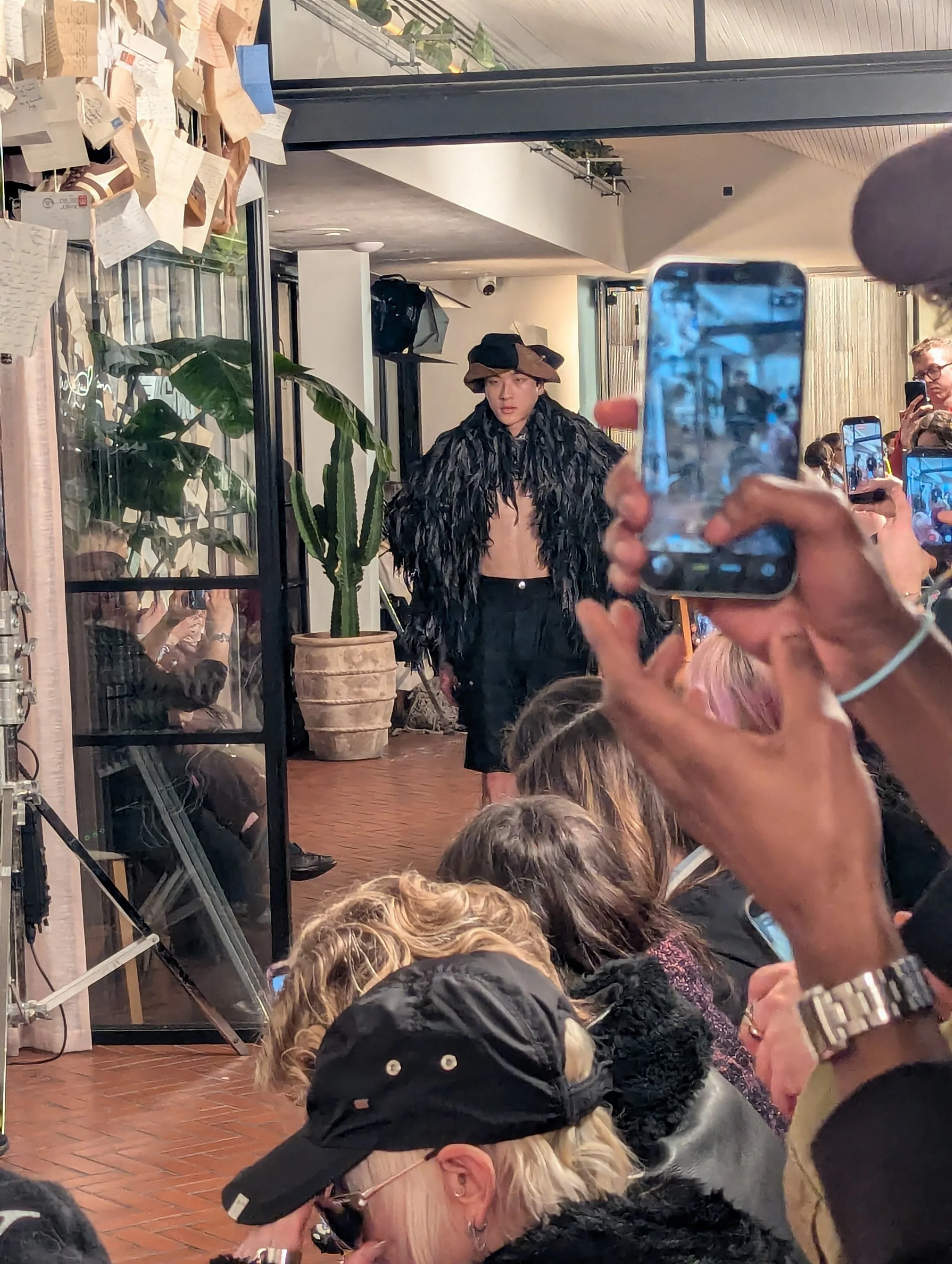
What’s quietly resonant about Raynor’s work is his commitment to re-using materials and to that tactile making that elevates discarded textiles into new sculptural forms. Upcycled and waste fabrics were integrated as core materials, from starch-like bodices to knotted woven constructions; a reminder that sustainability in London’s emerging scene often reads as craft forward material ingenuity rather than mere labelling.
A Central Saint Martins graduate who has steadily moved from promising graduate to one of the “ones to watch,” Raynor’s runway offers both spectacle and craft, the sort of brand building that combines narrative, technique and a refreshingly hands on approach to sustainability. His past collaborations and growing profile in the industry underline a designer who’s building a distinct signature rather than chasing headlines.
“Post Me One Last Kiss” is less a seasonal thesis than a mood; a tender, handwritten manifesto that suggests Raynor is interested in clothes as carriers of memory. In a week that often prizes the loudest spectacle, this was a show that rewarded intimacy, craft and a very British sense of theatrical understatement. Expect to see elements of Raynor’s textile experiments translated into wearable forms over the next retail seasons.